4,4'-Diaminobiphenyl: An Industry Touchstone With Urgent Questions
Historical Development
4,4'-Diaminobiphenyl, often known as benzidine, traces a complicated journey through modern industry and science. Developed into an industrial staple during the late 19th and early 20th centuries, this compound made its mark in dye manufacturing and laboratory analysis. Chemists gravitated toward it after observing its unique amine linkage in biphenyl structures, realizing that it served as a robust platform for building numerous azo dyes. These early breakthroughs reflected the fervor scientists felt for synthetic organic chemistry at the time, eager to meet the exploding demand for textiles with vibrant, durable colors. From the first patent filings in Europe to its adoption by American dye producers, this substance powered technological advancement, but that enthusiasm often ran blind to the compound's shadowy side—unseen health risks, which surfaced only through decades of accumulated evidence.
Product Overview
Across industries, 4,4'-Diaminobiphenyl found champions who valued its chemical utility. It delivered a framework for connecting molecular strands, anchoring colorants resilient against fading. Its properties also caught the attention of laboratory scientists, who incorporated it as a reagent in forensic blood tests, because of its color-changing reaction to oxidants. Every use-case seemed to uncover fresh territory—not just the dye vats of Europe and America, but also the criminalistics labs picking apart evidence. Even though safer options started turning up on the horizon, this compound's efficacy made it more than just a passing curiosity in chemistry's annals.
Physical & Chemical Properties
To the naked eye, 4,4'-Diaminobiphenyl appears as a colorless or faintly beige solid, prone to darkening on exposure to air and light due to gradual oxidation. The molecule carries two amine groups affixed to a biphenyl core, giving it distinct electronic and structural behavior. With relatively low solubility in water but ready dissolution in organic solvents, it moves quickly into solution in the right setting. Melting point measurements in the lab hover above 120 °C, but in practice, the powdery material demands careful handling, as even a minor dusting can settle in unexpected corners and become a contamination risk. Odorless to most people, it hides its hazards out of obvious reach, exemplifying how chemical dangers rarely wear clear warning signs.
Technical Specifications & Labeling
Industrial norms surrounding 4,4'-Diaminobiphenyl shifted drastically across decades, setting stricter guidelines for purity and distribution. Technical standards revolve around minimizing impurities, often outlining stringent levels for residual metallic and aromatic contaminants, as even small traces can complicate downstream applications or analytical results. Packaging leans toward airtight, light-resistant containers, reflecting its tendency to degrade and the potential health hazards involved. Chemical suppliers add hazard and regulatory markings in compliance with major authorities, such as the EU and OSHA, not merely as a box-checking exercise, but because improper identification could spell major health consequences. Product labeling—once a mere afterthought—now faces scrutiny as part of broader trends demanding chemical transparency and traceability.
Preparation Method
Chemists first synthesized 4,4'-Diaminobiphenyl by reducing 4,4'-dinitrobiphenyl, often with iron and hydrochloric acid, followed by extraction and purification. This reduction method set the gold standard, which later adapted to newer methods like catalytic hydrogenation. Process safety improved only after unfortunate accidents and environmental contamination forced changes—better ventilation, closed systems, and real-time monitoring moved from luxury to necessity. Industrial-scale production required constant vigilance, since every reaction batch carried the risk of simultaneous product formation and byproduct generation. Even minor tweaks—choice of solvent, reaction temperature, or reducing agent—impacted the ease of purification and the final yield. Each advancement in the fabrication route reflected a tightening web of environmental and occupational vigilance.
Chemical Reactions & Modifications
4,4'-Diaminobiphenyl earned its place as a versatile building block, mostly through its twin amine groups, which react eagerly with acid chlorides, sulfonyl chlorides, and nitrous acid. That trait allowed chemists to string together long, stable colorant molecules—the foundation of azo dye chemistry. Subsequent substitutions on the aryl rings further customized the properties, shifting hue and dyefastness in finished products. Research labs spent years exploring every corner of its reactivity, hunting for safer derivatives or more efficient transformations. As understanding of its toxicity deepened, exploration shifted towards modifications that retained chemical utility while seeking diminished hazard, though success on this front came slower than needed for broad commercial conversion.
Synonyms & Product Names
The compound travels under a slew of aliases: benzidine, 4,4'-diphenylenediamine, and biphenyl-4,4'-diamine among them. Each name turns up in particular sectors or legal frameworks, sometimes obscuring the direct connection to its underlying risks. Such synonym proliferation also creates obstacles for cross-disciplinary vigilance: researchers, regulators, and manufacturers speak in slightly different languages, which can complicate tracking usage and exposure. The haze around its labeling—once a minor paperwork nuisance—today presents a barrier to the clear communication needed to keep this hazardous material in check.
Safety & Operational Standards
No serious handling of 4,4'-Diaminobiphenyl escapes the looming shadow of health risk. Documented links to bladder cancer prompted global regulatory action decades back. Industrial operators responded by tightening access, imposing personal protective gear, remote handling equipment, and mandatory medical monitoring for exposed workers. Chemical hygiene plans now center on closed processes, active ventilation, and detailed spill response. Legal bans and phase-outs in many countries underscore a simple truth: no margin exists for slipshod practice. Where continued research or testing justifies its use, institutions institute double and triple checks—routine biological monitoring, daily exposure tracking, and rigorous waste management. The best labs learn humility: this compound punishes carelessness without remorse.
Application Area
Despite its black mark in safety history, 4,4'-Diaminobiphenyl left fingerprints all over textile dyeing, pigment chemistry, and analytical testing. For decades, vibrant colors produced on an industrial scale owed their properties to the chemical backbone it provided. Early adaptations in forensic science further cemented its notoriety, thanks to the famed benzidine test for blood—a staple in crime labs across generations, later abandoned for safer alternatives as its toxicity record grew undeniable. Today, legitimate usage teeters on the margins: tightly regulated research settings, controlled laboratory experiments, and rare industrial syntheses cleave to it. In my own experience, the conversation in research circles feels two-sided: an acknowledgment of utility, shadowed by an eagerness to escape the old chemical dependencies.
Research & Development
Scientists and developers working with 4,4'-Diaminobiphenyl face constant pressure to innovate. Early work focused on extrapolating new dye molecules and exploring what structural tweaks could bring to performance and colorfastness. Later decades shifted focus toward alternatives—finding substitutes with similar chemical strength but much lower health costs. Academic labs began exploring enzymatic or green chemistry alternatives, aiming to synthesize similar pigments without recourse to high-toxicity reagents. Researchers continue examining biomimetic routes, guided by principles of sustainability and safety. This drive for safer solutions sits front and center, pushing the chemical industry to confront its own legacy.
Toxicity Research
The toxic profile of 4,4'-Diaminobiphenyl is among the best documented in any industrial compound. Studies connected exposure to elevated cancer rates in workers; the evidence snowballed until even skeptic holdouts conceded the need for bans and restrictions. Experimental studies in animals backed up what epidemiological evidence already made clear: the compound damages DNA and builds risk with cumulative exposure. Institutions like the International Agency for Research on Cancer classed it as a Group 1 human carcinogen, removing any ambiguity from risk assessments. Ongoing research focuses on exposure pathways, delayed effects, and improved detection of even trace contamination. Each cohort of exposed workers adds to this grim but crucial scientific record.
Future Prospects
Conversations about 4,4'-Diaminobiphenyl's tomorrow take on a tone of reckoning and responsibility. Most developed regions outlaw routine industrial use, and those who still rely on the compound seek off-ramps as safe substitutes appear. Sectors still needing its unique chemistry invest in safer process controls and constant monitoring, limiting risks through engineering and administrative safeguards. Researchers remain alert to new findings on persistence, long-range environmental transport, and minute pathways of unintended exposure. The hard lessons of its history drive broader change: tighter regulation of new chemicals, prioritization of green chemistry, and collective vigilance across the life cycle of chemical products. For every chemical innovation, memories of benzidine’s double-edged utility serve as a warning: progress with blinders erects dangers that won’t show up in the tidy columns of a lab ledger.
What is 4,4'-Diaminobiphenyl used for?
Digging Into Its Main Role
Few people outside chemical circles have heard of 4,4'-Diaminobiphenyl, but this compound plays a pivotal part in modern manufacturing. It’s a crucial ingredient for making benzidine-based dyes. Think blue and black colors splashed on textiles, paper, and even plastics. Not long ago, many factories kept bulk drums of it to churn out vivid shades that caught shoppers’ eyes around the world.
Risk Isn’t Just Academic
Experience working in a dye house gives anyone a healthy respect for the safety sheet on this compound. 4,4'-Diaminobiphenyl links clearly to bladder cancer after long-term exposure, as scientists proved decades ago. This evidence led to strong regulations across the US, Europe, and Asia. Today, its handling in any setting falls under heavy oversight. Not washing skin or neglecting gloves invites real danger—no one shrugs off these concerns out of laziness or ignorance, not after hearing old-timers’ stories.
Why Some Industries Keep Using It
Certain dye products still call for the precise pigments that only benzidine derivatives can provide. Manufacturers who rely on these chemical properties care less about alternatives that bump up costs or dull their signature colors. In some developing markets, regulations move slower, so these dyes are more common than in places with stricter rules. While safer substitutes exist, not every chemical tweak matches the sharpness or fastness users expect. No one in textile production wants to risk a uniform’s color fading halfway through a season. Reliability trumps novelty when orders reach tens of thousands.
Medical Applications: No Place for Complacency
Aside from its color power, 4,4'-Diaminobiphenyl never found much success in medicine, but it helped earlier scientists study cancer mechanisms. Labs once used it as a reference for testing occupational carcinogens. This research gave real data to form policies protecting future generations from toxic workplace air. Every benchmark used to keep workers safe owes much to those early risk assessments driven by persistent researchers who put health before profit.
Solutions That Put Safety First
Better engineering controls in dye plants—enclosed systems, effective ventilation, and comprehensive employee training—do more than just check compliance boxes. Upgrading from open vats to sealed mixing rooms saves lives. Substituting with less toxic dyes wherever possible reflects the right kind of progress, though it doesn’t come free or easy for smaller factories already hit by rising costs in other areas. Government support can soften this transition so safety never feels like a threat to jobs.
Why Awareness Matters for Everyone
Most people won’t read a chemical label before buying a t-shirt, but someone did the work to make sure that decision stayed safe. Knowing where risk still lurks—especially in imported goods or unregulated markets—matters for families, shop owners, and workers alike. Buying from brands that publish their chemical policies keeps the conversation going between those who make things and those who buy them. Consumers have more power than they think.
Is 4,4'-Diaminobiphenyl hazardous to health?
Why This Chemical Raises Serious Concerns
Ask someone who has ever worked in an industrial setting about chemical hazards, and a few names come to mind. 4,4'-Diaminobiphenyl—also called benzidine—often lands high on that list. This compound, built from two connected benzene rings sprinkled with amine groups, once formed the backbone of many dye-making operations. From fabric dye to inks, it made bright colors cheap and durable. Now, decades later, most people recognize a different legacy: danger to health, especially in places where safeguards lag or rules get skirted.
The Link With Cancer
Studies from the 1950s and 1960s rang alarm bells for a reason. Workers in dye factories faced rates of bladder cancer way above the general population. Research pointed straight at benzidine. Later studies with lab animals backed up that fear. Rats and mice given 4,4'-Diaminobiphenyl wound up with more cancer, not just in the bladder but sometimes in the liver and pancreas too. The U.S. National Toxicology Program and the International Agency for Research on Cancer both now class it as a known human carcinogen. That’s as strong a warning as public health ever gives.
How Exposure Happens
Rules got tighter in North America and Europe, but risks haven’t vanished. Places where laws are weak or poorly enforced still see trouble. Sometimes, contamination creeps in when dyes made elsewhere enter consumer goods. Breathing the dust, touching the powder, or letting splashes linger on skin: all can let 4,4'-Diaminobiphenyl into the body. Not everyone sees symptoms right away. Illness can hide for years, making it easy for problems to get overlooked until much later.
Personal Experience Colors the Risk
Having worked for a few summers in a textiles mill during college, I watched as older workers shared stories. They spoke of burning eyes and strange rashes from careless handling of dye powders. At lunch, some coughed or kept clear of strong-smelling rooms, already aware of dangers not yet posted on warning signs. Many in the next generation new to such jobs take for granted that oversight and safety rules will always protect them. The truth gets murky in lower-paid temp positions or countries chasing cheap production. No one working with chemicals should have to gamble with their long-term health.
Cutting the Risk Down to Size
Getting rid of 4,4'-Diaminobiphenyl entirely from industry would give peace of mind. Some places already banned it outright. Replacing it with safer alternatives? That’s not just about swapping one molecule for another; companies win by testing substitutes for health impacts before full-scale use. Regular air quality checks, solid ventilation, and protective gear save lives. Training new hires on spill response matters more than a poster full of rules. Government inspectors who show up often mean companies stay honest. For people who find old dye or chemical stocks abandoned in warehouses or labs, alerting the right environmental agency avoids silent accidents. Communities benefit when risk is faced head-on instead of tucked away in technical paperwork.
The Case for Persistent Vigilance
Health damage from 4,4'-Diaminobiphenyl was not a fluke or scare story. Warnings came from hard-won evidence and too many true accounts of preventable illness. Long-term thinking pays off: cleaner processes, better substitutes, and the simple habit of questioning why hazardous stuff gets used at all. Those choices still shape health outcomes for families who live near factories, people who work on the production line, and customers down the road.
What are the physical properties of 4,4'-Diaminobiphenyl?
A Look at Its Physical Side
4,4'-Diaminobiphenyl turns up on the bench as a pretty interesting solid. It appears as light tan or pale brownish crystals, nowhere near flashy, but easy to spot when mixed in powders or spilled over a lab notebook. Touching it releases a faint, musty odor—an early warning for most chemists to wear gloves, though the smell doesn’t make you jump back like some chemicals do.
This compound stays solid and stable under normal room conditions. It starts to melt around 129–132°C, much lower than many heat-resistant industrial solids I’ve worked with. That softening point means heat isn’t its friend for storage or transport, especially in warm climates without air conditioning. In the real world, where shipping containers sit in the sun, the risk of sticking or clumping goes up. Humidity doesn’t rattle it much, though; it doesn’t grab water out of the air like some hydrophilic chemicals do.
The powder itself doesn’t dissolve in cold water. You try stirring it in and you just watch the grains swim and then settle. Strong acids like hydrochloric acid can bring it into solution. Organic solvents—ether, acetone, and hot alcohols—also do the trick. That solubility in aggressive solvents has real upsides in polymer production and dye chemistry, but it also means you’re reaching for a respirator and splash goggles if there’s a spill.
Why These Properties Actually Matter
It’s easy to look up a melting point or odor description, but the real significance shows up in practical use. As someone who’s handled aromatic amines, the powdery texture and volatility mean 4,4'-Diaminobiphenyl spreads fast when poured. That raises the odds of skin contact or inhalation. In my early lab days, a little gust or careless open jar could dust an entire counter. That’s not just a cleanup issue—this compound links to health risks if you breathe it in or get it on your skin. Agencies such as NIOSH and the CDC flag it for toxic effects, including links to bladder cancer from chronic exposure. Physical carelessness leads to long-term risks, so properties like low melting point and particulate form influence more than just process control—they shape lab and factory safety practices.
The powder’s resistance to water matters during production. If a drum gets into a flood zone or a sprinkler system bursts, you’re not looking at an instant spill dissolving into groundwater. That gives emergency response teams a fighting chance to capture and contain it. On the flip side, since it doesn’t wash away with water, cleanup needs real muscle—solvent wipes or dedicated gear—adding time and cost to any remediation.
What We Can Do to Work with It Safely
Anyone working with 4,4'-Diaminobiphenyl needs to respect the way it acts—especially that fine, persistent powder and its quick dissolution in organic solvents. Investing in good suction hoods, sealed handling tools, and steady training routines isn’t a regulatory headache. It directly shields workers from inhalation and skin contact. Switching from bulk powder to pelletized or granulated forms (when available) also goes a long way to cutting dust and spills—a trick I’ve seen cut accident rates in specialty chemical plants.
Testing for leaks or unexpected heat in storage areas catches problems early, long before they put workers or environments at risk. Pairing those physical precautions with regular medical checks and thorough documentation fits the E-E-A-T principle: you walk the talk on expertise, experience, and trust. Good science meets real respect for health—without needing glossy brochures or marketing buzzwords.
How should 4,4'-Diaminobiphenyl be stored?
Understanding the Real Risks
Everyday work in labs and plants throws complex chemicals into the mix, and 4,4'-Diaminobiphenyl is one of those names that means business. People handle it for its strengths in dyes and polymer production. But it packs toxicity on top, and just a whiff or touch can cause more trouble than many realize. It doesn’t belong near food, water, casual shelves, or shared spaces.
Why Proper Storage Makes a Difference
A single misplaced container can put workers at risk for skin rashes, breathing issues, or worse. Once this substance leaks, reacts, or turns to dust, reversing the contamination takes expensive cleanup and often eats up hours or days. That situation pushes companies into legal troubles too. The public trusts that facilities treat such chemicals like loaded pistols—not Halloween candy left on the counter.
In my own experience working with specialty chemicals, I’ve seen the long-term fallout when a chemical wasn’t stored right. The best operators treat every drum and jar as a source of potential harm unless proven otherwise. That mindset turns into muscle memory for the right protective gear and temperature controls. It’s not about paranoia. It’s about coming home in one piece.
What Smart Storage Looks Like
A tough container beats a fancy label any day. Metals that won’t rust or react, thick glass, or approved plastic tanks go a long way. No one stores 4,4'-Diaminobiphenyl in thin-walled jars or cardboard boxes. Keep the label sharp and visible, with warnings that leave no room for doubt. Always seal it well because this chemical drifts into the air if given the chance.
Moisture and heat stir up problems, so a climate-controlled spot earns real respect. Think cool, dry, and out of sunlight—much like you’d keep paint cans off the backyard porch. Humidity eats away at containers, while sunlight may start chemical changes no one asked for. A simple thermometer and a low-humidity reading deliver peace of mind.
Don’t let one person hold all the knowledge. Train everyone who might walk near the storage area, from new hires to visiting maintenance folks. Talk about leaks, spills, and emergency routines in plain language—pictures and drills sink in better than long memos. Post contact numbers for poison control or emergency response near the entrance.
The Role of Regulation and Innovation
Agencies like OSHA and local environmental boards outline clear practices. Many demand routine checks, logs of stored quantities, and up-to-date emergency gear. Following these rules does more than keep the inspectors happy. It billboards your commitment to team safety and neighborhood health.
Suppliers now design smarter packaging to foil leaks or splits even under rough handling. Some companies even use real-time monitoring to spot a temperature spike or drip before it grows. Digital sensors cost some money up front, but they save lives and reputation. That's the kind of expense no one regrets.
Moving Toward Fewer Worries
Proper storage for 4,4'-Diaminobiphenyl shows respect for others and the planet. Too often, cutting corners leads to lifelong lessons learned the hard way. Thoughtful planning—marked shelves, airtight containers, trained eyes—keeps accidents out of the headlines and people where they belong.
It's a basic fact: hazardous chemicals require more than just a locked door. They demand real leadership, teamwork, and the will to do the right thing every day.
What safety precautions are necessary when handling 4,4'-Diaminobiphenyl?
Recognizing the Risks
Handling 4,4'-Diaminobiphenyl means facing real health threats. This compound, known for its use in dye and polymer production, comes with a tough record—years of toxicology research point to its connection with bladder cancer and adverse effects on the liver and kidneys. Safe handling starts with this awareness: there’s no room for shortcuts or complacency with a substance that’s earned classification as a human carcinogen by the International Agency for Research on Cancer (IARC).
Geared Up for Safety
Personal protective equipment makes the difference between a bad day and a good one. Lab coats, gloves made of strong nitrile or neoprene, tightly sealed safety goggles, and, in some situations, a full-face shield form the “all in” approach needed for this work. Cotton clothes underneath, not synthetics, give some added protection in case of splash. Nitrile gloves hold up best against aromatic amines—nothing fancy or high-tech, just reliable old-school lab gear.
Managing Exposure in the Workspace
A chemical with a record like this doesn’t belong on any open bench. Fume hoods stand as the safe zone, keeping vapors and dust away from your nose and mouth. Any transferring, weighing, or mixing of 4,4'-Diaminobiphenyl goes straight under the sash—no exceptions. In my own research experience, even a “quick transfer” outside the hood led to unnecessary risk. Every exposure adds up, even if you don’t feel any effects right away.
Clean Work Habits
A clean bench is a safer bench. Never eat, drink, or keep food anywhere near the compound, even on long shifts. Clear labeling helps everyone avoid accidental contact, especially during shift changes or after-hours work. Keep spills under control immediately with industrial wipes and spill kits designed for hazardous organics. I’ve seen simple carelessness turn into expensive cleanups and needless exposure—one drop can be all it takes.
Good Storage Makes a Difference
Some people downplay the value of proper storage, but with this compound, it matters. Store it in a closed, labeled container far from acids, bases, or oxidizers; heat and sunlight give it the chance to break down and become even more hazardous. Ventilated, flameproof cabinets with dedicated space reduce the risk of chemical reactions. At the end of my own shifts, I always double-check that lids are tight and secondary containment holds up.
Medical Surveillance and Training
Institutions with experience in hazardous chemical work keep an eye on employee health with regular checkups. Routine urine or blood screening catches issues before they become big problems. Regular training and safety drills get everyone on the same page. Facing 4,4’-Diaminobiphenyl without knowledge and skills is asking for trouble.
Solutions: Changing the Culture
Substitution works best, if possible—many labs now use less hazardous alternatives or design better engineering controls. Sharing what’s learned from accidents or close calls builds a smarter, more cautious team. Practical habits, strong communication, and real respect for the risks can keep workers healthy and productive over a long career.
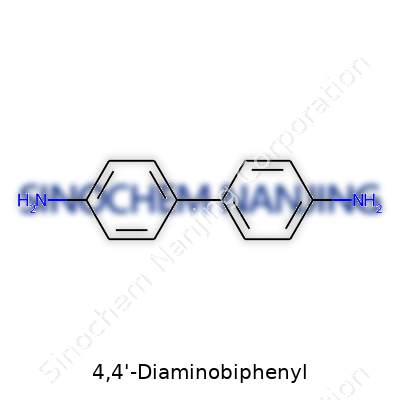
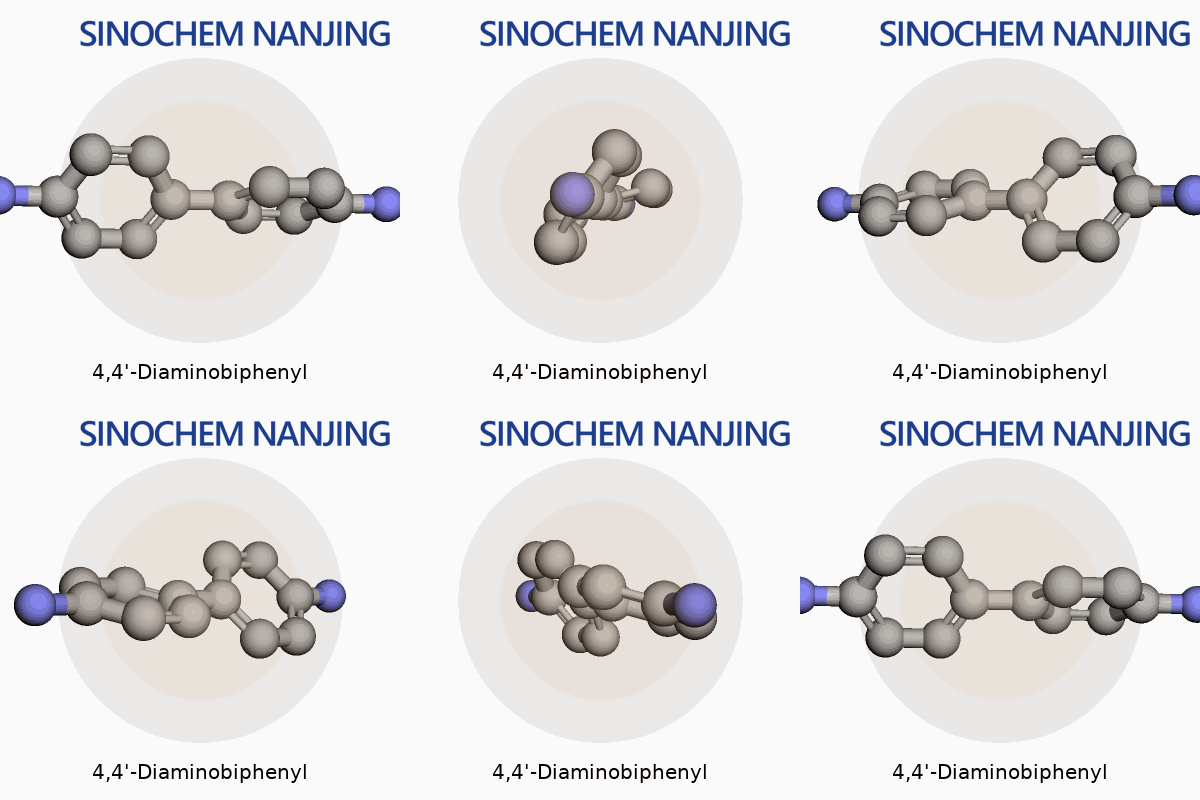
| Names | |
| Preferred IUPAC name | 4,4'-Diaminobiphenyl |
| Other names |
p-Aminodiphenyl Benzidine p-Diaminobiphenyl Diphenyl-p-phenylenediamine |
| Pronunciation | /ˈfɔːr fɔːr daɪˌæmɪnoʊˈbɪˌfiːnɪl/ |
| Identifiers | |
| CAS Number | 92-86-4 |
| Beilstein Reference | 136370 |
| ChEBI | CHEBI:34628 |
| ChEMBL | CHEMBL14050 |
| ChemSpider | 8275 |
| DrugBank | DB14087 |
| ECHA InfoCard | 19b2c4b7-9772-4f39-b21f-1d4597ee82c6 |
| EC Number | 202-177-1 |
| Gmelin Reference | 120139 |
| KEGG | C06582 |
| MeSH | D000682 |
| PubChem CID | 7070 |
| RTECS number | DD6650000 |
| UNII | 7N7QW41W2Y |
| UN number | UN2579 |
| CompTox Dashboard (EPA) | DTXSID7020182 |
| Properties | |
| Chemical formula | C12H12N2 |
| Molar mass | 198.26 g/mol |
| Appearance | white to yellowish powder |
| Odor | odorless |
| Density | 1.18 g/cm³ |
| Solubility in water | slightly soluble |
| log P | 1.25 |
| Vapor pressure | 0.0000188 mmHg at 25°C |
| Acidity (pKa) | 2.63 |
| Basicity (pKb) | 3.96 |
| Magnetic susceptibility (χ) | -72.0e-6 cm³/mol |
| Refractive index (nD) | 1.658 |
| Viscosity | Viscous liquid |
| Dipole moment | 2.44 D |
| Thermochemistry | |
| Std molar entropy (S⦵298) | 212.6 J⋅mol⁻¹⋅K⁻¹ |
| Std enthalpy of formation (ΔfH⦵298) | 83.8 kJ/mol |
| Std enthalpy of combustion (ΔcH⦵298) | -3216 kJ/mol |
| Pharmacology | |
| ATC code | D01AE02 |
| Hazards | |
| Main hazards | Carcinogenic, toxic by inhalation and skin absorption, causes skin and eye irritation, may cause allergic skin reaction |
| GHS labelling | GHS02, GHS06, GHS08 |
| Pictograms | GHS06,GHS08 |
| Signal word | Danger |
| Hazard statements | H302, H317, H319, H350 |
| Precautionary statements | P261, P280, P301+P310, P308+P313, P405, P501 |
| NFPA 704 (fire diamond) | 2-2-0-Health:2,Flammability:2,Instability:0 |
| Flash point | Flash point: 195°C (383°F) |
| Autoignition temperature | 650°C |
| Lethal dose or concentration | LD50 oral (rat): 514 mg/kg |
| LD50 (median dose) | 222 mg/kg (rat, oral) |
| NIOSH | DA2275000 |
| PEL (Permissible) | 0.1 mg/m3 |
| REL (Recommended) | 0.1 mg/m³ |
| IDLH (Immediate danger) | IDLH: 25 mg/m³ |
| Related compounds | |
| Related compounds |
4-Aminobiphenyl Biphenyl Benzidine p-Phenylenediamine |



