Looking Into 3-Trifluoromethylaniline: More Than Just a Building Block
Historical Development
The story of 3-Trifluoromethylaniline didn’t start in a blaze of glory. Back in the early days of organic chemistry, researchers combed through derivatives of aniline, always looking to modify physical and chemical properties for better performance in dyes, agrochemicals, and pharmaceuticals. The introduction of the trifluoromethyl group onto the aniline ring, especially at the meta-position, came about from a curiosity to see how much of a difference a simple swap could make. Trifluoromethyl groups grew in popularity for their knack at flipping reactivity and boosting metabolic stability. As fluorine chemistry surged across the 20th century, thanks to advances in reagents and methods, compounds like 3-Trifluoromethylaniline found themselves in the limelight—not by accident, but by intentional design sparked by the hunger for novel materials that could stand up to real-world demands.
Product Overview
Take a stroll through any advanced chemical research lab, and bottles of 3-Trifluoromethylaniline are sure to pop up on the shelves. This aromatic amine forms a crucial backbone for the synthesis of specialty chemicals and pharmaceutical intermediates. What sets it apart is the presence of the trifluoromethyl group, which punches up both its electron-withdrawing effects and its overall behavior in complex syntheses. Over the years, this molecule has shifted roles—from coloring cloth to serving as a critical building block in medicinal chemistry. When researchers run into hurdles in drug development, this compound often shows up in retrosynthetic strategies for tackling persistent metabolic instability and achieving desired pharmacological profiles.
Physical & Chemical Properties
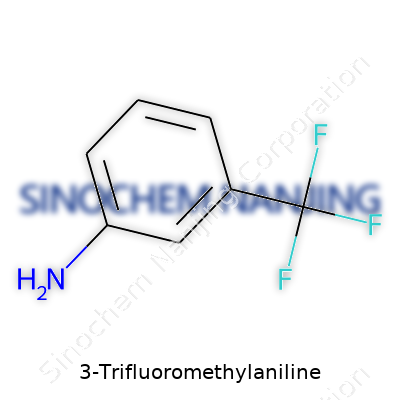
Looking at its structure, 3-Trifluoromethylaniline brings together an aniline core with a CF3 crew tagging along at the meta-position. This arrangement isn’t just cosmetic. The CF3 group adds weight, tugs electrons, and changes the molecule’s lipophilicity. Physically, you’re facing a nearly colorless liquid or light yellow oil, usually carrying that typical amine odor, but dialed down by the halogens. Its boiling point often lands higher than plain aniline, thanks to the fluorinated mass sitting on the ring. Chemically, the electron-withdrawing nature of CF3 pulls reactivity away from the amino group, shifting how the ring interacts with electrophiles and nucleophiles. Water solubility takes a nosedive, but it makes up for that by dissolving in organic solvents—ethyl acetate, dichloromethane, and the like.
Technical Specifications & Labeling
Do a survey of technical data sheets and the most trustworthy producers list purity grades north of 98%, sometimes pushing above 99% for lab-scale or pharma use. Labels need to lay out CAS numbers, chemical structure, and basic hazard warnings—this isn’t something to keep lying around without fair notice. Storage instructions aim to keep out light, heat, and moisture, all in an effort to dodge unwanted degradation or side reactions.
Preparation Method
Crafting 3-Trifluoromethylaniline usually means starting with a trifluoromethylbenzene backbone and working those chemistry skills on nitration, reduction, and separation. The nitro group makes its entrance onto trifluoromethylbenzene, and reduction brings out the amine. Hydrogenation with a mild catalyst, or more old-school chemical reductions, both see plenty of use. Today, catalytic transfer hydrogenation and metal-acid couples hold court because they cut down on by-products and streamline workup. Each method has its quirks. Scaling up for production means choosing routes that offer consistent yields, fewer purification headaches, and no surprise side-products.
Chemical Reactions & Modifications
The heart of 3-Trifluoromethylaniline’s value lies in how well it partners in various coupling or substitution reactions. The amino group, protected or not, can jump into acylation, sulfonation, or diazotization to build out more complex molecules. The trifluoromethyl group battles back against unwanted oxidation or hydrolysis, which is a real boon in medicinal chemistry. Its electron-withdrawing punch means electrophilic aromatic substitution goes slower, but nucleophilic steps like Buchwald-Hartwig amination or Suzuki coupling still perform well with the right catalyst. In personal experience, bringing this compound onto a benchtop always signals the start of a challenging, but manageable, synthesis plan focused on precision and reliability.
Synonyms & Product Names
Anyone buying or selling this chemical soon learns it has a crowd of aliases. 3-(Trifluoromethyl)aniline stands as the IUPAC favorite. Other names—meta-trifluoromethylaniline or m-trifluoromethylaniline—pop up in both catalogs and research papers. International suppliers sometimes use language-based variants or structural shorthand, but these don’t change the substance inside the bottle.
Safety & Operational Standards
Experience teaches that handling 3-Trifluoromethylaniline means respecting both its aniline roots and its fluorinated alterations. Its volatility is moderate, but inhalation or skin contact packs risks—tickling the respiratory tract, irritating skin, or worse with chronic exposure. Labs stress PPE: gloves, lab coats, goggles, and use of a fume hood become non-negotiable. Spills aren’t common, since most labs handle this compound in multi-gram quantities, but any accident means quick clean-up with adsorbent materials and disposal in line with hazardous waste controls. Regulatory agencies pay attention to both the toxicity of aromatic amines and the environmental persistence of CF3—so strict compliance is the rule, not the exception.
Application Area
In the real world, 3-Trifluoromethylaniline moves quietly behind the curtain. Pharmaceuticals latch onto its CF3 for drugs that survive metabolic detox longer and show better bioavailability. Agrochemists like the way the trifluoromethyl group fends off insects and decay, helping to build all sorts of pesticides and herbicides that work under tough field conditions. The dye industry keeps coming back for substituted anilines to create more vibrant, resilient pigments—though regulatory pressure keeps that area in check. This compound’s real value shows up in research and high-end specialty chemicals, with each batch moving out of the lab bringing innovation to market.
Research & Development
Work in research settings with 3-Trifluoromethylaniline rarely stops at making and analyzing. Medicinal chemists chase after analogs with superior binding and metabolic profiles. Material scientists feed the compound into polymers and specialty coatings, banking on CF3 segments to add water and oil repellency. Experience on interdisciplinary teams taught me that trifluoromethyl aromatics typically outperform their plain-ring cousins, especially in designing new candidates for biological screening or in optimizing properties of advanced materials. Patents keep rolling in for new uses, signaling the compound’s adaptability and ongoing significance across fields ranging from cancer therapeutics to organic electronics.
Toxicity Research
Toxicologists keep a sharp eye on both aromatic amines and trifluoromethyl groups because surprises lurk in metabolic pathways. Studies probe for carcinogenic potential, mutagenicity, and persistence both in the body and in the environment. Chronic exposure risks from parent anilines still worry health agencies, but the addition of CF3 reshapes metabolic fate—sometimes blocking quick degradation, other times giving rise to persistent metabolites. Animal studies and cell models help file down the uncertainty, but lingering questions about long-term cumulative impact tie directly into regulations and workplace safety rules.
Future Prospects
Looking ahead, 3-Trifluoromethylaniline seems poised to stay in the thick of modern chemistry. Its role in drug design won’t shrink, especially as researchers mine deeper into fluorinated aromatics for better pharmacokinetics and new modes of action against stubborn diseases. In materials, the growing demand for smart surfaces and nanostructures puts this molecule under a bright spotlight. Waste management and green synthesis techniques keep drawing attention, with researchers working up ways to push down emissions and boost process efficiency. The chase for replacements in less-regulated, safer chemicals continues, but nothing so far matches the performance of trifluoromethylated anilines in specialty applications. Chemists and engineers keep investing both brainpower and capital into unlocking more of this compound’s potential—giving it staying power long after its initial discovery.
What is 3-Trifluoromethylaniline used for?
Chemistry’s Puzzle Piece: More Than a Lab Oddity
Stepping into any chemical supply cabinet, you’ll find names that sound like cryptic codes. 3-Trifluoromethylaniline is one of them. Despite the tongue-twister name, a lot rides on it. In my work developing research proposals around new drug compounds, I’ve seen how a single change in a molecule can ripple across an entire project. 3-Trifluoromethylaniline proves itself useful in unexpected ways, far beyond basic chemistry textbooks.
Pharmaceuticals: Building New Medicines
Pharmaceutical labs turn to chemicals like 3-Trifluoromethylaniline when they chase after new treatments. The trifluoromethyl group attached to the aniline ring isn’t just for show; it helps create drug candidates that last longer in the body and stick to their targets more tightly. A team at Novartis once mentioned at a seminar how the right fluorinated group can shift a formula from possible to practical. Adding this specific molecule lets chemists experiment with anti-inflammatory drugs, antipsychotics, and even antiviral agents. The process brings its own challenges—fluorinated compounds can be stubborn to work with, but the payoff often justifies the extra hassle.
Agrochemical Research: Better Crops, Fewer Losses
Modern farming carries expectations. Fields need pest controls that don’t just wipe out bugs for a season—they need staying power and less threat to the surrounding environment. Chemists in the agricultural sector borrow tricks from pharmaceutical playbooks, using building blocks like 3-Trifluoromethylaniline to design new herbicides and insecticides. It’s no secret that this science comes with tension: tough enough to handle resistant insects, gentle enough to skip long-term soil damage. Adding trifluoromethyl groups to these formulas makes them break down more slowly under sunlight and rain.
Dyes and Advanced Materials
It isn’t all about pills and pesticides. Some manufacturers dabble with 3-Trifluoromethylaniline for whiter, brighter dyes, or stable coatings that don’t crumble in the sun. Textile specialists striving for colorfast synthetic fibers use it in their recipes. Engineers know that a sturdy aromatic ring with fluorinated tweaks can give plastics and films a fighting chance against wear or harsh solvents. In electronics, these tough molecules show up in specialty films and even some battery components. The ability to tune both durability and performance makes it valuable in these areas, especially where heat or chemical stability can't be compromised.
Safety and Sustainability
Pushing for more sustainable chemistry has grown louder in the last few years. Colleagues on the green chemistry side of the industry often point out that persistent fluorinated molecules, if left unchecked, can stack up in the environment. Using 3-Trifluoromethylaniline responsibly means building better monitoring and tighter guidelines for its manufacture and disposal. Green alternatives don’t always check the same boxes, though. Balancing performance with environmental impact takes both honesty and creative chemistry—some days it feels like walking a tightrope across competing priorities.
Looking Forward
At the end of the day, building a better medicine, safer crop treatment, or more enduring material means looking close at how each building block fits into the larger world. 3-Trifluoromethylaniline is one of those small pieces that gives researchers room to innovate. Solutions demand both open discussion in the lab and real-world oversight—two things the industry keeps demanding as the stakes get higher.
What is the chemical formula of 3-Trifluoromethylaniline?
The Basic Formula
3-Trifluoromethylaniline carries the chemical formula C7H6F3N. This structure tells a clear story if you’ve ever worked with organic molecules. The molecule grows from a benzene ring, which adds a layer of familiarity for anyone who’s explored aromatic chemistry before. The meta– or “3” – means the trifluoromethyl group bonds to the third position on the ring, not right next to the amine group but one step further. As for the amine group, it stays stuck firmly in place, hugging one side of the ring at the one-position. Add three fluorines to the other attachment, and the identity becomes clear: C7 for the seven carbons, H6 for the hydrogens, F3 marking those heavily electronegative fluorine atoms, and N for the amine group.
Why the Formula Matters
This formula isn’t just a string of letters and numbers for chemists. It tells you how the molecule behaves both in the lab and beyond. These fluorine atoms draw in electrons and change how the aniline reacts with other chemicals. For years, I’ve seen how swapping even a single substituent can shift a reaction. Trifluoromethyl groups make the whole molecule more stubborn—less reactive than plain aniline. This stubbornness can be a blessing or a curse. In drug discovery, you sometimes want compounds that stick around in the body longer. Adding a trifluoromethyl group often boosts this stability, helping medicines last longer and perform better.
Safety and Environmental Impact
Every lab handling organic fluorinated compounds knows the value of understanding structure at a glance. Trifluoromethyl groups resist breakdown, which makes these molecules persistent. These properties require special disposal methods, and any spill on the benchtop turns clean-up into a real headache. Fluorinated drugs and pesticides can linger in soil and water. People in environmental chemistry raise warnings about long-lasting “forever chemicals.” Solutions demand more than good intentions. Teams now build tracking protocols for these molecules right from the start, running research on safer break-down products. Researchers are working toward finding ways to recycle or neutralize them before they even leave the lab.
Real-World Applications and Solutions
Anyone working in pharma or materials science runs into this compound and its relatives in projects ranging from dye creation to new medicines. The formula C7H6F3N sits atop patents for some dyes that color textiles and research on advanced drugs for mental health. Medicinal chemists find these molecular tweaks crucial. Sometimes a trifluoromethyl group can push a candidate drug from “barely active” to “blockbuster.” Beyond pharma, these compounds shape how non-stick coatings behave. Their properties arise from the same perfluoro bonds that defy water, oil, and even glue.
Solving the problems connected with persistent fluorinated chemicals means bringing smarter chemistry to the table. I’ve watched colleagues devote entire careers to greener synthesis methods. Some chemists focus on biocatalysts—using enzymes chopped from nature to build or break apart molecules. Others spend time inventing methods that limit the release of poorly degradable byproducts. Teams also build partnerships with engineers for better water treatment. With pressure mounting from both industry and regulators, clear, actionable chemical formulas like C7H6F3N point out both the challenge and the path forward.
What are the safety precautions for handling 3-Trifluoromethylaniline?
Respecting the Risks in the Lab
3-Trifluoromethylaniline shows up in a fair number of chemical research and pharmaceutical projects, and if you’ve handled aromatic amines before, you know this isn’t just colored water in a flask. The compound gives off a distinct chemical odor and the “trifluoro” part makes it more than just a respiratory irritant. It’s easy to think of lab environments as controlled, but small mistakes with chemicals like this carry real consequences, from shortness of breath and headaches to skin rashes and corneal irritation.
Personal Safety: Keeping Your Body Out of Harm’s Way
Years of working behind the bench taught me long sleeves, gloves, and chemical splash goggles aren’t optional, they’re an everyday shield. With 3-Trifluoromethylaniline, nitrile gloves do the job well, since latex sometimes breaks down under aromatic amines. Even if the solvent sits in a tightly sealed bottle, vapors still escape. Chemical-resistant goggles go a long way to protect your vision; don’t swap them for regular glasses. Inhaling fumes over time always ends badly. Anyone handling open bottles needs a working chemical fume hood.
Labs too often skip the importance of ventilation. Going by OSHA, airborne exposure should stay below the limits set for anilines, and always use local exhaust if you’re transferring or weighing out the compound. Even the cleanest workplace can turn dangerous if a spill happens. Spill clean-up kits specifically for amines belong within arm’s reach, not hidden deep in storage.
Thinking Ahead: Storage and Labeling
Storing 3-Trifluoromethylaniline with flammable solvents isn’t a great idea. Rule I stick to: Use flammable-rated cabinets, avoid storing above eye level, and keep all containers labeled with date received and hazards. If you ever find a bottle with a faded or handwritten label, re-label it right away. Don’t store this chemical anywhere you keep acids or oxidizers.
Large labs sometimes leave “housekeeping” at the bottom of the priority list. But as I’ve seen, neat shelves and uncluttered work areas help you spot leaks before they turn into emergencies. If you find any stains, always assume the spot is hazardous until proven otherwise.
Disposal: Responsibility Doesn’t Stop at the Sink
Someone once told me, “Dilution is not the solution to pollution.” Pouring extra 3-Trifluoromethylaniline or its waste down the drain can foul up water supplies and get regulatory folks involved. Waste containers need proper labels and should go to approved hazardous waste facilities. That goes for contaminated gloves and paper towels, too—and never, ever toss these in the regular trash can.
Staying Informed and Trained
One of the best safeguards is constant awareness. Every researcher working with toxic chemicals needs annual training. Safety Data Sheets aren’t just paperwork; highlight the most important risks and emergency measures during group safety meetings. If you’re not sure about a specific exposure, talk to a lab supervisor or environmental officer. It’s better to ask a “dumb” question than end up at the emergency room.
Towards Safer Labs
No single checklist covers every scenario with 3-Trifluoromethylaniline, but common sense, up-to-date PPE, and honest communication in the lab cut the biggest risks. In my experience, those who make safety routine rarely have stories about close calls.
What is the purity and physical appearance of 3-Trifluoromethylaniline?
Seen in the Lab: Straight Talk on Purity
Anyone who’s ever handled 3-Trifluoromethylaniline in a chemistry lab will tell you the purity matters more than most realize. In an industrial setting, buyers expect to see figures like 98% or even 99% purity on the certificate of analysis. That isn’t just a box to check—trace impurities in this compound influence physical properties, reliability in reactions, and even safety.
Academic experience taught me that trace water or leftover synthetic byproducts can change the game completely. Say you’re running a pharmaceutical synthesis or trying to nail a catalyst study—anything less than high purity can slow down progress, cause failed reactions, or even introduce unexpected results. Purification methods like distillation, recrystallization, or column chromatography aren’t just formalities. They make sure what you’re holding is as close as possible to the real deal.
Physical Appearance Tells a Story
People who’ve cracked open a bottle of 3-Trifluoromethylaniline find a clear to pale yellow liquid. The yellow tint signals either slight aging or the residue of tiny impurities. By keeping chemicals sealed tight, avoiding sunlight, and storing them in glass that resists reaction, that color can stay almost completely clear for months.
Nothing quite replaces the gut check of looking at the sample yourself. Static cling, haziness, or heavy odor all hint that something’s not right. One rough experience comes to mind: years ago, a shipment arrived with a murky layer at the bottom—a red flag for decomposition or outside contamination. An unexpected color change, especially in aromatic amines, often signals the presence of oxidized byproducts.
Tactile impressions matter, too. If the liquid feels oily or leaves a greasy trace where it should flow thin, it’s best not to trust it for sensitive work. Those little clues go a long way before running more expensive purity tests.
Purity Ties to Safety and Quality
High-purity 3-Trifluoromethylaniline matters for more than performance. This material, with its amine group and trifluoromethyl twist, carries crucial responsibilities in pharmaceuticals, agrochemicals, and specialty material industries. Impurities raise risks. Some byproducts form strong, difficult-to-remove odors or volatile organic compounds. Moving these chemicals from research to scale-up depends on tight quality control.
Solutions for Keeping 3-Trifluoromethylaniline Top Notch
Preventing contamination starts early. Reliable sourcing stands as a first defense—buy from vendors with proven safety documentation, traceability, and modern analytical capability. In my years as a lab manager, we ran screening checks like gas chromatography, HPLC, and NMR before even using new stock.
Storage keeps purity intact. Dark, cool environments and airtight containers help. Make a habit of labeling received dates and inspecting every bottle before use. Never return unused material to the original container; even trace bits of dust or water change a batch forever.
The Final Word from Experience
Working with specialty amines like 3-Trifluoromethylaniline grows easier with practical routines and ongoing vigilance. Transparency between supplier, chemist, and consumer lays the groundwork for getting the right quality every time. What you see and measure in a bottle matters as much as the numbers on the datasheet—sometimes more.
How should 3-Trifluoromethylaniline be stored?
Understanding the Stakes of Handling Chemicals
Storing chemicals like 3-Trifluoromethylaniline brings more responsibility than just checking off a box on a safety data sheet. This compound shows up in research labs, chemical plants, and sometimes in specialty manufacturing. People work with it daily. The risk is real: skin irritation, eye damage, or even hazardous fumes in the wrong setting. Bad storage isn’t an inconvenience; it’s an open door to spills, fires, or worse. Every lab I’ve worked in hammered home the need for practical safety, not empty gestures. Once, I saw a minor chemical leak escalate just because a reagent had been kept on the wrong shelf—cleanup took hours, and wasted samples cost real money. No one forgot that lesson.
Room for Error: What Can Go Wrong
3-Trifluoromethylaniline does more than demand respect; it punishes mistakes. Its structure makes it sensitive to light, heat, and moisture. Left in sunlight or under hot room conditions, the liquid can degrade or form toxic vapors. Humidity can sneak in and mess up a whole batch, turning a clear liquid cloudy or releasing fumes you don’t want anywhere near your face. Many labs forget that ordinary plastic containers can react with chemicals over time, leading to leaks or contamination. I remember switching out old bottles only to find residue eating through a cap—something you spot once, then never let slide again.
Essentials for Good Storage
Safe storage means choosing the right container. An amber-glass bottle shields the chemical from light and keeps everything stable. A well-sealed cap stops air and humidity from creeping in. Shelving makes a difference too. Chemicals like 3-Trifluoromethylaniline should take up space in a ventilated, cool, and dry cabinet—not stacked high where someone might knock them down. Eye-level storage keeps inspections easy and spills less dangerous.
Labeling stays non-negotiable. Fast-moving labs with lots of compounds suffer the most from lax labeling habits. Misreading a faded label or relying on memory cut corners and brings accidents. A clear, up-to-date label spells out the name, concentration, date received, and any hazard warnings. I’ve seen teams rely on color-coded tape so even a newcomer spots trouble before a mistake happens.
Building Better Habits
People shape lab safety more than rules. Trained staff catch loose lids, odd smells, or broken bottles before they become problems. Simple routines—checking for crusty residue, cracked containers, and expired inventory—prevent surprises. Emergency spill kits nearby take the fear out of handling minor accidents. In one place I worked, a weekly five-minute “shelf review” kept people aware and kept chemicals in rotation so nothing expired or sat ignored. These small moves stack up to a culture where safety stays part of daily work, not extra chores added after the fact.
Finding Solutions That Stick
It helps to keep digital inventory systems, especially in busy places. Automatic reminders for expiration dates or low stocks stop waste and reduce the risk of forgotten bottles in the back of a cabinet. Some teams share photos of their setup so everyone follows a consistent system, which speeds up training for new folks and helps old hands break bad habits. Ensuring the right storage, regular inspections, and steady education all work together to make sure 3-Trifluoromethylaniline stays where it belongs—safe, secure, and ready for use, instead of causing headaches or harm.
| Names | |
| Preferred IUPAC name | 3-(Trifluoromethyl)aniline |
| Other names |
m-(Trifluoromethyl)aniline 3-(Trifluoromethyl)aniline α,α,α-Trifluoro-m-toluidine 3-Aminobenzotrifluoride m-Aminobenzotrifluoride 3-(Trifluoromethyl)benzenamine |
| Pronunciation | /ˌtraɪˌflʊəroʊˌmɛθəl.əˈnɪlɪn/ |
| Identifiers | |
| CAS Number | 98-16-8 |
| 3D model (JSmol) | `3d:JSmol?id=28639` |
| Beilstein Reference | 1208953 |
| ChEBI | CHEBI:34366 |
| ChEMBL | CHEMBL16396 |
| ChemSpider | 203047 |
| DrugBank | DB08357 |
| ECHA InfoCard | ECHA InfoCard: 100.011.025 |
| EC Number | 205-264-7 |
| Gmelin Reference | 529006 |
| KEGG | C14198 |
| MeSH | D016693 |
| PubChem CID | 69789 |
| RTECS number | KL6825000 |
| UNII | X79C6U88K5 |
| UN number | UN2810 |
| Properties | |
| Chemical formula | C7H6F3N |
| Molar mass | 161.13 g/mol |
| Appearance | Colorless to pale yellow liquid |
| Odor | amine-like |
| Density | 1.306 g/mL at 25 °C (lit.) |
| Solubility in water | Slightly soluble |
| log P | 1.87 |
| Vapor pressure | 0.4 mmHg (at 25 °C) |
| Acidity (pKa) | pKa = 4.1 |
| Basicity (pKb) | 9.28 |
| Magnetic susceptibility (χ) | -71.6 × 10⁻⁶ cm³/mol |
| Refractive index (nD) | 1.480 |
| Viscosity | 1.34 cP (25°C) |
| Dipole moment | 2.5156 D |
| Thermochemistry | |
| Std molar entropy (S⦵298) | 265.0 J·mol⁻¹·K⁻¹ |
| Std enthalpy of formation (ΔfH⦵298) | -205.6 kJ/mol |
| Std enthalpy of combustion (ΔcH⦵298) | -1584 kJ/mol |
| Hazards | |
| Main hazards | Harmful if swallowed. Causes skin irritation. Causes serious eye irritation. May cause respiratory irritation. Toxic to aquatic life with long lasting effects. |
| GHS labelling | GHS02, GHS07 |
| Pictograms | GHS07 |
| Signal word | Warning |
| Hazard statements | H302, H312, H332, H319, H373 |
| Precautionary statements | P261, P264, P271, P272, P280, P302+P352, P304+P340, P305+P351+P338, P312, P321, P363, P405, P501 |
| NFPA 704 (fire diamond) | 2-2-0 |
| Flash point | 71 °C |
| Autoignition temperature | 630°C |
| Explosive limits | Lower: 1.3%, Upper: 9.5% |
| Lethal dose or concentration | LD₅₀ oral rat 1510 mg/kg |
| LD50 (median dose) | LD50 (median dose): Oral rat 1720 mg/kg |
| NIOSH | JN8225000 |
| PEL (Permissible) | Not established |
| REL (Recommended) | 0.5 ppm (2 mg/m³) |
| IDLH (Immediate danger) | Unknown |
| Related compounds | |
| Related compounds |
Aniline 2-Trifluoromethylaniline 4-Trifluoromethylaniline 3-Nitroaniline 3-Chloroaniline 3-Bromoaniline 3-Methylaniline 3-Fluoroaniline |



