3-Methylpentane: An Editorial Commentary
Historical Development
Chemistry always seems to be a story of rediscovery. 3-Methylpentane entered the scene as petrochemical companies began picking apart the massive soup of hydrocarbons found in crude oil, right around the time the world demanded more high-octane fuels. Early researchers hunting for branched-chain alkanes discovered this molecule hiding in refinery streams, drawing attention for its role in raising the performance of gasoline without producing aggressive engine knocking. Growing environmental concerns and tighter fuel standards kept it relevant through the decades, especially in octane enhancement projects tied to the phasing out of leaded fuels. By the time I first stumbled on it in a university lab, 3-Methylpentane was no longer just a textbook structure. It sat on the shelf as another quietly essential compound, a simple molecule shaped by decades of industrial trial, error, and resourcefulness.
Product Overview
At its core, 3-Methylpentane ranks as a branched, saturated hydrocarbon—one of several isomers of hexane. You find it catalogued as C6H14, an unassuming liquid with a faintly sweet odor, less famous than its n-hexane sibling, but every bit as useful in the right context. Labs rely on this compound as a nonpolar solvent and reference, often appreciating its low reactivity. It typically comes in steel or glass containers under controlled environments, clear to slightly hazy depending on storage. Someone working with petroleum distillates, paint thinners, or chemical process optimization will recognize it immediately by sight and smell.
Physical & Chemical Properties
Every chemist who deals with solvents wants to know boiling point and density first. 3-Methylpentane boils close to 63°C, relatively low compared with heavier hydrocarbons, meaning it evaporates fast even at room temperature. Its density hovers just above 0.66 g/cm³. This stuff floats on water and spreads quickly. Its vapor is heavier than air, sinking into low areas and spreading without much warning. Volatility often means storage headaches and airflow becomes a serious safety concern. Chemically, it sits with the alkanes, mostly inert except in the presence of strong oxidizers or powerful UV. Stability in storage isn’t perfect, particularly near heat or open flames, so solvent cabinets and fume hoods become best friends in any lab with a stock of 3-Methylpentane.
Technical Specifications & Labeling
Regulators show no mercy on clear liquids. Container labels mandate flammability warnings, UN hazard codes, and step-by-step handling guidelines. Purity usually gets reported in mole percent or mass percent for analytical or industrial use. Impurities like cyclohexane or n-hexane trigger red flags for lab work, and every bottle comes tracked by lot number, expiry, and supplier batch information. Producers use color codes to flag storage risks. Experience teaches you that solvent labels matter—not as legal formalities but as quick references in case of accident or fire.
Preparation Method
Factories extract 3-Methylpentane from the labyrinth of refining columns using fractional distillation of natural gas liquids or naphtha. Catalytic isomerization often helps shift linear alkanes toward these more branched forms. This process, which involves alumina-supported platinum or zeolite catalysts, breaks and reforms carbon bonds under intense conditions, producing mixtures that require further separation. It’s labor-intensive, but necessary to keep streams of 3-Methylpentane pure enough for specialty uses. Waste streams from this process demand attention, as residual hydrocarbons pose storage and environmental challenges.
Chemical Reactions & Modifications
In the lab, 3-Methylpentane rarely takes center stage in reactivity studies, but it can participate in free radical halogenation or controlled combustion when investigating fuel performance. Its branched structure means its combustion profile differs from straight-chain cousins, producing less knocking in gasoline blends. Under harsh enough conditions—like chlorination under UV light—it yields various halogenated derivatives, valuable in synthesis or sometimes as intermediates in more complex organic reactions. Such reactivity stays largely academic or specialty industrial, since this compound's main value rests in what it doesn't do: react unintentionally.
Synonyms & Product Names
Anyone searching chemical databases knows this compound under a handful of names: isohexane, 1-ethyl-3-methylbutane, or simply 3-methylpentane. Trade catalogs sometimes stretch this list, especially when marketing to industrial or fuel markets, but I’ve rarely seen confusion in professional circles. CAS Number 96-14-0 helps ensure everyone stays on the same page.
Safety & Operational Standards
Working with 3-Methylpentane in a lab or industrial plant means keeping a close eye on flammable vapor control, respiratory hazards, and storage heat limits. Labs with good safety cultures mandate explosion-proof storage, flame arrestors near containers, and proper grounding. Air exchange in workspaces helps curb vapor build-up, and gas sensors along the floor pick up stray hydrocarbons before accidents strike. Exposure controls center on gloves, goggles, and splash-resistant aprons. The solvent causes central nervous system effects if inhaled in large quantities, and experience has taught many the consequences of ignoring these hazards. Fire departments and chemical safety officers run regular drills, knowing a leaked drum can turn a calm shift into an emergency fast.
Application Area
You find 3-Methylpentane serving specialty chemical producers, refineries, and labs looking for its particular volatility and low reactivity. Analysts spike it into GC calibration standards for petroleum samples. Fuel engineers blend it into research gasolines to test combustion performance, while paint, adhesive, and cleaning industries value it for thinning or cleaning because it dissolves sticky residues without harming many substrates. Some environmental laboratories use it as a reference standard in hydrocarbon pollution analysis, as its branched isomer profile helps distinguish man-made from natural signatures in soil and water. In my own work, its ability to stay inert against most reagents helped simplify reaction mixtures that would otherwise tie themselves in knots.
Research & Development
Recent years have shifted research priorities toward better refining processes and greener solvent alternatives. 3-Methylpentane plays a supporting role, providing a test bed for catalyst performance studies, fuel engineering, and separation technology improvements. Chemists experiment with catalytic isomerization to cut energy use and reduce emissions, aware that rising regulatory pressure demands cleaner manufacturing. Academic labs explore the environmental fate of branched hydrocarbons, examining breakdown paths in soil or groundwater. Advances in high-throughput distillation and more selective catalytic systems keep chipping away at cost and environmental waste, though much work remains. I often notice that improvements in 3-Methylpentane production and usage ripple outward, spurring broader progress in the hydrocarbon world.
Toxicity Research
Toxicologists focus on both acute exposure effects and long-term health outcomes for hydrocarbons of this type. Inhalation causes dizziness, drowsiness, or headaches at moderate to high concentrations, not unlike other alkanes. Prolonged skin contact sometimes triggers dermatitis. Studies into chronic health effects remain ongoing, yet, so far, there is no strong link to carcinogenicity, earning 3-Methylpentane a lower risk profile compared to aromatic hydrocarbons. That said, safety always takes priority, and the community views any sustained exposure as unacceptable. Environmental studies track the compound's fate in air and water, examining how quickly it breaks down and where metabolites settle.
Future Prospects
Petrochemicals face scrutiny, but branched alkanes like 3-Methylpentane still hold value as research standards and in formulations craving low-reactivity ingredients. Emerging green chemistry goals push for better solvent recovery and recycling—an area ripe for innovation—with some teams experimenting with closed-loop systems that give solvents like 3-Methylpentane multiple lifespans. Alternative fuel research reexamines classic branched alkanes as part of low-carbon gasoline blends for high-efficiency engines, and regulatory shifts may either promote or curtail these applications. My sense is that the next breakthroughs won’t make 3-Methylpentane a headline act, but as a solvent, reference standard, and clean combustion aid, it will persist quietly in labs and industrial plants, shaped by each new demand for cleaner, smarter chemistry.
What is 3-Methylpentane used for?
Understanding 3-Methylpentane
3-Methylpentane sounds like something you’d only find in a high school chemistry book, but it shows up in daily life more than people realize. This simple hydrocarbon appears as a colorless liquid, and it has the kind of faint gasoline odor that reminds folks of gas stations or junkyards. Scientists call it an “isomer” of hexane, which means it shares its family tree with other common compounds. The oil and chemical industries use it with purpose, not as a curiosity.
Refining Fuels: The Big Role
The main thing that stands out about 3-methylpentane is its role in fuel production. Oil refineries count it among the branched-chain alkanes used to make gasoline burn better in car engines. The molecular shape helps keep engines from knocking—a fancy way of saying your car runs smoother and quieter. Fuels with high “octane ratings” perform well because they contain molecules like 3-methylpentane. I’ve known mechanics who care about engine life, and they often point out how fuel quality can make or break a motor. The difference between a quiet ride and a sputtering one often comes down to what’s in the gas, and 3-methylpentane plays its part behind the scenes.
Beyond Fuel: Uses in Laboratories and Industry
3-Methylpentane isn’t just about filling gas tanks. Chemistry labs use it as a solvent. In lab work, the job of a solvent is to dissolve other substances so researchers can analyze, separate, or create new materials. The properties of 3-methylpentane make it useful for chromatography—a method chemists lean on to separate mixtures. Years ago, I helped a university research team where the quality of results often depended on choosing the right solvent. Using a high-purity 3-methylpentane often meant the difference between clear results and missed signals. Companies also use it when testing lubricants and cleaning electrical parts, especially when safety and consistency matter.
Environmental and Health Considerations
No one likes the thought of mystery chemicals. 3-Methylpentane brings up some fair concerns. Breathing its vapors in high amounts can lead to dizziness or headaches, like spending too much time around gasoline. Industry workers aim for proper ventilation and careful handling. Spills don’t just disappear; they seep into ground or water if left unchecked. It matters to me when neighbors raise questions about local air quality or environmental rules. With compounds like 3-methylpentane, responsibility sits with the companies to follow safety protocols and limit emissions. Regulation exists to keep things from getting out of hand, though enforcement can often fall short.
Looking Forward: Toward Safer Practices
There’s room for progress in how industry handles chemicals like this one. New fuel blends and engine designs might lower demand for branched alkanes. Alternatives arise as people push for greener choices—a trend that isn't going away. Investment in better containment, improved ventilation, and eco-friendly solvents can cut risks for both workers and the environment. Openness helps too. Companies willing to share safety data and support independent monitoring build trust. That way communities feel more secure about what’s in their air and water. Sometimes change starts with a simple question: what’s really in that gas or solvent? That curiosity keeps technology moving toward safer ground.
What is the chemical formula of 3-Methylpentane?
Why 3-Methylpentane Matters
The name "3-methylpentane" might look like a puzzle on a chemistry exam, but it shapes lives in ways most people overlook. This molecule hides in places from gasoline to specialized laboratory reagents. It's not rare to think of fuel as a faceless liquid poured into a car, but the chemistry behind those clear, colorless liquids means the difference between a smooth engine and a rough stumble. 3-Methylpentane carries its weight among the hundreds of hydrocarbons mixed into fuels and solvents, influencing performance and efficiency in products used every day.
Chemical Formula
3-Methylpentane belongs to the alkane family, where each carbon is linked by single bonds, keeping things simple yet sturdy. To figure out its formula, count each part: pentane gives you five carbons in a row. Adding a methyl group at the third carbon means one more carbon springs off the backbone. Total, that's six carbons and—by the alkane pattern—fourteen hydrogens. The formula stands as C6H14.
Everyday Connections and Health
Back in a university organic chemistry course, I marveled at a small bottle of 3-methylpentane sitting on a shelf, forgotten but essential. Blending different isomers of hexane, including 3-methylpentane, lets chemists find the right balance for tasks like chromatography or fuel formulation. You can taste the difference—literally—between fuels with pure straight-chain hydrocarbons and those with branched forms like this one. Branched alkanes tend to burn cleaner and knock less, improving engine performance.
Safety isn't just a bullet point in a textbook; lab workers know that every vial of hydrocarbon poses real risks. 3-Methylpentane shares the standard hazards of alkanes: it's flammable, can irritate the skin, and inhaling vapors means potential headaches or worse. In the bigger picture, hydrocarbons bleed into the environment when handled carelessly. So regulations exist, pushing proper storage and disposal, a reminder that chemistry book knowledge always turns practical.
Industry Use and Solutions
Industry turns to 3-methylpentane mainly for blending in fuels and making specialty solvents. Gasoline refineries seek these branched molecules because they boost octane without creating tricky byproducts. I remember walking through a refinery’s training center, seeing safety posters focused on hydrocarbon handling, and understanding that skills learned in the classroom echo through real workplaces.
Modern fuel standards demand efficiency and safety, and branched alkanes play a role in reaching those benchmarks. Chemistry hasn’t solved hydrocarbon pollution overnight, but one growing solution comes from improving capture and recycling during production. Researchers also hunt for alternative, greener fuels every year, but until then, careful management of components like 3-methylpentane makes a difference.
The Bigger Picture
Simple molecular structures like C6H14, tucked into gasoline or solvent bottles, connect science with society’s needs—clean cars, safe labs, efficient industries. That formula doesn't just fill exam papers; it shapes products, jobs, and safety protocols worldwide. When we understand that, formulas like 3-methylpentane’s become more than trivia. They show how chemistry builds our world, molecule by molecule.
Is 3-Methylpentane hazardous to health?
What Is 3-Methylpentane?
3-Methylpentane pops up as a colorless liquid with a distinct gasoline-like smell. Most of the time, it winds up in the world of industrial solvents, fuels, and lab chemicals. If you ever spent time in a high school chemistry class, picture those clear bottles labeled with long chemical names lined up behind thick glass. Some of them contained 3-Methylpentane or its close cousins. It acts a lot like other hydrocarbons in the same family, with similar risks and handling requirements.
Everyday Exposure and How It Happens
People don’t usually run into 3-Methylpentane during daily routines. Exposure tends to happen in workplaces, warehouses, or labs. Small leaks, an open drum, or splashes can release fumes. These fumes, invisible but strong-smelling, linger in the air and can cause headaches or dizziness if someone breathes them in for too long. Shortness of breath is common if the area isn’t well-ventilated. Studies by the National Institute for Occupational Safety and Health (NIOSH) underline the need for fresh air in any space that stores or uses this chemical.
Health Risks That Demand Attention
Once 3-Methylpentane hits the skin, it stings. A splash on bare hands can lead to redness and dry, cracked skin after repeated exposure. If it ends up in the eyes, burning and watering kick in almost immediately. The bigger concern is breathing it in. Inhalation brings lightheadedness and sometimes nausea, especially in a closed or poorly ventilated area. A few workers I’ve spoken to over the years recall feeling “drunk” or confused after a few hours in a confined warehouse without proper masks.
Going beyond short-term symptoms, researchers have looked into whether 3-Methylpentane causes damage with long-term exposure. Animal studies point to possible effects on the liver and nervous system. My experience reading through Material Safety Data Sheets keeps repeating the same theme: limit direct contact and stay sharp with safety controls. The chemical hasn’t been flagged as a known carcinogen, but the research sticks to respiratory irritation, impacts on organs, and acute symptoms.
Putting Safety Measures into Practice
Dealing with this chemical brings me back to a factory tour I took about a decade ago. Heavy-duty gloves, goggles, and real ventilation—not open windows, but actual air filtration systems—made all the difference. While some folks took shortcuts, the supervisors never budged on wearing masks near the blending vats. Companies that share up-to-date training and keep protective equipment on hand see fewer health complaints.
OSHA lays out clear exposure limits. Regular air checks, leak detectors, and using the right chemical storage lockers cut down the chances of any mishap. Relying on old fans and a cracked window doesn’t cut it. Workers take home fewer problems when businesses pay for fresh filters and make sure spills get cleaned up with the right absorbent pads, not just a rag and a mop.
Taking a Smarter Approach
Fewer injuries and health complaints show up in workplaces that keep safety on the agenda every day. Managers who run regular safety drills, hand out eye-wash bottles, and replace broken gear keep 3-Methylpentane in check. In the end, a little extra time and money spent on training and ventilation goes further than medical bills and lost workdays ever could.
Being aware, demanding safeguards, and taking personal responsibility protects everyone sharing space with chemicals like 3-Methylpentane. Experience and research—the ones printed on official safety data sheets and the ones learned the hard way—agree on that point.
What are the physical properties of 3-Methylpentane?
Clear Liquid, Noticeable Scent
3-Methylpentane, a hydrocarbon with the formula C6H14, appears as a clear, colorless liquid. Several colleagues in the lab remember its sharp gasoline-like odor—not easy to forget once you’ve handled it without gloves or wafted it near your nose. This distinct smell signals its relationship to other alkanes we use in chemistry, often serving as a reminder to respect safety rules since strong odors mean high volatility.
Volatility and Boiling Point
This compound boils at about 63°C to 64°C. That boiling range, lower than water, shows how readily 3-Methylpentane can turn from liquid to vapor at room temperature. Those working near open vials notice how quickly it evaporates if left out, much like hexane or lighter fluid. That characteristic matters in both lab and industrial settings: spills disappear fast from benches, but so do carefully measured samples. Whenever handling volatile solvents, proper ventilation and closed containers are more than recommendations—they’re daily practice.
Solubility and Density
On the topic of mixing, 3-Methylpentane doesn’t play well with water. You pour it into a beaker of water, and it floats above rather than dissolving. This behavior reflects its density, which sits around 0.653 g/cm3. In one of my teaching labs, a student asked why it wouldn't blend with water; it offers a physical chemistry lesson in polarity and density. Nonpolar alkanes group together, forming a distinct layer.
Flash Points and Fire Risks
Handling 3-Methylpentane means paying attention to fire hazards. Its flash point falls below zero—roughly −9°C—which means it can ignite from a simple spark at temperatures common in a standard fridge. This low flash point forces anyone using it to consider fire safety rules, such as avoiding static charge and using spark-free equipment. I’ve seen how quickly things can go wrong if staff treat such liquids casually. There’s a reason chemical storerooms often restrict access and require detailed logging.
Avoiding Exposure and Staying Safe
Respiratory irritation comes up as a risk with inhalation, probably because of its ability to vaporize at room temperature. In smaller workspaces and classrooms, the smell builds up steadily unless the area is well-ventilated. Goggle-wearing chemists know that direct contact with the skin or eyes causes slight irritation, making gloves and eye protection basics of daily use.
Why Understanding Its Properties Matters
Being aware of these properties shapes how industrial sites and schools create safe environments. Many years ago, a confusion over proper fume hood use led to a student getting a nasty headache—quickly traced to volatile hexane isomers like 3-Methylpentane. The event prompted routine checks and reinforced why safety data sheets aren't left unread. Proper labeling, using chemical-resistant containers, and maintaining ventilation systems all come from direct experience with substances that don’t give second chances.
Practical Solutions for Safer Use
Safe handling starts with respect for known hazards and recognizing tell-tale signs—strong odors, quick evaporation, and visible layering over water. Training emphasizes how high volatility calls for avoiding open flames and static, how density differences make for easy cleanup using absorbents, and how regular storage checks can prevent leaks before they become incidents. Having worked in places where a single oversight caused costly cleanup, I’ve come to trust routine maintenance and reliable signage more than the fanciest new tech.
How should 3-Methylpentane be stored and handled?
Understanding 3-Methylpentane’s Risks
No one likes surprises in the workplace, especially around chemicals. 3-Methylpentane belongs in the flammable solvents category. Leave the cap loose or a drum in sunlight, and you’re lining up for trouble. Take it from someone who’s seen solvent fires; it only takes a tiny mistake. So, storage and handling can’t turn into an afterthought or a box to check. It deserves respect, security, and careful routines.
Picking a Storage Spot That Makes Sense
Not all storerooms shape up equally. Tanking 3-Methylpentane in the corner of any old shed will breed all sorts of headaches. This stuff gives off flammable vapors. Those chemical safety datasheets don’t joke around when they warn about sparks and hot surfaces. Staying away from ignition is just common sense. Steel containers with tight-fitting lids outlast plastic and keep out air. Stick these containers on firm, ventilated shelving, far from rickety heaters and overloaded power strips.
I’ve seen warehouses double the cost and risk by skipping the basics—leaving a drum under the leaking roof or next to a furnace. That’s just asking for corrosion or a nasty fireball. A straightforward solution: Store barrels in a dry, shaded, well-ventilated room. Stack drums no higher than recommended, and keep spill kits in arm’s reach. Fire extinguishers suited for solvent fires need to live nearby, not buried at the bottom of a cabinet.
Smart Handling, Not Just Gloves and Goggles
Grabbing a pair of nitrile gloves and calling it “safe” does little if workers aren’t dialed in to the dangers. I’ve watched accidents unfold because people thought opening a drum “just for a minute” meant rules didn’t apply. It isn’t only about PPE; it’s about attitude and awareness. Safety goggles, respirators, anti-static shoes, and lab coats help. Yet, nothing beats conversations and regular training. Walk through proper transfer methods—grounding equipment so nothing sparks is a must, especially if the workspace hums with static electricity in the winter.
Spills make for the fastest lesson in vapor hazards. Even a little leak fills the air quickly. Setting up local exhaust fans, not just a cracked window, keeps vapors away from workers’ faces. Labeling every drum and never putting off cleanup shows everyone the standard. Keeping paperwork—safety data sheets, training logs—just makes the job smoother during audits or emergencies.
Real Costs of Cutting Corners
Cut corners with 3-Methylpentane and reality comes knocking. I’ve watched companies lose entire inventory to fire after sloppy storage. Insurance can’t fix a lost life or health problem from breathing in vapors. Regulatory fines pile up if emergency doors stay blocked or safety paperwork gathers dust. The cost of a proper ventilated room, regular safety gear, or an extra spill kit looks tiny compared to these headaches.
Building Good Habits
Safe storage and handling doesn’t demand endless paperwork or endless meetings. Make sure workers see good habits in action—leaders labeling drums, cleaning up, and asking questions. The tone set at the top spreads. Schedule routine checks, keep an eye on temperature and humidity in the storage area, and invite conversations if someone spots a problem. In my experience, nothing beats walking the floor and talking through risks. That’s how you avoid accidents and build trust with anyone who works around 3-Methylpentane. Everyone deserves to leave the job as healthy as they arrived.
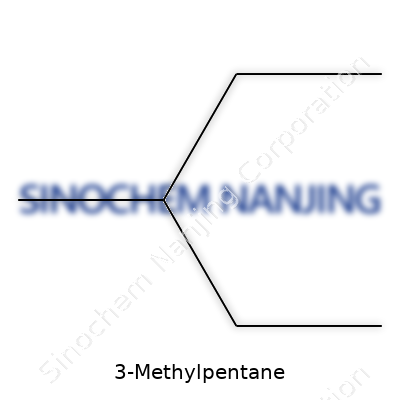
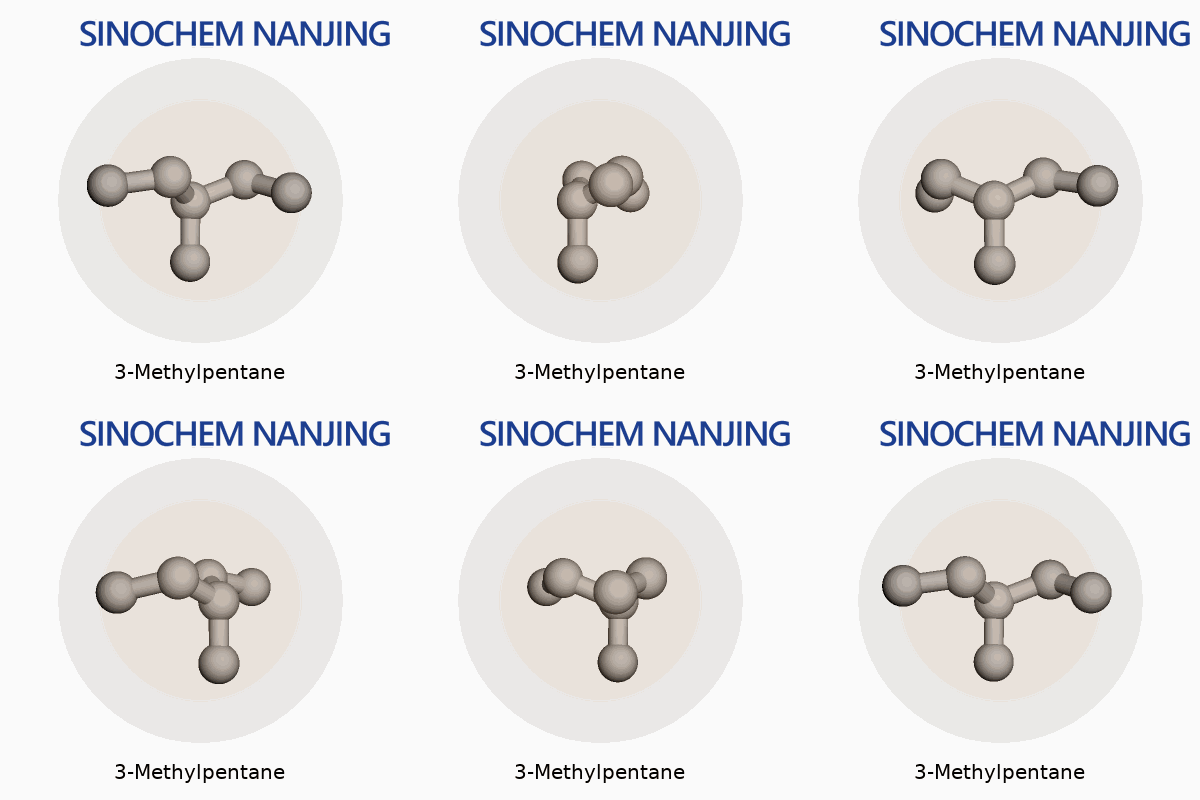
| Names | |
| Preferred IUPAC name | 3-Methylpentane |
| Other names |
Diethylmethylmethane 3-Methylpentan isohexane |
| Pronunciation | /ˈθriːˈmɛθ.ɪlˌpɛnˌteɪn/ |
| Identifiers | |
| CAS Number | 96-14-0 |
| Beilstein Reference | 1845133 |
| ChEBI | CHEBI:88374 |
| ChEMBL | CHEMBL141472 |
| ChemSpider | 6968 |
| DrugBank | DB14074 |
| ECHA InfoCard | echa-infoCard-100.006.931 |
| EC Number | 214-625-2 |
| Gmelin Reference | 58840 |
| KEGG | C08386 |
| MeSH | D019371 |
| PubChem CID | 11218 |
| RTECS number | SK4950000 |
| UNII | ZD089T78XG |
| UN number | UN1265 |
| Properties | |
| Chemical formula | C6H14 |
| Molar mass | 86.18 g/mol |
| Appearance | Colorless liquid |
| Odor | gasoline-like |
| Density | 0.653 g/mL at 25 °C (lit.) |
| Solubility in water | insoluble |
| log P | 2.92 |
| Vapor pressure | 5.09 kPa (at 20 °C) |
| Acidity (pKa) | 16 |
| Basicity (pKb) | – |
| Magnetic susceptibility (χ) | -8.0×10⁻⁶ |
| Refractive index (nD) | 1.387 |
| Viscosity | 0.420 mPa·s |
| Dipole moment | 0.13 D |
| Thermochemistry | |
| Std molar entropy (S⦵298) | 322.2 J·mol⁻¹·K⁻¹ |
| Std enthalpy of formation (ΔfH⦵298) | -167.0 kJ/mol |
| Std enthalpy of combustion (ΔcH⦵298) | -4163.9 kJ/mol |
| Pharmacology | |
| ATC code | V03AB36 |
| Hazards | |
| GHS labelling | GHS02, GHS07 |
| Pictograms | GHS02,GHS07 |
| Signal word | Warning |
| Hazard statements | H225, H304, H315, H336, H411 |
| Precautionary statements | P210, P233, P240, P241, P242, P243, P261, P271, P301+P310, P303+P361+P353, P304+P340, P331, P370+P378, P403+P235, P405, P501 |
| NFPA 704 (fire diamond) | 1-3-0 |
| Flash point | “-18 °C” |
| Autoignition temperature | 232 °C |
| Explosive limits | 1.1% - 7% |
| Lethal dose or concentration | LD50 oral, rat: 15 g/kg |
| LD50 (median dose) | LD50 (median dose): Oral rat 15 000 mg/kg |
| NIOSH | NIOSH: SK9275000 |
| PEL (Permissible) | 500 ppm (1800 mg/m3) |
| REL (Recommended) | 5,000 |
| IDLH (Immediate danger) | 1500 ppm |
| Related compounds | |
| Related compounds |
Isohexane n-Hexane 2-Methylpentane 2,3-Dimethylbutane 2,2-Dimethylbutane |



