3-Methylaniline: A Chemist’s Perspective Through Fact and Experience
Historical Development
People have been tinkering with aniline and its derivatives for generations, long before the era of digital labs and automated reactors. 3-Methylaniline came into the picture in the later stages of the 19th century, built off the backbone of aniline chemistry that started with the dye industry. The vivid purple of mauveine changed the world, but as researchers realized the versatility of aromatic amines, methylated versions like 3-Methylaniline found their way out of curiosity and into synthetic utility. Early chemists sometimes learned the hard way about toxicity and reactivity with bare hands or crude glassware, often by trial and error. These stories—sometimes cautionary, often inspiring—set the stage for how the molecule entered industry as both a tool and a challenge.
Product Overview
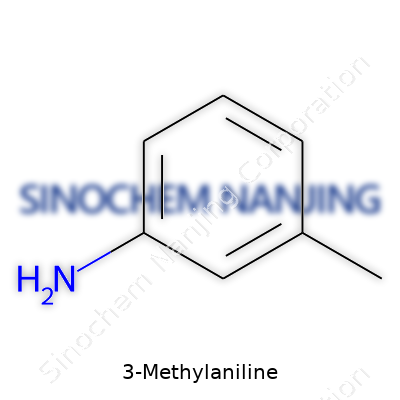
3-Methylaniline, known in labs as meta-toluidine or m-toluidine, looks pretty unremarkable as a colorless to pale yellow oily liquid, but its real action happens in synthesis. Its structure—a benzene ring with a methyl group at the third position and an amino group at the first—allows chemists to use it as a building block for dyes, pesticides, and pharmaceuticals. Its recognizable sharp, fishy odor and its place on most chemists’ shelves show how common it is in organic synthesis. Large-scale users, from dye makers to agrochemical producers, have relied on it for its reactivity and affordability.
Physical & Chemical Properties
With a boiling point that climbs just over 200°C and a melting point below room temperature, 3-Methylaniline stays liquid under most lab conditions. Its molecular formula C7H9N gives it enough volatility for vapor exposure to become a safety concern. In water, its solubility suffices for environmental worries but not enough to make it a convenient aqueous reagent. From experience, spill a bit and the smell tells you instantly what you’re dealing with. The aromatic nature allows for a range of reactions—nitration, sulfonation, and coupling—while the amine function opens doors for acylation and diazotization.
Technical Specifications & Labeling
Most bottles remain clearly labeled with hazard diamonds—flammable, harmful on skin, and toxic to aquatic life. Concentrations in industrial products often vary by intended use, but the chemistry always centers on the same meta-toluidine backbone. Documentation from reputable suppliers leans on CAS Number 108-44-1, which really matters when you’re cross-referencing regulatory documents. This sort of clear, practical labeling keeps lab researchers, process engineers, and safety officers on the same page.
Preparation Method
Most industrial routes for meta-toluidine start with toluene. Nitration forms the nitrotoluene isomer mix, and skilled process control separates the meta from ortho and para before catalytic reduction forms 3-Methylaniline. Experience in production settings shows that minor tweaks in temperature, catalyst selection, and work-up can shift yields and purity. Waste from these processes, especially acidic wash liquors, signals a need for responsible management to keep regulatory bodies at bay. Around the world, the manufacturing process often gets fine-tuned for local feedstock availability and waste treatment infrastructure.
Chemical Reactions & Modifications
Take meta-toluidine into the lab and its uses stretch for miles. Acylation turns it into amides, useful for further tailoring biological or dye activity. Sulfonation paves the route to many specialty dyes that color textiles with grit and resistance. Diazotization unlocks the azo chemistry beloved by the dye industry and analytical chemists. Each reaction offers its own quirks: diazotization of meta-toluidine, for example, runs smoother with careful pH control, or else reaction yield plummets and byproducts pile up. Methylated amines like this feature in coupling reactions all over the pharmaceutical landscape, especially in early-stage synthetic development.
Synonyms & Product Names
Ask different chemists and you’ll hear the names meta-toluidine, 3-aminotoluene, 3-methylbenzenamine, or even some more obscure names in old text—historical references sometimes call it meta-amidotoluene. These names stem from how folks approach IUPAC rules, but the structure always stays the same. Familiarity with these synonyms makes literature searches and procurement less frustrating, especially when systems use different standards to catalog chemicals.
Safety & Operational Standards
No one approaches 3-Methylaniline without gloves and a fume hood. Liquid contact can burn, and inhaled vapors trigger headaches and worse. The compound made OSHA’s hazardous chemical list for good reason. Regulations on storage mark it as a flammable and toxic substance. Labs rely on tightly controlled inventory and regular safety training. Many universities and companies insist on lock-and-key systems for chemicals like this, and they set low exposure limits not just to please inspectors, but to keep people healthy for the long haul. Disposal rarely happens without consulting hazardous waste teams or reviewing local environmental regulations.
Application Area
Meta-toluidine matters most where dyes start—in the base chemistry for azo and other colorants. Textile and leather industries use it to mix a spectrum of hues that last through years of wear and washing. In crop protection, 3-Methylaniline helps synthesize phenylurea herbicides and sometimes pesticides, feeding the agricultural supply chain. Pharmaceutical chemists use it for intermediate steps toward antihypertensives and antimicrobials. Some specialty polymers and fine chemicals demand such methylated amine backbones when specific structural features support performance or regulatory clearance.
Research & Development
Development teams keep pushing 3-Methylaniline chemistry into greener and safer territory. Fine control over nitration and reduction cuts side products and lowers environmental fallout. Automated reactors and better analytics allow R&D labs to model reactions and predict hazards before scaling up. Academic labs seek cheaper and gentler ways to functionalize the methyl-amino ring, chasing higher yields with less toxic reagents. Personal experience in startup environments shows that small teams gravitate toward meta-toluidine when standard anilines fall short in target molecule design—screening tens or hundreds of derivatives in structure-activity studies.
Toxicity Research
Toxicologists pay attention to all toluidine isomers, but meta-toluidine’s profile brings persistent concern. Studies show it causes problems with blood cells, notably forming methemoglobin and contributing to anemia if handled carelessly. Chronic exposure links to liver and kidney damage. Environmental scientists flag its persistence and toxicity to fish and aquatic invertebrates. Long-term exposure studies in the workplace direct regulatory bodies such as NIOSH and ACGIH, which publish conservative exposure limits based on cancer, reproductive, and systemic risks. Wastewater treatment and air emissions monitoring form a key focus in ongoing research to reduce public and occupational health risks.
Future Prospects
People keep looking for better synthesis pathways that cut waste and boost safety, especially as regulations tighten across continents. Synthetic advances may soon use biocatalysts or new green chemistry routes, aiming to melt the traditional image of hazardous aromatic amines. As automation and process sensors grow more common, incidents tied to human error drop, which means safer products and workplaces. Upstream users in pharmaceuticals and agrochemicals chase next-generation compounds based on structural tweaks to 3-Methylaniline—often seeking greater selectivity and lower toxicity. Expansion in the range of materials and applications will likely follow, subject to how chemists, regulators, and manufacturers work together to manage both the risks and the rewards inherent in a powerful, multifaceted chemical like meta-toluidine.
What is 3-Methylaniline used for?
Looking Closer at a Useful Chemical
3-Methylaniline, often called m-toluidine, shows up across industries I didn’t expect. I remember noticing the strange, almost sweet odor when I worked part-time at a resin plant in college. The production manager explained that small aromatic amines like this one help form some of the toughest polymers we take for granted. Back then, I had no idea how far its reach might extend.
Industrial Chemistry: The Bedrock of Everyday Items
Factories use 3-methylaniline as a starting block for making dyes, pigments, and other chemicals. I saw some batches destined for a company coloring everything from blue jeans to plastic water bottles. Aniline dyes don’t always get the spotlight, but they changed how people decorate fabrics and plastics. The chemical’s structure lets it attach well to these products, creating deep, lasting colors.
Pesticide makers value this compound as a core ingredient too. By attaching new chemical groups to the amine, they can tweak how the final pesticides protect crops or break down in soil. Regulators in the United States and Europe expect proof that these chemicals do more good than harm, but growing food for billions of people means pest control for both small farmers and huge agribusinesses.
Pharmaceutical labs sometimes tap 3-methylaniline for building blocks in pain relief, antihistamines, and anti-infective drugs. Creativity starts at the molecular level, where small changes to a starting chemical’s structure make new medicines possible. For researchers, these simple aromatic amines open the door to new treatments that help where old drugs come up short.
Risks and Realities: What It Means for Health and Safety
3-Methylaniline helps fuel manufacturing, but handling it takes real care. In the plant, workers wore gloves and kept the workspace well ventilated. According to the U.S. Environmental Protection Agency, this chemical can irritate skin and eyes and pose bigger dangers if inhaled or swallowed. Long-term contact may affect blood cell production.
Consumer products rarely contain much of it, if any at all, since most of the substance gets transformed during production steps. Still, accidents and improper storage raise the risk of workplace exposure or environmental spills. That’s why industries rely on strict safety protocols, air quality checks, and regular worker training. It isn’t a risk-free material, but responsible use keeps people and communities safer.
Moving Forward: Room for Safer Alternatives
Some research centers look for substitute chemicals that give the same industrial benefits with less hazard. Biobased dye and pesticide precursors, for example, attract attention in green chemistry circles. Facilities using 3-methylaniline have started switching out old practices for cleaner ones, recycling solvent waste, and limiting run-off. Regulators play their part by keeping up with the latest science and reviewing safety rules.
I’ve watched companies combine tradition with new approaches. Change starts with honest conversations about risk and necessity. As labs discover alternatives and rules keep evolving, 3-methylaniline’s story will keep unfolding. Its presence in industry reminds me that even small chemical ingredients can have big impacts that ripple through daily life.
Is 3-Methylaniline hazardous or toxic?
Looking at What 3-Methylaniline Is
3-Methylaniline, sometimes called meta-toluidine, pops up in stories about chemical hazards. Chemists and workers in manufacturing hit this chemical during the handling and making of dyes, pigments, and even rubber products. The conversation about risk stands tall for any substance that can wind up in the lab, factory, or even the air around us.
Health Risks and Exposure
3-Methylaniline draws concern partly because it acts as an aromatic amine. My years around industrial safety reports have shown aromatic amines often mean business regarding health effects. Direct skin contact can lead to irritation. A splash in the eye? It can pack a punch, causing discomfort and possible damage. Breathing in vapor in a poorly ventilated room, or spending time around open vats in warm conditions, leads to headaches, dizziness, and even a feeling of confusion.
The bigger cloud hanging over this chemical involves its potential for long-term issues. Studies, especially those coming out of industrial hygiene circles and toxicology research, tell us that squaring off with this substance day in, day out, links closely to effects on the blood. Methemoglobinemia—where the blood can’t carry oxygen as well as it should—sometimes crops up. This isn’t a risk to take lightly. Staff in production facilities have been hospitalized after significant exposure, with symptoms ranging from cyanosis (bluish skin) to rapid heartbeat and weakness.
Concerns about cancer creep in, too. Regulatory agencies, including the Environmental Protection Agency (EPA) and the International Agency for Research on Cancer (IARC), keep their focus on aromatic amines as a class. While the data on 3-Methylaniline itself lags behind the better-studied cousins like aniline and o-toluidine, animal studies drop hints about links to tumors after long-term, high-level exposure. That means extra vigilance isn't just a nice option—it's a must for any workplace or community near a manufacturing site discharging these chemicals.
Environmental Hazards
3-Methylaniline doesn’t just vanish after use. Wastewater, accidental spills, and poor disposal lead to pollution in soil and streams. The compound doesn’t break down quickly in the environment, so a little goes a long way in causing harm to aquatic life and even plants. Fish and small aquatic creatures can suffer from similar blood issues as people—low oxygen transport, confusion, and eventual death if concentrations spike. My conversations with environmental engineers always circle back to this: controlling chemical waste at the source does more good than cleanup efforts ever could after contamination happens.
Prevention and Safer Practice
Having worked behind the scenes in workplace safety, the lesson that sticks with me: personal protective equipment (PPE) isn’t just an annoying formality. Gloves, splash goggles, and local exhaust ventilation shave down risk drastically. Training isn’t optional either. Workers deserve to know what’s in whatever barrel or drum they’re moving. I’ve seen the difference solid safety training can make—lower accident rates, fewer missed days, and peace of mind on the job.
Regulators recommend substituting less-toxic chemicals wherever possible, setting exposure limits, and monitoring air quality. Sometimes older sites need upgrades in both equipment and safety culture. Communities benefit when emergency services and factories talk openly and regularly about chemical inventories and disaster planning. No one enjoys hearing about chemical leaks or fires because that usually means rules or training fell short.
Balancing Progress With Responsibility
The technology and products we use often ride on the shoulders of chemicals like 3-Methylaniline. That doesn’t mean shortcuts are okay. The safety data, direct stories from the workplace, and environmental risks all point the same way: treat this chemical with respect, keep exposure to a minimum, and invest in safety both at work and in the neighborhood. That’s the responsible route—one that supports both progress and people’s well-being.
What is the chemical formula and structure of 3-Methylaniline?
The Nuts and Bolts
Grab any entry-level textbook on organic chemistry, and you’ll meet a group of chemicals called aromatic amines. 3-Methylaniline is one of them, and its chemical formula is C7H9N. Some folks call it meta-toluidine, since a methyl group replaces a hydrogen on the benzene ring at the “meta” position relative to the amino group.
Take a blank sheet and sketch a benzene ring. Place an amino group (NH2) at position 1, then slide a methyl group (CH3) over to position 3. You now have 3-methylaniline. This set-up gives the molecule a strong odor, a clear to yellowish liquid form at room temperature, and some serious applications—including dyes and agricultural chemicals.
A Closer Look at the Structure
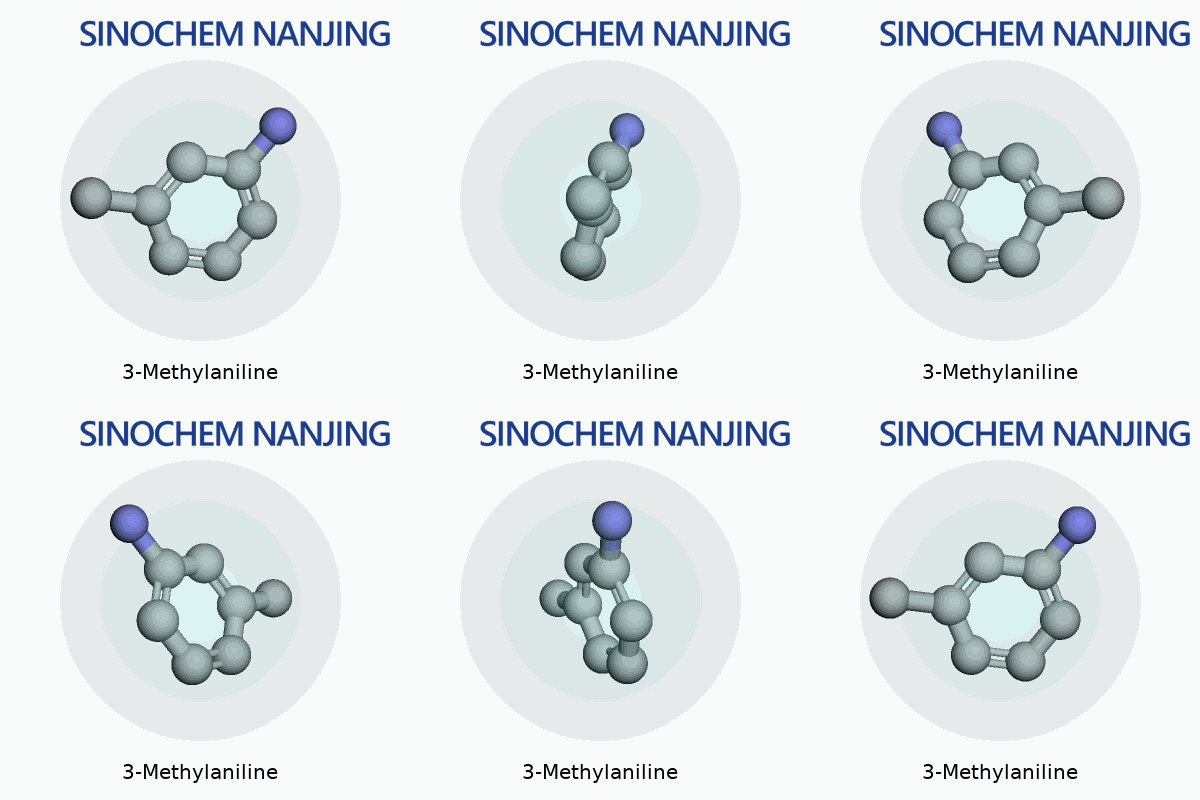
The way atoms attach affects everything from how a molecule smells to how useful it is in real-world products. In 3-methylaniline, the amino group can take part in hydrogen bonding, nudging up its reactivity. The methyl group, a small lump of carbon and hydrogen, influences electron distribution on the ring. Compared to the other two isomers (2-methylaniline and 4-methylaniline), shifting this group to the third spot changes the molecule’s properties in subtle ways, altering both its behavior in chemical reactions and its environmental fate.
Why Chemistry Students and Industry Pay Attention
People use 3-methylaniline on the factory floor, not just the classroom. It acts as a starting point for azo dyes, which color fabric and inks. Its reactivity lets chemists build larger, more complex molecules. It’s also a middleman in pharmaceuticals and even rubber manufacturing. At my own university’s lab, we run reactions with aniline derivatives because their reactivity unlocks so many possibilities—it’s like tinkering with a customizable tool where tiny atom shifts mean new properties for the final material.
Every time you dye a cotton shirt bright pink or hold a colored children’s book, you’re touching the handiwork of chemicals like 3-methylaniline. According to the Environmental Protection Agency, over 2.5 million pounds of substituted anilines—including the meta form—move through plants every year in the United States alone. Getting the chemistry right here supports not only vibrant colors but lasting performance and safety.
Health and Environmental Issues
An aromatic amine in your T-shirt might sound scary, especially after folks raised concerns about certain chemicals in dyes and plastics. 3-Methylaniline brings risks, as do many industrial ingredients. The American Chemistry Council recognizes its toxicity if swallowed or inhaled at high levels. In the lab, we wear gloves and train on ventilation systems. Long-term environmental build-up matters, since certain aromatic amines can break down into products that stick around in water or soil. Some research ties exposure to worker health problems—cancer risk, for example—so chemical manufacturers must follow rules on handling and disposal. That’s no academic exercise when workers’ lives hang in the balance.
Solutions for Safer Use
Mitigating risk starts with full disclosure. Manufacturers label containers, track shipments, and require safety sheets. The industry shifts toward better effluent treatment to catch and break down waste. Closed-loop production cuts down on leaks and exposure. And new green chemistry approaches push for less-harmful substitutes in dye production. Regulatory oversight, from REACH in the EU to TSCA in the US, tightens standards every year. Some textile brands now demand suppliers prove cleaner sourcing—good news for environmentally minded shoppers.
Without a solid handle on 3-methylaniline’s formula and structure, industry loses its way in making safe, high-quality products. With it, chemistry can keep inventing the next breakthrough—responsibly.
How should 3-Methylaniline be stored and handled?
Why Taking Precautions with Chemicals Pays Off
Growing up, my uncle ran a small painting business. The back room always smelled sharp, full of cans and containers marked with warning labels. As a teenager, I'd help sort supplies, always with a healthy dose of fear for anything I couldn't pronounce. Fast forward a few years, and names like 3-Methylaniline crop up in the news—mostly after something has gone wrong. You don't need a Ph.D. in chemistry to realize that chemical safety, especially with toxic organics, lands squarely on the shoulders of anyone using them. Taking shortcuts in storage or handling doesn't just risk fines—it endangers real lives.
Understanding the Risks
3-Methylaniline, also called meta-Toluidine, serves as a raw material in dyes and pigments. If the name hadn't crossed your path yet, trust me: it packs a punch. Chronic exposure attacks the liver, blood, and central nervous system, and even short contact can trigger rashes or something nastier. Fumes stick around and easily ignite. This isn't the type of thing you want to spill in your shop or leave uncapped in a hot garage.
Safe Storage: No Room for Complacency
The basics remain the same as for any hazardous chemical—store it in a cool, well-ventilated place, far from sunlight and flame. What people sometimes overlook is the container. You want tight-sealing bottles made from glass or high-quality plastic, since metal can react and degrade. Forget reusing food jars or stashing cans near oily rags. Dedicated storage cabinets rated for flammables make a huge difference. I remember a local lab nearly going up in smoke because leftover solvent sat near a space heater; only luck saved the day. There’s no substitute for planning ahead and keeping incompatible chemicals apart.
Handling: Stay Alert, Gear Up
The right personal protection is non-negotiable. Lab coat, chemical-resistant gloves, and splash-proof goggles beat wishful thinking every time. Spills happen faster than expected, and skin contact brings trouble. Proper ventilation cuts down on vapor risks—never work with volatile chemicals in a closed room. My friend learned this lesson after nausea sent him home, all because he skipped using the fume hood "just for a minute." Don't count on opening a window; fume hoods actually draw toxic air away.
I’ve seen an alarming number of folks treating unused chemicals as afterthoughts. The reality? Good recordkeeping helps you spot old, degraded stock before it splits or leaks. Cleanup kits, including absorbent pads and neutralizers, stay ready by the bench. Teach new hands what to do if something goes wrong, not just what to avoid. Emergency showers, eyewash stations, and clear labels on bottles pay for themselves. Even if you’re working out of a garage, these steps save costly mistakes and hospital visits.
Staying Ahead
Regulations aren’t just hoops to jump through. They reflect lessons written in blood and lawsuits. Consulting resources like the NIOSH Pocket Guide or OSHA chemical hazard standards makes common sense, not just compliance. Local disposal rules stop chemicals from ending up down the drain or in the trash, polluting groundwater or harming wildlife. Seeing the long view means thinking like a neighbor, not just a technician.
If you inherit a drum of 3-Methylaniline or consider using it in production, resist treating the job as routine. Safety doesn’t happen by accident—someone, somewhere, cares enough to sweat the details. That’s how you keep yourself and your community out of tomorrow’s headlines.
What are the safety precautions for working with 3-Methylaniline?
A Chemical With Teeth
3-Methylaniline, a colorless to yellowish liquid, has a sharp scent and an edge that’s hard to ignore. Anyone who has handled aromatic amines knows their dangers don’t always shout—with this group, a few droplets on skin or a whiff in the air can leave lasting impacts. I once got a mild skin rash after a tiny splash, so extra care is not just a formality.
Respect What’s in the Bottle
The real risk with 3-methylaniline is how easily it slips past weak precautions. Your skin is a doorway. The fumes carry toxicity fast, causing dizziness, headaches, and even long-term organ damage. Inhaling a puff or spilling on exposed hands can hurt far more than many everyday chemicals.
Personal Protective Gear: Non-Negotiable
Turning up to work without gear means rolling the dice. Lab coats offer some barrier, but nitrile or neoprene gloves hold strong against aromatic amines much better than latex. Don’t rely on safety glasses; splash-proof goggles seal out vapors and spray. If the job produces mist or fumes—pouring, heating, or stirring—use a half-face respirator with organic vapor filters. My old mentor insisted on shoe covers and full-length trousers. He fought for those standards after a coworker landed in the hospital from a chemical burn near the ankle. That lesson stuck with me.
Ventilation Shifts the Odds
Fume hoods make a massive difference. Open benches are not safe against volatile liquids like 3-methylaniline. Older buildings may have weak air handling, so you should test airflow with a smoke tube or tissue strip above the sash. If the draw is weak, don’t start work—go above the comfort zone and talk to facilities until you trust the air handling. It’s not being difficult—it’s refusing to gamble your lungs.
Storage and Handling: Problems Start With Complacency
It’s not just about securing lids and labeling bottles neatly. Storage cabinets need acid/solvent compatibility and have to stay outside high-traffic areas. Some labs organize chemicals alphabetically, but grouping by hazard keeps incompatible materials apart. Spills can sabotage nearby containers, setting off fires or releasing poison gas if flammables and oxidizers sit side by side. Spill kits are more than a bucket with sand—they need absorbent pads, neutralizer, and a clear plan for disposal. I’ve seen cleanup attempts go wrong because someone grabbed a random shop rag instead of the kit on the wall. Planning beats improvising every time.
Chemical Disposal: Keep It Strict
Pipes and drains don’t handle aromatic amines safely. Local regulations ban pouring them away or tossing them in normal trash. This chemical demands a hazardous waste bin, with accurate labeling and a sealed vessel. I once watched a newcomer try to rinse out glassware, unaware of how quickly the chemical would travel down pipes and threaten the environment. Even tiny spills add up in waste streams—tracking every milliliter protects water and soil well beyond the lab.
Training and Emergency Readiness
Hands-on training changes attitudes more than a forgotten PowerPoint. Practice with mock spills, unseal a chemical bottle in a safe demo, and quiz each other on emergency showers and eyewash locations. Trust between coworkers grows when everyone knows how to get help fast, and nobody wants those few seconds of blind panic if something goes wrong. Experience counts double during a crisis; that’s worth building every day.
| Names | |
| Preferred IUPAC name | 3-Methylaniline |
| Other names |
m-Toluidine 3-Aminotoluene 3-Methylbenzenamine m-Methylaniline |
| Pronunciation | /ˈθriːˈmɛθɪlˌǽnɪliːn/ |
| Identifiers | |
| CAS Number | 100-61-8 |
| 3D model (JSmol) | `3d7(8)ccccc8N` |
| Beilstein Reference | 1209240 |
| ChEBI | CHEBI:28485 |
| ChEMBL | CHEMBL14222 |
| ChemSpider | 7007 |
| DrugBank | DB14266 |
| ECHA InfoCard | 100.058.320 |
| EC Number | 202-440-0 |
| Gmelin Reference | 82273 |
| KEGG | C01586 |
| MeSH | D021063 |
| PubChem CID | 8650 |
| RTECS number | BY4300000 |
| UNII | 9Q86I1G38Z |
| UN number | UN2285 |
| Properties | |
| Chemical formula | C7H9N |
| Molar mass | 121.18 g/mol |
| Appearance | Colorless to pale yellow liquid |
| Odor | Aromatic amine-like |
| Density | 1.008 g/mL at 25 °C (lit.) |
| Solubility in water | slightly soluble |
| log P | 1.82 |
| Vapor pressure | 0.46 mmHg (at 25 °C) |
| Acidity (pKa) | 4.27 |
| Basicity (pKb) | 3.85 |
| Magnetic susceptibility (χ) | -77.5·10⁻⁶ cm³/mol |
| Refractive index (nD) | 1.601 |
| Viscosity | 1.05 mPa·s (25 °C) |
| Dipole moment | 1.61 D |
| Thermochemistry | |
| Std molar entropy (S⦵298) | 163.3 J·mol⁻¹·K⁻¹ |
| Std enthalpy of formation (ΔfH⦵298) | 91.8 kJ/mol |
| Std enthalpy of combustion (ΔcH⦵298) | -3547.0 kJ/mol |
| Hazards | |
| Main hazards | Toxic if swallowed, in contact with skin or if inhaled; causes damage to organs; harmful to aquatic life with long lasting effects. |
| GHS labelling | GHS02, GHS07 |
| Pictograms | GHS07, GHS08 |
| Signal word | Danger |
| Hazard statements | H301, H311, H331, H315, H319, H317, H411 |
| Precautionary statements | P260, P280, P302+P352, P305+P351+P338, P310 |
| NFPA 704 (fire diamond) | 2-2-0 |
| Flash point | 84 °C |
| Autoignition temperature | 535°C |
| Explosive limits | 1.3% - 7.0% |
| Lethal dose or concentration | LD50 oral rat 1750 mg/kg |
| LD50 (median dose) | LD50 (median dose): Oral rat LD50 = 1750 mg/kg |
| NIOSH | KNF41580 |
| PEL (Permissible) | PEL: 2 ppm (skin) |
| REL (Recommended) | REL: 2 ppm (8 mg/m³) |
| IDLH (Immediate danger) | 50 ppm |
| Related compounds | |
| Related compounds |
Aniline 2-Methylaniline 4-Methylaniline N-Methylaniline Methylenedianiline |



