3-Fluoroaniline: A Commentary on Its Journey and Impact
Historical Development
Chemistry tells a story far richer than formulas and reactions on a lab bench. 3-Fluoroaniline serves as an example of a niche but influential player in synthetic organic chemistry. Early organic chemists lingered over anilines and their derivatives, exploring their potential for dyes and pharmaceuticals. The introduction of fluorine into the aniline scaffold—especially at the meta position—emerged out of both curiosity and necessity. With each breakthrough in halogenation and aromatic substitution, researchers found ways to introduce fluoride atoms effectively, despite their notorious reactivity. Fluorinated anilines, especially 3-fluoroaniline, offered not just a new molecule but promises for better bioactivity, improved stability, and unique reactivity that other halogens failed to deliver. The industrial boom brought larger scales and purer batches, but it grew on an old foundation: a community of chemists pushing for molecules that do more, last longer, and open fresh paths in science and industry.
Product Overview
3-Fluoroaniline is not a household name, but it holds a certain respect behind lab doors and in the pages of medicinal chemistry journals. It's an aromatic amine, a direct descendent of aniline where a single hydrogen gives way to fluorine at the meta position. This tweak might sound minor, but it dramatically changes how the molecule behaves, especially in drug discovery and materials chemistry. Companies now recognize its value as a starting material for custom molecules—a cornerstone for researchers who want to introduce a little bit of fluorine magic without upending the rest of their synthetic route.
Physical & Chemical Properties
3-Fluoroaniline exists as a colorless to pale yellow liquid at room temperature, giving off a sharp, sometimes fishy odor typical of anilines. Its melting point sits below room temperature, so refrigeration is not usually needed for handling, and its boiling point allows straightforward distillation for purification. Fluorine's presence accentuates the molecule’s stability in oxidative environments and slightly shifts both electron density and bonding. This means extra resilience in synthesis and more defined behavior during chromatography. It stands out for modest solubility in water but mixes easily with most organic solvents like ether, acetone, or alcohols. In the lab, these features pave the way for broader handling options and fewer headaches during isolation.
Technical Specifications & Labeling
Unlike bulk commodities, specialty chemicals like 3-fluoroaniline get attention to purity and consistency rather than just volume. The typical product reaches purities above 98%, often listed as such on commercial bottles. Labels highlight not just chemical identity and concentration, but clear warnings reflecting toxicity. Certified reference materials take on added importance in fields like analytical chemistry, where even a trace impurity can skew results. Beyond numbers, technical documentation tends to focus on ensuring users know both the value and the risks—a philosophy rooted in decades of both triumphs and accidents across the chemical industry.
Preparation Method
Industries and research labs usually craft 3-fluoroaniline through selective halogenation and reduction routes. One favored route starts with 3-fluoronitrobenzene produced by fluorinating nitrobenzene, either through electrophilic substitution using fluorinating agents or through Balz-Schiemann-type diazotization followed by thermal decomposition. The nitro group is then reduced, typically with catalytic hydrogenation or iron/acid reduction, resulting in the amine. Alternative strategies involve nucleophilic aromatic substitution or transition-metal catalysis for direct C-F bond introduction—a testament to the relentless innovation in synthetic chemistry. Sourcing the right starting materials and optimizing conditions can have a huge effect on environmental footprint and cost, so serious thought goes into each method, especially as scale increases.
Chemical Reactions & Modifications
Anyone who’s watched anilines transform in reaction schemes knows their versatility, and 3-fluoroaniline doesn’t disappoint. The amine group readily forms bonds with acyl, sulfonyl, or alkylating agents, spinning out an array of amides, sulfonamides, and secondary amines. Fluorine brings extra intrigue; it tweaks both reactivity and biological affinity—a valuable trait in medicinal and agrochemical projects. 3-Fluoroaniline can play a leading role in cross-coupling reactions, letting chemists build more complex architectures without scrambling to protect or deprotect every functional group. Its structure holds steady during aromatic substitutions, yet responds well to modern palladium-catalyzed couplings. That versatility keeps it high on the list of building blocks for synthesizing active pharmaceutical ingredients, specialty dyes, and probe molecules.
Synonyms & Product Names
Trade often prefers shorthand over IUPAC formality. Researchers run into 3-fluoroaniline listed as m-fluoroaniline, meta-fluoroaniline, and 3-FA. Catalogs and reference books frequently use these names interchangeably. There’s little room for confusion compared to other anilines, but vigilance is necessary, given the breadth of similar derivatives that clutter commercial lists. It pays to check CAS numbers or standardized names before making that purchase—chemists know from bitter experience how a simple mix-up can stall a whole project.
Safety & Operational Standards
Every chemist who’s handled aromatic amines treats them with respect for a reason. 3-Fluoroaniline brings its own safety challenges, combining the usual hazards of anilines—acute toxicity and potential for skin or respiratory irritation—with fluorine’s unpredictable punch. Inhalation, ingestion, or skin contact can cause both acute and longer-term health effects, from methemoglobinemia to organ stress. Good practice means gloves, goggles, and a working fume hood, no matter how rushed the experiment. Laboratories regularly review procedures, from storage in tightly sealed glass or PTFE containers to protocols for spills and waste. Safety training sticks better with real examples, so chemists swap stories of close calls. Regulations lay down the law, but personal experience and respect for colleagues raise the standard further. Companies invest in engineering controls and exhaust management, knowing that prevention always beats regret in chemical safety.
Application Area
The impact of 3-fluoroaniline shows up across a surprising range of industries. Medicinal chemists lean heavily on its structure building everything from anticancer agents to antidepressants, exploiting fluorine’s knack for improving metabolic stability and modulating biological pathways. Outside pharma, it finds a home in agrochemical development—herbicides, fungicides, and pest control—where tailored aniline derivatives drive performance and selectivity. Material scientists turn to it when they need specialty coatings or polymers with altered electronic properties, banking on fluorine to tweak everything from conductivity to resistance against degradation. Research institutions, from academia to national labs, favor it for synthetic methodology studies, using it as a model substrate or a component in new reaction discovery.
Research & Development
Progress in 3-fluoroaniline research moves swiftly. Advances in synthetic methodology let scientists install fluorine at the meta position with fewer steps, fewer byproducts, and reduced energy input. Teams working in computational chemistry study the molecule’s electronic structure, correlating subtle changes in reactivity and predicting new transformations. Drug hunters track how this seemingly minor change in the aniline skeleton alters pharmacokinetics, with several research-grade molecules in preclinical studies showing better selectivity or metabolic profiles than their non-fluorinated cousins. There’s growing interest in green chemistry solutions, with researchers optimizing routes for higher atom economy or safer waste profiles. Scientific meetings and journal editors spotlight these successes, fueling more collaboration between academic, industrial, and regulatory groups.
Toxicity Research
Toxicology labs keep a close eye on 3-fluoroaniline, driven by its potential for both industrial exposure and environmental release. Animal studies reveal acute and chronic toxicity, mostly stemming from its ability to generate methemoglobin—a hemoglobin form that can’t transport oxygen efficiently. Sub-chronic exposure models flag concerns for liver and kidney function, consistent with many aromatic amines. Regulators pay attention: workplace exposure limits get revised as new data comes in, and environmental guidelines reflect its persistence and predicted breakdown pathways. Scientists also look for patterns in bioaccumulation, knowing that a molecule that survives in soil or water can find its way up the food chain.
Future Prospects
Looking forward, 3-fluoroaniline stands as more than just another specialty chemical. The march of fluorinated pharmaceuticals and crop protection agents suggests its demand will only grow, especially as synthetic chemistry tools become sharper and more sustainable. Emerging fields—personalized medicine, stimuli-responsive materials, targeted imaging—put a premium on molecular tweaks that bridge performance and safety. Synthetic chemists aren’t done finding new ways to modify the molecule, chasing both efficiency and greener processes. The biggest impact may yet arrive through cross-disciplinary work, where researchers from toxicology, process engineering, and life sciences join forces. With stricter safety rules and consumer expectations rising, every manufacturer and researcher has a part to play in keeping progress both responsible and inspired.
What is 3-Fluoroaniline used for?
Inside Chemical Manufacturing
3-Fluoroaniline sounds like it belongs in a high-level chemistry textbook, but it actually plays a big role in how a lot of everyday products come together. I’ve seen this type of compound called an “intermediate.” In plain terms, it acts as a building block for making other chemicals, which eventually turn into products with commercial value.
You’ll find 3-Fluoroaniline showing up mostly in the pharmaceutical world. Chemists rely on it when they piece together complex drug molecules, mainly because those fluorine atoms can help medicine stay stable in the body. This means longer shelf life, steadier effects, and a better chance for the drug to do what doctors need. Drug pipelines don’t function without a solid cast of reliable chemicals like this one in the background.
Beyond the Medicine Cabinet
Agriculture takes a pretty big slice of the pie, too. Pesticides owe some of their effectiveness to 3-Fluoroaniline. The compound brings a certain property that helps crop chemicals stick around long enough on leaves for the bugs to take notice. This isn’t just about protecting crops; it’s quietly shaping yields and affecting what food actually makes it to our plates. Living in a rural area, I’ve noticed the waves of chemical change as new crop protections roll out, and a lot of these shifts start in the lab, with compounds like this one.
The story doesn’t end there. Some dye and pigment manufacturers tap 3-Fluoroaniline to create deep, vibrant colors, which then find their way into plastics, textiles, and inks. The color in your printed T-shirt or packaging might trace its roots back to it. I remember chatting with a friend who worked in packaging design; she spent hours trying to find pigments that offered both brightness and resistance to fading, and substances in this chemical family often landed on her shortlist.
The Safety Conversation
Handling strong chemicals always carries real-world risks. 3-Fluoroaniline is no different. It can affect the blood and organs if not managed properly. Workers using it wear gloves, goggles, and protective suits, a practice I saw firsthand during a factory visit. Incidents involving chemicals like this one illustrate why workplace training and rigorous safety standards really matter—not just on paper, but out on the factory floor.
Some environmental advocates point to the persistence of fluorinated compounds, raising questions about water and soil contamination. This isn’t just theoretical. States with heavy chemical industries sometimes report traces of substances with similar structures in their groundwater. Tackling these risks starts with transparent monitoring and better waste management, both by the companies producing these chemicals and the regulators keeping watch.
Responsible Innovation
Society benefits a great deal from chemicals like 3-Fluoroaniline, but that comes with responsibility. One solution involves companies investing in research for cleaner alternatives and safe production methods. I’ve heard about new filtration technologies and smart recycling systems that trap or reuse chemical waste, and government grants have helped some of these ideas move from experiment to practice.
Bringing safer practices and transparency into chemical manufacturing doesn’t just protect workers and communities. It gives consumers a reason to trust what goes into their medicine, their food, and even the colors of the products they buy every day.
What is the chemical formula of 3-Fluoroaniline?
An Everyday Lens on Chemical Formulas
The chemical world often seems far-off from daily life, yet the details of a compound like 3-Fluoroaniline have real consequences. Its formula, C6H6FN, packs a specific arrangement that determines everything from how it behaves in the lab to its place in the pharmacy pipeline.
Putting 3-Fluoroaniline Into Perspective
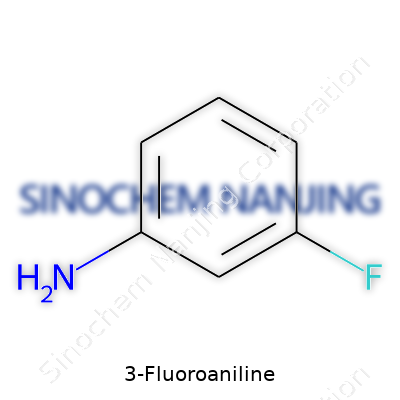
People encounter flavorings, dyes, and even cancer drugs shaped by aromatic amines like 3-Fluoroaniline. Swap out a single atom in an aromatic molecule and all bets are off: the color of a textile might last years longer; a medicine might stick to its target protein a little tighter. That’s why chemists spend their lives fussing over each element. In 3-Fluoroaniline, a fluorine atom sits on the third spot of a benzene ring, next to an amino group. That F atom gets noticed by the body in ways that bulkier atoms don’t. It’s small, highly electronegative, and influences how molecules interact with enzymes.
Why Accurate Formulas Build Trust
Getting the formula straight, C6H6FN, isn’t just chemical trivia. There’s serious science behind precision here. Fluoroaniline’s formula tells professionals about possible reactivity, environmental impact, and potential risks. Imagine ordering a specialty reagent and getting a compound with just one extra hydrogen—suddenly your experiment fails, or worse, releases a toxic byproduct. Purity and transparency matter, especially after tales of research fraud and supply chain substitutions have shaken trust in the past. Researchers and educators put time into cross-checking their sources so they don’t run into preventable hazards or waste.
Learning From Practical Experience
In my university lab days, keeping compounds organized meant chalking formulas on bottles, comparing structures, and checking for isomers. One time the wrong aniline isomer went into a project, and weeks of work vanished in a blink. This type of mess-up drives home how critical accurate formulas are, not just for publishing a paper, but for safety and repeatable results.
Responsible Use and Handling
With fluoroanilines, workplace safety depends on people taking time with labeling and inventory. Respirators and fume hoods aren’t for show: mishandled aromatic amines have toxic effects, with exposure links to organ damage and cancer. The chemical’s makeup, especially with fluorine in the mix, also changes how waste should be handled. In the right hands, these same molecules help create antibiotics or diagnostic agents—a lesson that benefit flows from understanding and respect.
Paths Toward Better Practice
Students in chemistry classrooms deserve real-world stories, not just diagrams. Opportunities to see how small changes in a formula create massive shifts in usefulness or danger light a spark of curiosity and caution. Industry can promote better transparency in shipments, including QR codes on bottles for instant digital verification, cutting down on human error. Regulators, too, hold a responsibility: pushing for tighter authentication and traceability before chemicals go public protects both workers and the environment.
Taking Chemistry Off the Page
Talking about something like 3-Fluoroaniline’s formula can sound narrow at first, yet its context touches medicine, industry, education, and safety. Getting formulas right doesn’t only fuel innovation; it guards against risk and opens the door to developments that matter in real life.
Is 3-Fluoroaniline hazardous or toxic?
A Closer Look at 3-Fluoroaniline
Working in labs brings plenty of encounters with chemicals that look harmless but are anything but safe. 3-Fluoroaniline, an aromatic amine with a fluorine atom, stands out among these. Found in research settings and the manufacture of pharmaceuticals and dyes, this compound demands careful handling. Not every chemist walking into a storage room expects serious risk from a colorless oil. People who’ve worked with anilines tend to respect them—a few spills or whiffs make that lesson clear quickly enough.
Health Risks: What Studies Reveal
Taking time to check safety data before opening a bottle of 3-Fluoroaniline isn’t just good practice, it’s non-negotiable. This chemical shares a toxic lineage with other anilines, which are known for their ability to cause methemoglobinemia. This condition makes it harder for blood to carry oxygen, leading to symptoms like headache, dizziness, and, in severe cases, bluish skin or life-threatening complications. Short exposures—through skin or inhalation—can be enough to spark such effects. NIOSH and the CDC flag 3-Fluoroaniline as a hazardous substance. Toxicity data suggests the LD50 (lethal dose for 50% of animals in studies) hovers at just a few hundred milligrams per kilogram when swallowed or absorbed. This isn’t some obscure academic figure; it means real-world accidents can turn dire quickly.
Environmental and Fire Hazards
Chemicals in this family rarely stay put if spilled. They seep into soil and can contaminate water, threatening animals and humans alike. It doesn’t help that 3-Fluoroaniline burns with toxic fumes, producing hydrogen fluoride and nitrogen oxides. Lab techs wearing full masks and gloves are following more than bureaucratic rules—they’re protecting themselves from fumes that can burn lungs or eyes. Even a fire in a waste bin can end up risking the health of everyone nearby.
Stories From the Bench
Old-timers in chemistry labs talk about one or two close calls. Even a tiny spill of 3-fluoroaniline left on a bench can vaporize and cause headaches or irritation. No one wanted to be on cleanup duty for that. Any trace on gloves meant a trip to the sink, scrubbing hands for longer than any official rulebook suggested. Its vapor can travel across a room, reaching unsuspecting colleagues. Years of lab experience have reinforced one lesson above all: no one ever regrets overdoing their safety precautions around anilines.
Building Better Chemical Safety
Clear procedures save lives. Every container carries warning labels that jump out in bold colors—danger, toxic by inhalation and skin contact. Simple steps make the biggest difference: working in a fume hood, storing it in ventilated cabinets, wearing double gloves, choosing fitted goggles over safety glasses. Training new lab members on real risks instead of brushing them off as unlikely makes the culture stronger. Having an emergency plan—eyewash stations close by and spill kits on hand—means less panic if mistakes happen. Sometimes swapping to less toxic chemicals brings better results with fewer risks, though for some research work, avoiding 3-Fluoroaniline isn’t really an option.
Why Speaking Up Matters
Ignoring these risks doesn’t help anyone. Reporting near-misses, pushing for updated training, and always double-checking labels and procedures can spare everyone from painful surprises. Staying vigilant around 3-Fluoroaniline means acknowledging that safety is both personal and collective. Every careful habit reduces chances for harm—it’s a lesson learned in every experienced lab worker’s career, worth repeating for every newcomer, too.
What are the storage conditions for 3-Fluoroaniline?
Why 3-Fluoroaniline Demands Caution in Storage
Anyone who has worked with aromatic amines knows the reality in the lab. 3-Fluoroaniline isn’t some harmless compound you can toss on any shelf. The structure looks simple, but the risks aren’t small. This material comes with both chemical and health hazards. Exposure can mess up the nervous system, and it brings the threat of irritation to skin and eyes. It isn’t only about regulations—every lab worker deserves an environment where safety is more than a checklist.
Direct Experiences Shape Safe Practice
I’ve prepared and stored chemicals like 3-Fluoroaniline during years in research labs. Lax storage caused problems more than once: from leaking bottles to accidental spills. These incidents usually happened because someone thought the general rules for chemicals would suffice. They don’t. The lessons stick with you: proper containers make a difference, and labels must be clear and obvious.
Conditions for Safe Storage
The properties of 3-Fluoroaniline push you into a mindset of prevention. This substance has a flash point around 97°C, which brings real fire risk. Vapor build-up isn’t just theoretical. Good storage always starts with temperature control—cool, stable conditions, away from heat sources. Temperatures around room level, avoiding sunlight and nearby heated machines, give reliability. Humidity needs control, too. Excess moisture can introduce unwanted reactions in many chemicals, including aromatic amines.
Containers have to be air-tight and chemically resistant. Glass does the job, but only when the lid seals fully. Polyethylene containers provide another reliable choice. Avoid metal, because impurities and corrosion can lead to dangerous reactions. Double containment, especially for larger volumes, prevents minor leaks from turning into major events. Store 3-Fluoroaniline apart from acids, oxidizers, and strong bases. Mixing these can trigger unintended reactions, which nobody wants in a lab.
Ventilation and Labeling
Vapors from 3-Fluoroaniline can pose a risk even without direct contact. I remember a summer week when a colleague opened a bottle in a cramped storage area with barely any airflow. The sharp, biting odor spread fast and sent people scrambling out. Storage always benefits from proper ventilation. A dedicated flammable cabinet with exhaust fits most workspaces, and it keeps air clean and risk down.
Every bottle or container deserves a clear, indelible label. This goes beyond compliance; it prevents rushed mistakes. Adding the hazard class and date of receipt or opening provides context for quick decisions later. Old bottles, missing data, or faded writing create hazards that multiply over time.
Preventing Problems Before They Arise
Regular checks on storage conditions spot issues before they grow. At least once each quarter, I inspect for leaks, damaged seals, and even subtle changes in appearance. Catching problems early means less downtime, less waste, and nobody on urgent medical leave from accidental exposure.
Spill kits and training aren’t just formalities. Quick response makes or breaks a situation. Having the right absorbents and neutralizers within arm’s reach, plus staff who know the right moves, keeps small issues from turning into emergencies.
Moving Toward Safer Practices
Putting these storage points into play cuts down on incidents. That creates a workspace where people can focus on the science and not the hazards. 3-Fluoroaniline deserves respect, but so do the people working next to it. With reliable practices rooted in experience, mistakes become rare, and productivity stays high without cutting corners.
What is the molecular weight of 3-Fluoroaniline?
Setting the Stage with 3-Fluoroaniline
3-Fluoroaniline looks simple on paper—a benzene ring with a fluorine atom and an amino group. Its molecular formula is C6H6FN, which gives it a molecular weight of 111.12 g/mol. But drawing numbers from a chart rarely gives the full story. Students and even experienced researchers often gloss over its weight, thinking it's just a trivia fact, but it’s the backbone behind every reaction step or lab calculation where this molecule appears.
Hands-on Impact in Real Chemistry
Getting the molecular weight right doesn’t just help with homework. In a practical sense, I remember working with 3-Fluoroaniline for a project during my time in a university chemistry lab. We were synthesizing new drug candidates. Every reaction setup meant double-checking the math. The molecular weight was key for weighing out the right amount, predicting yields, and even ensuring safety when handling reaction scales. Every wrong decimal in that value meant wasted reagents or skewed data points—issues that hit the wallet and the schedule.
Correct Values Prevent Problems
Labs can’t afford to get casual with numbers like 111.12 g/mol. Even a minimal error multiplies as syntheses scale up. Once, out of habit, I trusted the memory of a colleague who rounded off a compound’s weight. The reaction failed, and worse, it led to a day’s lost work. We traced it back to a miscalculation related to molecular weight. That one oversight snowballed into more failed runs—a reminder that accuracy saves both time and nerve.
Facts Behind the Formula
C6H6FN breaks down as follows: Carbon counts for about 72.06 g/mol, hydrogen for 6.06 g/mol, fluorine brings 18.998 g/mol, and nitrogen adds 14.01 g/mol. Sum it up and you hit 111.12 g/mol. The fluorine atom alone changes the way this molecule behaves both physically and in reactions; that's where the details matter. Strong electron-withdrawing groups affect things like boiling point and solubility, so every actual gram impacts not just theory but day-to-day lab work.
What's at Stake in Industry
Pharmaceutical companies and chemical manufacturers trust measured quantities to hit targets for scale-up and process control. An error in molecular weight trickles down to dosing mistakes, efficiency drops, or safety incidents. Consider a batch process using tons of precursors—that 0.01 discrepancy in molecular weight can translate into kilograms of lost product or extra waste disposal costs. Fact-checking these building blocks is non-negotiable.
Elevating Reliability in Chemistry
Lab protocols always insist on cross-checking molecular weights before launching any synthesis or analysis. Validating numbers against trusted databases and suppliers keeps errors at bay. Students get taught to write out every formula and calculation step not to bore them, but because this discipline prevents mistakes in professional work later on. It’s about building habits that support quality and consistency.
Improving Practices
Research groups benefit from establishing internal double-checks for all molecular parameters, including weight. Investing in reliable digital tools and training can reduce the margin for error. Creating easy access to reference data, not just for principal investigators but for new lab members, gives every team the backup needed to stay sharp.
| Names | |
| Preferred IUPAC name | 3-fluoroaniline |
| Other names |
m-Fluoroaniline 3-Aminofluorobenzene MFA |
| Pronunciation | /ˌθriː fluːˈrɔːr.əˌæn.ɪˈliːn/ |
| Identifiers | |
| CAS Number | 372-19-0 |
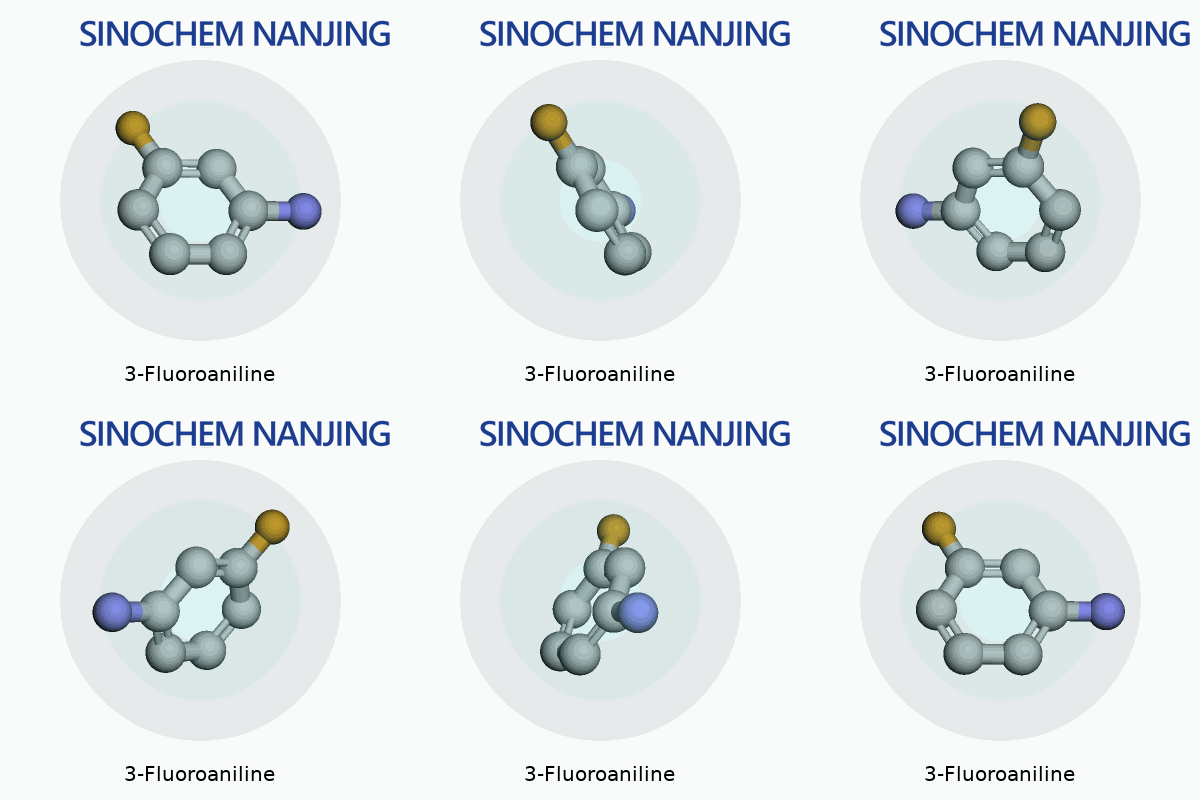
| 3D model (JSmol) | `/data/cml/mol/data/04a/3-fluoroaniline_JSmol-3d.cml` |
| Beilstein Reference | 1209247 |
| ChEBI | CHEBI:141555 |
| ChEMBL | CHEMBL13973 |
| ChemSpider | 12020 |
| DrugBank | DB08279 |
| ECHA InfoCard | 03d7e3ee-28fa-4d8e-af61-4e03c5e0d7a9 |
| EC Number | 612-088-00-1 |
| Gmelin Reference | 7864 |
| KEGG | C01592 |
| MeSH | D017175 |
| PubChem CID | 69240 |
| RTECS number | BX1400000 |
| UNII | 4U5B8MJG4P |
| UN number | UN2674 |
| Properties | |
| Chemical formula | C6H6FN |
| Molar mass | 111.12 g/mol |
| Appearance | Colorless to pale yellow liquid |
| Odor | ammonia-like |
| Density | 1.173 g/mL at 25 °C |
| Solubility in water | Soluble |
| log P | 1.14 |
| Vapor pressure | 0.526 mmHg (25 °C) |
| Acidity (pKa) | 3.98 |
| Basicity (pKb) | 9.43 |
| Magnetic susceptibility (χ) | -65.5×10⁻⁶ cm³/mol |
| Refractive index (nD) | 1.522 |
| Viscosity | 3.44 mPa·s (25 °C) |
| Dipole moment | 1.73 D |
| Thermochemistry | |
| Std molar entropy (S⦵298) | 144.2 J·mol⁻¹·K⁻¹ |
| Std enthalpy of formation (ΔfH⦵298) | −104.9 kJ mol⁻¹ |
| Std enthalpy of combustion (ΔcH⦵298) | -1474 kJ·mol⁻¹ |
| Hazards | |
| Main hazards | Toxic if swallowed, in contact with skin or if inhaled; causes serious eye irritation; suspected of causing cancer. |
| GHS labelling | GHS02, GHS05, GHS06 |
| Pictograms | GHS06,GHS07 |
| Signal word | Danger |
| Hazard statements | H301 + H311 + H331: Toxic if swallowed, in contact with skin or if inhaled. H373: May cause damage to organs through prolonged or repeated exposure. H410: Very toxic to aquatic life with long lasting effects. |
| Precautionary statements | P261, P280, P301+P312, P302+P352, P304+P340, P311, P330, P337+P313, P405, P501 |
| NFPA 704 (fire diamond) | 2-2-2 |
| Flash point | 138 °F |
| Autoignition temperature | 615°C |
| Explosive limits | Lower: 2.2%, Upper: 12% |
| Lethal dose or concentration | LD₅₀ (oral, rat): 175 mg/kg |
| LD50 (median dose) | LD50 (median dose) of 3-Fluoroaniline: "175 mg/kg (oral, rat) |
| NIOSH | RN0150000 |
| REL (Recommended) | 0.6 mg/m³ |
| IDLH (Immediate danger) | Unknown |
| Related compounds | |
| Related compounds |
Aniline 2-Fluoroaniline 4-Fluoroaniline 3-Chloroaniline 3-Bromoaniline 3-Iodoaniline 3-Nitroaniline 3-Methylaniline |



