3-Chlorofluorobenzene: Unpacking a Cornerstone of Modern Chemistry
Historical Development
3-Chlorofluorobenzene might not grab headlines like some of the chemicals that sparked revolutions in polymer chemistry or agriculture, but its roots stretch deep into the progress of synthetic chemistry. The push to develop halogenated aromatics began gaining ground early last century, right around the time when big changes in industrial chemistry set new benchmarks for precision and functionality. Researchers recognized that altering substituted benzenes gave them a toolkit for tailoring reactivity, and chlorofluorinated derivatives like this one started showing up in academic journals and patent filings. Its commercial production took off as demand for intermediates in pharmaceuticals and advanced materials picked up, especially once methods improved to control regioselectivity more efficiently. These advances meant higher yields, fewer byproducts, and safer processes on the factory floor.
Product Overview and Application Area
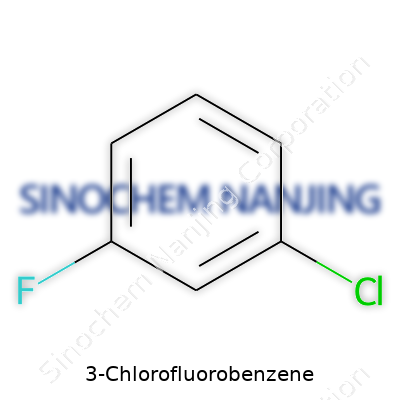
The simplest way to see 3-Chlorofluorobenzene is to look at its structure: a benzene ring, one chlorine, one fluorine, both attached to different carbons. That pairing offers something researchers and formulators prize—selective reactivity. In pharmaceutical synthesis, these kinds of compounds support the construction of complex targets, where a single error could tank the whole batch. Agrochemical makers reach for it because those halogens help tune biological activity in crop protection agents. The custom synthesis sector, which thrives by making intermediates nobody can buy off the shelf, keeps it in steady demand. For technical users, it gives an ideal launchpad for Suzuki couplings or nucleophilic aromatic substitutions—reactions that laid the groundwork for blockbuster drugs and specialty polymers alike.
Physical and Chemical Properties
3-Chlorofluorobenzene boils just north of 155 °C, and you can spot its colorless, mobile liquid form by its faint, sweet smell. It dissolves into organic solvents like ether or acetone, but water steers clear, with minimal mixing. That aromatic ring gives it the stability you'd associate with benzene, but the presence of both chlorine and fluorine shifts its electron distribution and opens the door for selective chemical modifications. These dual halogens place it in a prized middle ground—reactive enough to build on, stable enough to handle in a well-run lab. Anyone storing this solvent owes thanks to glass and metal compatibility that cuts down on surprises.
Technical Specifications & Labeling
Quality standards mean the difference between a research success story and a frustrating dead end. Chemists reach for high-purity 3-Chlorofluorobenzene—often 98% or higher by GC—because contamination at the parts-per-thousand level can undermine much larger projects. Lab and warehouse managers know to look for clear, modern labeling, including validated lot numbers, hazard pictograms, and clear hazard notices for handling and disposal. Analytical batches always come with a certificate of analysis, not just because it’s a good idea, but because strict traceability now defines best practice in chemistry. Regulatory language keeps shifting, so the era of vague MSDS sheets faded fast; anybody procuring today expects clear, actionable guidance from a reputable supplier, as required by workplace safety standards worldwide.
Preparation Method
Older generations relied on basic halogenation of benzene or multi-step Friedel–Crafts processes, often resulting in messy mixes and environmental headaches. Today, the playbook often starts with selective halogen exchange or lithiation processes—inspired by the burgeoning field of directed ortho-metalation—aiming for fewer steps, less waste, and tighter control over the final isomer. Fluorination, still regarded as a challenging game, often demands specialist equipment and scrupulous monitoring to avoid side reactions. Modern facilities now run continuous flow reactors and scrubbing systems to handle hazardous gases or byproducts, demonstrating industry’s shift toward responsible manufacturing.
Chemical Reactions & Modifications
I’ve lost count of how many synthetic routes kick off or anchor themselves on compounds like 3-Chlorofluorobenzene. The mixture of reactivity—thanks to the electron-withdrawing nature of the halogens—makes this molecule receptive to metal-catalyzed reactions. Suzuki, Heck, and other palladium-catalyzed couplings allow chemists to attach everything from aryl to alkenyl groups. I’ve seen nucleophilic substitutions swap out chlorine or fluorine for bulkier groups or more exotic nucleophiles. That opens the door for fine-tuning medicinal ingredients or crafting polymers with very specific performance traits. Chemists working in heterocyclic synthesis often treasure the ability to convert a simple halide like this into a complex intermediate with just a few steps—and with fewer unwanted surprises than older multi-halogenated benzenes might give.
Synonyms & Product Names
Depending on the catalog or textbook, you’ll see a handful of common names: 1-Chloro-3-fluorobenzene, m-Chlorofluorobenzene, and 3-Chloro-1-fluorobenzene. Take time to double-check CAS numbers before placing an order—mix-ups happen more often than they should, especially in fast-moving research labs and on complex procurement platforms where chemical naming conventions can boggle even seasoned chemists.
Safety & Operational Standards
No chemical deserves cavalier treatment, but halogenated aromatics ask for special respect. I’ve watched seasoned operators don the full set of PPE before unbolting drums, keenly aware of the potential for inhalation risks or chemical burns. Spilled drops will quickly announce themselves, with a sharp scent and irritation that’s hard to ignore. Good lab protocol starts with fume hoods, ends with grounded containers and systematic solvent waste segregation. Environmental emissions are tightly regulated for a reason—chlorinated and fluorinated byproducts carry penalties for public health and the ecosystem. Regulatory bodies in North America, Europe, and Asia routinely update their thresholds for workplace exposure, driving industry to install better filtration and monitoring. It’s not just about staying compliant—it’s about keeping talent safe, day in and day out.
Research & Development
3-Chlorofluorobenzene may look like a basic building block, but its unique properties attract ongoing research. I’ve seen plenty of academic interest in using it to model halogen effects in drug candidates, and its selectivity as a coupling partner makes it a go-to substrate for testing new reaction catalysts. Progress in process intensification and green chemistry calls for updated methods that cut solvent loads, trim waste streams, and recycle starting materials. These investments pay off in the long run, reducing both costs and environmental impacts. The most forward-looking labs now harness automation and machine learning to model reaction outcomes with compounds like this—closing the loop between discovery and scale-up at speeds unimaginable just a decade ago.
Toxicity Research
The rise of chemical safety regulations worldwide means the toxicological profile of every aromatic halide faces careful scrutiny. Studies suggest that 3-Chlorofluorobenzene shouldn't be handled lightly—like many small halogenated aromatics, it can provoke irritation to the respiratory tract and skin upon exposure, and repeated contact raises concerns over organ toxicity. Biodegradation studies reflect the reluctance of such compounds to break down in the environment, meaning spills or improper disposal persist far beyond the immediate workplace. For decades, the chemical sector has combined early hazard communication with workplace training to mitigate accidental exposures. Investment into alternative, greener synthetic methods may ultimately trim down the total volume of halogenated intermediates of all types in circulation.
Future Prospects
The journey of 3-Chlorofluorobenzene—from niche intermediate to modern staple—captures the constant push of chemistry to refine, improve, and innovate. Regulatory shifts push the industry toward safer handling and reduced emissions, prompting a fresh look at process engineering and life cycle management. As green chemistry picks up speed, process engineers chase new catalysts and reaction pathways that use fewer hazardous reagents or deliver higher atom economy. On the application front, demand from precision medicine and smart materials will sustain interest in customizable intermediates like this one. The march toward digital labs and automated synthesis carries promise, too, making the next generation of chemists and plant operators more prepared than ever to manage the challenges of halogenated intermediates. Careful stewardship will define the legacy left by molecules like 3-Chlorofluorobenzene—as more sectors lean on their adaptability and reliability to push boundaries well into the future.
What is 3-Chlorofluorobenzene used for?
Why Chemists Value 3-Chlorofluorobenzene
Walk through any science lab where people work with pharmaceuticals and specialty chemicals, you’re bound to find bottles and vials with complicated names. 3-Chlorofluorobenzene looks like just another chemical, but it stands out for its structure—a benzene ring wearing both a chlorine and a fluorine atom. For chemists, that combination means a flexible starting point for reactions, almost like starting a recipe with flour and eggs instead of a plain loaf of bread. Reactions latch onto those halogens and allow the creation of all sorts of complex molecules.
Real Applications in Medicine and Industry
The most urgent work for 3-chlorofluorobenzene kicks in during the early steps of making pharmaceuticals. Compounds like antidepressants or antihypertensive drugs often begin with a simple aromatic ring, tweaked and modified over and over. Drug compounds that have to interact in the body in specific ways draw on this starting structure, since chemists can swap out those halogens and build exactly what the body needs to recognize or reject.
Chemical manufacturers don't stop at medicine. 3-Chlorofluorobenzene lands in the pipelines of the agrochemical sector as well. Herbicides and insecticides often need resistant chemical backbones to survive sun, rain, and microbes. The stability of this molecule gives companies a foundation to construct molecules that fight off pests or boost crop growth. Its halogen decorations make it possible to avoid rapid breakdown in the field, so farmers see the benefit longer.
Beyond Chemistry Experiments
Some folks see 3-chlorofluorobenzene as a niche lab chemical, but it has practical uses beyond textbooks. Manufacturing dyes and pigments relies on chemical diversity, and benzene derivatives like this one form beautiful, strong colors that don’t fade easily in sunlight. Electronics manufacturing, especially in the production of specialty polymers and insulating materials, counts on compounds like these because they handle heat and chemical exposure without giving up their structure. Every time someone needs a stable material with a touch of resistance—whether in paint on a building or a plastic used in phones—molecules with built-in halogens give a good shot at long-lasting results.
Risks and Responsible Handling
Just because a molecule helps make medicine or protects crops doesn’t mean it gets a free pass. Halogenated benzenes have a history of causing environmental headaches, mostly because breakdown in nature doesn’t happen quickly. Regulators in the US, EU, and Asia keep a close eye on industrial emissions and disposal methods for chemicals like this. Factory workers handling drums of 3-chlorofluorobenzene depend on closed systems and protective gear; the risks from skin contact or inhalation are well-known. Companies that ignore proper handling put people and the environment at risk.
Seeking Greener Chemistry
There’s an ongoing push from both scientists and environmental groups to find alternatives or safer ways of making and breaking down aromatic halides. Green chemistry challenges researchers to design processes that use less toxic reagents or even swap out the halogens after their job is done. Cleaner manufacturing routes cut down on waste and energy bills, too. When companies choose safer solvents and adopt recycling techniques, whole communities benefit in the long run—not just end users, but everyone near the manufacturing sites or downstream from factory waste.
Looking Forward
3-Chlorofluorobenzene isn’t the name most people know, but it helps power plenty of daily life—from pills to electronic gadgets. Its usefulness also pushes chemists and manufacturers to work smarter and safer. If you value advances in healthcare and technology, paying attention to behind-the-scenes chemicals like this one matters far more than the label on the bottle suggests.
What is the chemical formula of 3-Chlorofluorobenzene?
Understanding the Basics
Anyone who spent hours in a chemistry class will remember how a formula does more than tell us what atoms are in a compound—it sets up a map of molecular identity. 3-Chlorofluorobenzene, a name that packs in both chlorine and fluorine, uses these two elements to alter plain benzene into something much more specific. Its chemical formula is C6H4ClF. That sequence captures six carbons, four hydrogens, one chlorine, and one fluorine, stuck together on a ring that has carried synthetic chemistry through generations of industry.
Why 3-Chlorofluorobenzene Matters
Skeptics might shrug at this molecule, but the pharmaceutical and agrochemical world sees something useful. Swapping just a hydrogen atom for a chlorine or a fluorine can twist how a compound behaves—how it reacts, how it holds up under stress, and how it fits into receptors in the body. These tiny changes change everything from shelf life to safety in doses. A good handful of modern drugs and pesticides use benzene derivatives shaped by halogen substitutions.
Health, Safety, and the Lab Reality Check
Mixing chlorine and fluorine into aromatic compounds isn’t pure academic work; it brings tough decisions into real labs. Chlorine can cause trouble in the body, while fluorine makes molecules more stable but tougher to break down. I’ve watched technicians double-check glove seals, wipe down fume hood surfaces, and treat every spill as a possible problem, not just a minor mess. Safety Data Sheets for C6H4ClF outline the need for fresh air, solid gloves, and quick cleanup steps. For all the value these compounds offer, chemical safety pushes toward stronger protocols every year.
Environmental Impact
Halogenated aromatics like this aren’t easy guests for the planet to handle. Wastewater from a chemical plant making 3-chlorofluorobenzene needs careful tracking. The chlorine and fluorine atoms stick around far longer than anyone likes, and the industry faces heavy pressure from environmental groups to keep pollutants away from natural water sources. It takes expensive separation tools, advanced oxidation, and constant monitoring to keep these byproducts from sneaking past treatment plants. The formula itself doesn’t say “persistent”, but that’s been the experience down the line.
The Search for Better Options
Labs aren’t stuck repeating yesterday’s choices. Chemists in green chemistry projects look for new ring systems or swap out halogens to shrink environmental footprints. Some research teams try to cut out persistent chemicals in favor of biodegradable variants. Enforcement from regulators only sharpens that drive. The market asks for safer, greener building blocks, and plenty of people have found that switching reagents, using alternative solvents, or even redesigning molecules leads to less hazardous waste and fewer headaches in disposal.
Putting the Formula in Context
C6H4ClF, the backbone of 3-chlorofluorobenzene, stands as a crossroads between utility and responsibility. Every structure tells a story that goes beyond textbooks. We lean on lab work, transparent records, and tight safety nets to keep benefits up and side effects down. Years in the lab showed me: formulas stick with you, not just on paper but through the choices they force industrial chemists to make. Smart chemistry keeps products effective while nudging the whole field toward safer, smarter solutions.
What are the safety precautions for handling 3-Chlorofluorobenzene?
Why Safety Matters with 3-Chlorofluorobenzene
If you’ve spent time in any chemical lab, you learn quickly that skipping steps can land you in hot water. 3-Chlorofluorobenzene doesn’t give second chances when it comes to sloppy handling. This clear, colorless liquid releases vapors that can irritate airways and skin. Before grabbing a bottle, it’s worth thinking about what’s at stake: your lungs, skin, eyesight, and maybe your whole workday.
PPE: What to Wear and Why
I’ve seen folks try to cut corners with safety goggles or gloves. Maybe you trust your hand-eye coordination, but one splash can turn a good day into an ER visit. For 3-Chlorofluorobenzene, chemical-resistant gloves (such as those made with nitrile), a lab coat, closed shoes, and goggles form the bare minimum. If you work with larger quantities or can’t guarantee good ventilation, a face shield or even a respirator may be needed. The National Institute for Occupational Safety and Health (NIOSH) recommends local exhaust ventilation and sometimes even full-face respirators, especially with repeated exposure. This isn’t overkill—it’s what keeps accidents from running your life.
Spill Management and Storage
Every accident I’ve seen comes down to someone being in a hurry or not knowing where to find the spill kit. 3-Chlorofluorobenzene doesn’t mix well with sparks, heat, or open flames, so storing it far from these things helps a lot. A cool, well-ventilated space works best. Chemical storage cabinets labeled for flammable liquids give peace of mind. Always check the cap—an unsecured lid can turn a shelf into a disaster site. If a spill happens, an absorbent material designed for chemical solvents works quickly. Sweep it up, dispose of it in a container labelled as hazardous waste, and avoid using materials that can react with the chemical. These habits get drilled into you because the cost of not following them is steep.
Working with Ventilation and Fume Hoods
Smelling this chemical should never be part of the job. I’ve watched people pipette in the open, thinking it’s “just a quick transfer.” If the fume hood is two meters away, walk over and use it. The Occupational Safety and Health Administration (OSHA) and most respected labs agree: fume hoods are your first defense against breathing in harmful vapors. Checking the airflow with a bit of tissue, making sure the sash is at the right height, and keeping the area clear all mean you can focus on your work, not a headache or coughing fit that follows you home.
Skin and Eye Protection
A splash in the eye or on the skin with 3-Chlorofluorobenzene is no joke. Immediate and thorough rinsing, using the eyewash or safety shower, can limit the damage. I keep a mental map of every emergency station at every new site. Seconds count. Clean up thoroughly after any potential exposure, and never touch your face, food, or drink before washing your hands thoroughly.
Training and Awareness Save Lives
If you walk into a lab and see a posted safety data sheet (SDS), take the time to read it. Training matters because emergencies never announce themselves. Reviewing evacuation routes, spill response, and first aid for chemical exposure should become second nature. Sharing experiences and mistakes keeps everyone sharper and lets newcomers pick up good habits faster. Safe practices are built by understanding risk, not by luck or shortcuts. Knowing the hazards—coughing, skin burns, or worse—keeps folks humble and more likely to respect the bottle on the bench.
What is the boiling point of 3-Chlorofluorobenzene?
Why Boiling Point Matters
The boiling point defines how a chemical behaves in the lab or factory setting. For 3-chlorofluorobenzene, the value lands around 173°C. This may not seem eye-catching to anyone outside a chemistry lab, but knowing this figure means more than just handling a flask correctly. It sets the parameters for anyone transporting, storing, or reacting this compound in anything from industrial processing to academic research.
As someone who has spent time wrestling with volatile organics and occasional pressure build-ups, sweating over simple numbers pays off. One high school mistake in reading a safety datasheet meant watching a beaker spit fumes all over the bench. With halogenated benzenes, like 3-chlorofluorobenzene, you take that boiling point seriously. Exceed that, and you risk toxic vapor exposure or worse.
Boiling Point Influences on Chemical Handling
The chlorofluorobenzene family deals out some odd combinations—swapping one halogen for another gives a new boiling point, a different odor, or a shift in solubility. For 3-chlorofluorobenzene, the presence of both chlorine and fluorine on the benzene ring nudges that boiling mark higher than simple benzene or monochlorobenzene. Fluorine atoms add electronegativity, tightening molecular interactions and making it stubborn to vaporize.
This detail gets crucial on chemical plants. Equipment choices—condensers, vacuum distillation setups—depend on boiling points. Workers expect to find this information front-and-center in safety documents, stored alongside CAS numbers and hazard labels. If you get it wrong, you could under-design containment or overheat a condenser line, all because of a misplaced digit in a boiling point factoid.
Health and Safety Considerations
Risk management in labs and chemical warehouses often rests on physical constants like boiling point. At 173°C, 3-chlorofluorobenzene sits higher than water and even above many common solvents. A building’s ventilation, PPE recommendations, and emergency response rely on the evaporation rate of such substances. According to the National Institute for Occupational Safety and Health (NIOSH), even moderate inhalation of halogenated benzenes brings risks—eye irritation, trouble breathing, maybe central nervous system effects at high concentrations.
Staggering into a fume hood at the end of a long shift and realizing your solvent is already boiling away when you planned to distill it gently can lead to nasty surprises. Slow and steady handling, attention to reference charts, and a backup thermometer in the lab apron pocket become more than habits. They become routines, hammered-home by every spill drill or chemical safety video.
Improving Chemical Use and Safety
Addressing any confusion about a compound’s boiling point starts with strong education. Chemistry teachers can’t gloss over these numbers. Industrial chemists do well to invest time in double-checking datasheets and equipping their workers with functional gear—thermocouples, automatic shut-offs—rather than relying on memory or hearsay. Digitizing SDS archives and providing quick app references makes a critical difference. In my own lab days, an easy database beat thumbing through battered binder pages.
At the industry-wide level, ongoing standards for chemical labeling, clear material safety data sheets, and open-access digital handbooks help cut down mistakes and reinforce safety culture. The science only matters if it translates reliably from page to practice—boiling point included.
How should 3-Chlorofluorobenzene be stored?
3-Chlorofluorobenzene Doesn't Forgive Mistakes
Anyone who's spent time in a lab can recall the sharp scent of volatile chemicals and the feeling that one error might make the place hazardous for everyone. 3-Chlorofluorobenzene doesn't top the charts for deadliness, but this clear, aromatic liquid brings enough risks that no one takes it lightly. One spill leaves behind not just a mess, but a puzzle for the facilities manager and a search for fresh ventilation. Enough stories of headaches and nausea drift around break rooms, proving it deserves respect.
Why Correct Storage Matters
Storing this compound in a regular bottle or closet invites trouble. 3-Chlorofluorobenzene evaporates easily. It builds up fumes that irritate eyes, noses, and lungs fast. Over time, breathing those fumes wears down health in subtle ways you won't notice until it's too late. Chemistry staff and warehouse techs handle toxic materials every day, but complacency grows if simple routines feel safe for too long.
Flammability is the next big concern. If this liquid sits near open flames, a shorted outlet, or even a careless spark from static, it becomes a fire risk the moment it vaporizes. According to the US National Institute for Occupational Safety and Health (NIOSH), similar halogenated benzenes often catch light at temperatures most labs hit routinely on summer afternoons. Fire suppression works best when chemicals aren't feeding the flames.
Best Storage Methods for Safety
Chemical cabinets designed for flammables do more than tick boxes on a safety checklist—they save lives and property. Thick steel walls keep the heat away and contain accidental fires for valuable minutes. These cabinets vent fumes outward, which stops the buildup of toxic vapor. Labels mark the shelves clearly because one rushed movement by a new worker spills disaster in a heartbeat.
People often want to save time by placing containers near the workbench. Once, I did this to shave off a few seconds for each synthesis. The headache that followed taught me to keep volatile liquids away from general traffic. Even a tightly sealed glass bottle can't stop persistent vapor leaks forever. The best practice keeps 3-Chlorofluorobenzene in its original packaging, inside a secondary tray, locked away in a climate-controlled, fire-resistant cabinet.
Simple Habits Prevent Expensive Cleanups
Strong ventilation works wonders. Fume hoods, exhaust fans, or dedicated air-handling systems flush out dangerous gases that creep into storage rooms. A poorly ventilated closet, even lined with shelves and good intentions, will accumulate fumes over time. Engineers design lab spaces with this in mind, making sure there’s enough airflow—not just to meet code, but to keep workers sharp and healthy.
In larger facilities, chemical inventories matter a lot. Regular audits help spot cracked bottles and outdated stock. Labels fade, so clear markings and inventory logs make it easy to keep track of everything. Some labs color-code bottles or assign barcodes to avoid mix-ups that could end badly.
Cutting Corners Is a Gamble
Reliance on safe storage isn’t just about ticking boxes for compliance. It shows respect for everyone working nearby. Fires or chemical exposures cause months of disruption for a whole team—plus reputational damage most businesses never fully recover from. Spending an extra minute returning a bottle to its place, double-checking the lock on the flameproof cabinet, or verifying ventilation may add up, but it’s a small price compared to the risks of carelessness.
3-Chlorofluorobenzene fits the profile of a chemical that rewards vigilance. Its shelf life stays longest under cool, dry, shaded conditions. Relying on routine inspections, effective storage equipment, and a culture of sharing lessons ensures accidents stay rare. These habits keep doors open for researchers and plant workers while guarding resources from destruction and waste.
| Names | |
| Preferred IUPAC name | 1-Chloro-3-fluorobenzene |
| Other names |
m-Chlorofluorobenzene 3-Chloro-1-fluorobenzene 1-Chloro-3-fluorobenzene m-Fluorochlorobenzene |
| Pronunciation | /ˈθriː ˌklɔːrəˌflʊərəˈbɛnziːn/ |
| Identifiers | |
| CAS Number | 108-60-1 |
| Beilstein Reference | 969064 |
| ChEBI | CHEBI:140309 |
| ChEMBL | CHEMBL237795 |
| ChemSpider | 75370 |
| DrugBank | DB14035 |
| ECHA InfoCard | 03e7f9f0-3dd9-4c2c-9333-7b65efb28b99 |
| EC Number | 208-963-4 |
| Gmelin Reference | Gmelin 150566 |
| KEGG | C19268 |
| MeSH | D016689 |
| PubChem CID | 70483 |
| RTECS number | GQ9625000 |
| UNII | QR7M91D9KT |
| UN number | UN1992 |
| Properties | |
| Chemical formula | C6H4ClF |
| Molar mass | 128.56 g/mol |
| Appearance | Colorless liquid |
| Odor | Aromatic odor |
| Density | 1.29 g/mL at 25 °C (lit.) |
| Solubility in water | Insoluble |
| log P | 2.8 |
| Vapor pressure | 3.9 kPa (at 20 °C) |
| Acidity (pKa) | 41.2 |
| Basicity (pKb) | 14.38 |
| Magnetic susceptibility (χ) | -73.6×10⁻⁶ cm³/mol |
| Refractive index (nD) | 1.528 |
| Viscosity | 0.754 cP (25°C) |
| Dipole moment | 2.60 D |
| Thermochemistry | |
| Std molar entropy (S⦵298) | 309.2 J·mol⁻¹·K⁻¹ |
| Std enthalpy of formation (ΔfH⦵298) | -73.8 kJ/mol |
| Std enthalpy of combustion (ΔcH⦵298) | -3859.9 kJ/mol |
| Hazards | |
| GHS labelling | GHS02, GHS07 |
| Pictograms | GHS02,GHS07 |
| Signal word | Warning |
| Precautionary statements | P261, P271, P280, P302+P352, P304+P340, P312, P332+P313, P403+P233 |
| NFPA 704 (fire diamond) | 2-2-0 |
| Flash point | 47 °C |
| Autoignition temperature | 632°C |
| Explosive limits | Lower: 1.2%, Upper: 9% |
| Lethal dose or concentration | Lethal dose or concentration (LD50/LC50) for 3-Chlorofluorobenzene: "LD50 (oral, rat): >2000 mg/kg |
| LD50 (median dose) | LD50 (median dose): Oral rat LD50 = 2527 mg/kg |
| NIOSH | CN8575000 |
| PEL (Permissible) | Not established |
| REL (Recommended) | Not established |
| IDLH (Immediate danger) | Unknown |
| Related compounds | |
| Related compounds |
Chlorobenzene Fluorobenzene 3-Chloronitrobenzene 3-Fluoronitrobenzene 1,3-Dichlorobenzene 1,3-Difluorobenzene 2-Chlorofluorobenzene 4-Chlorofluorobenzene |



