3-Bromopropionitrile: A Closer Look at a Versatile Chemical Compound
Historical Development
Back in the early days of synthetic organic chemistry, professionals kept searching for building blocks that could speed up new discoveries. 3-Bromopropionitrile first turned up on researchers’ radar in the early-to-mid 20th century, as folks working with halogenated nitriles needed a way to introduce both reactivity and stability into complex molecules. Chemists looking at pharmaceutical pathways, pesticide production, and textile dyes quickly caught on that this molecule opened up quite a few creative routes in the lab. Over decades, process improvements made 3-Bromopropionitrile far more widely available and easier to handle on an industrial scale, moving it from lab shelves to large reactors in specialty chemical plants.
Product Overview
3-Bromopropionitrile stands out for its practical synthetic role. This compound’s IUPAC name is 3-bromopropanenitrile. It shows up as a clear to light yellow liquid, sharp-smelling, and dense. Those working in synthesis rely on it for its dual functional groups: bromine for nucleophilic substitution, and nitrile for later transformations. Supply chains keep it in drum containers tailored for chemical safety, and its unique structure attracts everyone from early-career chemists to established process engineers aiming to scale up fine chemicals or intermediates.
Physical & Chemical Properties
Taking a closer look, 3-Bromopropionitrile sits at a molecular weight of 134.98 g/mol and a boiling point near 160°C. Its melting point remains low, keeping it in liquid form even in a cool laboratory. Solubility leans toward polar organic solvents — a feature valuable for controlling reaction mechanisms but stringently avoided with water to prevent hydrolysis or dangerous vapor buildup. Its refractive index hovers around 1.445, and the density is about 1.6 g/cm³ at room temperature. In open air, it releases irritating vapors, so strong ventilation goes from recommendation to necessity.
Technical Specifications & Labeling
Anyone dealing with 3-Bromopropionitrile should pay close attention to packaging and labeling. Most bottles and drums come stamped with an explicit hazard pictogram, as the compound falls under toxic and environmentally hazardous classifications. UN Number 2810 generally covers this class during transport. Purity levels often exceed 98% in industrial usage, verified by gas chromatography, and containers sport both lot numbers and production dates to track quality from manufacturer to end user.
Preparation Method
Chemical producers rely on an alkylation reaction to generate 3-Bromopropionitrile. Usually, the route starts with acrylonitrile, undergoing hydrobromination in the presence of an acid catalyst or radical initiator. This process needs careful temperature controls and precise monitoring to keep by-products at bay. For smaller batches or laboratory settings, bromine and propionitrile can react directly under controlled conditions, but safety protocols dominate these setups to protect workers from toxic vapors and exothermic events.
Chemical Reactions & Modifications
3-Bromopropionitrile slots into a chemist’s toolbox for its reactivity. The bromine acts as a leaving group in nucleophilic substitution, opening up myriad paths toward substituted amines, alcohols, and thiols. On the nitrile side, hydrolysis morphs it into corresponding amides or acids; catalytic hydrogenation can lead to amines. Because both functional groups tolerate a range of conditions, they let scientists build up or trim down molecules in multistep syntheses. Coupling reactions with organometallics, especially Grignard or lithium reagents, show high yields but demand sharp technical skills due to exothermic tendencies.
Synonyms & Product Names
Multiple industries and catalogs refer to 3-Bromopropionitrile by several names. You may spot it as β-Bromopropionitrile or 3-bromopropanenitrile, with registry numbers like CAS 6051-87-2 making inventory simpler. In trade, chemicals suppliers often abbreviate it to “BPN” and attach standard packaging codes to keep logistics on track. Keeping track of these synonyms across supply partners streamlines research and helps prevent unsafe substitutions or delivery errors.
Safety & Operational Standards
Safety can’t take a backseat with 3-Bromopropionitrile. It causes severe irritation to eyes, skin, and mucous membranes. Liquid spills or unprotected handling may lead to systemic toxicity, so handling in fume hoods with proper respirators tells the difference between a minor scare and an emergency. The Globally Harmonized System rates this compound as acute toxic if inhaled and dangerous to aquatic environments. Material Safety Data Sheets recommend full PPE: gloves made from nitrile or neoprene, splash goggles, and lab coats or chemical-resistant garments. Good training in spill response and decontamination should stay fresh, particularly for labs running frequent syntheses or preparing large volumes. In my own years around specialty intermediates, most incidents arose not from major mistakes but from letting routine dull attention to detail.
Application Area
3-Bromopropionitrile finds plenty of use in pharmaceutical R&D, crop protection, and specialty dye manufacture. Medicinal chemists reach for it when building ring systems, alkylating side chains, or introducing cyano groups into lead compounds. Crop science teams use its intermediates as scaffolds for more effective pesticide molecules. The textiles sector values its consistent performance when synthesizing vivid dye precursors. Academic labs and startup ventures alike keep this chemical on hand for its versatility and the relatively straightforward purification of its reaction products. Its balance between reactivity and selectivity delivers results at every stage, from grams in a university beaker to tons in a regional depot.
Research & Development
Recent years reveal growing interest in sustainable methods to make and use 3-Bromopropionitrile. Green chemistry pioneers look for cleaner catalysts, solvent-free techniques, and improved atom economy. Research journals publish advances in microwave-assisted synthesis and flow chemistry approaches that cut down hazardous waste. At the application end, medicinal chemists use computational design to fit this molecule into drug discovery libraries, especially in fragments targeting enzyme inhibition or molecular recognition. Patent filings show steady growth in formulations and process innovations, pointing to an active R&D landscape fueled by new challenges and shifting regulatory frameworks.
Toxicity Research
Toxicologists have warned for years that direct exposure to 3-Bromopropionitrile can bring acute symptoms: headaches, dizziness, and possible respiratory distress, with long-term studies suggesting nerve and organ risks from repeated low-dose contact. Animal studies (mostly rodents) have supplied LD50 data to help set workplace limits, with medical teams looking for efficient antidotes or protocols in the event of accidental poisoning. Environmental releases raise more red flags, as the molecule tends to persist in soil and can harm aquatic life at low concentrations. I’ve seen firsthand how community health concerns shape policies around both production plants and disposal sites, pushing for tighter engineering controls and broader access to exposure monitoring.
Future Prospects
Demand for 3-Bromopropionitrile keeps shifting with global trends in pharmaceuticals, advanced materials, and chemical manufacturing. Green chemistry and safer process design stand out as priorities for the next decade. Companies and research teams look to switch hazardous reagents for cleaner alternatives or redesign syntheses to limit waste streams. Emerging automation and artificial intelligence technologies offer a way to streamline both quality control and predictive safety management. If regulatory agencies in North America, Europe, and Asia coordinate on exposure and discharge rules, chemical makers may lean into bio-based routes and recyclable packaging for intermediates like this one. From lab innovation to large-scale application, 3-Bromopropionitrile will likely stick around in one form or another, its story evolving alongside technology, regulation, and the global push for safer, smarter ways to build new chemistry.
What is the chemical structure of 3-Bromopropionitrile?
The Basics of 3-Bromopropionitrile
3-Bromopropionitrile isn’t a household name for most, but it shows up in labs working with pharmaceuticals, dyes, and specialty chemicals. Experience in a research group reminded me that structure actually guides function for compounds like this. 3-Bromopropionitrile keeps things pretty compact and straightforward: three carbon atoms—“propion” points to a three-carbon chain—anchored by a bromine atom on one end and a nitrile (C≡N) group on the other. This gives it the chemical formula C3H4BrN. Picture it like this: Br-CH2-CH2-C≡N.
Functional Groups Shape Reactivity
That bromine atom attached to the first carbon ends up being a real game-changer. In undergraduate organic chemistry, we often used brominated compounds as building blocks because bromine leaves easily in substitution reactions. This makes 3-Bromopropionitrile handy for making other chemicals, such as pharmaceuticals or specialty polymers.
On the opposite side, the nitrile group carries a triple bond between carbon and nitrogen. Working with nitriles, I learned these are pretty reactive, especially in the presence of acids or bases. Chemists use that nitrile group to build everything from pharmaceutical intermediates to fragrances. I once watched a simple nitrile become an amine in just a few hours on the bench, thanks to reduction reactions.
Laboratory Risks and Considerations
Anyone who’s worked in a lab knows chemicals carrying halogens and nitrile groups come with risks. 3-Bromopropionitrile releases toxic fumes if mishandled, and it can irritate skin and eyes. Inhalation creates health risks—especially for those handling larger quantities. I remember wearing extra-thick gloves and staying near the fume hood while working with similar compounds. Safety data sheets stress minimizing exposure and using good ventilation because of possible mutagenic or toxic effects.
Practical Applications and Environmental Impact
3-Bromopropionitrile helps create molecules for drug research, dyes, and synthesis of agrochemicals. A mentor once told me, these building blocks speed up the path to new compounds, letting scientists test dozens of chemical routes in early-stage drug development. Because the molecule reacts readily, it cuts down on time needed to create new libraries of test chemicals—an important factor in fast-paced pharmaceutical pipelines.
As with many synthetic chemicals, its quick reactivity means breakdown can happen quickly with the right reagents, but accidental spills can hurt soil and waterways. Lab protocols focus on proper containment and neutralization before disposal. Regulatory bodies like the EPA and OSHA track its use and recommend best practices to limit environmental impact. Facilities that use it need spill plans and monitor air and water emissions closely.
Looking Forward: Safer Science and Smarter Use
Safer alternatives and greener chemistry practices often get discussed in research groups and industrial circles. By designing procedures that cut down on hazardous waste and exploring substitutes for brominated reagents, chemists work on shrinking the health risks associated with molecules like 3-Bromopropionitrile. Process chemists find routes that keep things safer and easier to scale, reducing both cost and hazard to people and planet.
For anyone studying organic chemistry or chemical manufacturing, recognizing and respecting the structure of 3-Bromopropionitrile helps in making smart, safe choices—on the bench and beyond.
What are the common uses or applications of 3-Bromopropionitrile?
Understanding 3-Bromopropionitrile in the Lab
Anyone who has spent time in a synthetic chemistry lab may have run across 3-bromopropionitrile at some point. It pops up as a useful intermediate—a building block, really—for making more complex molecules. Its simple structure, with both a bromine and a nitrile group, lets chemists use it for a range of reactions. I remember starting out as a junior researcher and seeing a bottle of it in the reagents cabinet, always wondering how it showed up in so many protocols.
Making Active Pharmaceutical Compounds
Pharma and biotech groups count on reliable starting materials. 3-Bromopropionitrile fits right into this picture. Medicinal chemists often need to build carbon chains with specific functional groups. The nitrile can turn into a carboxylic acid, an amine, or even form part of a ring. The bromine atom makes substitution reactions straightforward; for example, swapping it out for an amine or a thiol. Chemists working on cancer drug research or central nervous system agents can trace some synthetic routes back to this compound—it helps put core frameworks in place without much fuss.
Crop Protection and Agrochemicals
Agriculture science has its own set of demands when developing new crop protection products. A lot of candidate molecules start their lives as small, reactive compounds like 3-bromopropionitrile. Pesticides and herbicides often need that kind of chemical flexibility. Many new agrochemicals use this compound to attach different groups that change biological properties or help adjust how products break down in the environment.
Fine Chemical Synthesis and Dye Manufacturing
The dye industry also finds a place for 3-bromopropionitrile. Manufacturers sometimes need to attach various functional groups to aromatics for creating vibrant and long-lasting dyes. The versatile nature of bromopropionitrile plays a role in synthesizing intermediates for specialty dyes and pigments. In my own work, synthesizing a precursor for a custom dye meant using this compound as the initial step, making sure colors would stick and not fade.
Developing Advanced Polymers and Specialty Materials
Polymer chemists sometimes reach for 3-bromopropionitrile to design chain ends or introduce reactive points into growing chains. That approach leads to new materials with improved thermal stability or extra chemical resistance. Applications for these newer polymers can include automotive, electronics, and high-performance coatings—places where reliability carries even more weight.
Safety and Handling: A Practical Note
One thing that stands out in any lab that relies on this compound: proper storage and handling. 3-Bromopropionitrile carries both toxicity and volatility risks. Labs keep strict protocols in place. I once saw a minor spill left unreported, and the chemical odor lingered despite decent airflow; that moment drove home why gloves, eye protection, and fume hoods are non-negotiable. Regulatory guidelines place limits on exposure—OSHA, for example, lists acutely hazardous chemicals like this as a top concern.
Moving Forward with Innovation
The world of synthetic chemistry continues to expand, and compounds like 3-bromopropionitrile offer stepping stones to new discoveries. The search for more effective medicines, safer agrochemicals, and functional materials often starts small, and it’s the flexibility and accessibility of such reagents that keep research moving. It’s worth staying informed, both about applications and safety, as demand for innovative solutions keeps climbing.
What are the storage and handling precautions for 3-Bromopropionitrile?
Understanding the Substance
3-Bromopropionitrile stands out as a chemical that demands real respect in the lab. You run into compounds that don’t play around; this one lives squarely in that territory. It brings a sharp combination of toxicity and reactivity, with a whiff that signals danger, not curiosity. Direct skin or eye contact can cause immediate damage, and a single careless breath around open containers can send a sharp burn through the nose and throat.
Safe Storage Practices
Over the years, I’ve learned the value of sealing up reactive chemicals with a kind of stubbornness that borders on paranoia. For 3-Bromopropionitrile, that habit isn’t overkill. This substance thrives on dry, cool, and well-ventilated places. Moisture puts both the chemical and the handler at risk, so keep it away from humidity and water sources. Tight-sealing glass containers—labeled with large, clear warnings—are the way to go. Never store this chemical in plastic that can react under long-term exposure. A dedicated chemical storage cabinet, especially one fitted for poisons or toxics, offers peace of mind and real protection against accidental mix-ups.
Don’t tuck the bottle in with common reagents or organic acids. Segregate strong alkalis, acids, and oxidizers. Mischief between chemicals never starts big—it only takes a few drops dripped where they don’t belong. I always keep a log: date received, opened, checked, and used. It sounds old school, but nothing beats opening a notebook and seeing who handled difficult stocks last, or how old a vial really is.
Handling with Respect and Caution
Every step in the handling process should answer one question: “If something goes wrong, am I protected?” Gloves aren’t optional—splashes chew through nitrile and latex, so stick to chemical-resistant gloves, ideally butyl, paired with goggles and a heavy-duty lab coat with cuffs. I add a face shield if the work risks pressure or splashing. The fumes climb quickly in small spaces, so a certified fume hood or a well-sealed glove box makes the lab a safer place.
Don’t set up workstations in crowded corners. Clear off the bench, put away extra glassware, and keep a spill kit within reach. Once, I watched a colleague try to mop up with paper towels—bad idea. Absorbent pads, neutralizer, and a real plan for collecting and disposing of waste gave everyone more confidence after that scare. 3-Bromopropionitrile waste earns its hazardous stamp. Store it in well-marked waste bottles and arrange timely removal by approved professionals. Simple drains and trash bins spread the harm far beyond the bench.
Why Precautions Matter
A lax approach turns a productive day into a dangerous one, fast. Inhalation risks go beyond coughs—they mean nerve damage, chronic health problems, or worse. Hospital visits over a moment’s mistake leave a mark no lab veteran forgets. Follow-up means not just personal safety, but public trust in research. Labs accused of sloppy chemical stewardship face more than fines or shutdowns—they lose credibility with funders and peers.
Maintaining Expertise and Safety Culture
Staying current matters. Material Safety Data Sheets (MSDS) and ongoing training sharpen awareness. I remind myself and my colleagues: every new bottle, every batch change, deserves a fresh look at the safety sheet, right before use. Supervisors who check in, ask questions, and hold brief safety talks signal that vigilance earns more value than just finished results.
The safest teams invest in the right gear, set clear routines, and never cut corners—even in a rush. That steady vigilance lets researchers and technicians build trust in each other’s habits and creates a space that fosters real discovery, minus the life-changing mistakes.
What is the molecular weight and formula of 3-Bromopropionitrile?
Understanding the Basics
Chemistry often feels like piecing together a puzzle with tiny, invisible parts. Every molecule carries a story, both in structure and in the roles it fills in labs and industry. 3-Bromopropionitrile stands out for its unique combination of reactivity and versatility, recognizable by its molecular formula: C3H4BrN. Each symbol matters here. The formula represents three carbon atoms, four hydrogen atoms, one bromine atom, and a single nitrogen atom connected as a nitrile group. Its molecular weight clocks in at 149.98 g/mol, a figure every chemist keeps handy while planning reactions or handling safety data.
The Value of 3-Bromopropionitrile in the Lab
This compound isn’t something most people encounter outside labs, but those who do recognize its importance instantly. At the bench, 3-Bromopropionitrile serves as a building block for more complex molecules. It offers a shortcut in organic synthesis, helping researchers attach new chemical “arms” to existing structures. Any new anti-cancer drug or agrochemical sometimes depends on smaller ingredients like this one to even get off the ground. I remember a graduate project where we relied on compounds just like 3-Bromopropionitrile for alkylation reactions, each time marveling at how one bromine atom can change reactivity so much.
The Formula in Practice
Chemists weigh out compounds daily, and the molecular weight isn’t just trivia—it determines the equivalent amounts needed for successful reactions. Using the wrong number can spell disaster for both results and budgets. The certainty of 149.98 g/mol comes from summing up atomic weights: carbon (about 12), hydrogen (1), bromine (80), and nitrogen (14). Precise calculations keep the work consistent—and safe. If you’ve worked with nucleophilic substitution or tried to install a nitrile group onto a hydrocarbon, you know the difference a reactive bromine makes for yield and selectivity.
Handling Safety and Environmental Concerns
Working with any brominated compound demands respect. Proper ventilation, gloves, and eye protection reduce risk, but preparation counts. Nitrites and organic bromides sometimes present health hazards, making it crucial to follow safety data sheets and disposal regulations. Small errors—like a misplaced decimal in molecular weight—can throw off entire projects, lead to waste, or worse, accidents. Lab training focuses on awareness as much as skill. After hearing stories of minor mistakes turning into serious incidents, staying vigilant with compounds like 3-Bromopropionitrile becomes a habit, not a chore.
Looking Forward: Beyond the Bottle
Sustainability discussions now push scientists to think about every reagent’s life cycle. How efficiently can we make, use, and dispose of 3-Bromopropionitrile? Some research teams focus on greener methods for creating brominated nitriles, aiming to lower waste and energy use. Others assess whether alternative compounds can deliver the same results with fewer environmental drawbacks. Collaboration between academic and industrial chemists opens up new routes for both cost-effectiveness and responsibility. Chemists aim to make progress with an eye on health and environmental impact, adapting habits established over decades to the evolving demands of science and society.
Is 3-Bromopropionitrile hazardous and what safety measures should be taken?
Why 3-Bromopropionitrile Demands Respect in the Lab
In many research spaces and chemical manufacturing plants, 3-Bromopropionitrile draws attention for its reactivity. With a pungent scent and an aggressive profile, this compound doesn’t just belong on a shelf like sodium chloride. It’s volatile, toxic, and corrosive enough to earn a reputation as a chemical best handled by people with a healthy respect for safety protocols. I remember my first close encounter with it—a single fume escaping a loosely capped vial left me coughing and brought home the reality that not every chemical can be tamed with a pair of gloves.
Recognizing the Real Dangers
Safety data on 3-Bromopropionitrile points to acute toxicity: inhalation, skin contact, and ingestion each carry severe risks. Even a small splash on unprotected skin may cause burns, rashes, or worse. Vapors irritate the eyes and mucous membranes, and there's potential for long-term health consequences if someone breathes it in or absorbs the compound repeatedly.Exposure isn’t always dramatic—a drop on a glove can eat through latex, a whiff in the fume hood can already start irritation. Employees at chemical plants or students in academic labs benefit from understanding exactly what they’re dealing with, before unsealing the bottle.
Essential Safety Gear for 3-Bromopropionitrile
Every lab professional I’ve met swears by comprehensive protection against substances like 3-Bromopropionitrile. Ordinary safety goggles often fail, so full-seal splash-resistant eyewear makes a difference. A lab coat and chemical-resistant gloves create a solid barrier, and nitrile outperforms latex in this scenario. Face shields become more than a suggestion if there’s any chance of spattering.Respiratory protection matters too, simply because the fumes travel fast. I’ve learned to double-check fume hoods: if the airflow seems weak, it isn’t worth the risk. Respirators certified for organic vapors can plug the gap when air handling falls short. It only takes one mistake to turn a routine procedure into an emergency room visit.
Smart Storage and Handling
With strong chemicals, smart storage turns into a basic duty. 3-Bromopropionitrile can’t sit in a crowded shared cabinet; separation from acids, bases, and flammables makes sense to avoid violent reactions. Sturdy, sealed containers prevent leaks or evaporation. Labels need to alert anyone—at a glance—to the hazard inside, along with specific handling instructions.Planning counts. Every time I set up an experiment involving it, I build my work area before cracking open the bottle. That means laying out spill kits, prepping decontamination stations, and double-checking waste containers.
Good Habits in the Lab
Experienced chemists rely on discipline. They never pipette by mouth, they never work with this compound outside a functioning hood, and they keep emergency numbers on speed dial. Training isn’t just a requirement—it’s a critical step to keep people alive when mistakes happen. Familiarity with the safety data sheet, rehearsed spill responses, and a culture of asking questions make sure nobody faces danger alone.It’s tempting to breeze through a reaction or rush when short on time, but that’s when trouble finds you. Respect for the risks of 3-Bromopropionitrile keeps accidents rare and manageable. Years in the lab have shown me that safety isn’t about luck—it’s about habits, vigilance, and a deep trust in the right procedures.
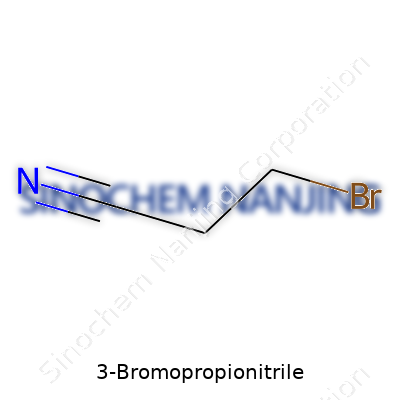
| Names | |
| Preferred IUPAC name | 3-Bromopropanenitrile |
| Other names |
3-Bromopropanenitrile 3-Bromo-1-cyanopropane 3-Cyanopropyl bromide β-Bromopropionitrile C3H4BrN n-Propionitrile, 3-bromo- |
| Pronunciation | /ˌθriːˌbroʊmoʊˌproʊpi.əˈnaɪtrəl/ |
| Identifiers | |
| CAS Number | 109-61-5 |
| Beilstein Reference | 1209227 |
| ChEBI | CHEBI:51901 |
| ChEMBL | CHEMBL16228 |
| ChemSpider | 14117 |
| DrugBank | DB07744 |
| ECHA InfoCard | 100.012.384 |
| EC Number | 211-253-9 |
| Gmelin Reference | 5874 |
| KEGG | C01344 |
| MeSH | D017209 |
| PubChem CID | 13541 |
| RTECS number | UF8225000 |
| UNII | YKE41DHQ1A |
| UN number | UN2877 |
| CompTox Dashboard (EPA) | 3-Bromopropionitrile: 'DTXSID80116493' |
| Properties | |
| Chemical formula | C3H4BrN |
| Molar mass | 120.01 g/mol |
| Appearance | Colorless to light yellow transparent liquid |
| Odor | Unpleasant |
| Density | 1.421 g/mL at 25 °C (lit.) |
| Solubility in water | Miscible |
| log P | 0.2 |
| Vapor pressure | 0.68 mmHg (25°C) |
| Acidity (pKa) | 21.0 |
| Basicity (pKb) | 2.94 |
| Magnetic susceptibility (χ) | -7.52×10⁻⁶ cm³/mol |
| Refractive index (nD) | 1.451 |
| Viscosity | 1.474 cP (25°C) |
| Dipole moment | 4.06 D |
| Thermochemistry | |
| Std molar entropy (S⦵298) | 309.6 J·mol⁻¹·K⁻¹ |
| Std enthalpy of formation (ΔfH⦵298) | –36.3 kJ/mol |
| Std enthalpy of combustion (ΔcH⦵298) | -3527 kJ/mol |
| Hazards | |
| GHS labelling | GHS02, GHS06 |
| Pictograms | GHS06 |
| Signal word | Danger |
| Hazard statements | H302, H312, H315, H319, H332, H335, H341, H373 |
| Precautionary statements | P210, P261, P280, P303+P361+P353, P304+P340, P305+P351+P338, P312, P337+P313, P403+P233, P501 |
| NFPA 704 (fire diamond) | 3*2*2*W |
| Flash point | 82 °C |
| Autoignition temperature | 485°C |
| Explosive limits | Explosive limits: 4.8–17.3% |
| Lethal dose or concentration | LD50 (oral, rat): 88 mg/kg |
| LD50 (median dose) | LD50 (median dose): Oral rat 41 mg/kg |
| NIOSH | RN 109-78-4 |
| PEL (Permissible) | PEL (Permissible exposure limit) for 3-Bromopropionitrile is not specifically established by OSHA. |
| REL (Recommended) | 10 ppm |
| IDLH (Immediate danger) | No IDLH established. |
| Related compounds | |
| Related compounds |
3-Chloropropionitrile 2-Bromopropionitrile Acrylonitrile Propionitrile 3-Bromopropionic acid |



