3-Bromo-1,2-Epoxypropane: An In-Depth Exploration
Historical Development
Chemists have searched for strong alkylating agents to advance synthetic chemistry since the early 1900s, always hunting for new routes to make complex molecules more accessible. 3-Bromo-1,2-epoxypropane grew out of this urge. The compound’s roots go back to early work on halogenated ethers and epoxides, used as key intermediates in pharmaceutical and organic synthesis. As the chemical industry matured, more controlled bromination and epoxidation processes appeared. Each breakthrough, whether from early German dye chemists or postwar pharmaceutical firms, got us closer to making intermediates like 3-Bromo-1,2-epoxypropane in bulk, reliably and cheaply.
Product Overview
3-Bromo-1,2-epoxypropane bridges the world of reactive halides and tension-packed epoxides. Its uses cross several fields, from drug development to specialized coatings. Wherever there’s a need to stitch carbon skeletons in tough ways, this product shows up as an intermediate or starting point. Synthetic paths favoring this compound often focus on the unique balance the epoxide ring and brominated carbon bring. Chemical suppliers that serve academic and industrial labs keep it stocked due to ongoing demand for such versatile intermediates.
Physical & Chemical Properties
This liquid doesn’t shy away from complexity. With a molecular formula of C3H5BrO, its density lands around 1.6 g/cm3. The boiling point hovers near 142°C, and it gives off a faint, sweet odor common to small halo-epoxides. The combination of a strained three-membered epoxide ring and a primary bromine atom brings reactivity at two distinct sites. The molecule’s polarity makes it reasonably soluble in organic solvents like ether, chloroform, and acetone, but less so in water. Handling it sometimes feels risky, since it can hydrolyze under moist conditions and the bromine invites nucleophilic attack.
Technical Specifications & Labeling
Industry suppliers often ship 3-Bromo-1,2-epoxypropane as a stabilized liquid, sealed tightly to keep moisture and light out. Purity runs from 95% for bulk industrial grades to 99% for research and pharma. Proper labeling lists not only its IUPAC name (2-bromomethyloxirane) but also hazard codes tied to toxic inhalation risk and corrosivity. Stockrooms give it a special spot with secondary containment and clear hazard diamonds—no chemist enjoys a surprise with a strong alkylator like this one.
Preparation Method
Lab-scale prep typically starts with allyl bromide and a strong oxidizing agent, like meta-chloroperoxybenzoic acid. The reaction targets the double bond, forming the strained oxirane ring while leaving the bromine installed on carbon three. Industrial manufacturing tightens this approach with better temperature and waste controls, sometimes shifting to alternative oxidants or solvent systems to scale up yield and safety. Each batch gets tested for epoxide content and residual bromide, as even tiny contaminations can throw off downstream syntheses. Even with modern automation, preparing this compound takes focus; one slip and you wind up with unwanted byproducts or dangerous exotherms.
Chemical Reactions & Modifications
This molecule invites action from nucleophiles—amines, thiols, alkoxides—all will open the ring with gusto, turning the three-membered oxygen into a diversity of functionalized three-carbon chains. That bromine atom rarely sits idle, either. Grignard reagents, cyanide, or even sodium alkoxides can swap the halide for something new, setting up routes toward amino alcohols, glycol derivatives, or even heterocycles with the right conditions. With the right sequence, a careful hand can turn a batch of 3-Bromo-1,2-epoxypropane into building blocks for antivirals, specialty polymers, or even agrochemicals.
Synonyms & Product Names
3-Bromo-1,2-epoxypropane shows up under several names across catalogs and literature: glycidyl bromide, bromomethyloxirane, and 3-bromopropylene oxide most commonly. Chemists sometimes get tripped up by abbreviations or trivial names that overlap with similar epoxides, so attention to full structure is key in order sheets and publications. Brands that supply specialized reagents often attach their own suffix, but the backbone identifiers remain consistent throughout the industry.
Safety & Operational Standards
Handling this compound always requires vigilance. Both the epoxide and alkyl bromide groups carry health hazards—rapid skin and eye irritancy, toxic vapor risk, and potential carcinogenicity. Institutions these days require fume hood work, goggles, and proper gloves before anyone pops a bottle open. Spill protocols and vapor sensors cut the chance of exposure, which matters after several published cases of accidental poisoning in careless or under-protected labs. Safe disposal demands incineration under carefully controlled conditions; lighter regulations or sloppy neutralization can send hazardous byproducts into wastewater, so oversight remains tight. Industry groups and academic EHS staff train chemists with real accident case studies on this specific molecule for these reasons.
Application Area
The pharmaceutical sector values 3-Bromo-1,2-epoxypropane for forging challenging carbon frameworks in small-molecule synthesis. Plant scientists count on it to access custom agrochemical precursors. In specialty polymers, the reactive sites set the stage for targeted cross-linking or end-group modifications, which can change how adhesives cure or resins perform in demanding environments. It has found use in preparing agents that modify proteins or DNA, so the biotechnology area also keeps it in their chemical arsenal. Research keeps finding new cross-coupling reactions or asymmetric syntheses, broadening this compound’s reach every year.
Research & Development
Scientists keep pushing for more selective, greener routes for making and using 3-Bromo-1,2-epoxypropane. Catalytic oxidation, use of less hazardous bromine donors, and solvent recycling top the list in recent literature. Some labs have built automated flow reactors to reduce worker exposure and improve product consistency, while start-ups tweak the reaction conditions to make processes work with renewable feedstocks. The quest for chiral modifications also keeps drawing grant money, since potential new drugs often need single-enantiomer intermediates. Chemistry journals fill with new reactions—radical additions, photoredox approaches, biocatalytic openings—all tested to see if product purity, safety, and yield see tangible improvements over old routes.
Toxicity Research
Studies in rodents and rabbits have shown acute toxicity from inhalation and skin exposure, due to the compound’s high reactivity with biological macromolecules. Experiments measure mutagenic effects and find DNA alkylation, an established driver of possible carcinogenicity. Chronic studies track liver, renal, and neurological endpoints to cover the full range of occupational hazards. Regulatory agencies use these numbers to set workplace exposure limits much below the odor threshold. Medical teams treating accidental exposure rely on knowledge from well-documented cases to guide antidote and decontamination efforts, so published research impacts real-world emergency care protocols. Environmental studies show that accidental release poses a risk to aquatic life, driving the push for tougher secondary containment and zero-discharge manufacturing zones.
Future Prospects
Smarter synthetic chemistry demands safer, more sustainable halogenated intermediates, so the ongoing development of process improvements doesn’t look likely to slow down. The move toward automation and ‘green’ chemistry will keep shaping how this compound is made, shipped, and used. Regulatory standards will only get stricter as toxicity data fills in. Custom applications in emerging pharmaceuticals and biomaterials create space for continued innovation, especially if researchers crack more selective activation or coupling routes. Long-term, materials and pharma sectors both count on access to tough carbon scaffolds, so 3-Bromo-1,2-epoxypropane’s profile will stay relevant. Doubling down on worker training, investment in safer process engineering, and more nuanced toxicity data will be key for anyone relying on this versatile reagent well into the next era.
What is the chemical structure of 3-Bromo-1,2-Epoxypropane?
Peeling Back the Atoms
Think of 3-Bromo-1,2-Epoxypropane like a small, energetic puzzle. Its backbone is a three-carbon chain, where the action happens at two specific spots. The first and second carbons hook together in a triangle by an oxygen atom, making a strained ring known as an epoxide. The third carbon grabs a bromine atom. This arrangement—one oxygen forming a tight ring and a bromine sticking out—means this molecule waits for the chance to spring into action. Its chemical formula is C3H5BrO.
Why Structure Packs a Punch
Ask any chemist: when you stick a bromine onto propane and weave in an epoxide ring, you build a small but fierce compound. Epoxides crack open easily, so they love to react. The bromine doesn’t just hang on silently; it pulls electrons, creating a spot prone to chemical attack. This setup lets 3-Bromo-1,2-Epoxypropane react with all sorts of molecules—alcohols, amines, water—sometimes explosively. Lab chemists use it to add three-carbon pieces into bigger molecules or to test new approaches in making polymers and pharmaceuticals.
Real-World Impact and Safety Concerns
In industrial chemistry, this molecule shows up as a starting point for building blocks used in specialty coatings, adhesives, even in fine-tuning certain drug ingredients. A few years ago, while working with a team on resin synthesis, we handled this compound—gloves and goggles essential. The epoxide ring irritates skin and eyes; even a whiff can sting your throat. Regulatory bodies like OSHA have set guidelines for using epoxides safely, given links to workplace illness and long-term health effects. They aren’t just being picky: exposure can cause nerve problems, and there’s evidence of potential cancer risks if mishandled.
Navigating Towards Safer Chemistry
One smart move already seen in several chemical plants involves switching to flow reactors, which keep 3-Bromo-1,2-Epoxypropane contained and lower the chance of spills or accidental exposure. Routine air monitoring and local exhaust hoods also keep vapor levels down. There’s continued research into alternatives with similar reactivity but fewer hazards—some biobased epoxides and non-halogenated versions show promise. Training and proper labeling remain basic but powerful tools: a solid safety culture makes the difference between an interesting synthesis and a dangerous accident.
The Broader Picture
Learning the lesson of 3-Bromo-1,2-Epoxypropane isn’t just about knowing electron arrangements. It shows how the tiniest differences in a molecule’s layout ripple out into safety concerns, product development, and even environmental impact. Better understanding the building blocks lets industries innovate while respecting the health of workers and surrounding communities. The structure shapes its reactivity, and that guides how carefully it must be handled—all the way from the beaker to the loading dock.
What are the main applications or uses of 3-Bromo-1,2-Epoxypropane?
What Stands Out About This Chemical
People working in chemistry or manufacturing probably know 3-Bromo-1,2-Epoxypropane pretty well, even if the name trips up the tongue. It’s a small molecule that packs a punch in the lab. What makes it valuable hooks right into its structure—a bromine atom and an epoxide ring together give chemists a kind of Swiss Army knife for making other stuff. But what does this actually mean for real work, real products, and real risks?
Turning Raw Materials into Necessary Products
I’ve seen research labs lean on this chemical for organic synthesis. Its structure allows for nifty ways to build complex molecules. In drug development, stepwise reactions with compounds like this one can create pharmaceutical building blocks. For specialists turning basic lab chemicals into life-saving drugs, 3-Bromo-1,2-Epoxypropane lets them add key functional groups where other reagents hit a wall.
Production of certain agrochemicals uses it for similar reasons: the chemical tweaks that boost a pesticide’s effectiveness often start with compounds that can open or close molecular rings, or stick extra atoms in exactly the right place. This stuff reliably offers those options. Without reagents like this, crops and harvests sometimes face bigger threats from pests that adapt over time.
Polymer and Material Science Applications
In materials science, researchers use 3-Bromo-1,2-Epoxypropane when building polymers with specialized properties. The epoxide group reacts well with other chemicals in plastics and resins, helping companies create coatings or sealing agents with improved strength or weather resistance. Watch any construction crew prepping an epoxy floor or an insulation panel—they benefit from the chemistry that starts on someone’s lab bench with molecules like this.
From what I’ve experienced, companies want small tweaks in formulas to hit industry standards on performance. This chemical enters the fray, adding reactive handles so engineers can spin out tough new polymers for electronics or even car parts.
Real Risks and Safety Considerations
No one in the trade ignores safety when handling 3-Bromo-1,2-Epoxypropane. It’s reactive—great for making molecules, not so great when it comes to skin or lungs. I’ve seen strict protocols in chemical plants: full protective gear, fume hoods, and regular training. Researchers keep a close eye on exposure limits, guided by regulations from groups like OSHA and information published by NIOSH.
Mistakes can leave workers exposed to pretty harsh health effects. Risks like skin burns or respiratory irritation remind us to take lab safety culture seriously, not just as a rulebook but as a habit.
Looking for Safer and Greener Alternatives
Some chemists now focus on finding less hazardous substitutes. Green chemistry has gained a bigger spotlight in the last decade. Less toxic reagents—and reactions that use less energy or create less waste—matter more each year. Research keeps pushing for ways to make needed molecules without sacrificing people’s health or planet health.
In my field, attention to these issues runs deep. Scientists trade tips online about greener protocols. Vendors highlight safer handling and disposal. Most progress flows from hard-won experience and a steady flow of data from real-world applications. The future likely includes fewer hazardous brominated chemicals, or at least tighter controls and better engineering.
What are the safety and handling precautions for 3-Bromo-1,2-Epoxypropane?
What Makes 3-Bromo-1,2-Epoxypropane Worth Discussing?
3-Bromo-1,2-epoxypropane falls into a group of chemicals that demand respect. It's a clear liquid, nothing flashy at first glance, but dig a bit deeper and it shows some teeth. Epoxides and alkyl halides can surprise you; both classes are known for their reactivity and health risks. I remember those safety meetings in grad school—everyone had stories about unexpected spills or vapors, and you’d hear the same grim advice: don’t treat it like water.
Personal Experience in the Lab
Ask any chemist with a few years on them—handling reactive epoxides is no joke. You always start with gloves, but not the cheap nitrile disposable kind. European safety data recommends butyl or laminated gloves since this stuff sneaks through thin layers and can soak your skin. I learned early on to spend a little more on proper protection rather than hope for no splash.
Goggles and a coat follow next. There’s a sharp, irritating smell that alerts you if the fume hood isn’t working right. More than once, I’ve seen folks get lax, step away from the sash, and end up feeling it in their throats. It's a stark reminder that inhaling vapors isn't just uncomfortable—overexposure brings headaches, irritation, and a higher risk of longer-term problems like asthma.
Why it Needs Caution
It’s tough to downplay what skin contact or inhalation brings. Toxicity data shows 3-Bromo-1,2-epoxypropane can burn, blister, and sensitize skin. Eyes are worse—you only get one set. The fire risk ramps up the concern. Spills in the wrong place go from irritating to dangerous fast, especially near hotplates or open flames. Epoxides react, sometimes violently, with amines or acids; brominated organics can release toxic, corrosive fumes.
Best Practices for Safer Handling
Never open a bottle outside a functioning fume hood. Don’t trust the nose—vapors linger even when they’re hard to smell. Keep fresh absorbent materials nearby in case of spills, and have a plan to neutralize and bag waste right away. Working alongside someone with more experience helps, especially for that first run. I once saw a new colleague skip the decontamination step after a splash; a minor rash turned into something worse, and a stint at the campus clinic slowed their project for weeks. Setting a protocol isn’t enough—everyone’s got to stick with it every time.
Storing and Disposing the Right Way
Leave this chemical far from acids, bases, and anything with active hydrogens. I learned the hard way—old, partially used bottles degrade faster if light or warmth get in. Before any disposal, combine waste with compatible solvents in marked, sealable containers. Let the campus environmental health crew deal with anything questionable. Pouring down the drain or tossing in the trash isn’t just against the rules; it risks groundwater, pipes, and health.
Ideas for Improvement
Better training saves hands and eyes. Short, real-life video walk-throughs beat a stack of printed data sheets. Keeping spill kits and emergency showers working, as well as the hoods, sets up a safer culture. Labs need easy labels and storage for hazards—anything to avoid the mistake of grabbing the wrong bottle.
Respect for chemicals like 3-Bromo-1,2-epoxypropane comes from seeing what happens up close. Seeing a glove dissolve or a messy splash reinforces just how quickly a routine day can turn costly. Mixing a respect for risk with straightforward habits—PPE, ventilation, storage, and backup from others—keeps more people in the lab and out of the hospital.
How should 3-Bromo-1,2-Epoxypropane be stored?
Understanding the Risks
3-Bromo-1,2-Epoxypropane grabs attention in the workplace once you take a closer look at its hazards. Its strong, sweet odor and colorless appearance don’t shout "danger," but health and safety officers know better. This chemical irritates the eyes, burns the skin, and does harm to the lungs if vapors build up. I’ve seen workers develop rashes or start coughing after a careless spill, so any misstep in storage can turn routine handling into an emergency. The Material Safety Data Sheet (MSDS) routes all users to the same conclusion—respect this chemical’s volatility and toxicity.
The Importance of Proper Storage Conditions
With 3-Bromo-1,2-Epoxypropane, even short-term lapses in proper storage matter. The liquid reacts fast with water and attacks metals. Any moisture around the storage space triggers decomposition, leading to hazardous byproducts—some of which easily ignite. I’ve worked in a lab where a single leaking bottle caused panic, corrosion, and damage to shelving. So, keeping the chemical away from sinks, windows, or even drafty ventilation ducts can prevent avoidable chaos.
Choosing the Right Containers
Glass bottles with tight lids outperform plastic and metal for many volatile chemicals. With 3-Bromo-1,2-Epoxypropane, glass resists attack and seals up fumes far better. Screwtop vials finished with PTFE (Teflon) liners make sense, since acids chew through metal caps. Anyone reusing containers for this chemical should audit them for old damage. On more than one occasion, I’ve watched reused containers degrade mid-shipment, costing time and creating hazardous waste.
The Value of Dedicated Storage Spaces
Isolation makes all the difference. Storing 3-Bromo-1,2-Epoxypropane on the same shelf with flammable solvents, acids, or water-reactive agents pushes luck too far. Shared experiences in academic and industrial labs taught many of us to lock away chemicals like this in their own ventilated cabinets, labeled with warnings and waterproof instructions. Flammable storage cabinets work well, but only if dry. A cheap hygrometer can reveal hidden risks by flagging rooms or cabinets running higher humidity.
Temperature Controls
Steady, cool temperatures hold the key to stability. Heat speeds up decomposition, so storerooms should avoid sources of warmth, direct sunlight, or nearby machinery. I’ve seen colleagues try to cut corners on storage space, stacking sensitive chemicals near autoclaves or steam pipes. Inevitably, the outcome included the stink of decomposing chemicals and at least one evacuation.
Staff Training and Ongoing Vigilance
Every safe storage plan depends on people, not just plans on paper. Labeling cupboards or training sessions about PPE won’t matter if staff cut corners or forget protocol during a rush. In every place I’ve worked, routine walkthroughs, inventory reviews, and honest conversations about near-misses helped keep dangerous materials like 3-Bromo-1,2-Epoxypropane where they belong—and kept accidents from repeating themselves. Alert, trained colleagues always spot a forgotten, leaking vial or a damp cabinet floor sooner, protecting everyone.
Room for Improvement
Tech can help, but only with commitment. High-volume labs and warehouses can invest in remote sensors for humidity, temperature, or even vapor leaks. Written guidelines lose power if nobody enforces them. The right culture rewards small corrections—wiping away condensation or relabeling a faded bottle—before they balloon into big repairs. In the end, the best solution comes from careful design, robust supplies, and people watching each other’s backs.
What is the molecular weight of 3-Bromo-1,2-Epoxypropane?
Understanding Why Numbers Matter in Chemistry
Calculations in chemistry can seem intimidating at first. Picking apart a formula for something like 3-Bromo-1,2-Epoxypropane goes a lot further than impressing a lab instructor. It guides applications in real labs and factories. Getting the math right doesn’t save face, it sometimes keeps people safe and production lines steady.
Crunching Numbers: The Calculation
Let’s break it down. Each atom contributes to a molecule’s heft. With 3-Bromo-1,2-Epoxypropane, the formula is C3H5BrO. To find the molecular weight, count every atom:
- 3 Carbon atoms: 3 x 12.01 g/mol = 36.03 g/mol
- 5 Hydrogen atoms: 5 x 1.008 g/mol = 5.04 g/mol
- 1 Bromine atom: 1 x 79.90 g/mol = 79.90 g/mol
- 1 Oxygen atom: 16.00 g/mol
Add them all:
- 36.03 + 5.04 + 79.90 + 16.00 = 136.97 g/mol
The Bigger Picture in the Lab
That 136.97 g/mol isn’t useless trivia. I remember working with epoxy compounds in a small industrial paint shop. One wrong measurement could kill a batch of coating or worse, trigger a fume event. Accurate weights let everyone scale their reactions properly. Workers adjusting for a solution with a percent concentration aren’t guessing, they’re relying on numbers from a periodic table, not back-of-the-envelope math.
Some years back, a team near my city ran into trouble with brominated organics. They estimated molecular weight on the fly and ended up with a solution that failed quality tests. The cost wasn’t just a wasted day. They spent a week hunting down the error, only to find the problem started with a single numeric mistake. Multiply that by a few million liters and the impact on the plant’s bottom line grows painful fast.
Why Chemists Insist on Precision
Safety comes up repeatedly in chemical fields. Knowing the exact weight of what you’re dealing with can mean the difference between a controlled reaction and a hazardous mess. In research labs, I’ve seen protocols stopped cold until calculations check out. Trust in science starts with the small details, molecular weight being one of them.
It’s not just about people in coats mixing things in beakers. Pharmaceutical companies audit these numbers before sending any medicine to market. Regulators expect no less. Any slip—using a compound with the wrong mass—might lead to failed batches, spoiled data, or compliance investigations.
Keeping Mistakes in Check
Reliable chemistry leans on shared tables, careful double-checking, and using software to back up the math. Even seasoned professionals pull out calculators, not because they doubt their memory, but because accuracy pays off. Mistakes in chemistry rarely stay small. A decimal in the wrong place not only disrupts the science, it often bites into the budget or, worse, safety standards.
Putting the Number to Work
So that number—136.97 g/mol—roots itself in practical daily decisions. A student learning it today or a process engineer measuring out a batch tomorrow essentially draw on the same need: numbers everyone can trust. Chemistry proves the value of small details, and the molecular weight of compounds like 3-Bromo-1,2-Epoxypropane sets the stage for safer, smarter, and more consistent real-world work.
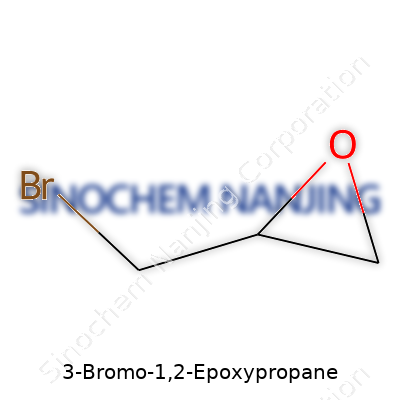
| Names | |
| Preferred IUPAC name | 2-(Bromomethyl)oxirane |
| Other names |
Epibromohydrin 1,2-Epoxy-3-bromopropane 3-Bromopropylene oxide |
| Pronunciation | /ˈθriːˈbroʊmoʊ waɪn tuː ɪˈpɑksiˌproʊpeɪn/ |
| Identifiers | |
| CAS Number | 3132-64-7 |
| Beilstein Reference | 80052 |
| ChEBI | CHEBI:63989 |
| ChEMBL | CHEMBL155984 |
| ChemSpider | 56571 |
| DrugBank | DB02273 |
| ECHA InfoCard | 03fc184e-7db0-4c58-b7d2-2f730c6690be |
| EC Number | 202-480-9 |
| Gmelin Reference | 8228 |
| KEGG | C06427 |
| MeSH | D001986 |
| PubChem CID | 7556 |
| RTECS number | UI1575000 |
| UNII | 819F4J6VWM |
| UN number | UN2556 |
| Properties | |
| Chemical formula | C3H5BrO |
| Molar mass | 170.00 g/mol |
| Appearance | Colorless to light yellow liquid |
| Odor | Strong unpleasant odor |
| Density | 1.463 g/mL at 25 °C (lit.) |
| Solubility in water | Soluble in water |
| log P | 0.1 |
| Vapor pressure | 0.7 mmHg (20°C) |
| Acidity (pKa) | 14.27 |
| Basicity (pKb) | –1.31 |
| Magnetic susceptibility (χ) | -82 × 10⁻⁶ cm³/mol |
| Refractive index (nD) | 1.449 |
| Viscosity | 1.696 cP (20°C) |
| Dipole moment | 2.96 D |
| Thermochemistry | |
| Std molar entropy (S⦵298) | 322.6 J·mol⁻¹·K⁻¹ |
| Std enthalpy of formation (ΔfH⦵298) | -92.7 kJ/mol |
| Std enthalpy of combustion (ΔcH⦵298) | -2210.7 kJ/mol |
| Hazards | |
| GHS labelling | GHS02, GHS05, GHS06, GHS07 |
| Pictograms | GHS02,GHS05,GHS06 |
| Signal word | Danger |
| Hazard statements | H301 + H311 + H331, H314, H341, H350 |
| Precautionary statements | P210, P261, P273, P280, P301+P312, P305+P351+P338, P308+P313 |
| NFPA 704 (fire diamond) | Health: 3, Flammability: 2, Instability: 2, Special: |
| Flash point | 71 °F (22 °C) |
| Autoignition temperature | 215 °C (419 °F; 488 K) |
| Lethal dose or concentration | LD₅₀ (oral, rat): 1140 mg/kg |
| LD50 (median dose) | LD50 (median dose) = 500 mg/kg (oral, rat) |
| NIOSH | PA8225000 |
| PEL (Permissible) | PEL: 5 ppm (parts per million) |
| REL (Recommended) | 2 ppm |
| IDLH (Immediate danger) | IDLH: 100 ppm |
| Related compounds | |
| Related compounds |
Epichlorohydrin Epibromohydrin 1,2-Epoxypropane 3-Chloro-1,2-epoxypropane Glycidol |



