3-Aminophenol: Chemistry, Impact, and a Glimpse into Its Future
Historical Development
Chemistry students quickly learn that 3-aminophenol doesn’t have the storybook history of compounds like penicillin, but its steady presence speaks volumes. Chemists identified and isolated this compound back in the golden age of coal tar studies, sifting through aromatic amines in a drive to crack open new worlds of synthetic dyes and pharmaceuticals. Curiosity led early scientists to explore the relationships between coal-tar derivatives, uncovering 3-aminophenol as a bridge between simple benzene chemistry and more specialized fields. Its development tangled with the birth of synthetic colorants, giving rise to new hues and expanding the toolbox for industries long before modern pharmaceuticals joined the party.
Product Overview
3-Aminophenol built its reputation as a modest but reliable player in chemical synthesis and applied science. Sometimes overlooked by casual observers, it delivers the raw versatility needed in both research and industry. Its molecular structure—one amino group and one hydroxyl group sitting on opposite sides of a benzene ring—translates directly to function. Those two chemical handles open doors to reactions needed in dye production, hair colorants, and many pharmaceuticals. Companies and labs have relied on it for decades to create compounds that would stand up to scrutiny, or work reliably batch after batch.
Physical & Chemical Properties
3-Aminophenol usually appears as off-white or tan needle-like crystals, sometimes a powder when finely processed. It sports a melting point a little above 120°C, a detail of practical value for anyone purifying or handling it on an industrial scale. It barely dissolves in cold water, but delivers better solubility in hot water, alcohol, or ether. Chemists appreciate the dual reactivity: the amino group nudges it toward basic or nucleophilic activity, and the hydroxyl group doesn’t hesitate to show its phenolic side. This combination means it readily forms a suite of derivatives and keeps its chemistry approachable without meandering into excessive complexity.
Technical Specifications & Labeling
Clear labeling of 3-aminophenol lots is the only way to avoid confusion—anyone who has ordered similar aromatic amines knows that even minor impurities or wrong isomers upend entire projects. Reliable suppliers stake their names on purity levels, moisture content, and the absence of hazardous contaminants. Storage recommendations usually emphasize dry, cool conditions because this compound degrades quicker in moist air or under heat. Lot numbers link batches to their respective certificates of analysis, backing up any claims of specification with hard data rather than empty sales talk.
Preparation Method
Laboratories and commercial plants alike turn to classic nitration-reduction methods for producing 3-aminophenol. They start with m-chlorophenol or m-nitrophenol and run a reduction—using reducing agents such as iron filings and hydrochloric acid, or catalytic hydrogenation for added efficiency and cleaner waste. Craftsman-level monitoring matters at every step, since reaction conditions or choice of precursor influence not only yield but also possible byproducts. Those who remember the unexpected colors and residues left behind in school labs never dismiss the importance of fine-tuning conditions or working up the crude product with care.
Chemical Reactions & Modifications
This compound shows its flexibility when secondary chemistry comes into play. The amino group accepts acetylation, diazotization, or even sulfonation, producing intermediates for dye-makers and pharmaceutical chemists. The hydroxyl group serves as a launching pad for ether or ester formation. Reactivity in both the para and ortho positions further multiplies the options, resulting in a deep portfolio of derivatives. Anyone who has spent time synthesizing substituted phenols can recall how a single sulfonation changes a routine structure into a specialized agent for photographic developers or colorants.
Synonyms & Product Names
Most chemical vendors and researchers recognize 3-aminophenol by several aliases: m-aminophenol, meta-aminophenol, or 3-hydroxyaniline. Each name points to its core structure—a benzene ring with amino and hydroxy groups spaced one carbon apart. Research journals and safety data sheets rotate among these synonyms, sometimes creating confusion, especially for those cross-referencing older literature or searching international catalogs. Pinning terminology to regulatory IDs and ensuring reference to CAS numbers smooths out the bumps, a practice any long-term lab manager would call essential.
Safety & Operational Standards
Handling 3-aminophenol means more than donning gloves and goggles. Overexposure can irritate skin, eyes, and respiratory passageways. Safety data points to its moderate toxicity; repeated exposure or poor ventilation increases risks. The aromatic amine group raises a flag for potential genotoxicity, making careful control and procedural discipline non-negotiable in labs and on plant floors. The responsible use of fume hoods, tight inventory control, and proper labeling all add layers of protection. Once, while working on a dye synthesis as a student, a friend’s careless splash emphasized how unpleasant even mild skin contact felt—a lesson reinforced by proper safety training.
Application Area
3-Aminophenol stands as a mainstay in producing synthetic dyes, especially for textiles and hair coloring products. Its chemical backbone forms the foundation for oxidative hair dyes, offering deep browns and blacks that persist through countless washes. In pharmaceuticals, this compound steps into the synthesis of molecules that treat a range of disorders. Photographic developers lean on its redox potential to develop silver-based images—a fascinating use that transformed analog photography. Its uses in building blocks for agrochemicals and stabilizers solidify its value outside of headline-making products, serving quietly but indispensably behind the scenes.
Research & Development
Scientists study 3-aminophenol and its reactions to push the boundaries of synthetic color chemistry, targeting new hues and better stability. Pharmaceutical researchers value it as a starting point for creating more selective enzyme inhibitors, thanks to the balance of polarity and reactivity in its structure. Work continues both in academic and corporate labs, chasing lower-toxicity analogs and seeking greener synthesis routes. As the regulatory spotlight intensifies on aromatic amines, innovation pivots toward reducing hazardous byproducts and exploring renewable feedstocks. Seeing this shift firsthand at conferences and in publications points to a clear trend: chemistry with conscience now drives discovery.
Toxicity Research
The safety conversation around 3-aminophenol brings up worries about mutagenicity and cumulative exposure. Studies in animals show intermediate toxicity, prompting regulatory bodies to watch its use in consumer products. Inhalation, ingestion, or severe skin contact all bring health risks. The aromatic amine group especially comes under suspicion, following decades-long awareness of its links to carcinogenicity in related compounds. Many labs seek substitute colorants or process aids with improved safety profiles, nudged by both hard data and precautionary principles. Personal experience in regulatory compliance highlighted how rapidly the accepted exposure limits can tighten if new data warrants caution.
Future Prospects
The next chapter for 3-aminophenol looks challenging but not bleak. Sustainable synthesis gains traction as new processes slash waste and hazardous solvent use. Research into non-toxic analogs and alternate uses underlines ongoing scientific curiosity, supported by advanced computational modeling and automation in both academia and industry. As sustainability targets tighten, expect even more pressure to innovate with better purification, greener reactions, and closed-loop manufacturing. New applications emerge as scientists dig into niche uses—from electronic materials to advanced imaging—proving that no established compound ever stops evolving. Having watched the field mature over years, optimism persists that 3-aminophenol will keep finding space in high-value applications for those willing to adapt.
What is 3-Aminophenol used for?
The Place of 3-Aminophenol in Modern Industry
Step into a college chemistry lab or a major pharmaceutical plant, and you’ll find plenty of chemicals with names hard to pronounce and even trickier to remember. Among them, 3-aminophenol stands out. The name sounds harmless, maybe a bit mysterious, but this compound shapes products used every day.
Behind The Scenes: Hair Dye and Beyond
Ask a hairstylist about coloring products, and there's a chance 3-aminophenol helps fuel the magic. This molecule forms the backbone in many permanent and semi-permanent hair dyes. Companies lean on it because it can create rich shades and stays stable under the harsh conditions you find in salons. I remember talking to a stylist in my neighborhood who explained how certain dyes last longer, and it surprised me to learn chemistry makes the difference.
The compound’s use doesn't stop at cosmetics. Pharmaceutical companies look to 3-aminophenol as a building block. It helps craft pain relievers and fever reducers because its structure allows for changes that lead to safe and effective medicines. Paracetamol, one of the world’s most-used painkillers, finds its origin story here. The ability to take something as common as a headache and knock it out quickly ties back to advances with chemicals like this one.
Dyes for Textiles and Photographic Needs
Modern clothing owes a debt to chemistry too. Synthetic dyes keep colors bright after hundreds of washes. 3-aminophenol steps in to link molecules and build dyes that resist fading, which means those favorite jeans look just as good after months of wear. Textile factories rely on these properties to keep up with fashion trends and consumer demands for eyewatering colors that last.
Photography once depended heavily on chemicals, and traditional black-and-white film development would struggle without 3-aminophenol. Even as digital cameras have swept in, researchers still use the compound in image processing and specialized printing. From art students in their first darkroom, to major archive projects scanning and restoring old prints, this molecule keeps having a role behind the scenes.
Safety Concerns and Solutions
There’s no escaping that every chemical has a flip side. Mishandling 3-aminophenol brings risks. Direct exposure can irritate skin and eyes. Breathing the dust might trouble the lungs. Manufacturing environments need tight controls: fume hoods, gloves, masks, and strict training keep workers safe. Big companies audit safety routines carefully, but stories from underregulated factories show what happens when corners get cut. Accidents and health emergencies remind everyone why chemical safety matters.
Better solutions sit within reach. Switches to greener dyes and safer alternatives in medicines continue to grow. Research pushes for less hazardous ways to get the same results, which reduces harm without losing effectiveness. Regulatory bodies like OSHA in the U.S. and REACH in Europe press for higher standards, drawing lessons from real-world mistakes and successes alike.
Factoring in the Future
For anyone curious about what goes into making common items, this compound’s journey from a simple bottle in a lab to coloring hair or fighting pain says a lot about the balance between innovation and responsibility. By asking tough questions—How can these chemicals serve us better? How do we shield workers and the public from harm?—we stand a chance to keep products both useful and safe.
What is the molecular formula of 3-Aminophenol?
Digging Into the Chemistry
Ask a chemist about 3-Aminophenol and watch their eyes light up. The molecular formula—C6H7NO—looks simple at first glance, but it packs plenty of meaning for anyone picking up a lab beaker or writing a regulatory dossier. This formula tells us there are six carbon atoms, seven hydrogens, one nitrogen, and one oxygen assembled in a precise ring. Years in the lab have shown me that each atom counts, especially with aromatic compounds like this one, where tinkering a single hydrogen or swapping the position of the amino group can flip a molecule’s whole personality—from mild to dangerously reactive or even unusable in synthesis.
Where C6H7NO Shows Up
The story of 3-Aminophenol isn’t just for textbook diagrams. This compound serves as a key ingredient in hair dyes and pharmaceutical precursors. Years ago, while doing a stint in a formulation lab, I found that subtle changes in the raw material made all the difference for a batch of painkillers. Shoddy supply chain controls would lead to trace impurities that turned a predictable reaction into a messy nightmare. Getting the formula right every single time meant no headaches down the road—literally and figuratively.
Safety and Regulation Matter
News about chemical mishaps often misses the root cause: gaps in training or failure to respect the details. The molecular formula gives a direct route to calculating mole ratios, hazard class, or toxicity predictions. For 3-Aminophenol, that nitrogen atom belongs to an amine group, which changes how it interacts with both living tissue and the environment. Any chemist dealing with safety sheets or compliance forms can’t afford to gloss over such features—missing a functional group could mean missing warnings about how a spilled solution might behave.
The Bigger Picture
Years of reading safety data sheets and watching industrial chemists at work taught me that precision doesn’t just satisfy curiosity. Getting fundamental facts right keeps production lines running, lets drug companies keep costs in check, and above all, guards health. I remember working on a dye project for a textile mill—substituting a positional isomer, like using 2-Aminophenol instead of 3, produced a weaker color that washed out after a few rinses. Nobody wants a shirt that fades after two cycles. Minor details in the molecular makeup make or break quality for both the lab staff and the end customer.
Stronger Science Through Shared Knowledge
Anyone with a background in teaching or mentoring can tell you: building a culture that values information sharing helps everyone. The simple fact of a formula like C6H7NO isn’t just trivia—it’s a cornerstone for decisions up and down the value chain. Encouraging young researchers and production staff to check formulas, to ask tough questions, and to probe experimental results tightens up outcomes across medicine, manufacturing, and environmental science. My experience says this isn’t just about following rules. It’s about building habits that lead to safer products and trustworthy data.
Is 3-Aminophenol hazardous or toxic?
Real Risks on the Table
3-Aminophenol works its way into many workplaces and labs. Factories use it to make dyes, pharmaceuticals, and hair colors. So the question comes up a lot: Is it hazardous? From my years covering science and industry, I’ve seen a pattern. A chemical might sound innocent on paper, but step into a lab, and the story changes. 3-Aminophenol falls right into this category.
Touch and Breath: Two Ways 3-Aminophenol Hits You
Get this stuff on your skin, and you’re likely to feel it. It irritates the skin fast, giving that itching or burning sensation nobody enjoys. A bigger splash can cause redness or swelling. Breathing in the dust or vapor isn’t much better. Coughing, sore throats, and sometimes headaches show up. Some workers tell stories of feeling out of sorts after an eight-hour shift handling the powder form.
While looking into this, I came across Material Safety Data Sheets that mention the chemical’s acute toxicity. In rat studies, the lethal dose sits at less than a gram per kilogram. It’s not the deadliest compound out there, but calling it safe ignores what happens during accidents and long-term exposure.
Eyes, Environment, and Long-term Concerns
Eyes take the brunt if dust gets airborne. Splashes burn and can damage the outer layer of your eyes. Years ago, someone from a dye manufacturing plant told me about a small spill in their mixing area. A coworker took off their goggles for just a minute. The emergency room visit that followed was a wake-up call for the entire team.
Runoff from manufacturing plants adds another layer. Tests on fish and aquatic life suggest it causes serious harm even in small amounts. 3-Aminophenol doesn’t vanish after leaving the drain. It sticks around in the environment, and local streams can pay the price. Environmental Protection Agencies rank it as hazardous waste in several regions, a sign they recognize what even a small spill can do.
The Mounting Case for Respect and Caution
I’ve seen folks treat 3-Aminophenol like a casual ingredient, tossing open bags or skipping gloves. All it takes is a rushed moment or an unexpected draft to create a real mess. Hand protection, eye shields, and fume hoods don’t just tick boxes on a safety checklist — they keep people out of the hospital. Proper training goes further than any label or warning sticker stuck on the drum.
It makes sense to have strict storage rules. Keep the chemical dry and label every container clearly. Routine air quality checks and spill kits within reach change the outcome of a bad day. For small businesses and labs that don’t have an assigned safety officer, assigning clear responsibility and refresher briefings can protect everyone. Ask anyone who’s cleaned up after a spill — those measures save more than equipment.
Better Choices on the Horizon?
Some research groups seek safer alternatives for hair coloring or drug synthesis. Switching to less hazardous chemicals takes time, investment, and good chemistry know-how. Until those alternatives become mainstream, real awareness and respect for 3-Aminophenol’s hazards protect workers and the environment. Anyone handling this compound owes it to their coworkers and community to keep the risks front and center.
What are the storage conditions for 3-Aminophenol?
A Closer Look at 3-Aminophenol
3-Aminophenol holds a key spot in the world of dyes, pharmaceuticals, and specialty chemicals. With a white or slightly brownish appearance, it doesn’t look much different from sugar at first glance. But that doesn’t mean you can just toss it in a bin and forget about it for a few weeks. As someone who’s spent time in labs dealing with both the punishing humidity of summer and the surprise cold snaps that can ruin a batch, I can say storage matters for every chemical—especially for compounds like this.
Stability Hinges on the Basics
This compound reacts easily with air and light. If left open to the elements, it absorbs moisture fast. A decade ago, I learned the hard way: a cracked jar lid on my shelf meant the whole batch caked up by the next morning. That clumping means it may break down or form byproducts, and in a research or manufacturing setting, a spoiled batch can set back a project by weeks. You find yourself checking not just the product, but the environment itself every single day.
Temperature: The First Line of Defense
Room temperature sounds simple, but in a facility without reliable climate control, temperature swings play with the product’s shelf life. I’ve worked with technicians who loved to keep everything at a steady 20 to 25°C. Heat speeds up unwanted reactions, turning a valuable compound into a messy puzzle. Keeping it away from sources of heat—no sunny windowsills, no storage near steam lines—makes a difference you notice in yield and reliability. Cold rooms do help, but there’s no need to freeze it; stability comes from consistency, not extremes.
Keeping Out Air and Water
Most people think about the solid, but the real trouble comes from the air above it. Moisture in the air hits 3-aminophenol and turns it sticky and lumpy. Air-tight containers with a good seal, made from glass or HDPE plastics, block out that threat. I always toss in a few silica gel packets. They do the quiet, everyday job of drying out the inside air—a $2 insurance policy that has saved me from a dozen headaches.
No Light, Less Trouble
Light, especially UV, breaks down chemicals before your eyes. After watching a sample lose its color in a jar set out by the wrong window, I started storing everything in amber glass. Those brown bottles matter. If glass isn’t available, I wrap containers in aluminum foil. Small steps cut the risk of breakdown and keep the compound fit for most sensitive uses, from pharmaceuticals to dyes.
Safety and Compliance Drive Good Habits
The MSDS for 3-aminophenol makes it clear: inhalation or skin contact causes irritation, and dust isn’t your friend. Fume hoods, gloves, and goggles aren’t just rules—they’re the habits that leave you healthy year after year. Labeling matters, too. Clear dates and hazard warnings mean no one will mistake this for an off-brand sweetener. That labeling culture stops mix-ups and gives every container a traceable history.
Handling Spills and Waste
If a spill happens, keep the area ventilated and use suitable absorbents. Don’t just sweep it into a trash can. Dedicated chemical waste bins and regular removal days, not the general garbage, keep everyone safe and in line with local regulations. Good practices make disposal straightforward and head off calls from regulators who want to see everything in good order.
Solutions That Stick
Simple steps—air-tight packaging, low humidity, stable temperatures, dark storage, and clear labels—add up, protecting both product quality and worker safety. Chemical management doesn’t take a PhD, but respect for small details saves money and time. Trust grows fastest when people keep each other—and the world around them—safe through daily routines that never cut corners.
What is the difference between ortho, meta, and para aminophenol?
Building Blocks: How Arrangement Shapes Aminophenol
In the world of chemistry, small tweaks make a big difference. Aminophenol, a basic organic molecule with both an amino group (NH2) and a hydroxyl group (OH) on a benzene ring, comes in three forms: ortho, meta, and para. Once you dive into their differences, you notice just how much impact the arrangement can have on their uses and properties.
Ortho Aminophenol: Close Companions
Ortho aminophenol places the two functional groups right next to each other. Put simply, the OH and NH2 groups sit side by side on the benzene ring. This closeness creates strong internal hydrogen bonds, which makes ortho aminophenol slightly less soluble in water compared to its counterparts. In the pharmaceutical industry, this form serves as a core ingredient for certain painkillers and dyes. I remember reading about its use in developing older hair dye formulas, where its reactivity produced vivid colors that held fast to hair fibers. Such characteristics make it prized in settings where chemical reactions need a bit of a push from built-in hydrogen bonding.
Meta Aminophenol: A Bit More Distant
Meta aminophenol spaces out the amino and hydroxyl groups, putting one carbon between them. With this separation, the molecule behaves differently. Internal hydrogen bonding isn't as strong, which opens new doors for how it interacts in chemical reactions. This quality gives meta aminophenol a specialty in certain photographic developers and resin production. Factories rely on this form for making resins that coat circuit boards, providing durability without unnecessary brittleness.
Para Aminophenol: Opposite Sides, Distinct Roles
Para aminophenol places the two groups opposite each other on the ring. Years ago, as a curious student mixing chemicals in a cramped college lab, I discovered that para aminophenol dissolved more easily. No surprise there—its structure lets water molecules interact freely with both functional groups. This property isn’t just theoretical. It underpins para aminophenol's role as the main starting material for making paracetamol (also called acetaminophen), the pain and fever medicine found in nearly every household. Pharmaceutical manufacturing depends on the para form for efficiency and purity, helping to keep production costs down for a medicine millions rely on. This structure also suits the textile industry, since it creates uniform dye color and stability even after lots of washing.
The Real-World Stakes
Knowing the difference between ortho, meta, and para isn’t academic trivia. It shapes choices manufacturers make every day—from ensuring drug safety to creating reliable industrial materials. Skipping over these distinctions risks mistakes, wasted resources, or poor product performance. Companies have learned the hard way that substituting one form for another, thinking it won’t matter, ends up costing more in recalls or production slowdowns. Paying attention to the details helps chemistry support modern life, whether that’s in health, technology, or as part of basic research.
Fine-Tuning Chemistry for Better Outcomes
What’s the way forward? Companies need to keep running thorough chemical analyses and investing in research. Universities should help students see theory in action, arranging real-world labs to show these differences firsthand. Better safety training and stricter sourcing rules also help keep mistakes from reaching the consumer. As more industries chase sustainability, fine control over molecular structure will help with recycling, lowering energy use, and engineering next-generation pharmaceuticals. Getting the details right with ortho, meta, and para aminophenol might not make headlines, but it steers the future of chemistry in practical ways.
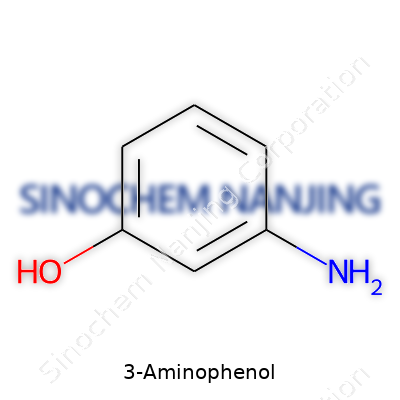
| Names | |
| Preferred IUPAC name | 3-Aminophenol |
| Other names |
m-Aminophenol meta-Aminophenol 3-Hydroxyaniline 1-Amino-3-hydroxybenzene |
| Pronunciation | /ˈæmɪnoʊˌfiːnɒl/ |
| Identifiers | |
| CAS Number | 591-27-5 |
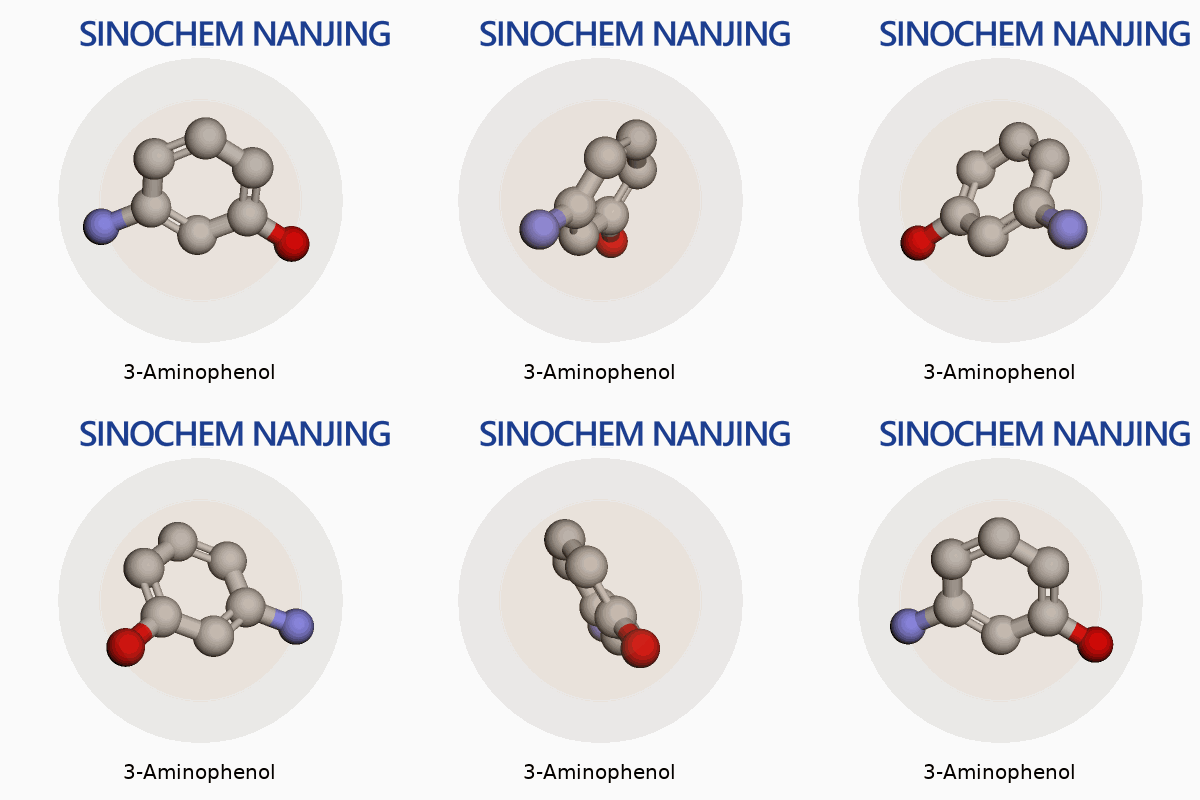
| 3D model (JSmol) | `3DModel: "3-aminophenol|JSmol" = "3D;16c-1-2-13(3-4-16-5-6-11-14)8-7-15(9-10-12)"` |
| Beilstein Reference | 632101 |
| ChEBI | CHEBI:17618 |
| ChEMBL | CHEMBL14035 |
| ChemSpider | 54671 |
| DrugBank | DB04468 |
| ECHA InfoCard | 100.052.800 |
| EC Number | 205-481-9 |
| Gmelin Reference | 83458 |
| KEGG | C00778 |
| MeSH | D02.092.050.050 |
| PubChem CID | 13411 |
| RTECS number | BX3430000 |
| UNII | Q40H964FSJ |
| UN number | UN2512 |
| Properties | |
| Chemical formula | C6H7NO |
| Molar mass | 109.13 g/mol |
| Appearance | White to beige crystalline solid |
| Odor | ammonia-like |
| Density | 1.18 g/cm³ |
| Solubility in water | freely soluble |
| log P | 0.24 |
| Vapor pressure | 0.0345 mmHg (25°C) |
| Acidity (pKa) | 9.8 |
| Basicity (pKb) | 4.74 |
| Magnetic susceptibility (χ) | -69.0·10⁻⁶ cm³/mol |
| Refractive index (nD) | 1.293 |
| Viscosity | 3.6 mPa·s (25°C) |
| Dipole moment | 1.51 D |
| Thermochemistry | |
| Std molar entropy (S⦵298) | 106.6 J·mol⁻¹·K⁻¹ |
| Std enthalpy of formation (ΔfH⦵298) | -20.3 kJ/mol |
| Std enthalpy of combustion (ΔcH⦵298) | -3064 kJ/mol |
| Pharmacology | |
| ATC code | D03AX03 |
| Hazards | |
| Main hazards | Harmful if swallowed, causes skin and eye irritation, may cause allergic skin reaction, harmful if inhaled. |
| GHS labelling | GHS02, GHS07 |
| Pictograms | GHS07,GHS05 |
| Signal word | Warning |
| Hazard statements | H302, H315, H319, H335 |
| Precautionary statements | P261, P264, P280, P301+P312, P302+P352, P305+P351+P338, P312, P330, P337+P313, P501 |
| NFPA 704 (fire diamond) | 2-1-0 |
| Flash point | 138°C |
| Autoignition temperature | The autoignition temperature of 3-Aminophenol is "500°C (932°F)". |
| Lethal dose or concentration | LD50 oral rat 375 mg/kg |
| LD50 (median dose) | LD50 (median dose): Oral rat 810 mg/kg |
| NIOSH | B0170 |
| PEL (Permissible) | PEL: Not established |
| REL (Recommended) | 1–5g |
| Related compounds | |
| Related compounds |
2-Aminophenol 4-Aminophenol Phenol Aniline |



