3,5-Dinitrobenzoyl Chloride: Navigating Its Pathways and Risks
Historical Development
3,5-Dinitrobenzoyl chloride traces its roots back to the rise of synthetic organic chemistry in the late nineteenth century. Chemists exploring aromatic nitrations found that attaching nitro groups to benzene rings created a remarkable class of compounds. Among these, dinitro derivatives quickly became tools in dye and pharmaceutical research because their distinct electron-withdrawing effects shifted molecular behaviors in ways that intrigued researchers. Laboratories, especially in Europe, experimented with benzoyl chloride derivatives as platforms for further structural modifications. The making of dinitrobenzoyl chloride followed the gradual refinement of nitration techniques and advancements in controlling harsh reaction conditions. Its history reflects the broader interest in transforming basic aromatic compounds into building blocks for more complex molecules—years of trial and error pushing forward the practical know-how for dealing with reactive and, frankly, challenging intermediates.
Product Overview
3,5-Dinitrobenzoyl chloride stands out among acid chlorides for its dual nitro substitutions at the meta-positions on the aromatic ring. The nitro groups adjust the reactivity and solubility, making this chemical a favorite for selective derivatization of amines and alcohols in research settings. People turn to it for applications where standard benzoyl chloride just doesn’t provide enough driving force or specific reactivity. For experienced organic chemists, its ability to add a strongly electron-deficient moiety drives interest not only in analytical chemistry but also in the design of new polymers and migration-resistant dyes. This is not a chemical one stumbles upon by chance or finds in common consumer products; it has carved out a niche in industrial and scientific labs focused on synthesis and analytical detection.
Physical & Chemical Properties
Holding a pale yellow to light tan appearance in solid form, 3,5-dinitrobenzoyl chloride emits a pungent, acrid odor typical of reactive acid chlorides. It isn’t exactly pleasant to handle without proper protection. This compound melts at elevated temperatures and boils with considerable decomposition. Solubility skews toward organic solvents; it dissolves efficiently in acetone, chloroform, and dichloromethane, while water contact sparks hydrolysis. The presence of nitro groups at the 3 and 5 positions pulls electron density away, making the acyl chloride even more eager to participate in acylation reactions. Unchecked moisture or strong nucleophiles quickly crack open the acyl chloride, breaking it down to its corresponding acid and giving off clouds of irritating gas—during lab work, caution comes first every time.
Technical Specifications & Labeling
Labeling for this compound typically reflects recognized hazard standards. Suppliers flag irritant, corrosive, and environmental hazard symbols, and include tightly regulated storage instructions: keep it dry, sealed, and away from reducing agents. Purity generally sits at 98 percent and up for research-grade material, since contamination with even minor impurities sparks unpredictable side reactions, especially in quantitative analysis or pharmaceutical synthesis. In my experience, labs receiving shipments log them immediately, double-check lot numbers, and store vials in tightly controlled cabinets. Accurate technical information on labels prevents mishaps; regulatory compliance isn’t an afterthought but an active safeguard when dealing with strong acylating agents.
Preparation Method
Synthesis of 3,5-dinitrobenzoyl chloride relies on carefully controlled chemical steps. Starting from 3,5-dinitrobenzoic acid, labs typically treat the acid with excess thionyl chloride or phosphorus pentachloride. These reagents strip out hydroxyls and introduce the acid chloride, with nitro groups lending additional complexity by affecting reaction rates and byproduct formation. Performing the reaction under inert atmosphere and anhydrous conditions helps suppress side reactions and dangerous fume generation. Post-reaction, purification by recrystallization sifts out unreacted materials, with solvent choices guided by the solubility of impurities. Researchers with hands-on experience know: Rushing this synthesis or ignoring small changes in temperature or moisture can mean costly losses—or hazardous releases.
Chemical Reactions & Modifications
In the realm of aromatic acid chlorides, 3,5-dinitrobenzoyl chloride offers enhanced reactivity thanks to the nitro substituents. It’s sought after for making amides and esters, with robust applications in the synthesis of pharmacologically active compounds and specialty materials. I’ve seen it deployed as a derivatizing agent to tag amino groups in amino acids and drugs, increasing molecular weight and introducing UV activity for easier detection. The nitro groups don’t just boost electrophilicity; they reshape the overall reactivity, making some reactions go faster or with more selectivity compared to plainer benzoyl chloride. Chemists value this flexibility when facing challenging syntheses or analytical separations. Modifications often explore reduction of the nitro groups to amines, yielding other well-defined derivatives or further branching into custom materials.
Synonyms & Product Names
Names for this chemical range from the straightforward “3,5-dinitrobenzoyl chloride” to trade and systematic identifiers like “m-dinitrobenzoyl chloride” and “Benzoyl chloride, 3,5-dinitro-.” In academic circles and technical documents, clarity matters more than branding, so researchers stick with clear chemical nomenclature. Still, being aware of the aliases helps when hunting down safety data sheets or cross-referencing chemical catalogs, where synonyms sometimes obscure the full hazard profile or regulatory status.
Safety & Operational Standards
Handling 3,5-dinitrobenzoyl chloride pushes labs to adhere to stricter operational protocols than what’s common for less reactive substances. Direct contact with skin or inhalation irritates and damages tissue, while improper storage risks corrosion of metal shelving and accidental leaks. Labs enforce use of fume hoods, protective gloves, and approved goggles. Waste management follows special rules because dinitro aromatics can threaten aquatic organisms or persist in the environment. Chemical hygiene goes beyond formality; I’ve witnessed accidents traced back to skipped steps or insufficient training. Well-organized risk assessments cut down on the frequency of such incidents, and ongoing education keeps all personnel alert to the unique hazards. Regulatory agencies keep a close watch, updating occupational exposure guidelines every few years as new toxicity reports surface.
Application Area
This compound occupies a specialized space in analytical chemistry, pharmaceuticals, and fine chemical production. In research settings, it helps identify and separate amino acids, peptides, and primary amines. Analytical labs rely on its strong derivatizing ability for quantifying trace molecules by HPLC or mass spectrometry. In the pharmaceutical world, creative chemists pick it for making intermediates that hold promise as therapeutic agents, particularly where conventional benzoylation yields too loosely held structures or ambiguous biological activity. In polymer production, the dinitro motif opens doors to advanced materials with tailored properties like resistance to UV degradation or enhanced binding. Usage, though, stays tightly controlled, reflecting both its value and distinct hazards.
Research & Development
Ongoing R&D investigates safer alternatives for both synthesis and handling, as well as greener derivatization agents. As green chemistry grows in importance, scientists experiment with replacing hazardous reagents like thionyl chloride with milder ones, and look to minimize waste generation. The popularity of 3,5-dinitrobenzoyl chloride rests in its clear analytical advantages, but sustainability concerns drive efforts toward recycling solvents and improving reaction efficiencies. Academic publications continue to enrich our understanding of how nitro substitutions change molecular behavior, with several groups pioneering new downstream products that could find their way into next-generation pharmaceuticals or advanced coatings. Every gain here traces back to deep curiosity about underlying reaction mechanisms, supported by practical lab tests, not just theoretical models.
Toxicity Research
Studies point to moderate to high toxicity for 3,5-dinitrobenzoyl chloride, as with other aromatic nitro compounds. Contact sparks acute irritation, and animal models show that repeated exposure can damage organs, especially the liver and kidneys. The nitro groups themselves call for caution; metabolic pathways can sometimes activate them into more reactive or harmful species. Regulatory bodies weigh up these risks and continue to tweak exposure limits, especially for workplaces where accidental spills or chronic low-level exposure could go unnoticed without proper monitoring. From my time in lab settings, it’s clear that stringent safety gear is non-negotiable. All waste disposal follows hazardous chemical protocols to protect both staff and the broader environment from persistent contamination.
Future Prospects
Demand for more selective and reactive derivatizing chemicals has strengthened the case for using 3,5-dinitrobenzoyl chloride, but its future depends on balancing performance with safety. Industry and academic researchers strive toward finding less hazardous handling procedures or developing next-generation molecules with lower toxicity and improved biodegradability. There’s also a push for automated, enclosed systems that reduce worker contact and exposure. Breakthroughs in reaction monitoring, process automation, and alternative acylation agents could slowly shift demand away from traditional dinitrobenzoyl derivatives, as both regulatory and environmental expectations rise. If my experience with chemical innovation counts for anything, the search for practical, safer alternatives will keep the field evolving—and keep scientists alert for both new discoveries and enduring risks.
What is the primary use of 3,5-Dinitrobenzoyl Chloride?
Digging Into Real-Life Chemistry Applications
3,5-Dinitrobenzoyl chloride pops up in organic labs everywhere, and there’s a practical reason for that. Chemical analysis feels like detective work, and this compound acts like a highlighter for tracking down unknowns. I’ve seen this in university labs, where students want quick and clear tests for compounds they’ve synthesized. Nothing frustrated me more than waiting on vague melting point measurements or uncertain color changes; using solid, reliable reagents saved valuable time and headaches.
The main value of 3,5-dinitrobenzoyl chloride lies in making derivatives of amines and alcohols for qualitative analysis. Its strong reactivity helps form crystals—derivatives that let researchers and students figure out exactly what they’ve got. Sometimes, the tiniest difference between related compounds just isn’t clear through basic methods, so this reagent steps in with an almost painterly touch—turning liquids to solids or adjusting the color in a meaningful way. I’ve watched teaching assistants hand out small vials of the chloride to speed up unknowns testing, as its derivatives often jump out under UV light or on a melting-point device.
Why Structure Matters
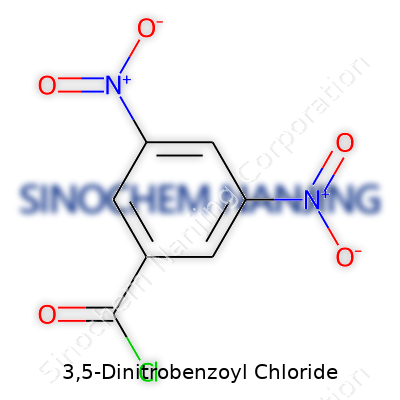
Its chemical structure, with two nitro groups on the benzoyl ring, makes it highly reactive with nucleophiles like amines and alcohols. Many chemists reach for it because it transforms unpredictable substances into stable compounds suitable for testing and cataloging. That stability matters. Once, a classmate tried other reagents and ended up with mushy, ambiguous products that gave murky test results. With 3,5-dinitrobenzoyl chloride, the obtained derivatives usually crystallized well and led right to the correct identification, especially for primary and secondary amines.
That ease of crystallization is not just about classroom exercises. It’s how industries check their work on a bigger scale. Pharmaceutical labs, for instance, use this compound to double-check intermediates and final molecules, making extra sure they’re working with the right substance before moving on. Getting that wrong gets expensive fast, so this chemical helps people sleep easier at night knowing they haven’t mixed up their batches.
Challenges With This Reagent
Handling 3,5-dinitrobenzoyl chloride calls for a careful approach. Its corrosive nature can create nasty fumes and seriously irritate skin. Working with it, I always made sure to have gloves and a fume hood, because even quick jobs could leave your hands feeling unpleasant or the air uncomfortable to breathe. Preparation and disposal also demand responsibility; you don’t want this stuff lingering at the back of cabinets or dumped in a general waste bin. Accidents happen, but there’s no excuse not to prep for safe handling, especially after seeing what a small spill can do to a benchtop.
Ways Toward Safer, Smarter Chemistry
Lab safety and environmental care need just as much focus as chemistry outcomes. Substituting with less hazardous reagents wherever possible gives everyone breathing room—literally and figuratively. Researchers stay alert for safer alternatives and improved handling protocols, including proper storage and timely disposal. Lab managers, educators, and supervisors could set up refresher training or signs reminding folks why safety goggles and gloves aren’t just optional.
The core value of 3,5-dinitrobenzoyl chloride lives in its power to bring clarity in complex analyses. We rely on these tested tools in research and teaching, but they come with a clear call for respect, always balanced by our growing knowledge and care for the spaces where we work and learn.
What are the storage requirements for 3,5-Dinitrobenzoyl Chloride?
Why Careful Storage Matters
My time working in research labs taught me fast: a little carelessness with chemicals like 3,5-dinitrobenzoyl chloride isn’t just an inconvenience, it’s a genuine safety risk. This compound plays a role in organic synthesis, especially when making derivatives for chemical analysis or pharmaceutical work. It reacts—fast—if it gets too humid or too warm. Mishandling usually stitches together several headaches, from health hazards to lost investment in spoiled materials. Simple routines stop most drama before it starts.
Keep It Cool and Dry
This compound stays stable longest in a cool, dry place, away from sunlight and moisture. Think of it like good coffee beans: moisture ruins the batch, light dulls potency. I’ve seen bottles left near a sunny window go yellow halfway through a project. The reaction with water forms 3,5-dinitrobenzoic acid—one drop of water will do it. Toss in some spilled acid fumes, and now you have more than a ruined sample; you’re risking your lungs.
Use Proper Containers
Store 3,5-dinitrobenzoyl chloride in tightly sealed, chemical-resistant bottles, preferably glass with a good teflon-lined cap. Weak plastic cracks over time, and some plastics allow vapor leaks. I’ve learned that freshly opened glass bottles with a solid seal hold up best, stopping both air and leaks.
Label Everything Clearly
Ever grab the wrong bottle? Everyone laughs at the stories until it burns a hole in someone’s nitrile glove. Take a permanent marker, big label, and write the chemical name, hazard class, and acquisition date. Hazard communication matters when you’re not the only person reaching for the chemical.
Avoid Temperature Swings
Store at room temperature, ideally below 25°C (77°F) and definitely not below freezing. Big swings between warm and cool cause condensation inside the bottle, even with the cap tight—then you’re back to water ruining your supply. In a lab, I worked out a good corner in a supply cabinet, away from heat vents or sunlight. Simple stuff, big difference.
Ventilation Is Key
This isn't a chemical you stash in an unventilated closet. Fumes can be irritating. Keep it in a well-ventilated chemical storage area. Flammables cabinets work if they’re not overloaded and if acids or bases aren’t stored nearby—mixing acid chlorides with moisture or incompatible chemicals doesn’t end well.
Handle Spills Swiftly
Spills happen—gloves slip, bottles tip. I learned to keep spill kits nearby: gloves, goggles, absorption pads, and sodium bicarbonate to neutralize acid. Scrambling for supplies after a small spill just spreads risk. Secure cleanup supplies and emergency eye-wash stations go a long way here.
Solutions for Safer Storage
Training everyone using the chemical helps more than any sign or lock. New folks should learn to double-check bottle caps, keep areas dry, and keep incompatible substances well separated. Audits and regular checks of temperature and humidity in chemical storage areas keep surprises away.
Safe Storage Helps Everyone
Safe, consistent storage of chemicals like 3,5-dinitrobenzoyl chloride makes for fewer accidents and less waste. Simple labels, sealed glass bottles, good ventilation, and frequent training pay off every day. If something doesn’t look right, better call the lab manager.
Is 3,5-Dinitrobenzoyl Chloride hazardous or toxic?
Understanding the Chemical’s Nature
3,5-Dinitrobenzoyl chloride gets used a lot in labs, especially in organic synthesis. Its main role: acting as a building block for some dyes, pesticides, and pharmaceuticals. The way this stuff handles in real conditions is what raises questions. People working in chemistry will know the sharp, acrid odor, a signal you’re dealing with something reactive. If you’ve inhaled fumes from acid chlorides before, you know the breathing discomfort and irritation. This is not the kind of compound you want left open on a crowded bench.
Real Hazards to Humans
This chemical doesn’t belong anywhere near food or casual contact. Just a splash onto your skin may sting or cause burns. Moisture on your hands or in your nose makes things worse, as it reacts with water to release hydrochloric acid right onto your tissues. Anyone who has spilled an acid chloride will tell you the burn comes quick, and the redness lasts. Eyes take a big risk, since even a droplet could cause immediate damage or vision loss. Breathing in the dust or vapors will irritate airways, leaving you coughing and short of breath for hours, or possibly worse.
Environmental Impact: Not Just a Lab Hazard
Spills and improper disposal send this compound down drains or into soil, where it doesn’t just break down. Once in water, it can form nitro-aromatic byproducts, persistent in the environment. Fish and aquatic wildlife suffer, since many nitro compounds cause chronic effects even in tiny doses. It’s not just talk—studies show these nitrobenzene derivatives can inhibit growth in plants and upset aquatic ecosystems.
Regulation and Worker Safety
I have worked in labs with strict protocols for all acid chlorides, and for good reason. Even brief exposure makes a day miserable or, with enough contact, sends someone to the hospital. Science employees must wear gloves and goggles, and run all work in a fume hood. Disposal rules stay strict, because these types of chemicals can’t mix with common trash. Companies risk fines, and more importantly, the health of their staff.
Avoiding Incidents—Practical Solutions
People new to handling 3,5-dinitrobenzoyl chloride should get proper training and supervision. There’s your first line of defense. Plenty of schools and companies schedule regular safety drills. Spills need quick cleanup, using absorbent material made to handle corrosives, never letting the chemical linger. Storing this stuff in well-labeled, corrosion-proof containers keeps confusion away. Any reaction using this chemical works best in a contained fume hood, with regular checks for leaks or spills.
Reducing Use and Finding Alternatives
Organisations can consider switching to less hazardous reagents for synthesis, whenever alternatives offer similar results. It’s worth the investment, as health problems and regulatory penalties stack up fast otherwise. Several companies focus on green chemistry approaches that cut down not just on hazard, but on toxic waste overall. Science grows by questioning and refining not just results, but how we get there.
Looking Ahead—Responsible Handling
No one wins by downplaying chemical hazards. 3,5-dinitrobenzoyl chloride demands respect from chemists and the organisations employing them. Knowledge, training, and preparation stand out as the best ways to keep people safe and limit the compound’s effect on the wider environment. I’ve found that regular conversations and refreshers on safety best practices build habits stronger than any warning label can offer.
What is the chemical formula of 3,5-Dinitrobenzoyl Chloride?
Getting to Know 3,5-Dinitrobenzoyl Chloride
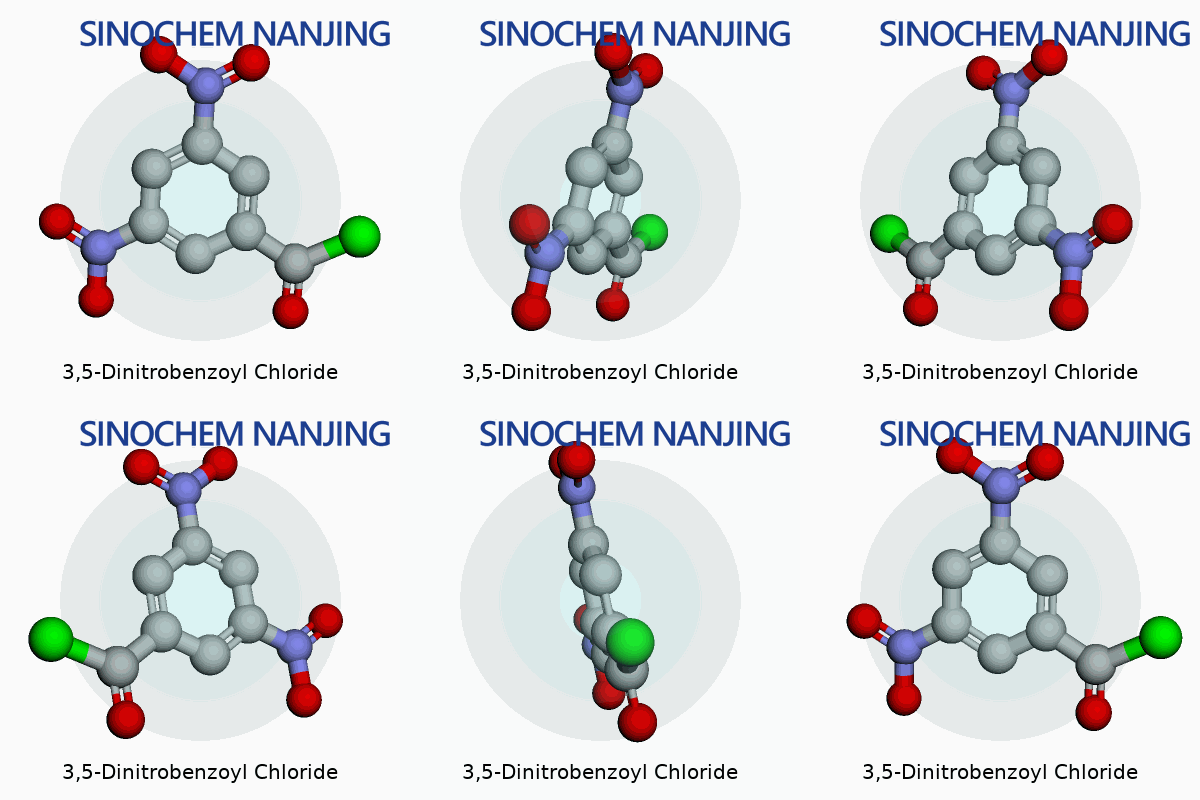
Chemistry loves shorthand. Most chemists recognize formulas like H2O for water or NaCl for salt without a second thought. The formula for 3,5-Dinitrobenzoyl chloride comes up a lot in organic labs, especially with synthesis and analytical work. The correct chemical formula for this compound is C7H3ClN2O5. For those like me who spent years in university labs, this compound’s structure gets burned into memory: a benzene ring, two nitro groups at the third and fifth position, and a carbonyl chloride group.
Why the Exact Formula Matters
Misidentifying a formula in organic synthesis opens the door to wasted time, money, and safety risks. I learned early that even a single atom off in a formula changes not just the physical properties, but also how a molecule behaves in a reaction. With 3,5-Dinitrobenzoyl chloride, every functional group carries its own weight. The nitro groups pull electron density away from the ring, making the molecule more reactive. The chloride group sets it up as an acylating agent. Precision in formulas isn’t pedantry—reliable science builds on it.
In research, the smallest error can spiral. Mixing up reactants leads to failed syntheses, ruined sample batches, and even laboratory hazards. Handling acyl chlorides like this one means dealing with pungent fumes and the risk of corrosive exposure. Gloves, fume hoods, and double-checking the formula on the bottle label aren’t options—they’re basics. More than once, I’ve heard of ruined glassware because someone thought they picked up benzoyl chloride but grabbed a dinitro derivative instead.
Applications in Real Chemistry
3,5-Dinitrobenzoyl chloride steps into the spotlight often as a reagent in organic synthesis. It helps chemists transform amino acids and alcohols into their dinitrobenzoyl derivatives. This process gives sharper melting points, pure samples, and cleaner spectra for analysis. Back in my grad school days, we used it almost like a stamp—attaching its bulky group to simplify downstream identification. The high electron-withdrawing effect of the nitro groups sets up strong, clean reactions. Its formula isn’t just trivia but affects every protocol using it.
Staying Safe and Solving Common Issues
Lab safety starts with knowing what’s sitting in your reaction vial. 3,5-Dinitrobenzoyl chloride reacts fiercely with water and many alcohols, throwing off hydrogen chloride gas in the process. One accident with this stuff and there’s a lesson you never forget. Good training would have saved me the first nasty inhale after a rushed transfer without a working fume hood. Double-checking formulas and understanding the structure protects people and cuts down on costly mistakes.
Mislabeling and mixing chemicals sit at the root of most lab incidents involving this compound. Chemists and lab techs need protocols—clear labeling, secure storage, and routine refresher training. Advanced inventory tools and better communication in shared spaces can prevent most mix-ups. Education and vigilance build trust in lab results, keep people safe, and prevent unnecessary waste.
The Bottom Line
3,5-Dinitrobenzoyl chloride, C7H3ClN2O5, teaches the value of attention to detail in chemistry. Knowing the formula and respecting its power helps researchers innovate safely, generate quality data, and keep their labs running smoothly.
How should 3,5-Dinitrobenzoyl Chloride be handled safely?
Looking Danger in the Eye
3,5-Dinitrobenzoyl chloride lands on the bench and suddenly, the air seems heavier. A compound with a sharp smell, able to burn breathing passages and skin in seconds, gives every reason to take safety seriously. This isn't one of those chemicals you want to handle on auto-pilot, even after years in the lab. People expecting a simple process find out quickly it’s not a task for distracted minds or tired hands. The harsh sting in your nose after a loose cap drives that lesson home.
No Room for Complacency with Toxicity
Its power to harm isn’t limited to momentary discomfort. This chemical sparks corrosion, eats through gloves, and fills rooms with noxious fumes if you give it half a chance. Even brief exposure can mean burns, asthma-like symptoms, or even worse – much more than a ruined afternoon. Safety sheets spell out the worst-case scenarios, but nothing teaches caution like a scar or a panicked colleague hunched over an eyewash station. I’ve watched a rushed grad student learn that lesson the hard way. The sting in those stories boosts the argument for never working without goggles and chemically resistant gloves.
Personal Protective Equipment Is Non-negotiable
Donning nitrile gloves and a snug-fitting lab coat should become as automatic as swiping a badge at the door. Sometimes colleagues complain about foggy goggles or tight respirators, but one whiff of 3,5-dinitrobenzoyl chloride erases the urge to cut corners. Fume hoods exist for a reason. Airflow snatches dangerous vapors and whisks them away, so there’s no cloud floating at face level. In my own practice, a morning spent prepping this chemical always starts with an inspection of the blast shield, fans, and glove integrity. Keeping a backup pair handy has saved me more than once.
Storage—Not the Place for Shortcuts
Tucking a bottle of this stuff onto a shelf “just for a minute” can invite real disaster. Once, a leaky stopper triggered a building evacuation. The rules advise storing acids and reactive chemicals in dedicated, labeled cabinets away from open flames and sunlight. After what I’ve seen, there’s no question: follow the rules or risk calling 911. Ventilated storage cuts down on unwanted fumes, and tightly sealing the container keeps moisture out. Moisture means hydrochloric acid can start to escape, raising stakes in one careless moment.
Mistakes Happen—Preparedness Pays Off
Accidents don’t care about experience. A single slip-upsprays liquid outside the beaker or sends crystals skittering off the balance. Easy access to an eyewash and safety shower becomes critical. Posting first-aid steps and spill kits where everyone can see them goes beyond box-ticking; it can save skin, lungs, eyesight, and lives. Quick response matters—a clean spill becomes a disaster only when uncertainty fouls the air.
Building Better Habits and Sharing Knowledge
Training fresh hands and old pros alike helps keep the worst at bay. Reviewing near-misses in lab meetings, practicing what-if scenarios, and running drills might draw eyerolls, but every bit lifts the standard for everyone. Sharing stories about blunders and smart solutions—these aren’t just war stories. They form a safety net built from shared attention and mutual trust. Investing effort here beats any cure after the fact.
Turning Protocol Into Habit
Safe handling of chemicals like 3,5-dinitrobenzoyl chloride boils down to treating it with respect, not fear. The routine—PPE up, prep the space, check the gear, keep focus—shouldn’t fade with overconfidence. As the years in the lab stack up, it’s easy to feel invincible. That overconfidence can prove costly. Choosing to slow down, double-check, and work like every drop matters makes the difference between just another day and a trip to the ER.
| Names | |
| Preferred IUPAC name | 3,5-dinitrobenzoyl chloride |
| Other names |
m-Dinitrobenzoyl chloride Benzoyl chloride, 3,5-dinitro- 3,5-Dinitrobenzoic acid chloride |
| Pronunciation | /ˌθriː.faɪv ˌdaɪˌnaɪ.trəʊˈbɛn.zɔɪl ˈklɔː.raɪd/ |
| Identifiers | |
| CAS Number | 99-27-4 |
| Beilstein Reference | 1238747 |
| ChEBI | CHEBI:51849 |
| ChEMBL | CHEMBL460550 |
| ChemSpider | 31362 |
| DrugBank | DB08409 |
| ECHA InfoCard | 100.018.954 |
| EC Number | 209-931-9 |
| Gmelin Reference | 60731 |
| KEGG | C19134 |
| MeSH | D004080 |
| PubChem CID | 68910 |
| RTECS number | CU5950000 |
| UNII | F0Y6W6E3YN |
| UN number | UN1576 |
| CompTox Dashboard (EPA) | DTXSID3023808 |
| Properties | |
| Chemical formula | C7H3ClN2O5 |
| Molar mass | 202.54 g/mol |
| Appearance | Yellow crystalline powder |
| Odor | Odorless |
| Density | 1.65 g/cm3 |
| Solubility in water | Insoluble |
| log P | 1.95 |
| Vapor pressure | 2.9 x 10^-4 mmHg (25°C) |
| Acidity (pKa) | 0.8 |
| Basicity (pKb) | pKb ≈ -3.5 |
| Magnetic susceptibility (χ) | -79.2·10^-6 cm³/mol |
| Refractive index (nD) | 1.618 |
| Viscosity | 0.7420 cP (20°C) |
| Dipole moment | 2.89 D |
| Thermochemistry | |
| Std molar entropy (S⦵298) | 265.6 J·mol⁻¹·K⁻¹ |
| Std enthalpy of formation (ΔfH⦵298) | -69.6 kJ/mol |
| Std enthalpy of combustion (ΔcH⦵298) | -755.3 kJ/mol |
| Hazards | |
| Main hazards | Harmful if swallowed, causes severe skin burns and eye damage, may cause respiratory irritation, toxic to aquatic life. |
| GHS labelling | GHS02, GHS05, GHS06, GHS08 |
| Pictograms | GHS05,GHS07 |
| Signal word | Danger |
| Hazard statements | H302, H314, H317, H318, H332, H335 |
| Precautionary statements | P280, P261, P271, P304+P340, P305+P351+P338, P405, P501 |
| NFPA 704 (fire diamond) | 3,1,2,W |
| Flash point | 113°C |
| Lethal dose or concentration | LD₅₀ (oral, rat): 283 mg/kg |
| LD50 (median dose) | LD50 (median dose): Oral rat LD50 > 2000 mg/kg |
| NIOSH | DK9625000 |
| PEL (Permissible) | PEL: 1 mg/m³ |
| REL (Recommended) | 10 mg/m3 |
| Related compounds | |
| Related compounds |
Benzoyl chloride 3,5-Dinitrobenzoic acid 3-Nitrobenzoyl chloride 4-Nitrobenzoyl chloride 2,4-Dinitrobenzoyl chloride |



