3,5-Dimethylaniline: Insights into a Dynamic Chemical’s Story and Role
Tracing the Roots: Historical Development
3,5-Dimethylaniline hasn’t enjoyed the spotlight like some better-known industrial chemicals. Still, its history reflects the larger evolution of organic synthesis, especially in the vibrant days following the early successes with coal tar derivatives. Chemists in the late 1800s found aromatic amines to be a goldmine for dyes and pharmaceuticals. 3,5-Dimethylaniline emerged not out of chance but from a deliberate search for new shades and molecular frameworks. Even today, the legacy of that era hangs over laboratories, as many techniques and methods still bear the stamp of those early experiments. Researchers across generations have pushed this chemical beyond just its origins in synthetic dyes into broader industrial and pharmaceutical spheres.
A Look at What It Is: Product Overview
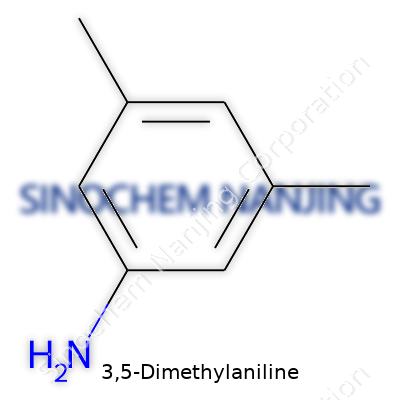
3,5-Dimethylaniline stands as an aromatic amine, derived from aniline through methyl group substitutions at the meta positions. It’s often recognized for its usefulness in dye manufacturing and as a stepping stone in crafting more complex molecular structures. Its stable aromatic ring and accessible amine group give chemists a reliable anchor for further modification, making it attractive not just in legacy applications, but also in more cutting-edge research seeking building blocks with a track record of both safety and performance.
Up Close: Physical & Chemical Properties
Easy to spot in a lab by its distinct faintly yellow tint, 3,5-Dimethylaniline is a solid at cooler temperatures but turns to a liquid not far above room temperature. Its chemical formula, C8H11N, sums up a relatively simple structure, yet its chemistry packs a punch. Those methyl groups on the ring lend it some subtle yet important differences from plain aniline, shifting its boiling and melting points, as well as its reactivity. Its solubility often divides those working with it: while it mixes reasonably well in organic solvents, its relationship with water is distant, a fact that influences not only its handling but also its routes through the environment and potential biological systems.
Decoding the Label: Technical Specifications & Naming
Look through chemical catalogs worldwide and you’ll find 3,5-Dimethylaniline under many names: m-Xylidine, 3,5-xylidine, and even as a compound simply referenced by its chemical skeleton. Each synonym can trip up a newcomer, so a close read of technical literature pays dividends. Those methyl groups at positions three and five define both reactivity and function, so any mislabeling can lead to problematic substitutions in a process. Its clear, structured naming stems from IUPAC standards that have evolved to keep chemists on the same page, whether they’re preparing it in India or Ohio.
Crafting the Molecule: Preparation Method
Synthesizing 3,5-Dimethylaniline leans heavily on well-worn chemical pathways. Chemists often start with m-xylene, using nitration to introduce the nitro group and then hydrogenation or reduction to transform it into the amine. The steps rely on careful control, since side reactions or incomplete reduction can clog up purification stages. Those who run these reactions in scale-up settings know the headaches of excess heat, reactor fouling, or runaway exotherms. The real-world challenge isn’t in the textbook chemistry—it's in finding rugged, reliable ways to churn out kilograms or tons that meet quality requirements every time.
Chemical Reactions & Modifications
3,5-Dimethylaniline offers a reactive amine group, inviting substitution, acetylation, or diazotization. Its use in dye chemistry—especially azo dyes—relies on that amine functionality. Beyond colorants, later reactions often take aim at the methyl rings, sometimes oxidizing them, sometimes trading them for bulkier substituents. The molecule’s symmetrical structure influences both reactivity and selectivity, both friend and foe in the hands of a synthetic chemist. Many modifications still aim for better dyes, fine-tuned agricultural chemicals, or intermediates for new medicines.
Staying Safe: Operational Standards
Those working with 3,5-Dimethylaniline respect its status as an aromatic amine—a class not known for total benignity. Contact with skin or inhalation can cause trouble, and prolonged exposure brings concerns about long-term effects. Many labs now demand gloves, fume hoods, and careful storage, reflecting a broader industry shift towards safety that took decades to gain traction. Spill protocols are drilled into every technician, and waste is treated with all the seriousness given to potential persistent pollutants. The wider world often forgets that behind every bottle sits a careful balance between progress and caution, guided by government and industry recommendations that have only tightened as toxicology has matured.
Where It Ends Up: Application Areas
Most roads for 3,5-Dimethylaniline lead into dyes or pigments, especially those needing a stubbornly vivid or uniquely shaded finish. Makers of agricultural chemicals reach for it to tweak activity, persistence, or plant compatibility. In pharmaceuticals, its backbone occasionally crops up in antihistamines or intermediates for other targets, even if its mainstream use remains smaller than some family members. Modern material scientists eye it as a vector for new polymers or nano-material applications, banking on its manageable reactivity and robust structure. Its relative affordability and proven track record keep it in steady demand, even if the growth edges have shifted.
Pushing Boundaries: Research & Development
In research labs, 3,5-Dimethylaniline doesn’t steal headlines, but it shows up again and again at crucial steps of innovation. New synthetic transformations often use it as a test case, since its structure balances reactivity and stability. Targeted drug discovery programs probe its analogs for unique activity profiles, with AI-driven modeling now pulling in new variants. Research led in years past to a deeper knowledge of aromatic amines in general, feeding breakthroughs not just for 3,5-Dimethylaniline but for a whole class of compounds that circle around it. Despite some age on its molecular blueprint, fresh interest keeps bubbling up wherever chemistry faces fresh challenges.
Watching for Trouble: Toxicity Research
Toxicologists have wrangled with aromatic amines for decades, and for good reason. Animal studies suggest possible links to mutagenicity, though 3,5-Dimethylaniline’s toxicity ranks below some peers. Caution grows out of hard lessons—the chemical industry’s long struggle with workplace exposure and environmental spills. Modern studies keep close tabs on metabolic byproducts, seeing whether this compound’s breakdown might quietly seed problems in exposed workers or release sites. Regulators have begun to recognize the need for deeper monitoring, nudged along by science that grows more sensitive every year. People living near chemical plants or workers handling large volumes deserve answers built on strong data, not assumptions.
The Road Ahead: Future Prospects
New uses may not transform 3,5-Dimethylaniline overnight, but researchers tracking next-generation polymers or advanced coatings keep the door open. The push for greener dyes puts pressure on manufacturers to develop substitutes that do more, pollute less, and cost about the same. In pharmaceuticals, interest in aromatic amine scaffolds always cycles back as new screening technologies turn up overlooked properties. Public and regulatory scrutiny builds as awareness of potential health impacts from persistent aromatic amines rises, likely tightening the leash on emissions and handling practices. There’s no question that this molecule earned its stripes in the classic world of synthetic chemistry, but every year, it faces tougher questions on sustainability, safety, and long-term value that will shape its story.
What is 3,5-Dimethylaniline used for?
Understanding 3,5-Dimethylaniline
3,5-Dimethylaniline is an organic compound that plays a behind-the-scenes role in a number of chemical processes. Many people have never heard of it, but it helps shape products that show up in medicine cabinets, on farms, and in industrial labs. The structure includes an aniline base with two methyl groups, making it a useful building block for more complex molecules. It carries a faint amine smell and has a pale yellow tint. Most workers encounter it in liquid form, wearing gloves and respirators, because like many small aromatic amines, it can irritate the skin and lungs.
Role in Dye and Pigment Production
I spent a summer in a textile lab and remember how nearly every vibrant fabric depends on compounds derived from anilines. 3,5-Dimethylaniline finds its way into dyes that color fabric, paper, and plastics. Manufacturers mix this compound into larger chemical structures to achieve stable, deep hues. The results don’t fade under the sun or bleed easily in water—traits customers expect from everyday goods, from car seats to office supplies.
Pharmaceutical Uses and Impact
Medicines, especially certain antihistamines and drugs aimed at cardiovascular conditions, rely on building blocks like 3,5-Dimethylaniline. Chemists value this molecule for its ability to easily form bonds and tweak the shape of new drug candidates. In the pharmaceutical sector, a small adjustment to a molecule’s shape often means the difference between a safe drug and a dud. As new treatments emerge, the flexibility of 3,5-Dimethylaniline gives researchers a wider palette of options. Safety always stays front and center when handling chemicals of this type—companies invest in thorough screening before anything reaches a patient’s hands.
Chemical Synthesis and Beyond
Beyond drugs and dyes, 3,5-Dimethylaniline acts as a starting point for other chemicals used in pest control, disinfectants, and some specialty polymers. For example, intermediates based on this molecule strengthen certain plastics and make coatings more durable. In agriculture, derivatives can protect crops from fungus and insects, although careful regulation aims to limit harmful residues in food and water.
Concerns Around Health and the Environment
Like many industrial chemicals, the benefits of 3,5-Dimethylaniline come with responsibilities. If not handled properly, it can slip into soil or nearby streams during transport or disposal. Even at low levels, certain aromatic amines risk triggering allergic reactions or more serious health issues. Factories must follow strict rules on storage and waste treatment. Workers need proper training, not just for their own protection, but for the safety of their families and neighbors. Researchers regularly update safety data, helping businesses keep up with best practices and avoid surprises.
Looking for Safer Alternatives and Solutions
As regulations grow tighter and public awareness increases, chemical engineers keep looking for ways to reduce the risks related to 3,5-Dimethylaniline. One approach involves recycling solvents and capturing by-products before they reach the environment. Some research teams search for “greener” alternatives made from plant-based sources rather than relying on traditional petrochemical processes. These steps take investment and creativity, but they pay off with cleaner air and safer workplaces. I’ve watched the industry gradually shift—each year brings new techniques and a bit more confidence that the benefits of these chemicals won’t come at too high a cost.
What is the chemical formula of 3,5-Dimethylaniline?
Knowing 3,5-Dimethylaniline: More Than Just Letters and Numbers
3,5-Dimethylaniline might sound obscure to anybody outside a chemistry lab, but its formula, C8H11N, carries a story behind it. Packing eight carbon atoms, eleven hydrogen atoms, and a single nitrogen atom, it looks like a small twist on regular aniline—yet those two methyl groups at the third and fifth positions make all the difference, both in labs and outside them. Understanding the structure allows chemists to predict how this compound will behave, whether in reactions or as part of a finished product.
Real-World Impact: Not Just for Chemists in White Coats
Reading a formula like C8H11N once made me think, “Why should I care?” Turns out, many consumer products owe part of their existence to such small changes in molecule structure. 3,5-Dimethylaniline crops up in the manufacture of dyes, pharmaceuticals, even some specialty herbicides. The way methyl groups change the character of the molecule, they help it do things the parent aniline can’t. Its application in synthesizing activators or certain medicines traces straight back to that chemical formula.
Working with organics, I’ve come to see formulas as shorthand for risk and potential. Add two methyl groups and you force manufacturers to take extra safety steps. 3,5-Dimethylaniline requires decent ventilation, gloves, and mindfulness about its toxic nature. Understanding its structure isn’t just academic—it’s about protecting everyone involved in its manufacturing chain. That’s why detailed material safety data sheets always start with the exact chemical formula. They don’t just describe— they warn, and they guide.
Responsible Handling Starts with Structure
Misunderstanding the difference between 3,5-Dimethylaniline and similar-sounding chemicals can lead to mistakes in production and waste management. Reactivity changes, hazard profiles shift, environmental risks increase. Once, while preparing a lab notebook entry, I nearly mixed data from 2,6-dimethylaniline instead. That small formula mix-up would have me wasting research time and risking safety. It’s the reason good chemists double-check, and why accurate reporting and labeling protect more than just researchers—they safeguard products and environments past the lab walls.
Driving Safer Practices in Industry
Getting familiar with formulas leads to smoother training for new lab staff. They see the formula, they memorize the risks and required controls. Industry guidelines like those set by OSHA or the European Chemicals Agency start with substance identity—C8H11N for 3,5-Dimethylaniline—before listing any exposure limits and safe disposal methods. With effective training, fewer workplace accidents happen and environmental releases drop, because everyone shares the same understanding of what’s really in the drum they’re handling.
Smarter Solutions: Green Chemistry’s Role
Chemical foundations matter even more as companies phase out old, hazardous compounds. Substituting safer alternatives starts with understanding a compound’s structure: what makes it useful, what also makes it risky. In the early days, I saw teams experiment with new catalysts or alternative solvents, their decisions grounded in the exact arrangement of atoms spelled out by the chemical formula. Sustainable change stems from mastery of structural knowledge—starting as simply as knowing C8H11N refers to 3,5-Dimethylaniline.
Is 3,5-Dimethylaniline hazardous or toxic?
What Role Does 3,5-Dimethylaniline Play?
3,5-Dimethylaniline pops up in industrial settings far more often than most people imagine. It serves as a building block for dyes, pigments, pharmaceuticals, and even rubber chemicals. In my experience working in and around labs, it’s not something you’d see on grocery store shelves or tucked away in the garage, but it still finds plenty of uses behind the scenes in global manufacturing.
Health Hazards: My Encounters and What Research Tells Us
While handling this chemical, safety goggles and gloves always feel mandatory, not optional. Direct skin contact causes irritation. Breathing in the vapors might lead to headaches or a scratchy sore throat. Published studies on similar aniline compounds connect exposure with a higher risk of developing methemoglobinemia, a blood condition that limits oxygen transport. The real trouble shows up among workers spending long hours near open vats or in poorly ventilated spaces. A report from the National Institute for Occupational Safety and Health noted that chronic exposure can cause significant health issues—liver and kidney damage are possibilities too.
Invisible Dangers Lurk Beyond the Obvious
Middle-sized molecules like 3,5-Dimethylaniline often go unnoticed by the public. Without clear labeling or training, accidental spills and vapor releases could reach workers quickly. I remember once seeing a bottle crack open on a cluttered bench. The unmistakable sharp odor caught everyone’s attention, and our safety officer hustled to clear the room. That day, it struck me how easy it would be for someone to misjudge the risk. Long-term exposure—even at those low levels—worries toxicologists. Some researchers connect aniline derivatives to cancer in animal studies. While the evidence isn’t concrete for all cases, occupational safety agencies still urge caution. No one enjoys gambling with their health in the workplace.
Handling and Storage: Hard Lessons in Safety
Accidents tend to happen during transfer or storage. Chemical compatibility charts become more than paperwork; they’re survival tools for anyone working with aromatic amines. In warm, humid environments, fumes drift off the liquid and settle around eye level. Even with protective clothing, direct splashes sting. Once, an old friend mentioned gloves breaking down after repeated use, leading to numb fingertips and skin rash. Safety data sheets point out these risks but don’t offer enough real-world advice—regular glove changes and air monitoring should never get skipped, even though it costs extra time.
Cleaning Up and Preventing the Worst
Most issues come down to preparation. Companies enforce fume hoods and strict training, though staff turnover can undermine these efforts. Spills get neutralized with absorbent materials, and waste must stay sealed and labeled. Many jurisdictions require reporting leaks over a certain size; the rules exist for good reason. Without these regulations, communities face unnecessary exposure risks from groundwater leaks or airborne drift.
Building a Culture of Caution
We cannot pretend that some chemicals are harmless just because they only affect factories or laboratories. Responsible business means investing in updated ventilation and making sure all staff have the training to handle emergencies. That spirit of caution—combined with honest communication about risks—protects workers and the neighborhoods near industrial zones. My takeaway from years around compounds like 3,5-Dimethylaniline is simple: treating hazardous materials with respect, not fear, keeps everyone safer.
What are the storage requirements for 3,5-Dimethylaniline?
It All Starts With Respect for the Chemical
3,5-Dimethylaniline may sound academic, but those who use it daily realize how much attention storage truly demands. The compound’s pungent, fishy odor lingers if any leaks occur, and it can turn a regular workspace into an irritating mess for those unlucky enough to work alongside it unprotected. Safety starts with real knowledge of its traits. This chemical appears as a clear to light yellow liquid at room temperature and carries more flammability than water or many benign solvents. Even seasoned lab workers develop a routine of double-checking lids and labeling for this reason.
Flammability Makes Careful Storage a Must
Flammable liquids like 3,5-Dimethylaniline command a sturdy storage area. My own years working in chemistry labs drove home the importance of using flame-proof cabinets—preferably ones that stand apart from high-traffic workspaces. Metal safety cabinets with self-closing doors earn their keep, especially if local fire codes call for them. Regulatory requirements matter because authorities base these rules on hard-earned lessons from lab accidents and fires. The last thing anyone wants is an unnoticed vapor to meet a spark.
Always keep this chemical away from sources of ignition such as open flames, hot surfaces, and even static discharge. The practice feels tedious at times, but the risk is too real to cut corners. Locating chemical storage away from sunlight and heat sources also matters. Overheated bottles can build up pressure and pop caps loose. Experienced handlers say it’s best to choose a cool, dry space with reliable ventilation.
Avoiding Dangerous Chemical Mixes
I once saw a misplaced bottle of amine on a shelf above oxidizers—an accident that thankfully got caught during inventory. 3,5-Dimethylaniline reacts harshly with strong oxidizers like peroxides or nitrates. If they meet, the result could be heat, fire, or even toxic gases. Keeping incompatible compounds far apart is more than tidy shelfwork; it’s basic survival. Well-trained staff clean spills quickly and use separate containers for acids and bases. Even small mistakes invite trouble, so proper segregation takes top priority in storerooms.
Ventilation: Keeping the Air Clean
With volatile chemicals, fumes pose just as much concern as liquid. Simple mistakes—forgetting to tighten a cap, for example—can fill the air with an irritating vapor. Proper ventilation pulls away those fumes and keeps everyone safe. Ventilated cabinets or exhaust hoods do a better job than makeshift solutions like cracked windows or old fans. Staff with experience understand that investing in good extraction systems cuts down on complaints and health concerns.
Label, Inspect, and Train—Every Time
Labeling may sound basic, but it often prevents confusion that would otherwise turn ugly in seconds. Every bottle I’ve worked with sports a bold, clear label with the full name and date received. Spoiled or leaking containers never get a second chance; it’s safer to dispose of them properly through certified chemical waste services. Regular stock checks become part of the routine. Training new staff—showing them the exact spot where this chemical belongs and what to do if something spills or breaks—builds confidence and a safety culture people carry forward.
Solutions for the Real World
Many companies and universities have adopted digital tracking for chemicals to make traceability easier. Personally, I think nothing beats the combination of good habits and proper facilities. Annual safety reviews, up-to-date standard operating procedures, and regular drills create a workplace where surprises get minimized. If a problem occurs, everyone knows which steps to take and who to call, which helps protect health and property.
What are the physical properties (appearance, melting point, boiling point) of 3,5-Dimethylaniline?
What 3,5-Dimethylaniline Looks Like
3,5-Dimethylaniline stands out as an aromatic amine with two methyl groups attached to a benzene ring. This compound usually shows up as a colorless to pale yellow liquid. Sometimes it looks a little oily, resembling many other simple aromatic amines. The presence of methyl groups nudges its appearance toward the lighter side, especially compared to heavier or more substituted cousins. People working in labs or chemical manufacturing see it as a typical, mobile liquid—easy to pour or draw up with a pipette. Out in the open, if it’s left exposed to air for long, it gradually darkens. This happens because compounds like this pick up oxygen from the atmosphere and start to oxidize.
The Numbers: Melting Point and Boiling Point
Melting point lands around 18–20 °C. That’s only a bit below average room temperature, which means you might find the bottle with a few solid crystals in the bottom during cold months. Warmer rooms pull it quickly into the liquid state. In this way, labs often store it in tightly closed amber bottles to cut down light and air contact and limit solidification or color change.
Boiling point for 3,5-Dimethylaniline measures close to 230 °C. That’s fairly high, which reflects the molecule’s shape and aromatic nature. Anyone heating it up smells its sharp, amine-like odor. It’s intense—no surprise, as aromatic amines often produce strong odors that travel quickly. Lab safety protocols advise plenty of ventilation or fume extraction because of this.
Why These Properties Matter in Real Work
Lab researchers and industry workers care about melting and boiling points for more than just curiosity. They pick containers, temperature controls, and processing steps based on these facts. Knowing that 3,5-Dimethylaniline boils at a high temperature allows for specific distillation methods during purification and synthesis. This can set it apart from contaminants with lower boiling points, protecting overall product purity.
Appearance isn’t just trivia either. Small changes hint at purity—or contamination. If the typical pale color has changed or the liquid looks cloudy, contamination could pose a safety risk or wreck an experiment. On the other hand, recognizing the sharp odor immediately triggers faster safety steps. Every chemist who’s ever spilled a small amount of an aromatic amine remembers the smell: it lingers, even after rigorous cleanup.
Safety Steps and Environmental Responsibility
3,5-Dimethylaniline shares common hazards with other aromatic amines. Skin contact, inhalation, or ingestion may cause harm. People handling it wear gloves, goggles, and work under fume hoods. Too many accidents come down to ignoring these basics. Chemical supply sheets point out what to do in case of a spill or exposure, but long experience in a lab reminds one to keep cleanup material close and be ready to act right away.
Disposal of this chemical demands care. Local and international regulations ban pouring aromatic amines into the regular drain system. Waste treatment and special pickup teams ensure it doesn’t end up in waterways, where it could hurt wildlife and people downstream. Green chemistry approaches suggest using it only in scales required by the experiment or process, with minimal excess.
The Takeaway for Chemists and Industry
Understanding details like melting point, boiling point, and appearance of 3,5-Dimethylaniline goes beyond textbook memorization. Real work requires quick recognition, safe handling, and swift response if anything goes wrong. Purity, performance, and safety all depend on knowing what you’re working with, not just in theory, but in the ordinary tasks of chemical research and manufacturing.
| Names | |
| Preferred IUPAC name | 3,5-dimethylaniline |
| Other names |
meta-Xylidine m-Xylidine 3,5-Xylidine 3,5-Dimethylbenzenamine |
| Pronunciation | /ˈθriː,faɪv daɪˈmɛθ.ɪl.əˈnaɪliːn/ |
| Identifiers | |
| CAS Number | 108-69-0 |
| Beilstein Reference | 636253 |
| ChEBI | CHEBI:27850 |
| ChEMBL | CHEMBL16022 |
| ChemSpider | 7272 |
| DrugBank | DB01928 |
| ECHA InfoCard | 034c4358-7557-4971-a1ae-5e4ac56b0dc2 |
| EC Number | 202-468-6 |
| Gmelin Reference | 79213 |
| KEGG | C01579 |
| MeSH | D014236 |
| PubChem CID | 8598 |
| RTECS number | BY5425000 |
| UNII | 55B16P8EFS |
| UN number | UN3335 |
| CompTox Dashboard (EPA) | DTXSID7035547 |
| Properties | |
| Chemical formula | C8H11N |
| Molar mass | 121.18 g/mol |
| Appearance | Colorless to pale yellow liquid |
| Odor | sweet amine-like odor |
| Density | 0.980 g/mL at 25 °C(lit.) |
| Solubility in water | slightly soluble |
| log P | 1.98 |
| Vapor pressure | 0.27 mmHg (25 °C) |
| Acidity (pKa) | 4.34 |
| Basicity (pKb) | 11.02 |
| Magnetic susceptibility (χ) | -67.6·10⁻⁶ cm³/mol |
| Refractive index (nD) | 1.571 |
| Viscosity | 2.12 cP (25°C) |
| Dipole moment | 1.61 D |
| Thermochemistry | |
| Std molar entropy (S⦵298) | 206.6 J·mol⁻¹·K⁻¹ |
| Std enthalpy of formation (ΔfH⦵298) | 86.3 kJ·mol⁻¹ |
| Std enthalpy of combustion (ΔcH⦵298) | -3657.1 kJ/mol |
| Pharmacology | |
| ATC code | D04AB06 |
| Hazards | |
| Main hazards | Toxic if swallowed, in contact with skin or if inhaled; causes damage to organs; harmful to aquatic life with long lasting effects. |
| GHS labelling | GHS02, GHS07 |
| Pictograms | GHS02,GHS07 |
| Signal word | Warning |
| Hazard statements | H302, H311, H331, H315, H319, H351, H373 |
| Precautionary statements | Precautionary statements: P261, P280, P301+P312, P302+P352, P305+P351+P338 |
| NFPA 704 (fire diamond) | 2-3-0 |
| Flash point | 113 °C |
| Autoignition temperature | 630 °C |
| Explosive limits | Explosive limits: 1.2–7.0% (in air) |
| Lethal dose or concentration | LD50 oral rat 891 mg/kg |
| LD50 (median dose) | LD50 (median dose) of 3,5-Dimethylaniline: "530 mg/kg (rat, oral) |
| NIOSH | KN5075000 |
| PEL (Permissible) | Not established |
| REL (Recommended) | 5 ppm |
| IDLH (Immediate danger) | IDLH: 50 ppm |
| Related compounds | |
| Related compounds |
Aniline 2,4-Dimethylaniline 3,5-Dimethylphenol 3,5-Xylenol 3,5-Dimethylnitrobenzene |



