Taking a Closer Look at 3,4-Dichlorotoluene: An Editorial Commentary
Historical Development
Long before newer aromatic compounds hit laboratory benches, 3,4-Dichlorotoluene kept showing up in chemical catalogues for good reason. This chemical didn’t arrive on the scene as a byproduct of fancy technology boom; rather, it settled into the industrial world alongside other dichlorinated toluene isomers as scientists kept pushing for more versatile intermediates. The story stretches back to days when basic chlorination of methylbenzenes offered a goldmine for dye and pesticide makers. The roots of 3,4-Dichlorotoluene’s popularity can be traced to the practical success of direct halogenation methods, an approach both cost-effective and accessible to mid-20th-century chemists. From that point, demand grew in parallel with the explosive expansion of synthetic organic chemistry, giving this compound a role that spread beyond its initial prospects.
Product Overview
Every chemist who has worked with aromatic starting materials comes across 3,4-Dichlorotoluene—whether seeking out agrochemical intermediates, a step in dye production, or something more obscure. This compound features two chlorine atoms attached to a methylbenzene ring, paving the way for a set of reactions making it attractive from a synthetic point of view. Once considered just another entry on a reagent shelf, its versatility continues to stand out, particularly where selective substitution patterns open opportunities that ortho- or para- derivatives often can’t match.
Physical & Chemical Properties
Focusing on physical appearance, 3,4-Dichlorotoluene often turns up as a clear liquid, faintly reminiscent of solvents many chemists use day-to-day. The boiling point typically rises above 200°C, which keeps the substance easy to handle for liquid-phase chemistry while avoiding rapid evaporation during handling. The dense, oily nature is immediately apparent to anyone pouring it out of a bottle, and its solubility in organic solvents stands out, especially when compared to polar compounds. The two chlorines not only boost its molecular weight but also cause a noticeable uptick in chemical stability, keeping unexpected side reactions at bay as long as the environment remains mild.
Technical Specifications & Labeling
In practice, technical data come down to a handful of numbers. The purity percentage usually sits in the mid- or high-nineties for lab and industrial use, since even small impurities tend to complicate downstream steps. Density matters for large-scale operations. Label regulations increasingly focus on transparency, pushing suppliers to list not just assay results but possible contaminants, including residual solvents and monochloro- isomers. Transport regulations and hazard labels reflect the growing concern for environmental health, as these compounds don’t break down easily and can hang around in soil and water.
Preparation Method
Starting from toluene, chemists can crank out 3,4-Dichlorotoluene using classic chlorination, relying on controlled reaction rates and careful monitoring to land the chlorines on the 3 and 4 positions. Yet, selectivity remains a real headache; side products form unless temperature, concentration, and timing align, making this a process favoring vigilance over automation. Sometimes, more sophisticated tactics, like chloro-substituted benzyl intermediates, narrow the field, tightening up those yields for specialty uses. Even with decades of experience, scale-up doesn’t always play nice, and waste management hangs over every batch.
Chemical Reactions & Modifications
Put this molecule in the hands of a resourceful chemist and it doesn’t stay unchanged for long. The methyl group offers easy access to side chain oxidation, birthing carboxylic acids or benzyl halides as precursors to even more diverse structures. The chlorines lend themselves to nucleophilic aromatic substitutions, inviting amines, phenols, or alkoxides to join or replace as needed. In my experience, modification routes often spark the most creativity in the lab—each step and functionalization opens another door to more complex molecules. The simplicity of its reactivity sometimes undersells how deep those synthetic pathways can get.
Synonyms & Product Names
Outside the generic “3,4-Dichlorotoluene,” this compound occasionally takes on industrial pseudonyms, following older nomenclature rooted in numbering from the benzene ring’s perspective. “Benzene, 1-methyl-3,4-dichloro-“ comes up intermittently, particularly in regulatory listings and patent files. Trade catalogs offer little respite from the name game, and cross-referencing synonyms often ends up as a necessary chore for anyone hunting through multiple supplier databases. This can feel tedious, but it matters when confirming chemical identity in a global supply chain.
Safety & Operational Standards
From my own experience in labs, diligence in handling 3,4-Dichlorotoluene becomes non-negotiable. Direct contact causes skin and respiratory irritation, and the heavier chlorinated aromatics persist in the environment far longer than their hydrocarbon cousins. Standards hammered out in the past decade reflect rising pressure from environmental agencies; fume hoods, proper personal protective equipment, and spill protocols form the backbone of safe practice. Safety data sheets warn against heating or mixing with strong oxidants. Disposal means more than pouring waste down a drain—chemical incineration or specialized hazardous waste handling count as the only long-term fixes.
Application Area
Take a walk through the industries that drive demand, and 3,4-Dichlorotoluene’s range springs into view. Agrochemical production leans heavily on its unique reactivity, helping build intermediate steps in complex synthetic pesticides. Dye manufacturing still taps this compound to generate necessary chromophores, making it part of everyday consumer goods, whether in textiles or inks. More niche fields, including fine chemicals and select pharmaceutical research, lean on its modifiability; anyone working in medicinal chemistry keeps an eye out for aromatic moieties that might tweak molecular activity or bioavailability. The reach isn’t infinite, but every sector that values fine-tuned chlorinated aromatics keeps a place open for it.
Research & Development
Companies and university labs alike recognize that sticking with traditional processes around 3,4-Dichlorotoluene won’t cut it in the long run. Research aims both to sharpen existing synthesis routes and to minimize the environmental fallout, whether by rethinking catalysts, adopting greener solvents, or looking for paths with less chlorinated waste. You can see the focus in published papers tracking catalytic efficiency and reaction yields. Commercial players, meanwhile, track regulatory shifts and react by investing in improved monitoring technology and robust supply chain auditing; recent years brought more vigorous pushback against impurities and batch variances.
Toxicity Research
No one working with chlorinated aromatics ignores toxicity data. Research shows that 3,4-Dichlorotoluene poses acute and chronic risks, especially if inhaled or ingested in any significant amount. Toxicological studies suggest bioaccumulation potential, and animal model findings continue to spark caution—skin absorption leads to organ impacts, and breakdown products don’t always behave predictably. Regulatory agencies raise permissible exposure limits every couple of years. Most concerning, environmental leakage threatens aquatic and soil systems for generations. The push for alternatives comes with the hope of cutting persistent toxicity without sacrificing industrial utility.
Future Prospects
Looking ahead, 3,4-Dichlorotoluene stands at a crossroads. Industry demand persists, yet stricter regulations and greener philosophies challenge business-as-usual thinking. Research into bio-based or less-toxic analogues looks promising but hasn’t yet offered a scalable replacement that can check all the boxes. The trend toward more selective synthetic methods and closed-loop waste management systems reflects both regulatory reality and honest scientific progress. Those working with this compound need to balance chemistry’s possibilities against responsibility for both public health and planetary well-being. Sticking with proven compounds will always draw on the comfort of familiarity, yet smart companies and research labs treat each incremental improvement in production and safety as survival rather than luxury. That’s the only way forward that truly counts.
What are the main applications of 3,4-Dichlorotoluene?
What 3,4-Dichlorotoluene Does in the Real World
In the sea of chemicals driving industry, 3,4-Dichlorotoluene rarely grabs headlines. The name itself doesn’t roll off the tongue, but its impact reaches further than most people realize. This colorless liquid has the kind of reliability that helps hold up bigger, flashier industries—sometimes quite literally. Used as a building block, this compound helps chemists piece together everything from insecticides to pharmaceuticals.
Shaping Crop Protection
Chemical companies rely on 3,4-Dichlorotoluene to make key ingredients for certain pesticides and herbicides. Synthetic steps often start with simple, reactive molecules like this one, because they stand up to the harsh conditions of industrial reactors. For folks in farming who battle weeds and bugs, every healthy harvest comes at least partly from innovations hidden behind closed factory doors. The chain starts with substances like 3,4-Dichlorotoluene and ends with a more secure food supply.
Pharmaceutical Foundations
Drug discovery can’t go forward without an army of simple, reactive molecules. Medicinal chemists depend on these compounds to build more complicated structures. 3,4-Dichlorotoluene serves as a jumping-off point for active molecules that face everything from fevers to more serious illnesses. I remember a friend who worked late hours tweaking reaction conditions for an intermediate just like this. Reliable access made their research possible, giving hope to folks waiting on a breakthrough drug.
Dyes, Pigments, and Colorants
People see the finished shade in a new shirt and probably never wonder what chemical journey led to that color. Coloring agents for textiles and inks use 3,4-Dichlorotoluene to build stability and brightness into dyes. These molecules hang onto color even after a dozen washes or a summer in the sun. That sort of performance can’t happen without a strong base, and this chemical delivers that. Factories add it in early chemical steps to make sure the final pigment works as intended—and lasts.
Beyond the Lab: Solvents and Custom Applications
Chemists also use 3,4-Dichlorotoluene as a solvent. Its properties help dissolve stubborn substances, making other reactions work better. In specialty industries, manufacturers make adjustments to formulas for unique resins and coatings using this compound. That flexibility means it appears where innovation asks for something outside the ordinary.
Environmental and Workplace Health
I've seen firsthand how important safety becomes while handling such chemicals. Wearing gloves and working with proper ventilation keeps risks under control. Experts track its behavior in soil and water to avoid unwanted buildup. The story of 3,4-Dichlorotoluene in industry always comes with ongoing research into safer handling, cleaner waste management, and smarter use. That work ensures we keep its practical benefits without losing sight of health and safety.
Moving Forward: Safer Chemistry
People in research labs keep searching for greener options that cut down on pollution. Over time, better controls and safer substitutes can reduce our dependence on legacy chemicals. Until then, smart management and constant vigilance protect working people and the neighborhoods around industrial sites. Responsible use of 3,4-Dichlorotoluene paves the way for a future that values both progress and safety—something industry and communities can agree on.
What is the chemical formula and molecular weight of 3,4-Dichlorotoluene?
The Chemical Details: More Than Letters and Numbers
Ask any chemist about 3,4-Dichlorotoluene and the answer comes fast: C7H6Cl2. The molecular weight sits at 161.03 grams per mole. These facts do more than fill a label. They let people in labs, factories, and classrooms understand exactly what they’re working with and how this compound behaves. That formula guides not only how someone might synthesize 3,4-Dichlorotoluene but also how it stands up when tested or combined with other chemicals.
Why the Structure Matters in Practice
Anyone who’s mixed chemicals or even handled cleaning products knows how small changes in a molecule’s structure can mean a world of difference. Swap a hydrogen for a chlorine, or move a group around the benzene ring, and you suddenly have a solvent with new uses, new hazards, or new legal rules. With 3,4-Dichlorotoluene, those two chlorine atoms hug the benzene ring just right to change everything from the smell to how it works as a solvent or an intermediate in dye production.
In the real world, I’ve seen folks in industrial labs double-check these numbers like their job depends on it—because it does. A mistake in molecular weight means incorrect dosing, botched reactions, and wasted money or worse, safety issues. This isn’t just paperwork. Accurate formulas stop confusion at every step, whether someone logs inventory, scales up a reaction, or writes a safety sheet.
Safety, Regulations, and Real-World Impact
3,4-Dichlorotoluene's molecular makeup affects everything from storage to disposal. Two chlorine atoms make it less flammable than plain old toluene but can bring different health issues when inhaled or absorbed. I’ve walked through plants where safety managers harp on the point: check your SDS (Safety Data Sheet), know what’s in your drum. For regulators, the formula sets the threshold for environmental rules. Chlorinated organics stick around in soil and water longer than their simpler cousins. That molecular weight figures into calculations for discharge permits and workplace exposure limits.
Getting the Facts Straight: Trustworthy Sourcing
People often pull these chemical facts from trusted industry databases like PubChem or the CRC Handbook of Chemistry and Physics. That’s crucial. Some websites list the wrong isomer or mix up the numbers. Anyone serious about laboratory work keeps printed copies or verified digital versions handy. It’s saved me more than once from an embarrassing phone call or a failed experiment.
Room for Solutions and Safer Practices
Organizations can set up training for new lab techs so everyone learns to double-check formulas right away. Barcode systems and digital inventory help, but the human check makes a real difference. Companies could push for clear, uniform packaging with verified weights and formulas. Smaller outfits that can’t afford fancy systems must focus on good record-keeping and habits in the lab.
Above all, anyone handling chemicals benefits from a culture where it’s normal to ask, “What exactly is in that container?” With 3,4-Dichlorotoluene, as with thousands of other chemicals, those details carry weight—the kind that keeps people safe and processes running right.
What safety precautions should be taken when handling 3,4-Dichlorotoluene?
Respecting the Risks
3,4-Dichlorotoluene sits on the shelf of many labs and industrial facilities because it’s essential in making dyes, pharmaceuticals, and agrochemicals. Experience teaches that just because a chemical serves a clear purpose doesn't mean it’s safe to touch, inhale, or spill. The fumes can irritate the eyes and nose, and skin contact leaves rashes or worse. If someone works with this solvent, the need to stay alert never gets old. No clever shortcuts pay off here.
Protective Gear Is Not Overkill
A fresh pair of gloves caked with old solvent never protected anyone. I’ve seen coworkers claim “I’ll only be a second” while skipping gloves, only to wind up in the wash station. Chemical-resistant gloves—usually nitrile—keep hands free of burns and rashes. Splash goggles or face shields have proven their worth when pouring out of heavy drums or filling pipettes. Lab coats shield shirts, but going the extra mile with a chemical apron stops leaks right at the core. Closed shoes and long pants keep ankles out of trouble.
Air Matters
Fumes from solvents find the nose faster than the eye can see the liquid. Ventilated work areas make a difference, and a good fume hood stands as the best insurance policy for anyone handling 3,4-Dichlorotoluene. I remember the first time someone brought in a cheap fan instead of turning on the hood—within minutes, the room felt stifling. No shortcut replaces real ventilation.
Labeling and Storage Habits
Sloppy labeling causes accidents almost as often as spills. Every container should announce its contents, and anyone worth their salt checks the spelling and concentration before pouring. Dark, cool, and dry cabinets away from direct sunlight help keep 3,4-Dichlorotoluene stable. I’ve seen old containers warp and leak on hot, sunny shelves—a mess nobody wants.
Cleaning Spills with Confidence
Small spills don’t stay small if ignored. Absorbent pads and sand make cleanup easier, but anyone mopping up should still put on gloves and eye protection. If a bigger mess hits the floor or skin, the safety shower and eyewash station serve as a lifeline. The difference between a quick wash and hoping it “will dry” sometimes means weeks of recovery.
Training Never Ends
Safety is more than a half-hour lecture before starting the job. Real education comes from repeat drills, talking through what to do if something goes wrong, and sharing stories about close calls. People who regularly check the material safety data sheet understand where danger lurks, from fire hazards to subtle signs of overexposure.
The Bigger Picture
If employers keep cutting corners on protective equipment or refuse to upgrade ventilation, workers face more injuries. Workplaces improve when managers invest in fresh safety checks, invite employee feedback, and make personal protective gear as accessible as coffee. People look out for each other, and culture shifts when safety isn’t labeled as just another formality.
Better Policies, Safer Hands
Everyone—from the rookie intern to the tenured chemist—benefits when workplaces combine solid protective habits with smart policies. Shortcuts get people hurt, but a habit of putting on the right gloves, keeping goggles intact, and reading every label leads to fewer regrets and lasting health.
How should 3,4-Dichlorotoluene be stored and transported?
Understanding What We’re Handling
Plenty of chemicals demand heavy attention, and 3,4-Dichlorotoluene stands out among them. With its use linking to pharmaceuticals, pesticides, and advanced materials, a single mistake during storage or transport can cause lasting harm. In daily work, meeting regulations means keeping everyone safe, but for many, actual hands-on knowledge brings the most confidence.
Storage Details That Make a Real Difference
I’ve visited enough plants to spot the difference between a warehouse that values prevention and one that leaves things to chance. 3,4-Dichlorotoluene doesn’t take kindly to casual treatment—it’s volatile, flammable, and inhalation can do damage. In practice, storage should start with airtight, corrosion-resistant drums or containers. These containers handle chemical interactions, but don’t stop there. Store these drums in cool, dry places, locked up in well-ventilated storage rooms away from sources of ignition or sun exposure. Stacking containers away from exits makes trouble if you need to act fast.
A chemical spill in a poorly aired storeroom could threaten workers and first responders. Ventilation saves lives, so fans and open-air circulation do more than meet codes—they stop accidental vapor buildup. Over years of working with chemical specialists, I saw the value of good inventory logs and clear labeling. Every time a team labeled drums tightly and kept them up off floors, risks dropped down. It’s simple and effective.
Transport: Treating Every Route with Caution
Transport highlights different dangers. Even the best drivers face challenges from rough roads, sudden stops, or distracted motorists. Secure drums in upright positions with solid strapping—no shortcuts. Each drum needs a clear, internationally recognized hazard label; I once saw a mislabeling cost a haulage firm thousands and spark a citywide alert. Proper paperwork helps drivers and emergency services work together if an accident takes place. Use vehicles rated for hazardous cargo—closed containers win out. Extra absorbent mats in transport trucks can catch leaks before a crisis builds up.
I’ve learned over time that communication makes or breaks safety here. Drivers briefed on risk factors and emergency numbers react faster in dangerous moments. Simple measures, such as double-checking seals and checking for corrosion before flatbeds set out, cut the odds of hazardous incidents that make headlines and threaten communities.
Why Vigilance Isn’t Optional
A lapse in judgment or a bit of carelessness lets trouble in. Stories from the chemical industry hit close to home. In one incident, a leaky drum that didn’t look like much caused an evacuation and triggered a long cleanup. Local wildlife suffered because simple containment steps were skipped. Cases like these shape how I view storage and transport. Prevention takes less effort and money than cleanup and legal battles.
Effective training gives warehouse teams and drivers the knowledge they can trust under stress. Regular reviews and checklists help keep gaps closed. Many companies use digital systems for inventory and route tracking, but no tool counts as valuable as the right attitude among the people on the ground. For 3,4-Dichlorotoluene and other high-risk chemicals, no substitute exists for personal responsibility, solid routines, and attention to detail every single day.
What are the potential health hazards of 3,4-Dichlorotoluene exposure?
What Is 3,4-Dichlorotoluene?
3,4-Dichlorotoluene pops up a lot in industries that deal with dyes, pesticides, and some plastics. I remember seeing barrels of this stuff back at a summer job in a plastics plant, and nobody ever stopped to explain much about it. A faint, chemical smell always drifted through the air, and at the time, most of us pulled our shirts over our noses and hoped for the best.
Routes of Exposure Matter Most
Most people never cross paths with pure 3,4-Dichlorotoluene at home or in the grocery store. In chemical plants, big storage areas, and labs, folks can swallow it by accident, breathe it in, or get it on their skin. The real trouble starts when safety gear gets ignored.
Short-Term Health Risks
Anyone who’s ever felt lightheaded or dizzy after sniffing strong chemicals probably remembers that feeling for a reason. Breathing in even small amounts of this stuff can cause headaches, sore throats, and a burning feeling in your chest. A friend once lost his balance for a few minutes after cleaning up a small spill at work, before realizing he should leave the room and get fresh air. Not everyone gets lucky with a quick recovery.
What Long-Term Exposure Can Do
Repeated contact builds up. Factory workers who touch or inhale the vapor for months or years have higher chances of skin rashes, trouble breathing, and even liver or kidney problems. Studies in animals suggest this chemical can damage organs if the body keeps dealing with it. No one wants to gamble with their health, so chronic exposure brings big risks that families and companies often overlook until workers start racking up doctor visits.
Evidence From Research
The U.S. National Library of Medicine lists 3,4-Dichlorotoluene as a possible threat for both acute and chronic health problems. Animal studies reveal harmful effects on organs over time. The World Health Organization pays attention to these risks, and scientists call for better monitoring in places where the chemical gets used.
Hard Truths About Protection and Policy
Half the people I worked with skipped gloves or masks because they were uncomfortable or slowed things down. Clear policies exist, but real life does not follow policy without accountability. The American Conference of Governmental Industrial Hygienists gives advice on acceptable air levels and gear to wear. Yet, enforcement varies from place to place and sometimes slides when management doesn’t check up on procedures. That lack of follow-through ends up hurting real people, not just numbers on a chart.
What Can Make a Difference
Education makes the largest impact. New hires—and folks who think they’ve seen it all—learn more when real-life stories come out rather than slide presentations. Regular on-site testing and stricter rules about protective gear help prevent dangerous slips. In places where someone cares enough to let people know their real risks, injury rates fall.
Stronger health monitoring—regular blood and urine checks for workers—catches problems early, long before someone lands in the hospital. Companies taking employee complaints seriously and making sure spills and leaks get cleaned up right away also see lower rates of illness.
Standing Up for Health
No paycheck should come with a gamble for chronic disease. The science gives a pretty clear message—ignore chemical hazards, and long-term consequences pile up. Basic protection, regular checks, and honest conversations keep people out of danger before medical bills pile up. Everyone at every step—the worker, supervisor, and family member—deserves to know the risks and expect better protection on the job.
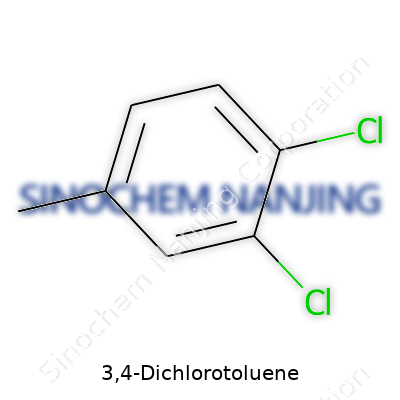
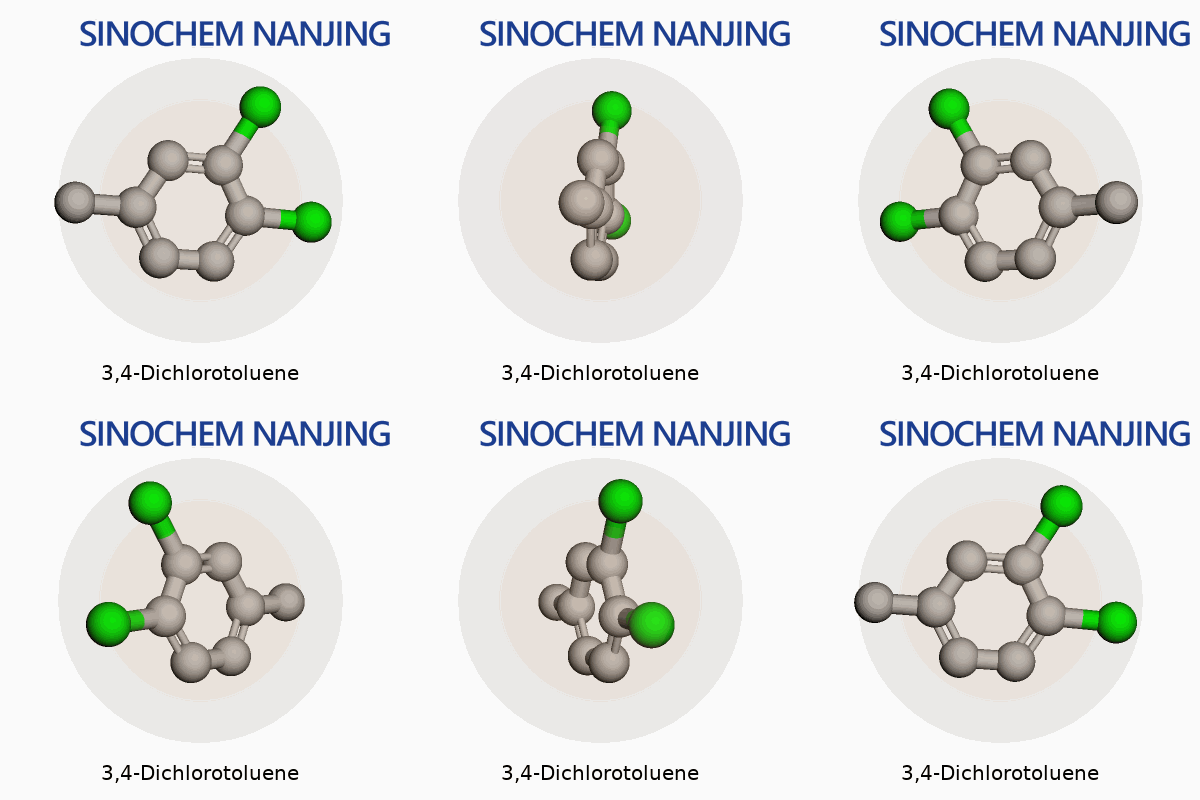
| Names | |
| Preferred IUPAC name | 1,2-Dichloro-4-methylbenzene |
| Other names |
1,2-Dichloro-4-methylbenzene 3,4-Dichlorotoluol 3,4-Dichloro-1-methylbenzene |
| Pronunciation | /ˌθriː, fɔːr daɪˈklɔːrəʊˈtɒljuːiːn/ |
| Identifiers | |
| CAS Number | '95-73-8' |
| Beilstein Reference | 1206720 |
| ChEBI | CHEBI:85344 |
| ChEMBL | CHEMBL15451 |
| ChemSpider | 10754 |
| DrugBank | DB14635 |
| ECHA InfoCard | 100.015.184 |
| EC Number | 202-537-2 |
| Gmelin Reference | 85977 |
| KEGG | C14106 |
| MeSH | D015041 |
| PubChem CID | 6912 |
| RTECS number | GZ3850000 |
| UNII | 45W8A2MJH4 |
| UN number | UN2321 |
| Properties | |
| Chemical formula | C7H6Cl2 |
| Molar mass | 163.04 g/mol |
| Appearance | Colorless to pale yellow liquid |
| Odor | Aromatic odor |
| Density | 1.24 g/mL at 25 °C |
| Solubility in water | Insoluble |
| log P | 3.93 |
| Vapor pressure | 0.41 mmHg (25 °C) |
| Acidity (pKa) | 34.98 |
| Magnetic susceptibility (χ) | -74.0×10⁻⁶ cm³/mol |
| Refractive index (nD) | 1.552 |
| Viscosity | 1.249 cP (20°C) |
| Dipole moment | 2.61 D |
| Thermochemistry | |
| Std molar entropy (S⦵298) | 211.9 J·mol⁻¹·K⁻¹ |
| Std enthalpy of formation (ΔfH⦵298) | -67.1 kJ/mol |
| Std enthalpy of combustion (ΔcH⦵298) | -3951.7 kJ/mol |
| Pharmacology | |
| ATC code | R02AA20 |
| Hazards | |
| GHS labelling | GHS02, GHS07 |
| Pictograms | GHS07 |
| Signal word | Warning |
| Hazard statements | H226, H315, H319, H335 |
| Precautionary statements | P210, P261, P280, P301+P312, P305+P351+P338, P337+P313 |
| NFPA 704 (fire diamond) | NFPA 704: 2-2-0 |
| Flash point | 63 °C |
| Autoignition temperature | 615°C |
| Explosive limits | Explosive limits: 1.2–7% |
| Lethal dose or concentration | Lethal dose or concentration (3,4-Dichlorotoluene): "LD50 Oral rat: > 2000 mg/kg |
| LD50 (median dose) | LD50 (median dose): 2,700 mg/kg (oral, rat) |
| NIOSH | SW1685000 |
| PEL (Permissible) | Not established |
| REL (Recommended) | REL (Recommended): 75 mg/m3 |
| IDLH (Immediate danger) | Unknown |
| Related compounds | |
| Related compounds |
Benzyl chloride Benzaldehyde Benzyl alcohol Toluene 3,4-Dichlorobenzyl chloride |



