2-Thiofuranmethanol: Chemistry, Safety, and Possibilities
Historical Development
Chemists got their hands on 2-Thiofuranmethanol from the steady evolution of furan chemistry. Furan rings, found originally in substances like furan resins and pharmaceuticals, have always fascinated synthetic chemists because the ring brings electron richness and reactivity. After synthesis routes for furan itself became reliable during the early parts of the 20th century, attention turned to sulfur replacements and derivatization. 2-Thiofuranmethanol came into focus right alongside related thiophenes and thiofuran chemicals, as sulfur’s unique electron properties offered promising new chemistry. The truth about sulfur's unique flavors in organosulfur compounds is that they stood out in both biochemistry and industrial synthesis. The methanol side chain brought additional versatility and set the stage for innovation across labs, echoing similar periods with furfural and tetrahydrofuran decades before but with a sharper sulfurous angle.
Product Overview
2-Thiofuranmethanol is built on a five-membered furan ring where an oxygen is replaced by sulfur and a methyl alcohol group is locked to the second carbon. This molecular tweak makes it a standout for further functionalization. Many chemists appreciate the potential for both nucleophilic and electrophilic reactions, especially where the thio group can bring stability or activate a site for forming new bonds. Over time, researchers discovered that this molecule could act as a bridge—offering both stability and new reactivity routes compared to its oxygen-based cousin, furanmethanol.
Physical & Chemical Properties
This compound usually shows up as a light liquid, somewhat yellowish, and produces a sulfurous odor that carries both sweet and pungent notes. The presence of the hydroxymethyl group at the 2-position does more than increase polarity; it affects boiling point and introduces a handle for hydrogen bonding in solution. Solubility tends to be moderate in water but much greater in common organic solvents like ethanol, ether, and chloroform. The combination of aromaticity from the ring and moderate nucleophilicity from the sulfur gives it niche stability—more stable than some thiols but reactive enough for targeted modification.
Technical Specifications & Labeling
Any lab handling 2-Thiofuranmethanol checks things such as purity, moisture content, and possible byproducts like unreacted furan or free sulfur compounds. Analytical standards center around NMR, GC-MS, and IR to confirm structure and purity. The proper chemical label calls out the IUPAC name “furan-2-ylmethanethiol,” structural formula, hazard statements, and safe handling instructions per regulatory frameworks like OSHA and the Globally Harmonized System. Regulatory agencies focus on the sulfur’s reactivity, which distinguishes the compound’s hazards from more well-known alcohols.
Preparation Method
Making 2-Thiofuranmethanol has roots in standard thiofuran chemistry. Most routes begin with furan or substituted furan rings, introducing sulfur via substitution or cyclization. One method swaps out the oxygen atom using Lawesson’s reagent, a phosphorus-sulfur mixture, or elemental sulfur under specific catalytic conditions. Generating the thiofuran ring paves the way for adding the hydroxymethyl side chain using formaldehyde or other methanol sources, often by electrophilic substitution or Grignard reaction. Pure product calls for careful purification, typically vacuum distillation and washing with brine to remove side products.
Chemical Reactions & Modifications
In the lab, 2-Thiofuranmethanol reacts with electrophiles and nucleophiles at several positions. The sulfur atom brings rich possibilities for oxidation into sulfoxides or sulfones; these versions turn up in the search for better drug scaffolds and advanced materials. The hydroxymethyl group opens the door for etherification, acylation, or even polymerization, inserting the thiofuran unit into longer chains or specialty plastics. On top of that, coupling reactions add to the molecular framework or even string multiple thiofuran rings together, creating electronic and pharmaceutical building blocks. Chemists find it a valuable participant in carbon-sulfur cross-coupling and thiolation strategies.
Synonyms & Product Names
Other names include furan-2-ylmethanethiol, 2-furylmethyl alcohol, and 2-thiofurylmethanol. The name on the bottle often depends on the supplier and tradition in the subfield, but most nomenclature points to the thio and hydroxymethyl pieces. Sometimes cross-listings pick up “2-furfurylthiol” or “2-thiomethylfuran.” This makes catalog searches occasionally tricky, as naming conventions are looser for specialty research chemicals.
Safety & Operational Standards
Standard operating procedures require good ventilation, splash protection, nitrile gloves, and eye protection since the vapor produces irritation and messy spills are tough to clean up. The sulfur atom means some of the worst hazards relate to possible oxidation products, which can irritate lungs and skin more than plain furans. Storage away from sunlight and heat slows down unwanted oxidation and keeps byproducts in check. Inhalation of vapors can make for headaches or nausea, and leftover residues tend to linger in glassware without meticulous washing. Local regulations ask for separation from oxidizers, acids, and open flames. Labs with real-world experience also stick to spill kits specifically equipped for organic sulfur compounds since the smell lingers and can create cross-contamination risks.
Application Area
Synthetic chemists keep 2-Thiofuranmethanol around for its unusual reactivity in growing libraries of sulfur-containing materials. The ring structure makes it a favorite in the hunt for novel agrochemicals, especially when target molecules need to resist hydrolysis or oxidation in soil. In the pharmaceutical world, thiofuran building blocks turn up in antimicrobial and antifungal leads—benefiting from the dual ability to fend off metabolic breakdown and to engage with biomolecular targets through sulfur-specific interactions. Material science teams have explored its use in the formation of new conducting polymers and specialty coatings, betting on sulfur’s effect on conductivity and binding. Sometimes flavor and fragrance researchers dive in briefly, attracted by the distinctive sulfur aromas for edible products, but routine use stays rare due to safety considerations.
Research & Development
Innovation centers on tapping the reactivity of the thio group. Scientists investigating sensors for metal ions or oxidative environments examine 2-Thiofuranmethanol as a precursor for surface-bound ligands, as the thio group offers selective, strong interactions with soft metals like silver or mercury. Synthetic organic researchers focus on cross-coupling for lengthening conjugated systems or constructing unusual sulfur heterocycles. With green chemistry a growing concern across the globe, teams also experiment with milder, solvent-free syntheses and enzyme-catalyzed pathways to minimize toxic byproducts. The compound’s versatility inspires ongoing patent applications in pharmaceuticals, imaging agents, and polymeric materials. Rising interest comes not just from traditional academic pockets but from startups betting on sulfur’s resurgence in sustainable materials and new therapeutics.
Toxicity Research
Toxicologists evaluate both direct and indirect health effects. The thiofuran ring structure triggers concern because some related sulfur heterocycles have shown mutagenic or cytotoxic profiles in cell tests. Animal studies look for signs of organ toxicity, behavioral changes, and long-term carcinogenic risks, guided by observations with similar thio-compounds. Short-term exposure often irritates mucous membranes and the respiratory tract, with skin contact causing dermatitis in some cases. Chronic exposure data remain incomplete but lean toward caution based on analogs. Regulatory agencies press for more detailed studies on bioaccumulation and breakdown products, especially as metabolites can sometimes show effects stronger than the parent molecule. Research continues—a reminder that expanding applications ought to move in sync with proper toxicology, not in its shadow.
Future Prospects
Interest in 2-Thiofuranmethanol keeps rising as researchers seek greener routes to sulfur-containing chemicals and look for untapped pharmaceutical and material science opportunities. Improved synthesis and safer handling will help unlock possibilities in bioactive compounds and specialty polymers. Imagining a future where sulfur-based chemical platforms feed both medical and electronics breakthroughs keeps the curiosity strong. With climate and sustainability pressures making alternatives to petrochemicals and traditional oxygen heterocycles more compelling, 2-Thiofuranmethanol sits on the map for teams who believe the next generation of molecules will lean on sulfur’s nuanced reactivity. Continued interdisciplinary collaboration among chemists, toxicologists, and engineers will shape just how broadly this unique molecule moves from the test tube into daily life and industrial use.
What is 2-Thiofuranmethanol used for?
Understanding Its Role in Industry
2-Thiofuranmethanol deserves some attention because it quietly shapes the background chemistry in a few key industries. This organic molecule, sitting in the family of furans, shows up in laboratories and manufacturing hubs alike. You probably won’t find it at your local hardware store, but its fingerprints hide in everything from specialty flavors to pharmaceutical development.
How 2-Thiofuranmethanol Enters the Scene
Chemists and manufacturers turn to this compound because it behaves predictably and brings a certain flexibility to the table. In my experience helping friends in food manufacturing, the smallest structural twists in a molecule can swing the taste and smell of finished products. 2-Thiofuranmethanol steps in as a building block for flavors and fragrances, especially when a sulfur note is necessary. Synthetic flavorists blend it into formulations that mimic roasted, nutty, or coffee-like aromas — those warm kitchen scents we instinctively recognize but rarely question.
The pharmaceutical angle matters too. Medicinal chemists look for reliable starting points when crafting new drug molecules. 2-Thiofuranmethanol helps shape complex molecules for drug research by giving scientists a handle that can change and react in controlled ways. Billy, a researcher I met at an industry conference, once described how much time and cost they save when precursors like this one come out pure and ready for more advanced chemistry.
Why Its Use Matters
The chain reaction from small specialty chemicals echoes through bigger systems. Take flavor and fragrance applications: millions of people directly experience products crafted from just a handful of rare compounds. If you’ve ever tasted a plant-based meat alternative, there’s a chance sulfur-containing ingredients contributed to its savory profile. This wouldn’t work without molecules like 2-Thiofuranmethanol.
On the medicine side, streamlining synthesis helps researchers chase new treatments with fewer delays. Sourcing high-quality intermediates becomes a pressure point for pharmaceutical companies. If supply chains break down, or purity falls off, research stalls. For families waiting on new therapies — especially for tough diseases — every month counts.
Safety and Responsible Use
Handling 2-Thiofuranmethanol comes with its own set of safety questions. Importers, manufacturers, and end-users have a responsibility to respect material safety data. This compound isn’t a household product, so those working with it learn to manage risks through real training, regular updates, and clear communication down the supply line.
The regulatory landscape keeps evolving, especially in Europe and North America. Agencies and watchdog groups stress the need for compliance, not out of formality, but because they’ve learned — sometimes painfully — how overlooked chemicals at small scales can lead to bigger problems later on.
What Can Be Done Better?
Open conversations across industry matter. More transparency about sourcing and purity will help both large manufacturers and boutique companies build trust with their partners and customers. Implementing green chemistry principles can steer production away from hazardous pathways, lessening the environmental toll and creating safer workplaces.
Education stands out as a critical investment. Companies that build strong training programs set themselves up to avoid accidents and costly delays. I’ve seen the difference when teams include safety experts right from the start, instead of as an afterthought.
2-Thiofuranmethanol might seem niche, but its ripple effect reaches far. Paying attention to its safe use, sourcing practices, and regulatory compliance means better flavors, safer medicines, and a healthier world for people on both sides of the production line.
What is the chemical structure of 2-Thiofuranmethanol?
Getting to Know 2-Thiofuranmethanol
2-Thiofuranmethanol isn’t a chemical you run across in daily conversation, but anybody interested in organic chemistry or working in research labs knows that every name tells a story. This compound comes shaped like a furan ring—a five-membered ring, mostly carbons, with an oxygen atom swapped out for sulfur at one spot. Hanging off this ring, a single –CH2OH group attaches itself at the second position. That small tweak, replacing oxygen with sulfur and adding a little alcohol group, changes how it reacts with other molecules and what tasks it manages in chemical synthesis.
Peering Into the Structure
Draw it on a page, and you start with the furan template—imagine a pentagon. At position two, sulfur pops in instead of carbon or oxygen. That sulfur gives it a different scent, sometimes a slightly garlicky note if you open a container. Off the same ring, the –CH2OH group comes off the same carbon, not far from the sulfur atom. Chemists label this as 2-(hydroxymethyl)thiophene, and its formula—C5H6OS—captures everything inside: five carbons, six hydrogens, one oxygen, one sulfur.
Why Structure Matters
Sulfur swaps into the furan framework not just for kicks but for meaningful changes in reactivity. I remember getting splashed by a bit during an undergraduate synthesis—nothing dangerous, just a reminder that small differences (sulfur instead of oxygen) make you handle things carefully. Thiofuran derivatives like this slide into reactions where oxygen-containing furans sputter. They show unique pathways, useful for building up more complicated molecules like pharmaceuticals.
The alcohol group—CH2OH—makes it a handier building block. Alcohols take part in dozens of classic organic reactions. In the lab, researchers use this functionality to chain on further chemical groups, to oxidize for creating acids, or to use as handles in coupling reactions. For instance, linking this molecule within specialty polymers becomes feasible thanks to that group.
Relevance to Applied Science
Why do these minor chemical details matter? There’s a big push for new molecules in drug development, for better batteries, and for greener chemical processes. Compounds like 2-thiofuranmethanol serve as stepping stones for these objectives. Furan derivatives have shown antimicrobial, antifungal, and even anticancer properties. Insert sulfur where oxygen sat, and suddenly the electron density shifts. This impacts how the molecule interacts in biological systems or catalyzes new bond formations.
A research group in Germany once highlighted how sulfur-containing furans block certain growth enzymes better than their oxygen siblings. That insight pushes chemists to explore thiofuran cores in pharmaceutical research. The alcohol group supports modification, letting drug designers tweak the structure for better solubility or target specificity—two features every pharmaceutical scientist wishes for.
Room for Responsible Application
As much as 2-thiofuranmethanol offers promise, working with sulfur compounds comes with a few quirks. Sulfur smells linger and trace contamination can throw analytical instruments off. Labs adopt rigorous cleaning routines. Research teams who dig into new thiofuranmethanol-based drugs or polymer backbones carry responsibility for understanding not just the reaction, but what happens downstream in disposal and environmental exposure.
Future advances depend on curious minds, shared procedures, and making data open for peer review. The right molecular tweak—sulfur instead of oxygen, a new alcohol—can open whole fields. Chemistry thrives on these details.
Is 2-Thiofuranmethanol hazardous or toxic?
The Real-World Impact of Chemical Exposure
Sitting in a lab, you come across names like 2-Thiofuranmethanol, and it’s easy to think, “That sounds pretty technical, maybe even dangerous.” Years of dealing with specialty chemicals taught me these names aren’t just academic. Safety isn’t a suggestion; it’s a rule written by hard-earned lessons and shared stories from experienced professionals. 2-Thiofuranmethanol offers a good example, because curiosity or carelessness around it can mean real risk.
Knowing the Hazards
Chemical suppliers flag 2-Thiofuranmethanol as a material you don’t want spilled on your hands or breathed into your lungs. Nature hasn’t designed human skin or respiratory systems to handle it. Those warning phrases aren’t legal padding—they come from tested data points and, too often, from people learning the hard way. If fumes catch your nose, irritation follows. Even brief contact can produce rashes, and enough of the substance might make you feel weak or dizzy.
Sifting through safety data sheets, you start to see a pattern. Repeated exposure doesn’t toughen you up; it causes problems to pile up. Eyes, lungs, and skin pay the price, especially without gloves or proper ventilation. These reactions come because 2-Thiofuranmethanol reacts with body chemistry at the cellular level, creating stress that the immune system can’t simply shake off.
Why This Matters Beyond the Lab
No chemical hazard exists in a vacuum. Workers on production floors, engineers, warehouse staff—they’re the faces behind the warnings. Some have worked with solvents for decades and could tell you just how quickly an everyday routine can turn into a medical emergency. In one manufacturing shop I visited, a spill meant instant evacuation. Everybody left their stations. No one checked their phone or shrugged it off. This reaction came from experience and respect for the risks involved, especially since furan-based chemicals can linger in the air and cause invisible harm.
What the Research Tells Us
Animal studies inform most of the data about 2-Thiofuranmethanol’s toxicity. Results paint a pretty clear picture: acute exposure leads to tissue damage, and the body struggles to break the substance down safely. You don’t find this chemical in food or cosmetics for a reason. The Environmental Protection Agency doesn’t list it as a household concern, but that’s only because most people never encounter it outside controlled environments. It doesn’t need to be highly notorious for harm to exist—enough exposure can overwhelm the body's natural defenses all the same.
Building a Safer Approach
Respect in the lab starts with good habits. Gloves, goggles, and solid ventilation might seem overcautious to newcomers, but no seasoned chemist skips these steps. If you store or transport 2-Thiofuranmethanol, keep it sealed, labeled, and away from heat or open flames. Spills demand more than paper towels; specialized kits help contain and neutralize the substance. Error often creeps in near the end of the workday or during cleanup, so regular safety drills help reinforce muscle memory and reduce the odds of a slip-up.
The larger conversation circles back to education and honesty about chemical risks. People can’t avoid hazards they don’t recognize, and it only takes a single incident to upend routines or cause injury. Staying informed and vigilant is the strongest defense—not just for scientists, but for everyone who works near potentially harmful materials.
What are the storage conditions for 2-Thiofuranmethanol?
Why Care About Storage?
Chemicals don’t always throw tantrums, but the wrong storage conditions can turn a straightforward formula into a real headache. 2-Thiofuranmethanol, a compound with a sulfur atom tucked inside its backbone, stands out as one that doesn’t react kindly to sloppy habits. Storing it right keeps labs safer, and it also preserves money, time, and good science.
Breaking Down the Science
2-Thiofuranmethanol carries a furan ring that’s fused with both oxygen and sulfur atoms. That structure gives it more reactive spots than some other furan derivatives. Anyone who has worked with sensitive chemicals will tell you: these structural quirks can make a huge difference in stability. Exposure to air, heat, or light might set off slow degradation. Instead of rolling the dice, the safer choice is to keep it in a cool, dry place, and in a tightly closed container.
The shelf-life drops if the bottle sits in direct sun or anywhere temperatures swing wildly. If the lab temperature drifts above room level, volatility increases and impurities sneak in. From my experience, a temperature-controlled cabinet makes a big difference. Avoid lockers near radiators, windows, or wherever sunlight hits in late afternoon. Regular air conditioning won’t always cut it if the bottle sits high up on a shelf, collecting heat.
Moisture and Air: The Invisible Trouble
Any seasoned chemist has seen otherwise clear liquids turn cloudy just because the cap wasn’t screwed on tightly. Moisture in the air, especially on muggy days, seeps in over time. For 2-Thiofuranmethanol, this can lead to slow oxidation or even the dreaded ring opening. And then there’s oxygen—just a little creeping into the bottle starts slow changes that show up weeks later in wonky results. The best habit is to use containers with airtight seals and, if possible, use an inert gas blanket—nitrogen or argon work well—to flush out oxygen before the cap closes.
Container Choices: Why Material Matters
Glass, with a tight screw-top cap, works better than plastic for long-term storage of many furan derivatives. Certain plastics allow vapor to escape and oxygen to sneak in, especially over months. I watched a grad student lose an entire batch because a plastic vial let in just enough air to spoil the compound’s purity. Amber glass bottles go further by sheltering from stray light. Labels tend to fade, so double up: one label on the bottle, one in the logbook.
Safety Decisions
Not all storage hazards wear a warning label. Sulfur-containing organics sometimes pack a faint but persistent odor. I always keep bottles in a vented cabinet to stop the smell from creeping across the workspace. If spills happen, clean-up takes less time and headaches drop. For anyone in a busy lab, checking expiration dates, monitoring container condition, and recording storage temperatures really pays off.
Finding Solutions That Stick
A few practical moves protect not just the chemical, but also everyone who relies on valid data. Use air- and moisture-tight containers, tuck the compound in a cool, dark storage area, and avoid the temptation to transfer leftovers into whatever vial happens to be handy. If the chemical sees frequent use, buy in smaller quantities. Regular checks make sure nothing’s evaporating or degrading. Simple habits keep the science solid.
Where can I purchase 2-Thiofuranmethanol?
Understanding the Real-World Search
Buying a compound like 2-Thiofuranmethanol doesn’t work the way grabbing a bag of sugar from the corner store does. Anyone who’s tried to source a specialty chemical knows: you run into supply shortages, complicated import rules, and—if you have a small lab or an unusual requirement—plenty of downright refusals. Not every supplier stocks obscure chemicals, and those with a clear reason for needing it often hit walls of red tape.
Who Sells It, and Why They’re Picky
People usually turn to chemical distributors like Sigma-Aldrich (now part of Merck), Alfa Aesar, or TCI America, companies with long-standing reputations and strict safety protocols. Some buyers check ChemSpider, Sciencemadness forums, or ChemShuttle, tracking down sellers with the specific catalog number and purity needed. Chemists know the drill—before an order even moves, expect a flurry of identity verification, business checks, and in some cases, licensing. Sellers keep lists of restricted substances. If a chemical can be used for anything nasty or dangerous, vendors will vet the end-user hard, sometimes asking more questions than your average border patrol.
The Challenges Beyond the Cart
Quality counts, but safety counts more. Many labs get burned buying from random online marketplaces like Alibaba or eBay, where the purity and traceability of a compound can drop off a cliff. People sometimes roll the dice, but most science careers don’t survive that gamble. Stories pass through the grapevine about batches tainted with mystery byproducts. Instead of saving a few bucks, labs pay a much bigger cost cleaning up failed reactions or fielding awkward questions from auditors.
The Importance of Experience and Know-How
Having spent time in academic and industry labs, I’ve seen firsthand how sourcing a low-volume, specialty compound can turn into a project of its own. Researchers at smaller startups or universities sometimes join forces to meet supplier minimum order quantities. Trust in a supplier grows with successful track records—chemists stick to those who offer certificates of analysis, good paperwork, and customer support that picks up the phone.
Regulation, Transport, and Why Patience Helps
Shipment for such chemicals often involves declared paperwork, shipping conditions (sometimes cold chain), and hazmat fees. Export laws play a role—the European Union, United States, China, and other major regions enforce their own rules for moving anything with marketable uses. That forces buyers to plan ahead, especially if deadlines hang overhead.
Safer, Smarter Solutions
If direct purchase looks too hard, some labs outsource custom synthesis to contract research organizations. This usually costs more, but it offers flexibility when stock runs dry. Others reach out to their network to borrow or buy small amounts from colleagues. Crowdsourcing through professional societies or online communities picks up the slack as a last resort, but legal and handling risks stay in play.
What Buyers Should Look For
Seek vendors who share safety data, confirm quality control, and can answer technical questions. Check regulatory paperwork before money leaves your account, even if it drags out the process. Buying 2-Thiofuranmethanol—or anything similar—means balancing urgency, traceability, and trust. It always pays to get advice from seasoned researchers or established procurement offices. Their mistakes and successes point the fastest path toward a reliable purchase.
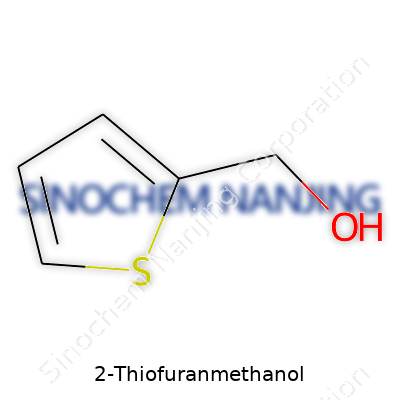
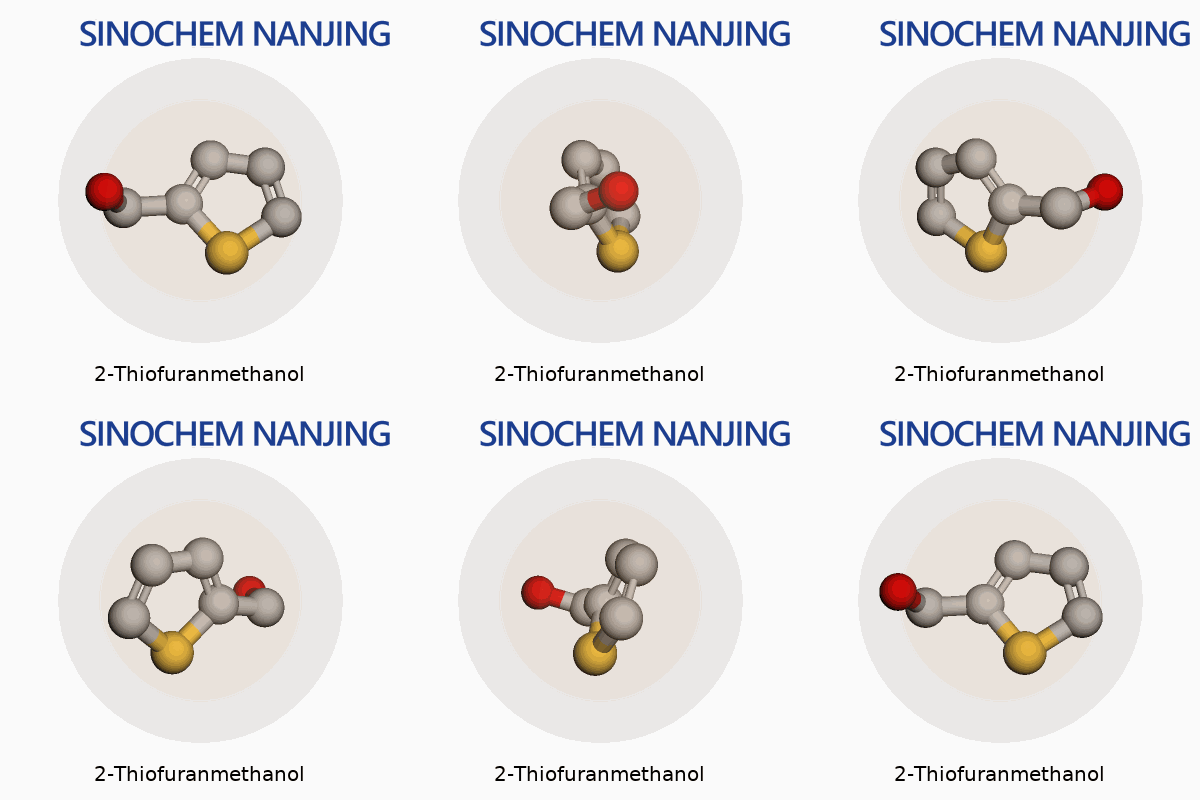
| Names | |
| Preferred IUPAC name | (furan-2-yl)methanethiol |
| Other names |
2-Furfuryl mercaptan 2-Furanmethanethiol 2-Thienylmethanol |
| Pronunciation | /tuː-θaɪ.oʊˌfjʊər.ən.mɛθ.ə.nɒl/ |
| Identifiers | |
| CAS Number | [13679-86-2] |
| 3D model (JSmol) | `3DStructe:JSmol//3Dmol - C1=CSC=C1CO` |
| Beilstein Reference | 82553 |
| ChEBI | CHEBI:18970 |
| ChEMBL | CHEMBL149110 |
| ChemSpider | 107403 |
| DrugBank | DB08615 |
| ECHA InfoCard | 03a34497-1b04-40c4-8784-1602043614a6 |
| EC Number | EC 611-313-8 |
| Gmelin Reference | 58387 |
| KEGG | C05624 |
| MeSH | D016747 |
| PubChem CID | 12505412 |
| RTECS number | XZ3150000 |
| UNII | CMU7Q9G95H |
| UN number | UN3435 |
| Properties | |
| Chemical formula | C5H6OS |
| Molar mass | 132.18 g/mol |
| Appearance | Colorless to yellow liquid |
| Odor | unpleasant, sulfurous |
| Density | 1.262 g/mL at 25 °C |
| Solubility in water | Slightly soluble |
| log P | 0.3 |
| Vapor pressure | 0.0937 mmHg (25°C) |
| Acidity (pKa) | 14.06 |
| Basicity (pKb) | 13.86 |
| Magnetic susceptibility (χ) | -64.57·10⁻⁶ cm³/mol |
| Refractive index (nD) | 1.6000 |
| Viscosity | 1.348 mPa·s (25°C) |
| Dipole moment | 1.75 D |
| Thermochemistry | |
| Std molar entropy (S⦵298) | 322.6 J·mol⁻¹·K⁻¹ |
| Std enthalpy of formation (ΔfH⦵298) | -38.3 kJ·mol⁻¹ |
| Std enthalpy of combustion (ΔcH⦵298) | -598.9 kJ/mol |
| Hazards | |
| GHS labelling | GHS02, GHS07 |
| Pictograms | GHS07 |
| Signal word | Warning |
| Hazard statements | H302: Harmful if swallowed. |
| Precautionary statements | Precautionary statements: "P261, P280, P305+P351+P338, P337+P313 |
| NFPA 704 (fire diamond) | 1-2-0-W |
| Flash point | Flash point: 104 °C |
| Autoignition temperature | Autoignition temperature: 405 °C |
| LD50 (median dose) | LD50 (median dose): 300 mg/kg (rat, oral) |
| NIOSH | KWJ69340N0 |
| PEL (Permissible) | Not established |
| REL (Recommended) | 20 - 25°C |



