The Journey of 2-Propyn-1-Ol: More Than Just a Niche Chemical
Historical Development
Curiosity drives chemistry forward. Looking back, the exploration of acetylenic alcohols began in the 19th century. 2-Propyn-1-ol, also known as propargyl alcohol, made its way from obscure laboratory benches into industrial settings once chemists realized the value hidden in small, reactive molecules. The way this compound caught the attention of early researchers has a lot to do with its versatility. The triple bond wedged in its structure paired with an alcohol group opened the door for creative chemical transformations. Over decades, persistent experiments shaped the current understanding and production routes, turning 2-Propyn-1-ol into an important intermediate in organic synthesis. Patience and plenty of lab mishaps eventually washed away skepticism over its utility, cementing it into various commercial and academic roles.
Product Overview
Some chemicals skim the edge of obscurity, but 2-Propyn-1-ol keeps popping up whenever researchers or manufacturers need a hit of reactivity. The molecule’s modest size hides outsized potential. Its main draw comes from the powerful combination of its terminal alkyne and hydroxyl group. This chemical doesn’t thrive on fame; instead, it appears in adhesives, corrosion inhibitors, pesticides, and in specialized organic syntheses both in research and in industry. What sets it apart isn’t just the scope of what it can do, but the finesse required to handle and leverage its chemical personality.
Physical & Chemical Properties
2-Propyn-1-ol looks pretty unassuming at first glance: a colorless liquid, sharp and biting in odor, lighter than water, and only a bit less eager to catch a spark. Boiling somewhere around 117°C, it slides easily into many organic solvents. Its structure, with that triple bond stitched directly to the carbon bearing the hydroxyl group, leaves it quite reactive, particularly toward strong acids, bases, and oxidizers. Having used this material in the lab, it always impresses just how much punch fits in such a small flask. Like many reactive organics, managing its volatility and flammability is a constant reminder that chemistry rewards care as much as curiosity.
Technical Specifications & Labeling
Anyone who has handled 2-Propyn-1-ol knows that accuracy matters—not only in labeling concentrations but also in managing purity and identifying byproducts. Chemically, purity assurance revolves around the percentage content and detection of water and other volatile impurities. Technical standards often refer to GC analysis, but a proper label also warns about flammability and toxicity. Its containers carry symbols for acute toxicity and flammable liquid, a warning that’s echoed in every safety training session and every glance at the shipping drum. In practice, these labels represent both a legal requirement and a hard-earned lesson from those who took shortcuts.
Preparation Method
Producing 2-Propyn-1-ol doesn’t rely on mysterious processes. The most established route begins with propargyl chloride, reacting under controlled conditions—sometimes with water, sometimes with sodium hydroxide—depending on the desired scale and efficiency. The reactive triple bond demands careful control of temperature and exclusion of moisture. Creating this molecule without inviting runaway side reactions takes a steady hand, a cool head, and attention to detail. Those who underestimate its capacity for exothermic surprises quickly learn to plan for containment, not improvisation.
Chemical Reactions & Modifications
Chemists gravitate toward 2-Propyn-1-ol’s unique structure for the challenges and opportunities it presents. That alkyne-hydroxyl combo sets it up for a number of classic reactions: nucleophilic additions, oxidative couplings, and substitutions. The terminal triple bond interacts with halogenation or hydrogenation reagents, opening up access to a family of derivatives—some useful as building blocks for agrochemicals, others as intermediates in pharmaceutical development. Epoxidation converts it into oxiranes; oxidation delivers propargyl aldehyde or acid derivatives. The breadth of its reactivity matches the creativity of those willing to experiment.
Synonyms & Product Names
Looking for 2-Propyn-1-ol in chemical catalogs? Don’t let one name rule out another. Between propargyl alcohol, methylacetylene alcohol, 2-hydroxy-1-propyne, and other less-common handles, the same molecule threads its way through patent literature and technical manuals. This cluster of synonyms sometimes leads to confusion among new users, but for seasoned chemists, these alternative names reflect the evolution of understanding over time. Language bends to the applications and context, often sparking stories from those who learned about the compound under one name and met it in practice under another.
Safety & Operational Standards
Each encounter with 2-Propyn-1-ol reinforces the need for respect. Direct skin contact produces rapid irritation, and inhaling vapors brings on discomfort or worse. In industrial settings, local exhaust ventilation isn’t a suggestion; it’s a requirement that aligns with hard-won experience. Fire risks never stay theoretical, so storage involves flame-proof cabinets and careful accounting for compatibility with oxidizers. Proper PPE—goggles, gloves, and lab coats—becomes the lived-in uniform for those regularly working with the material. Regulatory bodies like OSHA and agencies worldwide maintain guidelines, shaped by years of incident reports and toxicological evidence.
Application Area
End-use cases for 2-Propyn-1-ol stretch across many industries. In my own work, its value as a synthetic intermediate stood out, especially in small-scale research directed at new heterocyclic compounds. Paint and coatings industries rely on it for its corrosion inhibition, while the oil industry blends it for pipeline protection. Agrochemical developers chase its potential to form part of selective herbicides and fungicides, aiming for stronger efficacy and broader spectrum. Even electronics manufacturers tap its unique reactivity in specialty etching formulations. Each application area demands careful balancing of chemical advantages and handling protocols, underscoring why this material keeps finding new uses decades after its initial discovery.
Research & Development
R&D teams gravitate toward 2-Propyn-1-ol whenever a novel molecular transformation requires a pivot point—especially if a functional group needs to be both reactive and modifiable. Academic projects frequently showcase this chemical as a key player in transition metal catalysis, click chemistry, and the design of complex polymer architectures. Technical literature documents emerging catalytic systems leveraging its triple bond, pushing boundaries in functional material synthesis. Collaborations between universities and companies bring new process optimizations, always hunting for higher yields, fewer byproducts, and safer operational setups. The body of research keeps expanding, driven by demands for greener chemistry and the push for more sustainable feedstocks.
Toxicity Research
People sometimes downplay the risks associated with multi-functional alcohols until firsthand experience—or published toxicological data—sets the record straight. Inhalation of propargyl alcohol produces clear signs of distress in test animals, with dose-dependent effects extending to acute liver and kidney damage according to established studies. Separate lines of research point to neurotoxic effects with long-term or high-level exposure. Such findings prompted reclassification of workplace safety levels and revisions in permissible exposure limits. The material’s risks are not theoretical, and they shape both laboratory policy and industrial regulations. Transparent communication of these dangers, from MSDS to peer conversations, protects not just those who handle the compound but everyone downstream in the process.
Future Prospects
Looking forward, 2-Propyn-1-ol stands as a candidate for even broader development, especially as the demand rises for precision chemistry and sustainable processes. The unique dual-functionality of its structure offers a platform for innovations in polymer science, catalysis, and green chemistry. Researchers aim to streamline its synthesis routes, reduce hazardous byproducts, and incorporate renewable starting materials. New frontiers in material science could see it contributing to conductive polymers and advanced coatings. Strengthened by decades of learning from both success and near-miss, future developments will depend on collaboration across disciplines and vigilant attention to safety, ensuring that progress doesn’t outpace caution.
What are the main uses of 2-Propyn-1-Ol?
Getting to Know 2-Propyn-1-ol
Most people don’t bump into 2-Propyn-1-ol at the grocery store, but plenty of chemists and engineers rely on it. This chemical, known for its triple-bonded carbon structure and bite of reactivity, falls into lots of workaday settings. I’ve seen it standing in glass bottles in research labs. Industrial folks keep it on hand for reasons tied less to academic curiosity and more to practical problems requiring sharp chemistry.
Corrosion Inhibition: The Unseen Defender
If water rides through metal pipes, trouble usually follows. Over time, pipes give way to rust. Municipal water facilities and oil refineries turn to 2-Propyn-1-ol to give steel and iron a fighting chance. This little molecule attaches to metal, creating a thin layer that blocks oxygen and moisture. Without this layer, repairs multiply and costs skyrocket. My old engineering professor once said some of the briniest wells in the Permian basin only run thanks to corrosion inhibitors, with 2-Propyn-1-ol often in the recipe.
Building Blocks for Larger Molecules
Synthetic chemistry tends to build from scratch, using small woodshed molecules as starters. In this part of the story, 2-Propyn-1-ol acts like a corner piece in a puzzle. Its alkyne group unlocks chain reactions kickstarted by light or metal catalysts. Drug makers, dye producers, and plastics manufacturers put its chemistry to work, tacking it onto larger molecules, stringing it into polymers, or folding it into colorants. Bayer, BASF, and other companies use it where precision counts. Tuning a molecule’s backbone can turn a workable compound into a medication, pigment, or flexible plastic product.
Making Special Coatings and Resins
2-Propyn-1-ol features in coatings that bridge function and durability. Coatings for wires, floors, and machinery sometimes call for its scratch-resistant nature. The molecule’s structure handles crosslinking with other chemicals, so finished resins lock together tight. Years ago, I visited a factory floor in Houston where they rolled out big drums of cable insulation made with specialty acrylics derived in part from 2-Propyn-1-ol—those cables resisted cracking even after years outdoors.
Chemical Synthesis Lab Workhorse
Research teams find it handy for forging carbon-carbon bonds through reactions like propargylation. In academic labs, graduate students use 2-Propyn-1-ol to build libraries of experimental molecules. For example, new antibiotics or agrochemicals might start life with a hitchhiking bit of alkyne. Scientists cite its clean reactivity and easy handling compared with fussier reagents. Published research in journals like the Journal of Organic Chemistry supports its versatility, with plenty of recipes listing it as a starter or building block.
Environmental and Safety Notes
This chemical packs a punch, so safety rules stay strict. Inhalation or skin contact can burn or irritate, especially during large-scale manufacturing. Factory operators lean on closed systems, room ventilation, and tough gloves. Regulatory groups like OSHA and the European Chemicals Agency put out exposure limits that companies must heed.
Moving Toward “Greener” Chemistry
No industrial chemical exists in a vacuum. Pollution, disposal, and worker exposure all show up in audits and on spreadsheets. Researchers keep hunting for safer alternatives with lower toxicity and environmental impact. Still, 2-Propyn-1-ol’s track record in corrosion prevention, synthesis, and coatings keeps it front and center until viable substitutes appear.
What is the chemical formula and structure of 2-Propyn-1-Ol?
An Up-Close Look at 2-Propyn-1-Ol
2-Propyn-1-ol sounds like a mouthful, but most people know it better as propargyl alcohol. In its simplest form, the chemical formula is C3H4O. The molecular structure isn’t just a jumble of letters and numbers; it means something concrete. Visualizing it, you get three carbon atoms, four hydrogens, and one oxygen. The backbone holds a triple bond between the first two carbon atoms, then a single bond leading to an alcohol group (–OH) at the end. Draw it out, and it looks like HC≡C–CH2OH.
Why the Structure Matters
It isn’t about memorizing chemistry lessons—it comes down to what this structure lets you do. That triple bond throws in some real reactivity. I’ve handled propargyl alcohol in the lab, and its bite stands out compared to plain old ethanol. That mix of an alcohol tail and a triple-bonded start gives it the edge for lots of organic reactions. In fact, the compound regularly steps up as a building block in pharmaceuticals and specialty chemicals. That single triple bond means chemists can attach all kinds of groups, opening new possibilities in drug research, dye synthesis, or polymer chains.
Not Just a Lab Curiosity
2-Propyn-1-ol finds demand in the real world. Industries keep it on hand for making corrosion inhibitors and pesticide intermediates. Its strong reactivity toward other chemicals makes it a key player in building complex molecules, including some that help protect metals from rust. Anyone painting or working with concrete admixtures might bump into products that owe some of their performance to this little backbone of carbon and oxygen. That’s not science fiction—it’s the backbone of practical chemistry doing its work in everyday materials.
Why Safety and Responsible Use Matter
Propargyl alcohol isn’t your friendly, everyday alcohol. It carries health risks. In the lab, I always double-check the fume hood before opening a bottle. The fumes aren’t harmless—they irritate eyes, skin, and lungs. Even low levels over time can do real damage. Proper gloves and goggles beat bravado every time. On top of health risks, spills can make for a headache. Its volatility means special storage and handling aren’t just for show—they protect workers and the environment. Regulators push for clear labeling and regular safety audits. These aren’t hoops to jump through just to please insurers; they keep people out of harm’s way.
Solutions for Safe Handling
The best approach reduces human error. Automatic dispensers and leak-proof containers minimize splashes and accidental exposure. Regular, hands-on safety training rather than a binder full of protocols helps new hires stay alert. For larger operations, I’ve seen workplaces swap out open-air procedures for contained systems with ventilation and sensors. Even smaller labs have options—personal protective equipment and good habits keep accidents from turning into emergencies.
Looking Forward
Researchers continue chasing ways to manage risks while using 2-Propyn-1-ol’s full potential. Greener synthesis routes, real-time exposure monitoring, and improved containment keep moving the industry forward. For chemists and manufacturers alike, understanding the formula isn’t the end game; it’s about translating structural know-how into safer practices and better products. Real-world chemistry gets better not by memorizing lines on paper, but by putting knowledge to work, step by step.
What safety precautions should be taken when handling 2-Propyn-1-Ol?
Direct Contact Risks with 2-Propyn-1-Ol
Personal experience showed me just how quickly 2-Propyn-1-ol can irritate the skin and eyes. One splash seems like nothing until the burn starts. This compound loves sneaking through gloves that look sturdy, so only chemical-resistant gloves—like neoprene or nitrile—keep the pain away. Any open skin walks away red and itchy. For eyes, safety goggles with side shields become non-negotiable. If a single drop touches the eye, it demands at least 15 minutes at the eyewash station. Plain glasses never stop a direct spray.
Air Quality and Respiratory Protection
The smell alone should raise caution flags—breathing in its fumes never leads anywhere good. Short stints around even a small spill left my head aching and nose tingling more than once. Good ventilation takes priority in any room where 2-Propyn-1-ol gets opened. Fume hoods, local exhaust, or—at the very least—open windows push the vapors out. If high concentration lingers or you’re transferring larger amounts, a properly fitted organic vapor respirator keeps lungs clear. Forgetting a mask means waking up with a scratchy throat at best.
Storage Matters
Few chemicals cry out for better storage than 2-Propyn-1-ol. I learned my lesson the morning a bottle leaked and ate through a shelf coating. Storing it in a cool, dry spot, away from every possible heat source, blocks half the trouble. Flammability stays a real risk, so no open flames or heaters nearby. Using tightly sealed containers, kept away from acids, oxidizers, or bases, stops unexpected reactions—the types seen in lab mishaps and industrial accidents. Signage that jumps out at you and secure containment together cut the chances of spill drama.
Spill Response That Works
Being unprepared during a spill means doing everything wrong. My biggest mistake came from thinking paper towels could soak up a small leak—vapors just filled the air faster. Only absorbents rated for solvents do the trick, and the room gets cleared fast. My coworkers and I found that a clear step-by-step procedure, nearby and visible, helps everyone act instead of freezing. Closed shoes, gloves, and a lab coat go on before approaching a spill. After cleanup, every inch gets washed down, and waste heads into a container meant for hazardous solvents—not the regular dumpster.
Medical and Emergency Readiness
During one incident, knowing where the eyewash station sat made a difference in someone keeping their vision. Quick action only works with good preparation: accessible emergency showers, eyewash fountains, first aid kits, and a charged phone nearby play major roles. Training employees or lab users on what to do beats relying on luck. Emergency contact information right by the door stops confusion and panic in its tracks.
Building a Safety Culture
Chemical safety doesn’t end with one person’s vigilance. My most reliable protection always came from coworkers who watched my back and knew their way around protocols. Refreshers every few months on safe handling and accident response keep complacency out of the lab or plant. Encouraging questions and calling out unsafe behavior makes everyone safer. Managers who invest in up-to-date equipment, provide real gloves and goggles, and replace anything that falls short create lasting trust and protection.
Trust but Verify
Every label and every safety data sheet (SDS) matters with 2-Propyn-1-ol. I made a habit of double-checking both before every experiment or transfer. Revisiting the chemical’s SDS with each new shipment, not trusting old memory, leads to fewer surprises. Experience shapes a good routine, but the data brings the context and clarity so no corner gets cut.
How should 2-Propyn-1-Ol be stored?
Why Storage Matters
Spending years around chemicals makes you appreciate the importance of honest storage conversations. I’ve watched what can go wrong when someone takes shortcuts with solvents and reactive compounds. 2-Propyn-1-ol doesn't leave room for casual habits. It’s sensitive, flammable, and toxic, which tells you right away that mishandling carries risks not only for lab workers but also for nearby people and the environment.
Shops sell this chemical for industrial, pharmaceutical, and specialty uses. The danger doesn’t disappear after the delivery truck moves on. Real safety starts at the loading dock and stretches to the end user. Mishaps can mean poisonings, injuries, lost time, and lawsuits. In my experience, following proven storage steps is the only way to avoid regret when things go wrong.
Understanding the Hazards
2-Propyn-1-ol acts as both a fire hazard and a poisonous compound. Even a small spill in the wrong place can spark ignition or expose workers to inhalation and skin absorption dangers. Health experts agree that this chemical attacks the nervous system, eyes, and skin. Fires resulting from poor storage often require major responses, putting entire workplaces at risk.
It’s not rare for people to think “just for a few hours” is safe enough inside a regular storage closet, but I have seen this attitude backfire. The trouble usually starts with leaky containers, absence of good ventilation, or letting incompatible chemicals sit side by side.
Lessons from the Field
After helping set up a new storage area for specialty chemicals, I realized small design choices add up. Putting 2-Propyn-1-ol on lower shelves—never over eye level—always made sense. Spills roll downward, not up. Signs with clear warnings and emergency procedures made it easier for less experienced coworkers to act fast during a problem.
Metal containers can spark a fire if vapors collect, so plastic or approved glass containers always felt like the safer bet. Even so, everything needed a tight-fitting cap, and we double-checked for cracks every single time.
Best Storage Practices
Every training handout agrees: store this compound away from open flames, direct sunlight, and hot surfaces. Flammable storage cabinets rated for Class IB liquids provide real protection. I learned long ago that permanent ventilation (adding vent holes to the storage room, not just a small fan) makes a huge difference in lowering vapor buildup. Chemical manufacturers recommend keeping storage temperatures cool, ideally below 25°C (77°F), so we always checked thermostats along with locks.
Experts from the National Fire Protection Association underline the need for separation from oxidizers and acids. I have seen workers try to shortcut this by using a single cabinet for everything flammable. Problems followed. Each chemical got its own labeled space, with buffer zones for extra insurance.
Addressing Challenges
Routine checks for leaks and expired chemicals prevented most messes. I remember too well going through a training drill where our crew had to wear goggles, gloves, and full aprons. At first, it felt over-the-top, but we all agreed it felt like common sense after finding accidental spills left behind on valve threads.
Disposal sometimes caused confusion. Pouring unused 2-Propyn-1-ol down the sink led to blocked pipes and fines in one facility. Hazmat pickup days kept our waste streams safer, especially for new staff who needed clear instructions.
Building a Safer Routine
The safest teams I’ve worked with kept logs updated, alarms tested, and emergency numbers on the wall. Clear responsibilities help. No one expects a crisis, but good storage makes it easier to prevent a serious one. When dealing with chemicals like 2-Propyn-1-ol, the work never stops at the order form. It continues through every day the material sits on the shelf.
What are the potential health hazards of 2-Propyn-1-Ol exposure?
What is 2-Propyn-1-Ol?
2-Propyn-1-Ol, also known as propargyl alcohol, pops up in plenty of industrial settings. It's used for making chemicals, cleaning agents, and some specialty resins. I once walked through a facility that made dyes and watched workers use protective gear around vats containing this stuff. That kind of caution already tells you how seriously health experts take its dangers.
Main Ways People Get Exposed
Most contact happens at work. Inhalation is the main path—especially for anyone in manufacturing or lab work. Even small leaks can add up to significant exposure over time. Sometimes skin comes in direct contact, especially during mixing or accidental splashing, which is another source of concern.
Major Health Hazards
Breathing in 2-Propyn-1-Ol can hit the respiratory system hard. You might feel throat irritation, start coughing, or sense tightness in your chest. After spending time in a research lab, colleagues shared stories about headaches or burning sensations if ventilation failed. Prolonged exposure could increase risk for chronic respiratory issues. In some cases, shortness of breath and dizziness have forced workers out of the building for medical help.
Skin contact carries a risk too. Even a brief exposure can trigger redness, itching, or a burning feeling. Workers cleaning spills often mention dry or cracked skin even if they suit up. The chemical seeps through ordinary gloves quickly, so protective equipment must match up to the job.
Eyes have it roughest. Splashes will sting, cause watering, and make it hard to see for a stretch. A direct hit—without immediate rinsing—risks corneal injury. In one training session, we practiced eyewash techniques using dummy chemicals, and it became clear that time is critical for anyone exposed.
High doses can be toxic to the nervous system and may lead to confusion, sleepiness, or even loss of consciousness. There’s enough evidence that repeated workplace exposure sometimes causes damage to liver and kidneys. That’s not a hypothetical: medical journals record patients suffering multi-organ distress after handling 2-Propyn-1-Ol without proper safeguards.
Why Occupational Safety Matters
In some plants, I’ve noticed managers keep a close eye on air monitoring systems because one slip could mean costly health issues or legal penalties. OSHA puts exposure limits for 2-Propyn-1-Ol at 1 ppm over an 8-hour shift. But real-world conditions don't stand still—temperature, ventilation, and process changes can send vapors drifting outside expected zones.
Workers sometimes cut corners or hurry during cleaning or repair. Even a small mistake opens doors to accidental spills or splashes. Proper training, good communication, and up-to-date Material Safety Data Sheets help everyone spot trouble before it hits.
Reducing the Danger
Good air circulation and ventilation systems rank high on my list for keeping people safe. Fume hoods and local exhaust take care of vapors at the source. I’ve seen places invest in better gloves and chemical-resistant aprons—nothing flimsy lasts long around 2-Propyn-1-Ol. Emergency showers and eyewash stations near work areas aren’t optional—they save eyesight and stop injuries from escalating.
Frequent training and drills keep safety fresh. Workers remember the risks, respect the chemical, and know that quick action makes a difference if accidents happen. Proper medical monitoring and periodic health checks catch trouble early, and that means fewer long-term health problems. Simple steps and steady attention keep facilities running and coworkers healthy.
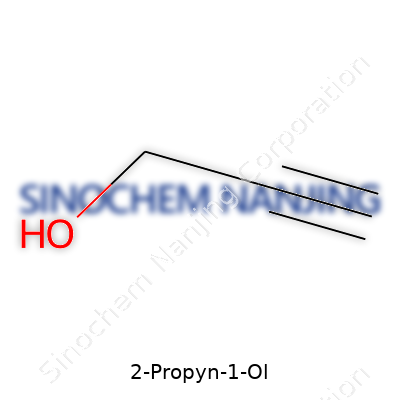
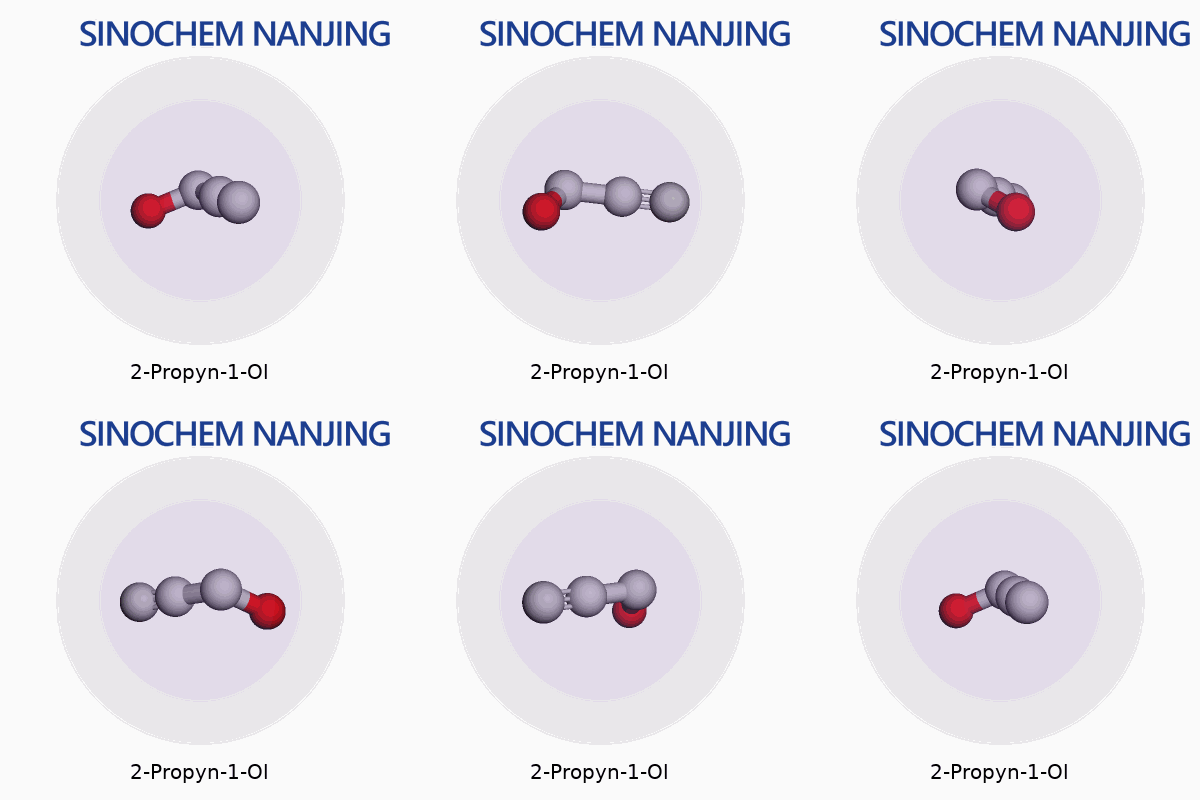
| Names | |
| Preferred IUPAC name | Prop-2-yn-1-ol |
| Other names |
Propargyl alcohol 2-Propynol Methyleynol Prop-2-yn-1-ol 1-Hydroxy-2-propyne |
| Pronunciation | /ˈproʊpɪnˈwʌnˌɒl/ |
| Identifiers | |
| CAS Number | 107-19-7 |
| Beilstein Reference | 1360435 |
| ChEBI | CHEBI:28533 |
| ChEMBL | CHEMBL15700 |
| ChemSpider | 55091 |
| DrugBank | DB01982 |
| ECHA InfoCard | 100.003.180 |
| EC Number | 201-161-6 |
| Gmelin Reference | 7617 |
| KEGG | C01765 |
| MeSH | D011375 |
| PubChem CID | 7906 |
| RTECS number | UK4375000 |
| UNII | L10JOB2UO0 |
| UN number | UN1282 |
| CompTox Dashboard (EPA) | QCATC7A073 |
| Properties | |
| Chemical formula | C3H4O |
| Molar mass | 56.063 g/mol |
| Appearance | Colorless to light-yellow liquid |
| Odor | mild, sweet odor |
| Density | D: 0.972 g/mL at 25 °C (lit.) |
| Solubility in water | soluble |
| log P | 0.28 |
| Vapor pressure | 1.5 mmHg (20°C) |
| Acidity (pKa) | 13.6 |
| Basicity (pKb) | 15.4 |
| Magnetic susceptibility (χ) | -13.53 × 10⁻⁶ cm³/mol |
| Refractive index (nD) | 1.404 |
| Viscosity | 2.38 mPa·s (20 °C) |
| Dipole moment | 1.31 D |
| Thermochemistry | |
| Std molar entropy (S⦵298) | 167.6 J·mol⁻¹·K⁻¹ |
| Std enthalpy of formation (ΔfH⦵298) | -5.6 kJ/mol |
| Std enthalpy of combustion (ΔcH⦵298) | -2212 kJ/mol |
| Pharmacology | |
| ATC code | D01AE15 |
| Hazards | |
| GHS labelling | GHS02, GHS05, GHS06 |
| Pictograms | GHS02,GHS05 |
| Signal word | Danger |
| Hazard statements | H301, H311, H331, H314 |
| Precautionary statements | P210, P261, P280, P301+P310, P305+P351+P338, P403+P233, P501 |
| NFPA 704 (fire diamond) | 3-2-2-W |
| Flash point | 52 °C |
| Autoignition temperature | 280 °C (536 °F; 553 K) |
| Explosive limits | 2.4% - 10.5% |
| Lethal dose or concentration | LD50 oral rat 55 mg/kg |
| LD50 (median dose) | LD50 (median dose) of 2-Propyn-1-Ol: 50 mg/kg (oral, rat) |
| NIOSH | PC26250 |
| PEL (Permissible) | 5 ppm |
| REL (Recommended) | REL: 1 mg/m³ |
| IDLH (Immediate danger) | 50 ppm |
| Related compounds | |
| Related compounds |
Propargyl chloride Propargyl bromide Allene Propene Propargyl alcohol carbonate 2-Butyne-1,4-diol |



