2-Phenylphenol: From Bench Discovery to Today’s Demanding World
Historical Development
Generation after generation of chemists have chased after better ways to preserve food, maintain hygiene, and fight off mold. As industrialization picked up speed in the early twentieth century, scientists began to explore the unique properties of aromatic compounds. The story of 2-Phenylphenol finds its roots in these early chemical ambitions. Researchers, keen to improve agricultural output and public health, honed their sights on substances that could resist microbes and fungi. Their quest unearthed this biphenyl derivative, which quickly stood out for its stable, crystalline structure and ability to ward off decay. Over the decades, the uses of 2-Phenylphenol spread beyond labs and factories into homes and hospitals. I’ve seen how the chemical’s place shifted from an obscure laboratory curiosity to a common yet carefully regulated tool in cleaning products, fruit preservation, and even water treatment systems.
Product Overview
2-Phenylphenol stands as a versatile molecule within the realm of industrial chemistry. Its formula, C12H10O, describes a pair of fused benzene rings with a strategically placed hydroxyl group. That configuration helps explain its resilience against common degradation pathways and equips it with broad-spectrum antimicrobial properties. In my experience, people who work in warehouse fruit storage, medical sterilization, or industrial cleaning all acknowledge this compound for its robust ability to keep products and environments cleaner and safer. Yet, with increasing regulatory scrutiny and a rising demand for safer, greener alternatives, the reputation of 2-Phenylphenol rides a delicate balance.
Physical & Chemical Properties
These white or slightly yellowish crystals display a slight aromatic odor and hold up well at room temperature, with melting points hovering around 56–57°C and boiling points close to 285°C. They dissolve only sparingly in water, though alcohols and organic solvents break them down with ease. The phenolic hydrogen tends to depart readily, which helps the molecule form salts and esters with real practical value. Chemists like to point out that this combination of stubbornness against breakdown and moderate reactivity gives manufacturers more freedom to control shelf life and processing conditions.
Technical Specifications & Labeling
Look for purity above 99% in high-grade samples aimed at food and pharmaceutical markets, with ash, water, and heavy metals reduced to absolute minimums. The visual expectation centers on fine, free-flowing crystals without clumping or discoloration—markers that show well-maintained storage and processing lines. Labels must highlight the chemical’s identity, hazard statements, concentration, and approved uses. With global trade, local regulations may push stricter warning requirements or unique pictograms, especially for shipments entering destinations like the EU, Japan, or North America. I can’t count the number of times logistics hang-ups revolved around label compliance, a reminder that paperwork matters as much as purity.
Preparation Method
Most commercial production starts with the alkali fusion of o-biphenylsulfonic acid or similar biphenyl intermediates, sometimes paired with transition-metal catalysts to steer the reaction toward the ortho-substituted product. Across industry, careful control of reaction temperatures, reflux conditions, and extraction steps ensures a product that meets rigorous standards for purity. Researchers continue to optimize the yield, minimize hazardous byproducts, and recycle reagents to align with sustainability targets. Often, the rules of green chemistry persuade companies to recover and reuse process solvents, cut down on caustic waste, and capture emissions for later treatment.
Chemical Reactions & Modifications
With its reactive phenolic group, 2-Phenylphenol opens the door to esterification, etherification, sulfonation, and even oxidative coupling. These modifications can yield surfactants, resins, and specialty additives with enhanced hydrophobicity or reactivity. In the crop protection sector, subtle tweaks produce derivatives with very specific antifungal spectra, helping farmers combat post-harvest spoilage. In the dye and pigment fields, coupling reactions take center stage, letting manufacturers fine-tune colorfastness and brilliance in textiles and plastics. The breadth of transformations is a testament to the molecule’s adaptability—a trait in high demand as chemical manufacturers face shifting market priorities and tighter safety standards.
Synonyms & Product Names
Common aliases for 2-Phenylphenol include o-Phenylphenol, biphenyl-2-ol, and E231 when approved as a food additive in some jurisdictions. In my everyday encounters with packaging, I’ve also seen it listed on safety data sheets under names like Dowicide, Preventol, and Nipacide, each nodding to a particular supplier’s branding rather than any underlying structural difference. Knowledge of these alternate names simplifies sourcing, comparing regulatory status, and navigating the sometimes-confusing world of chemical supply chains.
Safety & Operational Standards
Handling 2-Phenylphenol means respecting its irritant properties. Even comparatively brief exposure can prompt skin or respiratory irritation, and dust inhalation puts sensitive workers at risk. Standards set by groups like OSHA and the European Chemicals Agency don’t allow shortcuts. Workers suit up with gloves, goggles, and suitable ventilation. Spill management plans often include containment booms, neutralizing agents, and clear instructions for safe disposal. In the sectors I’ve worked with—especially food handling and hospital cleaning—a misstep in storage or handling can lead to regulatory backlash and potential health hazards. Robust safety culture can’t become an afterthought; it’s baked into every operator training session and documented with checklists and incident logs.
Application Area
Most people find their first encounter with 2-Phenylphenol in citrus fruit or the sheen on disinfected hospital gear. Fresh produce growers rely on this substance to keep oranges, lemons, and grapefruits free of mold during weeks-long ocean crossings. Paper mills and leather tanneries exploit its antimicrobial action to reduce mold contamination and extend product life. In the world of public sanitation, ready-to-use cleaning wipes and sprays often count on this molecule to knock back bacteria on hard surfaces. Industrial water systems, cooling towers, and even some lubricants benefit from its defense against microbial slime formation. Each use-case brings its own web of compliance demands, performance targets, and scrutiny from both regulators and environmental groups.
Research & Development
Academic and industrial labs keep pushing the limits of what 2-Phenylphenol can do. Researchers examine alternatives for its use as a preservative since consumers and watchdogs demand safer, more sustainable chemicals in food and consumer goods. Teams in synthetic chemistry keep searching for routes that generate less waste and require less energy, sometimes leveraging enzyme catalysis or more selective metal catalysts. By mapping the full breakdown pathway, scientists help regulators set limits on residues and guide waste management strategies. Some studies focus on combining 2-Phenylphenol with biodegradable polymers or nanomaterials to deliver more targeted action, answering the call for precision approaches in both agriculture and healthcare.
Toxicity Research
Toxicity studies on rodents and other animal models show that acute exposure can trigger skin and eye irritation, with higher doses linked to more severe systemic effects. Long-term studies have flagged potential impacts on liver function and pointed to possible carcinogenic outcomes, though the weight of evidence remains debated among toxicologists. Regulatory agencies in Europe, the U.S., and elsewhere keep adjusting allowable residue levels and workplace exposure limits as new data rolls in. In my conversations with toxicologists, the consensus is that vigilance matters; product safety hinges on clear usage guidelines, well-communicated risk assessments, and ongoing research into metabolic byproducts.
Future Prospects
Looking ahead, the future of 2-Phenylphenol seems tied to both innovation and caution. Markets hungry for safer, low-residue antimicrobials push developers to refine formulations and delivery systems that limit exposure and environmental release. As consumer preferences move toward organics and "clean label" claims, pressure will mount to phase out or heavily restrict use in sensitive applications like food and childcare products. Still, 2-Phenylphenol’s effectiveness keeps it relevant, especially where alternatives fall short. Investment into remediation, green chemistry, and safer blends could cement its role for years, but ongoing dialogue between industry, regulators, and the public will shape how broadly or narrowly its use extends.
What is 2-Phenylphenol used for?
A Common Yet Unnoticed Ingredient
Walk through a grocery store or hospital, and you might come into contact with 2-Phenylphenol. Most people don’t recognize the name, but this chemical pops up in places that value cleanliness. It works in disinfectants and cleaning agents, where good hygiene matters most. In my experience, the smell of strong household cleaners often hints at hidden ingredients like this one.
Keeping Food Fresh and Safe
2-Phenylphenol shows up in the produce aisle without shoppers realizing it. Many fruit shippers and packers use it as a surface fungicide. I grew up in a family that sold oranges. Back in the day, warehouse workers would dip boxes of fruit into solutions before shipping across the country. The aim: reduce mold and keep the fruit looking better longer. Keeping fresh food safe while it travels is a challenge, and this chemical extends shelf life with a technique that’s been around for decades.
Household and Industrial Disinfectants
Many hospitals, schools, and offices rely on 2-Phenylphenol to break the chain of infection. Surfaces get wiped down with solutions based on this compound. Its strength matters in public spaces, where bacteria and fungi pose much bigger problems than at home. Growing up, I saw custodians lug ten-gallon drums to stock up for a month. There’s a reason they keep using it—it helps cut costs by keeping outbreaks in check, with a track record that gives managers peace of mind.
Packing a Punch in Paper and Textiles
Fungi always look for a way to sneak into paper and textiles, especially in humid climates. Manufacturers learned long ago that 2-Phenylphenol keeps these materials safer during transit and storage. Many libraries treat books and archival papers with solutions to prevent musty odors and irreversible damage. My college’s library staff told stories of collections lost to mold, and since then, preservation efforts have leaned on chemicals like this one to keep books usable for years.
Worker Safety and Environmental Concerns
Every powerful cleaner carries a risk. Workers mixing or applying concentrated 2-Phenylphenol gear up with gloves and masks. Direct contact can cause irritation, and breathing dust in closed spaces isn’t an option. Safely handled, it does a job nothing else matches. But that safety takes rules and training, not shortcuts. When it washes off produce or goes down the drain, traces end up in wastewater streams. Good wastewater treatment catches most of it, but monitoring never stops. Regulatory agencies keep limits tight to protect human health and aquatic life, especially after cases where poor handling led to environmental problems.
Balance Through Better Alternatives
New research always pushes for safer, more sustainable chemicals. Some growers now use biological controls or coatings to reduce reliance on 2-Phenylphenol. Hospitals test disinfectants with lower toxicity for people and wildlife. But change comes slow—in settings where a proven solution works, switching carries risk. I’ve seen plenty of family businesses resist new methods until convinced by hard evidence that alternatives really work as promised, both for people and for the bottom line.
What the Future Holds
Good chemistry doesn’t sit still. As consumers demand greener choices, science responds. Until those next-generation options prove themselves, 2-Phenylphenol keeps a quiet role in keeping food safer, public spaces clean, and precious collections intact. Experience shows that smart policy and training lead to safer use, and innovation offers a path forward.
Is 2-Phenylphenol safe for humans and pets?
Everyday Encounters
2-Phenylphenol finds its way into many homes through products most people barely give a second thought. Grocery store apples and oranges get a light coating to help them last longer. Shoe racks and kitchen counters sometimes get a spray of disinfectant with this chemical tucked into the list of ingredients. That’s not too different from cleaning the house with a heavy-duty cleaner you picked up at the supermarket.
What Science Shows Us
Most science says regular household exposure to 2-Phenylphenol rarely brings big risks for healthy adults. Regulatory agencies like the U.S. EPA and the European Food Safety Authority have evaluated it and set rules on how much can go on food. Animal studies with high doses have turned up some skin and eye irritation—think redness that clears up a day or two later, not deep tissue burns. Chronic exposure at massive doses over months, way beyond what anyone would see by cleaning the bathroom, has linked to some liver changes in animal lab tests. The real gap is between those experimental doses and what’s actually left on a shiny piece of fruit.
Kids and Pets: More to Think About
Adults can read a label and use gloves. Children and pets do not check warning signs before licking a surface or biting into a treated fruit. Kids’ and pets’ smaller bodies mean a simple mouthful gives them a bigger punch per pound. Cats groom themselves after napping on a clean, freshly sprayed counter, swallowing anything that stuck to their fur. There are reports of stomach upset and drooling in pets exposed to concentrated forms—far from a trip to the emergency room, but not something anyone wants to see. Kids can rub their eyes right after touching fruit or a cleaned surface, leading to mild irritation.
Listen to Your Experience
Spending years working in food safety labs and living with a family packed with dogs, I see both sides. Washing fruit before eating is regular habit, and I always rinse paws when my dog walks across floors right after cleaning. I talk to neighbors who use disinfectant sprays and see no issues, but if asked, will remind them: nobody knows exactly how much builds up over a year in cracks behind baseboards or in pet bedding. The truth? Risk adds up because of routine, not one big mistake.
What Helps Keep People and Pets Safe?
Simple steps reduce worry. Rinse produce for at least thirty seconds under running water and set it aside to dry. Store cleaning products out of reach of pets and small kids. Ventilate rooms after cleaning and use gloves. Avoid spraying disinfectant directly onto surfaces pets or kids touch most, like food bowls, play mats, and cribs. Even pet-safe labels do not replace common sense—look for exact ingredients and watch for signs of irritation or upset.
More Research, Better Choices
Gaps remain. We know a lot about high-level exposure, but less about what low regular contact does over a lifetime. Researchers are chasing the answers, but information moves slow. In the meantime, a little caution goes a long way, and listening to the science and your own experiences helps keep the risks manageable for everyone at home.
What are the storage and handling precautions for 2-Phenylphenol?
Understanding the Risks with 2-Phenylphenol
2-Phenylphenol pops up everywhere from disinfectants to fruit preservatives. Working with this chemical means facing real risks. Eye and skin irritation isn’t just something in the safety manual—it’s what you get if you handle it carelessly. Breathing in dust or vapors could set off respiratory trouble. I’ve seen people pay the price for letting their guard down around chemical storage. A lapse with storage containers or getting lazy about personal protection turns a regular work day into a problem no one wants.
Smart Storage: Not Just a Box on a Shelf
A simple room isn’t good enough for 2-Phenylphenol. I always look for a cool, dry spot with plenty of ventilation. Heat, light, or even a little bit of moisture works against you. Over time, they can break the chemical down and send fumes into the air—ones you don’t want to breathe. Metal shelves can corrode and plastic can warp if you use the wrong material for shelving; it’s one of those details that matters a lot more than most folks realize. Sealed containers, especially those made of high-quality plastic or glass, lock out moisture and keep out air.
Secure containers in a spot where they won’t tip over if someone bumps into them. Labels should never fade or peel. Mixing up bottles can end up dangerous—especially since 2-Phenylphenol doesn’t look much different from plenty of safer chemicals. I used to hand-write secondary labels to make sure everyone on my crew could read them from across the room.
Handling Routines that Actually Work
Relying on gloves, goggles, and lab coats makes a real difference. Splashes don’t wait for a second chance—even a small spill can burn or cause itching. Eye-wash stations and sinks should always be within easy reach; don’t bury them behind boxes or furniture. No one wants to scramble for safety when panic hits. I’ve drilled my team on spill response as if someone’s job depended on it, because, frankly, it does.
Any dust kicked up by pouring or mixing turns into an airborne hazard. Work under a hood or use a dust mask. It saves you from that burning lung sensation and future asthma risk. I’ve seen what happens when this gets ignored—coughs that don’t go away, people calling out sick.
Dealing with Spills and Waste
A small leak left overnight turns into a cleanup headache by morning. Absorb spills with special pads or sand, never with regular floor rags. Disposing of waste doesn’t mean dumping it in the regular trash. Tie-in with local hazardous waste handlers who know their stuff. Ignore this, and you risk hefty fines or pollution claims that no insurance will cover without a fight.
Training and Ongoing Vigilance
Every team needs real-world training, not just a talk once a year. I run refreshers and walk-throughs so no one forgets to protect themselves or the environment. New staff bring curiosity but not always caution. One mistake can snowball—so experienced heads should always be around to catch shortcuts before they become disasters.
Keeping up with regulatory changes pays off; some states ask for tighter controls or different signage. Risking non-compliance costs way more in the end than staying sharp to the rules. Good storage and handling always feels like extra work—until it keeps everyone safe and regulators off your back.
Is 2-Phenylphenol effective as a disinfectant or preservative?
Why 2-Phenylphenol Gets People Talking
The way I see it, clean spaces don’t just appear by chance. Schools, hospitals, even my local grocery try to hold germs at bay using chemicals most folks barely recognize by name. 2-Phenylphenol tends to pop up in conversations about hygiene and food safety alike. It draws attention for a reason: this stuff tackles some real problems, especially where bacteria and fungal growth threaten what we eat or touch.
What It Can Really Do
Some facts deserve a spotlight. The compound works by messing with the cell membranes of certain microorganisms. Bacteria, molds, and yeasts lose their footing and don’t spread as they might. I’ve looked through Food and Drug Administration (FDA) and Environmental Protection Agency (EPA) sources, and 2-Phenylphenol’s name shows up for controlling mold on citrus fruit, sanitizing empty poultry houses, and cleaning hard surfaces.
People might imagine it’s an outsider in the chemical lineup, but it has stayed on the list of permitted post-harvest treatments for decades in the U.S., parts of Europe, plus a handful of spots in Asia. It’s usually layered onto citrus skins to block the nasty blue and green molds that spoil oranges, lemons, and grapefruits. I’ve noticed fewer moldy oranges at the store since its introduction.
Real-Life Benefits and Drawbacks
I have friends who work in kitchens. They care about staying within safety rules, especially since 2-Phenylphenol can give fruits longer shelf life with minimal residue transferring to the flesh inside. It’s pretty good at keeping products safe during shipping across long distances. The World Health Organization didn’t find evidence that it causes problems for consumers in normal conditions. On this front, families and food handlers get an added layer of protection.
But there’s a flip side, and I’ve seen this in a few food safety discussions. High exposure, especially in workers handling the concentrated form, could irritate skin, eyes, or lungs. People question the build-up of any chemical in the environment or in food. That skepticism isn’t baseless—overuse or misuse of disinfectants never leads to anything good. It calls for regular checks and strong rules, not just blind trust.
What Can Help Going Forward
People often ask if we can just wash everything with soap or vinegar. In smaller scales, maybe. On industrial farms, or in hospitals dealing with outbreaks, things get trickier. For operations relying heavily on 2-Phenylphenol, personal protective equipment makes sense, and real training goes much further than warning labels. Auditing chemical use and looking for smarter alternatives—think biological controls or less persistent compounds—always belongs in the mix.
The biggest gains will probably come from not treating every situation with the same solution. Sometimes fruit needs a light touch; sometimes surfaces call for extra defense. In my experience, transparency about chemical use and consistent monitoring calm public worry better than clever marketing or vague reassurances. Consumers want practical information and safety proof, not industry buzzwords. 2-Phenylphenol can help, but only as part of a system that values both effectiveness and caution.
What are the possible side effects or hazards of using 2-Phenylphenol?
Understanding Everyday Exposure
Plenty of households and workplaces turn to 2-Phenylphenol for cleaning and disinfection. It shows up on shelves as a major ingredient in antiseptics, surface cleaners, and preservatives. Grocery stores and warehouses use it to keep fresh produce from spoiling. I’ve seen it on apple skins more times than I can count, acting as a thin invisible shield against fungi and bacteria.
Side Effects That Matter in Daily Life
Direct skin contact brings the risks up close and personal. Redness, itching, and irritation rarely go unnoticed if you’re scrubbing a countertop without gloves. Even a simple spill during refilling can leave my hands dry and tender for days. Sensitive folks, kids, or people with eczema usually react even more strongly; it starts with mild discomfort but can turn painful fast if left unwashed.
Eye exposure takes things up a notch. Even tiny droplets burn like crazy and make vision blur for a while. It isn’t just a mild inconvenience; strong eye irritants such as 2-Phenylphenol land plenty of folks in emergency rooms every year, especially custodians and agricultural workers. Inhaling its fumes isn’t much better. Anyone who’s worked with aerosol disinfectants knows the sharp tickle in the throat, coughing, sneezing, or a dry, scratchy nose that lingers for hours. Long periods spent in poorly ventilated spaces with these chemicals can make sore throats and headaches routine.
Allergies and Sensitivities
Some people develop allergies from repeated exposure. My neighbor, a janitor, built up a reaction so strong he ended up with rashes on his arms and chest after years of daily use. This isn’t rare for cleaning professionals, grocery store staff, or those working in packing plants. Small-scale exposure may be annoying, but for high-risk groups, the reaction builds and disrupts life.
Potential Hazards Beyond the Obvious
Toxic effects don’t end with direct contact. Foods handled with 2-Phenylphenol sometimes keep traces even after washing. The European Food Safety Authority and the U.S. Environmental Protection Agency both flagged long-term consumption as an open question. Rats used in lab tests developed changes in their livers and kidneys after high doses over months—regular people probably won’t get anywhere near those levels, but the studies keep food scientists on alert. It always feels different eating sprayed fruit than a fresh peach off a tree.
Fire risks don’t show up often at home, but warehouses and packing facilities treat 2-Phenylphenol as a combustible substance. Spills near hot equipment or open flames can turn into a minor emergency in seconds. It pays to store and handle these products far from anything that sparks.
Safer Practices and Practical Tips
Protective gear isn’t just a nuisance—gloves, eye shields, and masks stop almost every side effect before it starts. Keep all cleaning products away from kids and food prep areas. Only use sprays and aerosols with the windows open, or the exhaust fan running. Switch to milder or natural alternatives where you can, especially if there are allergies in the household. Wash hands well every time, even after a quick wipe-down. Sometimes, the oldest habits work best.
Clear safety instructions and better hazard labeling would do a world of good. Too often, people have to guess about the real health impacts because manufacturers don’t always highlight the risks. Every cleaner, grocer, and food handler deserves clear facts so they can weigh their options—nobody wants to trade clean counters for nagging rashes or sore lungs.
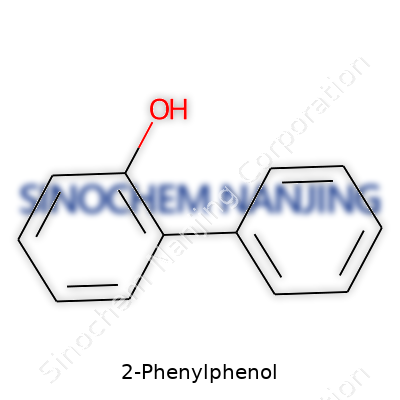
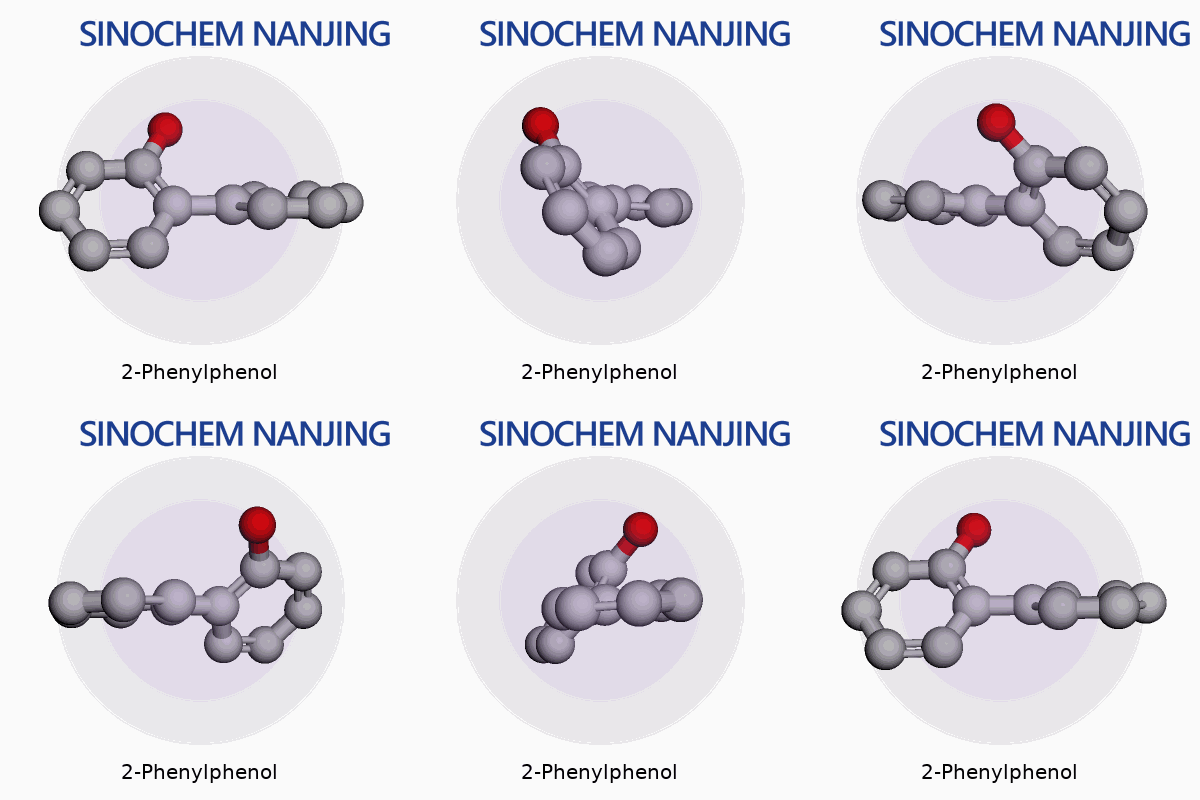
| Names | |
| Preferred IUPAC name | 2-Phenylphenol |
| Other names |
o-Phenylphenol Orthoxenol Dowcide Preventol O extra Phenylphenol o-Biphenylol |
| Pronunciation | /tuː ˈfiː.nɪl ˈfiː.nɒl/ |
| Identifiers | |
| CAS Number | 90-43-7 |
| Beilstein Reference | 1574227 |
| ChEBI | CHEBI:15837 |
| ChEMBL | CHEMBL14140 |
| ChemSpider | 5790 |
| DrugBank | DB03620 |
| ECHA InfoCard | 03b9b8dc-5c2c-4575-9ef8-aad225f11890 |
| EC Number | 204-306-2 |
| Gmelin Reference | 5428 |
| KEGG | C06583 |
| MeSH | D010699 |
| PubChem CID | 7010 |
| RTECS number | DJ4025000 |
| UNII | 8O8F5N3725 |
| UN number | UN3077 |
| Properties | |
| Chemical formula | C12H10O |
| Molar mass | 170.21 g/mol |
| Appearance | white crystalline powder |
| Odor | aromatic |
| Density | 1.25 g/cm³ |
| Solubility in water | 1.3 g/L (20 °C) |
| log P | 3.3 |
| Vapor pressure | 0.0004 mmHg (25 °C) |
| Acidity (pKa) | 9.58 |
| Basicity (pKb) | 11.04 |
| Magnetic susceptibility (χ) | Diamagnetic |
| Refractive index (nD) | 1.613 |
| Viscosity | 2.5 mPa·s (25 °C) |
| Dipole moment | 2.61 D |
| Thermochemistry | |
| Std molar entropy (S⦵298) | 322.6 J·mol⁻¹·K⁻¹ |
| Std enthalpy of formation (ΔfH⦵298) | 128.0 kJ/mol |
| Std enthalpy of combustion (ΔcH⦵298) | -5007.6 kJ/mol |
| Pharmacology | |
| ATC code | D08AE02 |
| Hazards | |
| GHS labelling | GHS07, GHS09 |
| Pictograms | GHS07,GHS09 |
| Signal word | Danger |
| Hazard statements | H302, H315, H318, H410 |
| Precautionary statements | P280, P302+P352, P305+P351+P338, P332+P313, P337+P313 |
| Flash point | 182°C |
| Autoignition temperature | 540°C |
| Explosive limits | Explosive limits: 1.2–9.2% |
| Lethal dose or concentration | LD50 oral rat 2700 mg/kg |
| LD50 (median dose) | LD50 (median dose): Rat oral 2700 mg/kg |
| NIOSH | UR7540000 |
| PEL (Permissible) | PEL = "5 mg/m3 |
| REL (Recommended) | 200 mg/L |
| IDLH (Immediate danger) | IDLH: 140 mg/m3 |
| Related compounds | |
| Related compounds |
Phenol 4-Phenylphenol Biphenyl o-Cresol Cyclohexylbenzene |



