2-Octyne: For Chemists, Manufacturers, and the Safety-Minded
Historical Development
Before anyone started writing patents or developing marketplace applications for 2-Octyne, chemists spent years puzzling over carbon-carbon triple bonds. Acetylenic chemistry got its legs in the late 19th century, through the curiosity of organic chemists hunting new chemical families. Early synthesis routes, such as the Favorskii reaction or dimerizations of alkynes, soon made way for more refined ways of constructing medium-chain acetylenes. As research into alkyne chemistry became an essential part of organic synthesis, the value of compounds like 2-Octyne grew. Scientists realized that these eight-carbon skeletons could serve as stepping-stones toward more complex targets, whether in academic labs or industry pilot plants. The interest repeated itself with every new pharmaceutical development or polymer innovation that called for more customizable intermediates—each time, 2-Octyne landed on shopping lists for its straight chain, its symmetry, and the reliable C≡C bond.
Product Overview
Manufacturers sell 2-Octyne as a colorless to slightly yellow liquid, with a faint, sometimes pungent odor. Many companies stock it for labs focusing on organic synthesis and material science. The product slips into reaction vessels as both a reagent and a building block. Because labs depend on purity, sellers often offer it above 97% by GC—removing peroxides and heavy residues. Some supply chain catalogs tuck it under reagent grade, others under technical grade. Price and container sizes often differ depending on the market—kilograms for pilot plants, grams or milliliters for research. Unlike more volatile alkynes, 2-Octyne ships under relatively ordinary precautions, though anyone working with it knows not to grow complacent around flammables.
Physical & Chemical Properties
2-Octyne brings a boiling point just north of 135 °C and a melting point deep below zero, often around -50 °C. Its density hugs 0.76 g/cm³, and its flash point floats under 30 °C, so storage conditions deserve respect. Its molecular formula, C8H14, channels a straight carbon backbone. Solubility tends to favor organic solvents like ether or acetone, avoiding water. Chemically, the triple bond sits tucked between the second and third carbon, not right up against a terminal methyl. This internal position changes how the alkyne takes on additions or catalysts in the lab. For those working with spectroscopy, it delivers a C≡C stretch on the IR near 2120 cm⁻¹, and proton NMR tells a different story on chemical shift than terminal alkynes.
Technical Specifications & Labeling
Product datasheets spell out lot numbers, CAS Registry Number 629-05-0, boiling and melting points, density, and purity specification by gas chromatography. Risk and safety phrases—often provided in several languages—tell handlers about flammability, health risks, and environmental precautions. Labels carry pictograms signifying flammable liquids, and transport rules require UN numbers for shipping. Each drum or bottle usually features the full supplier address, part codes, and manufacture or expiration date. Labs tracking reagents in automated stockrooms rely on these lines of data for compliance and recordkeeping.
Preparation Method
Chemists synthesize 2-Octyne in two classic ways. One involves the dimerization of ethyne derivatives under copper catalysts, building up the carbon chain. Another, more direct method, calls for alkylation of acetylene with 1-bromopentane in the presence of a strong base, such as sodium amide. Afterward, distillation and recrystallization step in to clean up the product. Both methods require deft handling of reactive intermediates, careful temperature control, and vigilance against side reactions. These synthetic techniques grew up over decades as chemists worked out yields, solvent systems, and the best base/catalyst combinations for each type of setup, be it a fume hood or a scaleup tank at an industrial site.
Chemical Reactions & Modifications
2-Octyne stands out in organic synthesis for how its triple bond can be targeted for addition, reduction, or cyclization. Hydrogenation brings it down to octane or stops at the alkene, depending on catalyst and pressure. Halogenation adds bromines or chlorines across the bond, while ozonolysis cleaves the chain into smaller carbonyl fragments. The molecule serves as a precursor in Sonogashira couplings and other palladium-catalyzed cross-coupling reactions, giving chemists a route to more complex molecules. In the lab, these modifications support the quest for new pharmaceuticals, advanced polymers, and specialty materials. Each transformation depends on precise control, often under inert atmospheres and with constant monitoring.
Synonyms & Product Names
Beyond the systematic name 2-Octyne, catalogs might list this compound as oct-2-yne or simply 2-octyne. Synonyms like ethyl butyl acetylene or DL-octine occasionally show up in older literature. CAS number 629-05-0 follows the compound across supplier lists, making it easier to track and verify. International names remain similar, though spellings or hyphens may shift. Trade catalogs and regulatory documents maintain standardization through this constellation of synonyms, limiting confusion and supporting global sourcing.
Safety & Operational Standards
Any handler must recognize 2-Octyne as flammable, with vapors forming explosive mixtures with air. Fire suppression calls for foam, CO₂, or dry powder—never water jets. Prolonged or repeated skin contact raises the risk of irritation, so labs train staff to use nitrile gloves and splash goggles as basic protection. Standard operating procedures keep the compound under fume extraction, far from sources of ignition. Facilities track storage temperature, segregating flammables and grounding containers against static. Safety Data Sheets document response steps for leaks, spills, or exposures, helping institutions keep incident response tight. Waste should go for incineration, not general drains, according to local chemical regulations.
Application Area
Research facilities and specialty manufacturers use 2-Octyne in syntheses that demand C8 intermediates with a controlled alkyne function. In the pharmaceutical world, it props up drug candidate libraries, contributing to structure-activity studies and mechanism explorations. Crop science and agrochemical producers employ 2-Octyne as a precursor for new plant protection agents or herbicide candidates. Materials research finds value in its ability to introduce acetylenic units into polymer backbones, opening routes for conductive materials, advanced coatings, or sensor applications. Its triple bond finds utility in click chemistry, bioconjugation, and developing surface functional groups for nanomaterial interfaces. Custom synthesis teams turn to it when a simple methyl or ethyl chain just won’t fit the final design.
Research & Development
Academic researchers chase new reactivity paths for chain-alkynes like 2-Octyne. Graduate students design transition metal catalysts that steer the triple bond toward selectivity—avoiding over-reduction or rearrangement. Patent filings track efforts to electrify 2-Octyne’s coupling reactions, bridging it into pharmaceutical scaffolds. In material science departments, research focuses on how incorporation of internal alkynes affects polymer structure and function. Several teams follow green chemistry principles, testing biocatalytic routes and solvent-minimized setups to make this building block with a lighter environmental footprint. Collaboration between universities and startups widens the knowledge base, fueling new applications outside the textbook.
Toxicity Research
Studies on 2-Octyne’s acute toxicity suggest moderate risks—less hazardous than light aryl alkynes, but still a concern with repeated exposure or improper use. Standard animal test models report central nervous system impacts and potential tissue irritation on high dose. Chronic data remain less developed, though safety writeups urge limits on skin and respiratory exposure. Human case reports point out accidental ingestion and vapor inhalation cases that prompted nausea, drowsiness, or coughing fits. Institutions flag the molecule for rigorous labeling, monitored use, and careful disposal until more data become available. Toxicologists keep pushing for better systemic studies, occupational monitoring, and low-dose chronic research to guide rules and standards.
Future Prospects
Over the next decade, the future for 2-Octyne looks shaped by the push for newer, greener chemistry and expanding application fields. Researchers keep exploring bio-based syntheses—turning less to fossil-derived precursors and drawing on enzyme catalysis. As battery and electronic materials grow in demand, the molecule’s role as a precursor in advanced polymer synthesis should increase. Analytical chemists search for more sensitive detection and quantification tools, building trace analytics for those working under increasingly strict regulations. Toxicology and environmental scientists dig deeper into breakdown products, persistence, and long-range health effects—paving the way for more thoughtful stewardship. All eyes remain on legislative changes, supply chain disruptions, and new R&D breakthroughs that could pivot 2-Octyne into fresh commercial relevance, or shrink its niche as safer or more sustainable alternatives arise.
What is 2-Octyne used for?
What Exactly is 2-Octyne?
2-Octyne shows up as a clear, colorless liquid with a pretty sharp smell—nothing you’d ever want to sniff up close. Chemical folks know it by its formula, C8H14, and its straight-up structure with a triple bond between the second and third carbon atoms. That triple bond gives 2-Octyne some punch, making it much more reactive than your average backyard hydrocarbon.
Real-World Applications
Organic chemists turn to 2-Octyne as a tool in the synthesis toolbox, especially if they're working on building more complex molecules. Some days in the lab, getting from raw materials to a useful compound depends on finding just the right reactant. The triple bond in 2-Octyne acts almost like a magnet for certain reactions. It doesn’t just sit there: it helps build chains, rings, and all sorts of chemical arrangements. Drug developers and researchers lean on it when creating new medicines and agrochemicals—the sort of things that might end up in your local pharmacy or produce aisle.
In the world of materials science, 2-Octyne plays a role in producing specialty polymers, which wind up in everyday stuff like coatings or adhesives. These are the same sticky materials that make skateboards last longer or keep the finish looking sharp on your car. The strength and durability of some modern products trace right back to small molecules like 2-Octyne making the backbone of those advanced polymers.
Research and Testing
Lab folks value 2-Octyne for another reason: it’s a solid marker in analytical chemistry work. Researchers use it to measure and test catalytic reactions, especially hydrogenation processes that change unsaturated molecules into more stable forms. These experiments help companies design everything from new fuel blends to safer industrial solvents. More than once, I’ve watched teams use it as an indicator, tracking how fast and efficiently a catalyst transforms one chemical into another. Such firsthand experiences in the lab highlight how one small compound can impact whole industries by helping to fine-tune manufacturing processes.
Safety and Environmental Concerns
2-Octyne isn’t something you’ll find in your kitchen cabinet. Like many chemicals, it can cause irritation if handled without care. Years working around chemistry labs taught me the value of protective gear and safe handling. 2-Octyne’s volatility means it can be risky if not respected, and long-term exposure might affect health. Companies working with it must stick to solid safety protocols, and many local laws require good ventilation and training for workers.
On the environmental side, spills or mishandling could let volatile organic compounds escape into the air or water. The good news is many firms invest in proper containment, air filtration, and disposal methods. I’ve seen factories adopt closed systems that prevent leaks, and onsite monitoring that helps catch issues fast. These efforts cost money up front, but they keep both workers and the surrounding area safer in the long run.
Room for Improvement
Technology keeps moving. Green chemistry experts are searching for less hazardous alternatives while improving containment procedures. As more companies explore bio-based feedstocks or less volatile alternatives, reliance on petrochemical compounds like 2-Octyne could drop. For now, its unique chemical features make it valuable, but science and industry work together to reduce potential risks wherever possible.
What is the chemical formula of 2-Octyne?
Breaking Down the Basics
Most folks probably haven’t used the term “2-Octyne” in an ordinary conversation. Still, that name matters on lab benches, in university textbooks, and for professionals in synthetic chemistry. Chemistry, after all, isn’t just an endless list of molecules—it’s a complex language describing the real world. 2-Octyne is one of those molecules with enough detail to spark curiosity but plain enough to serve as a solid teaching tool in organic chemistry fundamentals.
Structure Uncovered
The heart of the name “2-Octyne” carries a lot of weight. “Oct” signals eight carbon atoms chained together. “Yne” shows the presence of a triple bond among those carbons. The number two signals where you’d find the triple bond—between the second and third carbon atoms in the chain. If these chemical names seem esoteric, they aren’t just for academics. They allow quick and accurate communication about molecular structure.
Lay out the atoms. Eight carbons in a line. Start counting from the left. Attach the triple bond between carbon two and carbon three. Fill the rest of the available spots on the carbons with hydrogens. What falls out from this process is C8H14, the molecular formula for 2-Octyne.
Why Chemical Formulas Matter
Having the right formula is far more than an academic exercise. Errors in reporting or understanding even a single letter, like mixing up hydrogen counts, can cause real setbacks in the lab. Back during an undergraduate research project, I watched a classmate run an experiment with a compound he misidentified by only one hydrogen atom. The product ended up being useless for synthesis, burning valuable lab time and creating safety hazards. That experience underscored how critical accuracy is with formulas—chemistry doesn’t leave much room for guesses.
Real-World Uses
Alkynes, the family that 2-Octyne belongs to, show up in various industrial and research settings. They appear in advanced plastics, medicines, and some specialty fuels. 2-Octyne, due to its triple bond, serves as a stepping stone for creating more complex compounds. The precise placement of that triple bond means chemists have more predictable ways to modify or “functionalize” the molecule.
Potential Pitfalls and Solutions
Confusion creeps in when naming and deducing formulas for organic compounds. Not only students but even seasoned professionals sometimes mix up isomers—molecules with the same formula but different arrangements. Even the smallest misstep can lead to costly errors in pharmaceutical development or chemical manufacturing. Solid education, regular practice with molecular drawing, and digital tools that double-check structures help prevent those issues. A good model kit on a desk isn’t just nostalgic; it saves headaches when deciphering chains and bonds.
Staying Ahead
With so much riding on accurate formulas, using reliable reference materials becomes essential. Trusted textbooks and reputable scientific databases keep researchers on the right path. As the world grows more reliant on specialized chemicals—whether for energy, tech, or medicine—getting the basics right matters more than ever. The difference between C8H14 and some neighbor in the chemical alphabet isn’t minor. It determines success, safety, and new possibilities in science.
Is 2-Octyne hazardous or flammable?
Understanding the Risks Behind 2-Octyne
Everyday life brings people close to dozens of chemicals, often without a second thought. Some, like cleaning products or fuels, give off a clear smell or warning label. Others, such as 2-octyne, sit in the background in certain labs and factories yet still deserve attention. I remember my early days working in a university chemistry stockroom, opening unfamiliar bottles and always checking the hazard labels. Combustion risk and health effects stood out on every single inventory list.
2-Octyne, which carries the name 2-octyne for its eight-carbon backbone and a distinctive triple bond, belongs to a family of alkynes. Organic chemists prize this type of compound for its role in building blocks or specialized reactions. Most people outside the lab won’t cross paths with it, but the hazards matter wherever it shows up. The big question — is it hazardous? Is it flammable?
Fire Risk Is No Joke
2-Octyne, like other alkynes, poses a real flammability concern. The structure packs energy in its triple bond, making it easier for a spark to set it off compared to some long-chain hydrocarbons. The flash point of 2-octyne is near room temperature, which is low enough to worry anyone who handles it in a space with open flames or faulty wiring. I once saw a burnt sleeve on a lab coat after a small fire in an organic synthesis class — a sharp lesson in respecting how quickly things can go wrong with volatile solvents.
OSHA and the National Fire Protection Association both flag chemicals like this for their fire risk. Even if a bottle doesn’t burst into flames from static, its vapors can drift, meeting a pilot light or static discharge with instant ignition. The explosion danger isn’t science fiction. Small mistakes have led to serious lab accidents worldwide. Proper ventilation, flame arrestors, and grounded containers should stay nonnegotiable for anyone storing or working with 2-octyne.
Toxic by Exposure, Not Just in Combustion
Burns and fires dominate the headlines, but health effects deserve equal notice. Volatile organic compounds, including 2-octyne, pose inhalation risks. Breathing its vapor irritates the respiratory system; prolonged skin contact stings and sometimes leaves chemical burns. Accidental spills on bare skin have sent students scrambling for emergency showers. The Material Safety Data Sheet (MSDS) for 2-octyne classifies it as hazardous, warning about risks ranging from headaches to organ effects with enough exposure. In my experience, gloves and goggles aren’t wasted precautions, even for quick transfers or simple dilution steps. Err on the side of caution — the body quickly reminds you of a missed step if you don’t.
Best Practices Keep Hazards Manageable
Dealing with 2-octyne doesn’t call for panic, just respect. Facilities set up eye-wash stations, install fire extinguishers, and lock up volatile chemicals for a reason. Experienced workers label containers with clear warnings and never treat alkynes as harmless. Cleanup protocols, chemical fume hoods, and regular training sessions cut down on avoidable accidents. Even regular inspection of containers for leaks or residue makes a difference. Anyone in charge of safety drills in a school or industry setting knows listening to first responders’ advice is crucial — don’t try to contain a chemical fire with water.
Working safely with chemicals, including potent ones like 2-octyne, rests on solid information, training, and treating everyday tasks with respect. Trust in good habits cuts through most of the drama.
How should 2-Octyne be stored?
Why the Right Storage Matters
Back in my grad school days, I learned the hard way that even molecules with simple names can give a lot of trouble if left uncared for. 2-Octyne stands out as a good example; a colorless liquid at room temperature, but it doesn’t forgive sloppy habits. One night, somebody left a cap loose. Next morning, we found not just a sharp odor, but a headache for the whole lab — and we had to clear it out. From that day, chemical safety became personal for me.
Ask anyone who uses organic compounds: they never store chemicals like 2-Octyne on a shelf near direct sunlight or in open air. The reason is simple: it reacts and evaporates quickly, causing skin irritation and leaving a foul stench even with short exposure. The volatility makes it much riskier than more stable hydrocarbons. NIOSH fact sheets warn about keeping alkyne compounds away from air and ignition sources, since their vapors can catch fire almost instantly.
Practical Steps for Safer Storage
In busy labs, workers use flame-retardant cabinets with proper labels. I remember our department kept anything flammable locked up with spill-proof containers. This wasn’t just overkill — colleagues told stories of vials slipping, spills going undetected, and a small fire once started near an uncapped ether bottle. With 2-Octyne’s flammable classification (rated Category 2 for flammability), cutting corners can mean real consequences.
Good practice calls for using tightly sealed amber glass bottles, since regular plastic can degrade and let vapors escape. Those vapors aren’t just a fire risk; they can build up inside small storage rooms, leading to an atmosphere that irritates eyes and lungs, or triggers alarms. Keep containers stored below 30°C in a dry spot — excess heat and humidity speeds up decomposition.
Know Who’s Handling It
Years of research have shown that clear training matters most. I’ve watched new lab techs learn through hands-on walkthroughs: always wear chemical-resistant gloves, use splash goggles, and check the Safety Data Sheet before opening new bottles. Regular reminders on handling protocols keep everyone on the same page. On some teams, we used checklists and weekly audits. The payoff: fewer accidents, more peace of mind.
Building a Safer Workflow
No one likes a pointless rule, but some steps come from painful lessons. Modern facilities use vented hoods and clean-up kits within easy reach, not shoved in a corner. Spills do happen, even with the best intentions. Absorbent pads, neutralizing powders, and emergency eyewash stations have made a clear difference in incident reports. Anyone working after hours logs their chemicals, so fire responders have a full inventory in case of emergencies.
Waste disposal isn’t glamorous, but pouring leftovers down the drain brings legal and environmental trouble. Licensed waste contractors pick up halogenated and unsaturated solvents regularly, tracked by signed manifests. Even small-scale users keep logbooks to avoid run-ins with local inspectors or campus safety officers.
A Real-World View
Chemicals like 2-Octyne remind us that every bottle carries hidden risks. Respecting those risks turns good theory into daily practice — and keeps workspaces open, not shut down by the next spill or inspection. Old habits are hard to break, but a culture of care doesn’t just protect property; it saves headaches, jobs, and sometimes lives.
What precautions should be taken when handling 2-Octyne?
What Makes 2-Octyne a Chemical Worth Respecting?
2-Octyne isn’t just another reagent on the lab shelf. It packs a flammable punch and can irritate skin, eyes, and lungs. I still remember my first close call with a volatile solvent; the smell and the splatter pushed me to rethink what precautions really mean in practice. You can’t put your safety on autopilot with chemicals like 2-Octyne. One misstep turns an everyday procedure into an incident. Fact is, the Material Safety Data Sheet doesn’t exaggerate the risks; most of us who have worked in a research lab know burn stories aren’t just scare tactics.
Personal Protective Gear Isn’t Optional
Lab coats, gloves, and splash-proof goggles have saved more than a few chemists from lasting injury. Some folks get casual, thinking gloves are only for corrosive substances. That error led to a friend of mine ending up at the campus health clinic after some 2-Octyne splashed over a minor glove tear. This chemical isn’t forgiving — classic nitrile or butyl gloves work well, but they do degrade after time, so swapping them regularly becomes routine. You pick up these habits after getting burned or talking to someone who has.
Ventilation and Containment: Breathing Easy
No chemical fume hood, no handling — pretty simple. 2-Octyne vapors spread faster than you’d guess, and even a few whiffs can make a throat scratch. My old lab group once lingered a bit too long after a minor spill, assuming end-of-day air changes would be enough. Several of us wound up with headaches and watery eyes. Now, I double-check the extraction fan before starting and keep containers closed or capped when not in immediate use. Fume hoods and proper air flow turn what could be a dangerous space into a manageable one.
Spill Response: No Substitute for Readiness
Every lab’s got a spill kit; not every lab uses it right. Quick action makes all the difference. In one instance, a beaker toppled from a ring stand, and a few seconds of hesitation let 2-Octyne run across the bench. We tossed on absorbent material, sealed off the area, and called for hazmat help — but only because we’d drilled the procedure. Those dry runs sound tedious, but that’s what turned a bad day into a cleanup, not a crisis.
Storage and Labeling Matter More Than You Think
Someone once stashed a bottle of an alkyne too close to acids on a crowded shelf; the result was a near-miss with an unwanted reaction. Keeping 2-Octyne away from incompatible chemical classes and storing it in a dedicated flammables cabinet, well vented and clearly labeled, isn’t just a rule — it’s good sense. Organized storage cuts down on mistakes, especially for new folks still learning where everything lives.
The Role of Training and Common Sense
Some labs rush through safety training, but real-life experience reminds us why these hours matter. Sharing stories, learning from others’ mishaps, and taking safety moments seriously sets a tone that keeps people focused. The occasional safety refresh, and treating every bottle like it contains the unknown, helps everyone walk out whole. Mistakes tend to come from forgetting those basics. Taking five minutes before a procedure to walk through every step in your head is worth a lifetime at work.
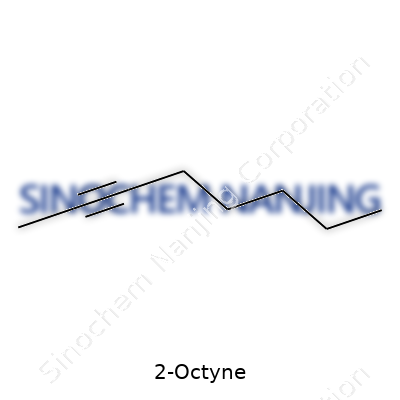
| Names | |
| Preferred IUPAC name | oct-2-yne |
| Other names |
Ethylbutylacetylene Butylethylacetylene |
| Pronunciation | /tuː ˈɒk.taɪn/ |
| Identifiers | |
| CAS Number | 629-05-0 |
| Beilstein Reference | 1209241 |
| ChEBI | CHEBI:38474 |
| ChEMBL | CHEMBL38363 |
| ChemSpider | 521174 |
| DrugBank | DB01840 |
| ECHA InfoCard | ECHA InfoCard: 100.008.897 |
| EC Number | 209-672-7 |
| Gmelin Reference | 7547 |
| KEGG | C01880 |
| MeSH | D017929 |
| PubChem CID | 78481 |
| RTECS number | RT3320000 |
| UNII | 3D7G9B0V8D |
| UN number | UN3361 |
| Properties | |
| Chemical formula | C8H14 |
| Molar mass | 110.19 g/mol |
| Appearance | Colorless liquid |
| Odor | mild |
| Density | 0.757 g/mL |
| Solubility in water | insoluble |
| log P | 1.83 |
| Vapor pressure | 2.93 mmHg (at 25 °C) |
| Acidity (pKa) | 25.0 |
| Basicity (pKb) | pKb ≈ 25 |
| Magnetic susceptibility (χ) | -27.5·10⁻⁶ |
| Refractive index (nD) | nD 1.409 |
| Viscosity | 0.613 mPa·s (25 °C) |
| Dipole moment | 0.75 D |
| Thermochemistry | |
| Std molar entropy (S⦵298) | 274.6 J·mol⁻¹·K⁻¹ |
| Std enthalpy of formation (ΔfH⦵298) | +165.0 kJ/mol |
| Std enthalpy of combustion (ΔcH⦵298) | -4810 kJ/mol |
| Hazards | |
| GHS labelling | GHS02, GHS07 |
| Pictograms | GHS02, GHS07 |
| Signal word | Warning |
| Precautionary statements | P210, P261, P280, P304+P340, P312, P403+P233 |
| NFPA 704 (fire diamond) | 2-1-2 |
| Flash point | 38 °C (100 °F; 311 K) |
| Autoignition temperature | 411 °C |
| Explosive limits | 1.1% - 7.6% |
| Lethal dose or concentration | LD50 oral rat 2500 mg/kg |
| LD50 (median dose) | LD50 (median dose): 1700 mg/kg (rat, oral) |
| NIOSH | NIOSH: LM2625000 |
| PEL (Permissible) | PEL (Permissible Exposure Limit) for 2-Octyne: "Not established |
| REL (Recommended) | 0.5 ppm |
| IDLH (Immediate danger) | No IDLH established |
| Related compounds | |
| Related compounds |
1-Octyne 3-Octyne 1-Octene 2-Octene Octane |



