2-Octene: In-Depth Commentary on a Key Industrial Intermediate
Historical Development of 2-Octene
Looking back at organic chemistry’s progress, 2-octene has played a steady role ever since petrochemicals started gaining traction around the mid-20th century. The groundwork for its recognition came through efforts to diversify chemical feedstocks beyond simple alkanes, with researchers and industrial chemists turning to alkenes like 2-octene because of their reactive double bond and manageable eight-carbon chain. As polymer production, surfactants, and specialty chemicals became more sophisticated, the importance of controlling the structure—cis vs. trans isomers—brought 2-octene into sharper focus. Industry reports from the ‘60s show 2-octene included in lists of intermediates for a range of synthetic lubricants and detergents, marking its transition from a byproduct to a staple feedstock.
Product Overview
2-Octene, a clear, colorless liquid at room temperature, splits into two geometric isomers: cis-2-octene and trans-2-octene. Both isomers carry the formula C8H16, offering balance between volatility and hydrocarbon backbone length. That makes it versatile for several synthetic applications. Major suppliers treat it as a commodity chemical, but specialty grades meet select process or regulatory requirements. Whether produced via cracking, selective dehydration, or partial hydrogenation, 2-octene crops up in merchant markets and as an internal intermediate at integrated sites dealing with surfactants, plasticizers, or performance chemicals.
Physical & Chemical Properties
2-Octene boils at about 122 to 124°C, flashing a moderate vapor pressure and a density nearly equal to water. Its molecular weight sits at 112.21 g/mol. Insoluble in water but soluble in many organic solvents, it delivers on reactivity through the C=C double bond, giving rise to a suite of addition and oxidation reactions. Flammability ranks high, and vapor may travel significant distances to ignition sources, causing flashback risks. Notably, its relatively low melting point keeps it in the liquid phase in most conditions, which simplifies handling but demands vigilant storage. Differences in the cis and trans forms influence properties like refractive index and reactivity toward catalysts, so industry users often request specific isomer ratios or pure fractions.
Technical Specifications & Labeling
Industry standards call for specifying isomer content, purity (commonly >98%), and residual saturates or aromatic hydrocarbons. Analytical labs support these requirements by using gas chromatography to confirm identity and composition. Key data like boiling point range, refractive index, and flash point figure prominently on technical data sheets. Labels also list flammability warnings and require GHS hazard pictograms because of vapor and skin exposure risks. Proper UN number assignment streamlines international shipping and meets regulatory statues under GHS and DOT standards. Users should match specification sheets against process needs, as trace residues or incorrect isomer ratios can affect catalytic reactions or final product stability.
Preparation Method
Large-scale processes often derive 2-octene from cracking higher alkanes or through selective dehydration of octanols. Some older routes started with n-octane and applied dehydrogenation using metal catalysts, but more efficient methods rely on controlled reaction parameters to favor the 2- over the 1-position double bond. Advances in zeolite and alumina catalysts further improved selectivity, helping to avoid over-cracking or byproduct formation. Another route hydroisomerizes 1-octene over acid catalysts, shifting the double bond to the 2-position. Industrial sites, particularly those integrated into refinery operations, recycle light fractions and control isomer ratios using distillation and catalytic refinement. Lab-scale synthesis can manage smaller, purer lots through stereospecific pathways, but scaling up demands robust yield and safety performance.
Chemical Reactions & Modifications
The double bond in 2-octene opens doors to several transformation reactions. Classic hydrogenation across the alkene yields n-octane, often in preparing reference fuels or specialty solvents. Halogenation (bromination, chlorination) allows further modification, underpinning large-scale production of surfactants or plasticizers. Ozonolysis cleaves the double bond to generate smaller carbonyl compounds—a valuable route for agrochemical intermediates. Many polymer chemists value 2-octene as a comonomer in ethylene-based plastics, contributing flexibility and toughness to finished resins. Oxidation, especially in the presence of air and light, can form peroxides, so inhibitors are often added during shipment and storage. Lab work demonstrates Diels-Alder reactions with 2-octene under the right catalysts, showing potential for building cyclic intermediates for pharmaceuticals or specialty chemicals.
Synonyms & Product Names
Chemists and engineers often refer to 2-octene as oct-2-ene, 2-octylene, or even alpha-n-hexylethylene in older texts. Manuals and data sheets sometimes distinguish between trans-2-octene and cis-2-octene, as their physical properties and chemical reactivity can differ in process applications. Commercial producers may market it under proprietary names, often appending grade or purity notations to align with industry requirements—high-purity or “reagent grade” signals tight impurity controls, while bulk lots serve as feedstock for large volume synthesis.
Safety & Operational Standards
Anyone handling 2-octene faces the standard suite of hydrocarbon safety and occupational risks. Open containers can produce flammable vapor concentrations above the lower explosive limit, especially in warm weather or poorly ventilated spaces. Direct skin and eye contact can cause mild irritation, and vapor inhalation causes headaches and dizziness if workplace controls fail. Factory operations install fire suppression systems, vapor detectors, and require spill kits equipped for volatile hydrocarbons. Standard PPE includes gloves, splash goggles, and flame-resistant labwear. Storage vessels ground to prevent static accumulation, and transfer conducted under nitrogen blanket or closed loop handling to limit oxygen exposure. Transportation abides by strict labeling and segregated loading protocols in line with international hazardous goods codes.
Application Area
2-Octene’s reach spans more than a single industry. Petrochemical plants add it as a co-monomer in polyethylene and polypropylene, where it improves physical properties without major cost bumps. Surfactant manufacturers value its double bond in alkoxylation and sulfonation, forming building blocks for detergents and emulsifiers. Lubricant makers hydrogenate 2-octene fractions, creating tailored base oils. In agriculture, its transformation leads to C8 chain aldehydes and acids used in flavor, fragrance, and crop protection markets. Fine chemical and pharmaceutical labs tap into its reactivity for diverse syntheses requiring a moderate-length alkene backbone. Each sector carves out specific grades and supply contracts depending on regulatory and process demands.
Research & Development
Chemists driven by both fundamental science and industry efficiency have investigated 2-octene’s reactivity and production optimization. Catalysis research digs into selective double bond migration, aiming to boost yields while slashing energy input and byproducts. Environmental chemists study pathways to degrade or recycle 2-octene and its derivatives, ensuring minimal release to air and water. Modern spectroscopic tools monitor its behavior in polymerization reactions, revealing routes to custom plastics and specialty elastomers. Lab-scale biotechnology work explores converting natural feedstocks—like fatty alcohols or bio-alkanes—into platform molecules like 2-octene as part of green chemistry efforts. Structural modifications, such as functional group additions, open doors to next-generation surfactants and specialty intermediates.
Toxicity Research
Toxicological studies show that the main risks of 2-octene belong to its group of volatile alkenes. Acute exposure in lab animals reveals mild to moderate respiratory and central nervous system effects, with irritation as the typical sign in humans. Data from industrial settings and animal testing suggest low long-term toxicity at ordinary exposures for workers, provided standard ventilation and handling protocols apply. Chronic toxicity studies remain limited but so far do not point to carcinogenicity or reproductive harm under standard exposure limits. Monitoring remains important in occupational health, as build-up of hydrocarbon vapors can pose asphyxiation risks or long-term health concerns in confined or unventilated environments.
Future Prospects
2-Octene remains locked in as a valuable building block for evolving industries. Advances in catalysis, especially those from bio-based and low-energy systems, point the way to more sustainable production. As polymer demands shift toward higher performance and environmental compatibility, demand for branch-point alkene co-monomers should push 2-octene into fresh research territory. Green chemistry methods seek to move feedstocks away from fossil hydrocarbons, so attention turns to renewable pathways—enzymatic or microbial routes, for example. Regulations on workplace exposure will likely drive further improvements in monitoring, airborne controls, and product stewardship, underscoring the shared responsibility across the entire chemical supply chain. Researchers and industry leaders, drawing from past advances, push for both higher efficiency and better safety profiles, with 2-octene at the intersection of classic organic synthesis and modern innovation.
What is 2-Octene used for?
What Makes 2-Octene Stand Out?
2-Octene pops up a lot more often than most people realize. Chemists grouped it as one of those unsaturated hydrocarbons—the ones that carry a double bond along their carbon chain. To the average person, 2-octene doesn’t sound like much, just another chemical on a shelf. In reality, this compound keeps the wheels of plenty of industries turning, both literally and figuratively.
An Important Ingredient Behind the Scenes
Refinery processes use 2-octene during the making of plastics, synthetic rubbers, and other polymers. 2-Octene reacts well with other substances—partly because of its double bond, which lets it slip into new chemical reactions easily. Since plastic is everywhere, especially as packaging, films, and containers, 2-octene sneaks its way into your pantry, closet, and even your car’s dashboard. A lot of this boils down to the fact that its structure—eight carbons long with a convenient double bond—gives flexibility when forming longer, more complex molecules.
Lubricants and Detergents
Motor oils and lubricants keep engines from grinding themselves to pieces, and 2-octene helps in their creation. Once transformed in a lab, it turns into ingredients that boost the performance and lifespan of oil. The detergent industry leans on 2-octene too. It provides a backbone for surfactants, the parts of soap or detergent that actually grab onto grime and let water wash it away. Without these surfactants, laundry would be a whole lot dirtier, and dishes greasier.
Creating Scents and Flavors
Not everything that starts in the lab smells of chemicals. 2-Octene supplies the flavor and fragrance industries as a building block. Once chemists work with it, they pull out compounds that end up in perfumes, air fresheners, and even food flavorings. The purity and consistency of 2-octene make it a favorite for these applications—people expect a certain smell or taste, and 2-octene helps deliver that every time. One day it could play a part in the aroma of new plant-based foods or eco-friendly perfumes, too.
Potential Dangers and Solutions
Handling 2-octene raises some issues. Like many volatile hydrocarbons, it can irritate skin and eyes, and breathing in its vapors isn’t safe. Factories and labs use engineering controls such as ventilation and sealed equipment to prevent accidents. It matters for companies to regularly train workers on safe handling and spill procedures—not just once, but throughout their careers. The chemical industry has improved safety compared to last century, though room always exists for tech advancements. Monitoring exposure and developing less hazardous substitutes also helps.
Environmental Impact
Leaks or poor waste control let 2-octene find its way into water or soil, where it doesn’t break down easily. Regulatory agencies ask for detailed tracking of production and disposal, which pushes companies to adopt better waste recovery and recycling. Biological cleaners—naturally occurring microbes—may one day help clean it out of soil and groundwater. Until that tech rolls out widely, each chemical shipped or stored correctly already makes a big difference.
Why Keep an Eye on 2-Octene?
Society relies on chemicals like 2-octene more than anyone admits out loud. Bottles of detergent on grocery shelves, new car tires, and perfumes in the mall—they all trace back in part to this compound. Sustainable chemistry matters now more than ever, and even workhorse materials like 2-octene need attention for safety, efficiency, and environmental health. Businesses, regulators, and communities share that responsibility. There’s plenty more to these little-studied chemicals than meets the eye.
What are the physical properties of 2-Octene?
Getting to Know 2-Octene
2-Octene pops up in many industrial settings, often unnoticed outside the chemistry world. This liquid hydrocarbon, part of the alkene family, packs a double bond right in the middle of its eight-carbon chain. It doesn’t grab headlines like plastics or fuels, but the details of its physical properties shape how it performs in labs, factories, and beyond.
What Does 2-Octene Look and Feel Like?
Pure 2-Octene shows up as a colorless liquid, sometimes leaving a faint, gasoline-like odor in the air. It slides through your fingers if spilled—oily and slick. Left out in the lab, it evaporates slower than lighter hydrocarbons like hexane. Its boiling point hovers close to 121–123 degrees Celsius—so heating it gently produces thick vapor, but not with the ferocity of lighter alkenes. Many folks handle it in glass bottles, but storing it in closed stainless steel drums works fine for larger operations.
Density, Solubility, and How 2-Octene Behaves in the Real World
2-Octene feels lighter than water, floating right on top at a density near 0.72 grams per cubic centimeter—easy to see during lab separations. It resists dissolving in water completely. Instead, this hydrocarbon mixes easily with other organic solvents, working well in solutions where water has no business. Practical chemists use this tendency for “liquid-liquid” extraction, skimming 2-Octene off the top after a reaction.
Stirring 2-Octene in cold labs or warm workshops doesn’t lead to solidification. Freezing happens deep below zero, around minus 101 degrees Celsius, so only specialized chillers can crystallize it. This trait matters in colder climates or chemical plants, keeping pipes and valves free of clogs. In warmer temperatures, it remains liquid and easily pumps through systems.
Vapor Pressure and Volatility in Action
At room temperature, 2-Octene gives off some vapor, but nothing alarming in a well-ventilated space. Vapor pressure ranges around 7 millimeters of mercury at 25 degrees Celsius, so it doesn’t jump out of open containers the way acetone or ether might. Still, a sharp nose can detect its scent, and handling it carelessly can release small clouds of fumes. Proper gloves and goggles keep possible irritation at bay.
Real-World Impact and Safety
Physical properties play a role in fire safety as well. With a flash point around 15 degrees Celsius, 2-Octene can catch fire from a simple spark above room temperature. Storage rules follow the same pattern as other flammable hydrocarbons: sturdy containers, cool storage, and no open flames nearby. The viscosity stays low—its molecules slip past each other—so it pours out of bottles smoothly, never clogging pipettes or syringes.
In industrial synthesis, these qualities allow it to function as a raw material for detergents and specialty chemicals. Quick separation from water saves time and resources, while a moderate boiling point supports easy recovery by distillation.
Handling the Challenges and Opportunities
Chemists and plant operators look at the big picture each day. Understanding substance density, boiling point, and solubility matters as much as any product’s price or availability. For 2-Octene, these physical properties drive decisions about storage, safety, separation, and efficiency. They shape how labs and factories use this unassuming chemical, guiding everyday choices that add up to safer, more reliable operations.
For anyone working with chemicals, getting familiar with details like these shapes not just how they store or mix 2-Octene, but how they think about risk, waste, and workflow. Every property tells a story—a lesson much bigger than any number on a datasheet.
Is 2-Octene hazardous or toxic?
Understanding 2-Octene’s Place in the Lab
People in chemistry labs and industrial plants run across 2-octene often. It’s an eight-carbon hydrocarbon, part of the alkene family, and comes in two forms—cis and trans. It acts like a building block in organic synthesis and sometimes ends up as an intermediate for surfactants or scents. If you’ve been around production lines or chemical storage, you start to recognize this sort of compound: oily, nearly clear, not wildly reactive compared to things like strong acids or bases, but not a bottle to ignore.
Assessing Hazards—Handling and Exposure
I’ve seen plenty of chemical storage rooms. Most folks pay careful attention to alkenes for fire safety more than anything else. 2-Octene evaporates fast. If you spill it, air fills quickly with the stuff. It's flammable, so letting it build up around heat sources guarantees trouble. The flash point sits below common room temperature, meaning it can catch fire without much effort—something that’s been drilled into my mind after a close call with a similar solvent.
Toxicity feels less dramatic. 2-Octene, by current research, doesn’t get classified as highly toxic, but it comes with the same warnings as most organic solvents: limit your skin contact, don’t breathe it in, and keep it away from food. Direct skin contact may bring mild irritation. Inhaling larger amounts can irritate your throat and lungs. Most studies on rats and lab animals came back with low acute toxicity numbers, nothing like benzene or toluene. But “low toxicity” doesn’t mean harmless. Chronic exposure, especially in enclosed spaces, stacks up and could affect your health after weeks or months.
Long-Term Health Risks—What We Actually Know
Scientific data on long-term effects looks thin. No clear links to cancer, mutations, or birth defects have shown up in the research I’ve read, and government guidelines reflect that. OSHA and NIOSH do not set precise exposure levels for 2-octene, but general hydrocarbon guidelines suggest using proper ventilation, gloves, and goggles. It feels a bit like the early days of other chemicals—absence of clear danger gets treated as safety, which has backfired before. A cautious person always tries to cut exposure down, even when regulations don’t force the issue.
Environmental Impact and Safe Disposal
Disposing of organics like 2-octene hits another nerve. Pouring them down the drain or dumping onto soil can damage aquatic life and microorganisms. At concentrations above a few parts per million, most small aquatic animals can absorb solvent, build up the chemical, and suffer nervous system effects. In the plant where I worked, all non-chlorinated organics went into steel drums for incineration—expensive, but better than watching fish die off downstream or hearing about groundwater contamination from a neighbor’s well. Safe disposal matters as much for your community as it does for your own safety in the lab.
Reducing Risk—Simple Steps That Work
Use the smallest amount you need. Store it in tight-sealed containers away from heat. Work in a well-ventilated area or use a fume hood. Never trust a label that says “low hazard” without double-checking safety sheets, and always keep your gloves and splash goggles close. In the world of chemicals, the ones that seem boring at first glance often cause trouble because we get too comfortable. Training, good storage, and respect for what even "mild" chemicals can do go a long way to keeping people and the planet in better shape.
What is the difference between cis-2-Octene and trans-2-Octene?
The Straight Story on Isomers
Anyone who’s handled organic compounds for a chemistry class, research, or industry work knows that sometimes, even a tiny twist in a molecule can change everything. Take 2-octene, for example. It comes in two main forms: cis-2-octene and trans-2-octene. The names mean there’s a double bond at the second carbon, but it’s what rests on each side of that bond that really counts. Cis and trans describe if the bigger bits on either side sit together or across from one another. Cis points these groups to the same side, trans splits them like two people sitting at opposite ends of a bench.
Why a Tiny Twist Means a Big Change
In my undergraduate synthesis course, we learned early on that not all liquids pour the same way. I remember the surprise after running a simple distillation: cis-2-octene boiled at a noticeably lower temperature than the trans. This comes down to shapes and how molecules stick together. Cis-2-octene, with its bent shape, packs poorly, sort of like trying to fill a box with bananas instead of bricks. Trans-2-octene stands straighter, lets molecules line up tighter, so it sticks together more and boils at a higher temperature.
You also notice the difference in colorless samples under a UV lamp. Slight tweaks in structure make for small, but important, changes in their absorption profiles. In labs that study material stability or photochemistry, this isn’t just trivia — it guides what compound works for what application.
Impact Outside the Lab
For people working in fragrance, coatings, or specialty lubricants, the shape of each 2-octene isomer isn’t just an academic fact. Trans-2-octene's straighter build often leads to more predictable behavior under pressure, like resisting breakdown at higher temperatures. Give this to a manufacturer, and there’s a better shot at producing batches that behave the same way every single time. In contrast, the kink in cis-2-octene can give unique properties—sometimes more flexibility or different interaction with other ingredients—useful for blending in specific recipes or for accessing different reaction pathways in synthesis.
Factoring in Human Health and the Environment
Industry doesn’t just chase the right product consistency. Over the years, we’ve come to recognize how isomer differences can affect toxicity, breakdown in the environment, and even bioaccumulation. Research points out that some isomeric forms hang around longer in soil and water. If we’re selecting which 2-octene isomer to use, those choices ripple out. Good practice means checking how the shape influences both performance and environmental fate. After all, what flows out of a plant or down a drain deserves just as much attention as what goes into a bottle or barrel.
Getting to the Right Mix: What Works Now
Separation and identification of these isomers rely on tools like gas chromatography, which can split them based on boiling point and polarity. In my summer internship at a specialty chemicals company, we spent long hours tuning GC columns just to get clean, reliable separation for quality control reports. Advances in catalysis have helped labs tilt the balance to make more of one isomer over the other, which trims costs and simplifies life for process engineers.
Choosing between cis and trans-2-octene doesn’t boil down to preference; it's a matter of application, performance, and responsibility. Anyone aiming to innovate or improve a process has to respect the difference that a tiny molecular kink can make—not just in a flask, but across the supply chain and into the environment.
How is 2-Octene produced or synthesized?
Looking at 2-Octene Up Close
Step inside any refinery or advanced chemical plant, and you’ll notice the buzz of activity around the manufacture of specialty chemicals. 2-Octene lands right in this crowd, a compound with eight carbon atoms and a single double bond in the middle. For years, it’s found work in everything from specialty plasticizers to helping with organic synthesis in research labs. What draws people to this molecule? It all comes down to the versatility that comes from a single bend in an otherwise straight carbon chain.
How Do Producers Synthesize 2-Octene?
I’ve watched colleagues in research and industry roll up their sleeves to tackle the formation of octene isomers. The go-to route for making 2-octene typically involves the catalytic dehydration of alcohols like 2-octanol or straight-chain cracking and separation from petroleum fractions. Engineers don’t just toss raw petroleum into a pot and call it a day. Instead, they slice up large hydrocarbon chains using heat and pressure, a process called “cracking.” Out comes a whole stew of hydrocarbons—some saturated, some with shiny new double bonds in places like the second carbon.
Those double bonds don’t form by magic. Chemists drive the process with acids or other catalysts, which take the incoming alcohol and help peel off a water molecule. What’s left behind rearranges itself to favor the more stable 2-octene structure. To steer toward the desired product, technicians control the temperature, pick their catalyst with care, and watch the clock during reaction time. Getting a good yield calls for accuracy; too hot and the product decomposes, too cool and things grind to a halt.
Why Purity and Isomer Control Matter
Purity strikes me as a challenge that separates the seasoned producers from the hopeful amateurs. 2-Octene doesn’t show up alone—other octene isomers tag along for the ride. Even small differences in isomer composition change how this chemical performs in downstream reactions. Separation means more than just running the mixture through basic distillation. Fractional distillation lines up the different boiling points, letting chemists collect cleaner samples. Some teams rely on chromatography or complex extraction to really nail down the purity.
Environmental and Safety Considerations
Pushing for efficiency isn’t just about the bottom line. Laws keep tightening around the release of volatile organic compounds, and the health and safety team watches every batch. Working around strong acids or high pressures asks for seasoned hands and thorough training. I’ve seen more investment into process controls, better fume collection, and waste recovery. Plant managers weigh the cost of these upgrades against fines and cleanup, so taking shortcuts rarely pans out over the long run.
Progress and Solutions
The pursuit of better catalysts never slows down. Teams search for more selective and robust options that handle higher throughput yet shed fewer byproducts. Some lean toward bio-alcohols as starting points, hoping to cut the petrochemical footprint. Improvements in process automation let smaller crews oversee bigger output, while digital monitoring nips hazards before trouble starts.
At my last industry meetup, the talk circled back to circular manufacturing. Producers want fewer off-spec barrels and lower environmental costs—both goals push technology forward. If synthesis shifts toward cleaner starting materials and smarter separation, the industry not only delivers a better product but sets itself up for tougher global regulations down the line.
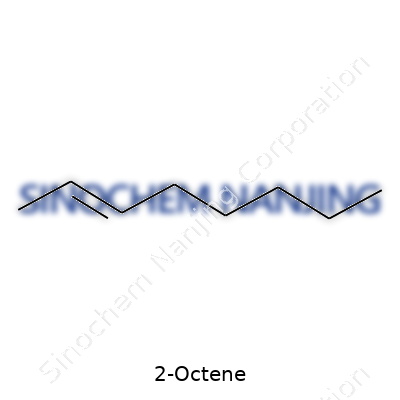
| Names | |
| Preferred IUPAC name | oct-2-ene |
| Other names |
beta-Octene Oct-2-ene |
| Pronunciation | /tuː-ˈɒk-tiːn/ |
| Identifiers | |
| CAS Number | 111-67-1 |
| 3D model (JSmol) | `2D0OCIdlJSl9C20_SAF4A5CJ4SRF64-FdCwOaNp_cfgPCqK9OfHskUKzHfjW2voKyF5lqM3H__wEIYArEv6SMYg==` |
| Beilstein Reference | 1208733 |
| ChEBI | CHEBI:36039 |
| ChEMBL | CHEMBL15959 |
| ChemSpider | 7274 |
| DrugBank | DB13843 |
| ECHA InfoCard | 100.167.789 |
| EC Number | EC 208-128-2 |
| Gmelin Reference | 8906 |
| KEGG | C16530 |
| MeSH | D010095 |
| PubChem CID | 5366340 |
| RTECS number | RG2275000 |
| UNII | V2M1WE229B |
| UN number | UN3077 |
| Properties | |
| Chemical formula | C8H16 |
| Molar mass | 112.21 g/mol |
| Appearance | Colorless liquid |
| Odor | sweet odor |
| Density | 0.712 g/mL at 25 °C |
| Solubility in water | Insoluble |
| log P | 2.92 |
| Vapor pressure | 1.79 mmHg (at 25 °C) |
| Acidity (pKa) | 15.7 |
| Magnetic susceptibility (χ) | -7.5×10⁻⁶ |
| Refractive index (nD) | 1.419 |
| Viscosity | 0.676 mPa·s (at 25 °C) |
| Dipole moment | 0.45 D |
| Thermochemistry | |
| Std molar entropy (S⦵298) | 320.5 J·mol⁻¹·K⁻¹ |
| Std enthalpy of formation (ΔfH⦵298) | -11.6 kJ/mol |
| Std enthalpy of combustion (ΔcH⦵298) | -4664.9 kJ/mol |
| Pharmacology | |
| ATC code | V06DC02 |
| Hazards | |
| GHS labelling | GHS02, GHS07 |
| Pictograms | {"GHS02", "GHS07"} |
| Signal word | Warning |
| Hazard statements | H315, H319, H335 |
| Precautionary statements | P210, P233, P240, P241, P242, P243, P280, P303+P361+P353, P304+P340, P305+P351+P338, P312, P331, P370+P378, P403+P235, P501 |
| NFPA 704 (fire diamond) | 2-1-0 |
| Flash point | 28°C |
| Autoignition temperature | 190 °C |
| Explosive limits | 1.1-7.0% |
| Lethal dose or concentration | LD50 (oral, rat): 1800 mg/kg |
| LD50 (median dose) | LD50 (median dose): Oral rat LD50: 3730 mg/kg |
| NIOSH | RT6450000 |
| PEL (Permissible) | Not established |
| REL (Recommended) | '0.85 mg/L' |
| IDLH (Immediate danger) | IDLH: 300 ppm |



