2-Nitronaphthalene: An Exploration of Its Journey, Properties, and Promise
Historical Development
In chemical history, 2-nitronaphthalene has always stood out for its role in coloring and the birth of larger organic frameworks. During the early industrial boom, especially in Germany, chemists turned to nitro derivatives of aromatic hydrocarbons for synthetic dyes. Through refining methods and a growing understanding of aromatic substitution, 2-nitronaphthalene became much more than a textbook curiosity. Its story links back to the days of coal tar chemistry: researchers extracted naphthalene from tar, then treated it carefully with nitric acid, opening new ways for building molecules with novel hues and chemical behaviors. This set up a foundation for later developments in advanced materials, agrochemicals, and pharmaceuticals, reflecting how something as simple as a yellow crystal could ripple through scientific discovery.
Product Overview
On the shelf, 2-nitronaphthalene usually appears as pale yellow or sometimes reddish crystalline flakes—distinctive enough to catch the eye but not out of place among industrial intermediates. Chemists know this compound as a key building block in manufacturing dyes, especially when a softer yellow with resistance to fading or washing is needed. Its utility stretches out to chemical syntheses involving reduction, where it shifts smoothly into amino derivatives like 2-naphthylamine, a step that has been foundational for many colorants and organic reactions. In process plants, it serves as more than just a color provider—planners rely on it for its reactivity and the way it combines with other aromatic molecules, giving pathways to materials with surprising strength or thermal stability.
Physical & Chemical Properties
The physical character of 2-nitronaphthalene brings predictability to synthetic routines. It begins to melt at about 79°C, which lets teams process it at moderate temperatures without special handling. A faint but noticeable odor lingers, familiar to anyone who has spent time in chemical storerooms—the signature of nitroaromatics. It barely dissolves in water, yet finds a home in solvents like ethanol, diethyl ether, and benzene. This kind of selective solubility guides how it’s handled in plant operations and how waste streams get treated. Chemically, the nitro group sits at the second ring position, affecting both the electron density and the pattern of subsequent substitutions. Reactivity sits at the core: with the right reducing agent, chemists transform the nitro group to an amine, while sulfuric acid converts it into sulfonic acids, broadening the synthetic reach even further.
Technical Specifications & Labeling
Every batch of 2-nitronaphthalene lands with certificates specifying purity, color, moisture content, and trace-level contaminants. Producers label drums and containers with chemical identity, hazard pictograms, lot numbers, and manufacturing dates to support safe tracking and regulatory compliance. Standards usually demand a purity upwards of 98%, since off-color or impure stock can compromise downstream reactions. In my time working with specialty chemicals, few shortcuts exist—a slightly off-spec supply can create headaches for QC teams, or even halt an entire production line if downstream processes rely on strict technical limits. Labeling doesn’t just help with compliance; it keeps everyone aware of what’s at stake in busy environments where dozens of hazardous intermediates often share shelf space.
Preparation Method
The classic synthesis of 2-nitronaphthalene takes naphthalene—usually derived from coal tar—and exposes it to mixed acids. Careful temperature control pushes the reaction to favor substitution at the 2-position over the 1-position, although a mixture often results and must be separated. The process relies on an industrial blend of concentrated nitric and sulfuric acids. Experience has shown that reactor design and the order of acid addition matter. Too rapid an addition can cause unwanted side reactions or even runaway exotherms; operators need vigilance. Washing out and distillation yield the final pure product. Process engineers constantly tweak reaction times and temperatures, aiming to balance output, purity, and safety in plants where even a small slip-up can have big financial or regulatory consequences.
Chemical Reactions & Modifications
The nitro group on the naphthalene ring changes how it reacts compared to the parent hydrocarbon. With a strong enough reducing agent—iron filings and hydrochloric acid, or catalytic hydrogenation—chemists convert it selectively to 2-naphthylamine, a valuable intermediate in dye and pigment manufacture. Electrophilic aromatic substitution slows at the position already bearing the nitro group, shifting reactivity to other open sites on the ring. In my own research experience, this targeted reactivity helps create libraries of new compounds, whether for color, taste, or even pharmaceuticals. The nitro group itself can transform into other functionalities with skillful chemistry: scientists introduce chlorine to make halonitronaphthalenes, swap nitro for sulfonate, or build up to even larger and more complex molecular structures.
Synonyms & Product Names
Beyond its systematic name, 2-nitronaphthalene has traveled under numerous labels. Some know it as β-nitronaphthalene, reflecting its position on the ring system. Others might call it 2-nitro-1,2-dihydronaphthalene, a mouthful that highlights its origins in aromatic hydrocarbon chemistry. Industry and commerce often simplify with product codes or abbreviations, like NNA or beta-nitronaph. These names have more than historical flavor—they influence how regulators, transporters, and buyers interact with the substance day-to-day, especially across borders where rules and naming habits can differ dramatically.
Safety & Operational Standards
Working safely with 2-nitronaphthalene goes well beyond eye protection and gloves. The compound comes with moderate acute toxicity; inhaling the dust or long skin exposure can irritate or sensitize some workers. Plant managers enforce rigorous containment, local exhaust ventilation, and regular air monitoring. Material safety data sheets demand respect—it is combustible, so sources of ignition stay clear during any transfer or blending. Training covers emergency response, first-aid, and proper hand hygiene. Storage areas must carry clear hazard labeling and be kept separate from incompatible chemicals. Over the years, responsible handlers have found that thoughtful procedures, good communication, and stubborn attention to detail keep operations safe and reliable.
Application Area
2-Nitronaphthalene plays a steady role in several value chains. In dyes, it stands out as an intermediate for azo colorants and pigment dispersions, which coat fabrics, plastics, and even food wrappers. It enables synthesis of compounds like naphthionic acid, which then find further use in creating reds and oranges that resist sunlight and washing. Agriculture leans on the molecule for manufacturing certain insecticides and herbicides. Pharmaceutical chemists turn to this backbone when assembling antimicrobial agents and anti-inflammatory drugs. In the lab, researchers lean on its robust chemistry to prepare specialized ligands for catalysis or model compounds for studying aromatic electronic interactions.
Research & Development
Research teams continue to find unexpected pathways using 2-nitronaphthalene. In addition to serving as a springboard for pigment design, recent work pushes into organic electronics—engineers are exploring nitronaphthalene derivatives as precursors for organic semiconductors, OLEDs, and novel photoactive materials. Labs working in environmental chemistry study how the compound degrades, both by light and by microbial activity—information that shapes waste management and remediation perspectives. Medical researchers, too, investigate derivatives for anti-cancer activity. With each new pathway found, textbooks add a little more detail, and industrial chemists dream bigger about what can emerge from this resilient aromatic platform.
Toxicity Research
Studying the toxicity of 2-nitronaphthalene shifted from curiosity to priority once regulatory agencies began taking a harder look at worker exposure and environmental fate. Animal studies reveal moderate acute toxicity, with liver and kidney as target organs in many models. Chronic exposure brings more concern—contact dermatitis, potential mutagenicity, and possible carcinogenicity have all surfaced in literature. Environmental teams track releases into waterways, since nitroaromatics can linger and resist natural breakdown. Workplace guidelines try to keep exposure below defined time-weighted averages, enforced through both engineering controls and medical surveillance. Over years in the field, I’ve seen how a solid program—one that combines science, oversight, and respect for the risks—makes sustained safe use possible.
Future Prospects
Looking ahead, 2-nitronaphthalene remains relevant not only as a tool of classical organic synthesis but as a bridge to advanced technologies. Demand may shift as dye production modernizes, but niche markets in electronics, advanced coatings, and specialty pharmaceuticals keep research labs experimenting. Green chemistry brings pressure to improve synthesis—less waste, safer solvents, and milder reaction conditions motivate process redesign. Newer analytical tools let researchers study molecular interactions at levels once unimaginable, opening doors for bioactive compound discovery and new materials design. Regulation and sustainability concerns intensify each year, so producers focus ever more on lifecycle impacts and best practices. In my career, I have seen the cycle: what might seem an old-fashioned molecule often reinvents itself through fresh thinking and adaptation, keeping chemists on their toes.
What is 2-Nitronaphthalene used for?
Digging Deeper Into 2-Nitronaphthalene
If you’ve never heard of 2-nitronaphthalene, you’re not alone. It doesn’t make headlines like plastics or petroleum, but it serves as a foundation for industries most of us rely on every day. 2-nitronaphthalene comes from naphthalene, itself a common byproduct of coal tar. Chemically, it stands out because a nitro group attaches at the second position on the naphthalene ring. The result—a yellowish crystalline solid—might not look like much, but it carries a surprising amount of industrial weight.
Why Manufacturers Seek Out 2-Nitronaphthalene
Its main job shows up in dye manufacturing. As someone who’s spent time around textile factories, the role of intermediates like 2-nitronaphthalene jumps out right away. This compound doesn’t just become a dye or pigment on its own. Instead, it acts as a starting point for the synthesis of aromatic amines, especially 2-naphthylamine. From there, the chemistry enables the creation of brilliant reds, oranges, and other hues you’d find in fabric, ink, and sometimes even art supplies. India, China, and Germany are just a few countries that keep demand strong because of their massive textile sectors.
Besides that, 2-nitronaphthalene plays a hand in making certain agricultural chemicals and rubber processing aids. As the global population grows, agriculture shifts up a gear in efficiency, and chemicals made with help from intermediates like this often drive that growth. 2-nitronaphthalene also enters the field of pharmaceuticals. Medicinal chemists sometimes use it as a building block for synthesizing more complex molecules, especially in early-stage research. Everything from antihistamines to antiseptics might trace some of their origins to it.
Safety, Environment, and Health: The Shadow Side
Experience on the ground in industrial settings shows that this compound deserves respect—and careful handling. 2-nitronaphthalene doesn’t classify as a household hazard, but exposure through inhalation, skin contact, or ingestion poses risks to workers. Animal studies link it to certain forms of toxicity, including possible carcinogenic effects. Reduced exposure ranks as a big priority for factories, with local and international regulators requiring personal protective equipment, proper ventilation, and clear storage rules.
Environmental impact can’t be downplayed. Accidental spills or mismanagement can mean contamination of soil or waterways. Cleaning up means expense, labor, and sometimes lasting damage. I’ve witnessed companies introducing closed-system reactors and water treatment upgrades just to stay ahead of the curve and avoid fines. Proper labeling, safe waste disposal, and real training for laboratory staff go a long way in limiting problems.
Can We Replace It?
Some may ask why stick with 2-nitronaphthalene if it's risky. The answer lies in chemistry’s slow evolution and the power of established supply chains. Researchers keep looking for greener or milder routes to the same dyes, pesticides, and additives. Bio-based alternatives sometimes offer lower impact, but the shift proves challenging due to technical hurdles and cost. Significant investment in green chemistry can help reduce reliance on older methods without destroying jobs in regions built around chemical plants.
Until better answers show up, 2-nitronaphthalene stays in the picture. Its reach goes far beyond its simple structure, touching everything from the clothes we wear to the food on our table. Every step toward safer handling and smarter substitution counts, both for workers’ health and for a cleaner future.
What are the safety precautions when handling 2-Nitronaphthalene?
Why Safety Matters with 2-Nitronaphthalene
Dealing with chemicals like 2-nitronaphthalene isn’t just a checklist item—it’s about real people staying healthy at work. This substance belongs to the nitroaromatics family, which means it can be more hazardous than many basic industrial chemicals. It’s known to cause health problems if it touches your skin, gets into your lungs, or even finds its way into groundwater. From my time working in a small environmental testing lab, I learned you don’t get second chances with materials like this. Years ago, someone in my building handled a similar compound without proper gloves—just a splash caused immediate irritation and weeks off work. That lesson stuck with everyone who knew about it.
Personal Protection: Gear Up or Pay the Price
Lab coats look strange until they stop a chemical from burning your skin. With 2-nitronaphthalene, it’s not just a suggestion to use thick nitrile gloves—it’s mandatory. Splash goggles matter too, not just basic glasses, because fumes and dust make their way around standard eyewear. I’ve watched colleagues swap out old, thin surgical gloves for chemically resistant ones on day one of nitrocompound duty—and every time, their hands thanked them. Wearing a fitted dust mask or, even better, a chemical respirator keeps your lungs free of particulate and vapor. Direct contact can lead to rashes, and you don’t want these compounds inside your body from accidental breathing.
Storing Chemicals Like You Mean It
Once I saw a shelf collapse under the weight of poorly-organized jars, reminding me that chemical storage isn’t just tidy—it’s critical. 2-nitronaphthalene needs a dry, cool, well-ventilated space. Avoid storing it near acids, strong bases, or oxidizers. The container itself should seal tightly, preferably with a backup container to prevent leaks or evaporation. Many labs use powder-proof bins to catch accidental spills—worth every penny, trust me.
Ventilation and Handling Practices
Using a fume hood changes everything. No fancy air freshener or open window will safeguard you from the volatiles coming off 2-nitronaphthalene. Ventilation systems designed for chemical work pull those invisible threats away before they reach your lungs. One of my mentors insisted on opening chemicals under running hoods only—not because it was a rule, but because he’d once tasted a chemical in the back of his throat even though he never poured it himself. Sometimes, small lessons save big headaches.
Cleanup: No Shortcuts, No Excuses
Accidents will happen—spill kits need to stay stocked and ready. Absorbent pads, neutralizing agents, special disposal bags—these should be on hand, visible, and reachable. Proper cleanup means scooping up solids, washing away the residue with appropriate cleaners, and staying away from drains that go directly to city sewers. Colleagues sometimes kept emergency numbers and the material safety data sheet posted by the door, cutting out confusion in case things went sideways.
Training and Vigilance
No one gets to assume they know everything. Real safety relies on honest, regular training. Bring up symptoms like dizziness, sore throat, redness, or trouble breathing as red flags. If anyone gets exposed, wash the area right away and report it without hiding anything. That openness saves lives. You might think you’ve done it all a hundred times, but complacency has poisoned more than a few seasoned workers.
Long-Term Thinking
There’s always a temptation to cut corners for speed or convenience. Every shortcut with 2-nitronaphthalene builds risk over time—risk that eventually turns into real harm or environmental damage. Strict routines, the right gear, and honest communication beat flashy safety posters every time.
What is the chemical structure and formula of 2-Nitronaphthalene?
A Closer Look at 2-Nitronaphthalene
Many everyday products rely on molecules that most people never see. 2-Nitronaphthalene is one of those quiet workers in the chemical landscape. Born from naphthalene—the same stuff found in old-school mothballs—2-nitronaphthalene stands out for its structure and for what it can do.
The Formula and How the Structure Matters
The molecular formula for 2-nitronaphthalene is C10H7NO2. The “2-nitro” means there’s a nitro group (NO2) attached to the number two carbon on the naphthalene backbone. Naphthalene’s two-fused benzene rings grant stability, so swapping a hydrogen atom on the second carbon for a nitro group carves out an entirely new personality in this molecule.
Naphthalene by itself brings simplicity: just carbon and hydrogen in a tight, aromatic double-ring. The joining of a nitro group alters its chemistry. The attachment at the ortho position compared to naphthalene’s functional groups influences how it reacts and where it gets used in industries like dyes, pesticides, and specialty chemicals.
Why Structure Defines Its Role in Industry
The arrangement of atoms in 2-nitronaphthalene isn’t just a matter of paperwork for a chemist. The position of the nitro group changes both the molecule’s reactivity and its uses. For example, I’ve seen how shifting the nitro group from the second to another position can completely change a compound’s color profile in dye manufacturing and its environmental breakdown rate. Chemists carefully select this structure to produce the desired end product efficiently, especially in pigments and intermediates for other chemicals.
Safety concerns also tie straight into structure. In my experience working with chemical research teams, compounds like 2-nitronaphthalene need careful handling because nitro groups often bring a degree of toxicity and can pose environmental risks if waste goes unmanaged. Regulatory requirements around production and disposal drive up costs but keep both workers and surrounding communities safer.
Evidence of Environmental and Health Impact
Studies point to nitroaromatic compounds contaminating soil and groundwater. 2-Nitronaphthalene, because of its solubility and persistence, shows up in industrial waste streams. The EPA recognizes the risks, noting its toxicity to aquatic life and potential for bioaccumulation. Workers who face prolonged exposure risk skin irritation and respiratory issues. This isn’t theory—there are documented incidents linking improper waste handling from dye plants to environmental contamination in local waterways.
Solutions and a Path Toward Greater Responsibility
Companies manufacturing or using 2-nitronaphthalene can cut down risks by investing in closed-system processes that capture emissions and scrub waste. Upgrading filtration and incineration cuts down the danger. More labs are also investing in green chemistry—creating alternative compounds or reactions with less toxic waste. Sometimes a tougher regulation might seem painful for profits, but from what I’ve seen, companies adapting early build stronger trust in the long run.
The chemical industry has the knowledge to reduce harm. Training workers to use updated safety equipment and following best disposal methods isn't optional—it’s part of running a business that lasts. Sharing data about spills and near-misses with regulators and the public, plenty of folks worry about transparency—yet sharing information builds trust with local communities, protecting both health and the bottom line.
What are the storage conditions required for 2-Nitronaphthalene?
Why Safe Storage Matters
2-Nitronaphthalene shows up in research labs and industrial setups for its use in synthesizing dyes and chemicals. It rarely grabs the spotlight, but its risks demand respect. Accidents do not pick locations or times. I learned that a little negligence—a cracked lid or ignored warning—can cost an organization money, resources, and sometimes people’s health. The value of safe storage lives in every quiet day where nothing goes wrong.
Getting the Storage Temperature Right
The biggest concern with this compound comes from its combustibility. 2-Nitronaphthalene doesn’t explode without provocation, but it does ignite more easily than most expect. Keeping it in a cool, dry place ranks as one of the easiest wins for safety. Temperatures above 30°C start increasing the risk of decomposition and fires, so most chemical storerooms use dedicated climate control. During a summer heatwave, I once saw a warehouse’s central cooling fail. The temperature inside drifted above safe limits for similar organic chemicals, leading to a hasty, stressful emergency transfer. Reliable refrigeration means peace of mind.
Ventilation and Fire Safety
Handling organic nitro compounds comes with lessons written in fire safety manuals. Good air circulation is a must. They shouldn’t share space with sources of ignition, oxidizing agents, or strong acids. Long shelves without air movement create pockets where vapors build up—nobody wants to find out the hard way how volatile substances can behave under those conditions. In a job years ago, I saw a family-run plant invest in better ventilation after a smoky scare. It chilled them enough to insist on regular system checks, and that choice probably saved their building later.
Container Choices Make a Difference
Any chemical’s storage container should be a barrier, not a hazard. For 2-nitronaphthalene, that means air-tight, sealed, and made from materials that do not corrode, react, or let light degrade the product. Glass or HDPE containers usually handle the job. Frequent inspections stand between a small leak and a costly cleanup. Once, during my early days helping with lab maintenance, I caught a leaking lid before the substance got anywhere it shouldn’t. That wake-up call stuck with me—complacency breeds problems.
Protecting People and the Environment
Accidental exposure, even brief, can irritate the skin, eyes, or lungs. Someone working near these materials always pairs up personal protective equipment: gloves, goggles, lab coat, the basics. Chemical-resistant gloves don’t just keep stains off—they stop hours of irritation or a trip to the medical office. A clear label on every jar and strict inventory logs help everyone know what’s in a storeroom and what precautions count. Emergency showers and eyewash stations aren’t afterthoughts, either; they’re lifelines when mistakes happen.
Planning for the Unexpected
Control and preparation team up every day in chemical storage areas. Spillage plans and absorbent materials stay close to where accidents might happen. Used containers get separated until professional disposal sweeps them away. Managers owe it to their teams to keep training sharp—complacency slips in during periods of quiet, not chaos. I have seen drills that felt tedious on paper end up saving time, money, and lives when it counted.
Moving Forward
Safe storage for 2-nitronaphthalene means mixing habit with vigilance—a blend of equipment, education, and respect for what’s on the shelves. Chemical safety does not live in policies alone; it shows up in daily decisions, teamwork, and care for other people.
Is 2-Nitronaphthalene hazardous to health or the environment?
Getting to Know 2-Nitronaphthalene
2-Nitronaphthalene isn’t a chemical most people hear about over coffee, yet it’s woven into the background of industries producing dyes and synthetic chemicals. Produced in ton-sized batches, it has a strong mark in the world of industrial chemistry, but its flipside raises some tough questions for both human health and the environment.
Health Concerns Aren’t Just for Lab Techs
As someone who once worked nights outside a chemical plant, stories from crew members carry weight. Folks talk about headaches, nosebleeds, or feeling “off” after exposure. These aren’t just tales—scientific evidence stacks up against 2-nitronaphthalene. Studies show it acts as a skin and eye irritant, so even a short brush with it, whether inhaled or by touch, can bring real discomfort. Longer exposure can shoot up the risk of lung effects or blood problems. The U.S. Environmental Protection Agency (EPA) lists it as a possible human carcinogen, as animal testing links it to certain cancers, especially in the bladder and respiratory tract.
This isn’t just a factory-worker issue. Transport can leave residues in communities bordering railroad lines or highways. Once, I talked with a group of parents near a train track who kept smelling strange odors after midnight; they later learned the freight cars had carried chemicals like 2-nitronaphthalene. That sense of exposure sparks worry and calls for trust in safety measures—which often feel invisible.
Bigger Environmental Ripples
Chemicals have a knack for escaping; 2-nitronaphthalene tends to seep into air through evaporation and sometimes leaks into water. In rivers or lakes, this compound stubbornly clings around. Fish and other aquatic life take the hit—studies show toxic responses and possible disruption to their bodies. It doesn’t just vanish. Sunlight breaks it down, but not before plenty of harm can happen.
Data from groundwater screens after a chemical spill in the Midwest found persistent traces of 2-nitronaphthalene months after the accident, well below national limits but still enough to spark debate about long-term effects. Local farmers raised concerns about water for livestock and crops. It’s easy for city-dwellers to forget, but rural families have ground-level knowledge that contamination isn’t just numbers on a chart—it translates to real risk for food and health security.
Searching for Solutions with Accountability
Company managers and safety inspectors need to step up, hands on. Stronger containment, scrubbing emissions, regular leak checks—these steps help, but don’t replace real vigilance. Community right-to-know laws should shine more light on where and how much 2-nitronaphthalene ends up outside factory gates. Sharing that data makes a difference; people deserve transparency. On the environmental front, tough waste rules and support for greener chemistry can cut risks where they matter most—upstream, before the compound leaves the plant, not just downstream after damage is done.
Doctors, scientists, and public health teams must share information clearly. A family living near a rail hub or processing plant shouldn’t need a chemistry degree to know if their air or water could harm their kids. Clean air, safe jobs, and honest answers ought to guide how we handle risky chemicals. Many voices—workers, neighbors, and experts—can point out where policies fall short. Their firsthand experience and facts should drive better decisions to protect everyone, not just those reading safety manuals in a control room.
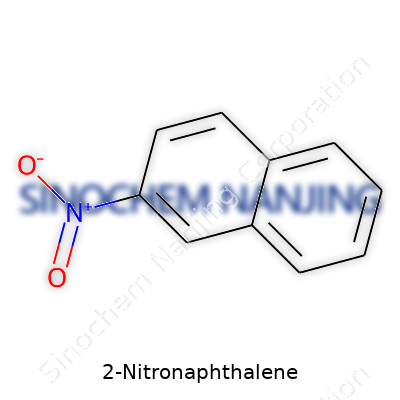
| Names | |
| Preferred IUPAC name | 2-nitronaphthalene |
| Other names |
β-Nitronaphthalene 2-Nitronaphthalin 2-Naphthyl nitrite |
| Pronunciation | /tuːˌnaɪ.trəʊˈnæf.θəˌliːn/ |
| Identifiers | |
| CAS Number | 91-57-6 |
| Beilstein Reference | 1208720 |
| ChEBI | CHEBI:34642 |
| ChEMBL | CHEMBL137882 |
| ChemSpider | 6728 |
| DrugBank | DB16336 |
| ECHA InfoCard | 100.006.214 |
| EC Number | 202-204-7 |
| Gmelin Reference | Gmelin Reference: 136980 |
| KEGG | C01508 |
| MeSH | D009636 |
| PubChem CID | 7070 |
| RTECS number | QJ0525000 |
| UNII | 82R3F2R5SE |
| UN number | UN1660 |
| Properties | |
| Chemical formula | C10H7NO2 |
| Molar mass | 173.16 g/mol |
| Appearance | Yellow crystalline solid |
| Odor | aromatic |
| Density | 1.205 g/cm³ |
| Solubility in water | Insoluble |
| log P | 1.96 |
| Vapor pressure | 0.001 mmHg (25 °C) |
| Acidity (pKa) | 15.63 |
| Basicity (pKb) | 8.75 |
| Magnetic susceptibility (χ) | -80.0 × 10⁻⁶ cm³/mol |
| Refractive index (nD) | 1.627 |
| Viscosity | 3.4 cP (25°C) |
| Dipole moment | 3.80 D |
| Thermochemistry | |
| Std molar entropy (S⦵298) | 211.3 J·mol⁻¹·K⁻¹ |
| Std enthalpy of formation (ΔfH⦵298) | 62.7 kJ·mol⁻¹ |
| Std enthalpy of combustion (ΔcH⦵298) | -4867 kJ·mol⁻¹ |
| Hazards | |
| GHS labelling | GHS02, GHS07, GHS08 |
| Pictograms | `[O][N+]([O-])c1ccc2ccccc2c1` |
| Signal word | Danger |
| Hazard statements | H302, H315, H319, H335, H351 |
| Precautionary statements | P261, P273, P280, P301+P312, P305+P351+P338, P337+P313 |
| NFPA 704 (fire diamond) | 2-Nitronaphthalene: 2-2-0 |
| Flash point | 129°C |
| Autoignition temperature | Autoignition temperature: 535°C |
| Lethal dose or concentration | LD50 oral rat 470 mg/kg |
| LD50 (median dose) | LD50 (median dose): Rat oral 470 mg/kg |
| NIOSH | RN3675000 |
| PEL (Permissible) | PEL (Permissible Exposure Limit) for 2-Nitronaphthalene: 1 mg/m3 |
| REL (Recommended) | Buffer zone; Air transport |
| IDLH (Immediate danger) | 100 mg/m3 |
| Related compounds | |
| Related compounds |
1-Nitronaphthalene Naphthalene 2-Naphthol Naphthylamine 2-Nitrofluorene |



