The Many Sides of 2-Methylpiperidine: A Down-to-Earth Look
Tracing the Roots of 2-Methylpiperidine
History doesn’t always give special attention to secondary amines, yet 2-Methylpiperidine has carved out a quiet niche since its discovery. It’s a product of early 20th-century chemistry, when folks used straightforward cyclization and hydrogenation processes to build heterocycles. Several decades back, the drive to find useful intermediates for pharmaceuticals and rubber accelerators set the stage for its development. It hasn’t received the celebrity status of penicillin, but plenty of chemists have made room in their notebooks for this molecule. Personal experience tells me: once you start using a reliable compound like this, it shows up again and again, especially in laboratories working on medicinal chemistry. Its evolution follows the timeline of synthetic amine chemistry, growing from bench curiosity to a trusted tool for researchers and industry.
Product Overview and Day-to-Day Use
In its pure form, 2-Methylpiperidine shows up as a colorless liquid carrying a sharp, fishy odor. Anyone who’s worked with secondary amines will recognize the smell—strong enough to linger if you crack open a bottle in a tight space. Over the years, the product has been adopted by pharmaceutical researchers aiming to construct more complex molecular scaffolds. Chemical manufacturers also value its amine function, which opens the door to a lot of downstream modifications. For those who spend afternoons in chemical storerooms, the bottle rarely gathers dust. I’ve seen it brought out for everything from polymer additives to catalyst synthesis, always masked behind its humble appearance.
Physical & Chemical Properties
Handling 2-Methylpiperidine, you soon notice its volatility and that characteristic heterocyclic structure. This liquid boils at a temperature just under 120 °C, and it dissolves nicely in solvent systems typical of organic labs such as ether and alcohol. Its molecular formula, C6H13N, spaces out the atoms to create a six-membered ring with a nitrogen tucked neatly away at one spot and the methyl group hanging off the second carbon. Chemical reactivity lines up with secondary amines: prone to nucleophilic attack, ready to grab onto acid chlorides, and built for participating in hydrogen bonding. Getting the best performance from this material usually means working under a fume hood, given the vapors ask for extra care. The density and vapor pressure often signal the need for proper ventilation, something I learned hard way as a student eager to avoid weird headaches at the end of the day.
Technical Specifications & Labeling
Technical labels tell a story, and in the case of 2-Methylpiperidine, the details tend to highlight purity, water content, and trace amine impurities. Typical standards keep purity above 98 percent, since those working on pharmaceuticals or advanced intermediates count on reliable material. Labels spell out chemical identifiers and hazard codes, a constant reminder that sharp odors and vapor toxicity demand respect. In the real world, it pays to glance at the warnings. Overlooking details about flash point or incompatibilities can turn an easy day into a headache, so checking the fine print counts for more than formality. Labels usually mention its alternative names, which help in tracking inventory and preventing confusion—especially when shared stockrooms can cause surprise mix-ups.
Methods for Preparing 2-Methylpiperidine
Synthesis routes for 2-Methylpiperidine have stuck around for a reason. Many chemists opt for catalytic hydrogenation of 2-methylpyridine, which blends efficiency with scalability. For bench-scale labs, reductive amination might sound appealing. Those with extra patience lean toward cyclization reactions involving pentan-1,5-diamine, although that method takes some wrangling. Every approach shares common ground: the need for good purification steps, since secondary amines like to form impurities that shadow the main peak in analytical runs. One thing’s certain, shortcuts usually mean headaches, especially with side product removal. Knowing which path works best comes from hands-on experience, fixing problems as they pop up rather than relying too much on theory.
Chemical Reactions & Modifications
2-Methylpiperidine’s chemistry offers more possibilities than its plain looks reveal. The secondary amine makes it a frequent base in alkylation reactions, an N-alkyl group ready to be swapped or expanded. It reacts with acid chlorides and anhydrides, forming amides used in advanced synthesis. Cyclization reactions often target the nitrogen, setting up bridges or more complex bicyclic systems. I’ve watched it perform in Mannich reactions, storing up charge and shuttling electrons, always ready for a new coupling or functionalization. Modifying the ring ends up shifting the reactivity and physical properties, enough to open new application areas each time a new group attaches. It’s this adaptability that keeps 2-Methylpiperidine useful across so many projects, even as chemical trends shift from year to year.
Synonyms & Product Names
Chemical language often weaves a tangle, and this compound stacks up alternate names. Chemists might call it 2-Methylhexahydropyridine in one place, swing back to 2-Methylpip in another, or reach for shorter forms like N-Methylpiperidine. Each name points to the same ring structure with that methyl group attached. Knowing the synonyms speeds up database searches and shrinks confusion in purchasing, a constant win for researchers who move between catalogs or switch roles between departments.
Getting Safety & Operational Standards Right
Responsible use covers more than ticking the safety box. Working with 2-Methylpiperidine always pushes me to upgrade personal protective equipment. Nitrile gloves, splash-proof goggles, and solid ventilation hold off the worst of its vapors. Safety sheets recommend working under a hood because inhalation hazards can sideline an experienced user just as quickly as a rookie. Proper waste disposal matters too. Secondary amines resist breaking down in water treatment plants, so handling spills, waste streams, and empty bottles involves more than just tossing them out. It gets into regulations, worker training, and discussions about potential substitutes with less environmental persistence. In my experience, teams that review standard operating procedures and build a culture of caution see fewer incidents and worry less about regulatory fines or community complaints.
Application Areas: More Than a Raw Material
Plenty of folks in pharmaceuticals, agrochemicals, and specialty polymers start their search with 2-Methylpiperidine. It often serves as a basic building block for synthesizing active pharmaceutical ingredients, stepping in as a source of the piperidine ring for antihistamines, antidepressants, and blood pressure treatments. In agriculture, the molecule plays a smaller—but still important—role in creating plant growth regulators and certain herbicides. Chemical manufacturing uses it for synthesis of corrosion inhibitors and rubber vulcanization accelerators, both of which see widespread deployment. Every time someone asks why it matters, I look back over lists of product formulations and patent filings—almost every year brings a new idea relying on this reliable secondary amine.
R&D and the Hunt for Better Compounds
Research activity around 2-Methylpiperidine hardly ever slows down. Chemists push the boundaries, seeking out ring modifications or ways to add active groups, chasing after new biological effects. Academic groups continue publishing new routes to derivatives that boost drug properties or enable tougher polymers. Many labs explore greener ways to make and modify this compound, including tweakable catalysts or less-toxic reagents. From sitting in multidisciplinary meetings, I’ve watched teams blend computational chemistry, automation, and hands-on synthesis, trying to leap from an established amine to the next generation of functional materials.
Toxicity Research and Ongoing Challenges
Concerns about toxicity spring up fast with secondary amines like 2-Methylpiperidine. Animal studies have shown this compound can irritate the respiratory tract, cause discomfort on skin contact, and raise concerns about chronic exposure. Regulatory entries call for careful monitoring, and strict adherence to exposure limits inside labs or production floors. Most toxicity data points at acute and sub-chronic effects, with open questions about long-term impacts. Personal experience tells me the best way forward involves ongoing monitoring, encouraging team members to report symptoms early, and reviewing data sheets regularly for updates. The push for transparency and more comprehensive safety evaluations remains strong, nudged along by both regulators and industry watchdogs.
Looking Beyond Today: Future Prospects
Chemistry always moves forward, and compounds like 2-Methylpiperidine rarely disappear from the toolbox. There’s growing interest in greener synthesis, less hazardous alternatives, and expanding its uses in areas like advanced drug design and new polymer science. Computational models may steer future development, streamlining the discovery of derivatives with improved selectivity, potency, or reduced toxicity. As sustainability continues to rise on priority lists, research networks and producers face pressure to clean up production methods and scrutinize lifecycle impacts—from extraction to disposal. My time in applied chemistry shows new regulations, consumer pressure, and academic curiosity usually push the field toward smarter, safer, and more responsible use. Somewhere in the stories about 2-Methylpiperidine, the lessons for the entire sector keep repeating: look after the details, question old habits, and always stay ready for the next round of innovation.
What is 2-Methylpiperidine used for?
Chemistry That Matters
2-Methylpiperidine isn’t showing up on the shelves at your grocery store, but people in chemical research circles care about it for good reason. This chemical, a derivative of piperidine, pops up in labs that focus on making new compounds. It’s clear and colorless, gives off a strong odor, and acts as a useful building block for several organic syntheses. In plain terms: it helps chemists put together molecules that otherwise might be tricky to make.
Building Blocks for Medicines and Materials
Pharmaceutical companies lean on 2-Methylpiperidine to get one step closer to their next big breakthrough. While you might not see its name on the label of headache relief or allergy medicine, chances are, 2-Methylpiperidine helped somewhere along the pipeline—often as an intermediate. Drug development depends on constructing complex, ring-shaped molecules. Take certain antihistamines or even some therapies aimed at the central nervous system—those may start with a chemical like 2-Methylpiperidine at the base of their family tree. Chemists piece together little details from compounds like this to create safer and more precise medicines.
Specialty Chemicals and Agro-Tech
Not all value lives in the pharmacy. 2-Methylpiperidine finds its way into the world of crop protection. Pesticides and herbicides rely on tailored molecules, and this chemical shows up as a key partner. Its versatility lets agrochemical makers attach different chemical groups, boosting effect or changing how a product breaks down in the environment. My uncle, who farms soybeans, tells me advances in crop treatments often begin with improved chemistry. Breakthroughs rarely come from the active ingredient you see on a bag—innovations lurk within the buried workhorse chemicals like this one.
Challenges and Cautions
Working with 2-Methylpiperidine isn’t straightforward. It doesn’t play well with open air, stinging the eyes and nose if you get too close. Toxicity remains a talking point. Researchers use gloves, fume hoods, and careful procedures. The chemical’s strength as a base, plus its volatility, keeps safety managers on alert. I remember watching as university lab partners handled a bottle while everybody else kept their distance. Direct exposure can cause health problems, and its sharp, fishy scent travels fast. So while this tool enables a lot, its risks can’t be shrugged off.
Room for Improvement
Safer handling protocols already exist, but improvements push forward every year. Closed systems, better labeling, and stronger training lower risks. Green chemistry advocates keep hunting for alternatives that offer similar reactivity with less hazard. One group at a Midwest university tested naturally derived amines to see if they could replace it in some pharmaceutical steps. The drive for greener substitutes feels urgent not just in the lab, but out in the world where waste products travel far beyond their starting point.
Looking Ahead
The story of 2-Methylpiperidine, like so many industrial chemicals, blends progress with responsibility. Its contributions to healthcare and agriculture can’t be ignored, yet safety and sustainability concerns need honest attention. Forward-thinking chemists and policymakers look for better answers all the time—not only to make more, but to make better. Every step, from research bench to field application, deserves a spotlight on both the marvels and messes in modern chemistry. It’s a reminder that progress comes not just from clever discoveries, but from caring about the footprints they leave behind.
What is the chemical formula of 2-Methylpiperidine?
A Look at Structure and Naming
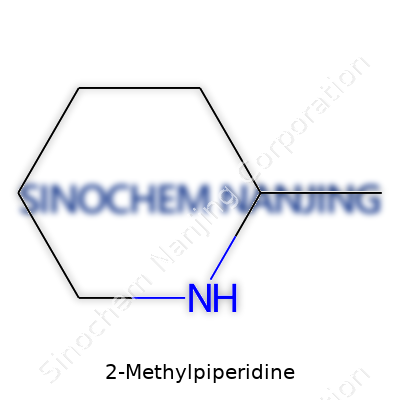
Every molecule holds its own story, and 2-Methylpiperidine offers a textbook example. The structure features a six-membered ring, made from five carbon atoms, one nitrogen, and a methyl group attached at the second carbon. That methyl tag really influences both the physical properties and behavior of the compound, making it more than just a small tweak from the base piperidine.
The formula for 2-Methylpiperidine is C6H13N. Chemists learn early on to break down names to count atoms: "piperidine" points to a six-membered ring with five carbons and one nitrogen. Adding "2-methyl" means tacking a CH3 group onto that second carbon. Years spent tucked away in labs demonstrate the impact a single group can create. 2-Methylpiperidine doesn’t just tweak volatility or basicity, it shifts how the compound reacts with other substances and even affects its safety profile.
Why Chemistry Teachers Bring Up This Compound
Years of breakfast table chemistry talk—thanks, Dad—made me notice that educators love examples like 2-Methylpiperidine. Beyond the basic formula, compounds like these train folks to see how every change in a molecule’s backbone can tilt reactivity or toxicity. In medicine, that methyl group becomes the difference between treatment and toxin. The "C6H13N" makes it a handy starting point for building more complicated molecules, the kind that crop up in pharmaceuticals and specialty materials.
Safety, Handling, and Real-World Use
Handling 2-Methylpiperidine in a lab feels like dealing with any small amine: gloves, goggles, a whiff of something sharp in the air. Proper ventilation always wins out over shortcuts. Poison control reports suggest exposures are rare but serious. 2-Methylpiperidine acts as a strong base, and burns or respiratory distress can hit without much warning. Good labs stress the basics—know your material and treat every bottle with respect, especially when a single drop can sideline someone for days.
Industrial Impact and Environmental Responsibility
Looking around the chemical industry, C6H13N pops up in synthesis of agrochemicals, intermediates for pharmaceuticals, and even rubber chemicals. The challenge: balancing efficiency and safety. Disposal of amines remains tricky, not just for regulatory compliance, but for neighborly goodwill. Spills leach into groundwater or let off noxious fumes if protocols get skipped. Modern waste streams use scrubbers and tip-top wastewater treatment, but mistakes still slip through.
Factoring Ethics and Transparency into the Equation
Responsible manufacturers keep Material Safety Data Sheets (MSDS), regular audits, and transparent communication with customers and staff. The days of stashing away containers and hoping for the best don’t fit a world with social media and community activism. When nearby residents ask about odors or safety plans, companies gain trust by showing—down to the chemical formula—what passes through their pipes. Nearly every incident you see in the news started with a shortcut or a breakdown in routine checks.
Moving Forward: Training and Investment
Seeing investment in both technology and skilled workers outpaces quick fixes. Automation reduces accidental contact, and real-time sensors catch leaks faster than human noses ever could. Companies make a choice to put safety and transparency first, and that habit shapes both community reputation and long-term business health. C6H13N may look simple on paper, but it represents a shift—one methyl at a time—towards thoughtful stewardship and chemical literacy.
What are the safety precautions when handling 2-Methylpiperidine?
Understanding the Risks
2-Methylpiperidine isn’t just another chemical on a shelf. Anyone who has handled it will tell you the fumes can sting your nose, and a spill leaves a strong, not-so-pleasant smell lingering. Some people develop headaches or even nausea after breathing in its vapors for a short while. Quick skin contact brings irritation or rashes. Eyes sting and water if a drop lands near them. Holding or moving 2-Methylpiperidine always means taking its hazardous properties seriously. According to the Global Harmonized System, it’s classified as corrosive and flammable, so skipping safety steps isn’t an option.
Why Ventilation Matters
The stuff evaporates easily at room temperature. Breathing in the fumes is the quickest way to get exposed, and symptoms can sneak up. A well-ventilated lab isn’t just about comfort—it keeps exposure in check, helping everyone focus on their work, not on watery eyes or splitting headaches. A fume hood makes a huge difference. The airflow pulls hazardous vapors away from your face and out of the workspace. Running the ventilation system before uncapping the bottle protects your lungs and keeps the air cleaner for everyone around you.
Personal Protective Equipment: Beyond the Basics
Gloves are non-negotiable with 2-Methylpiperidine. Nitrile or butyl rubber stands up better than latex. In my experience, even small splashes soak through thin, cheap gloves. Safety goggles are just as important because a single drop can lead to some very intense pain. Long sleeves and a lab coat help, and after even a short session, I always check my sleeves and hands for any stray spots. No one wants a chemical burn from forgotten splash marks.
Handling and Storage: The Daily Routine
Pouring or measuring 2-Methylpiperidine needs a steady hand. Pouring slowly into a container at low height prevents splashes. Some labs use syringes or pipettes with sealed tips to control motion and exposure. Spills on the bench should get wiped up straight away using absorbent pads or materials designed for organic chemicals. For storage, the container needs to stay tightly sealed. Metal shelves away from direct sunlight lower fire risk, and storing it with compatible chemicals—away from oxidizers or acids—keeps reactions to a minimum. Each bottle must have its label readable and intact.
Emergency Steps
Even with precautions, accidents happen. A splash calls for a quick rinse—fifteen minutes under a safety shower isn’t overkill for a big spill. Rinsing eyes with an eyewash station, keeping them open the whole time, saves vision. It’s important to know the phone numbers for emergency help and to keep the Safety Data Sheet nearby for clear steps during an incident. After any exposure, report it immediately to a supervisor or safety officer. Early action makes recovery easier.
Training Makes the Difference
Everyone who works with 2-Methylpiperidine benefits from hands-on training, not just reading pamphlets. Walking through mock spill responses, practicing glove removal without touching contaminated surfaces, and reviewing what to do after an accident make real situations less scary. Staying safe isn’t about memorizing rules; the habits that come from regular practice can save skin, eyesight, or even a life. The best labs run safety refreshers, and everyone gets more confident with the chemical each time.
What are the physical and chemical properties of 2-Methylpiperidine?
Looking Close at 2-Methylpiperidine
2-Methylpiperidine shows up as a clear, colorless liquid and punches you with a strong ammonia-like smell. It feels oily between your fingers, and most folks dealing with it in labs or industry know that sharp, pungent odor isn’t something you easily forget. Boiling at around 107 to 108°C, this compound refuses to stick around at room temperature if left open. Pouring it out, you’ll see it’s lighter than water, as its density hangs at roughly 0.8 grams per cubic centimeter.
Mixing and Matching: Solubility and Handling
Drop 2-Methylpiperidine into water and it will partly mix, but it truly shines dissolving in organic solvents like ether, ethanol, or chloroform. This means that in a chemistry lab, it gives you options. It doesn’t fight you when it comes time to react in a new synthesis, making it a favorite for folks working on pharmaceuticals or advanced chemicals.
Experience around labs tells me you need good ventilation when working with this one—it evaporates fast and inhaling those fumes isn’t pleasant. One case I remember involved an old bottle that tipped over; the chemical smell was so strong it cleared the room. Getting any of this stuff on skin or into eyes feels pretty harsh, so gloves and goggles are part of the standard routine.
Chemical Personality: Structure and Reactivity
If you sketch the structure of 2-Methylpiperidine, you’ll see a six-membered ring with a nitrogen atom tucked in, plus a single methyl group standing off the second carbon. This small tweak has a big impact: it bumps up the basicity compared to plain piperidine and can change how it acts as a building block in organic chemistry.
This compound loves to act as a base in reactions. In making drugs or catalysts, chemists reach for amines like this because they grab protons easily and help build tougher molecules. This property lines it up for everything from drugs for health care to agents that break down agricultural chemicals. The methyl group also blocks part of the nitrogen, shaping what kind of chemical dances it can take part in.
Why We Should Care: Safety And Sustainability
Working with 2-Methylpiperidine isn’t just about knowing its boiling point and structure. Facts on its flammability point to a real need for care—its flash point sits at about 7°C, so any spark nearby can set it off. Good storage and strict labeling aren’t just rules, they prevent hospital trips or worse. It stings in contact, and too much breathing of fumes brings headaches and dizziness. Regulatory guidelines now keep a tight watch on its handling in labs and in transport.
From an environmental angle, mishandling spills can lead to soil and water contamination. In the projects I’ve seen, professionals use secondary containment and have cleanup materials on hand not just for show, but because mistakes happen fast. Moving toward less volatile or less toxic alternatives is no easy feat for the industry, but rising attention to green chemistry could shape how 2-Methylpiperidine gets used or replaced down the road.
Possible Paths Forward
Understanding this chemical—by handling it with the right respect, knowing its quirks, and pushing for safer replacements where possible—grows out of both hard lab lessons and a drive for better workplace norms. Safer substitutes, better fume hoods, and constant monitoring make all the difference. Progress may look slow now, but small adjustments could lead to healthier labs and cleaner industry in the years ahead.
How should 2-Methylpiperidine be stored and disposed of?
Understanding the Chemical Up Close
2-Methylpiperidine stands out for its strong odor and volatility. The first time I came across this stuff, that sharp ammonia-like scent got my full attention – and a healthy respect. Many folks handling lab-grade chemicals learn quickly that even small spills can clear a room. Safety isn’t just a guideline, it’s a day-to-day practice.
Storage Isn’t Just About a Shelf
In the lab, we store 2-Methylpiperidine in tightly sealed glass containers. Plastic doesn’t cut it; this compound chews through some plastics over time. Cool, dry places away from sunlight help keep the container from degrading. Strong bases and acids go elsewhere. Mixing reactive chemicals, even by accident, turns storage spaces into disaster sites.
I’ve seen people ask, “Is a general flammable cabinet fine?” Not always. It likes to evaporate, so fire risks go up. Use a dedicated chemical storage area with strong ventilation and make sure every container holds a clear label. Even days-old spills can create long-lasting odors and headaches, so vigilance pays off.
Avoiding Disaster: Simple Gear, Steady Habits
Nitrile gloves, safety goggles, and a lab coat become routine for a reason. I had a small splash hit a glove once, and you instantly feel how quickly things penetrate. Fume hoods aren’t optional; venting any vapors away keeps air clean for everyone. Not every mistake involves splashes or spills; open containers and busy work benches often lead to exposure or mixing up lids. Discipline and labeling prevent chaos.
Never Treat Disposal Like Garbage
Throwing 2-Methylpiperidine in a sink or regular trash can causes serious harm. As a hazardous organic, it travels fast into soil and water. Some colleagues learned the hard way during an inspection when improper disposal almost shut down our lab. The compound’s toxicity isn’t just about people—fish, plants, and small mammals feel the impact, too.
Industrial waste bins meant for organic solvents make a safe bet. Hazardous waste is sent out through a certified disposal company. Pouring bleach or other household cleaners on remnants actually creates toxic gases. If you work with only a little at home or in a teaching lab, contact your local hazardous waste facility. Department websites usually post collection days and drop-off details.
Facts Back Up Caution
The Centers for Disease Control and Prevention points to 2-Methylpiperidine as an irritant for eyes, skin, and lungs. No amount of routine desensitizes those impacts. The Environmental Protection Agency tags improper disposal as a clear threat to waterways due to the compound’s persistence. Carelessness lingers well after clean-up.
Real Solutions: Build Safety Into Habits
Years ago, my mentor insisted on twice-yearly safety checks—labels, ventilation, and updated spill kits. That kind of repetition turns best practices into muscle memory. Digital inventory logs let us spot missing supplies or expired chemicals before trouble starts. Regular staff training, from seasoned researchers to interns, builds a culture that respects chemicals and the environment.
Storage and disposal may sound boring, but they shape health and safety in powerful ways. Chemicals like 2-Methylpiperidine demand real respect—not just a quick read of the label.
| Names | |
| Preferred IUPAC name | 2-Methylpiperidine |
| Other names |
2-Methylpiperidine alpha-Methylpiperidine 2-Piperidylmethane |
| Pronunciation | /tuː-ˈmɛθɪl-paɪˈpɛrɪdiːn/ |
| Identifiers | |
| CAS Number | 109-05-7 |
| Beilstein Reference | 1361166 |
| ChEBI | CHEBI:36144 |
| ChEMBL | CHEMBL48922 |
| ChemSpider | 10097 |
| DrugBank | DB04229 |
| ECHA InfoCard | 100.068.058 |
| EC Number | 203-638-7 |
| Gmelin Reference | 126591 |
| KEGG | C06222 |
| MeSH | D01809 |
| PubChem CID | 13537 |
| RTECS number | NL8756000 |
| UNII | T0N2G7C967 |
| UN number | UN number: "2733 |
| Properties | |
| Chemical formula | C6H15N |
| Molar mass | 101.19 g/mol |
| Appearance | Colorless to pale yellow liquid |
| Odor | fishy |
| Density | 0.792 g/mL at 25 °C |
| Solubility in water | miscible |
| log P | 0.94 |
| Vapor pressure | 3.3 kPa (at 20 °C) |
| Acidity (pKa) | 11.2 |
| Basicity (pKb) | 2.88 |
| Magnetic susceptibility (χ) | -5.91×10⁻⁶ cm³/mol |
| Refractive index (nD) | 1.409 |
| Viscosity | 0.695 cP (20°C) |
| Dipole moment | 2.29 D |
| Thermochemistry | |
| Std molar entropy (S⦵298) | 165.6 J·mol⁻¹·K⁻¹ |
| Std enthalpy of formation (ΔfH⦵298) | −121.0 kJ/mol |
| Std enthalpy of combustion (ΔcH⦵298) | -4063.7 kJ/mol |
| Hazards | |
| GHS labelling | GHS02, GHS05, GHS06 |
| Pictograms | GHS02,GHS05,GHS06 |
| Signal word | Danger |
| Hazard statements | H225, H302, H314, H336 |
| Precautionary statements | P210, P261, P280, P301+P312, P302+P352, P305+P351+P338, P310 |
| NFPA 704 (fire diamond) | 3-3-0 |
| Flash point | 36 °C (97 °F; 309 K) |
| Autoignition temperature | 375°C |
| Explosive limits | 1.1–7.2% |
| Lethal dose or concentration | LD50 oral rat 430 mg/kg |
| LD50 (median dose) | LD50 (median dose): Oral rat 200 mg/kg |
| NIOSH | SKA29850 |
| PEL (Permissible) | PEL (Permissible Exposure Limit) for 2-Methylpiperidine: Not established |
| REL (Recommended) | REL (Recommended Exposure Limit) of 2-Methylpiperidine: "5 ppm (15 mg/m³) TWA |
| IDLH (Immediate danger) | IDLH: 100 ppm |
| Related compounds | |
| Related compounds |
Piperidine 2,6-Dimethylpiperidine N-Methylpiperidine 2-Ethylpiperidine 4-Methylpiperidine 2-Methylpyridine |



