2-Methylnaphthalene: An Editorial Perspective on Its Past, Present, and Future
Historical Development of 2-Methylnaphthalene
At the crossroads of industrial progress and chemical research, 2-methylnaphthalene has carved out a quiet but important place since the late nineteenth century. Chemists first identified it during coal tar fractionation—an era that changed how people looked at aromatic hydrocarbons. As refineries scaled up, they didn’t just chase after the big-ticket chemicals. Lesser-known compounds, including 2-methylnaphthalene, came right along, often as byproducts rather than targets. The growth of the dye and pigment industries gave it purpose. Naphthalene’s family, more reactive by methylation, attracted interest for synthesis in agriculture and plastics. The story of its rise echoes the way society learns to value overlooked resources, only realizing uses once bigger markets crack open.
Product Overview: Know-How and Use
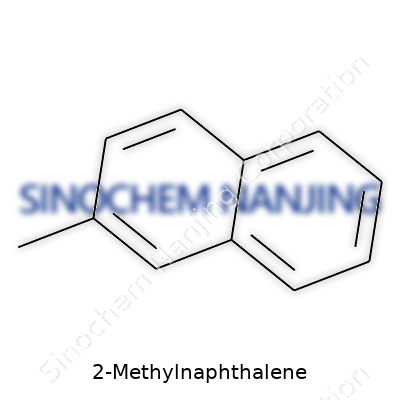
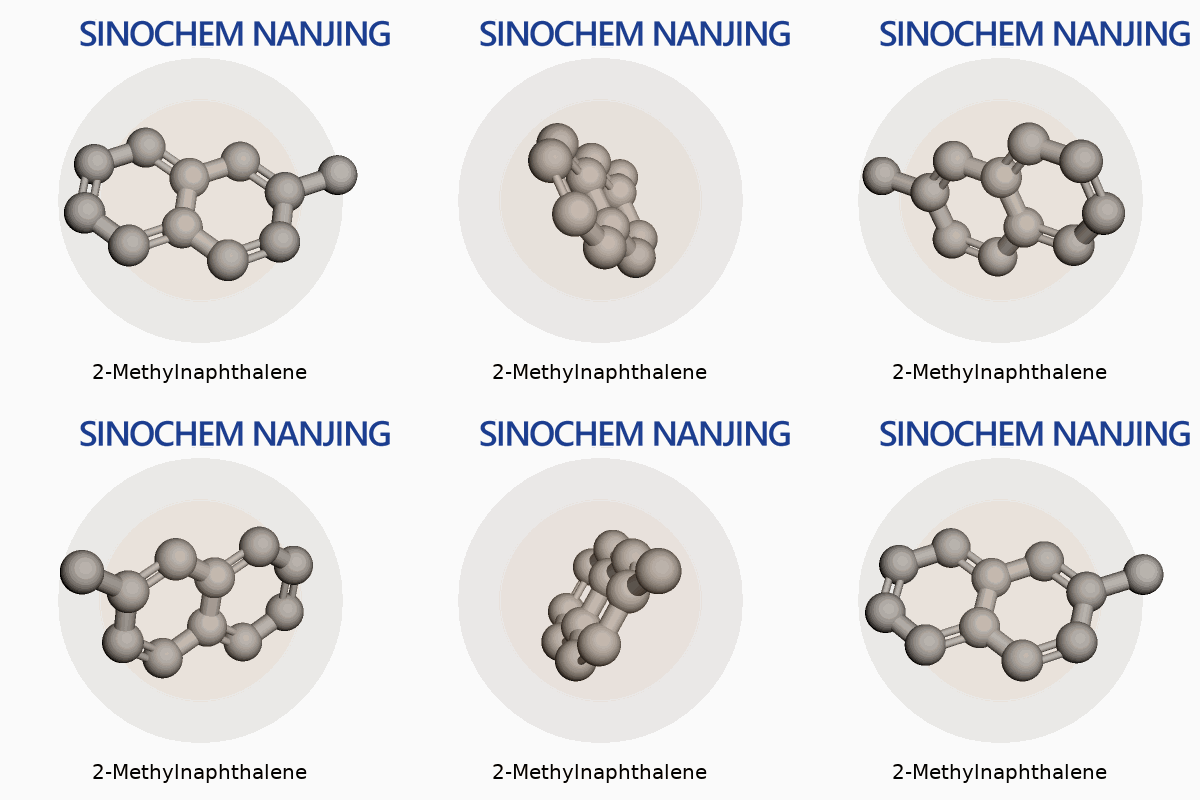
2-Methylnaphthalene doesn’t grab headlines the way its cousin naphthalene does, but it plays a role in a range of practical arenas. Its structure looks simple: a naphthalene ring with a methyl group tucked at the second position, shaping its chemical behavior. Producers mainly extract it from distillate fractions in coal tar, but modern synthetic methods use methylation with alumina or zeolites. By 2020, its uses stretched from intermediates for pesticides and resins to test materials for environmental work. One can see echoes of many industrial chemicals—quiet in public, but hard at work behind the curtain.
Physical and Chemical Properties
Anyone who has worked in a chemistry lab recognizes the slightly mothball-like smell, even though this cousin isn’t a common household item. With a melting point hovering around 34°C and boiling near 245°C, it sits solid or liquid, depending upon room temperature. Its solubility lines up with other PAHs—barely touching water, blending well with organic solvents. Chemically, the methyl group tightens up reactivity at the ring, allowing chemists to reach out through substitutions, oxidations, or even polymerizations. That methyl gives it just a little twist on naphthalene’s own familiar profile, and small shifts like this ripple right through its practical and safety landscape.
Technical Specifications and Labeling
Every bottle on a lab shelf must tell a clear story, and 2-methylnaphthalene deserves proper identification. Standard analytical labeling highlights purity, major impurities, hazardous nature, and batch numbers. Regulatory rules—especially for workplace handling—call out flammability, specific hazards, and storage recommendations. Labels aren't just checkboxes; they bridge safety and traceability, especially now that regulatory standards keep climbing higher. Back in my days handling polycyclic aromatics, carelessness in labeling could lead to costly confusion or worse. Modern digital systems have stepped in, but manual checks and real-world know-how still save the day when protocols misfire.
Preparation Method
Making 2-methylnaphthalene once meant sifting it out of the viscous leftovers from coal gas plants and coking ovens. Over time, as demand grew for cleaner materials, producers leaned toward more refined methods. Catalytic alkylation—adding methyl groups directly onto the naphthalene ring—offers a more predictable and scalable route. Some syntheses still rely on fossil sources; others experiment with greener chemistry when economics allow. Each pathway matters, not just for purity but to manage trace impurities that crop up and muddy downstream reactions or product safety. In industrial settings, an operator must keep an eye on temperature swings and catalyst fouling—otherwise, even a "straightforward" synthesis leaves a mess.
Chemical Reactions and Modifications
The methyl group draws in oxidizers, yielding acids or ketones, and supports further substitution, especially in the presence of strong Lewis acids or bases. Chemists use these characteristics to build dyes, inhibitors, and polymer precursors. Subtle tweaks change reactivity, opening or closing possibilities in manufacturing or environmental control. In the real world, these reactions often differ from textbook simplicity. Scale, batch variability, and catalyst poisoning hamper repeatability, and safety procedures must go beyond just gloves and goggles. The bottom line: understanding both underlying chemistry and real-world bottlenecks spells success or failure in scaling up from beaker to drum.
Synonyms and Product Names
2-Methylnaphthalene pops up under several names, depending on the industry or catalog. Common terms include β-methylnaphthalene and 2-methylnaphthalin. In academic circles, I’ve seen the abbreviation 2-MN. Such variety in labeling leads to occasional confusion, one reason rigorous chemical identifiers—like CAS numbers—have become so critical, especially for regulation, transport, or cross-border compliance.
Safety and Operational Standards
Anyone using or moving 2-methylnaphthalene needs to respect its hazards. It burns easily, boils off noxious vapors, and can build up in enclosed spaces. Standard PPE protects against splashes, vapors, and skin absorption. Engineering controls—good ventilation, fire suppression, clear spill response—stand as basics. Managers and regulators push for stricter training, recognizing that small chemicals may cause outsized risks if routines slip or protocols become “checked boxes” instead of real habits. Increasingly, digital verification backs up old-school instruction, reducing incidents but never eliminating the human factor.
Application Area
In industry, 2-methylnaphthalene serves mainly as a stepping stone. Manufacturers use it for synthesizing agricultural fungicides, certain resins, and specialty dyes. It sometimes acts as a standard for environmental science, helping define PAH contamination footprints in soil and water. In analytical chemistry, it finds a place in calibration and testing. Practical experience tells me that few outside of manufacturing or research know its name, but plenty rely on products built from it. The reach from the flask to the finished goods sometimes gets lost, but behind nearly every synthetic additive or pigment, some modest intermediates like this one make it all possible.
Research and Development
Researchers push boundaries using 2-methylnaphthalene to probe reaction mechanisms or as a model for polycyclic aromatic hydrocarbons' impact on health and the environment. Labs keep hunting for greener methylation processes, improved catalysts, and novel application areas. In environmental science, studies follow its transformation in air, soil, and water: how quickly microbes break it down or how much lingers in sediment. There is a deepening interest in using it as a marker for industrial pollution, prompting governments to tighten up monitoring rules. My time in academic labs showed the value of such intermediates in understanding both basic science and real-world risk.
Toxicity Research
Toxicologists have learned that 2-methylnaphthalene has a sharper bite than many used to think. Lab animals exposed chronically develop lung and liver issues, and in certain settings, metabolites stick around in the body, causing more damage. Regulators responded by placing it on watchlists, especially for workplaces and contaminated sites near former gasworks or coking plants. The larger class of PAHs gets regular headlines for links to cancer, persistent pollution, and bioaccumulation. In my experience, researchers walk a line between downplaying exposure risk—which reduces alarm—and overstating it, which can stall useful industrial advances. Risk communication and effective cleanup technologies need to adapt as evidence grows.
Future Prospects
The future of 2-methylnaphthalene won’t look the same as the past. Tighter limits on industrial emissions and residue in products stand to change how industries use or replace it. New advances in catalysis and green chemistry could shrink its footprint or set the stage for safer, more efficient production. Continued use as a pollution marker and as a niche intermediate seems probable, but the phase-out in consumer-facing products could follow broader trends against persistent organic pollutants. Research, both basic and applied, pushes for smarter control, improved alternatives, and reliable remediation. As regulations bite down harder, and as public awareness climbs, the challenge is to keep harnessing its practical value while shrinking its unwanted environmental and health impacts. My experience points to a future shaped by those who balance innovation with caution—moving beyond the old coal tar legacy toward a more sustainable chemical industry.
What is 2-Methylnaphthalene used for?
Where This Compound Shows Up
Spend enough time in a chemistry lab or a big industrial plant, and certain names pop up again and again. 2-Methylnaphthalene is one of those. If you smell mothballs, you’re in the neighborhood. It sits right next to ordinary naphthalene in the family tree—just one carbon swap makes the difference. It’s a small change, but it shifts the doors this chemical opens in manufacturing and research.
Building Blocks and Byproducts
2-Methylnaphthalene isn’t bought to enjoy the musk. Its main task comes as a starting point to make other things. It feeds into the production of naphthalene sulfonates—chemicals that end up in dyes, dispersants, even superplasticizers used in concrete. My first supervisor flagged these superplasticizers as a great example of hidden impact. Concrete can flow easier and set up stronger, all because chemists found ways to use molecules like this.
With industrial dyes, manufacturers rely on molecules offering the right backbone. 2-Methylnaphthalene gives enough structure but can be tweaked with other groups to deliver the vivid color or resilience needed for fabrics and plastics. For years, pigment companies searched for chemicals that resisted fading and didn’t break down under sun and weather. This simple molecule plays a quiet supporting role when people slip on a brightly colored jacket or see painted machinery holding its color season after season.
Research and Diagnostics
Academic labs and research outfits use 2-Methylnaphthalene as a reference material. It helps test analytical methods, especially for tracking polycyclic aromatic hydrocarbons in soil, water, or food. Environmental scientists search for these chemicals to study pollution. Detecting even tiny traces of something like 2-Methylnaphthalene tells them stories about industrial spills or smokestack output. During a stretch working at a water quality lab, tracking aromatic hydrocarbons became almost routine. Each time we dialed in our equipment, 2-Methylnaphthalene showed its face as a clean, reliable signal.
Risks in the Real World
There’s no way around the downsides. Chemicals in the same group as naphthalene and its methyl cousins make headlines for the wrong reasons. Workers exposed without respirators have reported headaches or even damage to red blood cells. The EPA tags 2-Methylnaphthalene as a possible hazard when released in large amounts. Spills at manufacturing sites and improper disposal create risks for both people and wildlife. I’ve watched local regulatory teams double down on air monitoring and spill response protocols because even low-level exposure matters.
Traces can slip from manufacturing plants, ride the wind, or wash through storm drains. Fish and other aquatic life feel the pinch quickly. The answer doesn’t come from fear, but from stricter containment and reporting standards. Automated leak detection, vapor recovery systems, and regular employee training give companies fewer excuses. Accountability, in my eyes, always stands strongest with good data and boots on the ground.
Paths Toward Safer Use
Reducing health risks depends on practical steps. Factories supervising their emissions better has a clear effect—levels in local bodies of water drop. Substitute chemicals sometimes help, though switching isn’t always straightforward. Research pushes for cleaner chemistry and greener manufacturing paths. After seeing firsthand how small spills linger longer in soil than many realize, prevention looks smarter than cleanup every time.
2-Methylnaphthalene finds roles beyond its reputation as just another byproduct. Used right, it keeps tinting solar panels, plastics, and clothing, serving as a signal in scientific research. Kept in check, it reminds everyone that big impacts often start with small, often-overlooked molecules.
Is 2-Methylnaphthalene hazardous to human health?
Understanding 2-Methylnaphthalene
Stepping into the world of chemical safety usually leads to compounds with long names and uncertain reputations. 2-Methylnaphthalene belongs on that roster. It's an organic chemical found in fossil fuels, used in chemical manufacturing, and it shows up in air pollution, sometimes even at old industrial sites or near oil spills.
The Science Points to Caution
Scientists know that 2-Methylnaphthalene can harm living things. Animal studies shine a light on its ability to cause lung damage—from inhaling the fumes—to its effect on developing young through contaminated water. Naphthalene, a close cousin in the same chemical family, already brings health warnings, so it makes sense to give 2-Methylnaphthalene a close look.
Exposure in Real Life
Daily life doesn’t make it easy to dodge toxins. This chemical can sneak into indoor air if you live near heavy traffic or manufacturing plants. It can drift into dust and settle, especially if you’re remodeling or cleaning up industrial spaces. Spilled oil, coal tar residues, even cigarette smoke, all add to the mix. Waterways don’t always filter these out. Children and pets spend time close to floors, sometimes picking up dust with their hands or mouths, and that puts them right in harm’s way.
Health Effects
Short-term contact with 2-Methylnaphthalene can irritate eyes, skin, and airways. Longer-term exposure, based on animal data, might mean more serious trouble—lung damage, possible effects on the liver, and tricky changes to blood cells. My own time spent volunteering for public clean-ups in industrial zones made one thing clear: we often only see the real danger after someone gets sick. Tracking exposure isn't always straightforward, since the effects can show up months or even years later. That’s a risk nobody wants to roll the dice on.
What’s Missing: Strong Oversight
Federal standards for this chemical remain pretty thin. While some states flag polluted sites and set soil cleanup levels, resources never reach every contaminated neighborhood. Homeowners aren’t always told what’s under their yard. Offices built on redeveloped land might ignore old contamination because paperwork got buried decades ago. Even water treatment processes can miss these compounds. There's a real need for regular testing, careful reporting, and honest labeling. Local governments should pay closer attention to any area with a history of spills or dumping.
Making a Difference in Communities
Public education changes outcomes. People need practical advice about handling dust, checking labels, and cleaning up mystery residues, especially during home repairs. Families should not feel alone if their neighborhood starts talking about chemicals in the groundwater or air. Community groups and city officials ought to push for soil and dust testing around old lots, demand timely cleanup, and offer resources such as bottled water or free medical checks if a risk shows up.
Taking Personal Action
At home, open windows for fresh air and vacuum with HEPA filters to cut risk. Wear gloves and masks during home projects. Dispose of old construction material at approved waste sites. Don’t ignore health symptoms if you spend time in an area with known pollution.
Final Thoughts
No chemical risk belongs in a gray area. Clear information, honest science, and a dose of advocacy make the difference. Every one of us has a role in calling for protection and making sure the air, soil, and water in our communities stay safe for the next generation.
What is the chemical formula of 2-Methylnaphthalene?
Understanding the Structure: Why 2-Methylnaphthalene Stands Out
As soon as I see naphthalene in a conversation, I’m taken back to my college chemistry lab—slides under the microscope, talking about polycyclic aromatic hydrocarbons, and just trying not to spill anything. Add a methyl group to that naphthalene skeleton, position it on the second carbon, and you get 2-Methylnaphthalene, known simply by its chemical formula: C11H10.
This isn’t just about putting a methyl group anywhere you please. Naphthalene itself is made of two fused benzene rings, so changing its molecular neighborhood by adding a methyl group affects how the compound behaves, from its reactivity to its potential health effects. Every chemistry textbook lays out the difference a simple methyl can create—a reminder that molecules are more than string-of-letters formulas.
Real-World Impact: Where 2-Methylnaphthalene Shows Up
People run into naphthalene derivatives like 2-Methylnaphthalene more often than they realize. This compound appears in coal tar, the stuff used for everything from roofing materials to older wood preservers. Over time, researchers linked naphthalene and many of its cousins to environmental and human health concerns. You won’t see this name on packaging at home, but it shows up in environmental testing results and hazardous sites, and anyone who has spent time in a research lab or an industrial plant recognizes the strong, somewhat pungent aroma that signals the presence of these kinds of hydrocarbons.
Being transparent about chemical formulas becomes a responsibility. It’s simple to say “C11H10,” but behind every molecular arrangement sits a potential for harm or for progress. Regulatory agencies, like the US Environmental Protection Agency, monitor compounds like 2-Methylnaphthalene because they know how quickly these chemicals move through soil, groundwater, and even the air. Their persistence in the environment is not just a theoretical worry; it’s something that can affect the health of people living near industrial sites.
Risks, Knowledge, and the Push for Responsible Handling
A person who’s handled 2-Methylnaphthalene—whether in a lab or at a facility working with tar products—knows that skin contact and inhalation call for protective gear, careful ventilation, and responsible disposal. Long-term studies collect evidence about how exposure could raise cancer risk, or harm aquatic life downstream from a careless spill. Academic journals, public health reports, and environmental watchdog groups push for broader awareness and stronger controls.
Solving these kinds of problems rarely involves banning a compound outright. Instead, people need better monitoring, enforcement of safe handling regulations, and investment in alternatives where possible. Chemical engineers, environmental scientists, and local communities all have their part to play. Publishing data about exposure, providing training for industry workers, and making sure people understand both the risks and the reasons behind them can help reduce harm and keep workplaces and neighborhoods safe.
Science in Action: Why Formula Knowledge Matters
In my own time teaching high school chemistry, questions always came up about why specific formulas get so much attention. Every number and letter in C11H10 carries weight because it points to real consequences—the kind you find in air quality tests and in updates from residents near factories. Understanding and communicating chemical details becomes crucial, not just for scientists but for anyone who depends on clean water and safe environments.
How should 2-Methylnaphthalene be stored and handled?
Treating Chemical Stability with Respect
Working with 2-methylnaphthalene always reminds me how easy it is to overlook the little details that keep everyone safe. Someone reading a data sheet in a lab might spot its low flash point (about 81°C or 178°F) and think, "Looks like another flammable solid." Truth is, this compound doesn’t forgive carelessness. Fumes irritate the lungs and nose. Taking a shortcut—leaving an open drum in a warm room, skipping personal protective gear, or forgetting good ventilation—can slip right into trouble.
Storage: Limit Heat, Limit Worry
I kept drums of 2-methylnaphthalene in our chemical store years ago. The guidance was clear: cool, dry, away from sunlight and direct heat. If the environment heats up, vapor builds up fast. Unpleasant as it is, the threat of fire hangs over any poorly stored barrel or container. Flammable materials near open flames turn a routine day into headlines nobody wants.
Steel containers with tight seals do better than plastic for this job. I’ve seen people underestimate the ability of vapors to creep through loose caps or cracked gaskets. Even a slow leak draws out a sharp, tarry smell—and that’s your first warning. Secondary containment, like spill trays, keeps things tidy if a leak starts. All containers lined up should carry a clear label and the right hazard markings: “Flammable Solid,” “Harmful if Inhaled.” A quick read on the label can make all the difference in an emergency.
Ventilation and Air Quality Matter
Reading about neighbors who tried storing similar chemicals in sheds with no airflow brings up strong memories. Air circulation isn’t just about clearing the smell—it pulls harmful vapors away from your nose and lungs. Any breeze or vented fan helps, especially when decanting or sampling. I once watched a friend get lightheaded just from standing too close to a fume-rich drum left in stagnant air. It shakes you awake to the risk.
Personal Protective Gear Front and Center
Goggles, gloves (butyl or nitrile, not latex), and a solid apron block direct exposure. Skin or eye splashes sting—and you’ll remember them. Respirators fit into the kit if working with larger amounts.
I hear plenty of folks say “It never happened to me.” This ignores countless incidents where protective gear stopped a splash or vapor from sending someone to urgent care. Scrubbing skin after a spill won’t beat good gloves in the first place.
Dealing with Spills and Disposal
No lab or facility is immune to accidents. Spills call for absorbent pads or sand—not water. Water pushes chemicals into drains instead of cleaning up. Every batch generated goes in a hazardous waste drum, labeled by date and type. Nobody enjoys paperwork, but one poorly managed spill can trigger environmental headaches and regulatory fines.
Solutions for a Safer Workplace
Training sticks with experienced workers and newcomers. Mixing in real stories during safety briefings—close calls, smart saves—grabs attention more than dry rules. Building a checklist for storage and daily inspections curbs surprises. Fire extinguishers should always stand within reach; practices like grounding and bonding drums prevent surprise sparks.
Every place I’ve worked ran better when chemical risks were out in the open, part of the everyday routine, not a hidden hazard waiting for a slip-up.
Is 2-Methylnaphthalene soluble in water?
Something Seems Simple, But Isn’t
2-Methylnaphthalene looks like a pretty common building block when you peer into the world of organic chemicals. It comes from the naphthalene family, which rings a bell for anyone who knows mothballs. Its structure—a couple of connected benzene rings spruced up with a methyl group—might sound complicated, but it forms the backbone of plenty of substances in the world. When anyone wonders if 2-methylnaphthalene mingles with water, the chemistry behind the answer comes straight from high school science, but the reasons matter well beyond the classroom.
Pour a bit of 2-methylnaphthalene into a glass of water and you get a surprise: the two ignore each other. There’s a good reason. Water prefers molecules that carry a charge or can form hydrogen bonds. Think of how sugar and table salt dissolve before your eyes. 2-Methylnaphthalene, on the other hand, hangs onto its hydrophobic personality-- it refuses to bond, so it stays in clumps and floats or sinks, but never blends. Scientists have measured its solubility and put the number at less than one milligram per liter. That’s so low, you wouldn’t notice any difference in the liquid. This isn’t unique to 2-methylnaphthalene. Most compounds like this one shun water.
Why Solubility Matters
Water and oil never mix, everyone learns that as a child, yet the lesson grows more important as the stakes rise. 2-Methylnaphthalene finds its way into soil and water near former industrial sites, rail lines, and areas with old coal tar. It’s not just academic to know how it behaves in water. Its low solubility means it floats on top, sticks to sediments, or seeps into groundwater in ways that ordinary cleanup methods struggle with. These properties slow its breakdown. The risk of exposure climbs if fish, plants, or even people run into pockets of pollution.
Research backs up what experience suggests. The Environmental Protection Agency has warned that 2-methylnaphthalene, while not as notorious as some cousins, can harm aquatic life. A study published by the United States Geological Survey reports that its persistence relies on solubility: trapped away from microbes that could eat it up, it lingers for years. Any community close to former manufacturing hubs or contaminated waterways has to worry about what’s left behind, not just what leaks today.
Facing the Problem Head-On
Ignoring solubility would be a mistake for anyone involved in cleanup or public health. Water treatment plants can’t easily remove substances that won’t dissolve. They pass right through most filters, riding on particles, or forming slick films. It takes some practical thinking: skimmers, activated carbon, or bioremediation work far better than standard methods. Testing for 2-methylnaphthalene, along with regular inspections of groundwater and wells, gives communities a chance to act quickly before problems escalate.
Clear, accurate information about which chemicals move with water and which stick stubbornly to soils lets us build better protections. Builders and city planners can design stormwater systems to trap runoff in the right place. Regulators can set tighter controls on storage and disposal near waterways. Parents can know whether it’s safe to fish or swim near places that look clean but still carry a chemical legacy. Without that key detail—whether a chemical dissolves or not—bad guesses become far too common, and those are always expensive to fix down the line.
Looking Forward
Solubility of 2-methylnaphthalene, while dry as a fact by itself, shapes the quality of water and the health of people who live near contaminated sites. Taming complex issues starts here, remembering that even a small detail from a chemistry textbook can ripple out through an ecosystem, a neighborhood, or a generation.
| Names | |
| Preferred IUPAC name | 2-Methylnaphthalene |
| Other names |
Beta-methylnaphthalene 2-Methyl-naphthalene 2-Methylnaphthalin 2-Methylnaphthaleen 2-Methylnaphthalin Isonaphthalene |
| Pronunciation | /tuː ˌmɛθ.əl næfˈθæliːn/ |
| Identifiers | |
| CAS Number | 91-57-6 |
| Beilstein Reference | 1222021 |
| ChEBI | CHEBI:34242 |
| ChEMBL | CHEMBL22778 |
| ChemSpider | 12180 |
| DrugBank | DB02561 |
| ECHA InfoCard | 03c759af-720a-4c97-80dc-6d2d5b4062f4 |
| EC Number | 202-453-1 |
| Gmelin Reference | Gmelin 205160 |
| KEGG | C08715 |
| MeSH | D008449 |
| PubChem CID | 7151 |
| RTECS number | QJ0525000 |
| UNII | 02A81J25TX |
| UN number | UN 2660 |
| Properties | |
| Chemical formula | C11H10 |
| Molar mass | 142.20 g/mol |
| Appearance | Colorless to yellow-brown liquid |
| Odor | aromatic |
| Density | 1.010 g/cm³ |
| Solubility in water | 0.026 g/L (20 °C) |
| log P | 3.86 |
| Vapor pressure | 0.067 mmHg (25 °C) |
| Acidity (pKa) | 12.50 |
| Basicity (pKb) | 13.1 |
| Magnetic susceptibility (χ) | -80.8·10⁻⁶ cm³/mol |
| Refractive index (nD) | 1.617 |
| Viscosity | 2.506 mPa·s (25°C) |
| Dipole moment | 0.29 D |
| Thermochemistry | |
| Std molar entropy (S⦵298) | 188.7 J·mol⁻¹·K⁻¹ |
| Std enthalpy of formation (ΔfH⦵298) | 38.5 kJ/mol |
| Std enthalpy of combustion (ΔcH⦵298) | -6157.5 kJ/mol |
| Hazards | |
| GHS labelling | GHS02, GHS07, GHS08, GHS09 |
| Pictograms | GHS07 |
| Signal word | Warning |
| Hazard statements | H226, H302, H315, H319, H335, H400, H410 |
| Precautionary statements | P210, P261, P273, P280, P301+P312, P302+P352, P305+P351+P338, P308+P313, P501 |
| Flash point | 79 °C (174 °F) |
| Autoignition temperature | 530 °C |
| Explosive limits | 0.9–5.9% |
| Lethal dose or concentration | LD50 oral rat 1,840 mg/kg |
| LD50 (median dose) | LD50 (median dose): 1630 mg/kg (rat, oral) |
| NIOSH | KN3325000 |
| PEL (Permissible) | PEL: 15 ppm (skin) |
| REL (Recommended) | 1 ppm |
| IDLH (Immediate danger) | 250 mg/m3 |
| Related compounds | |
| Related compounds |
Naphthalene 1-Methylnaphthalene 2-Ethylnaphthalene Acenaphthene Tetralin |



