2-Methylheptane: More Than Just a Branch on the Hydrocarbon Tree
How Folks Figured Out 2-Methylheptane
Digging through the history of organic chemistry uncovers names like Kekulé and Hofmann, who shuffled carbon atoms and made sense of straight and branched chains. 2-Methylheptane didn’t lead the charge but arrived with a bunch of similar molecules in the late 19th and early 20th centuries. Refinery chemists hunting for better fuels, or university labs isolating compounds from crude oil, kept spotting these isomers. Naming conventions like “iso-alkanes” evolved when researchers realized certain branches altered combustion properties in gasoline. All through the 20th century, as oil refineries optimized fuel for vehicles and aircraft, 2-methylheptane emerged as more than a mere footnote. Its story mirrors our growing need for tailored hydrocarbons and the endless curiosity to see how molecular structure shapes function.
Pulling Apart a Simple Molecule
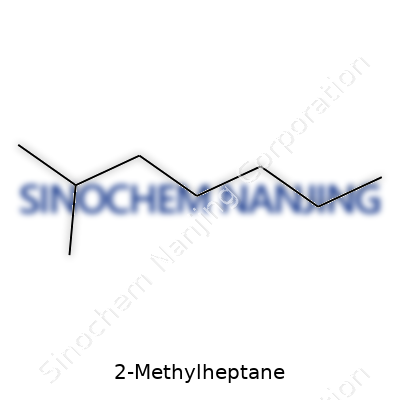
2-Methylheptane, with a directionally specific methyl group hanging off the second carbon of heptane, looks straightforward at first glance. You take a chain of seven carbons and add a methyl to the second, and now you have something with different boiling, melting, and burning characteristics. It’s not the star of the octane world—that’s more like iso-octane—but its structure teaches us how a small detour changes the script in fuel chemistry. The formula sits at C8H18, an isomer to its many siblings, showing once again that in organic chemistry, little tweaks can spark big differences.
What the Stats Show About Its Traits
People looking at 2-methylheptane might pull out a chemical supplier’s catalog or open up a textbook to check its numbers. This compound boils at around 118–120 °C, melts just under -120 °C, and handles itself like a typical hydrocarbon: clear, nearly odorless, and flammable. It resists dissolving in water, choosing instead to blend with other nonpolar solvents or hang around in fuel mixtures. Density clocks in close to 0.7 g/cm³, not surprising for a liquid hydrocarbon. Toss it in a cylinder and it evaporates easily, meaning the right ventilation matters if you tinker with it in a lab.
Labeling and Human Factor
Check any bottle in a chemistry lab, and the label usually shouts danger—flammable, irritant, sometimes environmental warnings. Because 2-methylheptane sits among volatile organics, storage in tightly closed containers away from sparks and high heat stands as basic protocol. The chemical’s straightforward label hides a deeper message: don’t take simple alkanes for granted. These hydrocarbons travel from refinery tanks to R&D setups, always requiring vigilance despite their basic chemical makeup.
Making It: Not Just a Textbook Reaction
Industry folks prepare 2-methylheptane using a handful of trusted routes. Fractional distillation pulls this compound straight out of petroleum streams, often as part of a hunt for usable naphtha fractions. Classic chemical synthesis, such as catalytic alkylation of hexane with methylating agents, gives another route, but most large-scale production rides on refining and careful separation. Chemical engineers rely on temperature and pressure tweaks in cracking units, always looking for the sweet spot where yield and purity intersect. These methods reflect a balance between old-school craftsmanship and modern process control.
Chemical Behavior and Simple Surprises
Once you get past physical separation, 2-methylheptane doesn’t charm chemists with wild reactivity, thanks to its saturated hydrocarbon frame. This stability both frustrates and reassures: lacking double or triple bonds, reactions tend toward free-radical halogenation under UV light, or occasional oxidation in strong conditions. Modifying 2-methylheptane challenges synthetic chemists to break tough C–H bonds, often leading to side products unless the route is tightly controlled. Its chemical reluctance wears well in fuels, where performance hinges on resisting breakdown and unwanted reactions.
Names in the Field
Any trip through chemical catalogs or literature can turn up a range of names for 2-methylheptane. It also goes by “iso-octane,” though the latter usually points to a different compound (2,2,4-trimethylpentane) famous for the octane rating scale. “1-Ethylhexane” pops up in older references, a reminder that nomenclature standards keep shifting. Staying precise means sticking to IUPAC conventions—2-methylheptane goes farthest with chemists worldwide.
Working Safe: Rules and Culture
Dealing with flammable hydrocarbons in any setting—lab, refinery, or transportation—demands respect for both regulations and the well-worn wisdom of experienced hands. Regulatory agencies set exposure limits and fire codes, covering everything from splash-resistant goggles and gloves to grounding containers during transfer. Safety showers and ventilation often move from the fine print to daily realities, especially after any accident. Personal experience working around volatile solvents leaves a mark: most accidents jump from little lapses, not exotic situations. Honoring lock-out/tag-out, spill containment, and emergency drills keeps everyone returning home safe.
Where It Ends Up: Real Uses
2-Methylheptane slips quietly into gasoline as part of tailored alkane blends, helping push engine performance and lower knocking. It never carries the fame of iso-octane but plays a steady role in research and calibration, especially for checking octane ratings and probing combustion chemistry in engines. A few industrial labs explore its behavior in solvent systems or test how branching in hydrocarbons shifts emissions during burning. In academic chemistry, this compound stands as a model for understanding structure-reactivity relationships, showing students why a methyl group at one spot matters more than at another.
Science on the Cutting Edge
Research keeps peeling back new layers on molecules as familiar as 2-methylheptane. With stricter pollution rules and demands for cleaner engines, scientists dig into exactly how branched alkanes break down during combustion. Spectroscopists probe bond energies and intermediates, while combustion engineers build high-precision setups to watch flames at the molecular level. Computational chemists model combustion and pollutant formation, using 2-methylheptane as a benchmark for predicted behavior. All this work bleeds into real-world solutions—smarter engines, purer fuels, maybe even cleaner exhaust stacks.
Hazards in Focus
Toxicity sets stakes in the science, too. 2-Methylheptane sits in the broader class of alkanes, which can irritate lungs and skin upon exposure, and carry acute risks if inhaled in high concentrations. Chronic exposure hypotheses get tested in animal trials and cell cultures, where researchers check for everything from respiratory damage to longer-term organ impacts. These studies shape workplace exposure limits and lay groundwork for further risk assessment. My time in research labs brings home that even compounds labeled “benign” carry real-world risks—a moment’s distraction can undo years of caution.
Building Toward Tomorrow
Future prospects for 2-methylheptane touch on both industry and pure chemistry. Renewable fuels, advanced engine designs, and stricter environmental targets all raise new questions about branched alkanes. Bio-based synthesis methods, perhaps tinkering with genetically engineered microbes, may one day edge out fossil routes. Analysis using big data and machine learning lets researchers tweak fuel blends for a fraction more efficiency or lower emissions, with 2-methylheptane serving as an instructive benchmark. Keeping legacy hydrocarbons relevant means finding safer, cleaner, and perhaps entirely new roles for them—a lesson as old as chemistry itself.
What is 2-Methylheptane used for?
Fuel Testing Has Roots in Tiny Molecules
Most people filling up a car tank don’t give a thought to hydrocarbons like 2-methylheptane. I spent years tinkering with engines in a college lab, and that’s when I saw straight-chain and branched alkanes quietly shape fuel science. 2-Methylheptane, an eight-carbon branched alkane, gets far less attention than gasoline’s superstars like isooctane or n-heptane. Its place might seem minor, but it fills a gap in measuring and improving how fuel burns.
A Standard for Knocking and Octane Rating
Gasoline knocks — anyone who’s driven an old engine knows the pinging sound, worse on a hot day or steep hill. Fuel testers chase reliable octane numbers to tell engine makers which fuel won’t knock under compression. Octane rating labs lean on pure hydrocarbons to set these numbers. Years back, I watched lab techs blend tiny doses of methylheptane with other standards. Its molecular “shape” gives it burn qualities between pure isooctane and the less-branched n-heptane. This helps chemists map the messy world of real fuels onto a neat scale, ensuring drivers get a knock-free ride.
Beyond Octane: Research and Chemicals
Real-world chemistry often loves the oddballs. While 2-methylheptane rarely makes headlines in production pipelines, chemical analysts often use it in strain and combustion studies. Graduate students in organic chemistry sometimes reach for methylheptane to tease apart reaction mechanisms. I remember friends using it as a reference when probing how branching affects chemical stability and engine wear. Its “middle of the road” properties make it a sturdy control without stealing the spotlight from more dramatic molecules.
Handling Health and Safety
Petroleum derivatives, no matter how innocuous, call for careful use. Breathing in volatile hydrocarbons can harm the nervous system, skin, or lungs over time. Factories and university labs store methylheptane away from sparks and heat, with safety sheets on hand. Over my early research years, I learned the hard way that irritant vapors mean sore throats and headaches if you slack on lab ventilation. Workers today have better PPE and fume hoods, but knowledge about these chemicals stops careless mistakes before they start.
Green Chemistry and the Path Forward
Most methylheptane comes from refining crude oil, though advances in bio-based synthesis—using microbes to create custom hydrocarbons—promise cleaner production someday. Renewable energy pressures put branched alkanes under the microscope. There’s growing discussion about how fuel standards could adapt as electric vehicles take over. Hydrocarbons like 2-methylheptane will shape those debates, from making greener fuels to helping train the next wave of chemists.
Solutions: Lab Transparency and Training
Nobody’s touting methylheptane as the future of green energy, but exposure to these compounds will persist as long as gasoline lives on. Regular training for anyone using or transporting such chemicals makes a real difference. Online databases now list every hazard and safe disposal method, outpacing most outdated binders tucked on lab shelves. Chem educators should keep showing students how small differences in molecule shape ripple through industry, fuel tech, and our daily routines.
What are the physical properties of 2-Methylheptane?
Understanding the Substance
2-Methylheptane shows up often on chemical spec sheets and lab logs. At its core, it’s an organic compound, falling under the umbrella of branched-chain alkanes. The structure looks simple: a seven-carbon chain, with a methyl group hitching a ride on the second carbon. This little shift from a straight chain might sound minor, but it changes how the molecule acts out in the world.
Looking at Physical Properties
Clear and colorless, 2-Methylheptane usually arrives in its pure state with no real odor that stands out. Anyone working with hydrocarbons can tell you physical state matters. Here, you get a liquid at room temperature. Its boiling point lands somewhere close to 118 degrees Celsius. In practical terms, that means it will evaporate fast if left uncapped in the lab.
Diving into density, 2-Methylheptane is lighter than water—about 0.71 grams per cubic centimeter. Pour this into a beaker of H2O and watch it float to the top, refusing to mix, which you’d expect from a hydrocarbon. Nothing fancy here—just the old rule: like dissolves like. If you spill some, you won’t see it blend with water, not even a little.
Viscosity and Handling
Running it between your fingers—though it’s never wise to touch without gloves—it feels about as thin as typical gasoline. Viscosity remains low so getting it to flow through tubing or transfer into reaction vessels runs smoothly. Forget about sludge or stickiness. You’ll notice almost no resistance when measuring it out. With chemicals, ease of movement isn’t just convenience; it keeps the workflow fast and cleanup simple.
Fire Risk and Storage
Like most alkanes, 2-Methylheptane burns fast if given the chance. The flash point, sitting around 28 degrees Celsius, pushes it squarely into flammable territory. That means storing it well away from sparks, heaters, or anything that could turn a workday into a call to the fire department. Safety data sheets underline air-tight containers, cool storage, and proper ventilation. No shortcuts here. Experience in the laboratory shows ignoring these guidelines brings trouble more often than not—and more than one story passes around about ruined experiments for those not following them.
Environmental and Health Concerns
Mishandling hydrocarbons rarely leads to good news. While 2-Methylheptane doesn’t carry the same hazard label as heavy solvents, inhaling fumes over long stretches or contact with skin builds up risks. Anyone who's spent years around organic chemicals learns to respect that risk. Gloves, goggles, fume hoods—these aren’t extra steps, but basic practice.
Spills flow fast and form thin layers that stick around, resisting breakdown in water and soil. Hydrocarbons like this can harm aquatic life, even if the impact doesn’t always make headlines. Small mistakes add up. Solid waste disposal routines, plus responsible handling, slow down pollution bit by bit.
Practical Solutions
Solutions start simple: invest in good ventilation, fireproof storage, and routine training. Catching leaks or worn seals, doing periodic audits, and labeling containers clearly keep problems at bay. Replacing old glassware and reviewing MSDS updates don’t grab attention, but these habits protect both people and experiments over the long haul.
Working with 2-Methylheptane means more than memorizing numbers off a chart. It’s about respect for the substance, lessons learned the hard way, and keeping an eye on the details that matter most, both for people and the world outside the lab.
Is 2-Methylheptane hazardous or toxic?
Understanding What 2-Methylheptane Really Is
Plenty of folks out there haven't thought too much about the chemicals inside things like gasoline or industrial solvents, but 2-Methylheptane is definitely on that list. It’s a branched hydrocarbon that pops up wherever crude oil gets split into the pieces we use every day. If you’ve ever caught a whiff at a gas pump, chances are you’ve smelled a soup of hydrocarbons, with 2-Methylheptane mixed in.
Real-Life Exposure Sources
People with jobs in oil refineries, chemical plants, or even some laboratories rub elbows with 2-Methylheptane more than anybody else. Others might encounter it when working around fuels or breathing city air where cars leave behind trace amounts. Unless you’re handling giant tanks of it, doses stay pretty low for most people. Still, it pays to stay conscious about potential risks even at low exposure. Going by my background in environmental science, I’ve always tried to look at toxicity by considering both dose and exposure.
What Science Says About Toxicity
According to the National Institute for Occupational Safety and Health (NIOSH) and other reputable resources, 2-Methylheptane doesn’t carry the kind of reputation that comes with alarming warnings. Acute toxicity in the lab mostly appears after breathing in large concentrations or swallowing far more than anyone would encounter by accident. It can act as a simple asphyxiant, meaning it pushes out the oxygen if there’s enough of it in the air. Employees in tight or poorly ventilated spaces can feel dizzy or get headaches with any hydrocarbon exposure, and 2-Methylheptane fits the pattern.
Getting it on your skin for long enough strips oils and brings irritation. Swallowing causes nausea and other digestive issues. These symptoms don’t differ much from other hydrocarbons like octane and hexane cousins. No evidence suggests 2-Methylheptane leads to cancer or gene mutations. Chronic issues have shown up with other solvents, but those tend to require long-term, high-level exposure. Large chemical companies publish their safety data sheets because they can’t afford to skip the details—public trust and worker safety are always at stake, and 2-Methylheptane does not hog the spotlight as a top-tier danger.
The Bigger Picture: Managing Risk
Most concern shows up in work environments, especially in industries where folks breathe in vapors or risk spilling liquids on their hands. Good ventilation turns out to be the real lifesaver. Decades ago, I spent my time in a college research lab measuring hydrocarbon vapors, and the lesson stayed with me: reliable air handling matters more than any label warning. Anyone working directly with 2-Methylheptane ought to wear gloves and make sure their air stays fresh. Engineering controls—hoods, fans, or even just open doors—cut exposure fast.
Practical Steps for Safer Use
Regulatory bodies like OSHA give exposure limits to keep air safe. Training goes a long way. Companies with a culture of speaking up about smells or symptoms usually avoid the long-term problems that sneak up on quieter crews. Basic personal protective gear—nitrile gloves, good goggles, and coveralls—keep hands and eyes out of harm’s way. If there’s ever a spill, sand and absorbents soak it up, not paper towels or rags. Safe storage matters too. Even though 2-Methylheptane won’t leap out and cause harm at trace levels, nobody wants to roll the dice by letting vapors pile up indoors.
Final Thoughts
2-Methylheptane isn’t something to panic about, but ignoring safe handling can turn a routine job into a trip to the emergency room. Trustworthy information helps everyone make decisions that balance risk and reward. My experience points to consistent training, good ventilation, and real-world common sense as the best solutions for keeping people safe around hydrocarbon chemicals like 2-Methylheptane.
What is the chemical formula of 2-Methylheptane?
The Basics: Naming Tells a Story
Most folks see a name like 2-Methylheptane and their eyes glaze over. But these names, built by organic chemists, give clues about what the molecule looks like. I remember the first time I figured out how “methyl” and “heptane” fit together, it made me realize why formulas matter outside the lab. For 2-Methylheptane, the chemical formula is C8H18. This doesn’t just pop up by chance; it traces back to carbon chains and side groups that combine in predictable patterns.
Understanding The Structure, Not Just The Formula
Count seven carbons straight in a row, you get heptane. Add a methyl group (a carbon attached to three hydrogens, CH3) onto the second carbon of that chain, now it’s 2-Methylheptane. This structure keeps the count at eight carbons and eighteen hydrogens, so the formula C8H18 materializes. It’s the same formula as octane, a molecule you find in gasoline, but the shape changes how it behaves. These differences drive why we even bother naming isomers—compounds sharing formulas but juggling atoms differently. Their boiling points, how they burn, and how they mix with other chemicals all change depending on their shape, even if the formula stays the same.
Why This Matters Outside Chemistry Class
It’s easy to treat chemical formulas like trivia, but they mean a lot in the real world. I’ve spent enough time around mechanics and engineers to know a difference between one molecule and its cousin can mean engines run smoother or break down faster. 2-Methylheptane, just like other isomers with the same C8H18 formula, helps set benchmarks for fuel ratings. Burn one version, and the engine purrs. Pick the wrong structure, and things knock and shake.
Industries don’t make distinctions by accident. Fuels, solvents, even plastics link back to the skeletons of hydrocarbons like this one. The arrangement of each carbon atom, the placement of a simple methyl group, shapes safety standards and environmental rules. In my own experience working around people using hydrocarbons day in and day out, these details move decisions from the boardroom straight into the hands of workers. Knowing the formula tells you a lot, but understanding why molecules connect the way they do keeps people safer and products better.
Better Communication Brings Better Solutions
Getting the formula right, like C8H18 for 2-Methylheptane, stands as only the beginning. Broadening how we communicate chemistry can help the public see why these details show up in safety briefings, product sheets, and building codes. I’ve watched chemistry miscommunications cause big headaches. Companies racing to patent new fuel blends sometimes chase the next big thing without pausing to educate. That leaves workers reading ingredient lists and wondering what really matters.
To bridge this gap, clearer science education and more hands-on examples would help. Translating formulas from abstract numbers into discussions about fuel performance or safety at work makes chemistry come alive. Schools, job sites, and public information efforts could benefit from linking the chemical formulas to their impact on daily life. Whether it's understanding how 2-Methylheptane fits into fuel ratings or why its structure changes the way an engine runs, knowing the formula is just the entry point; owning the knowledge means using it for better choices, safer practices, and smarter innovation.
How should 2-Methylheptane be stored and handled?
Why 2-Methylheptane Draws Attention
Most folks seldom think about organic solvents unless work or safety forces the issue. 2-Methylheptane, one of those colorless liquids with a gasoline smell, often finds its way into research labs and chemical plants. Its flammable nature and effects on health keep it on safety officers’ lists for a reason: mishandling brings real risk—fire, environmental contamination, or toxic exposure.
Storage Lessons Learned the Hard Way
After a stint helping manage chemical stockrooms, it becomes clear that solvents like 2-Methylheptane demand more than a shelf and a label. Keeping it in well-ventilated, cool places away from heat cuts down on fire hazards. Metal safety cans and flame-proof cabinets do more than look official—they keep fumes contained and deter accidents. Signs and clear labeling stop confusion before it starts, especially when folks grab what looks like a simple jar for a routine task.
Legal guidelines set by OSHA and NFPA serve as more than red tape; safety codes spell out real threats. In the right conditions, 2-Methylheptane vapors ignite—sometimes at room temperature. Past incidents with other flammable solvents, even in experienced labs, remind us that shortcuts lead to emergencies.
Safe Handling: Training Matters More Than Manuals
Protecting workers comes down to more than gloves and goggles. Training sinks in best through hands-on routines and honest talk, not just a dusty binder on a shelf. In places where folks handle this solvent daily, a culture of communication saves lives. I’ve seen new hires trip up the most—so pairing them up with experienced teammates really helps.
Working with volatile liquids often tempts people to cut steps for speed, but those few extra minutes measuring in a fume hood or checking ground connections for static save a world of headache. Keeping spill kits topped up and ready limits panic if a container tips or leaks. Regular spill drills turn chaos into a few steady hands and a quick cleanup.
Chasing Zero Incidents: Fact-Based Practices
The science backs strict measures. Flash points and vapor density figures look dry, but real-world stories of fires from improper storage stick in memory and shape habits. A 2022 report from the Chemical Safety Board highlighted several near-misses in college labs tied to overlooked solvent storage—lessons that travel beyond campus walls.
Simple fixes often bring big payoff. Avoid stacking containers, keep them off the floor to dodge floods, and space them apart to allow air to move. Never let solvents like 2-Methylheptane stay in direct sunlight or near machinery that gets hot. Fire suppression systems matter, but eyes and ears on the job catch problems before alarms sound. Regular, no-nonsense audits force everyone to pause, look around, and question habits.
Pushing Toward Smarter Solutions
It pays to remember: the safest operation feels boring. Every time a new automation or better monitoring tool hits the market, the excuse for human error drops. Digital logging and RFID tags help keep track of who stored what, where, and when. Nobody misses a panic run for missing chemical logs.
Bottom line: every bottle of 2-Methylheptane brings a story and a risk. With stricter habits—honest training, commonsense layout, and real accountability—workers and communities dodge disaster, keep air cleaner, and look out for each other.
| Names | |
| Preferred IUPAC name | 2-Methylheptane |
| Other names |
Heptane, 2-methyl- Diisopropylmethane |
| Pronunciation | /tuː-ˈmɛθ.ɪlˌhɛp.teɪn/ |
| Identifiers | |
| CAS Number | 592-27-8 |
| Beilstein Reference | 1718736 |
| ChEBI | CHEBI:15766 |
| ChEMBL | CHEMBL429055 |
| ChemSpider | 54618 |
| DrugBank | DB14085 |
| ECHA InfoCard | ECHA InfoCard: 100.118.205 |
| EC Number | 208-697-5 |
| Gmelin Reference | 54734 |
| KEGG | C08340 |
| MeSH | D000577 |
| PubChem CID | 11586 |
| RTECS number | MI1575000 |
| UNII | 7VMS783264 |
| UN number | UN1206 |
| Properties | |
| Chemical formula | C8H18 |
| Molar mass | 128.26 g/mol |
| Appearance | Colorless liquid |
| Odor | Odorless |
| Density | 0.702 g/mL |
| Solubility in water | Insoluble |
| log P | 4.57 |
| Vapor pressure | 2.43 mmHg (at 25 °C) |
| Acidity (pKa) | 50 |
| Refractive index (nD) | 1.398 |
| Viscosity | 0.674 mPa·s |
| Dipole moment | 0.13 D |
| Thermochemistry | |
| Std molar entropy (S⦵298) | 367.1 J·mol⁻¹·K⁻¹ |
| Std enthalpy of formation (ΔfH⦵298) | -208.4 kJ/mol |
| Std enthalpy of combustion (ΔcH⦵298) | -4814.8 kJ/mol |
| Hazards | |
| GHS labelling | GHS02, GHS07 |
| Pictograms | GHS02, GHS07 |
| Signal word | Warning |
| Hazard statements | H226, H304 |
| Precautionary statements | P210, P233, P240, P241, P242, P243, P280, P303+P361+P353, P370+P378 |
| NFPA 704 (fire diamond) | 1-1-0 |
| Flash point | “25 °C (77 °F) closed cup” |
| Autoignition temperature | 220 °C (428 °F; 493 K) |
| Explosive limits | 1-6.5% (by volume in air) |
| Lethal dose or concentration | LD50 Oral Rat 5000 mg/kg |
| LD50 (median dose) | LD50 (median dose) of 2-Methylheptane: Oral-rat LD50: > 5000 mg/kg |
| NIOSH | NIOSH: *heptane, branched, C8H18* |
| PEL (Permissible) | Not established |
| REL (Recommended) | 125 mg/m³ |
| IDLH (Immediate danger) | IDLH: 1500 ppm |
| Related compounds | |
| Related compounds |
n-Heptane 2,2-Dimethylhexane 3-Methylheptane 4-Methylheptane Isooctane |



