Looking Closer at 2-Methyl-5-Ethylpyridine: From History to Future Hopes
Tracing the Roots of 2-Methyl-5-Ethylpyridine
The path that led to 2-Methyl-5-Ethylpyridine runs alongside the broader march of organic chemistry. People started paying serious attention to pyridine rings back in the nineteenth century as chemists unraveled the mysteries behind coal tar. Once researchers cracked open the basic pyridine structure, curiosity pushed them down the alleyways of modifying it: methyl groups here, ethyl branches there. Some of the earliest production efforts happened during a time when synthetic chemistry blossomed in response to the demands of dye and pharmaceutical manufacturing. It didn’t take long for chemists to notice that adding a methyl group at the 2-position and an ethyl at the 5-position delivered a compound with distinct characteristics. That set the scene for new uses, shifting from pure chemical curiosity to value for both industry and academic labs.
What 2-Methyl-5-Ethylpyridine Brings to the Table
This compound shows up as a pale yellow liquid with a sharp smell that lingers. Unlike some other pyridine derivatives, it isn’t just a background player in industrial chemistry. Its unique molecular shape means it acts as a well-suited building block for synthesis. Chemists appreciate how its structure leaves options open for attaching new chemical groups, while the ring system keeps the molecule sturdy under reaction conditions that tend to scare off less robust organics. It’s got enough volatility for distillation, but not enough for runaway evaporation during handling, which adds practical value. Its chemical nature balances hydrophobic and polar tendencies, carving out a spot for itself somewhere between water-white solvents and purely oil-loving compounds.
Sorting Through Physical and Chemical Qualities
Take a close look at 2-Methyl-5-Ethylpyridine in a flask. The low viscosity and moderate boiling point make it fit for lab work and, with care, for some industrial operations. Its color can deepen with age or exposure to air, hinting at possible oxidation or impurities—signals that proper storage matters. The compound’s solubility profile isn’t straightforward: it mixes reasonably with organic solvents but holds back from dissolving completely in water. This divides its applications, steering it toward organic syntheses but less so for biological uses where water solubility plays a bigger role. Its reactivity sits at a healthy middle ground; the methyl and ethyl groups resist unwanted side reactions but provide handles for chemists who want to build more complex structures. This balance shapes the compound’s reputation among professionals who want predictability without losing flexibility in potential downstream reactions.
Digging Into Technical Details and Labeling Realities
Chemical suppliers label 2-Methyl-5-Ethylpyridine with all the regulatory details required for safety, including hazard pictograms and handling instructions. Labels should reflect the flammability risk and the need to avoid release into the broader environment. Regulatory compliance grows more important as global trade tightens its grip on specialty chemicals. Laboratories and warehouses log purity, batch numbers, and storage conditions, since even minor impurities can change the course of a reaction or test result. Environmental and health safety agencies now expect full transparency, driving tighter and clearer labeling compared to decades past when such care often fell by the wayside.
How Do You Make It? Lessons From Experience
Manufacture usually starts from simpler pyridine derivatives or similar precursors. Skilled chemists deploy methods like alkylation, where methyl and ethyl groups graft themselves to the nitrogen ring. Classical routes may involve Friedel-Crafts conditions or transition-metal-catalyzed couplings, often done in the presence of carefully chosen catalysts. These steps demand precise control over temperature, reagent ratios, and timing. Any misstep here can drive the yields down or pile on unwanted byproducts—lessons hard won in long nights at the bench. As industrial players scale up the process, containment and environmental controls come to the fore, since both raw materials and finished product pose hazards to workers and the ecosystem.
Reacting and Modifying: Opportunities and Pitfalls
The methyl and ethyl branches anchor the molecule, but smart chemists can still coax them to play along in advanced syntheses. Common transformations include halogenation and oxidation at select positions, which let researchers construct new rings or introduce functional groups. Some aim to tether the molecule to metal ions, stretching into catalysis research or advanced material development. Sometimes, functionalization goes far enough to make the compound unrecognizable to its former self, birthing new families of chemicals with unique properties. Failures are part of the journey, whether due to overreactivity, difficulty in purifying mixed products, or just plain stubbornness of the molecule to do what textbooks suggest. These challenges fuel further research and innovation each year.
Other Names You Might Find
Chemists often talk in code. In literature, 2-Methyl-5-Ethylpyridine gets called by its systematic name, but other synonyms pop up: 2-methyl-5-ethylpyridine, 2-ME-5-EP, and sometimes less common trade or catalog names, depending on the supplier. Navigating databases or scientific articles demands awareness of these alternatives. The multiplicity of synonyms can gum up literature searches, so knowing what aliases to look out for helps avoid missed findings or confusion.
Meeting Safety and Operational Benchmarks
Handling this compound means respecting its sharp odor and potential for harm. Anyone who’s spent time in a lab knows the sting of pyridines on exposed skin—or worse, inhaled directly. Protective gloves and goggles form the baseline standard, not an optional extra. Good laboratory practice expects chemical fume hoods for handling open containers and demands rigorous training. Fire safety ranks high, given the compound’s flammable vapor. Disposal creates a second front of vigilance: chemical waste needs expert oversight, since leftover material can cause knock-on effects in waste streams. Regular risk assessments and emergency drills transform safety from a rulebook to real-life readiness. It makes sense to stay current with safety data sheets and evolving regulatory advice, rather than relying on old habits.
Where It Shows Up in the Real World
2-Methyl-5-Ethylpyridine works as an intermediate, often showing up in the manufacture of agrochemicals, pharmaceuticals, and specialty materials. Its role frequently vanishes behind the finished products, yet without it, certain synthetic paths would grind to a halt. Researchers deploy it in target-oriented synthesis where fine control over molecular architecture decides the fate of a project. Industrial players, especially in agriculture, look for ways to tweak this compound to make new active ingredients for pest control or plant growth regulation. It’s also interested chemical biologists seeking new approaches to enzyme inhibition or receptor binding, even though water solubility sets limits for direct bioactivity. A compound like this slots into complex reaction chains, putting its mark on the modern chemical toolkit just as surely as old-school building blocks such as benzene or phenol.
Scientific Curiosity: Research and Expanding Horizons
Continuous research picks at the edges of 2-Methyl-5-Ethylpyridine’s capabilities. Scholars keep looking for new synthetic modifications, alternative preparation routes, and applications that pull it into emerging fields. High-throughput screening tools, novel catalysts, and green chemistry push people to rethink the molecule’s place in sustainable synthesis or advanced material science. The compound fits into research on functionalized polymers, ligands for transition metals, or as a probe in analytical chemistry. Collaboration between academic and industrial camps widens the pool of resources and presses for practical, scalable methods that cut costs and environmental burdens. Open-access data and international conferences now help spread findings that once stayed locked up in company vaults or obscure journals.
Peeling Back Toxicity and Health Questions
No one working with 2-Methyl-5-Ethylpyridine can afford to ignore toxicity data. People and animals exposed at high levels report central nervous system stimulation, symptoms like dizziness, nausea, or headaches—not unlike other low-weight pyridines. Studies suggest that long-term exposure carries risks, hitting liver and kidney function especially hard. Environmental persistence adds a burden, since the compound can stick around in soil and water longer than expected, raising questions about bioaccumulation and food chain effects. Regulators respond by tightening permissible exposure limits in industrial settings and increasing oversight on waste management. Results from in vitro and in vivo studies feed into chemical safety reclassifications, shaping how companies and researchers design their processes.
Looking to the Future: Where the Story Could Go
Innovation depends on squeezing more from molecules like 2-Methyl-5-Ethylpyridine than they’ve given so far. Pushes for renewable feedstocks draw attention to methods for producing pyridine derivatives from plant sources, not just fossil materials. Digital chemistry and machine learning open new doors for predicting modifications that lift yield, simplify purification, or create new value in pharmaceutical design. Policy shifts toward safer, greener chemicals prompt both labs and factories to think harder about lifecycle impacts, alternatives, and cradle-to-grave responsibility. Next-generation catalysis, microreactor technology, and tighter recycling loops all point to a future where this compound—like others in its class—earns its keep by fitting within a more sustainable and ethical framework. Every new finding, shared openly, raises the chances of smarter solutions across the chemical world.
What is 2-Methyl-5-Ethylpyridine used for?
Understanding the Compound
2-Methyl-5-ethylpyridine doesn’t get splashy headlines, but it shapes a lot of what people experience in their daily lives, even if they never hear the name. I’ve seen this chemical show up in conversations about flavors and fragrances, but it has a bigger story. Over the years, as chemistry connects the dots between natural processes and industrial needs, compounds like this one become essential building blocks for plenty of everyday products.
Role in Industry
One of the main jobs for 2-methyl-5-ethylpyridine comes from the manufacturing floor. Chemical companies use it as an intermediate—the type of stuff that gets turned into something much more familiar. It feeds into the process of making nicotinic acid and nicotine. Both of those have deep roots in agriculture and medicine. Nicotinic acid, better known as niacin or vitamin B3, helps balance diets and supplements across the world. It supports metabolism and keeps cholesterol in check. Nicotine, whether folks like it or not, drives significant industries—especially tobacco—and also plays a role in some newer medical and pest control research.
Labs blend 2-methyl-5-ethylpyridine into these chains because its structure makes it reactive in just the right way. Pyridines, at large, give rise to versatility. They slip into synthesis routes for antioxidant agents, corrosion inhibitors, and different specialty chemicals. That means the compound ends up hidden in coatings, stabilizers, and protection treatments for materials people rely on for infrastructure and transportation. Pyridine derivatives often crop up in creating disinfectants and agricultural products, showing how chemical advances reach fields and factories alike.
Sustainability and Impact
Manufacturing any pyridine derivative, including this one, takes resources and puts pressure on the environment. Factories need to balance yields, worker safety, and downstream waste. For years, increased focus on green chemistry pushed producers to search for cleaner synthesis steps and better waste treatment. I’ve talked to chemical engineers who point out how even one compound with improved safety margins can shift the risks across an entire supply chain. Recycling solvents and capturing emissions now play bigger roles in keeping chemical plants in line with toughening regulations. As society pushes toward cleaner industry, every improvement counts.
Quality and Regulatory Aspects
Safety doesn’t take a back seat, either. Pyridine compounds tend to give off strong, unpleasant odors and pose hazards if handled poorly. Regulatory bodies set exposure limits and demand detailed tracking through every manufacturing step. In settings with weak oversight, risks go up—for workers and for the environment. Reliable labeling, traceability, and waste handling mark the difference between responsible producers and those still catching up. It pays for downstream users to know their suppliers stick to standards, especially if compounds land in pharmaceuticals or food-related applications.
Looking Forward
Some of the most promising work in industrial chemicals today focuses on cost-effective, lower-impact routes that make these intermediates. Unraveling better catalysts or cleaner feedstock options could shrink both environmental costs and production prices. Shared experiences in the field show that innovations in chemical safety and environmental performance rarely stay siloed. Once a safer method goes public, it gets picked up fast by companies who want to keep their edge—whether out of ethics or competition.
For those of us outside the lab, it’s not always easy to see where a single intermediate fits in the whole chain of products and consumption. But recognizing the quiet contributors like 2-methyl-5-ethylpyridine opens a window onto just how layered and global the materials economy really is.
What is the chemical formula of 2-Methyl-5-Ethylpyridine?
Digging Into the Details
Anyone who’s poked around the world of chemistry long enough has seen some pretty wild-sounding names. When faced with “2-Methyl-5-Ethylpyridine,” my brain immediately thinks back to my college days and the countless evenings spent pouring over skeletal formulas scratched out on smudged paper. Names like this might look like a jumble of tongue-twisters, but they always reveal a real blueprint about what sits in the flask.
The name tells me the backbone of this molecule is pyridine, which is a six-membered ring with one nitrogen atom. I spent lab hours watching students pull apart pyridine’s tart smell in the air. Add a methyl group onto the ring’s second carbon and pop an ethyl group onto its fifth. Now, you’ve got 2-Methyl-5-Ethylpyridine. Chemistry names aren’t just technical jargon—the word paints a clear structure, almost like a street address for atoms.
What’s in That Formula?
C8H11N. That’s the real secret. Each symbol packs in more than it appears. In class, a formula means almost as much as the name. For those counting, pyridine by itself sits at C5H5N. Add in a methyl (CH3) and an ethyl (C2H5), attached just like Lego blocks, and you end up at C8H11N. This notation skips the fluff and gets right at the molecular punchline.
Why These Compounds Matter
Anybody outside the lab or away from industrial plants might ask, “So what?” Knowing the chemical formula is not about showing off memory tricks; it’s about using these facts in real life. Having spent time around chemical manufacturing plants, I understand how critical these little tweaks can be. Switch a methyl group’s placement and you completely change how the molecule interacts with other chemicals, how it smells, dissolves, or even how toxic it turns out. Knowing C8H11N isn’t trivia—it’s an important safety fact, an environmental clue, or a key step in pharmaceutical design.
In agriculture, some derivatives of pyridine act as intermediates for making herbicides. I remember seeing entire rows of containers in research facilities, each with a slightly different pyridine variant. Tweaking just a part of the formula affects which plants the product can protect or how quickly it breaks down in the soil. Stuff like 2-Methyl-5-Ethylpyridine keeps researchers on their toes, always checking properties and refining ideas.
Challenges and Path Forward
A challenge surfaces when chemical variants become environmental concerns. Pyridine compounds don’t always break down easily, and I’ve seen old reports stacking up about contamination near manufacturing sites. This isn’t just a problem overseas—it shows up anywhere with lax control or poor disposal habits.
Stronger monitoring and greener chemistry approaches would help. Teams in industry already experiment with biodegradable alternatives and work on trapping and cleaning volatile byproducts. The tools exist, but shifting entire supply chains or replacing legacy processes drags on, often slowed by budgets or habit.
Young researchers stuck on memorizing formulas sometimes lose sight of the bigger picture. Every formula, every compound spills into real human lives, public health, and earth's systems. A bit of curiosity—sometimes learning where a molecule fits outside the textbook—shapes better scientists and wiser citizens. C8H11N looks small, but it can leave a big footprint.
Is 2-Methyl-5-Ethylpyridine hazardous or toxic?
A Clear-Eyed Look at Chemical Safety
Toxicity isn’t just a buzzword—it shapes how we work with chemicals every day. Among the countless compounds out there, 2-Methyl-5-Ethylpyridine has raised some eyebrows. Scientists and regulators keep drawing attention to this substance, highlighting its use in chemical manufacturing. Though it doesn’t claim the spotlight as a household product, the fact that it finds its way into various industrial settings warrants a closer look.
Understanding the Risks
Anyone who’s spent time in a laboratory knows chemical names can sound intimidating on their own. The danger comes from actual exposure—not just the presence of something with a long name. Studies show that 2-Methyl-5-Ethylpyridine has both acute and chronic effects. Even small amounts can irritate the skin, eyes, and respiratory tract. Researchers exposed lab animals to vapors and noticed symptoms such as labored breathing, dizziness, and even damage to liver or kidneys after repeated exposure. I once spilled a small quantity of a similar pyridine derivative; even with gloves on, the smell lingered and stung my nose. It was a wake-up call: don’t trust any chemical with your bare hands.
Food and Drug Administration and Environmental Protection Agency databases point to moderate toxicity. Workers handling open containers are advised to use goggles and gloves. Chronic exposure—maybe by inhalation or skin contact day after day—leads to headaches, nausea, and possible long-term damage. Most folks don’t face risks at home, but accidents in transport or improper disposal leak these chemicals into water sources. The Centers for Disease Control has records of pyridine derivatives in contaminated groundwater, causing concerns for drinking water safety in industrial areas.
Learning From Past Mistakes
Getting careless with chemicals doesn’t always end in a dramatic explosion. Years ago, a warehouse in the Midwest failed to keep drums sealed properly; a routine inspection found vapor levels above recommended limits. Local authorities discovered several workers complained of rashes and shortness of breath. Simple errors—like not labeling containers properly or skipping safety briefings—create real harm. These stories remind us that the risk comes from neglect, not just chemical structure.
Many chemical plants follow rigorous practices. I’ve seen operators carefully check equipment for leaks, insist on using air filtration, and take regular breaks outside the processing rooms. Facilities that skip these steps trade away worker safety for convenience. Even short-term slips, like skipping a glove “just for a minute,” build up over weeks into major problems. Enforcement matters—regulators sometimes struggle to keep up with every site, but honest reporting, community oversight, and frequent audits create safer environments.
How to Reduce Hazards
Companies have an obligation to train workers about specific hazards. Hands-on training works better than online videos in my experience. When workers physically suit up in goggles, masks, and gloves, knowledge sticks. Good ventilation and fume hoods pull vapors out of the workspace. Emergency showers and eyewash stations stand ready for accidents; skipping these basics courts disaster.
At the community level, clear labeling and emergency response plans shield neighbors from accidental leaks. Local governments can also require regular soil and water testing around factories, catching trouble before it becomes a crisis. Scientists keep finding new ways to break down pyridine derivatives in wastewater, cutting down the environmental footprint.
Tackling chemical risk means constant vigilance, honesty about past mistakes, and daily commitment to doing things right. If safety falls off the radar, it’s workers—and everyone downstream—who pay the price.
What are the storage and handling requirements for 2-Methyl-5-Ethylpyridine?
Real-World Steps for Safe Chemical Management
Anyone who’s spent time in a lab knows there’s a big gap between glossy safety posters and the daily grind of chemical storage. 2-Methyl-5-Ethylpyridine isn’t an everyday name outside specialized industries, but it demands real respect inside four walls. This compound comes in handy as a building block for pharmaceuticals and pesticides—two areas where even small slips have big consequences. So, storing and handling this material the right way is more than a checkmark; it’s damage control for both people and property.
Understanding the Risks with This Pyridine
2-Methyl-5-Ethylpyridine carries a reputation for volatility. Breathing its vapors irritates airways, and skin contact may burn or sensitize over time. The smell—sharp and unpleasant—works like nature’s warning sign. I’ve learned not to ignore those. Even a mild exposure ends with a stubborn headache, so solid habits make all the difference.
Flammability ranks high on its risk list, as the liquid ignites at temperatures lower than most typical room conditions. Setting it next to ignition sources is like playing with fire—literally. Proper ventilation matters a lot here. In stuffy spaces, vapors gather and create pockets ready to catch a single spark. OSHA and NIOSH agree: keeping operations well-ventilated cuts the risk. Sensible systems route fumes outside, protecting everyone inside.
Keeping 2-Methyl-5-Ethylpyridine Secure
Only store this compound in tightly sealed containers built specifically for flammable liquids. Steel drums with quality seals, approved glass bottles in smaller labs, or HDPE jugs in certain setups—each holds up under pressure and lessens leaks. Safety cabinets that carry clear labels for flammables give extra peace of mind. Fire codes often set strict limits on how much one cabinet holds; going past that just piles up risk.
I always check containers for cracks or corrosion before filling them. Even a tiny flaw can snowball into a big spill. Containers should live away from direct sunlight, heaters, and fridges not rated for volatile chemicals. Sometimes folks try to stretch lab fridges into chemical storage, but unless a unit carries the right certifications, it turns into a ticking hazard.
Practical Habits: From Delivery to Disposal
Gloves, goggles, and lab coats turn into daily armor, and not just during spills. I remember one lab where a tired technician splashed a few drops—no burns, but the stench lingered for days. Spill kits sit within reach. The right absorbents soak up spilled liquid quickly, and neutralizers reduce lingering fumes. Contaminated clothing goes straight into special laundry bags—never home or common machines.
Training beats any equipment. Sharing stories, showing near-misses, and explaining label warnings to new hires keeps awareness high. Labels showing hazard symbols, expiration dates, and emergency contacts keep anyone from guessing about dangers.
Enforcing Standards and Seeking Progress
Tools alone don’t solve problems. Regular audits make sure safety rules don’t slip. Documenting each batch’s receipt, use, and disposal builds trust in every process. Government regulators, like the EPA and OSHA, push for stronger labeling, better secondary containment, and quick reporting if anything gets out. These standards don’t just exist on paper—they save hands, lungs, and sometimes lives.
Switching to less hazardous substitutes seems ideal but isn’t always possible in chemistry. Until that day comes, taking these steps seriously forms a real shield against trouble, for people and for the work that depends on them.
Where can I buy 2-Methyl-5-Ethylpyridine?
Why Sources Matter with This Chemical
2-Methyl-5-Ethylpyridine stands out in chemical labs for its role in synthesizing vitamins, catalysts, and specialty products. Anyone searching for it probably cares about purity, compliance, and shipping. People often start by scouring online suppliers. Sites like Sigma-Aldrich, Fisher Scientific, and TCI America come up quickly in search results. They handle customer vetting, proper storage, and support for shipping and documentation. Businesses turn to these distributors because the supply chain matters as much as the product itself.
Who Can Legally Buy the Compound?
It’s not as simple as clicking “add to cart.” I’ve watched companies get tripped up by compliance details. Regulations kick in because pyridine derivatives can end up in illicit labs or cause harm. So, legitimate buyers must prove their credentials, submit end-use declarations, and sign paperwork outlining how they’ll handle the product. Laboratories and manufacturers meet these standards by providing licenses, lab certification, and sometimes background checks. Hobbyists and private individuals rarely get past these hurdles, so most vetted sellers turn away people without credentials.
The Real Costs: More Than Just Money
The price tag on 2-Methyl-5-Ethylpyridine doesn’t tell the whole story. Reliable vendors don’t just sell a drum or a bottle. They come with batch-specific documentation, safety sheets, and traceability paperwork required for every shipment. If shipping crosses state lines or borders, extra licenses and import permits come into play. I've helped teams jump through these hoops, sometimes spending more on compliance and logistics than the chemical itself costs. It frustrates buyers—especially startups or research teams on tight budgets—but the paperwork protects public health and company reputations.
Risks of Cutting Corners
There’s always the temptation to buy from less-regulated online marketplaces. Overseas vendors sometimes advertise without asking for credentials and promise cheap prices. But with chemicals, you get what you pay for. I’ve seen professionals receive contaminated or mislabeled substances, which throws off entire projects. Worse, I’ve heard about shipments detained in customs, or buyers flagged in enforcement databases. Problems like that can shut down research or damage company standing. So, even when the process feels slow, sticking with vetted supply chains matters.
What Works Best
Start by reaching out directly to global distributors. Sites like Sigma-Aldrich, Fisher Scientific, or Alfa Aesar offer dedicated sales reps who can walk buyers through the steps. Build a relationship with these teams, because it pays off when unexpected problems pop up. For buyers outside a large institution, work with a local university or research partner who can act as an authorized purchaser. In some regions, chemical trade associations keep up-to-date lists of approved suppliers and can vouch for newcomers. No one enjoys paperwork. But in the world of specialty chemicals, cutting steps leads to headaches and delays.
Supporting Safe, Legal Access
Open access to specialty chemicals drives innovation in medicine, agriculture, and technology. Lawmakers and suppliers don’t want to slow down science—they just have to weigh safety and security, especially in areas prone to illegal repurposing. If a business or lab keeps solid documentation, maintains dialogue with regulators, and works transparently, getting supplies won’t become a bottleneck. Rushing through shortcuts never ends well for anyone in this field.
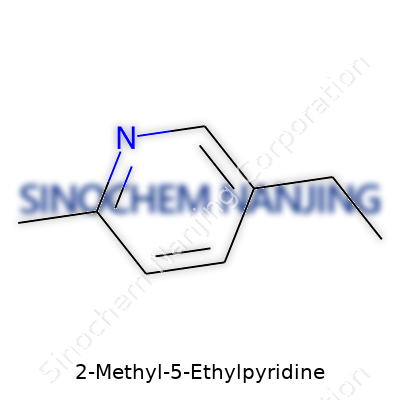
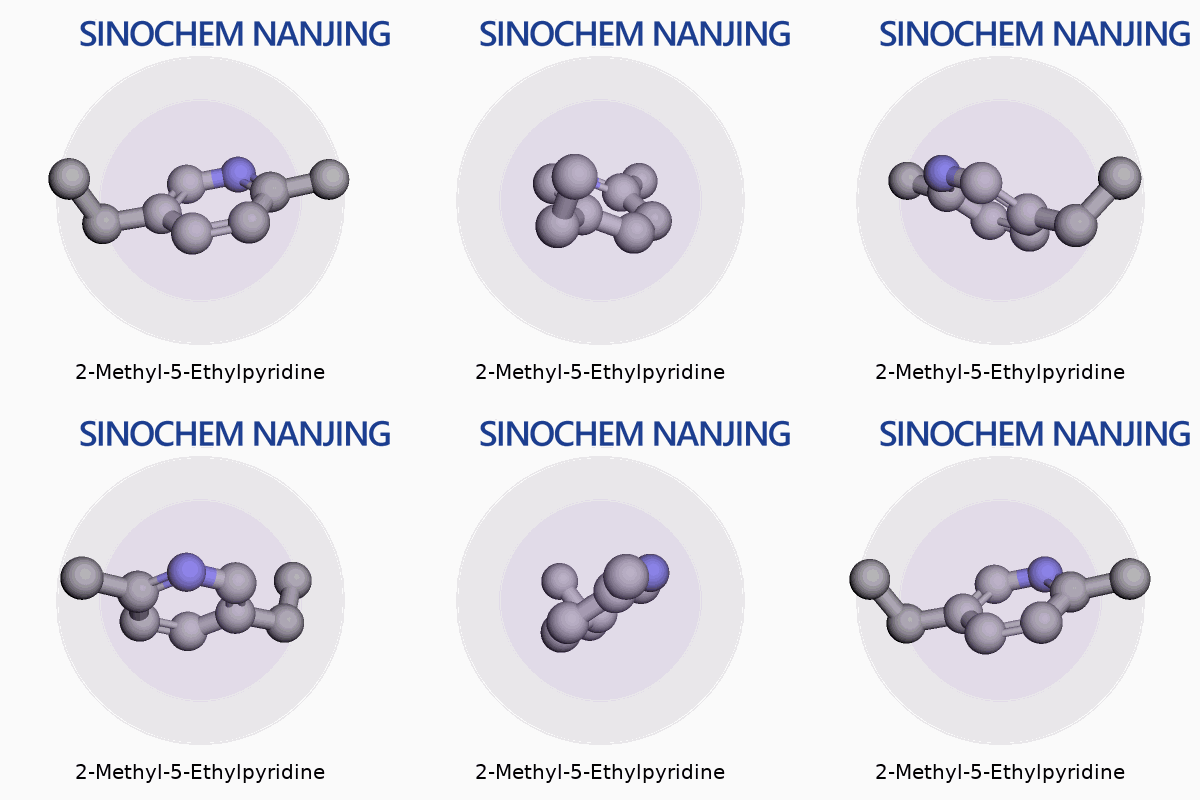
| Names | |
| Preferred IUPAC name | 3-Ethyl-6-methylpyridine |
| Other names |
2-Methyl-5-ethylpyridine 5-Ethyl-2-picoline 5-Ethyl-2-methylpyridine 2-Methyl-5-ethyl-pyridine 5-Ethyl-α-picoline |
| Pronunciation | /tuː-ˈmɛθ.ɪl-faɪv-ˈɛθ.ɪl-pɪˈrɪd.iːn/ |
| Identifiers | |
| CAS Number | 5315-79-7 |
| Beilstein Reference | 105939 |
| ChEBI | CHEBI:141345 |
| ChEMBL | CHEMBL20239 |
| ChemSpider | 15420 |
| DrugBank | DB02170 |
| ECHA InfoCard | echa.europa.eu/information-on-chemicals/infocards/100.010.629 |
| EC Number | 203-579-2 |
| Gmelin Reference | 958846 |
| KEGG | C06355 |
| MeSH | D015586 |
| PubChem CID | 12109 |
| RTECS number | UI3150000 |
| UNII | 9K45Q6E493 |
| UN number | UN2523 |
| Properties | |
| Chemical formula | C8H11N |
| Molar mass | 121.18 g/mol |
| Appearance | Colorless to yellow liquid |
| Odor | amine-like |
| Density | 0.930 g/cm³ |
| Solubility in water | slightly soluble |
| log P | 1.86 |
| Vapor pressure | 0.7 mmHg (20 °C) |
| Acidity (pKa) | 5.89 |
| Basicity (pKb) | 6.80 |
| Magnetic susceptibility (χ) | -54.6e-6 cubic centimeters per mole |
| Refractive index (nD) | 1.531 |
| Viscosity | 1.08 mPa·s (25 °C) |
| Dipole moment | 2.56 D |
| Thermochemistry | |
| Std molar entropy (S⦵298) | 309.5 J·mol⁻¹·K⁻¹ |
| Std enthalpy of formation (ΔfH⦵298) | 183.7 kJ/mol |
| Std enthalpy of combustion (ΔcH⦵298) | -3606 kJ/mol |
| Hazards | |
| GHS labelling | GHS02, GHS07 |
| Pictograms | GHS07 |
| Signal word | Warning |
| Hazard statements | Hazard statements: "H226, H302, H315, H319, H335 |
| Precautionary statements | P210, P261, P273, P280, P301+P312, P304+P340, P305+P351+P338, P405, P501 |
| NFPA 704 (fire diamond) | 2-1-0 |
| Flash point | 68 °C (154 °F; 341 K) |
| Autoignition temperature | 540 °C |
| Explosive limits | 3.2–19.4% |
| Lethal dose or concentration | LD50 oral rat 430 mg/kg |
| LD50 (median dose) | LD50 (median dose): 368 mg/kg (oral, rat) |
| NIOSH | SKS796 |
| PEL (Permissible) | PEL (Permissible Exposure Limit) of 2-Methyl-5-Ethylpyridine: "No OSHA PEL established |
| REL (Recommended) | 0.5 ppm |
| IDLH (Immediate danger) | IDLH: 100 ppm |
| Related compounds | |
| Related compounds |
2-Methyl-5-propylpyridine 2,6-Lutidine 2-Ethyl-5-methylpyridine 2,4,6-Collidine 2-Methylpyridine |



