2-Methyl-2-Propanol: Unpacking a Key Player in Modern Chemistry
Historical Development
Long before anyone attached market value to 2-methyl-2-propanol, or tert-butanol, chemists explored the boundaries of organic reaction. The journey of this compound starts in the mid-19th century, where the earliest references track back to the experimentation with petroleum derivatives. By the onset of the twentieth century, the focus sharpened toward tert-butanol's unique branching, which distinguished it from its straight-chained cousins. Researchers in academic settings pieced together its structural quirks using the evolving toolkit of organic chemistry. During the post-war industrial boom, manufacturers scaled up synthesis to supply the expanding needs of the solvents, coatings, and plastics industries. Today, the path from laboratory curiosity to bulk chemical staple tells the wider story of organic chemistry's maturation and the rise of petrochemical manufacturing.
Product Overview
2-Methyl-2-propanol doesn’t grab headlines outside specialty circles, but its utility ripples across multiple sectors. Its clear, sharp-smelling liquid form gets poured into everything from specialty plastics to extraction and purification workflows. In my own years working with laboratory reagents, I noticed tert-butanol’s role as a solvent shines in situations where less-branched alcohols stumble. Robust consumer demand keeps it in steady production, illustrating how the simple molecules often serve as the backbone for more complex innovations. While the layperson might never encounter it directly, the reliability of modern pharmaceuticals and coatings leans heavily on intermediates like tert-butanol.
Physical & Chemical Properties
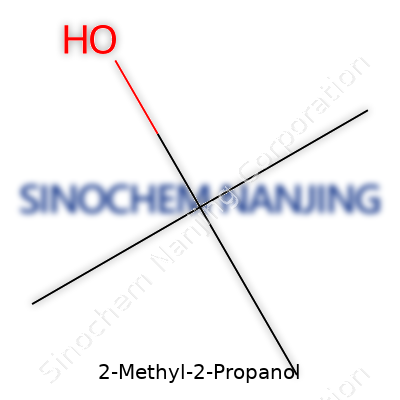
2-Methyl-2-propanol stands out thanks to its tertiary alcohol structure. The presence of three methyl groups around a central carbon squeezes the molecule into a compact, branched form. It boils at roughly 82 degrees Celsius, which falls in line with other small alcohols, but the branching drops its ability to engage in hydrogen bonding compared to straight-chain types. This structure grants tert-butanol a relatively lower toxicity profile and gives it a mild solvent strength—just enough for delicate tasks without overwhelming reactivity. Over years in laboratory work, I've found it offers reliable miscibility with water and many organic liquids, a trait that comes in handy for preparative chemistry and extractions.
Technical Specifications & Labeling
For all its ubiquity, tert-butanol doesn’t go onto shelves without rigorous scrutiny. Manufacturers define purity often above 99 percent, with water content as low as practical, since trace moisture can skew reactions. Industry-grade labeling typically stresses flammability and the need for storage in well-ventilated areas. Regulatory bodies like OSHA and the European Chemicals Agency insist on hazard warnings. Over the years, I’ve seen poor labeling trigger accidents and regulatory violations, supporting the argument for consistent labeling standards worldwide. This meticulous tracking helps protect both industrial users and laboratory staff, underlining the importance of thoughtful regulatory guidance backed by evidence and practice.
Preparation Method
Industrial synthesis traces back most often to the hydration of isobutylene. Catalysts, usually acids, drive the equilibrium toward tert-butanol formation, squeezing high yields out of cheap feedstock. I’ve followed this process in academic settings, watching as engineers optimized for energy efficiency and waste reduction. Small-scale labs may turn to Grignard reactions with acetone or manage the substitution pathway through tert-butyl chloride hydrolysis. Though simple on paper, each step demands careful handling and precise control to safeguard yields and prevent byproducts that could undermine downstream applications.
Chemical Reactions & Modifications
One of the appeals of tert-butanol in the lab is its versatile response to chemical treatment, shaped by the bulky nature of its tert-butyl group. It forms esters, ethers, and halides with ease. The molecule’s tertiary carbon shrugs off oxidation, so it resists conversion to aldehydes or carboxylic acids—something that simplifies purification and storage. I’ve used tert-butanol’s resistance to unwanted side reactions in dehydrations or base-catalyzed transformations, where it plays the role of an inert co-solvent or a stabilizer for reaction intermediates. Its reactivity profile gives it a steady supporting role in modern synthetic design.
Synonyms & Product Names
Ask five chemists about 2-methyl-2-propanol, and you might hear tert-butanol, t-butyl alcohol, TBH, or even trimethylcarbinol tossed into the conversation. Over time, these synonyms became entrenched in technical literature—sometimes causing headaches for researchers looking up data or writing compliance documents. I’ve sat through more than one meeting meditating on the confusion that arises from naming conventions in global supply chains. Standardizing names not only cuts red tape but also elevates safety and boosts communication in multi-disciplinary teams.
Safety & Operational Standards
Access to reliable safety guidance stands as a make-or-break feature in how any lab or facility manages tert-butanol. Flammability operates as the most pressing risk—open flames or high heat sources paired with poor ventilation invite real danger. Short-term exposure rarely leads to severe toxicity in humans, but inhaling large quantities or ingesting the chemical can elicit symptoms like dizziness, headaches, or more pronounced central nervous system effects. Practical experience shows that wearing splash goggles, gloves, and observing standard chemical hygiene rules gets embedded in every tert-butanol protocol. Proper storage containers, ventilation, and thoughtful handling prevent incidents and limit liability. Regulatory updates regularly seek to keep pace with best practices. Commitment to rigorous protocols should never slacken, since one oversight in handling or waste disposal can endanger workers and the environment.
Application Areas
The chemical’s role in the modern world stretches far beyond the laboratory. The solvents industry leans on its unique polarity for extraction and crystallization of sensitive compounds. Pharmaceuticals value tert-butanol for its stability, forming the backbone of reactions that need a non-reactive medium. In paints and coatings, the alcohol reduces viscosity and tunes drying rates for uniform application. Over the years I have seen it slip into specialty inks and adhesives, where precise formulation gives products their market edge. Not all uses get equal attention, but each application rewards its unique balance between volatility, miscibility, and relatively low toxicity. The story of tert-butanol’s applications suggests that small changes at the molecular level ripple out into wide-ranging industrial impact.
Research & Development
Innovation never stops, and chemists consistently probe for new angles on tert-butanol’s utility. Teams worldwide focus on cleaner production methods, seeking to swap harsh acids for greener catalysts or even enzyme-based processes, aiming to reduce environmental impact. I’ve seen research groups dig into compositional analysis, hoping to better predict behavior in new polymer blends or reactive dyes. Analytical studies continue, exploring how the alcohol interacts with novel pharmaceuticals or influences crystal growth mechanics. Academic-industry partnerships keep advancing the state-of-the-art, distributing findings in professional societies and scientific journals. These investments bear fruit in incremental process improvements and, occasionally, step-change breakthroughs.
Toxicity Research
Scrutiny of toxicity sits at the heart of responsible chemical stewardship. Studies over the past decades show that tert-butanol’s acute risks under ordinary use remain low. Long-term or high-dose exposure brings more concern; animal studies indicate potential effects on the liver and nervous system at elevated concentrations. Regulatory scientists monitor these results, shifting permissible exposure standards in light of new evidence. Wastewater and environmental persistence prompt ongoing research to track breakdown pathways and possible effects on aquatic life. My take, reinforced by these findings, emphasizes that risk remains manageable with the enforced use of personal protective equipment, engineering controls, and updated training. Ramping up investment in green chemistry methods further lessens both human and environmental risk profiles.
Future Prospects
Looking forward, 2-methyl-2-propanol’s future sits at the intersection of scale, safety, and sustainability. As bio-based chemical manufacturing expands, new feedstocks could replace the petroleum route without sacrificing purity or performance. Regulatory moves to lower environmental burdens may force manufacturers to rethink energy use and waste streams within tert-butanol production. Industrial demand in coatings, adhesives, and especially pharmaceuticals remains robust, with new applications tied to the growth of specialty chemicals. Advances in analytical instrumentation suggest tighter process control and product traceability are within reach. Over my years observing the field, every innovation that brings safer handling and greener chemistry strengthens the case for keeping tert-butanol—and chemicals like it—at the core of economic and scientific progress.
What are the main uses of 2-Methyl-2-Propanol?
Diving Into the Heart of 2-Methyl-2-Propanol
In labs and factories, 2-Methyl-2-Propanol—some folks call it tert-butanol—crops up more than most people notice. Chemistry students bump into it early on, but its usefulness goes far past college workbenches. I remember handling this stuff myself on a hot summer job, gloves snug, double-checking chemical labels like my day depended on it. As a worker and writer, seeing both sides of these chemicals changes how you view their quiet influence.
Solvent Power That Gets Results
Paint factories mix 2-Methyl-2-Propanol into coatings because it dissolves resins and dyes quickly. Its structure gives it an edge—it blends with water and organic solvents. In my own garage, stripping old paint became easier with hardware-store products built on this alcohol. And labs use it to pull out desirable chemicals during synthesis, a process that rewards the right solvent choice. Facts show strong global demand for it in surface coatings, with reports linking it to consistent product results. That reliability saves time and headaches for both workers and customers.
Key Role in Pharmaceuticals
Medicines depend on clean, controlled chemistry. 2-Methyl-2-Propanol steps up as a reagent during synthesis of drugs and vitamins. It can transform raw materials, making reactions go faster and better. The pharmaceutical market tracks every ingredient—one misstep can ruin a batch. Companies rely on this alcohol to help produce compounds like antibiotics and painkillers. Market data ties its use to safe processing—essential when health is on the line. Without its place in these labs, shelves at the local pharmacy could look very different.
Fuel Additive That Keeps Engines Honest
Out on the road, a tank of gasoline may hide some science in plain sight. 2-Methyl-2-Propanol has a history as an octane booster, improving how engines burn fuel. By raising the octane rating, it helps engines run smoother and cut down on knocking. Regulatory agencies keep an eye on fuel additives, checking both air quality and performance. Blending in this alcohol helps reduce emissions linked to poor fuel combustion. Older cars, especially, ran cleaner because of it.
How It Handles Water and Ice
A cold winter means icy roads and slippery sidewalks. De-icing fluids draw on 2-Methyl-2-Propanol’s properties to prevent water from freezing where safety matters most. Airports rely on fast-acting solutions to keep runways open. Chemistry gives this compound a low freezing point, letting it power through even stubborn ice. Transportation safety studies have pointed out fewer flight delays where these mixtures get used.
Careful Use and What Comes Next
The chemical deserves respect. Industry guidelines flat out require safe handling, with training for anyone using or transporting it. Health and safety records remind us—getting lax leads to unnecessary exposure and risk. For folks worried about environmental impacts, research on greener alternatives moves slowly, but some bio-based alcohols are in the works.
Fixing Problems, Building Trust
Real solutions come from better oversight and honest data. Audits and stricter safety training give confidence that workers and surrounding communities stay protected. Supporting scientific studies deepens understanding, pushing industries toward products that balance efficiency and health. The debate over chemicals like 2-Methyl-2-Propanol asks industries to look past cost and consider lasting effects, both good and bad.
What is the chemical formula of 2-Methyl-2-Propanol?
Chemistry in Everyday Life
2-Methyl-2-Propanol isn’t a name I hear at a coffee shop or while picking up groceries, but its relevance pops up in labs, industries, and even in some college classrooms. Most folks who spent time in a chemistry lab remember the sharp scent of alcohols, and 2-Methyl-2-Propanol stands out. Also known as tert-Butyl alcohol, its chemical formula—C4H10O—holds the story of its structure and how it interacts in the world.
What That Formula Really Means
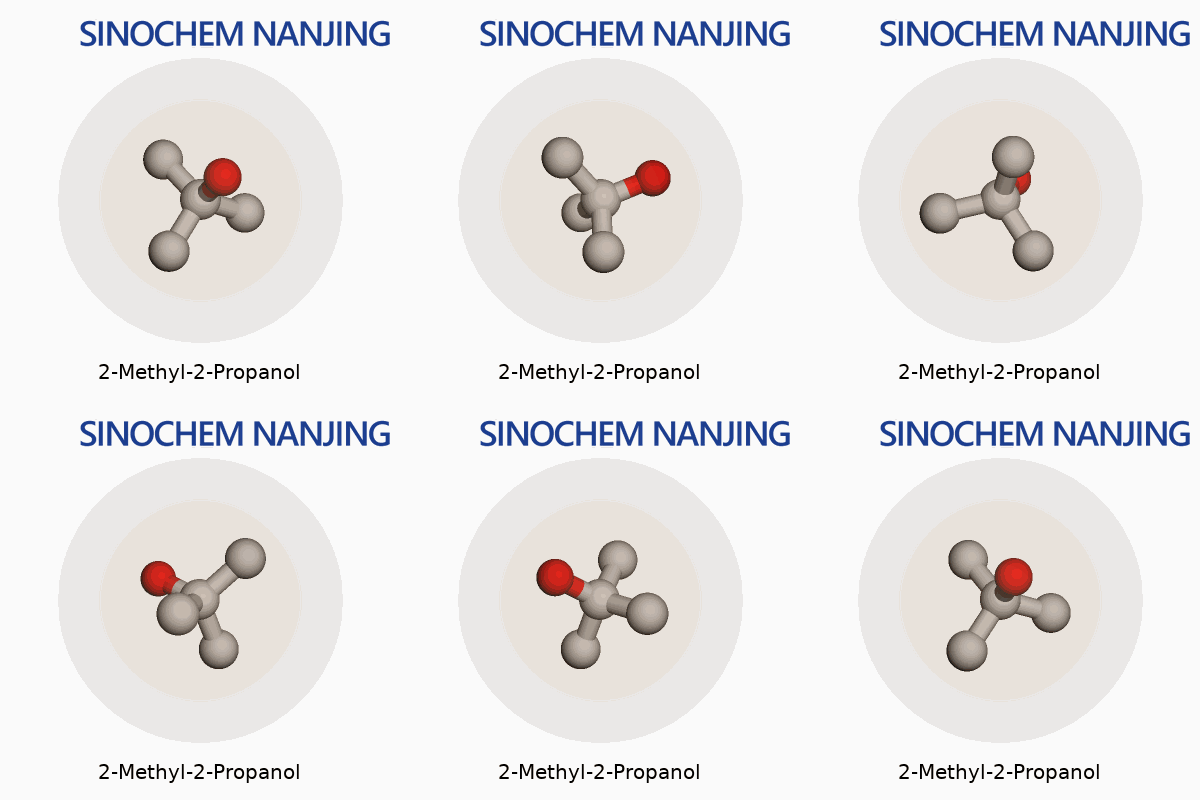
Anyone who looked at the formula might try to piece together the structure. Four carbons, ten hydrogens, and one oxygen. The placement makes all the difference. This isn’t just another variant of butanol. In 2-Methyl-2-Propanol, three methyl groups branch from a central carbon, which also holds the hydroxyl group. This central setup leads to a compact shape, and in practical lab work, that means different boiling points, solubility, and reactivity compared to other alcohols.
Applications and Everyday Encounters
Out in the field, 2-Methyl-2-Propanol often shows up in organic synthesis. It’s used to produce other chemicals, act as a solvent, or even help some flavor and fragrance chemistry move along. I’ve come across it used in pharmaceutical preparations, particularly where a strong yet manageable alcohol comes in handy. This compound’s branching gives it properties that partially separate it from run-of-the-mill straight-chain alcohols, like a lower melting point and increased volatility.
There’s value in recognizing how formula and structure control these traits. That recognition plays a role in everything from developing more efficient lab methods to managing safety protocols. The way it evaporates fast means good ventilation becomes important wherever it’s stored or handled. Lab accidents usually come from misunderstandings like this, so knowing the formula isn’t just for passing exams—it’s for real-world health and safety.
Risks, Safety, and Responsible Handling
Working with chemicals like 2-Methyl-2-Propanol, safety always comes to mind. The chemical can cause irritation if it splashes on skin or hits the eyes. Aspirating its fumes causes headaches. I've learned the hard way that gloves and goggles aren’t optional. Spills clean up easily because of its volatility, but that volatility also increases fire risks. A well-ventilated workspace and secure chemical storage cut down on mishaps.
Building Chemical Literacy
A big takeaway here: learning chemical formulas like that of 2-Methyl-2-Propanol isn’t locked away in the classroom. It matters in any space dealing with solvents, cleaners, or reagents. Digging beneath the formula gives deeper insights. Students and workers can connect the dots between structure and behavior, which empowers them to adapt safely and creatively. Professional chemists rely on this knowledge daily, and those entering the field do well to make it second nature.
Solutions and Future Directions
Teaching chemistry with hands-on examples and direct experience opens up understanding. Safety protocols start making real sense once students see why branching in alcohols leads to fast evaporation or heightened flammability. Simple demonstrations that tie formula to function help connect science education to meaningful learning. Clear labeling, ongoing training, and updates on materials safety keep both newcomers and experienced folks on the same page, cut down on accidents, and encourage curiosity rather than confusion.
Is 2-Methyl-2-Propanol hazardous to health or environment?
Real Life Around 2-Methyl-2-Propanol
You don’t see 2-Methyl-2-Propanol (t-butyl alcohol) on store shelves like bleach or ammonia, but it pops up in industrial settings and research labs all the time. I spent years as a chemistry student and later as a writer covering environmental science, so I’ve both handled and tracked it. The way t-butyl alcohol gets used — as a solvent, in pharmaceuticals, part of making perfumes — means it sneaks quietly into plenty of corners. Most people won’t grab a jug of it at the hardware store, but the folks making plastics, flavorings, or even some cleaning products get familiar with its sharp smell fast.
Lungfuls and Leaks: Why Exposure Matters
Take a sniff of this stuff in the lab and you’ll know right away things aren’t normal. Short-term exposure leads to headaches, dizziness, and sore throats. That’s according to the Centers for Disease Control and Prevention. Breathing high levels for too long may mess with your respiratory system and even your nervous system. Purdue University ran studies on classroom exposure to solvents like this one — one afternoon with a broken bottle left half the class with pounding heads. More than a few students learned to respect volatile organics the hard way.
Through the skin, things get tricky, too. Spillage or splashing can cause irritation. Factories keep eye wash stations and gloves close by for a reason, because the alternative is redness or burns. I learned once, dropping a test tube, exactly how fast it seeps through gloves if you grab too slow.
On the Other Side of the Drain
Down the drain, things change. 2-Methyl-2-Propanol does not last long floating in the open air. Its molecules break apart quickly under sunlight. The U.S. Environmental Protection Agency has data showing it breaks down in days, not months, outside. But in places with low sunlight — closed drains, trapped soil, inside old carpets — it hangs around longer and builds up. If spilled in large amounts, it can move through groundwater and reach drinking supplies.
In rural areas with private wells, a single barrel leak could introduce the compound to groundwater. EPA records from industrial accidents in Texas and Louisiana report trace amounts in wells after chemical plant spills. Inhaling vapor or drinking contaminated water isn’t a daily risk for most people, but it doesn’t take much to set off alarms for local communities relying on that water.
Long-Term Questions, Better Tools
Nobody lives on a steady diet of 2-Methyl-2-Propanol, but long-term exposure can’t be ignored where manufacturing is heavy. The International Agency for Research on Cancer lacks data on cancer risk, but that doesn’t mean a clean slate. Respiratory and liver effects show up in animal studies. NIOSH safety guidelines suggest airing out workspaces, keeping chemical stores tight, and using proper breathing protection.
On the cleanup side, new filtration and remediation techniques let communities deal with spill risks better than before, catching leaks before they get into the water table. Some states direct companies to track this compound in their wastewater, not just in finished products.
Where Smarter Choices Add Up
Chemicals carry weight beyond the test tube or mixing vat. 2-Methyl-2-Propanol earns careful respect, not just for the obvious headaches but for the unseen routes into water and air. The lessons I’ve seen, working side by side with environmental engineers, keep coming back to vigilance: better monitoring, real-time leak response, more education for workers. The more a community demands transparency from local factories and holds industries to higher safety, the less chance for harm — at work and at home.
What is the boiling point of 2-Methyl-2-Propanol?
Understanding the Basics: Why Boiling Points Matter
Take a stroll through any chemistry lab, and you’ll see bottles with all sorts of names. Among these, 2-Methyl-2-Propanol stands out for its unique structure and practical uses. The boiling point of this liquid—around 82°C (179.6°F)—doesn’t just pop up on datasheets for fun. It sets the tone for how this compound gets used and stored, from the classroom to the factory floor.
Stepping into the Lab: Real Consequences of a Low Boiling Point
A boiling point in the low 80s Celsius counts as low among alcohols with similar weights. That doesn’t sound wild, but it changes the way labs and professionals handle this chemical. You can spill 2-Methyl-2-Propanol on your hand, and it starts to evaporate in moments thanks to a boiling point below that of water. Researchers and students pick it up and quickly notice how it doesn’t linger or leave much trace. This makes certain tasks—like extracting specific non-polar compounds—a whole lot easier.
Spotlight on Safety: Risks That Come with Volatility
Early in my chemistry days, using volatile compounds brought me both excitement and caution. Liquids with a low boiling point escape into the air much faster. Left out, 2-Methyl-2-Propanol fills the room with fumes that catch a spark far quicker than water or alcohols like ethanol. The National Institute for Occupational Safety and Health (NIOSH) classifies it as a chemical that requires solid ventilation and careful handling, especially under heat. People working with open flames or hot equipment don’t risk pouring it just anywhere.
Industrial Value: How Boiling Point Shapes Production
Look at industry, and you’ll see how a low boiling point works in favor of efficiency. Companies favor 2-Methyl-2-Propanol as a solvent because it evaporates out of solutions with little fuss, leaving behind less residue. Its quick evaporation speeds up drying times for coatings and inks, and saves energy on distillation compared to high-boiling cousins. Still, fast evaporation forces plants to manage air quality with local exhaust and keep containers closed outside of use.
Environmental Concerns and Health: The Responsibility of Quick Evaporation
With a low boiling point, more of this liquid ends up in the air even at room temperature. Years back, I saw open bottles forgotten in a university storeroom—gone in days, leaving only a faint smell. Volatile organic compounds (VOCs) like this play a role in ground-level ozone when they drift up and react in sunlight. The U.S. Environmental Protection Agency (EPA) keeps an eye out for emissions of VOCs, including 2-Methyl-2-Propanol, aiming to keep smog levels reasonable. In spots with poor airflow, high vapor concentrations can bother eyes, noses, and lungs.
What Helps: Approaches for Safer Use and Storage
Basic habits make a big difference. Tightly sealed containers, cool storage areas, and well-designed fume hoods limit both waste and risk. Lab workers check for leaks and keep track of inventory, staying one step ahead of accidental vapor buildup. Training teams to spot evaporation and understand how a boiling point can affect daily tasks keeps everyone safer. Sharing data on safe exposure limits, ignition sources, and proper personal protective equipment does more than check a box—it helps build a culture of responsibility around every chemical, not just 2-Methyl-2-Propanol.
How should 2-Methyl-2-Propanol be stored and handled safely?
Why 2-Methyl-2-Propanol Matters
Working in a lab, you’ll spot chemicals with names that sound intimidating. Take 2-Methyl-2-Propanol. Folks use it in perfumes, resins, and pharmaceuticals. It’s got a sharp, almost medicinal smell. Most people call it tert-butanol. One leaky bottle floods a room with fumes that demand quick ventilation. Safe storage and handling are not just tasks to tick; they are solid ways to keep people and property out of harm’s way.
Understanding Storage Risks
2-Methyl-2-Propanol catches fire easier than rubbing alcohol. I’ve seen a careless moment—a loose cap or a cracked jug—create a room full of anxiety. High vapor pressure means it evaporates fast. Fumes build up indoors and linger at nose-height, ready to catch a spark. Years ago, I opened a warm storage cabinet, caught the scent, and immediately double-checked every container. Never ignore a suspicious odor with this compound nearby.
Smart Storage Choices
You don’t keep this chemical on a regular shelf. Store it in a flammable liquid storage cabinet, away from heat and ignition sources. Flammable safes are built with thick steel and a self-closing door. Look for a spot that’s not in direct sunlight or close to heaters. Always mark the shelf so everyone knows where it goes. A tight seal goes a long way. Vapor escapes through loose caps, so use containers meant for volatile organics.
Keep water and strong acids far from tert-butanol. A little cross contamination, a small leak, and you have a toxic mess on your hands. I’ve watched someone store acids on the shelf below, then learned the hard way that vapors seep down.
Handling Without Shortcuts
Handling starts with wearing gloves and goggles. I always pick gloves that resist organic solvents like nitrile. Don’t use the cheap stuff—some gloves feel thin and turn tacky right away. Eye protection comes first; one splash burns and takes ages to heal. Use a fume hood, not an open bench. Vapors irritate your eyes, nose, and throat. I once tried to pour a small sample outside the hood, trusting the open window; minutes later, the air felt heavy and my eyes stung.
Spill control works best when absorbent pads and sand are on hand. I keep a dedicated spill kit nearby, checked every month. Cleanup can’t wait—let a spill sit, and it spreads across the floor, evaporating and filling your workspace with nasty fumes.
Emergency Preparedness
Have an emergency shower and eyewash station within arm’s reach. Practice the drill; don’t just do it on paper. People freeze when alarms blare, so do real run-throughs. Extinguishers should work for chemical fires—not just wood or paper. Carbon dioxide or dry powder are good options. Label all containers clearly, using chemical names that everyone recognizes. Don’t trust hand-written tape; print the labels if possible.
The risks with 2-Methyl-2-Propanol are real, but careful storage, good habits, and backup plans give you control. Small fixes, like a new cabinet or fresh gloves, anchor real safety. Paying attention to these details pays off every day you share space with volatile chemicals.
| Names | |
| Preferred IUPAC name | 2-methylpropan-2-ol |
| Other names |
tert-Butyl alcohol t-Butanol Trimethylcarbinol t-Butyl hydroxide 2-Hydroxy-2-methylpropane TBA |
| Pronunciation | /tuːˈmɛθəl tuːˈprəʊpənɒl/ |
| Identifiers | |
| CAS Number | 75-65-0 |
| Beilstein Reference | 605414 |
| ChEBI | CHEBI:15355 |
| ChEMBL | CHEMBL44877 |
| ChemSpider | 682 |
| DrugBank | DB02321 |
| ECHA InfoCard | 100.609.142 |
| EC Number | 200-889-7 |
| Gmelin Reference | 787 |
| KEGG | C00424 |
| MeSH | D016689 |
| PubChem CID | 6410 |
| RTECS number | EO3496000 |
| UNII | K1M0713FEG |
| UN number | UN1123 |
| CompTox Dashboard (EPA) | DTXSID4020903 |
| Properties | |
| Chemical formula | C4H10O |
| Molar mass | 74.12 g/mol |
| Appearance | Colorless liquid |
| Odor | camphor-like |
| Density | 0.789 g/cm³ |
| Solubility in water | miscible |
| log P | 0.35 |
| Vapor pressure | 40 mmHg (20°C) |
| Acidity (pKa) | 15.5 |
| Basicity (pKb) | 15.2 |
| Magnetic susceptibility (χ) | -43.9·10⁻⁶ cm³/mol |
| Refractive index (nD) | 1.378 |
| Viscosity | 2.9 cP (20°C) |
| Dipole moment | 1.70 D |
| Thermochemistry | |
| Std molar entropy (S⦵298) | 103.7 J·mol⁻¹·K⁻¹ |
| Std enthalpy of formation (ΔfH⦵298) | -338.0 kJ/mol |
| Std enthalpy of combustion (ΔcH⦵298) | -2681 kJ/mol |
| Hazards | |
| GHS labelling | GHS02, GHS07 |
| Pictograms | GHS02,GHS07 |
| Signal word | Warning |
| Precautionary statements | P210, P233, P240, P241, P242, P243, P261, P271, P301+P310, P303+P361+P353, P304+P340, P305+P351+P338, P312, P337+P313, P370+P378, P403+P235, P501 |
| NFPA 704 (fire diamond) | 2-1-0 |
| Flash point | Flash point: 11 °C |
| Autoignition temperature | 720 °F (382 °C) |
| Explosive limits | 5.0–11.0% |
| Lethal dose or concentration | LD50 oral rat 3500 mg/kg |
| LD50 (median dose) | 2,600 mg/kg (rat, oral) |
| NIOSH | ZD3325000 |
| PEL (Permissible) | 100 ppm (300 mg/m3) |
| REL (Recommended) | 50 ppm |
| IDLH (Immediate danger) | 2500 ppm |
| Related compounds | |
| Related compounds |
tert-Butyl chloride tert-Butyl bromide Isobutylene tert-Butylamine tert-Butyl methyl ether |



