Taking a Closer Look at 2-Methyl-1-Butanol: The Hidden Player in Chemistry and Industry
Historical Development
Long before the world of chemistry divided itself into thousands of specialty products, 2-Methyl-1-Butanol found its role in fermentation broths and distiller’s flasks. German scientists gave it serious attention in the nineteenth century. They first recognized it as part of the “fusel oils”—a label for the assortment of higher alcohols created along with ethanol in old-school spirit distillation. People didn’t quite understand the differences back then, but gradually, research separated 2-Methyl-1-Butanol from its brothers, like isoamyl alcohol and n-butanol. By the early twentieth century, chemists had mapped out its structure and boiling point, giving researchers and manufacturers the groundwork to tweak and scale its production, whether by synthetic or fermentation routes. This early science revolutionized not just chemistry labs, but also the world of flavors, solvents, and fuels.
Product Overview
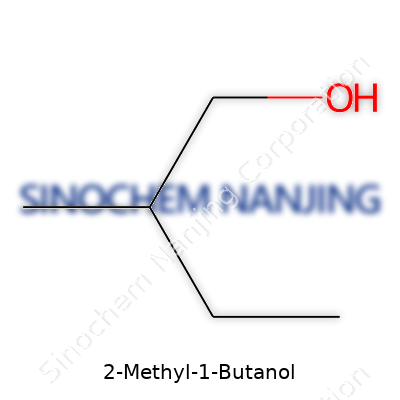
2-Methyl-1-Butanol doesn’t get splashy advertising, but in manufacturing and research, few materials are as quietly useful. Structurally, it’s a five-carbon alcohol with a methyl group hanging off the second carbon. Most reference materials call it a simple branched pentanol, and that subtle branch changes its character. Unlike its straight-chain cousins, this version blends well with flavors and fragrances or slips into motor fuels as an octane enhancer. Companies extract it for both its flexibility and its relatively straightforward handling.
Physical & Chemical Properties
Pick up a bottle of pure 2-Methyl-1-Butanol—what you get is a clear, oily liquid that pours with a sweet, slightly heavy scent. The boiling point sits just above most common alcohols, at about 127°C. You’ll see its density hovers around 0.81 g/cm³, making it lighter than water but heavier compared to familiar solvents like acetone. It resists mixing with water, yet teams up easily with most organic solvents. Chemists rely on its moderate polarity and that branch in its carbon chain, which gives it different reactivity than plain old 1-pentanol or 2-pentanol. These properties shape how industries use it, whether in extraction processes, coatings, or perfume chemistry.
Technical Specifications & Labeling
Labeling for 2-Methyl-1-Butanol hinges on purity, water content, and trace impurities, especially because sensitive uses—like pharmaceuticals or food flavorings—call for tight quality controls. Standard industrial-grade 2-Methyl-1-Butanol comes with purity above 98%, but analytical chemists always want more. Labels should also mention storage needs: this material keeps best in tightly sealed containers, in well-ventilated settings, away from heat or open flames. Containers ought to list the main safety phrases, hazard pictograms, and standard identifiers, such as the CAS number 137-32-6. Honesty and clarity on labels mean fewer headaches for everyone, from warehouse keeper to lab manager.
Preparation Method
Early factories made 2-Methyl-1-Butanol as a lucky byproduct from starchy or sugary fermentations, pulling it out of grain washes and fruit mash. Microbes would go after the sugar and produce a ragtag mix of higher alcohols along with the expected ethanol. Today, companies use petrochemical routes just as often as fermentation. The classic chemical method involves hydroformylation of butenes, where carbon monoxide and hydrogen react with an olefin in the presence of a catalyst to drop in a formyl group, then chemists reduce that to the alcohol. Both approaches have their ups and downs: fermentation needs clean handling of byproducts; hydroformylation calls for precise catalysts and control over high-pressure systems. Each process reflects what’s available and what the end use demands.
Chemical Reactions & Modifications
2-Methyl-1-Butanol steps up for all sorts of reactions in the lab. Oxidize it, and you head toward a corresponding aldehyde or acid. Use it as a substrate with acid chlorides, and you’ll get a stream of esters, many of which find their way into food and fragrance additives. Those ester notes—fruity, rounded, sometimes convincingly like fresh apples—trace straight back to this alcohol as a starting block. It handles mild reduction or etherification reactions with ease. Whether preparing intermediates for pharmaceuticals or adding another layer of complexity to specialty resins, its chemical behavior responds predictably thanks to that secondary branching.
Synonyms & Product Names
Ask a room of chemists about 2-Methyl-1-Butanol, and you’ll hear a variety of names thrown around. Isopentanol, active amyl alcohol, methyl butyl carbinol, and 2-methylbutan-1-ol all refer to the same compound. Basic research journals may use the strict IUPAC naming, but in production lines or perfumer’s workshops, the shorter nicknames prevail. All these labels trace back to the simple fact that this alcohol builds off a butyl backbone with a single methyl group sitting at the second carbon. Recognizing these synonyms matters for cross-border commerce and research, where regulation, customs, or specification sheets may swap between these terms.
Safety & Operational Standards
Safety has improved as both production and end uses have risen in scale. 2-Methyl-1-Butanol brings a moderate degree of flammability, so responsible storage means using flameproof cabinets and clear labeling in industrial settings. Liquid and vapor both irritate eyes and mucous membranes. Factories stick with engineering controls—proper ventilation, fume hoods, and personal protective gear. Spill guidelines emphasize swift containment using inert absorbents, followed by careful cleanup. Most organizations draw directly from international regulatory standards, like those from OSHA and the EU’s REACH framework, to keep workers safe and environmental releases rare and limited.
Application Area
While the average consumer might never think of 2-Methyl-1-Butanol, its fingerprints show up everywhere. Fuel companies blend it into gasoline as an octane booster or as a renewable additive, helping engines run smoother and reducing emissions. Flavorists shape esters from it for food and beverage work, where strict regulations govern both purity and allowable quantities. Paint and coating manufacturers grab its solvency—because it dissolves resins smoothly and dries without leaving a heavy odor behind. Fragrance chemists value it for its ability to round out and lift perfume compositions. Across sectors—energy, chemistry, coatings, and flavors—its flexibility and approachable production costs keep it a fixture in the toolbox.
Research & Development
Chemists in research labs continuously look for ways to improve yields, purity, and sustainability. New microbial strains promise higher and cleaner yields through fermentation. Synthetic chemists explore catalysts with lower toxicity and better selectivity for hydroformylation, which means fewer headaches during separation and purification. Some green chemistry initiatives target renewable feedstocks, hoping to make the process less dependent on fossil resources. Sensors and analytical tools push the boundaries on trace impurity detection, enabling production that meets tighter specification bands for sensitive uses like pharmaceuticals. The push for cleaner, safer, and more sustainable paths has only stepped up as regulations and consumer expectations combine to demand better answers.
Toxicity Research
Toxicologists have kept a close eye on 2-Methyl-1-Butanol for the last several decades. Acute toxicity lands in the moderate range: large oral doses can cause headaches, dizziness, or nausea, but at practical exposure levels, it doesn’t present hazards beyond what you see from other similar alcohols. Researchers have not found it to be carcinogenic, and industry guidelines suggest strict exposure limits designed to prevent chronic effects or organ damage. Environmental fate studies show it breaks down readily in soil and water, so it poses low risks of long-term buildup. Still, in workplaces, exposure needs tracking, since inhalation of vapors, especially with poor ventilation, causes both discomfort and concern.
Future Prospects
2-Methyl-1-Butanol stands in a promising spot for both industrial and research futures. The global push for renewable fuels and cleaner solvents keeps attention fixed on higher alcohols. As biofuel mandates take hold and synthetic processes move toward greener pathways, production of this compound will likely rise. Chemists see growth in markets like advanced coatings, specialty plasticizers, and novel fragrance bases. Regulatory changes—especially those designed to clamp down on volatile organic compounds—have triggered innovation in both formulation and application methods. If clean energy and consumer safety trends continue as expected, demand for sustainable sources and purer grades will reshape both supply chains and research directions.
What is 2-Methyl-1-Butanol used for?
A Closer Look at a Less Discussed Chemical
2-Methyl-1-butanol doesn’t grab headlines or show up in splashy ad campaigns. It doesn’t show up on labels in the supermarket, and most people won’t mention it unless they work in a lab or factory. But this simple alcohol quietly shapes products we all encounter, builds flavors some people enjoy, and helps many industries keep moving.
Supporting Flavors and Fragrances
2-Methyl-1-butanol plays a steady role in the world of flavor and fragrance. In small doses, it gives certain foods, especially some cheeses and wines, a fruity or malty note. Winemakers watch it closely since the compound pops up during alcoholic fermentation. Anyone raising a glass of complex red or craft beer benefits from the subtle chemistry brought by 2-Methyl-1-butanol. In perfume and cosmetics manufacturing, this alcohol helps to bring out and carry other scents, at doses low enough not to overpower. Some people experience its smell as banana or pear-like — proof that even the tiniest molecules can change how something tastes or smells.
Fuel Additive on the Table
There’s talk about the big future of so-called biofuels. Here, 2-Methyl-1-butanol doesn’t get the press of ethanol, but it holds its ground as a fuel additive and potential replacement. Research teams focus on this molecule because it blends well with gasoline and resists evaporation better than ethanol. That means it helps engines run smoother without causing as much trouble for storage tanks or fuel lines. Scientists run experiments to see which bacteria or yeast strains can crank out sustainable 2-Methyl-1-butanol from sugar or agricultural waste. I’ve seen a few pilot plants show off this bio-upgrade, but the jump to large-scale production takes more investment and steady consumer demand. For now, most drivers won’t fill their tanks with this alcohol, but the groundwork looks promising for future blends.
Industrial Uses Beyond the Obvious
Many clearing agents and chemical syntheses lean on 2-Methyl-1-butanol. For people who haven’t spent time in a lab, a “solvent” helps dissolve other substances — getting products ready for mixing, separating, or testing. In my old research days, I found it helpful for extracting flavors from botanical sources or preparing specialty chemicals. Manufacturers also put this alcohol to work in the creation of plasticizers, resin hardeners, and even some pharmaceuticals. Its molecular structure gives it unique properties, letting it take on roles that more common alcohols can’t always manage — either due to toxicity or solubility differences.
Safety and Environmental Considerations
Every chemical brings challenges. 2-Methyl-1-butanol can irritate the skin and eyes, so chemists always wear gloves and goggles. In large spills, it can harm aquatic life, so factories use tight containment and disposal procedures. Regulations push for transparency, so anyone handling the chemical gets clear safety instructions. Companies searching for greener industrial options consider renewable sources for 2-Methyl-1-butanol, cutting down on fossil fuel reliance and shrinking the ecological footprint. These steps help balance industrial progress and responsibility — something that matters to anyone working with chemicals, even if most shoppers won’t notice unless they check a material safety sheet.
What are the safety precautions when handling 2-Methyl-1-Butanol?
Why Safety Matters with 2-Methyl-1-Butanol
Handling any chemical, especially solvents like 2-Methyl-1-Butanol, comes with risk. Over the years, I’ve seen even experienced lab techs get careless and wind up in trouble. This particular compound releases fumes, stings the eyes, and can cause unpleasant rashes if it lands on skin. It’s crucial to respect what you’re working with, no matter how routine your job gets.
Understanding the Hazards
Exposure to 2-Methyl-1-Butanol hits hardest through skin contact, inhalation, and, rarely, accidental ingestion. Vapors irritate nasal passages and lungs; liquid leads to burning eyes and red, itchy skin. Long hours in a closed lab can leave you dizzy or with a pounding headache. Signs like coughing, wheezing, or skin redness aren’t things to brush off—they’re warnings.
According to the U.S. Centers for Disease Control and Prevention (CDC), moderate concentrations in the air over a few hours make people unwell. Spills and splashes add to risk, not just for you but for everyone else in the workspace. It doesn’t take much for a bad day to get worse if chemicals end up on a handrail or breakroom table.
Personal Experience—Daily Precautions Matter
Gloves aren’t optional. I use nitrile gloves, which keep this solvent from reaching my skin. Latex sometimes breaks down too fast, so it’s not the best. Splashing isn’t just a distant threat—I’ve seen co-workers flick open bottles with a thumb, only to wear the contents. Always put on safety goggles and a lab coat before popping a seal or pouring.
Ventilation makes a world of difference. In small rooms, a fume hood keeps vapors away from your face. In an open shop or industrial plant, good airflow and working exhaust vents work well. I learned early in my career to avoid sniffing a container out of curiosity. That split second sends a sharp, boozy sting up your nose.
Best Practices: Keeping Yourself and Others Safe
Label everything. Clear labels with hazard symbols mean nobody makes a mistake. Never rely on memory or guesswork, even if bottles look obvious. The next worker on shift may not realize what’s inside—but one whiff tells them fast if it’s wrong.
Spill kits belong within reach, not buried in a back room. I keep paper towels, absorbents, and a plastic waste bucket on hand. If a bottle tips, I mop it up immediately and bag the waste. Hands get washed with soap and warm water, not wipes or sanitizer. Stubborn odor or irritation means it’s time to step outside for fresh air.
Training keeps people out of the hospital. Regular safety drills hammer the rules into routine habits. Everyone should recognize symptoms of overexposure. A buddy system helps—never work alone in a lab where solvents fill the air.
Smarter Work Culture and Ongoing Solutions
Some risks never disappear, but you can cut the odds. Regular checks on fume hoods, glove stocks, and eyewash stations prove more useful than fancy posters. If feeling foggy or lightheaded, I know to speak up. Open conversation lets the whole team take breaks when needed or sub in for each other.
For labs or plants, swapping to less hazardous chemicals offers more protection than perfect technique. That takes buy-in from management, but even small changes give everyone peace of mind. Good safety gear, reliable training, and open communication stop routine tasks from spiraling into emergencies.
What is the chemical formula of 2-Methyl-1-Butanol?
Understanding the Basics
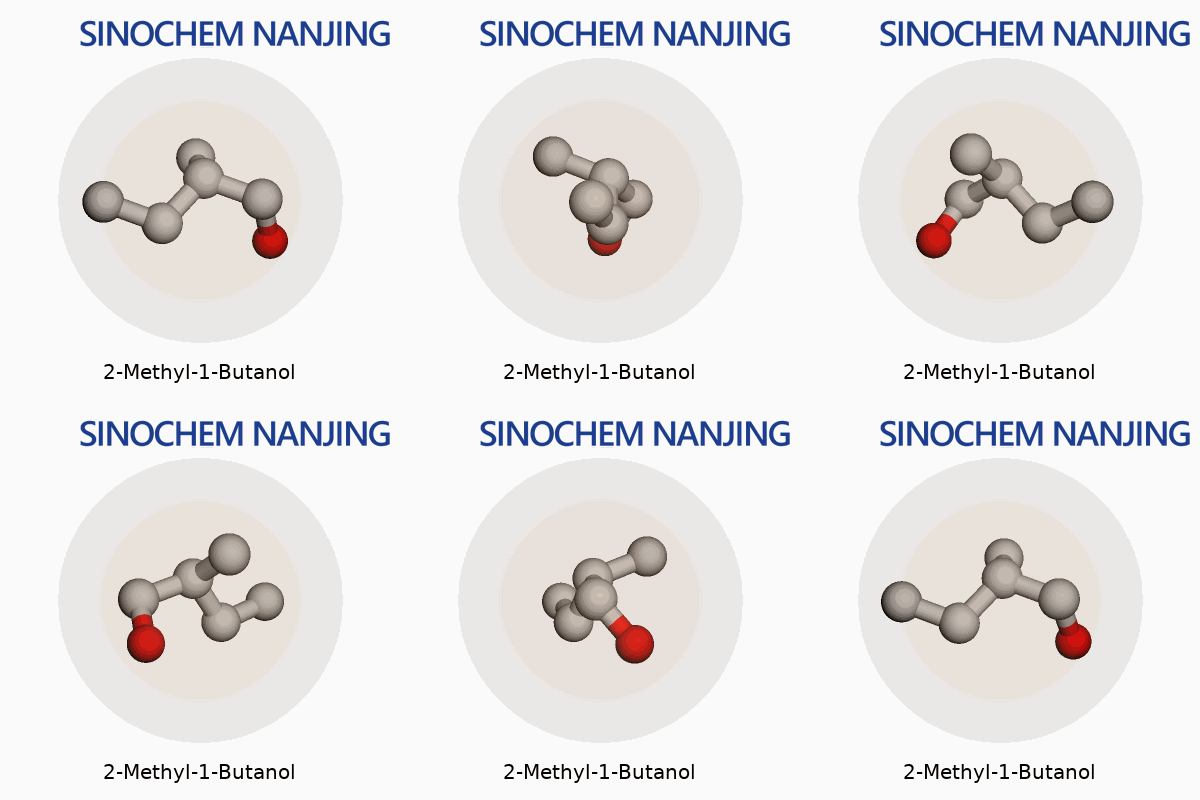
Chemistry never seemed like just a pile of tables and rules to me — molecules really do have stories behind them. 2-Methyl-1-butanol is one of those compounds whose formula pops up in practical places. Its formula, C5H12O, represents five carbons, twelve hydrogens, and a single oxygen, all connected in a pretty specific way. Anyone who’s stepped into a university lab, or even brewed their own beer, has probably met this molecule or something similar. Small changes in structure make a huge difference; that methyl group tagged onto the second carbon creates a unique identity that influences how this alcohol behaves both in the flask and out in the world.
Why Structure Matters
Imagine lining up carbon atoms in a straight row — that’s a basic alkane. Swap out a hydrogen on the second carbon for a methyl group, and tack a hydroxyl group to the first carbon, you get 2-Methyl-1-butanol. The positioning isn’t just for exam questions; it determines how the alcohol smells, how it interacts with other chemicals, and even how the body breaks it down. By adding one small group in the wrong spot, a harmless flavoring agent can turn into something completely different. That’s part of the reason chemists pay so much attention to these names and numbers. Errors in structure can mess up lab results, product safety, or even foul up large-scale syntheses.
Real World and Safety Considerations
This alcohol pops up in flavors, fragrances, and sometimes in the distilling industry — it shows up as a byproduct in some fermented beverages. The formula C5H12O is easy enough to remember, but more important is understanding where and why it forms. Fermentation tanks aren’t sterile environments, and controlling these kinds of compounds becomes important for quality, taste, and safety. In proper amounts, 2-Methyl-1-butanol is safe for use in flavors and food products, but overproduction can create off-notes or health concerns. Several regulatory agencies, including the US FDA and European Food Safety Authority, keep eyes on concentrations in consumable products.
What Can Go Wrong, and How to Fix It
People sometimes underestimate how easy it is to make mistakes in synthesis or fermentation, especially when basic attention drifts. I’ve seen labs mislabel isomers, leading to bad batches or failed QC checks. Separating 2-Methyl-1-butanol from its chemical cousins takes careful technique — distillation, chromatography, and lots of patience. Investing in solid training and analytical equipment helps keep errors at bay. Keeping better records, routine instrument calibration, and strong knowledge transfer between team members matter even more. Teaching new chemists why minor differences in structure can derail whole projects builds a culture of attentiveness that goes far beyond one particular compound.
Building Better Processes
2-Methyl-1-butanol might never become a household name, but it’s a reminder that every small compound brings its own set of questions: How do we make it? Where does it end up? Who needs to worry about it? Strong standard operating procedures, reliable chemical suppliers, and up-to-date regulatory guidance combine to keep this alcohol where it belongs — as part of safe, effective flavor and fragrance manufacturing, and not as a surprise contaminant. Chemistry isn’t just about formulas; it’s about doing the right thing at every stage, from raw ingredient to finished product.
Is 2-Methyl-1-Butanol soluble in water?
Taking a Closer Look at a Curious Alcohol
Anyone who's ever mixed oil with water knows some things just don't blend. Chemistry class breaks that rule sometimes, and alcohols have always caught my attention there. 2-Methyl-1-butanol looks and smells a bit like other small alcohols, yet people often wonder if this one plays nicely with water. Turns out, experience at the lab bench tells a different story from what you might expect, especially for a molecule this size.
Facts That Matter
Let’s talk facts. Solubility isn’t just about tossing one chemical into another. Chemistry revolves around the structure of the molecules and the nature of their bonds. 2-Methyl-1-butanol carries both a hydrophobic chain and a single -OH group. That -OH end wants to shake hands with water. The chunky four-carbon tail, with that methyl bump, pushes water away. This creates an interesting tug-of-war at the molecular level.
If you crack open a chemistry textbook, you’ll find that 2-methyl-1-butanol mixes poorly with water. Only about 12 grams slip into a liter, on a good day at room temperature. That number turns heads because it’s quite low for an alcohol, though not shockingly so for something edging into “almost oil” territory. Think of it as trying to get butter to dissolve in tea. You’ll get some creamy streaks, but most of the fat stays put.
Why Should Anyone Care?
This may seem like just trivia, but real consequences show up in the lab and beyond. 2-Methyl-1-butanol pops up in flavors, fragrances, and even trace natural processes like wine fermentation. If someone wants to blend it in a water-based product — maybe a cleaner or a flavoring — trouble begins. Tiny solubility means uneven mixtures, which hurts consistency. That hollows out expectations for quality and reliability, two things customers care about, especially when taste or scent is involved.
Think about waste handling, too. Factories producing flavors and scents need to rinse their tanks and pipes. If 2-methyl-1-butanol barely dissolves, rinse water doesn't clear out residues as well. Over years, that could hike up costs for water treatment, and stricter regulations force companies to rethink their cleanup steps.
How Do We Deal With Poor Solubility?
Some people work around this by using co-solvents. Ethanol, a much friendlier compound to water, helps pull 2-methyl-1-butanol in. Surfactants come in handy, too. They act like bouncers at a club, coaxing oil-loving and water-loving chemicals to mingle. That opens up more creative options for product formulators. Even so, chasing perfect mixtures brings higher expenses and sometimes extra safety steps.
Choosing greener chemical processes could help. Developing water-compatible flavors or solvents would give companies a stronger hand, cutting back reliance on extra chemicals. On my end, I’ve seen smaller producers happier when they can skip co-solvents altogether. Fewer steps, less waste, and a smoother safety record. Some researchers keep tinkering with enzymes and bio-based tweaks to encourage better mixing, keeping one eye on performance and the other on regulations and market demand.
Looking Ahead
Practical chemistry means knowing your tools and their warts. 2-Methyl-1-butanol looks simple, but its solubility shapes how far it can go outside of specialty labs. Armed with a deep understanding of what it can and can't do, people in science and industry pick the smartest path — even if that path involves more ingredients, new strategies, or finding a different molecule for the job.
How should 2-Methyl-1-Butanol be stored?
Why Storage Matters for 2-Methyl-1-Butanol
2-Methyl-1-butanol crops up in labs and production facilities for all kinds of uses—flavoring, intermediates, solvents. People tend to overlook the risks lurking in a simple-looking container until strong fumes hit or something goes wrong. From experience, the big lesson boils down to preparation and respect for what’s inside those bottles. This compound releases a sharp odor and can catch fire without much. Mishandling, like letting the cap gather dust or skipping out on ventilation, quickly snowballs into bigger problems. Workers face headaches, dizziness, or worse, so dealing with the stuff shouldn’t shift to autopilot.
What Safe Storage Looks Like
Every bottle of 2-methyl-1-butanol deserves a place where sunlight can’t sneak in and the room keeps cool. Heat turns risk into reality. In storage rooms during one hot summer, I saw containers puff up from the growing vapor pressure inside, sometimes enough to deform the original seal. Give the bottles a break: keep them below room temperature, out of the sun, and away from the heater or any possible source of sparks.
Moisture finds its way in if the seal isn’t tight. Once, a poorly closed bottle started to smell sour, turning from clear to slightly hazy. Dampness kicks off spoilage, making what should be predictable suddenly dangerous. Store 2-methyl-1-butanol in airtight, chemical-resistant containers, preferably glass or the proper grade of plastic. Metal can spark corrosion or react, especially with aluminum parts, so think twice before using random containers.
Fire Safety Can’t Wait
No matter how often people mention flammability, reminders matter. I watched a small spill near a power strip turn ugly—it took seconds for the vapors to ignite. Store each bottle well away from open flames, electrical outlets, and sources of static. Use actual explosion-proof fridges or cabinets when large volumes come into play. Don’t keep oxidizers or acids close; those can trigger violent reactions. Keep fire extinguishers rated for chemical blazes within reach, not locked away in another department.
Labels, Training, and Routine Checks
A faded, hard-to-read label can create confusion, especially during a late-night shift or in a rush. Mark every bottle clearly with the name, hazard symbols, and the date received. Rotate old stock forward. Make sure only those trained in chemical safety get access, and go over the protocol at least once a year. I’ve seen emergencies handled smoothly only when people knew exactly what they were dealing with and how to react.
Solving Complacency: Building a Real Safety Culture
Accidents rarely trace back to flawed chemicals—they start from daily lapses in judgment. Everyone benefits when storage instructions become habit, not just paperwork. Keep strong policies and back them up with resources: proper shelving, ventilation fans, dedicated flammable cabinets, and regular staff reminders. Every safe day builds trust, and trust keeps work moving forward. 2-Methyl-1-butanol isn’t the enemy, but letting your guard down is. Safe storage starts with care, not shortcuts.
| Names | |
| Preferred IUPAC name | 3-Methylbutan-1-ol |
| Other names |
Active amyl alcohol 2-Methylbutan-1-ol β-Methylbutanol isoamyl alcohol Isopentanol |
| Pronunciation | /tuː ˈmɛθ.ɪl wʌn ˈbjuː.tæn.ɒl/ |
| Identifiers | |
| CAS Number | 137-32-6 |
| Beilstein Reference | 1720233 |
| ChEBI | CHEBI:43735 |
| ChEMBL | CHEMBL43090 |
| ChemSpider | 52651 |
| DrugBank | DB02854 |
| ECHA InfoCard | 03a457a6-ea22-49ea-af22-822dbd81ebf0 |
| EC Number | 203-722-6 |
| Gmelin Reference | 82253 |
| KEGG | C02232 |
| MeSH | D000361 |
| PubChem CID | 6568 |
| RTECS number | EL5950000 |
| UNII | 0B7S3BPE69 |
| UN number | UN2282 |
| Properties | |
| Chemical formula | C5H12O |
| Molar mass | 88.15 g/mol |
| Appearance | Colorless liquid |
| Odor | Characteristic odor |
| Density | 0.809 g/cm³ |
| Solubility in water | 8 g/L (20 °C) |
| log P | 1.28 |
| Vapor pressure | 1 mmHg (at 20 °C) |
| Acidity (pKa) | 16.0 |
| Magnetic susceptibility (χ) | -55.8×10⁻⁶ cm³/mol |
| Refractive index (nD) | nD 1.406 |
| Viscosity | 4.6 mPa·s (20 °C) |
| Dipole moment | 2.51 D |
| Thermochemistry | |
| Std molar entropy (S⦵298) | 210.6 J/mol·K |
| Std enthalpy of formation (ΔfH⦵298) | –332.6 kJ/mol |
| Std enthalpy of combustion (ΔcH⦵298) | -3321 kJ/mol |
| Hazards | |
| GHS labelling | GHS02, GHS07 |
| Pictograms | GHS02,GHS07 |
| Signal word | Warning |
| Hazard statements | H226, H315, H319, H335 |
| Precautionary statements | P210, P233, P240, P241, P242, P243, P280, P303+P361+P353, P370+P378 |
| NFPA 704 (fire diamond) | 2-1-0 |
| Flash point | 70 °C |
| Autoignition temperature | 340 °C |
| Explosive limits | 1.4–9.4% |
| Lethal dose or concentration | Lethal dose or concentration (LD50/LC50) for 2-Methyl-1-Butanol: "Oral, rat: LD50 = 3700 mg/kg |
| LD50 (median dose) | LD50 (oral, rat): 3700 mg/kg |
| NIOSH | RT8420000 |
| PEL (Permissible) | PEL (Permissible Exposure Limit) for 2-Methyl-1-Butanol: Not established |
| REL (Recommended) | REL (Recommended): 100 ppm (330 mg/m3) |
| IDLH (Immediate danger) | 200 ppm |
| Related compounds | |
| Related compounds |
1-Butanol 3-Methyl-1-butanol 2-Butanol 2-Methyl-2-butanol Isobutanol |



