2-Mercaptoethanol: The Backbone of Molecular Biology and Beyond
Historical Development
Back in the 1930s, folks saw 2-Mercaptoethanol pop up in chemical literature as a reducing agent. At first glance, this looked like an odd little molecule. Over time, it kept showing up in biochemistry labs, especially during the boom in nucleic acid and protein research after World War II. By the late twentieth century, students and researchers across the world started opening up brown-stained glass bottles labeled “2-ME” in cold rooms and fume hoods, thanks to the methodical grind of protein science. I remember the stench of the stuff in university bio labs—like someone left eggs out on a hot day for too long. Still, progress in gene cloning, electrophoresis, and protein denaturation just wouldn't have moved this fast if chemists had skipped this simple molecule. Its story traces the rise in detailed protein and DNA studies from arcane curiosity into everyday industrial and medical tools.
Product Overview
2-Mercaptoethanol crops up all over cell biology, proteomics, and enzyme chemistry. Its claim to fame? Breaking disulfide bonds in proteins, so researchers can unravel tangled up structures and see what they’re made of. Even if you aren’t working directly with it, you’ve probably benefited from new diagnostics, vaccines, or manufacturing methods that once relied on its ability to keep enzymes ready and proteins loose. In my own research days, if a protein sample turned stubborn, someone always waved a bottle of 2-ME and grinned, “Try a little of this.” Outside the lab, industrial bioprocessing uses the same tricks on a larger scale, with massive tanks treating feedstocks or producing pharmaceuticals under strict conditions.
Physical & Chemical Properties
This molecule holds its own in the lab: a clear-to-yellowish liquid, 2-mercaptoethanol brings a sharp, foul odor that lingers on gloves and jackets for days. Its low boiling point, high water solubility, and strong reducing power—the result of that reactive thiol group—help it cut sulfur-sulfur bonds with ease. That’s the whole reason it became the go-to for researchers taking apart complicated proteins or preparing samples for electrophoresis. If you’ve ever run a gel and the sample dissolved into the correct bands, odds are this molecule made it possible by shattering those bonds. It doesn't just work well in water; it manages to keep working even under harsh conditions, like high temperatures or in the presence of organic solvents. These features come from years of chemistry know-how and hands-on trial and error.
Technical Specifications & Labeling
Despite appearing simple, bottles of 2-ME come tagged with warnings, concentration ranges, batch numbers, and supplier details. Chemically, it’s C2H6OS—a structure simple enough for undergraduates to diagram out. In practice, the stuff’s strong smell is a signal to work carefully, wear the right gloves, and keep the bench clean. Labeling doesn’t just list concentration or purity; it flags the acute toxicity and regulations that follow, from local university safety offices to national watchdogs. Over the years, quality control stepped up. Labs check for peroxides, stabilizers, and trace contaminants because a small change in composition can affect protein structure results or downstream data quality. Out on the production floor, strict labeling helps avoid mishaps, mix-ups, and unnecessary exposure that can have lasting consequences.
Preparation Method
Making 2-mercaptoethanol starts with simple starting materials. Industrial chemists typically react ethylene oxide with hydrogen sulfide under tightly controlled temperature and pH, watching out for runaway reactions due to the exothermic nature of the process. Over time, processes have moved from rudimentary glassware to precise, contained reactors, sensitive to water content and side-product formation. Purification involves distillation, sometimes under vacuum to reduce decomposition and stink, and the final product needs careful storage in tightly sealed containers, away from oxidizing agents or acids. Even a seasoned chemist respects the complexity and possible byproducts—handling errors have set off more than a few lab evacuations.
Chemical Reactions & Modifications
In addition to its disulfide-cleaving power, 2-ME does more work in organic synthesis. It acts as a precursor in forming thioethers, and sometimes ends up as a chemical handle to build more complex molecules. Given its solubility and stability, researchers often use it to modify proteins or trigger chemical reactions where sulfur atoms need to be swapped or transferred. In biological settings, that characteristic smell serves as an early warning if a reaction’s going wrong. Anyone who’s opened a tube of freshly prepared sample buffer knows the whiff means business. Its reactivity means it can’t just sit on a bench unattended—it can form oxidation products like disulfides, especially if left uncapped or in the presence of light or air. Chemists learned to keep fresh stocks and minimize opening times for the best results.
Synonyms & Product Names
Outside standard textbooks, the stuff appears under a string of synonyms: β-mercaptoethanol, 2-hydroxyethanethiol, and BME pop up regularly in protocols and catalogs. Popular science suppliers and chemical distributors brand it by these names to catch both seasoned researchers and newcomers. In my experience, these interchangeable terms occasionally muddle things when cross-referencing a protocol from a different country or research group. The nickname “BME” carries an implied familiarity, heard in labs from Boston to Beijing. Most scientists settle on one name and stick with it in their notes, but the chemical itself does all the talking where it counts.
Safety & Operational Standards
Working with 2-mercaptoethanol means taking safety seriously. That harsh smell is a reminder: a few minutes of exposure can leave hands, nostrils, and hair reeking for hours, and the health risks go far beyond the inconvenience. Inhalation or skin exposure leads to irritation, headaches, and possible long-term harm. Strong local regulations call for fume hoods, nitrile gloves, splash goggles, and frequent training. I remember more than one classmate rushing to an eyewash station after a mishap—a lesson you only need once. Spills shut down workspaces until cleanup teams make sure everything's safe. The toxicity pushes everyone to keep stocks low, limit storage, and favor less toxic alternatives whenever possible. Lab safety culture builds up over years, mostly on the backs of folks learning the hard way about what happens if you forget “just this once.”
Application Area
Scientists rely on 2-mercaptoethanol to unlock cells, denature proteins, and prep samples for analysis. Western blots, protein sequencing, and nucleic acid purification all owe some of their precision to its reducing action. In industry, pharmaceutical manufacturers use it to keep enzymes active, synthesize specialty chemicals, or treat raw materials. Research into new protein drugs found ways to improve purity and efficiency thanks to the mild yet effective reducing power of this humble compound. Folks in plant biology use 2-ME for extracting viral RNA or studying plant defense mechanisms, while microbiologists probe bacterial resistance by breaking down tough cell walls. It even sees use in connective tissue research and some cosmetic manufacturing, though regulations get stricter outside controlled lab settings. Every breakthrough in biomedical diagnostics or modern vaccine development has a link, somewhere down the line, to a bottle of this compound waiting by a chilled centrifuge.
Research & Development
Recent years saw efforts to tweak 2-mercaptoethanol for better performance and lower toxicity. Scientists are searching for alternatives that smell less vile or break down more safely in the environment without giving up the unique advantages of thiol-based chemistry. Studies into protein folding, enzyme mechanisms, and molecular chaperones depend on reliable, small-molecule reducing agents like BME. Advances in single-cell genomics and large-scale proteomics keep labs running through gallons of the stuff, though always under watchful eyes. Industry looks for blends and stabilizers to prolong shelf life and keep reactions predictable, while green chemists eye sustainable feedstocks for the next generation of reducing agents. My conversations with researchers often circle back to the same theme: keep the results good, keep the risks manageable, and if possible, take the stink out of the lab.
Toxicity Research
Toxicology profiles on 2-mercaptoethanol fill journal pages and regulatory dossiers. In animal studies, high doses cause liver and kidney damage, but even low-level exposure adds up over years. Short-term symptoms—like eye irritation, dizziness, and breathing problems—prompt universities to restrict how it's handled and disposed of. Chronic exposure concerns led to routine air monitoring and detailed medical assessments in high-use labs. Many researchers push for alternatives, both to protect workers and reduce hazardous waste. Modern protocols focus on containment, personal protection, and strict inventory management. Every year, studies turn up fresh data on long-term health impacts, nudging institutions to adopt stricter handling standards and encourage open reporting of accidental exposure. The chemical’s toxicity taught a generation of scientists that curiosity and caution grow best side by side.
Future Prospects
Looking down the road, 2-mercaptoethanol faces challenges from greener and safer substitutes. Its deep roots in protein chemistry and molecular biology won’t disappear overnight, but shifting workplace safety laws, environmental regulations, and growing awareness about hazardous waste call for new solutions. Researchers hunt for smaller, less noxious molecules that bring the same power without the drawbacks. Some teams focus on encapsulated delivery, others tweak the molecule to cut down volatility and odor. Meanwhile, bioengineers develop alternative enzymes or synthetic biology pathways. The experience I’ve picked up over years in the lab says BME won’t drop out of use tomorrow, but the pace of change is real. Funding for R&D trends toward sustainability, lower toxicity, and greater safety, so future generations of scientists might run the same experiments without the headaches—literal or figurative—that once marked a day with 2-mercaptoethanol.
What are the primary uses of 2-Mercaptoethanol?
What is 2-Mercaptoethanol?
2-Mercaptoethanol catches your attention right away with its strong, unpleasant smell. This colorless liquid is more than just a stinky substance—people have found use for it across research labs and industrial plants thanks to its ability to break chemical bonds. With a sharp, almost sulfur-like odor, once you've worked around it, you never forget it. But the smell takes a backseat to how important its chemical properties are for science and technology.
Unraveling Proteins in the Laboratory
Any scientist handling proteins knows how tricky they can be. Proteins naturally form complex shapes held together by special bonds called disulfide bonds. If these bonds stay in place, scientists can’t fully unlock the protein’s structure or study individual components. Here’s where 2-mercaptoethanol does its magic: it “reduces” these bonds, snapping them open and laying the protein bare. Whether in biology or chemistry, researchers pour this chemical into solutions to denature proteins, getting clearer results during procedures like electrophoresis or Western blotting.
I remember sitting at a cold lab bench, pipetting out that pungent liquid into a buffer mix. Once those disulfide bridges broke apart, we could see how much a sample changed under the microscope or in an imaging tray. Without 2-mercaptoethanol, scientists would lose a reliable tool for getting proteins ready for analysis, especially for applications like identifying mutations, understanding how enzymes work, or tracking disease markers in samples.
Preserving Enzyme Solutions and Cell Cultures
Every living cell juggles a soup of oxygen and reactive compounds that can damage sensitive molecules, especially enzymes. In cell culture labs, these problems pop up fast: unwanted oxidation can inactivate the very things you want to study or use for experiments. Adding 2-mercaptoethanol acts as a protective shield. It soaks up dangerous oxygen species, acting as a scavenger that keeps the solution friendly for enzymes. This comes in handy for vaccine production, pharmaceuticals, and those fiddly genetic experiments that call for clean, controlled environments.
Many animal cell lines really won’t thrive for long without it. Just a small amount often makes a world of difference, improving cell survival rates and helping researchers get data worth trusting. Cutting corners here often leads to lost samples and frustrated nights in the lab.
Industrial Applications: Beyond Research
Science may cover the headlines, but the story continues in industrial plants making everything from adhesives to plastics. 2-Mercaptoethanol prevents materials from forming unwanted cross-linked chunks. Its reducing power keeps production lines running smoothly, especially when manufacturers want a product to remain flexible or easy to process. Manufacturers rely on its unique chemistry, whether making rubber more elastic or keeping specialty resins from turning brittle.
Challenges and Safer Alternatives
For all its benefits, 2-mercaptoethanol demands respect. Its fumes can cause headaches and sore eyes, and spills leave an odor that lingers for days. Safety needs to come first: working in hoods, wearing gloves, and storing it carefully keeps accidents at bay. Recently, researchers have looked for alternatives like dithiothreitol (DTT) or tris(2-carboxyethyl)phosphine (TCEP), which bring less odor and lower risk. Not every substitute matches 2-mercaptoethanol’s efficiency or versatility, though, so the choice often depends on the experiment or job at hand.
Looking Forward
Whether in the lab smashing protein bonds or in a factory keeping materials in check, 2-mercaptoethanol proves its value again and again. Scientists and engineers keep adapting the way they use it, always hoping to balance performance with safety. As the push for greener, less hazardous chemicals grows, the search continues for alternatives—but until then, this smelly, powerful compound remains a workhorse behind the scenes.
What safety precautions should be taken when handling 2-Mercaptoethanol?
The Risks Behind the Bottle
I remember my first lab supervisor always sniffed out careless behavior long before checking data. In the world of lab chemicals, 2-Mercaptoethanol has a reputation—sharp smell, skin irritation, and enough volatility to command respect. It shows up in many biological experiments, especially for breaking protein bonds, but it’s nobody’s idea of user-friendly. Even the most seasoned researchers keep an extra eye on the bottle. The fumes sting your nose and eyes if you work without enough airflow. Don’t let its clear appearance trick you into underestimating it.
No Substitute for Good Ventilation
Anyone working with this chemical learns the character of fume hoods fast. A regular bench does not cut it; this is one for inside a running fume hood. Direct exposure to 2-Mercaptoethanol vapor can irritate mucous membranes. Labs in busy research institutions have recorded episodes where failing to use proper ventilation led to headaches or, worse, nausea. Short clips from the scientific literature show that repeated, unprotected exposure can affect the central nervous system. Put simply, nobody feels comfortable coming home from work with a persistent headache or stinging eyes, so there’s a reason why good labs invest in the right infrastructure.
Personal Protective Equipment: Not Optional
Lab coats and splash goggles matter every time. I’ve had small droplets land on my sleeves; accidents happen even to careful workers. Polyethylene gloves give better protection than latex, which can start degrading quickly. Double-gloving for spill-prone tasks beats the regret that comes with a chemical burn. For those responsible for larger containers or frequent transfers, face shields add another layer of protection against splashes. These steps seem simple but make a world of difference when handling a chemical known for strong, lingering odors and skin reactivity.
Safe Storage and Labeling
2-Mercaptoethanol lasts longest when kept tightly closed, away from light and moisture. Colleagues in molecular biology labs use dedicated, labeled cabinets for all sulfur-containing reagents. Accidental spills usually happen after containers get mislabeled or left half-open. The Environmental Protection Agency ranks 2-Mercaptoethanol among the hazardous air pollutants, so strict storage rules make sense. Good labeling practices include hazard pictograms and expiration dates. Regular inventory checks catch leaks or degraded containers early before a problem gets worse.
Dealing With Spills and Waste
Emergency kits—spill pads, neutralizing agents, and extra gloves—belong within arm’s reach if 2-Mercaptoethanol is in use. Those chemical odors linger unless every drop gets cleaned up fast. In my former lab, a single spill brought on a full evacuation and slow reentry while the air cleared. The process for disposal also follows rules much stricter than most kitchen cleaners. Waste containers must seal tightly, venting through carbon filters if possible, since 2-Mercaptoethanol vapors can react with oxidizers in landfill streams, raising both health and environmental risks. Workers who fail to segregate their waste run the risk of mixing incompatible chemicals, sometimes causing fires or releasing even more toxic fumes.
Training: The Human Factor
Written protocols only go so far if people skip safety briefings. Lab orientation ought to include hands-on sessions with mock spills and PPE fitting. Those extra 20 minutes at the start of a research semester build discipline and muscle memory. Supervisors who reinforce these habits never regret the investment. Even at experienced institutions, human error ranks among the top causes of chemical incidents. Proper training closes that gap, keeping both new students and senior technicians out of harm’s way.
Moving Forward
Clear safety culture, reliable equipment, and consistent hands-on training form the backbone of safe 2-Mercaptoethanol use. Nobody benefits from shortcuts. Putting these lessons into action not only keeps labs compliant with OSHA and EPA regulations but also means fewer sick days and more productive research. Creating a safer lab doesn’t just tick boxes—it shapes a workplace that people trust and return to each morning, knowing they’ll make it home in the same shape they arrived.
How should 2-Mercaptoethanol be stored?
Recognizing the Risks of 2-Mercaptoethanol
Plenty of scientists and lab techs get a first encounter with 2-Mercaptoethanol through its knockout scent—a potent cocktail of sulfur and rotten eggs that lingers across labs even in tiny spills. The smell isn’t just unpleasant; it’s a reminder of how dangerous this chemical can be. Breathing in its vapors causes headaches, nausea, and even more serious long-term health issues with repeated exposure. In my own experience doing molecular biology, I knew colleagues who would clear the room before even opening a bottle.
Why Proper Storage Is Essential
One wrong move with 2-Mercaptoethanol invites more trouble than ruined experiments. This chemical attacks eyes, skin, and lungs. It’s also flammable, and reacts with air over time—forming peroxides that turn disposal into a risk. Left on a crowded bench or near a heat source, it causes real harm both to people and the work the lab tries to do.
I once saw a careless researcher leave the bottle open—vapors triggered the building’s evacuation and left everyone scrambling for fresh air. That single event drove home the point: proper storage protects people and keeps science moving forward.
How to Store It Right: Lab Reality
No high-level principle replaces strict routines. Each bottle goes into a chemical storage cabinet—never on an open bench or inside someone’s desk drawer. Most labs use flame-proof storage fridges if the protocol calls for low temperatures, but the focus should always be on keeping the chemical in a cool, well-ventilated area away from sparks or flames.
The container must seal tightly every time after use. Glass or high-quality plastic both work, but the cap needs an airtight fit. Every time someone finishes with the bottle, they check for leaks or sticky residue because one unnoticed drip can spoil the air and endanger people down the hall.
Labeling and Inventory Control
Labels aren’t just a box-ticking exercise. 2-Mercaptoethanol should display a clear hazard warning with the date received and date opened. Everyone who handles chemicals understands how easy it is to mistake one clear liquid for another. Good labels prevent those mistakes.
Keeping a tight inventory means the chemical doesn’t collect dust or sit far past its prime, when it’s more likely to degrade or leak. Regular checks keep 2-Mercaptoethanol from surreptitiously aging past its safe shelf life. I’ve found monthly walk-throughs make it quick to spot a cracked lid or bottle that’s outstayed its welcome.
Safety Training and Emergency Prep
No system works if people don’t use it. Safety training for every new team member sets high expectations. The lab should make safety gear like gloves, goggles, and good ventilation routine. Spill kits and eyewash stations belong an easy dash away from any spot where 2-Mercaptoethanol gets used.
Regular drills and honest conversations about slip-ups nudge the whole group to stay vigilant. I tell new trainees that keeping the lab safe isn’t about paranoia—it’s about caring for your teammates and making sure everyone gets home healthy.
Creating a Safer Laboratory Culture
Good chemical storage practices never stop with a single rule. It grows from repeated habits, instincts sharpened by experience, and leadership that takes the risks seriously. Storing 2-Mercaptoethanol right proves that the group values safety as much as science. In the end, people matter most—smart storage keeps everyone ready for tomorrow’s work.
What is the chemical structure and formula of 2-Mercaptoethanol?
Understanding 2-Mercaptoethanol's Chemistry
2-Mercaptoethanol stands out in countless laboratories due to its strong, unpleasant odor—something everyone working with proteins remembers. Its chemical structure shaped many frustrating and rewarding experiments for me as a younger researcher. Handling it takes focus, a steady hand, and plenty of ventilation.
The molecular formula of 2-Mercaptoethanol is C2H6OS. It comes together as a two-carbon chain, much like ethanol, but instead of the usual alcohol group on the end, there’s a thiol group (-SH). The chemical structure looks like this: HS–CH2–CH2–OH. That little sulfur atom delivers powerful reducing capabilities, breaking disulfide bonds in proteins—a vital role for biochemistry.
Where Structure Meets Real Use
The layout of 2-Mercaptoethanol’s atoms makes it a strong donor of electrons. Because the thiol group reacts fast with oxidizing agents, it can reduce other molecules. In my lab experience, adding a small amount could completely change a protein’s solubility. The -SH group bonds tightly to metals and can deactivate some enzymes, so care and proper planning are essential.
Some labs use 2-Mercaptoethanol when running SDS-PAGE gels to study proteins. It keeps the proteins unfolded by reducing internal disulfide bonds. This results in clearer, more accurate readings, helping researchers identify proteins by size. The same feature helps preserve enzymes by preventing unwanted reactions—but keep the bottle well-sealed as it easily evaporates and stinks up the whole space.
Safety, Handling, and Practical Dangers
The very structure that gives 2-Mercaptoethanol its effectiveness also creates headaches. That -SH group makes the compound volatile, toxic, and a skin and respiratory irritant. I always double-gloved and kept the fume hood running. Chronic exposure leads to headaches, nausea, or worse. Incidents of accidental spills remain common in crowded student labs, driving home the need for real training and safety discipline. Personal experience taught me that a loose cap can ruin someone’s day, if not their experiment, so education around handling these hazardous chemicals deserves full attention.
Lessening the Risks
Some alternatives work in many cases, such as dithiothreitol (DTT). These replacements won’t always match 2-Mercaptoethanol’s effectiveness, so researchers need to weigh the benefits against the health risks. Ventilation, PPE, and careful tracking of chemical inventory go a long way toward preventing accidents. Spills should be contained with plenty of absorbent, and contaminated waste clearly labeled.
Scientific Significance
2-Mercaptoethanol’s impact goes way beyond its smell. With a simple formula and a practical structure, this compound shaped research in proteomics, molecular biology, and medicine. Its ability to protect protein samples and maintain enzyme function keeps it popular, despite its risks. For those working with it, respect for both structure and safety keeps the science going strong without sacrificing health.
Is 2-Mercaptoethanol hazardous to health or the environment?
A Glimpse at What 2-Mercaptoethanol Does
Step into any life sciences lab and odds are, you'll spot a bottle labeled 2-mercaptoethanol somewhere on a chemistry shelf. This liquid doesn’t look dangerous by just sitting there, but for those who use it to keep proteins from sticking together or breaking down, it brings certain risks you can’t ignore. For those who haven’t spent hours hunched over biology benches, 2-mercaptoethanol works as a reducing agent. It gets used in everything from DNA extraction to making scientific reagents, which supports a lot of important research work, but at a health cost no one should wave off.
The Health Risks: More Than a Nasty Smell
Anyone who’s cracked the lid on this stuff knows you catch a rotten-egg stench before you even see liquid. That smell spells warning. It comes from the sulfur in its chemical makeup, a little like hydrogen sulfide. Even at low amounts, 2-mercaptoethanol can stir up headaches, eye irritation, and nose or throat trouble right away. Forget gloves or a fume hood, and things can get worse. Liquid spills on skin lead to burns or blisters, sometimes lasting long after the workday ends.
Long-term or repeated exposure cranks up the risks. Some studies out of workplace safety agencies point to breathing problems, nervous system stress, and possible harm to organs like kidneys or liver after months of sloppy lab safety. Animal research adds more worry: large doses can harm unborn pups in rats, so the concerns reach beyond just what scientists can see on their hands or in their lungs.
Environmental Damage Takes a Different Track
Once it leaves the lab, the trouble doesn’t end. Pour it down the drain, and it won’t act like soapy water that disappears with a flush. In rivers or soil, 2-mercaptoethanol can harm fish and helpful bacteria. It takes a while to break down in the environment, and its high solubility in water means it might end up in places you want clean. That chemical can knock out sewage treatment microbes, making it harder for water plants to clean up ordinary waste.
Most countries watch how this chemical gets shipped, stored, and tossed out. European regulations label it as acutely toxic and hazardous for the environment. In the US, you’ll find agencies like OSHA and the EPA pointing out exactly how to handle and dispose of it, though some smaller labs cut corners or overlook those steps.
Safer Handling and Responsibility
These hazards aren’t a total dealbreaker for research, but they do call out for extra steps. Putting 2-mercaptoethanol under a chemical hood each time it’s opened, wearing fitted gloves, and using sealed containers all make a difference. Luckily, some labs have started testing alternatives with fewer health risks, like DTT or TCEP. These substitutes won’t fit every experiment, but swapping out 2-mercaptoethanol even some of the time can lower hazard levels in both the lab and the local water system.
The story with 2-mercaptoethanol has shown that chemicals supporting science aren’t harmless. Spotting warning labels, learning emergency treatment for splashes or fumes, and keeping waste away from the sink build a culture of respect for both people and the planet. Every day, the decisions made in front of a rack of bottles really do ripple farther than a single experiment.
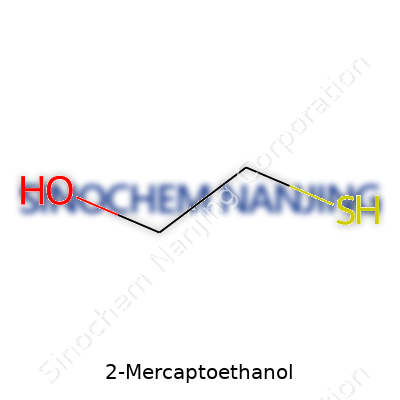
| Names | |
| Preferred IUPAC name | 2-sulfanylethanol |
| Other names |
2-Hydroxyethanethiol β-Mercaptoethanol BME Mercaptoethyl alcohol Thioethylene glycol |
| Pronunciation | /tuː mɜːrˌkæptoʊ ˈɛθəˌnɒl/ |
| Identifiers | |
| CAS Number | 60-24-2 |
| Beilstein Reference | 1720227 |
| ChEBI | CHEBI:41204 |
| ChEMBL | CHEMBL1519 |
| ChemSpider | 8216 |
| DrugBank | DB03853 |
| ECHA InfoCard | 03f7be3576-90ed-4017-8e3a-c6f97d8b5d11 |
| EC Number | 2.7.7.7 |
| Gmelin Reference | 60775 |
| KEGG | C01143 |
| MeSH | D016229 |
| PubChem CID | 1567 |
| RTECS number | KL2975000 |
| UNII | 6TI99VG3TU |
| UN number | UN2966 |
| Properties | |
| Chemical formula | C2H6OS |
| Molar mass | 78.13 g/mol |
| Appearance | Colorless liquid |
| Odor | Unpleasant, fetid |
| Density | 1.114 g/mL at 25 °C (lit.) |
| Solubility in water | miscible |
| log P | -0.36 |
| Vapor pressure | 0.08 mmHg (20°C) |
| Acidity (pKa) | 9.5 |
| Basicity (pKb) | pKb = 7.5 |
| Magnetic susceptibility (χ) | -49.0×10⁻⁶ cm³/mol |
| Refractive index (nD) | 1.521 |
| Viscosity | 0.00106 Pa·s (20 °C) |
| Dipole moment | 2.01 D |
| Thermochemistry | |
| Std molar entropy (S⦵298) | 163.71 J·mol⁻¹·K⁻¹ |
| Std enthalpy of formation (ΔfH⦵298) | -177.6 kJ/mol |
| Std enthalpy of combustion (ΔcH⦵298) | -464.1 kJ·mol⁻¹ |
| Pharmacology | |
| ATC code | V03AB32 |
| Hazards | |
| GHS labelling | GHS02, GHS05, GHS06, GHS07 |
| Pictograms | GHS06,GHS05 |
| Signal word | Danger |
| Hazard statements | H302, H312, H315, H319, H331, H335, H373, H400 |
| Precautionary statements | P210, P261, P273, P280, P301+P310, P302+P352, P304+P340, P305+P351+P338, P308+P311, P330, P403+P233, P501 |
| NFPA 704 (fire diamond) | 3-2-2-W |
| Flash point | 64 °C |
| Autoignition temperature | 310 °C |
| Explosive limits | 4.0%–16.3% |
| Lethal dose or concentration | LD50 (oral, rat): 244 mg/kg |
| LD50 (median dose) | LD50 (median dose): 244 mg/kg (oral, rat) |
| NIOSH | NIOSH: KL5600000 |
| PEL (Permissible) | PEL (Permissible Exposure Limit) of 2-Mercaptoethanol: 1 ppm (5 mg/m³) |
| REL (Recommended) | 5 – 10 |
| IDLH (Immediate danger) | 100 ppm |
| Related compounds | |
| Related compounds |
Ethanol Ethylene glycol Dithiothreitol Beta-mercaptoethylamine Thioglycolic acid |



