2-Mercapto-5-Methoxybenzimidazole: In-Depth Commentary
Historical Development
Chemists pushed the boundaries of benzimidazole research through the early and mid-20th century, wanting to find stable sulfur-containing analogues that could drive progress in pharmaceuticals and materials science. During this period, researchers noticed that by threading a methoxy group through the benzimidazole ring and tying in a mercapto (-SH) group, they produced a structure that stood out for its distinct chemical options and potential biological activity. This synthesis didn’t just open new research avenues. It multiplied opportunities in chemical modification, molecular recognition, and drug development. Traditional approaches built benzimidazoles by condensing o-phenylenediamine with various carboxylic acids, but the addition of functional groups like methoxy and mercapto brought a new wave of interest.
Product Overview
2-Mercapto-5-Methoxybenzimidazole shows up as a pale or off-white crystalline solid. It draws attention among researchers for its balance between reactivity and stability, which gives room for both lab experimentation and industrial applications. Laboratories depend on its chemical backbone for assembling more advanced compounds, especially in the search for anti-corrosive additives, pharmaceutical intermediates, and specialty chemicals. Many suppliers offer this compound under its various synonyms, making it a mainstay in catalogs that serve the pharmaceutical and chemical industries. Scientists value quality control, which means detailed sourcing and consistent testing from certified structures matter more than ever.
Physical & Chemical Properties
Examining this compound under a microscope, the dense crystalline particles pack down tightly, melting around 260–265°C. The molecular formula, C8H8N2OS, yields a molar mass near 180.23 g/mol. Researchers describe its faint odor, which comes from the mercapto group. The methoxy moiety tunes its solubility, making it more workable in certain organic solvents (like ethanol, dichloromethane, and DMSO) while keeping water solubility low. That sulfur atom in the mercapto group gives this molecule a reactive handle, which means it participates in sulfur-specific chemistry, making it attractive for both redox modifications and as a ligand in coordination chemistry.
Technical Specifications & Labeling
Reputable suppliers label 2-Mercapto-5-Methoxybenzimidazole with clear technical specifications. Purity almost always exceeds 98% for research-grade material, with moisture and ash content controlled to low values. Labels mention shelf-life, recommended storage temperatures (usually cool, dry places), and hazard statements in compliance with global regulatory frameworks such as REACH and GHS. Each batch lands on the market with an individual certificate of analysis, including melting point range, spectral data (typically NMR and IR), and supplier batch number for traceability. The chemical gets called both by its systematic name and a set of familiar synonyms, all of which help researchers identify it in catalogs.
Preparation Method
Preparation often begins with o-phenylenediamine, which reacts with an appropriate thioester under controlled acidic or basic conditions. Chemists then introduce the methoxy group, using either a direct methylation route or by incorporating the substituent before cyclization. This route needs precise temperature control to prevent overreaction or decomposition of the sensitive mercapto group. In industrial setups, yield optimization and waste reduction come to the forefront through solvent recycling and efficient isolation methods. For academic labs, access to small-scale synthesis—supported by robust literature protocols—keeps the door open for undergraduates and postgrads wanting to study its derivatives or applications.
Chemical Reactions & Modifications
The mercapto group encourages a range of chemical manipulations. For example, it reacts with alkyl or acyl halides to form stable thioether or thioester derivatives. This flexibility leads to custom modifications for pharmaceuticals or specialty polymers. Oxidation of the sulfur atom creates sulfoxide or sulfone analogues with altered electronic properties. Nucleophilic substitution can occur at both the mercapto and methoxy positions, so the molecule fits into multi-step syntheses or combinatorial frameworks. Complexation with transition metals via the nitrogen or sulfur atoms broadens its use in coordination chemistry for catalyst development or material science applications. Laboratories that practice organic synthesis highlight the compound’s broad reactivity profile as ideal for exploring new frontiers.
Synonyms & Product Names
Besides its main IUPAC name, this compound appears in chemical databases and supplier catalogs as 2-SH-5-methoxybenzimidazole, 5-Methoxy-2-mercaptobenzimidazole, and 2-Mercapto-5-methoxy-1H-benzimidazole. This set of synonyms ensures researchers don’t miss it because of naming conventions. Some vendors even highlight regional trade names. Cross-referencing structure identifiers such as CAS and EC numbers reduces misidentification, especially as it moves between research, pilot, and industrial scale.
Safety & Operational Standards
Handling protocols center on safety goggles, gloves, and well-ventilated areas. 2-Mercapto-5-Methoxybenzimidazole shares the skin and eye irritation risk commonly found among small organosulfur molecules. The importance of proper containment and appropriate storage—locked flammables cabinet, away from acids or oxidizers—can’t be overemphasized. Spills require prompt clean-up using inert absorbent materials. Disposal carries local environmental compliance requirements, as small amounts of unreacted mercapto compounds can trigger strict scrutiny. Proper risk assessment, readily available safety data sheets, and annual safety audits all help keep workplace accidents to a minimum. Professionals who work with these chemicals recognize that incremental improvements in safety standards make a difference over time.
Application Area
A major sector driving demand for this compound sits in pharmaceuticals, especially as a functional intermediate during heterocycle assembly for antiulcer, antifungal, and anticancer candidates. Industrial researchers value it for its corrosion inhibition in metal treatment fluids, where it outperforms older additives without causing excessive foaming or residue build-up. Advances over the past decade now point to usage in dye synthesis, specialty plastics, and as a ligand in novel catalytic systems. Materials scientists investigate its inclusion in electrochemical sensors, where the methoxy and mercapto groups help anchor and tune surface interactions. These applications translate into real products that contribute to manufacturing efficiency, product lifespan, and regulatory compliance.
Research & Development
Academic labs worldwide invest in derivative libraries using 2-Mercapto-5-Methoxybenzimidazole to chase new biological activities or material properties. Each successful modification creates a ripple through the literature, bringing fresh patent filings and journal publications. Modern techniques such as combinatorial chemistry and high-throughput screening pull this compound into early-stage drug discovery campaigns. In collaborations with universities, industry partners fund pilot projects to scale up selected modifications, knowing that minor tweaks can generate big improvements in efficacy or cost structure. Open data initiatives encourage the sharing of synthetic protocols and biological results, reducing duplication and raising the collective level of chemical expertise.
Toxicity Research
Toxicologists continue to monitor organosulfur compounds, noting that some analogs raise concern over acute or chronic exposure effects. Early studies place 2-Mercapto-5-Methoxybenzimidazole in a moderate category for skin and mucous membrane irritation, with low volatility averting most inhalation risks under standard conditions. Animal studies usually focus on acute oral and dermal toxicity, seeking no-observed-adverse-effect levels (NOAELs) to inform user guidelines. Professional organizations such as the OECD and national regulatory agencies demand ongoing data before approving it for large-scale use in sensitive industries. Real attention goes to studying metabolic breakdown pathways, especially for pharmaceutical derivatives, to avoid unexpected toxicity caused by active metabolites. Regular review of workplace exposure limits and improvements in personal protective equipment show the industry’s commitment to reducing occupational incidents.
Future Prospects
Chemists remain optimistic about new directions. Entrepreneurs push forward with bio-inspired synthesis and green chemistry strategies to lower energy inputs and reliance on hazardous reagents. Improvements in selective modification and directed heterocycle synthesis could unlock new medical candidates and advanced materials. Academia and industry now work together on predictive modeling tools to suggest promising structural tweaks. Specialists in corrosion science already look at adapting related structures for electronics and microfabrication, while pharmaceutical developers test new analogues in emerging therapeutic areas. Regulatory harmonization across international supply chains will decide how quickly 2-Mercapto-5-Methoxybenzimidazole and its analogues reach broad adoption, balancing innovation with user and environmental safety.
What is 2-Mercapto-5-Methoxybenzimidazole used for?
A Closer Look at Its Role in Everyday Products
Trying to pronounce 2-Mercapto-5-Methoxybenzimidazole feels like a tongue-twister, but the compound impacts more daily products and processes than most people expect. Holding a bottle of pills or watching machinery run in a factory, few pause to think about the chemistry that helps protect both formulas and machines. That’s where this compound steps in, often acting behind the scenes.
Guarding Pharmaceuticals and Protecting Quality
Pharmaceutical companies lean on stabilizers to extend a medicine’s shelf life. Some chemical structures break down under light or in contact with oxygen. 2-Mercapto-5-Methoxybenzimidazole works as an antioxidant, neutralizing free radicals and keeping medications potent longer. Imagine opening an allergy pill bottle and trusting the dose inside matches what the label promises—compounds like this play a key role in that trust. In my experience working with pharmaceutical development, swapping out or neglecting stabilizers has led to batches losing their punch, so companies don’t cut corners here.
Rubber and Polymers: Stretching Product Life
Factories producing anything from rubber hoses to seals want those goods to handle heat, wear, and constant bending without breaking down. The benzimidazole part of this molecule provides strong antioxidant properties, making it useful in rubber manufacturing. Heat and oxygen can chew through rubber quickly. 2-Mercapto-5-Methoxybenzimidazole slows that process down, keeping car tires and conveyor belts tougher for longer. Not every antioxidant handles all environments—they need to match the heat and speed a factory throws at them. This compound has proven flexible in this setting.
Solving Corrosion in Industrial Settings
Industrial machinery faces plenty of stress: moisture, fluctuating temperatures, and chemical exposure. Metals rust and corrode swiftly without protection. This compound’s ability to bind to metal surfaces forms a kind of shield, blocking water and oxygen that trigger corrosion. I’ve seen maintenance costs drop in plants where coatings containing this ingredient prevented rust far better than older formulas. The benefit goes beyond dollars and cents. With machinery performing more reliably, factories can produce with fewer disruptions, boosting safety for workers, too.
Supporting Research and Finding Safer Solutions
Researchers experiment with many benzimidazole derivatives when testing new drugs or materials. Changing a single atom in a molecule tweaks its effect on living cells or on industrial processes. Pharmaceutical scientists investigate this compound for potential uses beyond just stabilization—there’s ongoing work exploring antiviral and anticancer properties. Sometimes, a tweak leads to breakthroughs—a safer or more effective medicine, or a process that's both greener and more efficient.
Challenges and Responsibility in Usage
Many chemicals bring valuable features to products but can raise concerns if handled carelessly. Safe use protocols protect both workers and the environment. Companies using 2-Mercapto-5-Methoxybenzimidazole need to follow proper disposal and handling guidelines, and keep up with toxicity and environmental impact research. As regulations update, staying ahead with safer alternatives or improved processes helps maintain trust and keeps essential industries running responsibly. Working in labs and alongside production teams, I’ve seen how small changes in procedures—like better ventilation or new safety gear—can have big impacts on both worker health and environmental outcomes.
What is the chemical structure of 2-Mercapto-5-Methoxybenzimidazole?
Breaking Down the Backbone
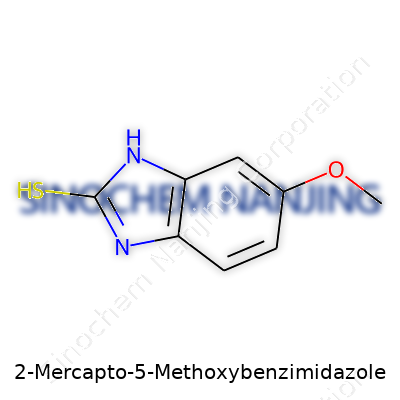
Chemistry always fascinated me for its endless capacity to puzzle and reward. Among the organic molecules I’ve worked with, 2-Mercapto-5-Methoxybenzimidazole stands out as more than a string of syllables. You’re looking at a benzimidazole ring, which means it brings a mix of rigidity, aromaticity, and reactivity. Two fused rings—one benzene and the other imidazole—form that core. Chemists recognize this structure from so many pharmaceutical scaffolds or corrosion inhibitors.
Now, about its name. “2-Mercapto” points to a thiol group (–SH) attached at the second position of the ring, a spot well-known for influencing biological activity. The “5-Methoxy” means a methoxy group (–OCH3) sits on the fifth carbon. Each group influences how the molecule acts, both in a living body and in industrial processes.
Putting Atoms in Their Place
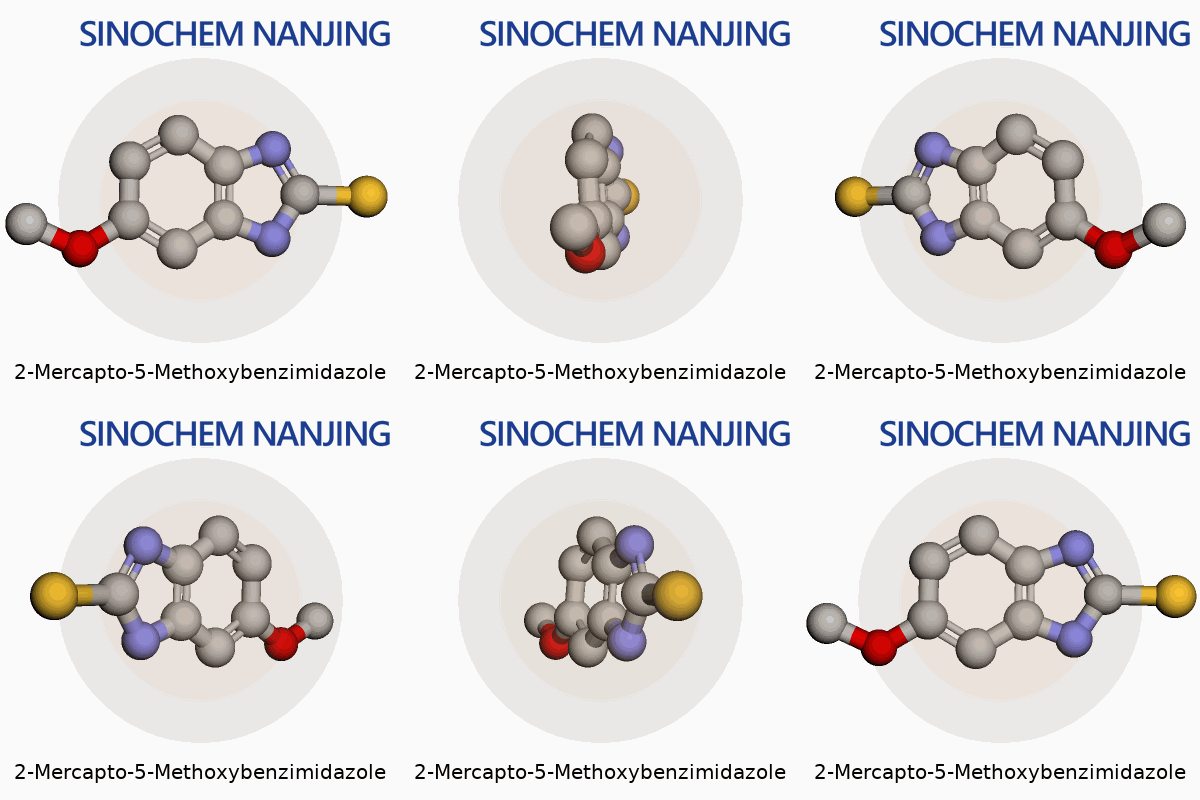
Lay it out on paper, and 2-Mercapto-5-Methoxybenzimidazole contains eight carbon atoms, six hydrogens, two nitrogens, two oxygens, and a sulfur. The heart of this molecule, the benzimidazole ring, delivers two nitrogens at positions one and three. Attach the sulfur group to carbon two right next to a nitrogen, and plant a methoxy group on carbon five, right across the ring. The methoxy tends to dial down reactivity at that spot, often making it less prone to oxidation, while the thiol opens the door to all sorts of reactions.
A chemist draws it this way: start from the nitrogen at position one, count around the ring, and place each group in order. The positioning of these groups is precise, like clockwork—shift even one and you get a different molecule with different properties.
Real World Use: Why Researchers Care
Knowledge of this structure doesn’t just impress in a test. I’ve seen this compound or its siblings in application in pharmaceuticals and as corrosion inhibitors. A thiol group on an aromatic ring lends strong binding to metal surfaces, making these molecules favorites for folks working with pipelines or water systems. The methoxy group offers increased solubility in organic solvents, which can help in designing drugs able to cross biological membranes or mix into paints and coatings.
The benzimidazole ring itself offers antimicrobial properties and has served as a starting point for antivirals, antifungals, and anti-ulcer agents. Researchers find those sulfur and oxygen-rich groups can tune the chemical’s fate inside a living organism. One tweak can make a substance stick around longer or clear out faster, changing both its risk and reward.
Building Safety and Impact
Chemists and safety experts know that adding a thiol group means extra care: those hydrogens attached to sulfur like to detach, creating strong odors and sometimes toxicity. You’ll find detailed handling guidelines for these chemicals in labs and industry, and rightly so. At the same time, that reactivity brings problem-solving power to the table—for scrubbing pollutants from smokestacks or cleaning up toxic metals from water.
I’ve watched teams scrutinize every atom’s placement before taking a molecule into new territory—say, a medicine or coating—because just one group can change how safe or effective it becomes. Regulatory filings, published studies, and endless bench work show that the structure matters at every turn.
From Structure to Solution
Better understanding of 2-Mercapto-5-Methoxybenzimidazole’s structure could clear a path for more reliable drug molecules or greener corrosion protection. Chemists refine their synthesis and safety approaches with every small discovery about where atoms sit. By taking these discoveries from the lab to real-world challenges, society gets stronger treatments, cleaner environments, and safer workplaces.
What are the storage conditions for 2-Mercapto-5-Methoxybenzimidazole?
Why Safe Storage Matters
Chemical safety in research and manufacturing has far-reaching impacts. 2-Mercapto-5-Methoxybenzimidazole gets a lot of use in laboratories, especially for corrosion inhibitors and pharmaceuticals. It’s not enough to just keep a bottle on a shelf and walk away. There’s a shared responsibility between chemists, lab technicians, and procurement teams to keep the workplace safe, protect project quality, and respect environmental rules.
Understanding the Chemical’s Nature
Anyone handling this compound knows it brings a distinctive sulfur odor, one of those instant reminders to take safety procedures seriously. It’s important to note that even mild exposure can irritate skin or eyes—that’s firsthand experience many would rather avoid. Humidity and high temperature turn powders like this into a much bigger headache, sometimes even setting up unwanted reactions. Light sensitivity has come up in stability tests, so leaving the container near windows or hot benches only invites trouble.
Real Storage Requirements—And Why They Matter
I’ve worked in labs where researchers thought “room temperature” means any temperature under 40°C. Overheated storage rooms dry out many lab chemicals, but 2-Mercapto-5-Methoxybenzimidazole holds up best in cool, dark, stable conditions. A 2–8°C environment, like a chemical fridge, keeps decomposition at bay and extends shelf life. Sealed containers made from glass or polyethylene keep out air and moisture, so what goes in stays pure. Desiccators, especially with silica gel packs, add a layer of protection during humid months. For those with limited fridge space, interior cabinets away from direct sunlight become the next best thing, as long as the temperature stays steady and the area remains dry.
Personal Experience With Small Mistakes and Big Costs
Once, we lost an entire batch because a shared fridge got unplugged overnight and nobody flagged it. The material clumped, yellowed, and failed quality testing in a matter of days. After that loss, our team started logging fridge temperatures daily. Added routines like checking desiccant packs and container seals made storage much less stressful, and audit findings dropped sharply.
Labeling matters, too. I’ve seen bottles with faded handwriting risk confusion, especially during busy periods. Clear labeling with date received and opened dates removes any guesswork and keeps teams accountable.
Environmental and Regulatory Responsibilities
Spills sound dramatic, but in reality, a small powder spill from careless lid tightening causes persistent odor and potential contamination. Proper storage catches most issues before they start. Waste rules in most labs dictate sealed hazardous waste receptacles for old product, never a sink or standard trash can. Regulatory compliance isn’t bureaucratic; it’s legal protection for the entire operation.
Looking Toward Solutions and Best Practices
Basic steps—reliable refrigeration, dry cabinets, airtight containers, and reliable logs—turn good intentions into consistent outcomes. Sharing clear protocols across teams, from graduate students to new hires, cuts down on risky shortcuts. Many companies are moving to digital inventory tracking to spot expiry dates and manage stock rotation, which cuts costs and ensures safety. Suppliers and shipping staff also deserve feedback if containers arrive damaged or missing seals.
Storing 2-Mercapto-5-Methoxybenzimidazole safely isn’t just following rules; it’s learning from past mistakes, trusting reliable routines, and shaping a lab culture that values both safety and scientific integrity. Few things halt progress faster than preventable accidents or failed batches. Simple attention to storage keeps chemistry safer, cheaper, and a lot less stressful for everyone involved.
Is 2-Mercapto-5-Methoxybenzimidazole hazardous or toxic?
Everyday Contact With Specialty Chemicals
Most people never notice the names of the chemicals they handle at work or encounter as part of daily life. The reality feels different for those who spend hours in research labs, manufacturing plants, or chemical warehouses. My journey as a chemist got me familiar with countless compounds that raise questions about safety. 2-Mercapto-5-Methoxybenzimidazole doesn’t trip off the tongue, but it turns up in serious industrial processes—especially for its antioxidant and corrosion inhibition roles.
What The Data Says About Safety
Few consumer products rely on this chemical outright. Safety data sheets flag it for potential hazards, though: toxicity for aquatic life and risks from improper handling. If you breathe in dust or get it on your skin long enough, you risk irritation. Animal studies report negative effects at high doses, yet the precise human impact isn’t fully mapped. Without plenty of robust human data, companies rely on animal trials and established chemical safety principles—usually the right play to reduce risk.
Practical Risks in Real-World Settings
In most facilities, 2-Mercapto-5-Methoxybenzimidazole sits in tightly sealed drums under controlled conditions. Workers wear gloves, goggles, and protective clothing. If a spill happens, sealed-off ventilation and chemical absorbents keep it from spreading. I’ve walked through laboratories where “hazardous” doesn’t mean an imminent catastrophe, but more a set of smart precautions nobody skips. The material can trigger asthma-like symptoms or dermatitis. No one wants to learn that lesson the hard way.
Environmental Concerns and Regulation
The environmental side matters just as much as personal exposure. Aquatic toxicity means runoff spells trouble for waterways and fish. A batch washed down the drain could tip an entire pond’s ecosystem out of balance. Most countries classify the chemical as hazardous for shipment and disposal. The European Union’s REACH regulation, for example, places specific controls on import and use. This can slow down paperwork and add safety checks, but it keeps people and wildlife out of harm’s way.
Balancing Benefits and Responsibility
I’ve seen how some companies work out ways to substitute or minimize high-risk substances. Green chemistry isn’t a buzzword, it’s technicians and managers searching for antioxidants that won’t leave dangerous residues or poison the water. Substitutes for 2-Mercapto-5-Methoxybenzimidazole are on the rise, but it still fills a niche that hasn’t been easily replaced yet. The industry keeps looking for safer, cost-effective molecules.
Smart Choices for Safer Outcomes
If you work in a setting where chemicals like this turn up, commonsense protocols make all the difference. Training, proper gear, and up-to-date safety instructions push risk down to nearly zero. On a broader scale, stricter industrial hygiene standards and routine monitoring lower the possibility of accidents or lasting health problems. No one wants to breathe new life into the old “nothing to see here” attitude that used to get workers hurt. Responsible handling, careful waste management, and honest communication keep everyone ahead of the curve.
What is the purity specification for 2-Mercapto-5-Methoxybenzimidazole?
Why Purity Makes All the Difference
Anyone who has spent time in chemical research or manufacturing knows compounds don’t just come in one flavor—you’ve got grades, purity levels, and endless datasheets to sift through. For 2-Mercapto-5-Methoxybenzimidazole, purity marks the threshold between an experiment that delivers real results and one that muddies the data. Over the years, I’ve seen labs cut corners, thinking a “good enough” level will work, only to see reactions fail or stability data collapse. In pharmaceuticals and materials science, an impure batch can throw off entire projects. That’s not just wasted money; it disrupts trust and hurts progress.
Typical Purity Specification and Why It Matters
Manufacturers tend to define their quality using the “assay” value—basically, how much of the product is actually the compound you’re paying for. For 2-Mercapto-5-Methoxybenzimidazole, reputable suppliers set the bar at 98% purity or higher, frequently aiming for 99% especially for pharmaceutical applications. This means out of 100 grams, at least 98 must be the real deal. The rest covers trace contaminants—unreacted starting material, side-products, acids, water, and sometimes even breakdown products from storage.
Analytical methods like HPLC (High-Performance Liquid Chromatography), IR spectroscopy, and Mass Spectrometry check if the purity claim holds water. I remember working with a batch that read 95% on paper but yielded unpredictable spectra. Those “missing” 5% brought along issues—extra peaks, unexpected reactions. Any trace of sulfur-containing impurities, for instance, might mess up downstream processes or color stability in polymers.
Industrial and Pharmaceutical Implications
In pharma, the tolerances tighten to avoid any risk. Even tiny impurities can trigger regulatory headaches, allergic reactions, or reduce effectiveness. Agencies like the FDA or EMA inspect these values closely. For a drug intermediate or active pharmaceutical ingredient (API), a compound like 2-Mercapto-5-Methoxybenzimidazole with the promised purity facilitates the paperwork, speeds up regulatory approval, and simplifies process validation.
Quality assurance departments rarely accept “unknown” impurities above 0.1%. In my experience, synthetic chemists chase purity because every error multiplies if you’re scaling from milligrams to kilograms. One spec sheet with a missing impurity profile sometimes means a week of extra purification, costing not just solvents and time but the good-will of everyone waiting for data downstream.
Pushing for Better Standards
Sustainable production techniques and green chemistry practices can support better purity from the outset. Every step that cuts out orphaned by-products—optimized reaction conditions, smart catalysts, robust purification—brings cleaner outcomes and reduces rework. The more open suppliers are about their purification and testing protocols, the easier it is for all of us to trust the material’s reliability.
Quality isn’t just about numbers—nobody wants to debug a synthesis only to discover the culprit is a minor contaminant. Having clear, consistent specs for 2-Mercapto-5-Methoxybenzimidazole lets researchers and manufacturers focus on results, not cleaning up after the fact. That’s how innovation moves forward without bottlenecks.
| Names | |
| Preferred IUPAC name | 5-Methoxy-1H-benzo[d]imidazole-2-thiol |
| Other names |
5-Methoxy-1H-benzimidazole-2-thiol 2-Mercapto-5-methoxy-1H-benzimidazole |
| Pronunciation | /tuː-mər-ˈkæp-toʊ-faɪv-mɛˈθɒk-si-bɛnˈzɪm-iˌdæz-əˌloʊ/ |
| Identifiers | |
| CAS Number | 37052-78-1 |
| 3D model (JSmol) | `3D model (JSmol)` string for **2-Mercapto-5-Methoxybenzimidazole**: ``` CC1=CC2=C(C=C1OC)N=CN2S ``` |
| Beilstein Reference | 92468 |
| ChEBI | CHEBI:95028 |
| ChEMBL | CHEMBL20848 |
| ChemSpider | 2821 |
| DrugBank | DB08794 |
| ECHA InfoCard | 05c5e2b2-0e84-48ed-9982-1af725f3f779 |
| EC Number | 252-884-7 |
| Gmelin Reference | 78271 |
| KEGG | C14769 |
| MeSH | D017967 |
| PubChem CID | 2101 |
| RTECS number | DG6475000 |
| UNII | BPY80T77UQ |
| UN number | UN3335 |
| CompTox Dashboard (EPA) | DTXSID5052730 |
| Properties | |
| Chemical formula | C8H8N2OS |
| Molar mass | 196.25 g/mol |
| Appearance | White to off-white powder |
| Odor | Odorless |
| Density | 1.32 g/cm³ |
| Solubility in water | slightly soluble |
| log P | 1.98 |
| Vapor pressure | 1.43E-6 mmHg at 25°C |
| Acidity (pKa) | 10.39 |
| Basicity (pKb) | 6.62 |
| Magnetic susceptibility (χ) | -61.4 · 10^-6 cm³/mol |
| Refractive index (nD) | 1.664 |
| Dipole moment | 3.53 D |
| Thermochemistry | |
| Std molar entropy (S⦵298) | 152.6 J⋅mol⁻¹⋅K⁻¹ |
| Std enthalpy of formation (ΔfH⦵298) | -37.4 kJ/mol |
| Std enthalpy of combustion (ΔcH⦵298) | -6443.8 kJ/mol |
| Pharmacology | |
| ATC code | A02BC01 |
| Hazards | |
| Main hazards | Harmful if swallowed. Causes skin irritation. Causes serious eye irritation. May cause respiratory irritation. |
| GHS labelling | GHS05, GHS07 |
| Pictograms | GHS07, GHS09 |
| Signal word | Warning |
| Hazard statements | H302, H315, H319, H335 |
| Precautionary statements | P261, P280, P305+P351+P338, P337+P313 |
| NFPA 704 (fire diamond) | 1-2-0 |
| Flash point | > 243.3 °C |
| Lethal dose or concentration | LD50 Oral Rat 1170 mg/kg |
| LD50 (median dose) | LD50 (median dose): Rat oral 1560 mg/kg |
| NIOSH | SY8575000 |
| PEL (Permissible) | PEL (Permissible Exposure Limit) for 2-Mercapto-5-Methoxybenzimidazole: Not established |
| REL (Recommended) | 0.05 mg/m³ |
| Related compounds | |
| Related compounds |
2-Mercaptobenzimidazole 5-Methoxybenzimidazole Benzimidazole 2-Mercapto-6-methoxybenzothiazole 2-Methyl-5-methoxybenzimidazole |



