2-Ethoxyaniline: An In-Depth Commentary
Historical Development
2-Ethoxyaniline didn’t just pop up overnight. Chemists recognized its structural possibilities more than a century ago as they explored the quirks of aromatic amines and ether derivatives. Folks working in early dye chemistry started tinkering with different substitutions on the aniline ring, figuring out how changing a hydrogen or adding an ether group nudged chemical reactivity or color. In the mid-20th century, as specialty chemicals boomed, chemists found practical pathways to make 2-Ethoxyaniline and mapped its potential across pharmaceuticals, agrochemicals, and beyond. Throughout the decades, people used sharper analytical tools to really nail down its properties and confirm its identity, locking down reliable spectra and purification routines. Laboratories that supplied advanced intermediates held up 2-Ethoxyaniline’s structure as useful, not only for what it could do on its own, but also as a stepping stone towards bolder and more complex molecules.
Product Overview
2-Ethoxyaniline, recognized in labs by its pale yellow to orange liquid appearance, stands out as a key aromatic amine with a simple structure: an ethoxy group at the ortho position of the aniline ring. This structure makes it a reliable intermediate for synthesizing dyes, pharmaceuticals, and other fine chemicals. Many suppliers keep it on hand in bulk and lab grades, ensuring high purity and manageable packing that fits standard chemical storage. Chemists regularly order it for coupling reactions, azo dye work, and certain analgesic drug classes, thanks to the balance of reactivity and stability that’s harder to achieve with more heavily substituted anilines.
Physical and Chemical Properties
2-Ethoxyaniline clocks in at a molecular weight of 137.18 g/mol and sports a boiling point in the 242–245°C range. Its melting point stays well below room temperature, so it pours as a liquid under most lab conditions. As an oily aromatic amine, it mixes with organic solvents but likes to keep its distance from water. The ortho position ethoxy group tugs both electron density and steric bulk, changing both its reactivity and its safety profile. The compound’s amine group supports moderate basicity, and anyone who’s worked with it knows the smell tells of its chemical roots — pungent and distinct but less stinging than unsubstituted aniline. UV and IR spectra give clear, sharp signals for quality control, giving analysts confidence during product checks.
Technical Specifications and Labeling
Most suppliers list 2-Ethoxyaniline at 98% or better purity for standard applications, with certificate of analysis confirming limited water, color, and by-products. The chemical labels warn plainly about toxicity, flammability, and the need for gloves and goggles. Reliable shipping options mean researchers can order confidently, knowing batch consistency remains a focus for most reputable vendors. Typical containers range from dark amber glass bottles to lined steel drums for bigger users. Labeling includes the CAS number 578-54-1 and hazard labels showing toxicity symbols, plus easy-to-read GHS pictograms. Large-scale users expect extras like batch tracking numbers and safety certificates.
Preparation Method
The production of 2-Ethoxyaniline usually follows a route where 2-nitrophenol gets ethylated to form 2-ethoxynitrobenzene, followed by catalytic hydrogenation to give the target amine. Ethanol serves as the alkylating agent, with sometimes an acid catalyst nudging things along. Industrial operators pay close attention during hydrogenation, since impurities or over-reduction can trip up yields and stall a whole production run. At bench scale, folks might try reduction via iron filings and acid or even tin chloride as a smoother, less hazardous route. No matter the scale, purification by distillation (under reduced pressure, mostly) cleans up the end product, pulling off fractions that do not meet the required purity.
Chemical Reactions and Modifications
Chemists reach for 2-Ethoxyaniline as a building block for making more complex molecules. Direct diazotization opens the door for azo dye synthesis, a process that paints fibers with vivid yellow, orange, or brown hues that stick. The free amine group also forms amides and sulfonamides through straightforward acylation, giving rise to pharmaceutical intermediates with anti-inflammatory or antimicrobial touches. N-alkylation and further etherification can push the amine to new places in chemical space, tuning biological activity in drug research. Electrophilic aromatic substitution reactions on the ring slow down because the ethoxy group pulls pi electron density, but nitration or halogenation still happen under the right push.
Synonyms and Product Names
2-Ethoxyaniline often pops up as o-Ethoxyaniline or ortho-Ethoxyaniline in catalogs, depending on regional habits and supplier language preferences. Some chemical shops list it as 2-Aminoethoxybenzene, highlighting the group positions more classically. Old-school European markets use “C.I. 37102 intermediate” for those tracking down legacy dye intermediates, and a handful of pharmaceutical patents list “Ethoxybenzene-2-amine” in reference to their specific synthesis pathways. This diversity in naming calls for careful double-checking before reordering or scaling up a synthesis, since confusion between isomers can cause costly mistakes in fine chemical production.
Safety and Operational Standards
Handling 2-Ethoxyaniline comes with responsibility. The amine group puts the compound into hazardous territory, generating toxic vapors and posing health risks on skin or by inhalation. Regulations set strict occupational exposure limits in most countries. Chemical hygiene plans demand nitrile gloves, lab coats, and safety goggles at minimum; fume hoods take priority during transfers and reactions. Any spill or accidental release means immediate cleanup and containment, often with absorbent pads and proper disposal in solvent-safe drums. Training laboratories to recognize the smell and handle container compatibility avoids incidents. Over the years, safety data sheets have gotten sharper, warning about cumulative toxicity and the need for robust ventilation — not just basic PPE. Fire risk runs high close to open flames or hot plates, so solvent storage rules apply.
Application Area
In the world of dyes and pigments, 2-Ethoxyaniline steps up as a key intermediate. The textile industry pulls it for yellow and orange azo dyes, which outlast sun exposure and sweat better when that ethoxy group stabilizes the product. Pharmaceutical researchers dig into its profile while investigating new APIs, especially for pain relievers or anti-inflammatory drugs. Agrochemical developers look to it as a core in certain herbicides and fungicides, using its electron-rich backbone to tweak activity against plant pathogens. In research labs, it functions as a molecular probe or reactant in studies on aromatic substitution or novel catalyst design. Plus, polymer chemists see opportunities in using substituted anilines to set up cross-linkable or color-stable compounds embedded in plastics and adhesives.
Research and Development
Current R&D spots several hot fronts involving 2-Ethoxyaniline, including the hunt for eco-friendlier synthetic routes and milder purification steps that produce less waste. Graduate students in organic chemistry keep testing greener catalysts for hydrogenation or direct amination, aiming to cut hazardous byproducts. Artificial intelligence predictions push chemists to screen for analogs with less toxicity and bolder bioactivity, and patents on new active pharmaceutical ingredients often leave a mark with ortho-alkoxy aniline cores. Environmental chemists look hard at how to trap or treat wastewater containing substituted anilines, spurring collaborations between academia and chemical manufacturers. The drive towards digital tracking means every lot gets its analytical profile uploaded and compared against global databases, ensuring seamless regulatory compliance and improving transparency.
Toxicity Research
Toxicologists flag 2-Ethoxyaniline for its acute and chronic effects. Studies show repeated skin contact can cause dermatitis, and inhaling vapors leads to headaches or respiratory distress for unprotected workers. Long-term exposure correlates with potential impacts on the liver and blood chemistry, putting it firmly into groups that require tight workplace exposure ceilings. Animal studies anchor current hazard ratings, with oral LD50 figures in the hundreds of milligrams per kilogram, echoing the trends for related aromatic amines. Ecotoxicologists run bioassays showing risks for aquatic organisms, and environmental managers keep a close eye on accidental releases. Regulatory agencies issue persistency and bioaccumulation warnings, pushing research into safer disposal methods and on-site neutralization.
Future Prospects
Looking ahead, 2-Ethoxyaniline’s fortunes ride on the ability of chemists and manufacturers to boost both productivity and safety in the face of tightening regulations. Interest grows around bio-based synthetic alternatives that avoid petrochemical feedstocks, maybe using engineered enzymes or biomass feedstocks for the ethoxy group. The demand for high-stability dyes and advanced medicinal compounds isn’t dropping any time soon. Digital process control and real-time monitoring promise leaner, safer, and more transparent operations, trimming both waste and risk. Toxicity research will shape worker protections, and future product development could shift towards derivatives with improved biological profiles or faster post-use biodegradation. Sustainability trends will test both ingenuity and resolve in the labs and factories that depend on this versatile chemical, but history suggests new uses and routes will keep emerging as the field adapts.
What is 2-Ethoxyaniline used for?
Diving Into the Uses of 2-Ethoxyaniline
2-Ethoxyaniline doesn’t mean much to most people outside of a lab, but this compound quietly shapes parts of daily life. Through my own experience researching chemical applications, I’ve come across its role in a range of industries, from high-performance materials to dyes. It’s a simple molecule on paper, yet it can change how finished products perform, how colors look, and even what stands up to wear and tear.
Why Factories Want 2-Ethoxyaniline
Chemical manufacturers go for 2-Ethoxyaniline because of its versatility. It pops up in the production of dyes, pharmaceuticals, and certain polymers. In dye-making, this molecule helps give fabrics the bright, long-lasting colors you see in stores. The textile world leans on chemicals like this for shades that don’t fade fast in sunlight or after a few trips through the laundry. I’ve read reports and seen first-hand how using the right intermediates can make or break a batch of vibrant fabric. That’s the kind of difference 2-Ethoxyaniline can make.
Pharmaceutical companies turn to it as a building block for some drugs. Its structure makes it helpful for weaving together different parts of a medicine molecule, improving the process and, in some cases, making treatments more affordable or effective. Workers in the lab appreciate molecules that lend themselves to straightforward synthesis with reliable outcomes, and this one fits those needs.
Risks Worth Noting
Nothing in chemistry comes without a cost. 2-Ethoxyaniline brings a set of risks, especially in terms of health and environment. Direct exposure can irritate skin or eyes, and breathing in the dust or fumes isn’t good news for lungs. I’ve met plant workers who must suit up with masks and gloves just to handle these batches. Safety data backs up their practices, with toxicology studies linking prolonged exposure to more serious health issues. Factories strictly monitor air and water waste for this reason. Regulations like those from OSHA and the EPA exist for a reason, holding companies accountable for making sure this stuff doesn’t seep into waterways or hover in the air unchecked.
Improving How We Handle These Chemicals
Problems arise not because we use compounds like 2-Ethoxyaniline, but because of how they’re managed. Improving storage, better protective gear, tighter processing controls—these steps go a long way. Technology is moving forward, and I see more chemical producers investing in closed systems and real-time monitoring. This reduces the risk for workers and cuts down on emissions.
On the research side, there’s growing interest in finding safer alternatives for the most hazardous intermediates. Scientists keep playing with molecules, testing new ways to produce similar colors or pharmaceutical structures with less risk. In the meantime, education for workers and strict oversight from regulators can reduce harm and help facilities stay ahead of accidents.
Where 2-Ethoxyaniline May Go Next
The journey for 2-Ethoxyaniline isn’t over. As environmental standards grow tighter and industries shift toward cleaner practices, this molecule’s story could change. Its place in dyes, drugs, and plastics may shrink if greener alternatives prove just as useful and safer to make. Until then, the key lies in respecting its strengths and handling its dangers with care—and never shutting the door on better solutions down the road.
What is the chemical formula and structure of 2-Ethoxyaniline?
Diving Into 2-Ethoxyaniline’s Formula
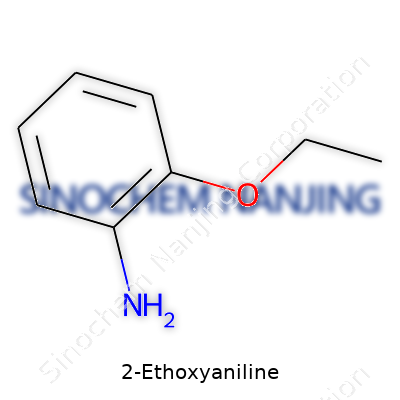
In a lab or a classroom, some chemicals catch your attention because of their structure and how they turn up in real-world compounds. 2-Ethoxyaniline belongs on that list. Its chemical formula, C8H11NO, gives you a snapshot: eight carbons, eleven hydrogens, one nitrogen, and one oxygen. It’s basically an aniline ring with an ethoxy group attached to the second carbon. For those studying organic chemistry or working in industrial research, this isn’t just a bunch of atoms on paper.
Chemically, the way 2-ethoxyaniline is built shapes how it behaves and interacts with other substances. The core of the molecule—a benzene ring—remains familiar in many household items, from dyes to pharmaceuticals. The ethoxy group (–OCH2CH3) at the second position wakes up the ring, giving it a set of properties that pure aniline alone won’t offer.
How Structure Changes the Game
Structure changes everything. Place an ethoxy group in the ortho position beside the amino group (–NH2), and suddenly, you get shifts in reactivity and solubility. Chemists draw this as a six-sided ring, with the amino group (NH2) sitting on one carbon and the ethoxy group (OCH2CH3) on the next. This arrangement produces different reactivity compared to meta or para isomers, sometimes leading to specialized uses in manufacturing.
Not everyone who buys a can of paint or bottle of medicine cares about the fine points of aromatic substitution. Still, those who do research in these areas know 2-ethoxyaniline gets used as an intermediate—meaning it helps bridge the gap between raw materials and finished products.
Why 2-Ethoxyaniline Isn’t Just Lab Stuff
I’ve spent time in labs where small tweaks on molecules yield big results. Add an ethoxy group to an aniline and you end up with something that behaves differently—better solubility in organic solvents, for one, and altered reactivity in coupling reactions. Factories that need to make certain dyes or stabilize certain pharmaceuticals find value in this specificity.
Take dye synthesis. 2-Ethoxyaniline offers up its amine group in coupling reactions that give color to everything from textiles to writing ink. A shift in substituents changes the color shade and fastness. There’s a direct link between that molecular drawing and what ends up on your shirt or notebook cover.
Looking at Access and Safety
Seeing chemicals as just data on a worksheet misses the real picture. 2-Ethoxyaniline, like many aromatic amines, doesn’t belong anywhere near food prep or bare skin. Long-term exposure has links to health risks, including possible toxicity and carcinogenicity. Workers dealing with it should handle it with gloves, safety goggles, and proper ventilation. When companies push for safer workplaces, these details aren’t academic—they save lives.
Better labeling, restriction of hazardous uses, and high-quality safety data sheets go a long way. Up-to-date training for anyone handling it keeps accidents at bay. Investing in substitutes for particularly risky applications also protects both the worker and the end consumer.
Real-World Applications and Better Choices
I’ve watched as labs phase out riskier aromatic amines, replacing them with less hazardous trims. This switch costs time and money but leads to real benefits. Better health outcomes and fewer contamination worries trump any temporary inconvenience. Sharing research and open collaboration between industries spreads safer methods faster.
2-Ethoxyaniline’s formula and structure tell a story beyond the textbook. They reveal how small changes can make big waves in product development and safety. Getting the details right on a molecular scale means a lot in the broader picture—especially when those decisions touch everyday products and worker safety.
Is 2-Ethoxyaniline hazardous or toxic?
The Basics: What Is 2-Ethoxyaniline?
2-Ethoxyaniline belongs to a family of chemicals called aromatic amines. These compounds show up in laboratories, manufacturing sites, and sometimes, in the middle of supply chains for dyes, pigments, or even pharmaceuticals. Folks working in industries handling specialty chemicals might get familiar with the strong, sweet-ish smell of 2-ethoxyaniline. To many, this substance looks harmless—a clear or slightly yellow liquid, easy to handle—but that easy handling hides harder truths.
Hazards Lurking Behind the Label
Long lab days always teach caution around chemicals. Even without flames or big spills, certain liquids hold hidden risks. 2-Ethoxyaniline deserves respect for its health hazards. Skin contact may cause irritation or dermatitis. This chemical can pass through latex, so regular nitrile gloves do a better job protecting hands. Breathing in its vapors sometimes leads to dizziness, headaches, or even more severe effects if the exposure continues over hours or days. Eyes are especially sensitive; a splash can sting or even damage eyesight. That’s why safety goggles become non-negotiable in any lab or factory dealing with this compound.
A lot of worry circles around what can’t be seen. Aromatic amines sometimes change how blood carries oxygen, much like the more notorious aniline. While there’s little data about 2-ethoxyaniline’s cancer-causing potential, other substances in this category have landed on watch lists for a reason. Some animal studies hint that this chemical group may cause gene mutations or even increase cancer risk with chronic exposure. Without long-term tracking studies on workers, it’s smart to err on the side of caution. Kids and pregnant folks especially should stay away—simple household chemistry is best left to long sleeves and closed doors.
Why Worker Health Demands Attention
I’ve seen what happens when workspaces slack on safety. Gloves worn thin, ventilation ignored, accidental splashes shrugged off—over time, bad habits catch up. Loss of focus, unexplained nausea, trouble concentrating: all these can creep in quietly. Some places rush through chemical training or treat MSDS sheets as paperwork instead of a roadmap to staying healthy. That mindset creates the real danger. Companies sometimes think short shifts or low usage means less risk, but even short bursts of exposure can harm sensitive folks. The simple answer has always been: respect the warnings, use the gear, don’t cut corners.
Reducing Risks: Simple Steps Make a Difference
Clear labeling and smart storage help. Locking 2-ethoxyaniline in ventilated, fireproof cabinets stops casual exposure. Disposable gloves, face shields, and goggles cut the chances for trouble. Good labs count on fume hoods to suck away invisible vapors before they reach your lungs. For small operations or home chemistry, smart folks skip these dangerous chemicals altogether. Loads of substitutions exist now—greener dyes and pigments that cut back on toxins without missing color or performance. Looking for and choosing these alternatives gives workers and communities a better shot at good health and fewer long-term worries.
Anyone using 2-ethoxyaniline should get regular checkups that include bloodwork, especially if symptoms pop up or there’s reason to think of heavy exposure. Unions and worker groups have pushed for tougher exposure limits in many countries, leading to better training and more personal protective gear. Staying proactive keeps people safer and means less regret later—no chemical is worth a hospital trip or a scary diagnosis years after the fact.
Knowledge Continues to Evolve
Much about 2-ethoxyaniline’s long-term impact on people remains uncertain. That shouldn’t mean waiting for illness before changing habits. Personal experience and scientific research point in the same direction: stay alert, choose safer alternatives, and treat unknown risks with healthy skepticism. That choice matters not just for workers today, but for everyone living near facilities using and storing these chemicals.
What are the storage and handling requirements for 2-Ethoxyaniline?
Recognizing Risks
Anyone who spends time in a lab or warehouse soon learns to respect chemicals like 2-Ethoxyaniline. This aromatic amine holds value in dyes, pharmaceuticals, and research, but it’s got a reputation for being hazardous if treated casually. Direct skin contact or inhaling vapors causes irritation, sometimes more serious symptoms, and a slip in judgment can hurt more than reputations.
Why Storage Matters
I learned the hard way that storing 2-Ethoxyaniline isn’t just about shelf space. Keep it under a tightly sealed lid, never left out for convenience. Exposure to air speeds up oxidation, which not only messes up the sample’s purity but can cause a nasty build-up of pressure. Proper storage avoids mess, accidents, and wasted money. Once, after a bottle got exposed to moist air, the contents darkened, and that single mistake killed a week’s progress for our team.
Choose bottles made of glass or compatible plastics. Avoid storing near strong acids or oxidizing agents. Once, I saw a mislabeled container parked next to hydrogen peroxide. That sort of oversight invites disaster. Learn from that and always double-check what sits next to what.
Environmental Factors
Light and humidity play tricks on this compound. Bright lights speed up decomposition and can even weaken the safety of its container. I remember a shipment stored under flickering fluorescent lights — over a month, labels faded and a weird film appeared inside some bottles. For any sensitive amine, darkness and dry air are non-negotiable essentials. Don’t store near heat sources; instead, keep it at room temperature, steady, and stable.
Protecting People and Spaces
In workplaces I’ve been part of, personal protective equipment isn’t just a box to tick. Eye protection, gloves, and a proper lab coat stop accidents from turning serious. Even careful people slip up in busy labs, so splash goggles sit close at hand, not tucked away somewhere.
Ventilation, too, deserves more attention than it often gets. A fume hood isn’t a luxury — it keeps tiny leaks or spills from building up dangerous fumes. I once walked into a lab where the ventilation had broken, and it made the eyes water instantly from amine fumes. That taught me: air quality never to take for granted.
Handling Spills
Spills happen to everyone, sooner or later. Fast containment matters: absorb with inert materials, scoop up, and bag for disposal. Do it without delay, since this compound can stain workspaces, corrode surfaces, and wash down drains into places it shouldn’t go. Clear protocols and easily reached spill kits save more than just time in these moments. In a lab I worked at, an outdated kit once led to confusion, and the cleanup took twice as long as it should have.
Paths Forward
Routines make a difference: clear labeling, reliable inventory checks, and solid training keep people and property safe. I’ve seen new staff go from nervous to confident after sharp, hands-on practice with real containers and pretend spills. Companies that invest in well-stocked PPE stations, visible warning signs, and regular storage reviews face fewer headaches and fewer emergencies.
2-Ethoxyaniline brings value in the right hands, but it asks for respect every day. Experienced workers don’t cut corners on storage, protection, or cleanup — because in the chemical world, shortcuts often come back to bite.
Where can I purchase 2-Ethoxyaniline?
What Exactly Is 2-Ethoxyaniline?
2-Ethoxyaniline belongs to the family of aniline derivatives. Chemists recognize it for its use in making dyes, pharmaceuticals, and sometimes polymers. A smooth transparent liquid with an unusual smell, it isn’t something you see in an everyday retail store next to cleaning products or hardware tools. Within the industry, it’s considered both valuable and hazardous. This stuff isn’t candy. Handling it without the right gear and expertise can end badly.
Not Just Available Anywhere
You won’t find 2-Ethoxyaniline at giant online retailers or your local home improvement shop. That’s not about exclusivity—it’s about safety and legality. Readers should know, this isn’t like shopping for isopropyl alcohol. In my experience working with lab supply chains, every order for a chemical like this triggers a set of checks. Sellers aren’t only protecting their own liability; they also serve as the first barrier against misuse.
Reliable suppliers operate through specialized chemical supply companies. Sigma-Aldrich, Fisher Scientific, Alfa Aesar—these brands screen every buyer. Before handing over a bottle, they ask for proof. You will probably need to show a business license, proof of academic research, even paperwork outlining your intended use. Hobbyists or the curious hobby chemist hit a wall here. If you look at chemical supplier forms, the language is clear: no documentation, no sale.
Why Regulations Matter
Strict controls exist for a reason. 2-Ethoxyaniline can cause damage to skin, lungs, and even your genetic code if handled wrong. Years ago, a local research project had to pause because a shipment of a similar substance got held up in customs. The lack of paperwork and hazmat training caused confusion and fear across people in shipping and receiving. Imagine a world with no barriers—harmful substances floating among parcels of everyday goods.
It’s not all doom and gloom. Regulations often look like red tape, but in practice, they keep workers and communities safe. Even chemists who spend decades in the field respect these lines in the sand. Shipping dangerous substances by air or ground requires certifications. The U.S. Environmental Protection Agency and the Occupational Safety and Health Administration have pages dedicated to the handling of anilines and related chemicals. Skipping these protocols can land buyers and sellers in court—or the ER.
How to Approach a Purchase Responsibly
Anyone who genuinely needs 2-Ethoxyaniline—universities, pharmaceutical labs, dye manufacturers—should set up a business account with an established chemical distributor. Trustworthy companies demand a clear address, tax ID, and the purpose for each order. Some even interview buyers. This isn’t meant to annoy professionals. Each layer of paperwork saves an accidental spill or misuse from becoming a headline.
If you’re a student or independent researcher, approach a professor or someone in your institution’s procurement office. They already have relationships with suppliers, and they know the hoops you must jump through. Never try to buy such chemicals through online classifieds or gray-market sources. Risks outweigh any convenience promised there—not just legal headaches, but real physical harm.
In our search for knowledge or industrial progress, chasing convenience shouldn’t overshadow safety. The right supplier asks hard questions not to keep you out, but to make sure everyone stays safe in the process.
| Names | |
| Preferred IUPAC name | 2-ethoxyaniline |
| Other names |
o-Ethoxyaniline 2-Aminoethoxybenzene 2-Ethoxybenzenamine |
| Pronunciation | /tuː ɪˌθɒksiˈænɪliːn/ |
| Identifiers | |
| CAS Number | 578-54-1 |
| Beilstein Reference | 1361847 |
| ChEBI | CHEBI:28043 |
| ChEMBL | CHEMBL3210298 |
| ChemSpider | 7351 |
| DrugBank | DB14157 |
| ECHA InfoCard | 100.030.753 |
| EC Number | 202-584-6 |
| Gmelin Reference | 8597 |
| KEGG | C14768 |
| MeSH | D000438 |
| PubChem CID | 7404 |
| RTECS number | BZ9625000 |
| UNII | 7L3HWD4H4T |
| UN number | UN1992 |
| Properties | |
| Chemical formula | C8H11NO |
| Molar mass | 137.19 g/mol |
| Appearance | Colorless to pale yellow liquid |
| Odor | aromatic |
| Density | 1.032 g/mL at 25 °C (lit.) |
| Solubility in water | Slightly soluble |
| log P | 1.47 |
| Vapor pressure | 0.133 hPa (25 °C) |
| Acidity (pKa) | 4.6 |
| Basicity (pKb) | 10.33 |
| Magnetic susceptibility (χ) | -61.0×10⁻⁶ cm³/mol |
| Refractive index (nD) | 1.568 |
| Viscosity | 1.032 cP (25°C) |
| Dipole moment | 2.06 D |
| Thermochemistry | |
| Std molar entropy (S⦵298) | 221.7 J·mol⁻¹·K⁻¹ |
| Std enthalpy of formation (ΔfH⦵298) | 81.9 kJ/mol |
| Std enthalpy of combustion (ΔcH⦵298) | −3225.8 kJ·mol⁻¹ |
| Hazards | |
| Main hazards | Harmful if swallowed. Causes skin irritation. Causes serious eye irritation. Suspected of causing cancer. Toxic to aquatic life with long lasting effects. |
| GHS labelling | **GHS02, GHS07** |
| Pictograms | GHS07 |
| Signal word | Danger |
| Hazard statements | H302, H315, H319, H332 |
| Precautionary statements | P261, P280, P302+P352, P305+P351+P338, P312, P337+P313 |
| Flash point | 140°C |
| Autoignition temperature | 465°C |
| Explosive limits | Upper: 1.2%, Lower: 7.5% |
| Lethal dose or concentration | LD₅₀ (oral, rat): 1,350 mg/kg |
| LD50 (median dose) | LD50 (median dose): Oral rat 1470 mg/kg |
| NIOSH | KWJ7950000 |
| PEL (Permissible) | Not established |
| REL (Recommended) | 1 mg/m³ |
| IDLH (Immediate danger) | 50 ppm |
| Related compounds | |
| Related compounds |
2-Ethylaniline 2-Methoxyaniline 2-Phenetidine 2-Propoxyaniline 2-Isopropoxyaniline |



