2-Deoxy-D-Glucose: A Closer Look at Its Journey, Uses, and the Road Ahead
Historical Development
2-Deoxy-D-Glucose, often written as 2-DG, emerged decades ago during the persistent search for methods to disrupt glucose metabolism in living cells. Researchers in the mid-20th century wanted to slow down glucose-dependent processes in cancer cells. This led them to explore glucose analogs that could interfere with glycolysis. After the initial chemical synthesis, scientists tested it across labs, learning that 2-DG could stall tumor growth in some animal studies by halting glycolytic flux.
Product Overview
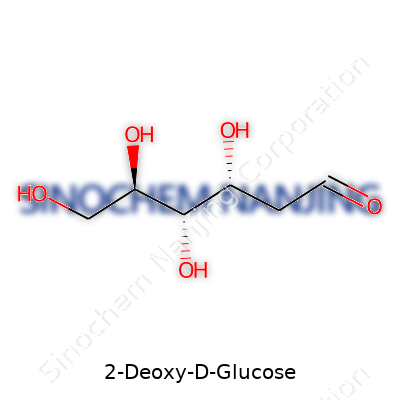
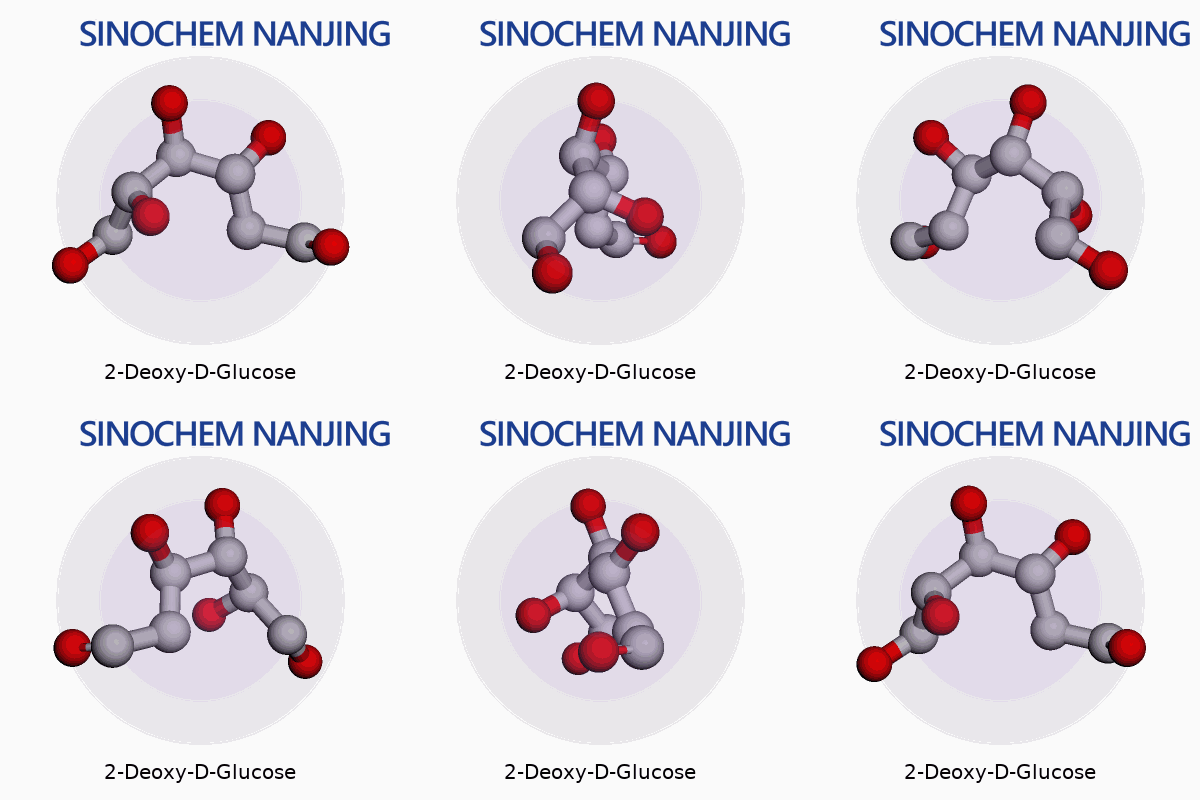
2-DG functions as an inhibitor of glycolysis, taken up by cells like glucose but halting at the phosphorylation step and blocking further breakdown. It shares a similar structure with glucose but misses the oxygen atom at the second carbon. Scientists in the pharmaceutical and research sectors rely on it to investigate cancer cell metabolism, viral replication, and more recently, as an experimental adjunct for COVID-19. Healthcare logistics and industrial bioprocessing also use 2-DG to study sugar transport mechanisms and regulation.
Physical & Chemical Properties
2-DG comes as a white crystalline powder, soluble in water and slightly soluble in ethanol. Its molecular formula is C6H12O5, and the molecular weight clocks in at 164.16 g/mol. The melting point ranges just below 160°C, and it carries a faint sweet taste. Stability under standard storage conditions stays high, without significant degradation. Under exposure to strong acids or bases, its sugar ring structure breaks apart. The absence of an oxygen atom at its second carbon sets it apart structurally and functionally from natural glucose.
Technical Specifications & Labeling
Suppliers of 2-DG usually offer purity above 98%, commonly confirmed by HPLC or GC analysis. Labeling details focus on batch numbers, storage guidelines — cool and dry, away from light — and warnings about skin or eye irritation upon contact. Containers display chemical identifiers such as CAS: 154-17-6 and hazard codes. Laboratories track expiry dates closely given its shelf life depends on proper sealing and moisture control. Some research-grade batches advertise extended purity analyses to ensure that the smallest trace contaminants do not confound sensitive experiments.
Preparation Method
Production of 2-DG starts with D-glucose. Through selective catalytic hydrogenation and dehydroxylation, chemists remove the hydroxyl group at the C-2 position, resulting in the "deoxy" pattern that blocks further metabolic processing. Enzymatic methods came into play more recently, with engineered microbial strains turning natural sugars into 2-deoxy variants through fermentative pathways. Scale-up in industrial reactors demands careful attention to reaction temperatures and purification steps, often employing recrystallization and column chromatography to reach pharmaceutical standards.
Chemical Reactions & Modifications
2-DG's most well-known reaction involves phosphorylation by hexokinase, the cell’s first glycolytic enzyme. This modification forms 2-DG-6-phosphate, trapping the molecule inside the cell but interrupting glycolysis since downstream enzymes cannot process it. For research, chemists attach fluorescent tags to track glucose transporters or use isotopic labeling for metabolic flux analyses. Derivatives created by slight modifications at other hydroxyl groups increase specificity for investigational assays. With some catalytic conditions, 2-DG's sugar ring can open or rearrange, useful in synthetic biology and carbohydrate chemistry studies.
Synonyms & Product Names
Scientists and industry catalogs list alternate names like 2-Deoxyglucose, 2-Deoxy-D-arabino-hexose, and D-Glucose, 2-deoxy-. Some commercial products carry trade names referencing its anti-metabolic action. Oncology researchers sometimes abbreviate it as simply DG or use research codes in experimental logs. While product labeling sticks to recognized scientific nomenclature, older literature may mention synonyms like 2DG or 2-deoxyglucopyranose.
Safety & Operational Standards
Safe handling of 2-DG means wearing gloves, safety glasses, and lab coats to guard against skin or eye irritation. Inhalation or ingestion can cause respiratory tract and gastrointestinal upset, including nausea or headache. Material safety data sheets stress proper ventilation and immediate washing if exposed. For bulk storage, tightly sealed containers and desiccators help prevent clumping and maintain chemical integrity. Disposal follows guidelines for non-hazardous organic chemicals, but larger spills or workplace exposures require reporting and decontamination using standard lab spill kits. Occupational health protocols often include regular training on chemical safety and emergency response for research teams.
Application Area
Research into 2-DG goes deep into oncology as scientists probe how tumors feed on sugar. Clinical trials have tested 2-DG in combination with chemotherapy or radiotherapy, aiming to starve malignant cells by blocking their favorite energy pathway. In infectious disease, 2-DG captured renewed attention during the COVID-19 pandemic for its promise in slowing viral replication. Neuroscience teams use 2-DG to map metabolic activity in the brain, tracking changes during development, aging, or neurological disorders. Cell biologists apply it when studying autophagy and metabolic shifts under nutrient starvation, while bioengineering teams use it to select for mutant strains with altered sugar metabolism.
Research & Development
Ongoing research around 2-DG explores everything from new cancer treatments to metabolic syndrome interventions. Preclinical studies chase ways to boost selectivity for tumor cells over healthy tissue, sometimes by delivering 2-DG via nanoparticles or targeting strategies. In virology, lab teams seek dosing regimens that curb viral load without serious host toxicity. Chemical engineers look at large-scale biosynthesis to cut costs and improve access for massive clinical studies. Collaborative grants between industry and academic labs focus on refining the compound for regulatory approval in new indications, with progress relying both on basic biochemistry and advanced pharmacology.
Toxicity Research
Toxicologists dig deep into how much 2-DG living organisms can tolerate before side effects kick in. Prolonged exposure or high doses upset normal heart function, cause hypoglycemia, and provoke weight loss in animal models. In humans, clinical trials have required tight monitoring of glucose levels, liver function, and cardiovascular health. Some studies report neurotoxic effects or gastrointestinal discomfort at higher doses. Most toxicity data underline the narrow gap between therapeutically effective and harmful concentrations, so designing precise delivery protocols ranks high on the risk management list.
Future Prospects
Interest in 2-DG keeps climbing as metabolic targeting becomes more central in medicine, especially with the rise of personalized treatments. Scientists hope to find combination drugs where 2-DG pairs with established therapies for better results and fewer side effects. Advances in drug delivery, such as liposomal or implantable slow-release forms, could make it safer for long-term administration. Expect to see deeper investigation into its antiviral mechanisms, applications in metabolic imaging, and custom modifications for synthetic biology projects. Pricing and large-scale production improvements appear set to widen access, possibly transforming how fields ranging from oncology to infectious disease management look at targeted sugar analogs for years to come.
What is 2-Deoxy-D-Glucose (2-DG) and how does it work?
What is 2-DG?
2-Deoxy-D-Glucose, or 2-DG, landed in the spotlight during the COVID-19 pandemic, but it’s a compound scientists have explored for years. This sugar analog closely resembles glucose, minus one oxygen atom at the second carbon. That small structural tweak gives it some unique properties.
How 2-DG Interacts with the Body
In everyday life, the body breaks down glucose for energy. Cells rely on this fuel, especially those growing fast or under stress — like cancer cells and virus-infected cells. 2-DG tricks the cell by mimicking glucose, using the same transport systems to sneak inside. Once in, 2-DG tries to follow the usual energy-making steps, but its missing oxygen throws a wrench in the works. The cell jams up, energy production drops, and growth slows.
Roots in Cancer Research
I first read about 2-DG in articles on alternative cancer therapies. Tumor cells crave sugar and grow aggressively, gobbling up glucose at a much higher rate than regular cells. Researchers figured out early that if they could starve these cells of their main fuel, maybe tumors would shrink. Trials used 2-DG to block glucose processing, stalling cancer growth. Though trials continue, 2-DG hasn't become a cancer cure-all. Some tumors adapt, while others get hit harder. The idea still deserves attention, especially when combined with other treatments.
COVID-19 and Emergency Use
2-DG gained fresh attention during the pandemic. In India, emergency clearance allowed its use with COVID-19 patients, based on data suggesting it could slow virus growth and aid recovery. The science makes sense: viruses hijack a cell’s machinery, ramping up energy use. 2-DG, by gumming up that machinery, may halt viral replication or dampen the fire of inflammation tied to severe COVID-19. Some Indian clinics reported that patients taking 2-DG recovered faster and needed less oxygen support, though global agencies didn't greenlight it for broad use. The catch remains lack of extensive human trials. Without solid long-term data, judgment stays reserved.
Safety and Side Effects
2-DG isn’t a magic bullet, and it doesn’t come without risks. Some folks taking it reported drops in blood sugar, confusion, nausea, and even heart rhythm changes. The line between attacking sick cells and hurting healthy ones isn’t always clear. Doctors I spoke with stressed the need for close monitoring. Dosing matters—a lot.
Finding Balance: Next Steps for 2-DG
The promise of 2-DG lies in its blend of simplicity and targeted action. Instead of wiping out all cells, it zeroes in on those with high sugar hunger. This specificity opens routes for new treatments, but it also demands careful study. More clinical trials, tracking different doses and combinations, could settle whether this humble sugar analog finds a permanent home in medicine cabinets. At the very least, 2-DG’s story reminds us that answers in science sometimes hide in the details of everyday molecules.
What are the main uses of 2-Deoxy-D-Glucose in medicine or research?
Turning Sugar Against Cancer
Walking into any hospital cancer ward, you will hear about the battle with tumor growth. Doctors and scientists always look for new angles in this fight. One surprise player: sugar, or rather, a sugar lookalike called 2-Deoxy-D-Glucose (2-DG). I have followed years of research where this molecule keeps turning up as a tool against cancer. Unlike regular glucose, 2-DG enters cells but jams up energy production. Cancer cells, greedy for sugar, take in more of it. But inside, this lookalike grinds their engine to a halt. Trials in India pushed 2-DG into COVID-19 treatment as well, tapping into its ability to slow down fast-dividing cells and possibly cut off resources to the virus. Results there sparked debate, but the jump from lab bench to bedside shows how determined people are to squeeze every use out of this compound.
Investigating Metabolism
Many scientists rely on 2-DG to track how cells handle energy. I remember seeing lab teams using it in metabolic studies, adding this glucose mimic to cell cultures. They measure how cells respond—do they take up less? Do they stall in growth? These basic science experiments, often overlooked outside research circles, quietly drive forward understanding in diseases from diabetes to neurodegeneration. 2-DG acts like a tiny stress test for cell metabolism, showing where the cracks appear when sugar supply fails or when signaling goes haywire.
Imaging the Body’s Hotspots
Imagine having a camera that reveals the hungriest tissues in the body. 2-DG forms the basis for PET scans when tagged with a radioactive marker. Doctors inject this tracer before the scan. Tumors light up on the images because they feed on sugar at high rates, sucking in the marked 2-DG. My own encounters with family facing cancer drove home how important it is to spot tumors fast and watch whether treatment shrinks them. These scans help guide therapy, catching what constant blood tests can’t reveal.
Testing Limits in the Clinic and Beyond
Every new drug starts with questions and more questions. Researchers use 2-DG in animal studies and early human trials to check what happens if you put a brake on energy production. Some trials push 2-DG as an anti-cancer agent, others look for side effects. Stories from labs include reports of nausea or low blood sugar, making it clear: no silver bullet emerges without costs. In studies on viruses or brain disorders, the same principle—starve the bad guys of their needed fuel—guides the work. COVID-19 brought a rush of interest, as teams grasped for anything that might stall viral spread in the body, though review committees keep urging for more robust results before routine clinical use.
What Comes Next
The story of 2-Deoxy-D-Glucose is one of hope mixed with realism. Chasing every clue, scientists learn more about how cells stay alive or die. In medicine, shortcuts rarely exist, but 2-DG keeps finding footholds. Oncologists, metabolic experts, and imaging specialists see new doors opening with every paper, every patient scanned, every mouse studied. As the research grows, facts and real-life testimonials continue to shape the path for this special sugar’s future in health care.
Is 2-Deoxy-D-Glucose safe and what are its side effects?
What is 2-Deoxy-D-Glucose?
2-Deoxy-D-Glucose (2-DG) looks a lot like the sugar glucose that powers our bodies, but it doesn’t work the same way. Researchers first showed interest in 2-DG decades ago. It blocks one of the main steps cells need to turn sugar into energy. That action makes 2-DG intriguing for studies on cancer and, more recently, viral infections. In 2021, India gave emergency use authorization for 2-DG in COVID-19 cases, pushing the compound under a brighter spotlight.
Safety Concerns
Whenever a treatment idea sounds promising, folks naturally want reason to trust it will not cause harm. 2-DG isn’t brand new, so we do know a bit about how people respond. At moderate doses, most healthy adults can tolerate short courses. Side effects reported in studies include nausea, vomiting, dizziness, headache, drop in blood sugar, and heart rhythm changes. Researchers have also noted extra caution for people with heart trouble or diabetes. Fasting patients or those with existing low blood sugar run risk of hypoglycemia.
More serious problems cropped up during cancer trials with high doses or long-term use. Some patients experienced severe drops in platelet count or liver irritation. These issues point to the need for ongoing lab monitoring if 2-DG gets used outside of a research study. The US Food and Drug Administration has yet to approve 2-DG for any use. That means safety data comes mostly from small, early-phase clinical trials and not from large, diverse patient groups.
Why it Matters
People look for hope in a pandemic or with a tough illness. They want options that turn things around quickly. That’s the feeling that led to the excitement over 2-DG in COVID-19 patients. Indian authorities highlighted its ease of use and potential for speeding up recovery. Still, the medical community stressed that claims based on preprint or early evidence could give false confidence. In my experience, medicines with a lot of early excitement often show limits when tested at scale.
Looking at big hospital trends, it becomes plain that no drug solves everything on its own. For people managing COVID-19, cancer, or other tough diseases, the risks of experimental drugs stack up if doctors can’t track side effects in real time. Patients may need regular EKGs, blood sugar checks, and liver tests with 2-DG. These safeguards depend on well-trained teams and real access to labs.
Potential Paths Forward
Doctors and patients both want newer options, whether for viral infections or cancers. More research is the answer. Large, well-designed studies in diverse groups finish the picture on effectiveness and safety. Without that, side effects simply don’t get caught in time. Pharmacies and clinics also need clear guidance on who should avoid 2-DG. Tools like electronic health records can help flag risk, especially in people with diabetes or a heart condition.
Education goes a long way too. My experience shows that honest conversations about side effects, not just benefits, keep trust in medicine strong. Giving every patient in-depth info about risks and signs to watch for makes a difference. If future trials show 2-DG has a role to play, then careful rollout in hospital settings — not just over-the-counter access — can prevent real harm.
Any promising new drug demands careful balance. Hope must come with honest review of side effects. 2-DG has a story worth watching, but safety questions still need complete answers.
How is 2-Deoxy-D-Glucose administered or taken?
What Is 2-Deoxy-D-Glucose and Why Do People Use It?
2-Deoxy-D-Glucose, or 2-DG for short, pops up in medical news whenever researchers talk about unique treatments for cancer or viral infections. Hospitals in India grabbed headlines during the COVID-19 pandemic for using this compound, aiming to lower the oxygen needs in moderate to severe cases. Backed by decades of study as a cancer treatment candidate, 2-DG continues to draw attention for its unusual way of working: interfering with how cells break down sugar, which slows the growth of fast-dividing cells or viruses.
Getting Down to the Basics of Administration
People seeking information on how 2-DG is taken often run into technical terms. From my own experience working alongside healthcare providers, the most common form used in trials or hospitals comes as an oral powder. Doctors ask patients or caregivers to dissolve the prescribed dose in water and drink it. That’s the form approved by Indian regulators for emergency pandemic use, packaged in clear sachets. The powder doesn’t need refrigeration, so it's practical even in outlying clinics, and the mixing process is straightforward. Cancer researchers have also looked at oral tablets, and scientists sometimes use intravenous dosing in lab experiments. For now, outside of clinical settings, oral powder remains the go-to version.
Why Not Just A Pill?
Most people are used to getting pills at the clinic. So, the question comes up: why is 2-DG offered as a powder to mix in water? That choice isn’t about novelty. The powder gives flexibility for exact dosing, which matters a lot since the right amount can change depending on the patient’s weight and condition. Oral powder dissolves quickly, gets absorbed efficiently, and can be measured to the milligram. Plus, it sidesteps problems for anyone struggling to swallow tablets, such as older adults or children. These real-world details tend to slide under the radar until someone faces them firsthand.
Looking at Safety and Supervision
Administration of 2-DG is not a casual matter for home use. Medical teams handle it closely, drawing from clinical trial protocols. Doctors review blood glucose levels since 2-DG tweaks sugar processing in the body. Anyone with diabetes, kidney problems, or who takes multiple medications requires careful monitoring. On a practical level, some report mild side effects like low blood sugar, fatigue, or gastrointestinal discomfort. That makes prescription control and counseling essential. In a crisis, having a compound that can be mixed with water and handed over quickly counts for a lot, but the risks can't be ignored.
Clearing Up Misconceptions
Word spreads quickly online. Some people see 2-DG as a “miracle cure” and hunt for ways to find it without a prescription. That’s never a smart move. Clinical guidance matters. Regulatory approvals vary by country, and in most parts of the world, finding 2-DG outside of a clinical research setting isn’t just difficult—it’s often illegal and unsafe. Trials so far focus on moderate to severe hospital cases, not mild illness or day-to-day prevention.
What Could Improve Access and Understanding?
Access should never mean cutting corners on safety. Health agencies could lead by providing clear language guides, outlining what patients and families can expect when offered 2-DG. Better education about proper administration and monitoring would go a long way toward protecting people. More research into easy-to-swallow tablets and dosing for children could help, as would stronger global coordination so doctors everywhere have the same information. Every promising treatment deserves a clear, honest explanation so people can make wise choices together with medical staff.
Can 2-Deoxy-D-Glucose be used for treating COVID-19 or cancer?
The Science Behind 2-Deoxy-D-Glucose
Back in the early months of the pandemic, everyone wanted a quick fix. News about 2-Deoxy-D-Glucose, or 2-DG, started making headlines. Indian scientists drew attention when their early studies suggested this old molecule, mostly used in labs, could slow the speed of COVID-19 in patients. Even the Indian drug regulator gave emergency use approval for mild and moderate COVID-19 patients, sending social media into a frenzy.
I remember talking with a few friends in healthcare at the time. They felt pressure from families looking for any new “miracle cure.” It reminded us all how hope and fear often mingle in moments of crisis, but hope needs backing. 2-DG blocks a piece of cell machinery that both cancer cells and infected cells use for energy, targeting the way diseased tissue gulps up glucose. That idea sounds solid in the lab. If a cell can’t feed, it can’t grow.
COVID-19 Reality Check
Fast-forward to today, and we see 2-DG didn’t deliver the breakthrough. Studies have shown its benefit sits on shaky ground. The peer-reviewed evidence didn’t support the hype—most international organizations for COVID-19 treatment never included 2-DG in any major recommendations. Health care workers on the ground found logistical headaches too. The powder form, odd taste, and the need for careful dosing made it tough to use in hospital wards already running on thin staff and heavy stress.Looking at the data, some Indian trial results saw a slightly faster recovery, maybe a day or two faster, not a huge leap. Results failed to inspire confidence outside early government announcements. Researchers also flagged the lack of large, rigorous trials. Most large hospitals quietly set aside 2-DG, moving on to other treatments backed by stronger data.
Cancer Treatment: Old Story, New Scrutiny
Long before COVID, researchers explored 2-DG for fighting cancer. Many types of cancer gobble up sugar, growing quickly by taking in more glucose. Cutting off sugar with 2-DG made sense, at least in theory. In practice, things proved messy. Tumor cells—like any clever enemy—find workarounds and tap other energy sources. Lab mice sometimes responded to 2-DG. In real patients, results were mostly underwhelming, especially with aggressive cancers. Often, the side effects—nausea, weakness, and the risk of messing with normal cells—limited how much could be given.
Some scientists still see hope for combining 2-DG with other drugs. Cancer research teems with new ideas, especially on how to target a tumor's growth machinery from different angles. But for now, oncologists trust proven combinations and encourage patients to focus on what works backed by larger clinical trials.
Moving Forward With Sound Science
It’s easy to feel worn out by media cycles that bounce us from one “breakthrough” to the next. Real medicine requires patience and careful study. Results from smaller or unreviewed trials rarely hold up in broader practice. Patients seeking treatment for COVID-19 or cancer deserve honesty and evidence more than easy promises. Regulators, scientists, and doctors keep returning to this basic rule: treatments need proof, not just hope.
We need more carefully designed trials, complete transparency with results, and strong voices from doctors who’ve seen both the promise and pitfalls of experimental treatments. For anyone facing illness, the trustworthy path includes asking tough questions and making choices based on the best available science—not on viral headlines or rumors spread in the thick of crisis.
| Names | |
| Preferred IUPAC name | (2R,3R,4R,5R)-2-(Hydroxymethyl)oxolane-3,4,5-triol |
| Other names |
2-Deoxy-D-arabino-hexose 2-DG 2-Deoxyglucose 2-Deoxy-D-glucopyranose 2-Deoxy-alpha-D-glucopyranose |
| Pronunciation | /tuː diˈɒksi di ˈɡluːkoʊz/ |
| Identifiers | |
| CAS Number | 154-17-6 |
| Beilstein Reference | 1723733 |
| ChEBI | CHEBI:4167 |
| ChEMBL | CHEMBL429022 |
| ChemSpider | 50486 |
| DrugBank | DB01167 |
| ECHA InfoCard | 100.016.248 |
| EC Number | EC 1.1.1.49 |
| Gmelin Reference | 174997 |
| KEGG | C00212 |
| MeSH | D04722 |
| PubChem CID | 4082 |
| RTECS number | KW2975000 |
| UNII | CBR0XE601Q |
| UN number | 2811 |
| CompTox Dashboard (EPA) | DTXSID4017093 |
| Properties | |
| Chemical formula | C6H12O5 |
| Molar mass | 164.16 g/mol |
| Appearance | White crystalline powder |
| Odor | Odorless |
| Density | 1.54 g/cm³ |
| Solubility in water | Soluble |
| log P | -1.37 |
| Acidity (pKa) | 12.28 |
| Basicity (pKb) | 12.44 |
| Magnetic susceptibility (χ) | -73.0·10⁻⁶ cm³/mol |
| Refractive index (nD) | 1.420 |
| Viscosity | Viscous syrup |
| Dipole moment | 3.52 D |
| Thermochemistry | |
| Std molar entropy (S⦵298) | 215.8 J·mol⁻¹·K⁻¹ |
| Std enthalpy of formation (ΔfH⦵298) | -971.15 kJ·mol⁻¹ |
| Std enthalpy of combustion (ΔcH⦵298) | -2820 kJ/mol |
| Pharmacology | |
| ATC code | A16AX01 |
| Hazards | |
| Main hazards | Not a hazardous substance or mixture. |
| GHS labelling | GHS07, Warning, H302 |
| Pictograms | GHS07, GHS08 |
| Signal word | Warning |
| Hazard statements | Not a hazardous substance or mixture according to the Globally Harmonized System (GHS) |
| NFPA 704 (fire diamond) | 1-2-0 |
| Flash point | > 177 °C |
| Autoignition temperature | 410 °C |
| Lethal dose or concentration | LD50 (oral, rat): > 10,000 mg/kg |
| LD50 (median dose) | LD50 (median dose): 15,300 mg/kg (rat, oral) |
| PEL (Permissible) | Not established |
| REL (Recommended) | 7 mg/kg |
| IDLH (Immediate danger) | NIOSH has not established an IDLH value for 2-Deoxy-D-Glucose. |
| Related compounds | |
| Related compounds |
D-Glucose 2-Azido-2-deoxyglucose Fluorodeoxyglucose (FDG) 6-Deoxyglucose 2-Deoxy-D-galactose |



