Looking Closely at 2-Chloropyridine: Beyond the Chemistry
Historical Development
Chemistry leans on the tiniest building blocks, transforming our lives in ways most people don’t see. Take 2-Chloropyridine, for example. Scientists stumbled on this compound back in the early 20th century, digging through possible new materials and drugs made from pyridine rings. As people started to make pyridine derivatives for dyes and medicines, 2-Chloropyridine showed up as both a byproduct and a target. Early synthetic routes sometimes sputtered, depending on harsh chlorination methods and often returning inconsistent yields. In the decades that followed, those early obstacles forced researchers to refine selective chlorination and ring manipulation techniques, paving the way for cleaner syntheses and broader adoption. Hands-on lab work and practical challenges in scale-up kept this chemical both relevant and in demand, especially as folks figured out where it fits into industrial and pharmaceutical puzzles.
Product Overview
Today, 2-Chloropyridine lives in the supply chain for the chemical industry, showing up in drums and bottles destined for labs, drug manufacturers, agrochemical firms, and specialty chemical outfits. More than a tool on a shelf, it opens doors to advanced products, since its unique position on the pyridine ring and its reactivity offer shortcuts to complex molecules. It’s the sort of building block that helps bridge the gap between academic dreamers and real-world makers, with its versatility acting as a magnet for anyone shaping new chemical entities.
Physical & Chemical Properties
You can spot 2-Chloropyridine as a colorless or pale yellow liquid, with a pungent odor that sticks in your memory if you’ve ever cracked open a bottle in an undergraduate lab. It boils at around 192°C, slides into organic solvents, and shows clear separation from water. Chemists appreciate its reactivity, shaped by the combination of a chlorine atom and the nitrogen-containing ring. The chlorine at the 2-position nudges the electron density and sets up the molecule for substitution reactions, whether that means swapping in better leaving groups or attaching new functionalities.
Technical Specifications & Labeling
On the shelf, containers list concentration, purity, and storage recommendations, along with standard hazard warnings. Regulatory labeling pulls from international agreements and local rules. High purity often means fewer than 1% impurities, a value labs track to limit unwanted side reactions. Final users want confidence that every batch maintains consistency, especially since downstream chemistry depends on reliable input.
Preparation Method
There are a handful of ways to get to 2-Chloropyridine, though not all sit comfortably in every lab. Larger manufacturers often rely on direct chlorination of pyridine with chlorine gas, running under temperature controls and tight safety standards because of the risks involved. Other labs favor routes where they swap a functional group—like an amino or hydroxy group—for the chlorine, often using reagents like phosphorus oxychloride. Each pathway has trade-offs, shaped by access to raw materials, desired purity, waste treatment possibilities, and production scale.
Chemical Reactions & Modifications
Reactivity stands at the core of 2-Chloropyridine’s role in the lab. That chlorine atom makes good bait for nucleophiles, which step in and replace it, creating a gateway to a long list of derivatives. Chemists often use palladium-catalyzed cross-coupling reactions to tack on new groups, using methods either named for their inventors or adapted from classic protocols. Hydrogenation, substitution, and oxidation all run fairly smoothly, giving this molecule a reputation for flexibility. Chemical creativity runs wild as researchers chase down unique heterocyclic frameworks starting with this simple liquid.
Synonyms & Product Names
Chemists often juggle multiple names for the same material. For 2-Chloropyridine, alternative labels include alpha-chloropyridine, 2-pyridyl chloride, or just by its CAS number for pinpoint reference. These alternate handles circulate in catalogs and research, sometimes confusing newbies but helping veterans cross-check and source from different suppliers. The variations spring from conventions in naming organic compounds, sometimes focusing on the position of the atom or the functional group present.
Safety & Operational Standards
Work with 2-Chloropyridine calls for experience and respect. This isn’t a chemical for the careless. It can irritate eyes and skin and damages mucous membranes with direct contact. Inhalation brings its own risks, and those who have spent time around open bottles remember the sharp sting in the air. Fume hoods, gloves, and goggles go from optional to mandatory. Industry standards recommend proper labeling, safe storage away from incompatible materials like strong oxidizers, and regular staff training. If spills or exposures occur, quick clean-up and medical checks follow. Labs watching for accidents stay safer, and regulatory agencies enforce these habits for a reason.
Application Area
2-Chloropyridine shows up in more places than most people expect. Its biggest impact lands in pharmaceuticals, where it acts as a precursor to antihistamines, anti-infective agents, and other drugs. Agrochemical firms depend on it as a stepping stone toward herbicides and pesticides built around pyridine frameworks. On the materials science front, it feeds into specialty dyes, functional polymers, and liquid crystals. Research labs lean on its ability to construct rare molecular architectures, taking advantage of the predictable reactivity the chlorine leverages. The chain often starts with 2-Chloropyridine and ends somewhere much further downstream, sometimes in the hands of physicians or farmers.
Research & Development
Chemists never stop hunting for smoother syntheses or lower-impact processes. Lately, green chemistry has pushed for routes that trim waste and minimize hazardous reagents. Researchers also look for catalysts that cut energy costs and reduce the need for excessive purification. Novel applications keep popping up, from advanced pharmaceuticals to electronic materials. The flexibility of the pyridine ring structure, combined with the utility of the chlorine leaving group, empowers researchers to invent new scaffolds and potential drugs. Every discovery in this space comes backed by hard-earned knowledge, bench work, and the constant need to outsmart both nature and previous roadblocks.
Toxicity Research
Nobody in the lab ignores the risks tied to 2-Chloropyridine. Toxicity studies show it causes harm with repeated or high-level exposure, impacting liver, kidneys, and the nervous system. Animal studies have directed safety standards and influenced exposure guidelines. Researchers prioritize determining mechanisms of toxicity, exploring metabolism, and proposing treatments. Environmental fate remains a concern as trace levels may linger in water and soil, showing limited breakdown over time. Regulatory standards set clear rules for handling, disposal, and exposure, drawing on decades of medical data to keep workplaces and communities out of harm’s way.
Future Prospects
The road ahead for 2-Chloropyridine stretches into new territory as researchers and manufacturers aim for better, safer, and more sustainable chemistry. Pharma continues to tap this compound for next-generation drugs, while renewable feedstocks and greener methods drive industrial innovation. Emerging analytical tools help track purity and predict downstream behavior, guiding process improvements in real time. With pressure to phase out harsh reagents and lower the environmental footprint, researchers now aim for catalyst-driven, energy-efficient syntheses. The steady growth in custom organic synthesis suggests 2-Chloropyridine will hold its value, serving as both a foundation for discovery and a litmus test for chemical ingenuity.
What is 2-Chloropyridine used for?
A Closer Look at a Versatile Chemical
2-Chloropyridine stands out in the world of organic chemistry because of its adaptability. This compound’s structure, with a chlorine atom attached to a six-membered aromatic ring, has drawn the attention of both scientists and industry professionals. I remember helping out in a university lab where our team used 2-chloropyridine as a starting material in synthesizing more complex molecules. Its chemical character plays well with others—to a chemist, that means you can build a lot from it.
Role in Pharmaceuticals
People might not see 2-chloropyridine on a pharmacy shelf, but it quietly contributes to the medications available today. The pharmaceutical industry relies on intermediates—these are crucial building blocks that help construct active pharmaceutical ingredients. 2-Chloropyridine enters the scene here. Its presence can be traced in the synthesis of antihistamines, antibiotics, and treatments for tuberculosis.
Drug development doesn’t happen overnight. Teams run through different molecular configurations before finding a version that works. 2-Chloropyridine offers chemists the ability to swap out the chlorine atom for other chemical groups, opening up new possibilities in medicine design. This means improved safety profiles, better targeting in the body, and sometimes, easier production methods.
Importance in Agrochemicals
Another area where 2-chloropyridine makes a difference: agriculture. Growing enough food to feed a fast-growing population takes more than just seeds and water. Crop protection relies on pesticides and herbicides, and many of these substances are shaped around molecular skeletons like pyridine. 2-Chloropyridine helps in synthesizing compounds that safeguard fields against diseases, damaging insects, and invasive plants.
Farmers don’t want excess chemicals lingering in soil or water. The drive for safer, more effective agrochemicals puts pressure on chemical manufacturers to refine each step. Formulators look to 2-chloropyridine not only for its reactivity but also for the potential to create targeted solutions—knocking back pests without harming pollinators or people.
Beyond Drugs and Fields
This chemical has a footprint that touches more than just medicine and food. 2-Chloropyridine shows up in specialty chemical synthesis, helping to create dyes, flavors, and fragrances. Chemical companies also use it in research labs as a reagent—so new discoveries often pass through the hands of this substance.
With broad industrial and research uses, 2-chloropyridine also calls for steady oversight. Mistakes in handling can be costly, both financially and to human health. Exposure may cause irritation or harm, and the environmental impact can’t be ignored. Factories invest in containment, scrubbing systems, and improved production practices because regulators want to minimize risks linked to hazardous chemicals, especially in regions with strict environmental standards.
Looking Ahead: Balancing Progress and Safety
Building on lessons from the past, the chemical industry keeps searching for greener synthesis routes. With 2-chloropyridine, companies explore recycle-and-reuse methods, invest in worker safety training, and push for lower-emission manufacturing. At the research level, teams craft new molecules with selectivity in mind—delivering benefits to healthcare and farming, while striving for less waste at every step.
What is the chemical formula of 2-Chloropyridine?
Understanding 2-Chloropyridine at the Ground Level
Once you spend time in a chemistry lab, names like 2-Chloropyridine no longer sound like distant textbook jargon. This compound carries the molecular formula C5H4ClN. To folks outside the lab, that formula might look a little cryptic, but it tells a clear story: five carbon atoms, four hydrogen atoms, a single chlorine atom, and a nitrogen atom sitting in a six-membered ring. That ring gives the compound its backbone. The chlorine sneaks in at the number two position, right next to the nitrogen, steering the molecule's reactivity and uses in the real chemical world.
Why C5H4ClN Matters Beyond Paper
Pyridine rings, like the one in 2-Chloropyridine, form the skeleton of a lot of what we call ‘building block’ molecules. I've handled plenty of solutions that used 2-Chloropyridine to get pharmaceuticals just right. Adding a chlorine to the second spot of the ring isn't just a small tweak. It shifts the way the whole molecule behaves. That subtle shift gives chemists power to design drugs and agricultural products with intended results, like protecting crops from destructive pests or making antibiotics work where other options fail.
Work in synthetic chemistry circles for even a few weeks, and you’ll spot bottles of 2-Chloropyridine lining storage shelves. It’s not exactly a star in the headlines, but it’s a real workhorse in drug discovery. That extra chlorine influences the molecule’s ability to stick to targets in the body or in crops, often blocking odd chemical reactions and making the molecule more stable for shelf life—an underappreciated detail that saves money and effort across the pharma industry.
Risks, Responsibility, and the View from the Lab Bench
No chemical gets a free pass on safety. Handling 2-Chloropyridine calls for respect. It can give off strong odors and has the potential to irritate skin or lungs. Those who use it follow established protocols, not out of habit but because even small spills can mean big headaches—imagine having to evacuate lab rooms for something as simple as a broken vial. Manufacturers and researchers keep Material Safety Data Sheets in plain sight, relying on accurate hazard ratings and real stories about what accidents looked like and how they got resolved. Safety steps—closed hoods, gloves that actually fit, and clear disposal plans—matter just as much as the chemical’s formula.
Improving Chemical Practices Going Forward
Chemists building on compounds like 2-Chloropyridine have a chance to bring safer, greener methods into the lab. There’s growing interest in reactions that cut down on toxic byproducts. Universities and industry groups share new routes for making these building blocks with less chlorine waste and lower temperatures. Open communication around lab safety goes hand-in-hand with innovation. I’ve seen team meetings shift, focusing not just on yields, but also on the long-term impact of each reaction's leftovers. With tighter rules on chemical storage and better air filtration, people in the lab worry less about headaches and more about results.
The formula of 2-Chloropyridine might read like a simple code, but it unlocks a long list of possibilities—and responsibilities—for scientists, manufacturers, and anyone drawn to the power and unpredictability of chemistry.
What are the safety precautions when handling 2-Chloropyridine?
Respect the Hazards, Rely on Good Habits
A lot of us who have spent time in labs recognize the sharp, almost nauseating odor of pyridine compounds right away. My first encounter with 2-Chloropyridine was enough to teach me why you read the safety data sheet before opening any bottle. This chemical, like many in the pyridine family, carries a high risk to health if you shortcut best practices. No one wants a trip to the ER because of careless handling.
Personal Protection That Actually Works
Gloves aren’t optional. Nitrile gloves work well because 2-Chloropyridine can soak right through latex or vinyl after a short time. Splash goggles shouldn’t gather dust in your drawer—mild splashes to the eyes from volatile compounds feel worse than most people imagine. If you handle larger volumes or need more than a brief open-bottle transfer, a lab coat or chemical apron adds the kind of barrier your street clothes just can’t deliver.
Ventilation Means More Than a Window Crack
Many underestimate the power of real lab ventilation. Years ago, I watched a colleague try to synthesize a small batch in a poorly ventilated corner. That experiment ended with headaches and a lingering chemical smell no one could ignore. Fume hoods are built for situations just like this. Always keep containers tightly capped unless they’re actively in use under the hood.
Fire Is Always a Risk with Organics
2-Chloropyridine stands out for its low flash point—so it catches fire a lot easier than people expect. Flammable solvent waste cans might seem like just another restriction, but I found one error with open waste bottles led to a major safety audit in my undergraduate lab. Static discharge, open flames, and hot equipment all belong far from this chemical. Grounding and bonding containers during transfer adds another layer of safety many miss until learning the hard way.
Health Effects: Dose Matters but Precaution Counts More
It’s easy to think “just a few drops” can’t hurt, but direct skin contact brings skin burns and serious irritation. Inhaled vapors can irritate airways and trigger coughing or shortness of breath. After longer exposure, dizziness and headaches creep in. That’s based not just on the official data, but on the experience of techs who had to seek medical attention after assuming their quick pour was harmless. If you get any on your skin, use copious running water now, not after waiting. If you splash in your eyes or breathe noticeable vapor, heading to an eye wash or fresh air right away limits lasting harm.
Labeling, Storage, and Waste: Doing the Job Right
Labels should never be handwritten in a rush. Printing clear, durable labels with hazard information isn’t bureaucracy—it keeps people out of harm’s way. Locked, ventilated storage cabinets save headaches later, because 2-Chloropyridine fumes have a way of contaminating shared spaces. Store away from strong acids and oxidizers; a spill gets a lot worse when incompatible chemicals mix.
Training and Emergency Readiness
Having the right gear is only half the picture. Regular safety training and clear emergency plans help everyone remember steps that get skipped in the rush of a busy shift. Practicing spill cleanup on simulations made a difference for me after watching new researchers panic at their first real incident. Safety showers, spill kits, and eyewash stations need to be clear of clutter for when seconds really count.
No Shortcuts for Safety
If you handle 2-Chloropyridine, working smart and staying prepared counts more than following procedure by rote. Long-term lab pros know the difference between theory and daily practice—it's about taking care every single time, and never thinking “it won’t happen here.”
What is the boiling point of 2-Chloropyridine?
Getting Specific with Science
2-Chloropyridine has a boiling point of around 192°C. Anyone who’s handled chemicals in a lab knows this figure isn’t just a random trivia fact—it guides safety decisions and shapes how scientists approach their work. This number comes from reputable chemical handbooks and safety data sheets. Researchers, chemists, and even folks in the pharmaceutical industry lean on these details to avoid nasty surprises during synthesis or scale-ups.
Why Boiling Points Aren’t Just Numbers
Years in the lab have taught me that ignoring the numbers rarely ends well. I remember working on a project with small differences in boiling points having a big impact. If a solvent or reactant evaporates unexpectedly, especially with toxic ones like 2-Chloropyridine, it’s more than just a mess to clean up; it’s a health concern. Fume hoods and protective equipment become mandatory not just because of lab policy, but because people have learned through hard lessons—somebody, somewhere has gotten sick or worse from mishandling volatile substances.
The Role of 2-Chloropyridine
This compound turns up in a host of different industries. From pesticide manufacture to pharmaceuticals, pyridine bases and their derivatives like 2-Chloropyridine build the backbone of a range of molecules. Boiling points shape how these chemicals get moved, stored, and transformed on an industrial level. In the pharma space, heat-sensitive reactions or purification methods rely on precise temperature control. Pulling off a safe distillation means staying alert to that 192°C threshold. An oversight might mean losing valuable product or, far worse, sending hazardous vapors into the workplace.
Safety Focus: Learning from the Past
People sometimes think of numbers only in the abstract, but the consequences become real quickly in a busy lab. Safety sheets advise ventilation and specific protective equipment for a reason. 2-Chloropyridine is not only flammable, it can cause throat and eye irritation and even more serious effects with longer exposure. These aren’t theoretical risks. Once, early in my career, poor ventilation during a distillation set off alarms and sent everyone scrambling. The boiling point, clearly marked on the bottle’s label, had become the dividing line between routine work and emergency response.
Making Chemistry Safer
Tracking the boiling point of chemicals like 2-Chloropyridine feels basic, but it lays the groundwork for good science. Regulatory agencies reference these numbers to draw up rules about shipping, storing, and handling hazardous goods. In a global marketplace, everyone from customs officers to warehouse managers gets handed the same reference points. Most dangerous mishaps happen when details go overlooked, or shortcuts get normalized. Solid training and a culture that values checking the data sheet over cutting corners makes a world of difference.
Building Better Practices
In a fast-paced world where deadlines often rule the day, those small details—like 2-Chloropyridine’s 192°C boiling point—don’t just keep the work on track; they keep people healthy and out of harm’s way. By respecting the data and passing it forward, chemists can do meaningful work and encourage a new generation of scientists to pay attention to the pieces that matter most. The right numbers, learned and used, help prevent accidents and build a functional, safe community in the sciences.
Is 2-Chloropyridine soluble in water?
Navigating the World of Organic Chemicals
Ask any chemist who’s worked in a synthesis lab – solubility can turn a straightforward plan into a headache. I remember dealing with pyridine derivatives in grad school, often chasing clues about why a compound wouldn’t dissolve. 2-Chloropyridine came up more than once, and anyone searching for info on it will find a well-trodden question: Will this stuff actually mix with water?
The Science Behind It
2-Chloropyridine, with its chlorine atom hanging off the pyridine ring, isn’t the most sociable character in the world of solvents. It plays a different game from its parent, pyridine. Drop regular pyridine in water, and it disappears with no fuss. Add a chlorine atom, and things change. The chlorine atom adds a level of hydrophobicity – that’s a fancy term for “water has no interest.” It almost feels as if the molecule is dodging water’s invitation to party.
Data shows that 2-Chloropyridine has limited solubility—just 17 grams per liter at 20°C. That number may sound technical, but in practice, it means you won’t see this stuff acting like table salt in a glass of water. I’ve tried dissolving enough of these halogenated heterocycles to know: you don’t just dump and stir. Most of it sits at the bottom, refusing to get involved unless you shake things up with heat or a more polar co-solvent.
Why This Matters in Real Life
This isn’t just a chemistry curiosity. Solubility impacts safety, waste disposal, and reaction design. When 2-Chloropyridine stays mostly out of water, it won’t travel quickly through groundwater in the case of a spill, but if enough gets in, it can still cause trouble. Environmental reports flag these kinds of compounds for being stubborn during remediation. Not being easily dissolved means more effort goes into cleanup, and you can’t count on simple dilution by water.
On the industrial front, a chemist who needs 2-Chloropyridine to react with something in water has to think creatively. They may reach for organic solvents, emulsifying agents, or adjust temperature and pH to coax the reaction along. My own experience says not every trick works equally well, so pilot studies and small-scale tests come first to skip wasted time and excess chemical use.
Honing in on Safer Handling
Limited solubility sometimes helps with containment, but it won’t block exposure by itself. Gloves, goggles, and fume hoods become the order of the day. Organic chemicals with low water solubility often have a knack for volatility. Even those trained in chemical safety can get tripped up, thinking something won’t be an issue just because it won’t dissolve fully in water. Read the safety data sheets. Rely on proven procedures— it keeps hands, lungs, and co-workers safer.
Improving the Situation
Better solubility usually requires designing derivatives or adding co-solvents. Some researchers attach polar groups to the pyridine core to shift the balance, so it willingly mixes with water. Others focus on using 2-Chloropyridine where its reluctance to dissolve actually helps—like in phase-transfer chemistry, where keeping it in a certain layer makes separation easier. That all comes down to matching a chemical’s personality to the job instead of fighting its nature.
Bottom line: Anyone dealing with 2-Chloropyridine ought to keep its solubility in mind, not just for reaction design, but for every step from handling to waste. Small differences in water solubility can shift the outcomes in big, real-world ways—ones that matter for lab safety, industry, and the environment.
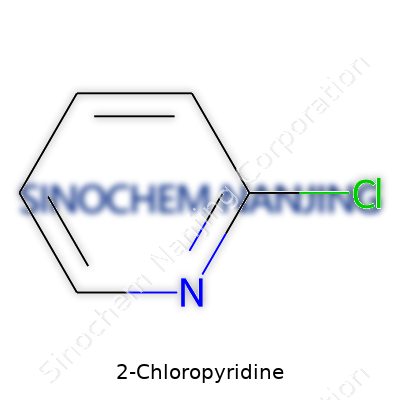
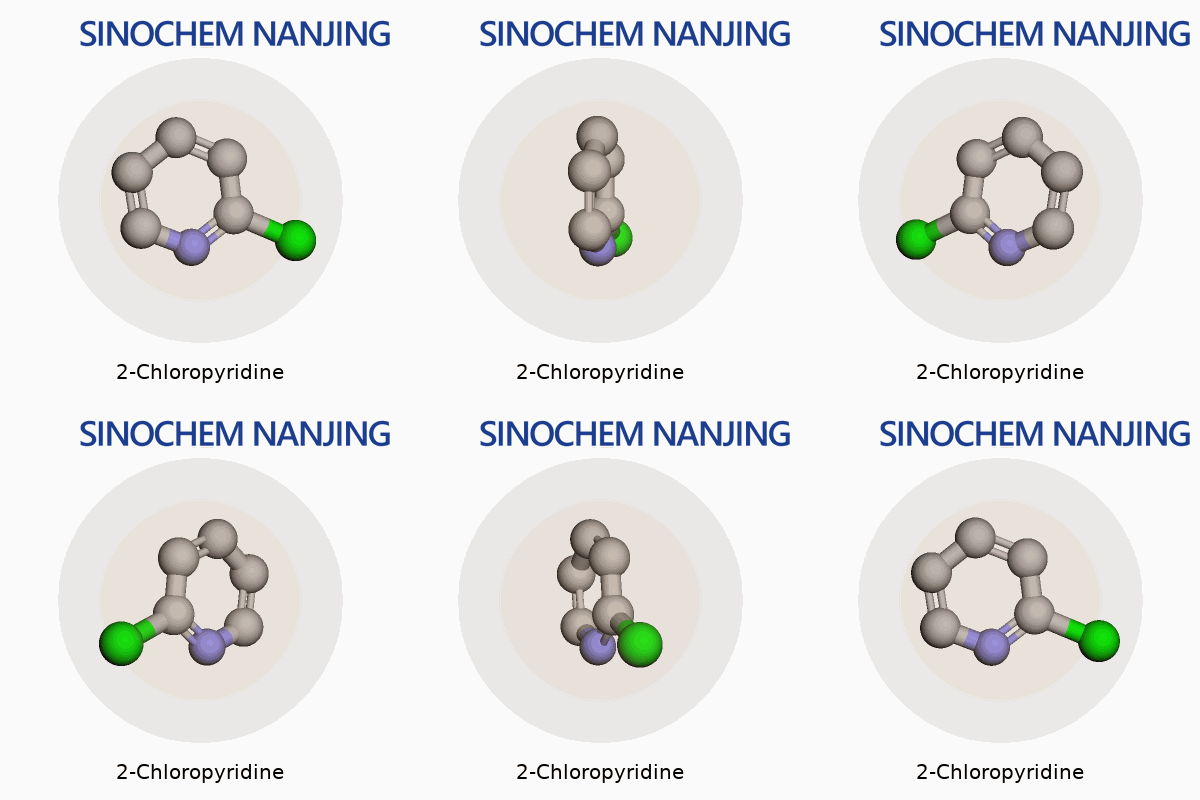
| Names | |
| Preferred IUPAC name | 2-chloropyridine |
| Other names |
2-Chloropyridine o-Chloropyridine 2-Pyridyl chloride Pyridine, 2-chloro- 2-chloro-pyridine |
| Pronunciation | /tuː-klɔːrəˈpɪrɪdiːn/ |
| Identifiers | |
| CAS Number | 109-09-1 |
| Beilstein Reference | 626052 |
| ChEBI | CHEBI:36848 |
| ChEMBL | CHEMBL18785 |
| ChemSpider | 54623 |
| DrugBank | DB02175 |
| ECHA InfoCard | 03e6d1ef-099a-4d13-93f9-190ba7a0c9cf |
| EC Number | 202-708-7 |
| Gmelin Reference | Gmelin Reference: 202399 |
| KEGG | C06381 |
| MeSH | D003549 |
| PubChem CID | 7965 |
| RTECS number | UJ3675000 |
| UNII | 3K9Q95V1HU |
| UN number | UN3422 |
| Properties | |
| Chemical formula | C5H4ClN |
| Molar mass | 128.56 g/mol |
| Appearance | Colorless to pale yellow liquid |
| Odor | pungent |
| Density | 1.167 g/mL at 25 °C(lit.) |
| Solubility in water | Soluble (10 g/L) |
| log P | 1.66 |
| Vapor pressure | 0.8 mmHg (20 °C) |
| Acidity (pKa) | 5.20 |
| Basicity (pKb) | 8.77 |
| Magnetic susceptibility (χ) | -66.0·10⁻⁶ cm³/mol |
| Refractive index (nD) | 1.543 |
| Viscosity | 0.917 mPa·s (25 °C) |
| Dipole moment | 1.41 D |
| Thermochemistry | |
| Std molar entropy (S⦵298) | 132.6 J·mol⁻¹·K⁻¹ |
| Std enthalpy of formation (ΔfH⦵298) | 75.6 kJ/mol |
| Std enthalpy of combustion (ΔcH⦵298) | -1871 kJ/mol |
| Hazards | |
| GHS labelling | GHS02,GHS06,GHS07 |
| Pictograms | GHS07, GHS05, GHS09 |
| Signal word | Warning |
| Hazard statements | H301: Toxic if swallowed. H311: Toxic in contact with skin. H331: Toxic if inhaled. H411: Toxic to aquatic life with long lasting effects. |
| Precautionary statements | P261, P264, P271, P301+P312, P304+P340, P305+P351+P338, P312, P405, P501 |
| Flash point | 68 °C |
| Autoignition temperature | 660°C |
| Explosive limits | 2.2–14% |
| Lethal dose or concentration | LD50 oral rat 178 mg/kg |
| LD50 (median dose) | LD50 (median dose): Oral-rat LD50: 208 mg/kg |
| NIOSH | SK8750000 |
| PEL (Permissible) | PEL (Permissible Exposure Limit) for 2-Chloropyridine: 5 ppm (18 mg/m³) |
| REL (Recommended) | REL (Recommended Exposure Limit) of 2-Chloropyridine is: "0.5 ppm (2 mg/m3) as a TWA |
| IDLH (Immediate danger) | IDLH: 100 ppm |
| Related compounds | |
| Related compounds |
Pyridine 2-Bromopyridine 2-Iodopyridine 2-Fluoropyridine 3-Chloropyridine 4-Chloropyridine 2-Chloropyrimidine 2-Chloroquinoline |



