2-Chloroethyl Vinyl Ether: From Early Labs to Future Frontiers
Historical Development
2-Chloroethyl vinyl ether caught chemists’ attention decades ago, during the boom in organic synthesis research that defined much of the twentieth century. In the early days, experimentalists found themselves fascinated by both its structural versatility and its reactivity profile. They tinkered with its synthesis, hoping for a molecule that could open doors in pharmaceuticals, coatings, and specialty polymers. Labs began offering it as a unique reactive intermediate and soon industrial research teams put it to work crafting new polymers and high-performance lubricants. The early literature, peppered through journals from Europe and America, details its first uses in complex ether synthesis and notes practical struggles—controlling purity, minimizing side-products, dealing with volatility—all echoes of a time when chemical know-how depended on hands and glassware rather than automated process controls.
Product Overview
2-Chloroethyl vinyl ether, also known as CEVE, sits among the unsung yet vital building blocks in many chemical synthesis chains. This colorless, highly volatile liquid gives researchers a versatile way to access both the ethereal and chlorinated structural motifs prized in specialty chemical design. Its chemical handle—a reactive vinyl group adjacent to the chloroethyl chain—invites all kinds of transformations, making it a backbone reagent in routes to pharmaceuticals, fine chemicals, and advanced materials. While it doesn’t show up on supermarket shelves or in common consumer products, it’s busy behind the scenes turning basic feedstocks into ingredients for life-saving therapies, protective coatings, and flexible plastics.
Physical & Chemical Properties
With a boiling point near 92°C and a density hovering around 1.03 g/cm³, 2-chloroethyl vinyl ether doesn’t stick around in open air—its volatility means any spill becomes a vapor hazard fast. Look at its chemical structure, and you’ll see an ether linkage (–O–) bridging a vinyl group and a 2-chloroethyl moiety. This arrangement packs a double punch: chemical reactivity ready for polymerization or nucleophilic attack. Solubility patterns reflect its intermediate polarity, mixing readily with most organic solvents, which helps in both laboratory manipulations and scale-up. Its sharp, ether-like odor signals a need for care, hinting at underlying toxicity that researchers must always respect.
Technical Specifications & Labeling
Regulations for CEVE are strict. Producers provide it in sealed, amber-glass bottles, often with nitrogen blanketing, aiming to slow both evaporation and degradation. Purity levels usually reach 98% or better, since trace impurities can impair downstream reactions. The labeling matches international standards, displaying signal words like “Danger” and clear pictograms for dermal and respiratory risk. Storage instructions stress cool, dry, and well-ventilated shelving, tightly separated from oxidizing agents and acids. Safety Data Sheets (SDS) accompany all shipments, offering guidance on risks and first aid for exposure. Whether handled by a seasoned research chemist or an industrial operator, the technical sheet demands respect: hazardous if inhaled, harmful to skin, and flammable.
Preparation Method
Chemists synthesize 2-chloroethyl vinyl ether starting with vinyl etherification routes involving ethylene glycol and hydrochloric acid, followed by alkylation with vinyl acetate or related intermediates. Industrial production has come a long way from early flask-based procedures, now relying on catalytic methods that boost both yield and purity, with recycling steps to handle by-products like chloroethanol. Reactor design and process control have evolved, drawing on lessons from polymer and pharmaceutical plants. The process remains energy-intensive and requires experienced oversight, especially during distillation and drying, where both yield and safety are on the line. Companies who manufacture it tend to invest in well-sealed closed systems, using pressure-tested piping and advanced leak detection.
Chemical Reactions & Modifications
CEVE’s main draw remains its ability to undergo both addition and substitution reactions, thanks to its vinyl and chloroethyl functionalities. In the right hands, the molecule becomes a gateway for introducing vinyl groups into target compounds or constructing complex heterocycles. It often steps into polymerization reactions, as a co-monomer providing chemical “handles” for further functionalization of specialty polymers. Chemists tweak its structure to attach bioactive groups or to introduce crosslinking sites, taking advantage of the reactivity at both molecular ends. In medicinal chemistry, nucleophilic substitution reactions lead to new ether-linked compounds that sometimes appear as intermediates in API synthesis. The molecule isn’t shy—given the right conditions, it reveals a willingness to participate in everything from acid-catalyzed additions to base-promoted rearrangements, offering surprising creativity to experienced practitioners.
Synonyms & Product Names
Over the years, the molecule picked up a handful of names: 1-chloro-2-(vinyloxy)ethane, vinyloxyethyl chloride, and (2-chloroethoxy)ethene, among others. In chemical catalogues, you’ll often see it listed as CEVE or VECE. These synonyms reflect naming conventions favored by IUPAC or commercial suppliers, each offering a different perspective on the same core structure. Commercially, a few branded versions appear, mostly tied to companies customizing it for specific industrial partners or researchers. Catalog numbers and CAS registry numbers keep the supply chain organized—vital for regulatory tracking and lab safety.
Safety & Operational Standards
CEVE’s hazards keep regulators and operators vigilant. Its vapor can irritate lungs and eyes, and liquid contact with skin raises blisters after prolonged exposure. Chronic inhalation exposure leaves workers open to long-term health risk, including damage to internal organs. Facilities handling this molecule invest in proper ventilation systems—think fume hoods in labs and multi-stage scrubbers in plants. Written protocols cover everything from routine transfer to emergency decontamination. Chemical spill kits and eye-wash stations sit within arm’s reach. Training focuses on glove and goggle use, plus fast action in case of accidental exposure. Government agencies oversee standards, out of hard-learned respect for the volatile behavior of haloalkyl ethers. Regulatory compliance isn’t just bureaucracy—it’s about protecting human health from a substance that bites if underestimated.
Application Area
Industrial chemists plug 2-chloroethyl vinyl ether into a surprising range of processes. It brings utility as an intermediate in creating specialty polymers that demand both flexibility and chemical resistance. In the coatings industry, it helps generate cross-linked films that stand up to mechanical and environmental stress. Pharmaceutical teams have reached for CEVE in crafting complex molecules, using it as a stepping-stone toward compounds with antiviral or anticancer potential. A few agricultural chemical manufacturers exploit its reactivity to build pesticide scaffolds and active ingredients. Some R&D groups push boundaries, integrating CEVE into smart materials for electronics, engineering new functionalities into base polymers. Wherever creative organic chemistry flourishes, the molecule finds new uses.
Research & Development
R&D teams continue exploring fresh applications for 2-chloroethyl vinyl ether. Academic labs work out new reaction mechanisms, hoping to unlock greener, safer, or more efficient synthetic routes. Industrial researchers look at ways to boost polymer performance, coaxing better stability or unique optical properties from CEVE-derived sidechains and mainchains. A few forward-thinking groups examine its interfacing with nanomaterials, probing how the molecule performs when attached to advanced carbon or silicon structures. Sustainability remains front-of-mind, especially for chemists hoping to replace hazardous reagents or minimize waste in large-scale production. The molecule, in research hands, never stands still. It keeps surprising with new roles in the toolbox of organic and materials scientists committed to real-world impact.
Toxicity Research
Investigators have dug deep into how CEVE affects living organisms. Rodent studies highlight strong irritant effects after both short and long-term inhalation, with pathological changes in liver, kidneys, and lungs at high doses. Skin exposure tests show a clear risk for dermatitis and delayed burns, supporting strict PPE standards. More chronic toxicity data, especially for humans, has accrued slowly, yet regulatory guidance leans on animal models and structure-activity trends seen in other haloalkyl ethers. Environmental impact probes trace how CEVE behaves after release, flagging the potential for groundwater contamination and challenges in municipal wastewater treatment. Recent findings prompt regulators, employers, and manufacturers to enforce robust exposure controls and ongoing health monitoring for staff working with the compound. As scientific understanding grows, so too does the priority for tighter risk management.
Future Prospects
Looking forward, the future for 2-chloroethyl vinyl ether blends both promise and challenge. On the bright side, growing innovation in smart polymer design and next-gen pharmaceuticals holds out hope that this versatile molecule can continue opening new pathways in science and industry. Advances in catalysis and process safety could further improve how it’s made and used, trimming waste and boosting efficiency. Digital chemistry tools now let teams model its reactivity, streamlining design of new derivatives. On the flip side, evolving regulations around hazardous organochlorine compounds push for stricter controls, with replacement by less toxic alternatives in some fields. Researchers confront the need for greener chemistry, seeking to both harness and tame the reactivity of CEVE. Careful stewardship, rigorous study, and creative problem-solving will keep this distinctive vinyl ether moving into fresh applications while safeguarding health and the environment.
What is 2-Chloroethyl Vinyl Ether used for?
What 2-Chloroethyl Vinyl Ether Brings to Industry
2-Chloroethyl vinyl ether pops up mostly as a specialty chemical. You find it in places where people need to make hefty polymers or sophisticated resins. Chemists, especially in industries that build coatings or adhesives, value this chemical because it delivers reactivity and flexibility that are tough to match. In the world of synthetic chemistry, the goal is often not just to make things stick together, but to create materials that hold up across years. When I’ve talked to folks mixing up batches of paint resins or setting up strong laminates, they mention how this compound helps link pieces together at a molecular level. In coatings, it gives extra weather resistance, standing up where basic formulas crumble after a heavy season.
How 2-Chloroethyl Vinyl Ether Helps Science
Research labs and industrial scale plants both look for chemicals that offer balance—easy to work with, but still powerful in the end product. This ether handles both. Scientists use it to kickstart reactions for complex organic molecules. A lot of the rubber industry turns to this chemical in tough elastomers, especially when making products that deal with heat or chemical attack. If you’ve ever worked in an environment where hoses or gaskets must keep their shape under stress, you understand why these properties matter. According to the National Institute for Occupational Safety and Health (NIOSH), materials built from vinyl ethers like this survive in corrosive settings, which saves money by cutting maintenance and downtime.
Workplace Precautions and Health Concerns
While the molecule opens many doors for manufacturing, there’s no question—working around volatile chemicals demands focus and respect. Safety data from sources like the European Chemicals Agency warn that breathing in 2-chloroethyl vinyl ether vapor or letting it contact your skin can cause irritation or worse. Older safety reviews tied heavy exposure to long-term health effects, so industry always pushes to keep levels down in the air and on work surfaces. In my time reporting from production lines, operators suited up with gloves and goggles, running constant air checks to keep risk low. Training goes beyond paperwork; people know this isn’t something to get casual about.
Why Oversight and Alternatives Matter
Acts like the REACH regulation in Europe and chemical rules in the United States keep an eye on how companies store and handle this material. Chemical engineers look out for safer replacements, though the quest isn’t easy. Most alternatives either cost much more or fall short on performance. Still, I see more research in “greener” options—new monomers with similar traits but fewer safety hazards. It always lands back on the basics: treat every risky ingredient with respect, train workers, check ventilation, update safety plans, and support research into less hazardous chemicals.
The Value in Asking Tough Questions
Whenever I cover industrial chemicals, I try to push past textbook answers and ask: Who’s using these, why, and what could go wrong? For 2-chloroethyl vinyl ether, the benefits show up in durable products or nimble lab synthesis, but each step is shadowed by a clear need for rigorous safety. As industry leaders and engineers keep searching for the sweet spot between power and protection, the ongoing push toward better standards and smarter substitutes earns everyone’s support.
What are the safety precautions for handling 2-Chloroethyl Vinyl Ether?
Why This Chemical Demands Respect
2-Chloroethyl vinyl ether comes with dangers I’ve learned to take seriously. This organic compound plays a role in specialty polymers and adhesives, but its volatility and reactivity make it more than just another bottle on a lab shelf. The vapors can irritate your eyes and lungs. I have seen even seasoned chemists caught off guard by strong fumes, and the symptoms don’t go away just by stepping out for air. Toxicity reports list dizziness and headaches, with some evidence suggesting long-term risks if you get careless.
Engineering Solutions and Personal Discipline
It’s not smart to pour this stuff in an open lab or rely on a cracked fume hood. Proper ventilation matters. Every responsible workspace features a certified chemical fume hood, and nobody should improvise. Fume hoods capture vapors at the source. Without one, even careful handling produces airborne contaminants that stick around and create workplace hazards. I always check airflow alarms before opening a container.
Gloves matter. I don’t mean the thin kind sold for quick cleanups. Choose nitrile, neoprene, or butyl rubber gloves—latex falls short against ethers. Eye protection isn’t a back-burner issue: snug-fitting goggles prevent accidental splashes from causing lasting damage. I’ve watched safety glasses save someone’s eyesight during a splash spill. Lab coats and chemical-resistant aprons protect skin and street clothes from accidental contact. It only takes one small spill to regret skipping good gear.
Storage That Prevents Catastrophe
Storing 2-chloroethyl vinyl ether on an open shelf puts everyone at risk. I use flammable liquid storage cabinets away from sunlight and sources of heat. The container lid must fit tightly. When moisture sneaks in, dangerous peroxides can form without much warning. These unstable by-products have been behind some memorable laboratory accidents. Desiccants in the storage area help keep humidity low, and I always date and regularly test containers for peroxide build-up.
No Substitutes for Team Awareness
Working alone encourages mistakes. Before handling this kind of ether, I let colleagues know and post warnings. Clear labeling of hazard classes helps prevent confusion or mishandling by someone who just recognizes the bottle’s shape. Everyone deserves to know what they’re dealing with. Emergency eyewash stations and showers must be available, uncluttered, and tested weekly. If something goes wrong, seconds count. People panic less when routines get drilled in advance.
Responsible Disposal and Spill Response
This chemical should never go down the drain. I save all waste in designated, tightly closed containers until a licensed hazardous waste vendor collects it. Clean-up materials and solvents present their own risks, so I use absorbents compatible with ethers. In my experience, the best preparation involves spill kits stocked and ready—never rely on whatever happens to be handy. Quickly evacuate and ventilate in case of a large spill, then let trained responders neutralize the hazard.
Culture of Training
Staying safe depends on everyone buying into a shared sense of care. I’ve learned to review safety datasheets each time I plan a new experiment. Training isn’t a box to check—refreshers keep the muscle memory sharp, especially if you haven’t handled volatile ethers in a while. If something feels off, ask a colleague or supervisor. Nothing pushes the boundaries faster than pride or complacency.
Respect for 2-chloroethyl vinyl ether grows from honest stories and lessons shared among peers. Safety comes from treating every procedure as a chance to protect health and build trust in the lab community.
What is the chemical formula and structure of 2-Chloroethyl Vinyl Ether?
Getting to Know 2-Chloroethyl Vinyl Ether
I’ve spent a fair amount of hours talking to chemists who work hands-on with all sorts of specialty molecules. 2-Chloroethyl vinyl ether comes up in conversations about flexible chemical building blocks. Some folks use it to build polymers; it’s a backbone piece in the creation of pharmaceuticals and advanced coatings. This isn’t your garden variety chemical. Learning its formula and structure isn’t just academic curiosity—it lays the foundation for handling, storage, and getting the most value from it in the lab or on the factory floor.
Breaking Down the Formula
Let’s tackle the simple part first. The chemical formula for 2-Chloroethyl vinyl ether is C4H7ClO. You count four carbon atoms, seven hydrogens, one chlorine, and just one oxygen. That arrangement tells the story of a lightweight, reactive ether with an extra punch from chlorine. Vinyl groups have double bonds, and for me, those double bonds mean creativity and caution—the possibilities for making new compounds multiply quickly, and so do the safety considerations in a lab.
Understanding the Structure
Visualizing chemicals often helps even more than memorizing formulas. With 2-Chloroethyl vinyl ether, you get a backbone that starts with a two-carbon vinyl group (CH2=CH-). This gets connected to an oxygen atom—think of that as the “ether” bridge—then moving on to a two-carbon chain capped off by a chlorine atom (-CH2CH2Cl). Drawn out, it looks like CH2=CH–O–CH2CH2Cl. One end wants to grab more partners for a chemical reaction. The other end, with the chlorine, primes the molecule for more specialized action, like binding to biological molecules or linking into plastic chains.
Why the Details Matter
In my experience, knowing this structural information has real, practical implications. If someone is planning to use 2-Chloroethyl vinyl ether in a new polymer, its reactivity owes itself both to that vinyl group and the presence of chlorine. Early in my career, a mentor warned that vinyl ethers can snap into fast reactions given a little nudge—like light, heat, or acid. He was right; the molecule doesn’t just sit there politely on a shelf.
This compound’s chlorine content is a double-edged sword. The halogen keeps reactions under control but complicates things if the goal is a greener, less persistent material. A chemist with environmental safety on their mind weighs these choices carefully.
Factors Driving Responsible Use
Handling 2-Chloroethyl vinyl ether means you put safety first. Splash goggles, gloves, and well-ventilated workspaces are not optional. Companies and labs tracking green chemistry trends ask about its breakdown and residual presence in end products. I’ve spoken to researchers pushing for new vinyl ethers with less lingering environmental impact but keeping the same versatility. Moving toward safer, more sustainable options without losing performance remains at the core of today’s chemical innovation.
Understanding the molecular structure helps guide safer storage and smarter usage. Watching for moisture and acids means fewer headaches and less risk, both for operators and the community nearby. In practical terms, this insight helps regulators and producers shape best practices and local policy choices that keep both people and innovation moving forward.
How should 2-Chloroethyl Vinyl Ether be stored?
Handling a Fussy Chemical
2-Chloroethyl vinyl ether doesn’t just sit quietly in a bottle. It gets volatile, reactive, and even unstable if left unprotected. My days in a busy chemistry research lab made it clear—this chemical brings hazards nobody wants to deal with. Even a whiff makes you reach for fresh air, and spilled drops risk more than just a bad smell. The importance of proper storage goes beyond checklists and regulations; it’s about keeping people and property safe.
Understanding Its Hazards
This stuff reacts with water, oxygen, acids, and bases. Exposed to a warm room or a beam of sunlight, it starts to break down and build pressure in sealed containers. Explosions aren’t just accidents with a chemical this touchy; they happen in labs and factories when people cut corners. Inhalation may lead to headaches and trouble breathing. Direct skin contact burns and blisters. Add to that its flammability—one spark in an unventilated space could cause a fire.
Where Temperature Has the Last Word
Every safety officer I’ve worked with agrees—temperature deserves respect. The chemical should stay below 20°C (68°F), never near heat sources, radiators, or sunny windows. Standard lab fridges do not do the trick; only explosion-proof refrigerators work. At home, most folks toss peroxide bottles or old cleaning products in any cool corner. This practice would put lives at risk with 2-chloroethyl vinyl ether. A real, monitored cold storage room protects both the chemical and everything else nearby.
Avoiding Triggers for Decomposition
Moisture invites trouble. Even a tiny leak in a container cap lets water start a dangerous reaction. I’ve seen bottles turn yellow and pressure caps swell from improper sealing. Keep containers tightly shut, and store them with a few grams of a chemical stabilizer like BHT (butylated hydroxytoluene). It’s not hunters after wild peroxide buildup; it makes a real difference. Dry nitrogen blankets inside containers push out the air, cutting down on oxidation and those sneaky side reactions.
Labeling and Emergency Prep
In research labs, I watched new interns grabbing unmarked bottles. Labeling saves lives, not just paperwork headaches. Bold, waterproof labels keep everyone aware. Storing this compound in secondary spill trays or bins won’t win any awards, but it sure keeps leaks from reaching drains and floors. Safety goggles, gloves, and even a fresh air mask make daily handling less risky. Fume hoods pull vapors away from people, not just out of habit, but out of self-preservation.
Final Thoughts on Shared Responsibility
Chemicals like 2-chloroethyl vinyl ether don’t forgive lapses. No one works in a bubble—safety standards mean everyone goes home unharmed. A trusted supplier should always provide a current safety data sheet. If ever in doubt, reach out to an industrial hygienist or a certified chemical safety consultant. The investment pays itself back by keeping calamity off the nightly news. These steps do more than keep doors open; they keep people alive and well in places that can’t afford mistakes.
What are the potential health hazards of 2-Chloroethyl Vinyl Ether?
What is 2-Chloroethyl Vinyl Ether?
This clear, colorless liquid pops up in the world of specialty chemical manufacturing. From pharmaceuticals to adhesives, people have found inventive ways to use 2-Chloroethyl Vinyl Ether. The substance isn’t a household name, and unless you’re stepping into a lab or an industrial facility, you probably haven’t come across it. Still, for those who work close to it, the risks go far beyond simple caution.
The Trouble with Breathing or Touching
Few things stick with you quite like the memory of a rough day in the lab. A coworker ignored basic safety rules around a similar chlorinated compound, and it was easy to see how things could go wrong. 2-Chloroethyl Vinyl Ether releases fumes that irritate the eyes, nose, and throat. Extended or repeated exposure creates something nastier—headaches, dizziness, and a cough that lingers. Chemical manufacturers report that the compound vapor can damage airways, upset digestion, and affect breathing.
Repeated skin contact leads to dryness, redness, or worse. Some people experience rashes, blisters, or even chemical burns. This isn’t just an abstract risk—overlook a glove or skimp on protection, and your skin feels the sting.
Lurking Long-Term Dangers
Short-term irritation grabs your attention, but the bigger threat lurks in the background. Chlorinated vinyl ethers, including this one, raise questions about their ability to damage organs over time. Scientific studies point to possible liver and kidney damage. Chronic inhalation could leave respiratory damage that lasts long after the exposure ends. There’s worry about possible links to cancer, though not enough research exists yet to say for sure.
Anyone in environmental safety knows these problems snowball in poorly ventilated spaces, especially older facilities without updated air controls. Experts in occupational medicine point to long-term monitoring for those working around the substance year after year.
Putting Safety Front and Center
Thinking back to strict teachers in chemistry class, that constant drill of goggles, gloves, and good ventilation saved a lot more than test grades. Robust personal protective equipment (PPE) forms the front line—nitrile gloves, chemical goggles, and full-face respirators in higher-risk settings. Smart companies invest in fume hoods and air scrubbers, so workers aren’t left to just hope for the best.
Regular air monitoring, real-time exposure alarms, and clear labeling of all chemical containers lower the risk of accidental exposure. Anyone involved with storage or mixing keeps spill kits within reach. Routine training turns these procedures into muscle memory; safety meetings aren’t just a box-ticking exercise, they save skin and lungs.
Changing the Conversation on Industrial Chemicals
Too often, chemicals like 2-Chloroethyl Vinyl Ether get tucked away on dense safety data sheets. Instead, health risks deserve plain talk and honest attention. When companies make safety part of their culture, incidents drop and trust goes up. Pulling together a mix of good science, solid training, and plenty of common sense means people go home at the end of the day in the same shape they started—hopefully better informed and with a little more respect for what’s in those drums and bottles.
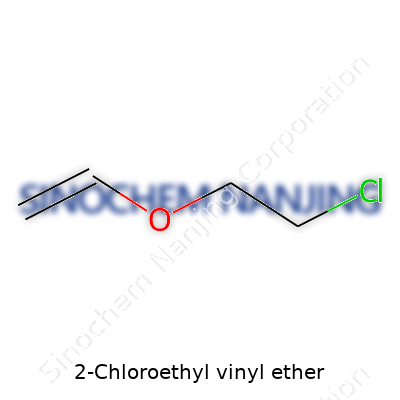
| Names | |
| Preferred IUPAC name | (2-chloroethoxy)ethene |
| Other names |
2-Chloroethoxyethylene Chloroethyl vinyl ether Vinyl chloroethyl ether |
| Pronunciation | /tuː ˈklɔːroʊˌɛθɪl ˈvaɪnɪl ˈiːθər/ |
| Identifiers | |
| CAS Number | 110-75-8 |
| 3D model (JSmol) | `3DModel: "C=COCCCl"` |
| Beilstein Reference | 1432302 |
| ChEBI | CHEBI:52755 |
| ChEMBL | CHEMBL37639 |
| ChemSpider | 17718 |
| DrugBank | DB14154 |
| ECHA InfoCard | 20-211-936-STRING |
| EC Number | 211-800-4 |
| Gmelin Reference | 8266 |
| KEGG | C19673 |
| MeSH | C0257100 |
| PubChem CID | 79090 |
| RTECS number | KH8575000 |
| UNII | ECM6UK73R6 |
| UN number | UN1919 |
| Properties | |
| Chemical formula | C4H7ClO |
| Molar mass | 106.56 g/mol |
| Appearance | Colorless liquid |
| Odor | ether-like |
| Density | 1.032 g/mL at 25 °C(lit.) |
| Solubility in water | Slightly soluble |
| log P | 1.21 |
| Vapor pressure | 3.3 kPa (at 20 °C) |
| Acidity (pKa) | 14.51 |
| Basicity (pKb) | “15.35” |
| Magnetic susceptibility (χ) | -49.5·10⁻⁶ cm³/mol |
| Refractive index (nD) | 1.432-1.434 |
| Viscosity | 1.4 mPa·s (20 °C) |
| Dipole moment | 2.16 D |
| Thermochemistry | |
| Std molar entropy (S⦵298) | 383.6 J·mol⁻¹·K⁻¹ |
| Std enthalpy of formation (ΔfH⦵298) | -93.2 kJ/mol |
| Std enthalpy of combustion (ΔcH⦵298) | -1711 kJ/mol |
| Hazards | |
| GHS labelling | GHS02, GHS06, GHS07 |
| Pictograms | GHS02,GHS06 |
| Signal word | Danger |
| Hazard statements | H225, H302, H315, H319, H332, H335, H351 |
| Precautionary statements | P210, P261, P264, P271, P280, P301+P312, P303+P361+P353, P304+P340, P305+P351+P338, P312, P337+P313, P370+P378, P403+P233, P405, P501 |
| NFPA 704 (fire diamond) | 2-2-2-W |
| Flash point | 10 °C (50 °F) (closed cup) |
| Autoignition temperature | 215 °C (419 °F; 488 K) |
| Explosive limits | 2.6–16% (in air) |
| Lethal dose or concentration | LD50 (oral, rat): 430 mg/kg |
| LD50 (median dose) | LD50 (median dose): 980 mg/kg (oral, rat) |
| NIOSH | KV9275000 |
| PEL (Permissible) | PEL: 1 ppm (parts per million) |
| REL (Recommended) | 1 ppm |
| IDLH (Immediate danger) | IDHL: 5 ppm |
| Related compounds | |
| Related compounds |
2-Chloroethyl ethyl ether 2-Chloroethyl methyl ether Vinyl chloride Vinyl ether |



