The Role and Realities of 2-Chlorobenzoyl Chloride in Chemical Progress
Historical Development
In the realm of synthetic organic chemistry, certain reactive intermediates have opened up pathways that once seemed impossible. 2-Chlorobenzoyl chloride belongs to that class of substances with roots stretching back over a century, evolving as chemists looked for new tools to create tailored molecules. Back in the early days, the focus revolved around making dyes, pharmaceuticals, and agricultural compounds. German chemists led the charge, sensing opportunity in the aromatic acid chlorides that allowed them to quickly introduce key functional groups. With each successive stage—whether in wartime research or peacetime industry—scientists learned to tame its reactivity, leveraging modern equipment and tighter controls to refine processes that, in the past, posed serious risks. Knowledge passed down from these earliest efforts shapes current practices, making the journey of 2-chlorobenzoyl chloride reflect how chemistry, like every science, stands on the shoulders of those who came before.
Product Overview
For anyone who has walked through a synthesis lab, 2-chlorobenzoyl chloride stands out for its distinct smell and volatile character. It brings high reactivity to the table, making it a reliable choice for introducing the benzoyl group with a precise chlorine tag. This dual functionality opens doors for downstream modification, which is where its value truly emerges. I’ve watched seasoned chemists scan bottles of 2-chlorobenzoyl chloride, weighing not just purity but the subtle influence impurities can exert on their next step. The real challenge is not getting the compound; it’s learning how to treat it with the respect strong acids demand, given their biting nature and the havoc inflammation and corrosion can wreak on both people and equipment.
Physical & Chemical Properties
Chemically, 2-chlorobenzoyl chloride exists as a pale, oily liquid with a sharp, pungent odor. It weighs in with a molecular formula of C7H4Cl2O, setting itself apart through its chlorinated aromatic ring linked to a highly reactive acid chloride group. Its boiling point averages around 222°C under normal atmospheric pressure, reflecting a robust structure that still gives off noticeable fumes at room temperature due to its volatility. Density comes in above 1.3 g/cm3, meaning a small spill quickly settles into the lowest points on the bench. In my experience, even slight moisture triggers rapid hydrolysis, releasing hydrogen chloride gas, which brings home the need for airtight storage and proper fume hoods—direct contact with water never goes unnoticed, often bringing proceedings to a halt for cleanup and safety checks.
Technical Specifications & Labeling
Walking into any chemical plant or academic stockroom, safety pictograms shout the hazards: corrosive, harmful, and environmentally dangerous. These warnings have roots in hard lessons learned from exposure incidents. Reagent grade 2-chlorobenzoyl chloride must meet stringent purity standards to avoid unpredictable outcomes in syntheses where trace impurities can derail entire projects. Labels highlight its CAS number—82-28-0—and draw attention to its shelf life, handling requirements, and storage temperature limits. In my own research, misreading a label or trusting a partially worn sticker once led to mistakenly mixing old, degraded reagents—an error I haven’t repeated since. Reliable labeling and awareness remain a first line of defense against avoidable lab incidents.
Preparation Method
Industrial production of 2-chlorobenzoyl chloride follows a direct route from 2-chlorobenzoic acid, often using thionyl chloride as the chlorinating agent while under strictly controlled conditions. The process demands exclusion of moisture and careful monitoring of temperature since excessive heat accelerates side reactions. Research has shown that improvements in reactor design—especially using sealed systems with constant agitation—can nudge yields closer to their theoretical limits while suppressing unwanted byproducts. On a small scale, such as in a university lab, I have seen glassware etched by the byproduct gases, a clear reminder to work with vigilance and respect for each step’s energy and hazard profile.
Chemical Reactions & Modifications
2-Chlorobenzoyl chloride’s real potential reveals itself in the transformations it facilitates. It serves as an acylating agent in Friedel–Crafts reactions, forging new bonds with aromatic rings or amines—skills invaluable for making diverse pharmaceuticals, dyes, and agricultural protectants. In peptide chemistry, it aids in capping free amines, and in my observation, the difference between a clean reaction and a mess often rides on subtle factors like temperature stability and the quality of solvents. Careless handling opens the door to unwanted polyacylation or the introduction of water, which costs both yield and purity. Many creative modifications arise from careful adjustment of chlorination levels or selective activation of other positions on the ring, demonstrating how synthetic chemists rely on both theory and practice.
Synonyms & Product Names
Chemical catalogs across the globe list 2-chlorobenzoyl chloride under a variety of synonyms—o-chlorobenzoyl chloride appears most often, yet variations like 2-chlorobenzoic acid chloride and benzoyl chloride, 2-chloro- quickly follow. Each name traces back to naming conventions that differ by region or supplier, sometimes causing confusion. I’ve seen inexperienced researchers reference outdated or uncommon names, which only adds uncertainty and risk to ordering, especially for time-sensitive projects. That’s why cross-checking structural formulas and CAS numbers remains essential—one mistake and a simple order can become a logistical headache.
Safety & Operational Standards
Strict safety measures surround the use of 2-chlorobenzoyl chloride for good reason. Contact with skin or mucous membranes brings burning pain, and even short inhalation can spark respiratory problems. Guidelines from organizations like OSHA and the European Chemicals Agency recommend usage within well-ventilated chemical fume hoods, insulated gloves, goggles, and vapor-resistant aprons. In my own work, training drills focused on neutralizing accidental spills had a deep impact—nobody forgets how quickly HCl fumes fill a closed space or the sting of even a single drop on exposed skin. Proper labeling, reliable PPE, and detailed hazard communication stay central to every safety protocol, and regular refresher sessions offer an unambiguous reminder of what’s at stake.
Application Area
2-Chlorobenzoyl chloride finds itself woven into the backbone of synthetic chemistry, shaping compounds in pharmaceuticals, agrochemicals, dyes, and polymer intermediates. Its structure makes it a preferred building block for synthesis of antibiotics, anti-inflammatory agents, and other bioactive molecules where precise substitution patterns count. I recall industrial partners gravitating toward this molecule, especially in large-scale manufacturing, because it simplifies downstream derivatization and allows tight control of sterics and electronics in target compounds. Special applications in polymer science involve using it as a chain-terminating agent or for functionalizing monomers. The compound’s capacity for reactive acylation gives chemists flexibility without needing to overhaul entire synthetic routes for each new project.
Research & Development
Modern R&D activities target better yields and safer processes, aiming to minimize waste and exposure. Labs keep testing alternative chlorinating procedures that avoid the use of aggressive reagents like thionyl chloride, leaning toward milder agents or catalytic systems when possible. Some current research demonstrates how solvent-free protocols and microwave-assisted routes can blunt environmental downsides and cut reaction times. From what I have seen, the lag between initial discovery and industrial adoption reflects inertia as well as regulatory caution, but steady progress comes as pressure mounts from both environmental compliance and economics. Younger chemists bring a keen eye for green chemistry, challenging established norms and refining what once seemed immutable in reaction setups.
Toxicity Research
Toxicological data on 2-chlorobenzoyl chloride points to significant hazards. Acute effects include skin burns, severe eye injury, and inhalation toxicity, with animal studies showing marked lung and liver damage after exposure. Chronic exposure even at low levels can trigger respiratory issues and dermatitis. Detailed epidemiological studies remain sparse, but existing records document numerous occupational cases, which translates to tight control over access and mandatory health surveillance for workers. In my view, continued toxicity research matters not just for compliance but for building trust with the workforce and affected downstream communities. Pushes for closed-system operation, advanced air scrubbing, and rapid neutralization of wastes stem from lessons written in both industry logs and personal mishaps.
Future Prospects
Looking forward, 2-chlorobenzoyl chloride stands on the cusp of several transitions. Pressures from green chemistry and regulatory groups drive research into safer alternatives and modified production routes. Yet its core value—efficient, selective reactivity—keeps it relevant for pharmaceutical and specialty chemical makers. Next-generation processes likely will rely on better engineering controls, digital process monitoring, and a move toward continuous-flow synthesis, which cuts inventories, waste, and risk in one shot. I have seen pilot projects where digital monitoring and real-time waste management reduced both incident rates and costs. In a field where demand for functionalized aromatics rarely slows, incremental innovation and lessons from each production run promise a sustainable path forward for those who are willing to rethink and refine traditional methods rather than chasing novelty at any price.
What is 2-Chlorobenzoyl Chloride used for?
Understanding Its Real Uses
2-Chlorobenzoyl chloride doesn’t roll off the tongue, but its fingerprint shows up in a surprising list of objects and treatments that shape daily life. This chemical helps lay the foundation for medicines on hospital shelves, crop treatments in the field, and factory processes that fill store aisles. I remember seeing it first as a name printed on a barrel at a specialty chemical warehouse; the warnings made it clear this isn’t something to splash around, but neither is bleach, and many houses stock that under the sink.
Building Medicines From Scratch
In the world of pharmaceuticals, efficiency and precision save lives. Many painkillers, antibiotics, and more rely on intermediate substances to even exist. 2-Chlorobenzoyl chloride gets involved early, sometimes buried two or three steps back from the final molecule in a pill bottle. It acts as a reagent, helping stick basic chemical building blocks together. Pharmaceutical companies count on its ability to add chlorinated or benzoyl groups—basically tailoring a simple core structure into a drug that actually works with the human body.
I checked a scientific catalog and saw this chemical pop up in research notes on anticonvulsants and anti-inflammatory agents. In these medications, a tiny change in molecular structure can mean the difference between relief and dangerous side effects. The industry trust in 2-chlorobenzoyl chloride comes from long years of predictable results, not random luck.
Helping Farmers Guard Crops
Farmers fight pests and diseases stubbornly, especially with crop demand rising. The fruits and vegetables in every produce aisle depend on crop-protection chemicals that start out in complicated laboratory glassware. The chemical acts as a starting block for synthesizing certain herbicides and fungicides, strengthening defenses against insects and mold that can wipe out an entire field overnight. Safe, cost-effective pest control saves farmers loads of trouble. That means better food security and more stable prices. Without intermediates like this one, those state-of-the-art crop treatments would vanish.
Linking Modern Industry
Take a step outside medicine and agriculture, and 2-chlorobenzoyl chloride keeps showing up. It gets involved in making specialty polymers and dyes, especially when materials need some heat resistance or color stability. I remember talking with a coatings engineer about how tricky it gets to design something as basic as a paint that won’t peel in desert heat. The backbone of that sort of product often relies on aromatic chlorides to build toughness at the smallest scale. This chemical serves as a bridge for attaching those types of durable groups, helping cars look sharp after years under the sun or giving electronics parts that last longer than the device itself.
Balance Between Utility and Safety
Every strong chemical calls for care and control in its use, shipment, and disposal. Handling 2-chlorobenzoyl chloride means proper gear, fume extraction, and trained workers. Stories of spills or misuse reinforce why strict workplace safety rules matter. Regulators worldwide require proof of safe production and environmental protection steps, prompted by past mishaps with similar chemicals. Even so, demand remains high. Looking forward, green chemistry solutions aim to create versions or processes that cut down on toxic waste. My own tours of chemical plants show that firms are always searching for safer alternatives and ways to recycle leftovers instead of dumping them.
The Search for Safer Alternatives
Research keeps pressing on. Universities and commercial labs experiment with catalysts or different starting materials to reach the same end products while boosting safety and trimming pollution. Efforts in solvent reduction and closed-loop manufacturing have started making a mark. Still, right now, plenty of vital products—from life-saving medications to hard-wearing plastics—count on intermediates like 2-chlorobenzoyl chloride. Tools for change exist, but progress depends on funding, oversight, and sometimes, a strong push from public demand for greener production.
What are the safety precautions for handling 2-Chlorobenzoyl Chloride?
Understanding the Risks
2-Chlorobenzoyl chloride shows up in labs and chemical facilities more often than most realize. If you've ever worked with it, a few things become clear fast: you can't treat this as just another bottle on the shelf. This compound reacts fiercely with water, puts out corrosive fumes, and doesn't ask permission before burning your skin or eyes. The moment the bottle opens, sharp, choking vapors spill out. It's the sort of chemical that reminds everyone in the room why good habits aren't optional.
Reacting to Exposure
A fistful of facts backs up real caution. Skin contact causes blisters and burns. Eyes take a direct hit with immediate pain and redness. Vapors bring coughing, sore throats, water eyes. If you breathe too much in, the chemicals can make swelling and fluid build up in your lungs. I remember an incident in an older college lab—one careless turn, a cap came off, and within seconds the room filled with fumes. The room cleared fast, and nobody forgot their goggles again. It only takes one moment for a chemical like this to prove how dangerous it can be.
Handling It Right
Safety starts before you even touch the bottle. Work only in a chemical fume hood. Not a single task happens at the open bench. These hoods never feel optional for a reason: they pull vapors away from your face and lungs. I always double up on gloves—nitrile for feel, heavy neoprene for protection. Splash goggles, not just safety glasses, stay on the whole time. I add a face shield for any work with larger volumes or uncertain procedures. Aprons and full lab coats keep the rest of you from taking a hit in case something goes wrong. Every smart chemist I know has seen at least one person regret skipping just one part of the gear.
Storage and Transport
Keep 2-Chlorobenzoyl chloride in a tightly-sealed glass bottle, clearly labeled. Plastic jars can react or even dissolve, which ruins both your day and your job. Never store it with water, strong bases, or amines—those will go off in a hurry. Flammable liquids storage cabinets work well, as long as they're cool and dry. Carry the bottle in a secondary container. This isn't overkill—accidents often pile up through simple slips, and extra protection means one less emergency call.
Preparing for Emergencies
Sinks, eyewash stations, and safety showers—these must be close at hand and always tested. If a splash happens, the victim goes straight to the shower or eyewash, keeps rinsing for at least 15 minutes, even when it feels impossible. Spills call for special absorbents, not just paper towels, because you can't mop up a toxic acid chloride with bare hands. I keep calcium carbonate or soda ash nearby to neutralize any spill.
Engineering Controls and Culture
Good habits sink in when reinforced by a group, not only by signs or manuals. The most careful teams I've joined hold each other accountable. Supervisors check that everyone respects proper procedure and keeps records. Regular drills, inspections, and constant reminders all play a part. Over the years, I've seen this culture turn near-misses into learning moments, not tragedies. Training never feels like a chore once you’ve seen what even a small mistake can do.
Improving the Future
Reducing risk with chemicals like this means always looking for greener alternatives, scaling down quantities, and reviewing safety protocols after every incident. Digital monitoring, modern personal protective clothing, and updated storage solutions have pushed the bar higher than ever before. Making these part of the baseline isn't just about ticking boxes; it's about watching out for the person at the next bench as much as yourself.
What is the chemical formula and structure of 2-Chlorobenzoyl Chloride?
Breaking Down the Formula
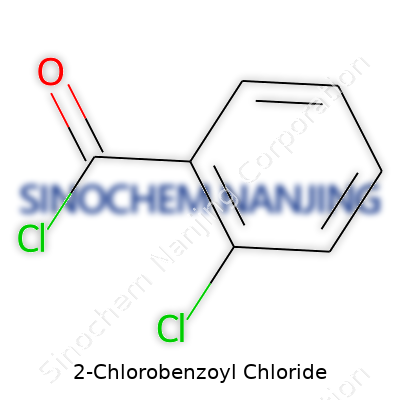
2-Chlorobenzoyl chloride carries the chemical formula C7H4Cl2O. You find seven carbon atoms, four hydrogen atoms, two chlorine atoms, and one oxygen atom coming together to build this compound. The story behind each symbol on this formula isn’t just textbook knowledge. These atoms, once joined, underline a backbone for a wide range of organic synthesis processes, especially where pharmaceutical or agrochemical development kicks in.
Visualizing the Structure
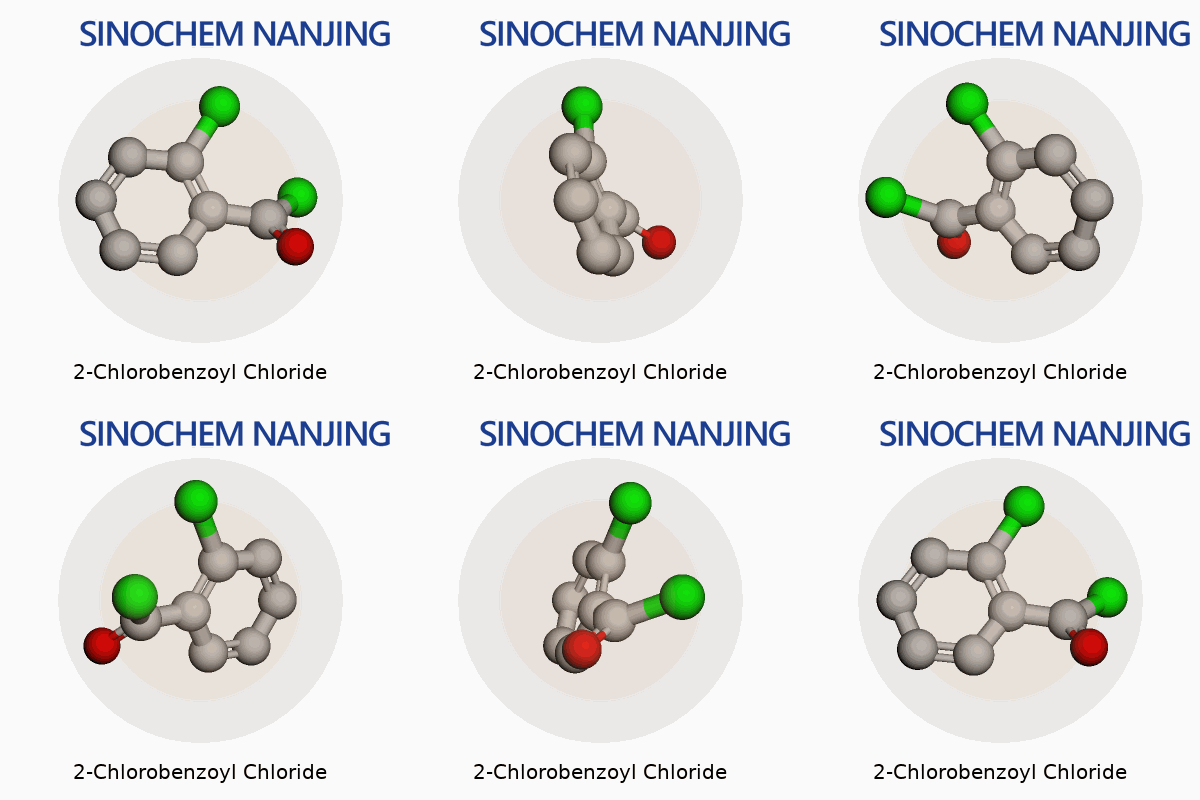
Structure matters a lot in chemistry, and seeing how 2-chlorobenzoyl chloride comes together, even in my memory from lab work, helps a lot in understanding what makes this molecule tick. The main frame has a benzene ring, a hexagonal skeleton of carbons with alternating double bonds. Don’t get fooled by the simplicity—those bonds introduce real stability to the molecule.
Attached to this aromatic ring at the second carbon spot (counting from the carbonyl carbon) sits a chlorine atom. On the same ring, but at the first carbon, you see the acyl chloride group—COCl—taking its place. The presence of both the chlorine atom and the acyl chloride group on adjacent carbons changes how this molecule reacts, how it handles water, and how it fits into bigger chemical syntheses. Drawing this on paper brings memories of bustling undergraduate labs, sometimes with the sharp, distinct odor of acyl chlorides hanging in the air.
Why Structure Affects Performance
2-Chlorobenzoyl chloride isn’t just another chemical. Its unique arrangement, especially the acyl chloride group bound right next to a chlorinated position on the ring, creates high reactivity. Whether you’re synthesizing specialty pharmaceuticals or working on herbicide intermediates, chemists pick it for quick, selective reactions—especially for making new bonds between carbon and nitrogen or oxygen.
Handling the stuff in person really underlines why chemical structure matters. Acyl chlorides love reacting with moisture, sometimes releasing choking fumes of hydrogen chloride. Gloves, goggles, and fume hoods aren’t just suggested—they’re the way to go. The ortho (2-) position of that ring-bound chlorine further tunes reactivity and selectivity in complicated organic syntheses. That’s why professionals keep an eye on the structure before reaching for a bottle.
Addressing Safety and Responsible Use
2-Chlorobenzoyl chloride’s usefulness brings some baggage. Labs and factories churn out a lot of value from it, but workplace safety can’t take a back seat. Inhaling vapors or touching the skin can spell serious trouble. Industry standards call for stringent containment, air monitoring, and emergency protocols. I remember more than one emergency drill in the chem building, all because someone underestimated a volatile acyl chloride.
Switching to greener alternatives or tighter process controls can make a difference. Research teams look for reagents or catalysts that do the same job but with less hazard downstream. If you’re running a lab or scaling up for industry, reaching for more automation and sealed reaction vessels takes some risk off the table—letting the chemistry shine while keeping people safe.
Final Thoughts on Importance
The chemical formula C7H4Cl2O and its structure don’t just sit on a lab shelf looking pretty. They drive real progress in drug discovery, crop science, and specialty materials. Every time I read a paper or talk to a chemist about getting an elegant reaction done, 2-chlorobenzoyl chloride pops up as a cornerstone, shaped by its formula and structural features. Understanding those details gives both a safer workplace and a sharper edge in the lab.
How should 2-Chlorobenzoyl Chloride be stored?
Real Dangers Lurk in the Details
2-Chlorobenzoyl chloride isn’t just another reagent stashed on a chemical shelf. I’ve seen what an accidental spill can do: fumes fill a room so fast even a prepared chemist breaks a sweat. Tempers flare, eyes water, chlorine hangs heavy in the air. It only takes a single leaky cap or a careless placement on a sunny windowsill. Behind strict regulations and bullet-point safety sheets lies the reason for this caution—this compound reacts aggressively with moisture forming corrosive hydrochloric acid and toxic clouds. Missing the basics of storage opens up the lab (and lungs) to real harm.
Direct Steps Matter, Not Just the Manuals
Most guidance warns against humid, warm, or bright spaces. That advice isn’t legalese; it translates into real habits. Every bottle of 2-chlorobenzoyl chloride I’ve ever handled goes into a tightly sealed, corrosion-resistant container, away from liquids and sunlight. Forget plastic with weak lids—solid glass with a reliable seal protects against leaks and accidental exposure. It’s not just about keeping things tidy but keeping coworkers and yourself out of the ER.
Separation and Labeling Save Lives
No one relishes rifling through anonymous brown bottles in a pinch. Good labeling isn’t busywork. Clear, un-peeling labels save time and prevent accidental swap-outs with other lookalike chemicals. During a late-night synthesis, I once grabbed a similar-looking compound; had it been 2-chlorobenzoyl chloride, the story could have ended in disaster. Keeping incompatible reagents—especially strong bases and water—far from this bottle reduces the risk of unwanted reactions, since even a single drop of water starts trouble most people would rather read about than witness firsthand.
Temperature Control Can't Be Ignored
I’ve stored this compound in temperature-monitored cabinets, never out in the open or next to heat sources. Between 2°C and 8°C hits that reliable sweet spot. Too warm and you tempt decomposition. Fridges in shared labs fill up quick, but that’s one battle worth fighting. Open shelving or cluttered workspaces pull focus from other vital work and let lapses happen. Regular temperature checks feel like a chore until something goes wrong and everyone pays for it.
Emergency Space Matters Too
Even the most careful handler runs into the unexpected. Spill kits and eyewash stations positioned near storage areas aren’t bells and whistles—they’re necessities. I learned that after seeing a friend taken by surprise one afternoon. Saline rinse bought time before medical help arrived. From that day forward, every workspace I use stays prepared, because real accidents don’t send calendar invites.
Training Makes It Routine
No piece of safety gear replaces regular, hands-on training. Relying on memory or dusty protocols fades after a long day at the bench. Labs I admire train everyone to handle 2-chlorobenzoyl chloride like a live wire—even veterans refresh their knowledge. Mistakes shrink when everyone pays attention and calls out shortcuts. Storing this chemical safely requires a community effort, not just an individual’s vigilance.
Responsible Handling Builds Trust
Colleagues and regulators notice when safety sticks. Good habits keep accidents rare, sickness away, and reputations intact. They don’t waste time with flowery words—long experience shows the point. No shortcut matters more than the health and trust of those nearby. Storing 2-chlorobenzoyl chloride the right way isn’t a chore but a sign of professionalism everyone has a stake in.
What is the proper disposal method for 2-Chlorobenzoyl Chloride?
Why Proper Disposal Matters
2-Chlorobenzoyl chloride shows up as a colorless liquid with a sharp odor, and anyone who's worked in a lab knows how tricky acyl chlorides can get. They're pretty reactive, and it’s not just the risk to your skin or lungs that’s at stake. Chlorinated organics like this one raise alarms for local water, soil, and air quality. Pouring it down the drain or tossing it in regular trash puts more than just a single building at risk. Wildlife, water systems, even sanitation workers catch the fall-out from shortcuts. That’s why most countries have strict waste codes—often waving the D001 or D003 flags for hazardous waste—and regulatory bodies like OSHA, the EPA or similar agencies across the globe set specific rules.
Safe Handling Before You Think of Disposal
Leak-free containers, good ventilation, and personal protective equipment always come first. Chlorobenzoyl chloride won’t hesitate to hydrolyze if it finds water or even just moist air. That reaction creates toxic and corrosive fumes—hydrogen chloride and 2-chlorobenzoic acid aren’t exactly forgiving to your lungs, to say nothing of pipes or waste lines. After a spill, neutralization becomes much tougher.
The Actual Disposal Procedure
Every drop of 2-chlorobenzoyl chloride should end up in a sealed, clearly labeled container that can resist acids and doesn’t allow leaks. Labeling matters: nobody wants to play chemical roulette with hazardous leftovers found on the shelf or in a waste bin.
Once contained, the right move is to treat it as hazardous waste. Highly trained waste management teams handle such chemicals for a reason. They usually rely on incineration at high temperatures—nothing backyard burners can attempt. At the right facility, high heat and advanced scrubbers destroy harmful molecules and control the release of dangerous gases. The EPA points out that this method keeps toxins out of water sources and cuts down on long-term soil or air exposure.
Treating Small Laboratory Quantities
Labs sometimes want to neutralize chemicals before sending them to waste vendors. Phasing in slow hydrolysis under heavily controlled conditions—typically in a fume hood, with icy water and slow stirring, followed by neutralization with a base—limits dangerous fume emissions. Still, this approach brings its own risks. Only trained personnel with the right gear and training should attempt it, and plenty of local rules forbid this step outright. Checking your local regulations and institutional safety guidelines before ever unscrewing the cap is just common sense.
Environmental and Legal Consequences
Story after story pops up of companies or individuals facing steep penalties for dumping chlorinated chemicals improperly. Cleanup costs balloon when contamination hits groundwater, and the trust of neighbors or the public fades overnight. A single spill can trigger health issues for workers, neighbors, and local wildlife—sometimes for years. Regulators don’t take kindly to the excuse of “I didn’t know,” and neither would most communities.
Push for Training and Waste Minimization
Years in chemical labs taught me that cutting waste in the first place solves half the disposal challenge. Double-checking work plans, using microscale experiments, and sharing excess chemicals with other labs can lower the leftover pile. Training never stops. Refresher courses, hands-on practice with hazardous waste protocols, and keeping up with the latest rules all lower risks. Good habits save money, prevent accidents, and show respect for people down the waste chain.
Final Thoughts on Responsible Chemical Management
Disposal of 2-chlorobenzoyl chloride isn’t just a box to tick. Done with care, it guards against legal troubles, health scares, and long-term environmental scars. Following established hazardous waste procedures and treating every drop with caution makes the difference between responsible stewardship and lasting harm.
| Names | |
| Preferred IUPAC name | Benzoyl chloride |
| Other names |
o-Chlorobenzoyl chloride 2-Chlorobenzoic acid chloride o-Chlorobenzoylchloride 2-Chlorobenzoylchloride |
| Pronunciation | /tuː ˈklɔːr.oʊˌbɛn.zɔɪl ˈklɔːraɪd/ |
| Identifiers | |
| CAS Number | *1988-7-2* |
| 3D model (JSmol) | `3D model (JSmol)` string for **2-Chlorobenzoyl Chloride**: ``` ClC1=CC=CC=C1C(=O)Cl ``` |
| Beilstein Reference | 87852 |
| ChEBI | CHEBI:85012 |
| ChEMBL | CHEMBL15431 |
| ChemSpider | 10955 |
| DrugBank | DB14005 |
| ECHA InfoCard | 200-836-6 |
| EC Number | 203-404-7 |
| Gmelin Reference | 7785 |
| KEGG | C19196 |
| MeSH | D015588 |
| PubChem CID | 6971 |
| RTECS number | DG7875000 |
| UNII | 9A7D1P03J9 |
| UN number | UN2237 |
| Properties | |
| Chemical formula | C7H4Cl2O |
| Molar mass | 176.00 g/mol |
| Appearance | Colorless to pale yellow liquid |
| Odor | Pungent |
| Density | 1.405 g/cm³ |
| Solubility in water | reacts |
| log P | 2.79 |
| Vapor pressure | 1.4 mmHg (20°C) |
| Acidity (pKa) | -0.86 |
| Magnetic susceptibility (χ) | -63.5·10⁻⁶ cm³/mol |
| Refractive index (nD) | 1.576 |
| Viscosity | 1.648 cP (20°C) |
| Dipole moment | 2.56 D |
| Thermochemistry | |
| Std molar entropy (S⦵298) | 322.8 J·mol⁻¹·K⁻¹ |
| Std enthalpy of formation (ΔfH⦵298) | –204.0 kJ/mol |
| Std enthalpy of combustion (ΔcH⦵298) | -499.7 kJ/mol |
| Hazards | |
| Main hazards | Corrosive, causes severe skin burns and eye damage, harmful if inhaled, may cause respiratory irritation. |
| GHS labelling | GHS02, GHS05, GHS06 |
| Pictograms | GHS05,GHS06 |
| Signal word | Danger |
| Hazard statements | H302, H314, H317, H331, H335, H410 |
| Precautionary statements | P260, P280, P301+P330+P331, P303+P361+P353, P304+P340, P305+P351+P338, P310 |
| NFPA 704 (fire diamond) | 3-2-0 |
| Flash point | 78 °C |
| Autoignition temperature | 270°C |
| Explosive limits | Upper limit unknown, lower limit unknown |
| Lethal dose or concentration | LD₅₀ (oral, rat): 1230 mg/kg |
| LD50 (median dose) | LD50 (median dose): Oral rat LD50 = 1630 mg/kg |
| NIOSH | CY1225000 |
| PEL (Permissible) | PEL (Permissible Exposure Limit) for 2-Chlorobenzoyl Chloride: Not established |
| REL (Recommended) | 0.5 mg/m³ |
| IDLH (Immediate danger) | IDLH: 2 ppm |
| Related compounds | |
| Related compounds |
Benzoyl chloride 2-Chlorobenzoic acid Chlorobenzene 2-Chlorobenzamide |



