A Commentary on 2-Chloroaniline: Past, Present, and the Road Ahead
Historical Development
2-Chloroaniline isn’t a household name, but its story connects with the long, tangled history of synthetic chemistry. The chemical industry saw huge growth during the industrial revolutions, especially throughout Europe, as scientists hunted for new ways to transform coal tar into colors and medicines. Early chemists stumbled across 2-Chloroaniline as they tried to improve dyes and drugs, working with primitive techniques and little knowledge about the risks at hand. The roots of 2-Chloroaniline’s use can be traced back to the expansion of the aniline dye industry, with factories in Germany and Britain laying the groundwork. The chemical has stuck around for decades. No surprise — it’s versatile, and it paved the way for a wide family of aromatic amines that impacted everything from colorants to pharmaceuticals. Looking back, the rise of 2-Chloroaniline reminds me how scientific progress sometimes marches faster than the world’s ability to keep up with safety and environmental worries.
Product Overview
Today, 2-Chloroaniline is an important building block in multiple sectors. It turns up as a starting ingredient for synthesizing herbicides, dyes, pigments, and even medicines. Though most people never see it or hear its name, products stemming from its chemistry color fabrics, enhance plastics, and help protect crops. Folks working in the chemical trade often refer to it as a staple intermediate, not a finished product. That’s the reality for many basic chemicals—unnoticed by most, yet woven into daily life in subtle ways.
Physical & Chemical Properties
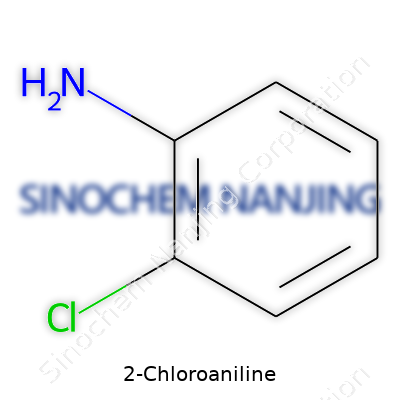
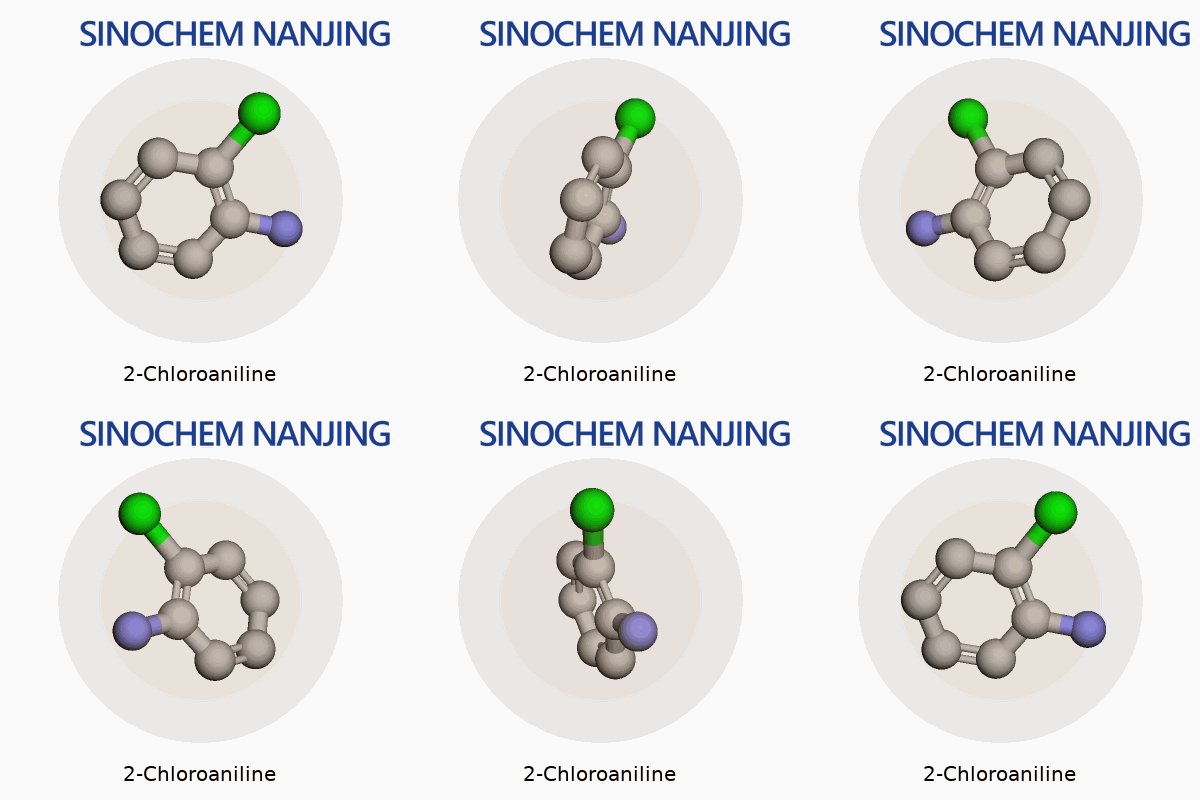
This compound shows a distinctive yellowish or sometimes brownish liquid appearance, often with a sharp, musty odor. Its molecular structure gives it some quirks: 2-Chloroaniline chills out at room temperature as a liquid but will freeze when things get cool enough. It doesn’t mix with water easily. Instead, it tends to stick to organic solvents like ethanol and ether. Its reactivity stems from the amine group attached to a benzene ring that also holds a chlorine atom in the ortho position. This placement changes how the compound behaves and what types of transformations it allows in the lab or in industry. The scent, look, and chemical personality of 2-Chloroaniline may only matter to chemists working with it, but the physical traits shape how people handle, store, and ship it, for good reason.
Technical Specifications & Labeling
Lab workers and regulatory folks recognize 2-Chloroaniline by its chemical formula, C6H6ClN. Labels highlight its hazards long before they mention purity or grade requirements. Safety data sheets stress dangers such as toxicity or environmental harm. Keeping an eye on labeling details isn’t bureaucratic fuss; it matters for anyone moving, using, or disposing of the substance. Packaging tends to be robust, leakproof, and labeled with universally recognized danger signs. This is not the sort of thing you find in a kitchen drawer; every step along the supply chain requires care and precise documentation.
Preparation Method
Making 2-Chloroaniline usually relies on the reduction of 2-nitrochlorobenzene. This method gained favor because it’s efficient and straightforward, using either iron and acid or catalytic hydrogenation to strip away the nitro group and swap in an amino group. The process is pretty typical for aromatic amines, but the chlorinated precursor gives the product its special character. Engineers have spent years tweaking yields and reducing waste, though, honestly, there’s no such thing as a “green” aniline process yet. Working with hazardous chemicals means constant vigilance, so anyone responsible for production learns to spot trouble before it starts. This is the side of chemistry where mistakes don’t just end in lost money — they can threaten worker safety and the environment.
Chemical Reactions & Modifications
2-Chloroaniline’s versatility comes from how it reacts with other stuff. That amino group packs plenty of punch. It can link to acyl groups in syntheses, giving rise to more complex molecules. Chemists use it as a launch point for building pesticides, pharmaceutical molecules, or specialty dyes, exploiting both the amine and the chloro group. Modifications often involve swapping out handlers on the benzene ring to tune reactivity or physical traits. Over the decades, researchers have used 2-Chloroaniline as a model to explore aromatic substitution and diazotization reactions. In practice, the compound’s chemical personality means hours of glove-and-goggles work, careful monitoring, and a hefty respect for the unexpected.
Synonyms & Product Names
Most chemicals pick up plenty of aliases. 2-Chloroaniline goes by o-Chloroaniline, ortho-chloroaniline, and sometimes 1-Amino-2-chlorobenzene. Researchers and industrial suppliers shorten it to OCA or OCAn in literature and inventory sheets. The crowd of names adds confusion for newcomers but also highlights how widely it gets used across countries and contexts. The abundance of synonyms reminds me of the chemical industry’s sometimes-chaotic recordkeeping, especially as global trade grew and translation entered the mix.
Safety & Operational Standards
Working with 2-Chloroaniline calls for a strong safety culture. The substance is far from benign. It can harm people through inhalation, skin contact, or accidental ingestion, affecting the blood and possibly other organs. Long exposure can lead to severe health problems. These dangers aren’t theoretical; they’re backed by numerous cases in poorly equipped factories and labs where protection fell short. Containment, ventilation, and personal protective equipment form the core of safe handling. Operating regulators and plant managers face a constant challenge to maintain systems that minimize leaks and worker exposure. Industrial users rely on established ventilation standards and chemical-resistant gear, guided by global and regional health and safety agencies such as OSHA and the European Chemicals Agency. Neglect can cost lives and pollute communities, so accountability must never slacken.
Application Area
2-Chloroaniline’s fingerprints show up in many industries, mostly as an ingredient for more valuable goods. Agrochemical companies synthesize herbicides from it, especially compounds that tackle broadleaf weeds. Textile and pigment manufacturers employ it to design synthetic dyes with certain shades and fastness properties. Pharmaceutical researchers use the amine base to sketch out drug candidates, although most molecules in finished medicines look quite different by the time they reach a pharmacy shelf. Plastics and rubber firms find use for its derivative compounds when modifying material characteristics. Demand for such intermediates grows and shrinks with the health of the fabrics, pesticides, and specialty chemicals markets. That unpredictability makes it harder to forecast shifts in use.
Research & Development
Academic and industrial researchers keep poking at both practical and theoretical angles of 2-Chloroaniline. These days, I see two main themes: finding methods that reduce toxic byproducts during synthesis and understanding how structural tweaks impact biological or material properties. Lab groups investigate catalysts that would tame energy costs or cut down on hazardous waste. Other teams model how substituting or moving groups on the benzene ring changes a compound’s fit within larger molecules — work that can lead to safer or more potent agrochemicals and drugs. Collaboration across universities and companies speeds up progress, but deep-rooted regulatory and economic hurdles keep big changes slow. The pace can frustrate those who want transformative results, but the risks tied to aromatic amines demand a careful approach.
Toxicity Research
Research keeps uncovering ways 2-Chloroaniline can harm people and ecosystems. Toxicologists note it messes with blood chemistry, sometimes causing methemoglobinemia — a dangerous reduction in the blood’s oxygen-carrying power. Repeated exposure can damage critical organs or even alter genetic material, raising alarms about long-term industrial handling. Environmental studies report troubling persistence in soil and water, leading to new calls for tighter regulation or safer alternatives. Regular monitoring and rigorous health screening matter for factory workers and communities nearby production plants. Policy debates continue about acceptable limits, and public health researchers push for even lower thresholds, convinced the old standards no longer provide enough protection. I’ve seen firsthand the divide between older generations who remember more lax handling and younger workers taught to recognize danger early.
Future Prospects
Looking beyond today, 2-Chloroaniline’s role depends on how fast green chemistry advances and how strict chemical regulations become. If new, less toxic intermediates pop up, industries might switch over, driven both by worry over worker and environmental safety and by possible cost savings. Some research teams aim to design “drop-in” replacements with milder health effects and similar versatility. Still, for now, the market’s demand for durable dyes, effective herbicides, and specialty materials keeps 2-Chloroaniline in play. Progress in large-scale recycling or degradation methods offers hope, as do improved detection tools for leakage and contamination. The chemical’s history serves as a reminder that responsibility must match ingenuity — not just in scientific circles, but wherever a raw material enters commerce and daily life.
What are the main uses of 2-Chloroaniline?
A Look at 2-Chloroaniline in Industry
2-Chloroaniline plays a direct role in creating products many of us rely on daily. This clear, oily liquid, known for its pungent smell, comes straight from the world of chemical manufacturing. Most of the industrial demand for this compound traces back to how useful it proves as a building block. Whether you flip through a science catalog or the safety manuals at a plant, you’ll spot its name tied to a long list of cropping sectors.
Colors and Dyes
If you've ever noticed that your clothes hold their color well or that printed materials pop with deep, lasting shades, this compound likely had something to do with it. Factories use 2-Chloroaniline to make various azo dyes and pigments. These dyes don’t bleed or fade as quickly as older types back in the day. Textile manufacturers pick this substance to generate vivid yellows, reds, and even greens. Inks for the publishing world and plastics industry also claim a fair share of these stabilized hues.
Agricultural Chemicals
Modern farming depends on more than hard work and weather luck. Pesticides need a reliable backbone to fight off stubborn weeds and insects, and this is where 2-Chloroaniline fits in. Chemical manufacturers rely on it to develop several herbicides and fungicides that keep crops healthy. Its core structure pops up in several familiar agrochemicals, like some of the anilide-based weedkillers. These products make their way onto fields that feed cities, so safety checks and environmental monitoring stay locked in step with their use.
Pharmaceutical Foundations
Some over-the-counter pain relievers and antibiotics tie their effectiveness back to intermediates such as 2-Chloroaniline. Research chemists and drug companies use this compound as a starting point for synthesizing active pharmaceutical ingredients. Think of it as a scaffold—enabling chemical tweaks that help treat pain, infections, or allergies. The journey from raw materials to a finished pill often crosses the path of this chemical for specific drug classes, keeping the supply chain busy and labs challenged.
Specialty and Fine Chemicals
Beyond the “big three” uses, this compound finds its way into many laboratory syntheses and niche production lines. Resin and rubber manufacturers line up for shipments of 2-Chloroaniline to build improved materials. Lab researchers lean on it to test out new reactions, often searching for better performance or safer alternatives in established chemical products. In these settings, the compound's reactivity is an advantage, making it easier to create derivatives that support innovation.
Safety and Environmental Impact
Talking about any chemical in production, health and safety land at the top of every conversation. 2-Chloroaniline isn’t something you treat casually. Both inhalation and skin contact can cause problems, and spills threaten soil and groundwater. Industrial users follow strict protocols while storage and disposal rely on closed systems and monitoring. Regulatory limits require companies to report how much they use and release, helping watchdogs keep tabs on environmental impact. Moving forward, investment in green chemistry and alternatives helps reduce reliance on legacy compounds while still meeting production needs.
What is the molecular formula of 2-Chloroaniline?
Tracing the Structure
The molecular formula of 2-chloroaniline is C6H6ClN. This isn’t just trivia; every number and letter tells a story about what makes this compound tick. There’s a benzene ring at the core, holding six carbon atoms and six hydrogens. The twist is the presence of a chlorine atom at the “2” position, which sits right next to an amine group (-NH2) that’s attached directly to the aromatic ring. That single switch, where chlorine swaps in for hydrogen, tweaks both the reactivity and the safety profile of the compound.
Why Knowing Formulas Counts
In the chemistry lab, missing even a single subscript in a molecular formula can blow a hole in the whole experiment. Every chemical behaves differently depending on its structure. 2-Chloroaniline is one of several possible isomers of chloroaniline, meaning the position of the chlorine atom on the benzene ring drastically changes how the molecule acts in real reactions. Teachers used to drill us on these structural formulas because they’re the map to both creating new compounds and predicting their behavior.
I’ve seen research teams waste days troubleshooting a failed synthesis because they confused 2-chloroaniline with its 4-chloro cousin. The push to understand this molecule isn’t just about acing a test. It’s about accuracy and reliability in everything from dye manufacturing to pharmaceutical research, where the difference between success and a safety incident can hang on the knowledge of where each atom is placed.
Addressing Real-World Issues
2-Chloroaniline gets used as a building block for dyes, pesticides, and medicines. It’s not just chemists who should care about its formula. Public health officials, emergency responders—even environmental activists—need to know how this stuff behaves. If it spills, everyone wants clarity on toxicity, remediation, and downstream effects.
Misidentification or misunderstanding carries consequences. This compound, with just one more chlorine atom, stirs up different environmental and health risks than plain aniline. 2-Chloroaniline has been found in water sources near manufacturing sites; this raises questions about disposal standards and monitoring. Studies link its breakdown products to various health problems. There’s a balance between innovation and oversight, and getting the molecular formula right means knowing where to look for trouble.
Pathways Toward Better Practice
Improving chemical safety and reducing environmental impact starts with education and communication. Standardized labeling and digital tracking in supply chains reduce the risk of confusing one isomer for another. Universities and small labs need funding and incentives to invest in analytical tools. Even seasoned professionals benefit from refresher training on isomer identification.
Tighter regulations may feel like a hassle, but if my own missteps with chemicals taught me anything, it’s that shortcuts and guesswork don’t pay off. With real-time access to accurate data, plus community-driven oversight, industries can reduce accidents and environmental impact. 2-Chloroaniline’s formula—C6H6ClN—serves as a touchstone for clarity. Knowing it by heart, and what it represents, carries weight in driving safer, smarter approaches in chemical work.
Is 2-Chloroaniline hazardous to health?
What is 2-Chloroaniline?
2-Chloroaniline pops up in many industrial settings. Manufacturers use it to make dyes, agricultural chemicals, and pharmaceuticals. Its chemical structure sticks out because of the chlorine atom attached to the aniline ring. For most folks working outside a lab, it remains an unfamiliar name, but for anyone spending long hours in chemical plants, it's important to know exactly how this compound behaves and why good safety matters.
Health Effects of 2-Chloroaniline Exposure
Exposure routes almost always involve inhalation, skin contact, or sometimes swallowing by accident. The U.S. National Institute for Occupational Safety and Health (NIOSH) points out links between exposure and health symptoms, which can show up fast or creep in over time. Immediate signs may include headache, dizziness, nausea, and sometimes a bluish tint to lips or fingers. This discoloration happens because 2-Chloroaniline can interfere with the body’s oxygen-carrying system, causing methemoglobinemia. That’s not just a science word for the textbooks—the impact on oxygen flow will leave a person feeling weak and struggling to catch their breath.
Long-term or repeated exposure can hit even harder. Studies have pointed to liver and kidney problems. Animal data suggest tumors could develop after extended periods of inhalation or skin contact, so governments take a cautious stance. The U.S. Environmental Protection Agency lists it among possible human carcinogens. It might not show up in the headlines, but the science draws a clear line from exposure to genuine health concerns.
Personal Experiences in Industrial Environments
Many years in chemical manufacturing taught me to develop a healthy respect for safety sheets and proper protective gear. Early in my career, a colleague once handled a drum of 2-Chloroaniline without gloves because he thought a short touch wouldn’t matter. By lunch, he was lightheaded and needed medical help. That experience changed how our crew treated even “routine” chemicals. Regular monitoring reduced incidents. Simple adjustments like stricter glove use and improved ventilation instantly showed results in lower symptom reports.
Reducing Risk on the Job
No fancy technology replaces the basics. Solid training sessions let workers see the dangers of 2-Chloroaniline firsthand—without waiting for a bad reaction. Good ventilation clears the air of vapors inside factories. Proper labeling makes it harder for mistakes to happen. Consistent glove, clothing, and eyewear policies protect the skin and eyes. Routine air testing keeps exposure in check, giving managers and workers the evidence they need to act early. I’ve seen workplaces transform their safety records by enforcing simple rules and updating equipment.
Industry and Regulation
Strict limits on 2-Chloroaniline exposure levels get enforced by agencies like OSHA. Plants receiving surprise inspections get cited for missing gloves, broken exhaust systems, or poor training materials. Progress often shows up in numbers—lower accident rates tie directly to solid investments in safety and compliance. Companies that push for best practices end up saving money by avoiding sick days and legal trouble.
Looking Ahead
People demand stronger oversight, and it makes a real difference. Updated rules and public information push companies to clean up their act. There’s no substitute for strong workplace culture. Everyone benefits when leadership cares about health and workers feel empowered to speak up. As science learns more about chemicals like 2-Chloroaniline, vigilance and honesty become everyday habits in the industry.
What are the storage and handling precautions for 2-Chloroaniline?
Why 2-Chloroaniline Matters
Many folks working in chemical labs or handling dyes know 2-Chloroaniline, a chemical that pops up across industries. It features in making pesticides, pharmaceuticals, and dyes. Its usefulness comes with a few risks. Handling and storing it carelessly brings real hazards. Over the years, enough headlines have made this clear, from skin burns to fires and vapor clouds leading to evacuation drills.
Risks You Can’t Ignore
Spill some 2-Chloroaniline, and you’ll notice a strong, almost medicinal odor. Breathe too much, and your head starts to ache. Skin contact causes irritation, rashes, and sometimes something much worse if absorption happens. The liquid catches fire without much encouragement. Anyone who has worked with this compound will remember that sharp sense of caution people carry in areas where it’s stored.
Smart Storage Means Safer Labs
Unsafe storage can turn a useful chemical into a disaster. In the lab, I've seen that companies and universities often set aside special cabinets for chemicals like 2-Chloroaniline. These cabinets come marked with flammable warning signs and sit far from heat sources. Refrigerated units work well, but only if designed to contain spills. The key lies in cool, dry, and well-ventilated spots. Humidity and temperature swings invite trouble. Glass bottles or specialized HDPE containers work better than metals that might corrode.
Store away from oxidizers, acids, and bases. Mix-ups sometimes happen, and a spilled acid on a shelf will create more than just a cleaning headache. Segregated shelves, clear labels, and weekly inspections help catch early signs of leaking or deterioration. A strong whiff of solvent may suggest a loose cap or a cracked seal. It pays to address these issues at once.
Protecting People Who Handle the Stuff
No one should open a bottle of 2-Chloroaniline without gloves. Nitrile or neoprene gloves work well against spills. Eye protection is always a must, and proper lab coats keep the chemical off skin and regular clothes. Fume hoods aren’t just for show. Handling even small amounts outside one brings unnecessary risks. If a task takes more than pouring from one bottle to another, a respirator adds a shield from fumes.
Chemical hygiene plans become more than paperwork when they spell out what to do after a spill or accidental exposure. Eyewash stations and safety showers need regular checks. Supervisors slack on these details sometimes, but those small steps define real safety.
Addressing Waste Without Cutting Corners
Any leftover or spilled 2-Chloroaniline shouldn't head down the drain. Specialized disposal companies know how to deal with such waste safely. In the real world, improper dumping leads to groundwater contamination, and I've seen cases where a shortcut led to expensive cleanups by environmental agencies. Never underestimate the stubbornness of aromatic amines in soil or water.
Room for Improvements
Regular training refreshers lower the risk of mistakes. Team drills that put everyone through emergency steps--from minor spills to fire--build confidence and memory. Uploading written protocols online and posting them in common spaces keeps everyone on the same page. Inventory controls, audits, and digital tracking prevent expired stock from hiding on back shelves.
Mistakes still happen, but layers of common-sense precautions, respect for the chemical’s hazards, and ongoing attention set apart safe workplaces from risky ones. In my experience, open communication and a willingness to revisit old habits often make the biggest difference.
What is the appearance and odor of 2-Chloroaniline?
Recognizing 2-Chloroaniline on Sight
Everyone working in chemical labs or handling industrial chemicals eventually runs into 2-Chloroaniline. At room temperature, it usually takes the stage as an oily, clear-to-pale yellow liquid. The fluid isn’t too flashy. Sometimes, with time or exposure to light and air, you might see it shift to a darker yellow or pick up a brownish hue. I noticed that leaving a sample bottle unsealed, even just for a day, deepens that tint quickly. That visual cue offers a simple warning to lab workers: this stuff isn’t fresh anymore, and contamination or breakdown could affect experimental outcomes or safety protocols.
Some folks expect every lab chemical to look totally clear, but minor yellow shades don’t always spell trouble. In my experience, fresh stock from reputable suppliers usually stays only barely yellow—anything darker signals possible degradation. This yellowing comes from a bit of oxidation, which can creep in with air exposure. Anyone who has handled chemicals in glassware knows how quickly a supposedly stable compound can go awry just by sitting out during a lunch break.
That Smell Tells a Story
2-Chloroaniline isn't stealthy when it comes to odor. Open that bottle, and you get hit by a sharp, acrid, somewhat unpleasant scent. Sometimes described as “aromatic” in old textbooks, most describe it as a chemical, amine-like smell—think old paint, musty rubber, or overworked industrial cleaner, rather than anything floral. Without proper ventilation, its odor lingers and makes the whole work area uncomfortable, leaving a headache and eye irritation in its wake if exposure drags on.
I remember my first day in an organic lab as a grad student; one careless classmate cracked open a bottle of 2-Chloroaniline without using the fume hood. The odor blanketed the space within minutes. The smell stuck to our lab coats for hours. That memory still reminds me why good ventilation isn’t just an afterthought.
Health and Safety Behind the Scenes
Besides its strong personality in the lab, that distinctive smell serves as an important warning: this chemical isn’t just stinky. 2-Chloroaniline can absorb through the skin, and its vapors annoy the eyes and respiratory tract. Extended exposure has links to issues with blood cells, even after short-term handling. The body recognizes aromatic amines like this as foreign, and metabolizes them into even more reactive substances, which can stress your liver and lead to other problems. The Occupational Safety and Health Administration (OSHA) lists strict exposure limits for chemicals like this.
Accurate labeling and tight controls help a lot, but the best long-term solution involves solid training and education. Lab workers shouldn’t guess what a chemical might look or smell like—a missed detail can lead to bigger issues. Using checklists, proper storage, and spill kits in work spaces makes encounters with harsh chemicals less risky. Building awareness about health impacts and instilling good habits early goes a long way toward a safer lab culture, where a single whiff from a stray bottle cap already means it’s time to reach for gloves and the nearest fume hood rather than gutting it out.
| Names | |
| Preferred IUPAC name | 2-chlorobenzenamine |
| Other names |
o-Chloroaniline 1-Amino-2-chlorobenzene 2-Chlorophenylamine 2-Chloraniline |
| Pronunciation | /tuːˌklɔːroʊ.əˈnɪliːn/ |
| Identifiers | |
| CAS Number | 95-51-2 |
| Beilstein Reference | 1209221 |
| ChEBI | CHEBI:34957 |
| ChEMBL | CHEMBL1285 |
| ChemSpider | 797 |
| DrugBank | DB14096 |
| ECHA InfoCard | 100.007.154 |
| EC Number | EC 202-429-0 |
| Gmelin Reference | 82123 |
| KEGG | C01442 |
| MeSH | D002703 |
| PubChem CID | 6929 |
| RTECS number | BX1400000 |
| UNII | F4C8D8A4T9 |
| UN number | UN2018 |
| Properties | |
| Chemical formula | C6H6ClN |
| Molar mass | 127.57 g/mol |
| Appearance | Colorless to pale yellow liquid |
| Odor | aromatic amine-like |
| Density | 1.214 g/cm³ |
| Solubility in water | slightly soluble |
| log P | 1.85 |
| Vapor pressure | 0.45 mmHg (25°C) |
| Acidity (pKa) | 3.98 |
| Basicity (pKb) | 7.66 |
| Magnetic susceptibility (χ) | -60.0e-6 cm³/mol |
| Refractive index (nD) | 1.613 |
| Viscosity | 1.240 mPa·s (20°C) |
| Dipole moment | 1.61 D |
| Thermochemistry | |
| Std molar entropy (S⦵298) | 144.2 J·mol⁻¹·K⁻¹ |
| Std enthalpy of formation (ΔfH⦵298) | 39.1 kJ/mol |
| Std enthalpy of combustion (ΔcH⦵298) | -2852 kJ/mol |
| Hazards | |
| Main hazards | Toxic if swallowed, in contact with skin or if inhaled; causes skin and eye irritation; may cause damage to organs through prolonged or repeated exposure; suspected of causing cancer |
| GHS labelling | GHS02, GHS05, GHS06 |
| Pictograms | GHS05,GHS07,GHS09 |
| Signal word | Danger |
| Hazard statements | H302, H312, H332, H315, H319, H341, H351, H411 |
| Precautionary statements | P261, P273, P280, P302+P352, P305+P351+P338, P310, P501 |
| NFPA 704 (fire diamond) | 2-3-0,** |
| Flash point | 117 °C |
| Autoignition temperature | 615 °C |
| Explosive limits | 3.7–20.4% |
| Lethal dose or concentration | LD50 oral rat 630 mg/kg |
| LD50 (median dose) | LD50 (median dose): 850 mg/kg (oral, rat) |
| NIOSH | CN 9800000 |
| PEL (Permissible) | 5 ppm |
| REL (Recommended) | REL (Recommended)": "0.5 ppm (2 mg/m3) |
| IDLH (Immediate danger) | 50 ppm |
| Related compounds | |
| Related compounds |
Aniline 2-Bromoaniline 2-Iodoaniline 2-Fluoroaniline 3-Chloroaniline 4-Chloroaniline |



