2-Buten-1-Ol: A Practical Look at Its Role in Chemistry and Industry
Historical Development
Chemists have been curious about unsaturated alcohols since the early 1900s, chasing after compounds that could bridge the gap between simple hydrocarbons and more reactive intermediates. 2-Buten-1-ol turned a few heads due to its combination of a double bond and a hydroxyl group—a combo that doesn’t just add complexity, but opens up a toolkit for synthetic routes. This compound’s history sits within the work of European organic chemists who figured out how shifting one bond could bring new reactivity to everyday lab work. It didn’t start as a star, but when industries began needing advanced flavors, fragrances, and the building blocks for pharmaceuticals, it found its place on the long shelf of useful but less-glamorous chemicals.
Product Overview
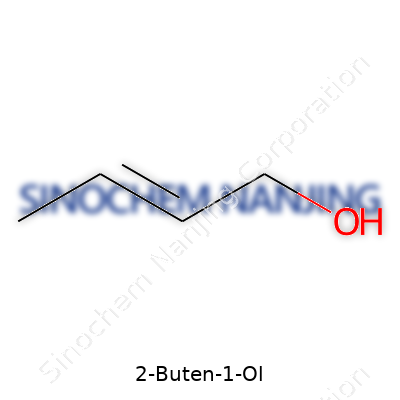
2-Buten-1-ol has earned its stripes in both research and production labs. Its value comes from how it manages to stay both reactive and harnessable. The structure—four carbons strung together, marked with a double bond and capped off by an alcohol group—is straightforward enough that it doesn't intimidate, yet just complex enough to be useful for organic synthesis. Many folks in the field view it as a key starting material, whether that’s for oxidizing into acids or making more complicated molecules that we rely on in daily life. This is not a blockbuster molecule, but you’ll find it in the background of many multi-step syntheses, helping piece together more complicated targets.
Physical and Chemical Properties
2-Buten-1-ol doesn’t try to hide its traits. Clear, colorless, and slightly oily—this is what you’ll see in the flask. The smell is strong, almost reminiscent of fermenting grain or sweet alcohol, which hints at the double-edged property it carries: both promise and danger. Its boiling point sits around 117°C—manageable for distillation, yet the volatility keeps handlers on their toes. The double bond next to the alcohol group brings a kind of chemical tension. That tension shows up during storage and use, especially when air or light is involved. In my experience, even casual exposure to air can lead to degradation—one of those reminders that in chemistry, even the smallest tweak to molecular shape can shift the entire behavior of a substance.
Technical Specifications and Labeling
Chemicals require more than a name and a bottle. 2-Buten-1-ol’s technical grade typically comes at high purity—often north of 95 percent, sometimes even higher depending on the intended use. The colorless liquid gets shipped in amber bottles or sturdy drums, always kept away from sparks or direct sunlight. Labeling isn’t just a formality here. Strict naming conventions, hazard pictograms, and clear concentration details get printed on every shipment. Clarity in labeling keeps users safe and helps keep accidents to a minimum, but it also gives peace of mind to operators who need to know exactly what’s in their glassware. Regulatory frameworks demand this transparency, and there’s a good reason—too many lessons have been learned the hard way.
Preparation Method
Industrial production starts from accessible feedstocks like butadiene or crotonaldehyde. One of the most reliable approaches involves selective reduction of crotonaldehyde—dialing down the aldehyde to an alcohol without overshooting into a saturated product. Catalysts, precise temperature control, and thoughtful handling of hydrogen all play a role here. Other routes use hydroboration of 1,3-butadiene, leveraging hydroboration–oxidation chemistry that organic chemists have trusted for decades. No matter the method, efficiency and cost control make all the difference. Chemists are always trying to tweak these processes, chasing higher yields or safer conditions. Anyone who’s ever scaled up a reaction from bench to pilot plant knows how fast tiny complications balloon into headaches, so the tried-and-true methods keep coming back for a reason.
Chemical Reactions and Modifications
2-Buten-1-ol stands out for what it can become. Its double bond opens the door to a catalog of addition reactions—bromination, hydrogenation, even Michael additions for the more advanced groups. The terminal alcohol lets it undergo classic esterification, oxidation, or even be bolted onto longer chains to make surfactants and specialty chemicals. I’ve used it as an intermediate where selective transformations are needed: it’s not so reactive that everything falls apart, but it’s no wallflower either. With the right conditions, the molecule morphs into everything from solvents to active pharmaceutical intermediates. This dual reactivity explains why research chemists keep coming back to it as a reliable starting point, even as newer, flashier molecules make headlines.
Synonyms and Product Names
Discussions about 2-Buten-1-ol often get tangled in names. You might hear it called crotyl alcohol, but-2-en-1-ol, or even γ-butylenol. This patchwork of names shows up in journals, on safety data sheets, and in trade documents. The confusion can cause problems, especially for less experienced staff or across regions where naming conventions drift. Using the International Union of Pure and Applied Chemistry (IUPAC) name brings clarity, but it doesn’t always catch on in day-to-day talk. I’ve seen orders delayed due to naming mix-ups—no one benefits from guessing games over which compound sits in a bottle.
Safety and Operational Standards
Work with 2-Buten-1-ol brings risks that experienced hands respect: flammability, inhalation hazards, and eye or skin irritation top the list. Anyone who’s handled volatile unsaturated alcohols knows the importance of good ventilation and proper gloves. Industry standards expect not just a well-ventilated space, but also fire suppression systems and ready access to first-aid. Spills happen, but regular training keeps incidents contained. Over the years, safety requirements have grown stricter, with regulatory agencies dictating what can and cannot be done—gone are the days of open-flask experimentation under bare bulbs. That isn’t just bureaucracy; it’s a reaction to real-world injuries and accidents.
Application Area
2-Buten-1-ol has found its way into a surprising range of products. In my early days, I used it as a precursor for flavors and fragrances—the kind added to processed foods or home care products. The molecule’s structure makes it a handy intermediate for synthesis, used by pharmaceutical chemists working on new drugs. Industry uses it to tweak polymers, and in specialty surfactants for coatings or inks. Each field brings its own set of standards and modifications, but all take advantage of the combination of the alcohol function and the double bond. Its subtle differences from similar structures make it a specialty item, not just a generic alcohol like ethanol or propanol.
Research and Development
In the lab, 2-Buten-1-ol still inspires curiosity. Chemists keep probing its behavior under new catalysts or reaction conditions, searching for efficient routes to higher-value materials. Green chemistry teams look at minimizing waste and avoiding hazardous byproducts during its production. Synthetic organic researchers keep designing new ways to use this molecule as a scaffold for building complexity, especially as demand grows for fine chemicals in everything from electronics to new medicines. Academic papers still feature this compound, especially where nuanced selectivity is needed. Researchers know that even small improvements in yield or safety can tip the scale for wide adoption.
Toxicity Research
Toxicologists have a close relationship with molecules like 2-Buten-1-ol. Animal studies and cell culture experiments report that high exposure disrupts cellular processes and irritates tissues, with risks increasing at higher concentrations or during prolonged exposure. Chronic toxicity isn’t as well documented as some other industrial compounds, but the data we do have echo the same warnings seen across unsaturated alcohols: respect the volatility, minimize inhalation, and don’t shortcut safety gear. Regulations force companies to list potential acute and chronic effects on safety paperwork, giving users clear warnings. Still, the real world doesn’t always match textbook cases. My own sense is that a little caution and common sense, backed up with data, goes a long way in preventing problems.
Future Prospects
2-Buten-1-ol won’t turn into a superstar, but it’s here to stay, especially as more industries chase sustainable and versatile synthesis routes. Bio-based feedstocks and green oxidation methods stand out as frontiers for innovation. Some startups and academic teams are tinkering with biosynthetic pathways to turn agricultural waste into this molecule, chasing lower emissions and better life-cycle outcomes. Digital tools and automated synthesis platforms could also streamline how chemists handle and manipulate this compound, making complex syntheses safer and more scalable. As global regulations keep tightening, the push for higher purity, safer handling systems, and traceable supply chains only gets stronger. Sometimes, the underdog intermediates make all the difference in a supply chain, especially as new applications arise. With the right mix of research and practical safety, 2-Buten-1-ol will keep its quiet but steady place in modern chemistry.
What is 2-Buten-1-Ol used for?
What’s 2-Buten-1-Ol in Everyday Language?
2-Buten-1-ol isn’t a name that comes up at coffee shops or even at most job sites—unless your work falls in chemistry or manufacturing. This compound holds the official title of an unsaturated alcohol. People might describe it as a colorless liquid, but that doesn’t do much to explain why it’s got a spot at chemical plants or research labs.
Why Is It Making a Difference in Manufacture?
You don’t see 2-Buten-1-ol lining grocery shelves. Companies usually bring it in for chemical synthesis. It acts as a building block—sort of like lumber for a chemical carpenter. In pharmaceutical research, scientists work with 2-Buten-1-ol to develop chemical families that help shape medications. Drug makers rely on lots of intermediate compounds, and this molecule gives flexibility for building more complex ones. Without versatile ingredients like this, bringing new medicines to market would slow down.
Flavors and Fragrances: The Secret Player
Not everything that ends up as perfume or a flavored drop starts out pretty. Chemical makers sometimes use 2-Buten-1-ol behind-the-scenes to create esters, which smell much better than the raw materials. These esters then get blended into all sorts of perfumes and flavoring mixtures. I remember learning that the fresh, fruity or floral notes in air fresheners often took several steps to complete; it’s not just the last rosy-smelling ingredient, but the entire process that matters. Many times, smaller, lesser-known compounds like this one make the rest possible.
Industrial Chemistry: The Quiet Backbone
Plasticizers, resins, and specialty polymers all start as a mix of simple chemicals. 2-Buten-1-ol shows up as a tool for changing the structure of these bulk materials. It’s often involved in making flexible plastics or coatings for different surfaces, from wires to flooring. In college, I shadowed an industrial chemist who spent weeks tweaking formulas to nail down just the right properties—strength, shine, durability. One wrong ingredient caused brittleness or cloudiness. When they swapped in a new alcohol compound, the improvement was clear. That extra flexibility shifted product quality and how long it lasted in harsh environments.
What About Safety?
2-Buten-1-ol lands on the list of compounds that need careful handling. It gives off fumes and can irritate skin or eyes if people aren’t protected. In workplace settings, strict protocols kick in, balancing production speed with worker health. Proper storage and good ventilation help keep everyone safe, based on shared safety data sheets and direct experience from people who understand how these substances can react.
Looking for Cleaner Chemistry
More people push for greener chemical solutions: fewer toxic byproducts, less waste, and safer handling. 2-Buten-1-ol is no different. Researchers have started to look for methods to deliver this compound from renewable sources or with fewer hazards in the process. I’ve talked with young chemists who take satisfaction not just in making a new substance, but in doing it using cleaner, smarter routes—less energy, less harm. Encouraging these attitudes and supporting alternative methods stands out as a way forward for all kinds of chemical building blocks in tomorrow’s products.
What are the safety precautions when handling 2-Buten-1-Ol?
Understanding the Risks
2-Buten-1-ol stands out as a chemical you don’t want to treat lightly. It brings a low boiling point, catches fire easily, and releases irritating vapors. Breathing in its fumes can sting the eyes and nose and will upset your lungs pretty quickly. Getting this stuff on your hands or in your eyes causes more than just a passing discomfort. Some folks might shrug off a quick whiff or a splash, but repeated slapdash handling leaves workers open to bigger health problems down the road—including headaches, dizziness, or even more critical nervous system symptoms. Long-term exposure hasn’t been studied as closely as some chemicals, which gives even more reason to take things seriously the first time around.
Practical Steps for Protection
Safety in the lab or on the shop floor always starts with simple discipline. Before cracking open a bottle or drum of 2-Buten-1-ol, make sure you’ve got solid personal protective equipment. Nitrile gloves keep the chemical off your hands, chemical splash goggles stop eye contact, and a lab coat or coveralls save you from soaked-through clothing. Standard cotton or latex gloves soak up this chemical fast, so nitrile is the better choice. Don’t just hang goggles around your neck—actually put them on. Folks who skip this step tend to regret it sooner rather than later.
Fresh air cuts down risk. Keep containers tightly closed, especially when not in use, and make sure the work happens in a fume hood, at a ventilated bench, or outdoors. Ventilation fans do a decent job, but nothing beats a properly tested fume hood. I’ve seen too many folks prop open a door or window and figure that covers ventilation. That shortcut only puts everyone else in the building on the hook if vapors spread.
Handling Spills and Storage
For spills, absorbent pads and spill kits designed for organics work better than regular shop towels. Avoid pouring anything down the drain or letting it evaporate into the room. I once watched an inexperienced hand sprinkle kitty litter over a puddle of 2-Buten-1-ol and then toss it straight into regular trash—a move likely to spark a small fire by day’s end. Dispose of this waste in a fireproof drum and mark the label clearly. Fire extinguishers should stand nearby, but regular water won’t cut it; dry chemical powder works far better on flammable liquid fires.
Keep storage simple and separate: place bottles in cool, dry areas, away from open flames, direct sunlight, and oxidizers. People sometimes store bottles on open shelves for easy access. One jolt or dropped tool can break a seal and send vapor everywhere. Choose a ventilated chemical storage cabinet that closes smoothly. Store only the amount you need, not a stockpile for the next year. Smaller quantities mean less risk if something spills or breaks.
Building Safer Habits
Safety training should never be rushed. Regular drills help everyone remember what to do without fumbling when the pressure is on. Always check the safety data sheet—skimming leads to missed steps or misunderstood risks. If something splashes or spills, know where the nearest eyewash and safety shower stand, and push folks to actually test them before real emergencies arrive. I’ve run into plenty of situations where dusty, unused showers barely trickle water during a crisis. Testing keeps the system honest.
Anyone who underestimates chemicals like 2-Buten-1-ol learns quickly that shortcuts barely save time and carry big consequences. Taking the right precautions not only avoids injuries but also helps keep projects running. Good habits guarantee a safer workspace, and nobody ever regrets being ready when things go sideways.
What is the chemical formula of 2-Buten-1-Ol?
Understanding 2-Buten-1-ol at Its Core
Science often seems complex, loaded with long words and codes that don’t roll off the tongue. But here’s a chemical that shows how structure matters, even in the world outside the lab. 2-Buten-1-ol is a straightforward compound—a four-carbon molecule with an alcohol group and a double bond. Its formula, C4H8O, looks simple on paper, but small differences in its structure have a serious impact on its behavior.
Why Structure Shapes Properties
The location of the double bond and the alcohol group tells a big story. Placing a double bond between the second and third carbon, and an alcohol group at the first carbon, opens the door to reactions that wouldn’t be possible if these groups sat elsewhere. That’s not just academic. It shapes how 2-Buten-1-ol reacts in chemical manufacturing, influence in making flavors and fragrances, and how environment responds if this compound lands in water or soil.
Walking Through the Details: A Personal Perspective
Working with molecular models early on gave me respect for the value in notation. Reading C4H8O, I know there’s more than one way to arrange those atoms, but 2-Buten-1-ol fixes down the structure: CH2=CH–CH2–CH2OH. The knowledge gives anyone in chemical labs or industrial settings clear direction. If you’re tasked with checking a shipment for purity, you need to recognize if you have the right isomer—mixing in a different version might throw off an entire batch. That need for accuracy has burned a lesson into many careers, mine included.
Chemistry Matters in Every Corner
Everyday products, from perfumes to solvents, sometimes have roots in small molecules like this one. 2-Buten-1-ol’s formula, C4H8O, supports researchers looking for new ways to create biodegradable goods or safer flavors for food. In the lab, formulas steer lab teams. In the real world, the same patterns shape rules about waste handling and exposure limits. A single misplaced atom might turn a mild compound into a strong irritant or lead to unintended emissions.
The Broader Importance of Precision
Small molecules like 2-Buten-1-ol remind us to respect details. Getting the formula right means lives go a bit smoother. Industry avoids costly recalls, research discoveries get published, and workers handle chemicals safely. That shared foundation benefits both the lab worker and the folks down the supply chain enjoying the end products.
Looking at Solutions and Best Practice
Staying on top of the right formula starts with education. Solid training in organic chemistry, especially on isomers and reactivity, cuts down on mistakes before they spread. Using reliable suppliers and modern analytical tools boosts that margin of safety. Policy makers can lean on well-established labeling and documentation standards as a backstop. I’ve seen that even the fastest crews pause for an extra minute to double-check, especially on unfamiliar ingredients. Cutting corners rarely pays, but a careful approach keeps work safe and honest.
Is 2-Buten-1-Ol hazardous or toxic?
What Is 2-Buten-1-Ol?
2-Buten-1-ol shows up as a colorless liquid, often used in labs and as an intermediate in chemical industries. The compound smells a bit like alcohol, but underneath the surface lies more than just an odd scent. Anyone who’s stepped in a high school chemistry lab knows the strange feeling of handling unfamiliar materials—whether that’s excitement, caution, or a bit of both.
Hazards at Eye-Level
Most folks never run into 2-Buten-1-ol in daily life, but those who manage, store, or transport it carry real responsibility. Several reliable chemical databases—the likes of PubChem and the European Chemicals Agency—flag this organic compound as hazardous. Extended skin contact dries out and irritates. Breathing its vapors for any stretch brings headaches, dizziness, and throat irritation. At higher concentrations, nausea or respiratory distress can creep in.
What raises the stakes is how liquid organic chemicals sometimes slip past regular ventilation. Even a few drops spilled on skin can sting. Inhalation risks grow in tight spaces—the kind you find in research labs, manufacturing plants, and storage rooms with poor airflow. The body doesn’t give much warning before negative symptoms ramp up. Most chemical exposures are sneaky like that.
Long-Term Worries
The big concern with 2-Buten-1-ol, beyond burns and coughs, surfaces around repeated or chronic exposure. Animal studies—still the main source in many cases—raise red flags. Over time, test animals developed liver and kidney issues after repeated doses. With many chemicals, liver trouble shows up first, since that organ turns into ground zero when breaking down foreign compounds. Even though research on human health effects remains limited, ignoring animal data doesn’t make much sense, especially for folks working around the stuff week after week.
Toxicity and Fire Risk
Besides the health angle, 2-Buten-1-ol comes with flammability worries. Spills and leaks near ignition sources can spark fires fast. It evaporates into vapors more quickly than water and hangs low to the ground. In my own experience, walking through a plant that used volatile solvents, the smell alone put nerves on edge—you could almost sense danger in the air. When routine storeroom checks missed a leaking valve, folks inside caught headaches within minutes. The lesson sticks: don’t trust your nose alone. Gas detectors and good ventilation often mean the difference between business as usual and an emergency.
Better Practices, Safer Outcomes
Companies and labs already handle tricky chemicals every day. For 2-Buten-1-ol, standard operating procedures call for gloves, goggles, and fume hoods. Emergency eyewash stations and showers patch up spills fast, while clear labeling and staff training cut down on hazardous surprises. Learning about chemicals like 2-Buten-1-ol makes me think back to safety drills—boring, yes, but sometimes the only thing between a mistake and a disaster.
Modern safety rules and oversight show clear results: fewer injuries, less illness, more confidence in the workspace. Investing in training, ventilation upgrades, and leak detection goes further than piling up insurance paperwork. Nobody enjoys an avoidable hospital visit, and good safety habits help get workers home in one piece. Staying informed and vigilant serves real people, not just the bottom line.
How should 2-Buten-1-Ol be stored?
Eye-Opening Lessons From a Chemical Shelf Mishap
I learned the hard way how storing even a small flask of 2-Buten-1-ol can turn into a lesson in safety and personal responsibility. Years ago, a colleague tried sliding it behind a row of solvents, not realizing the smell would seep out days later. Let’s put up front: 2-Buten-1-ol isn’t the most hazardous chemical you’ll run into, but giving it the same consideration as something innocuous invites trouble.
The Real Risks No One Wants to Talk About
2-Buten-1-ol carries a sharp, almost eye-watering odor and it doesn’t just irritate the nose—fumes sneak up fast, even when you think you’ve sealed the bottle tight. It evaporates easily at room temperature. Manufacturers like to remind everyone that vapors can form explosive mixtures with air, and that’s not a scare tactic. There’s no shortage of lab stories where overlooked vapor led to alarms or headaches after lunch breaks. Fires aren’t common, but the risk’s real enough that open flames or static shouldn’t get anywhere close.
Handling this chemical isn’t just a box to check for protocol’s sake. Left unguarded, a spill can trigger skin irritation and inhalation symptoms long before someone even reaches for a cleanup kit. A single splash on bare skin doesn’t burn instantly, but repeat incidents chip away at confidence and comfort in the lab. Shortcuts here rarely end well.
Simple Steps Bring Real Peace of Mind
Safe storage always starts with a dedicated cabinet yanked far from heat sources. Keeping the bottle in a tightly sealed, correctly labeled container will choke off most fumes. Picking cabinets made of flame-resistant materials cuts down risk if something ever does catch. Even on rushed mornings, nobody wants to skip the habit of double-checking seals.
Small habits make the difference. I wipe off drips from the threaded cap, since accumulation means more vapor escapes each time you unscrew it. Every container needs a date and contents marked in clear, scratch-proof ink. Pushing chemicals to the back of a busy shelf almost invites leaks and accidental mix-ups.
Storing 2-Buten-1-ol away from oxidizers and acids isn’t just a suggestion. Combining such chemicals triggers violent reactions that will disrupt more than just your workflow. Most labs use secondary containment trays, and after a scare with a cracked flask, I stopped questioning that practice.
Ventilation matters. Too many shelves crowd out airflow, turning a simple storage area into a ticking time bomb. Fume hoods or ventilated cabinets knock vapors down to safe levels. I once worked in a shop that relied on open windows and a small fan, but nothing replaces built-in mechanical ventilation. The extra cost always matches the peace of mind in the long run.
Responsible Planning Wins Every Time
Every person involved—from storage to disposal—needs straightforward training. Forgetting where and how to store 2-Buten-1-ol doesn’t just invite regulatory fines. It throws away the trust built between colleagues who rely on each other to leave the lab safer than they found it. Understanding the risks isn’t about paranoia; it’s about respect for the tools and chemicals that fill our benches and shelves.
| Names | |
| Preferred IUPAC name | But-2-en-1-ol |
| Other names |
Crotyl alcohol 2-Butenol-1 Crotonyl alcohol 1-Hydroxy-2-butene |
| Pronunciation | /tuːˈbjuːtɛn.wʌn.ɒl/ |
| Identifiers | |
| CAS Number | 1653-31-6 |
| Beilstein Reference | 3220596 |
| ChEBI | CHEBI:86580 |
| ChEMBL | CHEMBL15724 |
| ChemSpider | 68243 |
| DrugBank | DB08797 |
| ECHA InfoCard | 100.003.831 |
| EC Number | 2.3.1.44 |
| Gmelin Reference | 71569 |
| KEGG | C02371 |
| MeSH | D001943 |
| PubChem CID | 6567 |
| RTECS number | EL6475000 |
| UNII | 2091A8J8RY |
| UN number | UN2439 |
| Properties | |
| Chemical formula | C4H8O |
| Molar mass | 70.10 g/mol |
| Appearance | Colorless liquid |
| Odor | penetrating |
| Density | 0.857 g/mL at 25 °C (lit.) |
| Solubility in water | soluble |
| log P | 0.28 |
| Vapor pressure | 0.661 mmHg (at 25 °C) |
| Acidity (pKa) | 15.77 |
| Basicity (pKb) | 15.38 |
| Magnetic susceptibility (χ) | -47.2×10⁻⁶ cm³/mol |
| Refractive index (nD) | 1.424 |
| Viscosity | 2.77 mPa·s at 20 °C |
| Dipole moment | 2.31 D |
| Thermochemistry | |
| Std molar entropy (S⦵298) | 324.7 J·mol⁻¹·K⁻¹ |
| Std enthalpy of formation (ΔfH⦵298) | -161.7 kJ/mol |
| Std enthalpy of combustion (ΔcH⦵298) | -2441 kJ/mol |
| Hazards | |
| GHS labelling | GHS02, GHS07 |
| Pictograms | C=C\C=CO |
| Signal word | Warning |
| Hazard statements | H226, H315, H319, H335 |
| Precautionary statements | P210, P233, P240, P241, P242, P243, P280, P303+P361+P353, P304+P340, P305+P351+P338, P337+P313, P370+P378, P403+P235, P501 |
| NFPA 704 (fire diamond) | 2-1-0 |
| Flash point | 33 °C (91 °F; 306 K) |
| Autoignition temperature | 225 °C (437 °F; 498 K) |
| Explosive limits | 1.6% - 11.4% |
| Lethal dose or concentration | LD50 (oral, rat): 630 mg/kg |
| LD50 (median dose) | LD50 (median dose) of 2-Buten-1-Ol: "566 mg/kg (rat, oral) |
| NIOSH | NIOSH: EU8925000 |
| REL (Recommended) | 2000 mg/m³ |
| IDLH (Immediate danger) | 150 ppm |
| Related compounds | |
| Related compounds |
1-Buten-3-ol crotyl alcohol 2-butanol 2-butene butanol |



