2-Bromotoluene: A Deep Dive into a Classic Chemical
Historical Development
Chemists have been exploring aromatic halides longer than most realize. 2-Bromotoluene first appeared in laboratories in the nineteenth century, at a time when aromatic substitution reactions fueled a rush toward new synthetic dyes and pharmaceutical ingredients. Early reports in German journals detailed simple bromination of toluene isomers, showing both the unpredictable side of such chemistry and the patience of those early experimenters. As industrial demand for brominated aromatics expanded after World War I, this compound began to show up in trade catalogs, recognized for its role in making specialty chemicals and as a building block for creative organic synthesis. Back then, understanding reaction control meant spills, glassware, and trial by fire. Now, quality and reproducibility rank as top priorities, reflecting decades of accumulated knowledge and smarter process safety.
Product Overview
2-Bromotoluene, an aromatic liquid with a faintly medicinal odor, consists of a toluene ring bearing a methyl group and a bromine atom bonded to adjacent carbons (ortho position). Often clear or pale yellow, it stays liquid at room temperature and packs a punch in small amounts. Chemical suppliers ship it in glass bottles with secure caps due to its volatility and modest toxicity. Demand runs steady in pharmaceuticals, agrochemicals, and high-value functional materials, thanks to its role kicking off both Suzuki coupling and Grignard chemistry. Those who work in R&D or custom synthesis expect a material that’s easy to store, handle, and incorporate into multistep preparations, though process engineers keep a sharp eye out for fugitive emissions and runoff.
Physical & Chemical Properties
2-Bromotoluene’s molecular weight clocks in at 171.03 g/mol, giving it enough heft to stay put in reactions but not so much it resists volatility. It melts at -24°C, boils just above 180°C, and mixes poorly with water, preferring organic solvents like ether or dichloromethane. The compound looks simple, yet the bromine atom radically changes both its electron distribution and its behavior in chemical transformations. Bromine delivers reactivity, while the methyl brings slight electron-donation, affecting everything from how it binds with palladium catalysts to its behavior as an electrophile. Anyone working with it on the bench knows the smell—somewhat sweet, a bit pungent, unmistakable after a day spent sampling aromatic halides.
Technical Specifications & Labeling
Manufacturers present 2-Bromotoluene with purities typically above 98%, making sure residual toluene, isomeric bromotoluenes, dibromotoluenes, and trace acid are all measured below strict thresholds. Labels show CAS 95-46-5, molecular formula C7H7Br, GHS hazard pictograms, UN numbers for transport, and recommended storage temperature. Quality control sheets provide GC or HPLC data, density (1.42 g/cm³ at 20°C), refractive index, and batch-specific spectroscopic readings that help users double-check composition. Compliance with REACH, TSCA, and similar chemical legislation pushes suppliers to upgrade their test protocols and data reporting, giving end users peace of mind about consistency and legal duty.
Preparation Method
Manufacturing 2-Bromotoluene starts with selective bromination of toluene, coaxing the reaction towards ortho-substitution. Commercial processes lean on Lewis acids such as iron(III) bromide to tip the balance away from the thermodynamically-favored para isomer. Over time, process engineers have learned that temperature, solvent, and reactant ratios control the outcome more than brute force. The resulting mixture gets purified by distillation, then dried and carefully packaged. In smaller labs, researchers try alternative routes, such as Sandmeyer reactions starting from 2-aminotoluene, since this offers another way to drop the bromine exactly where it’s needed, all while sidestepping over-bromination or unwanted byproducts.
Chemical Reactions & Modifications
This compound serves as a starting gun for countless cross-coupling reactions. Palladium-catalyzed couplings—like Suzuki or Stille—use the bromine as a leaving group, snapping in boronic acids or stannanes and creating complex biphenyl, styrene, or heterocycle structures that form the backbone of drug candidates or OLED materials. Grignard formation lets chemists build carbon-carbon bonds or introduce functional groups by reaction with CO2, epoxides, or electrophilic aromatics. Nitration, acylation, and sulfonation occur on the toluene ring but the methyl and bromo groups steer where incoming groups settle, allowing for tailored syntheses or targeted biological activity. The compound’s reactivity unlocks a treasury of synthetic operations, driving academic curiosity and commercial interest alike.
Synonyms & Product Names
Trade catalogs reference 2-Bromotoluene by names such as ortho-bromotoluene, 1-bromo-2-methylbenzene, and o-Tolyl bromide. European literature sometimes lists it as 2-methy lbromobenzene. Each points to the same aromatic structure and similar chemical purity requirements, though specialized applications may demand fingerprinting to rule out close isomers. Industrial clients and laboratory professionals tend to trust recognized supply chains with full traceability, since getting the wrong isomer can derail a synthesis or force a costly investigation down the line. Clear, accurate naming ensures workers, from customs inspectors to bench chemists, can distinguish it from cousins like 4-bromotoluene or plain bromobenzene.
Safety & Operational Standards
2-Bromotoluene brings both skin and respiratory hazards. Splashing it on bare hands causes irritation, and inhalation of vapors produces headaches or worse. Spills evaporate slowly but persistent fumes call for decent ventilation and tight-fitting gloves. Safety Data Sheets outline the risks, proper PPE (goggles, gloves, lab coats), spill response, fire-fighting guidance, and disposal routes. Labs and plants invest in solvent-safe hoods, bonded storage, and leak-detection to knock down fire and exposure risks. Emergency showers and eyewash stations come standard, not as an afterthought, wherever regular active handling occurs. Like most aromatics, safe management depends on good habits, alert oversight, and careful waste segregation.
Application Area
In pharmaceuticals, 2-Bromotoluene acts as a launch pad for synthesizing active intermediates, giving process chemists and medicinal chemists a versatile way to functionalize the toluene ring. Crop science researchers use it to build herbicides and fungicides aimed at plant-specific enzymes. Polymer scientists crosslink and functionalize materials with its derivatives to improve strength or electronic properties. Electronics manufacturers value this compound for making starting materials used in liquid-crystal displays, semiconductors, and organic photovoltaics. Although legacy uses in dyes have faded, it still turns up in specialty pigments and advanced materials projects, showing that the molecule remains relevant across several technologies.
Research & Development
Academic labs continue exploring what 2-Bromotoluene can do in organometallic and heterocycle synthesis, with new reactions appearing in journals each year. Its ready access makes it a testbed for emerging coupling methods targeting greener, lower-waste chemistry. Drug discovery groups reach for it when exploring novel medicinal scaffolds, especially those branching out from simple aromatic cores. Materials chemists use it as a modular unit for building optoelectronic devices or studying substituent effects on photophysical properties. Ongoing research on catalytic systems aims to increase selectivity and recovery, translating lab innovations into larger-scale production, which helps keep costs in check for both small-scale users and industry.
Toxicity Research
Classic animal studies rate 2-Bromotoluene as moderately toxic, with oral LD50 values in rats between 2,000–5,000 mg/kg. Exposure through air or skin presents lower risks compared to inhaling fumes or ingesting large quantities, but steady exposure may lead to liver or kidney stress over time. Eye and skin contact incite inflammation or dermatitis. Environmental persistence raises concerns since the aromatic structure resists easy degradation, so modern toxicity studies also look at aquatic organism impacts and bioaccumulation. Carcinogenicity remains unproven, but occupational hazard controls keep exposures to a minimum given the history of similar aromatic bromides. Waste treatment plants and chemical incinerators apply tested protocols to manage runoff, but wastewater monitoring and strict regulatory tracking help prevent environmental release.
Future Prospects
Businesses and academics want synthetic ingredients that deliver both efficiency and sustainability. In that light, 2-Bromotoluene sits at the crossroads between classic reactivity and modern green chemistry trends. New catalyst systems target milder conditions and easy separability, promising savings in energy and fewer byproducts. Process intensification for batch and flow systems continues to gain favor, making the chemical attractive for continuous operations and pilot plants. Advanced analytics now support real-time monitoring of impurities, boosting confidence in critical manufacturing steps. Ongoing development in biodegradable pharmaceuticals and recyclable materials keeps the molecule in the research spotlight, pushing for routes with reduced lifecycle impact. Stronger workplace health regulation, climate awareness, and cleaner waste management all shape the ways industry will source, use, and dispose of aromatic bromides like 2-Bromotoluene over the next decade.
What is 2-Bromotoluene used for?
Looking Behind the Label
People outside the chemistry world probably glance at a name like “2-Bromotoluene” and keep scrolling. For anyone who spends time working with paints, pharmaceuticals, or specialty materials, this compound is more than a science lesson. It’s a piece that shows up in all kinds of labs and supply chains, often without a lot of fanfare.
Building Blocks for Pharmaceutical Innovation
Pharmaceutical researchers know 2-Bromotoluene as a convenient starting point. It’s like a shortcut to making certain medicines because the bromine and methyl groups sit perfectly for chemical reactions. Over-the-counter pain pills and allergy therapies sometimes trace their origin back to this molecule. It doesn’t act alone either—chemists use it to prepare lots of other carbon frameworks called intermediates. These form the groundwork for drugs that treat infections, sleep disorders, and chronic conditions.
Fine Chemicals and Dyes
Not everything about modern life happens in a pharmacy. The clothes we choose and the colors that stick through wash after wash often depend on robust dye chemistry. Manufacturers use 2-Bromotoluene to prepare more complex aromatics that bite onto fibers or plastics. Its chemical backbone reacts readily with other ingredients to form vivid colors that hold fast. Anyone who’s ever owned a red shirt that never faded probably owes something to the sturdy links built from molecules like this one.
Everyday Chemicals
Paints, coatings, and even certain flavors rest on the shoulders of chemicals that rarely get much credit. 2-Bromotoluene stands out in the toolkit of paint formulators because it anchors pigments and resins in products that offer years of brightness. Sometimes chemists rely on it to make stabilizers for plastics. These applications show up in products you find at hardware stores, supermarkets, and home improvement aisles. Choosing the right raw materials directly shapes the quality of everything from plumbing pipes to outdoor furniture.
Challenges and Responsible Use
Working with brominated compounds brings a real set of safety obligations. Researchers and factory technicians rely on personal protection and strict handling procedures for a reason. Brominated aromatics can irritate skin, eyes, or airways. Long-term mishandling might even pose risks to water and soil. Cutting down on waste and investing in containment systems isn’t just bureaucracy—it’s part of keeping local communities safe.
Many companies look for greener routes, using catalysts that produce fewer byproducts and recycling solvents whenever possible. This approach stretches budgets and builds trust with regulators looking to protect public health. Over time, moving toward sustainable processing means less environmental fallout and stronger business reputation.
Solutions for Safer Chemistry
Advanced filtration systems and automation cut back on occupational exposures. Training staff to spot warning signs tops the list for facility managers. Smart sensors now track leaks or spills in real time—stopping accidents before they spread. Policy changes can also help. Governments and industry groups push for safer processes and more disclosure about where chemicals end up.
Anyone who handles 2-Bromotoluene plays a part in a broader system stretching from research labs to your home. Paying close attention to safety, investing in cleaner technologies, and sharing knowledge helps everyone. That kind of responsibility matters, not just for those of us in chemistry, but for communities that rely on the products built from compounds like this one.
What is the chemical formula of 2-Bromotoluene?
Understanding 2-Bromotoluene in Everyday Labs
In the world of chemistry, every compound plays a role—some are workhorses, some are finesse players. 2-Bromotoluene has found a place on the workbenches of organic chemists everywhere. Its chemical formula, C7H7Br, captures more than just its atomic makeup; it represents a starting point for a host of useful transformations.
Unlocking Its Structure
Look closer, and C7H7Br breaks down into a toluene backbone, a methyl group attached to a benzene ring. Add a bromine atom to the second carbon and you get 2-Bromotoluene. The placement matters—switch it to the third or fourth carbon and you change the chemical’s properties. Many young chemists run into confusion here, but the position of that bromine can dictate reactivity and how this building block interacts in reactions.
Why Is 2-Bromotoluene Important?
This compound steps into the spotlight any time chemists need to introduce a controlled bromine atom to a complex molecule. My time in an undergraduate lab taught me a lot about how targeted substitutions on aromatic rings give us fine control. The presence of that bromine at the ortho position sparks fresh possibilities in Suzuki or Heck coupling. In industry, these couplings help build larger, more complicated molecules, and often, those molecules end up as materials in electronics or pharmaceuticals.
Safety and Handling Aren’t Just Box-Ticking
Having handled 2-Bromotoluene myself, I can say that attention to safety pays off. Its vapors and liquid can irritate skin and eyes, and nobody wants to breathe in a lungful of halogenated aromatic. Fume hoods and gloves keep risks low. Reading safety data sheets makes sense—chemistry becomes much safer with preparation rather than reaction.
Moving Chemistry Forward—One Substitution at a Time
The appeal of 2-Bromotoluene stretches far past its simple formula. Researchers use it to build pharmaceuticals, agrochemicals, and polymers. A great example comes from medicinal chemistry, where new drug candidates often require fine-tuned aromatic scaffolds. A bromo group at just the right position means a big difference in how the end product works. Those improvements don’t just make more effective drugs; they can offer fewer side effects and lower costs.
Getting Beyond the Bench
People might not think of supply chain disruptions, but small changes upstream can slow innovation. Brominated aromatics like 2-Bromotoluene, produced from petroleum byproducts, usually keep their price manageable, but as raw material costs climb, so does the pressure on researchers and manufacturers. Sustainability remains a concern, so green chemistry approaches—recycling bromine or moving to less hazardous alternatives—find more support each year.
Better Chemistry Builds a Better Future
Every bottle labeled C7H7Br in a stockroom hints at the people and ideas that brought it there. Every synthesis relying on that simple formula represents another step towards smarter materials, safer drugs, and more responsible research. Chemists teach, mentor, and innovate to make sure that knowledge and practice move forward, carrying the lessons learned from every reaction.
Is 2-Bromotoluene hazardous or toxic?
What 2-Bromotoluene Brings to the Table
Having some background in chemistry and safety, I’ve been around plenty of industrial chemicals, including aromatic bromides like 2-bromotoluene. This compound, with its sharp, biting odor and clear appearance, often pops up in labs and manufacturing lines focused on dyes, agrochemicals, and pharmaceuticals. The more often you interact with products like this, the more you realize that safety isn’t a suggestion—it’s a promise you owe to yourself and everyone nearby.
Why Health Concerns Matter
2-Bromotoluene manages to catch the eye of safety officers because it can slide in through the skin, nose, or eyes. If you catch a whiff, expect throat and lung irritation. Splashed on unprotected skin, redness or a rash often follows. Without gloves or goggles, the irritation moves from risk to reality. Prolonged exposure in workplaces breathing in the vapor can lead to headaches, nausea, or dizziness. Chronic skin contact stirs up problems for people with allergies or sensitive skin. There’s evidence from materials safety data sheets and toxicology research that it carries moderate toxicity—not as nasty as the most infamous organics like benzene, but far from harmless.
The real problem comes from the subtlety. 2-Bromotoluene doesn’t announce itself with a dramatic hazard symbol, so it’s easy for new workers to downplay its risks. Based on my own experience, the lessons always come after someone forgets a respirator or skips a quick safety check. 2-Bromotoluene reminds us that you don’t always need skull-and-crossbones to cause harm; steady, low-level exposure builds up trouble just as efficiently.
Environmental Pathways and Community Impact
Communities living near chemical plants feel the impact long before regulators step in. The substance doesn’t dissolve well in water, but it floats between soil and air, occasionally washing into streams if spills aren’t managed. Aquatic toxicity sits in the moderate range—fish and smaller invertebrates draw the short straw. Over time, even tiny amounts influence biodiversity, and that’s got implications for drinking water, farming, and fishing.
Mitigation Steps: Experience on the Ground
Facilities handling 2-bromotoluene can’t just trust a single alarm or safety poster. The trusted fixes always involve a few basics: exhaust systems that actually pull fumes out of work zones (not just recirculate), gloves and eye shields designed for organics, and regular training that hits home with real-world stories. Spillage kits should sit close at hand, not locked away in a storage room.
From what I’ve seen, reporting problems needs a better culture—workers are more likely to mention issues if their input matters and supervisors don’t ignore the small stuff. Medical checks for those exposed go a long way. Early symptoms track subtle changes, which often look like everyday colds or allergies. Proper labeling, clear instructions, and open feedback save time and health.
Looking for Solutions in Policy and Practice
Regulations play a key role. Governments and safety agencies encourage regular handling reviews, limit airborne concentrations, and shine a light on disposal practices. The best operations I’ve visited go beyond compliance, using safer alternatives for routine tasks if possible. For small labs and startups, even sharing experiences and posting near-miss stories helps develop smarter habits.
Keeping 2-bromotoluene risks in check remains an ongoing job. Facts and firsthand lessons prove that thoughtful handling, ongoing education, and open communication build the strongest line of defense.
How should 2-Bromotoluene be stored?
Understanding the Material
2-Bromotoluene doesn’t pop up in everyday conversation outside a chemistry lab, but for those who handle it, the questions about safety never get old. Its use stretches from making pharmaceuticals to serving as an intermediate for dyes and specialty chemicals. The trouble shows up because it is both flammable and potentially harmful when inhaled or in contact with skin. In my years shadowing chemical engineers across different labs, I’ve seen that misunderstanding these properties can lead to real headaches, from costly spills to health scares.
Practical Storage Tips Backed by Science
Every bottle of 2-Bromotoluene brings a few straightforward rules. Keep it cool, keep it dry, and keep it away from open flames. Storing it in a flammable chemicals cabinet isn’t just over-cautiousness; it’s smart. Flammable safety cabinets, usually steel double-walled, tamp down the risk of ignition if someone nearby is careless with a cigarette or a spark jumps from equipment. The cabinets often come labeled with bold “Flammable” warnings for a reason—engineers designed them to contain disasters until help arrives.
Running into a lab with bottles stacked high on open shelves once taught me the value of dedicated chemical cabinets. In a worst-case scenario, open shelving lets a small mishap turn into a multi-chemical mess. The right container matters almost as much as the right shelf. Glass bottles with tightly screwed caps work well; they resist chemical attack and keep the fumes in check. Plastic might sound convenient, but it can get brittle or soft with time, which risks leaks—something nobody cleaning up wants to see.
Environmental and Health Hazards
Labs often overlook ventilation, but it stands between routine work and respiratory complaints. 2-Bromotoluene vapors can cause irritation fast. Anyone handling or storing this chemical needs fume hoods, exhaust fans, and plenty of signage reminding people not to go sniffing around. I’ve watched seasoned techs reach for their respirators before restocking shelves—because a sore throat or dizziness after exposure isn’t just inconvenient, it’s a warning sign.
Protecting groundwater and soil near labs stops long-term problems. Secondary containment trays pick up drips no one sees until a weird smell creeps out at the end of the day. Forgetting those trays invites leaks through cracks or loose caps—fixing those mistakes always costs more than foresight and a few extra supplies.
Regulations Driving Safer Habits
The Occupational Safety and Health Administration (OSHA) and the Environmental Protection Agency (EPA) set clear ground rules. They base storage guidelines on plenty of hard data, from flash points to chronic toxicity. Following those rules means regular safety audits, accurate signage, and detailed material safety data sheets at each chemical’s site. Sloppy labeling, scribbled with faded ink, never cuts it. In my early career, I thought rules like these slowed things down, but after seeing enforcement in action—mandatory training sessions, surprise on-site checks, and accident investigations—I get their value.
Insurance companies push the envelope even further. Claims analysts want proof of safe storage before approving coverage for hazardous materials. One missed step in storage, even if it’s just leaving a bottle on a counter, can send premiums through the roof or get a facility shut down.
Building Better Chemical Habits
Storing 2-Bromotoluene safely keeps workers healthy, labs running, and neighbors at ease. It all comes down to a blend of common sense, peer-reviewed science, and respect for rules written after too many chemical accidents in the past. Having routines, doing surprise checks, and keeping everyone trained proves more effective than waiting for problems. Simple habits—putting a bottle back in the right spot, checking the cabinet’s lock, glancing at the label—carry more weight than any fancy storage tech on the market.
What is the purity level of 2-Bromotoluene available?
Why Purity Matters in Chemicals
Purity is more than just a number on a label—it shapes the outcome of chemical reactions and the reliability of finished products. In the world of fine chemicals, 2-Bromotoluene grabs attention because trace levels of impurities in this compound frequently take center stage in both research and manufacturing. I’ve learned over years spent in laboratory settings that overlooking even a fraction of a percent in purity can throw off an experimental result or create nasty surprises later in a project.
The Breakdown of Typical Purity Grades
Most suppliers offer 2-Bromotoluene at high purity levels, regularly above 98% or 99%. Lab catalogs often list “analytical grade” around 99%, meeting quality benchmarks fit for sensitive organic synthesis where clean starting materials set the tone for smart, predictable chemistry. Some stockists up the ante, selling “ultra pure” or “high purity” versions edging towards 99.5% or more. Sometimes rarer cuts go as high as 99.9%, but you pay a premium for that kind of perfection.
Sources and Methods of Testing
Companies don’t make these claims casually. Top-tier suppliers back their figures with certificates of analysis. Those documents tell the story: not just about percentage purity, but also about the sorts of impurities hanging around. Common contaminants include dibromotoluenes, toluene itself, and trace inorganic residues. Techniques like gas chromatography (GC) and high-performance liquid chromatography (HPLC) put purity in black and white. I remember always eyeing the gas chromatograph readout before trusting a batch for an important synthesis.
Comparing Lab and Industrial Uses
A university lab often won’t compromise on quality. Even a small percentage of unwanted byproducts can ruin an organic synthesis or foul up NMR readings. On the other side, chemical plants making intermediates for dyes or agrochemicals may not splurge on premium purities unless a customer’s process absolutely demands it. Over the years, I’ve seen the cost difference become significant—shaving off a half percent from purity can cut expenses considerably in large-scale operations. But once you factor in the risks, such as inconsistent runs or downstream contamination, those savings sometimes evaporate.
Risks and Solutions in Sourcing
Risks show up when buyers take labels at face value. Not all suppliers run robust QC programs, and mislabeling happens more often than you’d guess. I’ve run into shipments that checked out as “high purity,” but upon analysis, you find enough byproducts to scramble a research timeline. Deep trust in your supplier comes from those times they share batch-to-batch COAs and let you trace quality back to source.
One solid solution is to request independent testing even before bringing a large shipment on site. Some labs keep a relationship with third-party labs for this reason alone. Another tip is switching to suppliers with traceable supply chains and a track record under international standards like ISO 9001. In-house verification with techniques such as NMR or IR spectrometry adds an extra layer of safety.
Looking Ahead: Transparency and Customer Knowledge
Chemicals live or die on the quality behind the label. As suppliers invest in transparency, and buyers get smarter at reading and verifying certificates, higher purity and trust go hand-in-hand. For research teams, pharmaceutical makers, and even dyehouses, knowing exactly what is in that drum or bottle of 2-Bromotoluene will always pay off more than it costs.
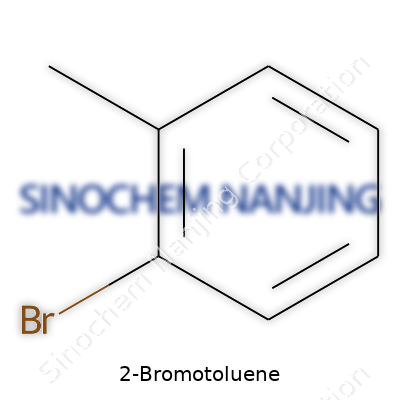
| Names | |
| Preferred IUPAC name | 1-Bromo-2-methylbenzene |
| Other names |
o-Bromotoluene 1-Bromo-2-methylbenzene 2-Methylbromobenzene |
| Pronunciation | /tuː ˈbrəʊmə.tɒl.juːiːn/ |
| Identifiers | |
| CAS Number | 95-46-5 |
| Beilstein Reference | 1209224 |
| ChEBI | CHEBI:36421 |
| ChEMBL | CHEMBL14125 |
| ChemSpider | 13745 |
| DrugBank | DB04261 |
| ECHA InfoCard | 03b0f753-d6e2-43ce-bd32-a4c776a3aba3 |
| EC Number | 202-160-6 |
| Gmelin Reference | 7367 |
| KEGG | C19612 |
| MeSH | D001932 |
| PubChem CID | 7243 |
| RTECS number | XS8575000 |
| UNII | M80M6AY7V3 |
| UN number | UN2507 |
| Properties | |
| Chemical formula | C7H7Br |
| Molar mass | 171.04 g/mol |
| Appearance | Colorless to pale yellow liquid |
| Odor | Aromatic |
| Density | 1.398 g/mL at 25 °C (lit.) |
| Solubility in water | Insoluble |
| log P | 3.9 |
| Vapor pressure | 0.4 mmHg (20°C) |
| Acidity (pKa) | 41.33 |
| Basicity (pKb) | 14.69 |
| Magnetic susceptibility (χ) | -69.0×10⁻⁶ cm³/mol |
| Refractive index (nD) | 1.546 |
| Viscosity | 0.955 cP (20°C) |
| Dipole moment | 1.98 D |
| Thermochemistry | |
| Std molar entropy (S⦵298) | 336.7 J·mol⁻¹·K⁻¹ |
| Std enthalpy of formation (ΔfH⦵298) | 56.1 kJ/mol |
| Std enthalpy of combustion (ΔcH⦵298) | –4634.6 kJ/mol |
| Hazards | |
| GHS labelling | GHS02, GHS07 |
| Pictograms | GHS02, GHS07 |
| Signal word | Warning |
| Hazard statements | H315, H319, H335 |
| Precautionary statements | P261, P264, P271, P273, P280, P301+P312, P305+P351+P338, P337+P313, P330, P501 |
| NFPA 704 (fire diamond) | 2-2-0 |
| Flash point | 82 °C |
| Autoignition temperature | 495°C |
| Lethal dose or concentration | LD50 oral rat 3000 mg/kg |
| LD50 (median dose) | LD50 (median dose): Oral rat LD50 = 6800 mg/kg |
| NIOSH | WI6625000 |
| PEL (Permissible) | Not established |
| REL (Recommended) | 25 kg |
| Related compounds | |
| Related compounds |
Bromobenzene Benzyl bromide 2-Iodotoluene 2-Chlorotoluene 2-Nitrotoluene 2-Methyltoluene |



