2-Bromophenol: A Detailed Review
Historical Development
Every meaningful chemical has a story worth knowing, and 2-Bromophenol holds a shelf in the laboratories of the late nineteenth century. Early organobromine compounds drew attention among chemists interested in aromatic halogenation. The discovery of 2-Bromophenol came out of these foundational explorations. These days, the compound is not just a product of curiosity. Research chemists pursued new halogenation techniques and sought ways to control regioselectivity on benzene rings, leading to gentle improvements in synthesizing this substance. As an intermediate, it set off the development of other fine chemicals. Over decades, the methods and aims matured, tying 2-Bromophenol not just to pure research but to practical needs in pharmaceuticals and materials.
Product Overview
2-Bromophenol acts as a reliable building block in several industries. For small-scale synthesis or industrial bulk, the compound supports multiple use cases. Some labs lean on it for custom synthesis work, making specialty molecules for agrochemical or pigment research. In the pharmaceutical field, it provides a starting point for drug lead development. You can recognize 2-Bromophenol by its distinctive aromatic odor—a reminder that chemical identity goes beyond paper.
Physical and Chemical Properties
This organic compound appears as a colorless to pale yellow crystalline solid at room temperature. Its melting point sits at around 37–39°C, and it boils at 222–227°C. The molecular formula C6H5BrO gives it a molar mass of roughly 173 grams per mole. The density lands near 1.7 grams per cubic centimeter. 2-Bromophenol dissolves fairly well in organic solvents like ethanol, ether, and chloroform. Water solubility remains much lower because the bromine atom boosts its hydrophobic character. On the chemical front, it carries both a phenol group and a bromine substituent, mixing reactivity from two functional families. The hydroxyl group enables hydrogen bonding and redox chemistry, while the aromatic ring with bromine makes it ripe for coupling and substitution reactions.
Technical Specifications & Labeling
Quality standards for this compound matter, especially for regulated industries. Typical specifications mention purity above 98%, checked by gas chromatography or other analytical methods. Impurities—such as dibrominated products or trace solvents—get flagged during QA. Commercial labels must provide hazard symbols, warnings for health risks, details of the chemical structure, and lot numbers for traceability. Safety data sheets spell out recommended handling, including PPE guidance and storage temperature ranges. Regulatory compliance demands clear labeling under GHS standards, including signal words and risk phrases about contact and inhalation hazards.
Preparation Method
Traditional syntheses rely on direct halogenation of phenol using elemental bromine. By controlling stoichiometry and reaction conditions, chemists can drive substitution to the ortho position. Protecting groups sometimes step in to suppress para substitution and minimize side products. Another approach calls for Sandmeyer-type reactions, converting 2-aminophenol to the diazonium salt, then treating it with copper(I) bromide. Some laboratories lean into greener methods, seeking less hazardous reagents and conditions that produce fewer toxic byproducts. Reactor design and scale—batch or continuous flow—affect yield and product consistency.
Chemical Reactions and Modifications
Chemists value 2-Bromophenol for its dual reactivity. The bromine is amenable to palladium-catalyzed cross-coupling like Suzuki, Heck, or Buchwald–Hartwig amination, opening doors to biphenyls, ethers, and arylamines. The phenolic oxygen participates in etherification and esterification. Some teams use it as a starting material for further halogenation or nucleophilic substitution, stripping the bromine and adding substituents that tool up a molecular scaffold. Reductive debromination can strip out the halogen, while oxidation can drive the phenol to quinones or aryl ethers.
Synonyms and Product Names
You might spot 2-Bromophenol in catalogs and supply sheets as o-Bromophenol, ortho-Bromophenol, or even Phenol, 2-bromo-. These names serve to clarify its unique structure. International trade numbers like its CAS number (95-56-7) aid global sourcing and harmonize regulatory approaches across borders. In some applications, trade names turn up, especially when manufacturers tie it to a specific formulation or blend.
Safety and Operational Standards
Direct contact with 2-Bromophenol can irritate the skin, eyes, and respiratory tract. Long experience in laboratory settings shows that gloves, goggles, and local exhaust ventilation cut risk. Spills call for inert absorbents and prompt cleanup, with containers sealed and labeled tightly. Storage in cool, dry, and well-ventilated spaces keeps the compound stable. Waste regulations classify it as hazardous, so disposal routes require high-temperature incineration or licensed hazardous waste processing. Training and up-to-date operating procedures remain part of the toolkit for lowering incident rates. Environmental legislation, including REACH and EPA frameworks, means companies track inventory, emissions, and end-of-life fate.
Application Area
2-Bromophenol fits snugly as an intermediate in drug synthesis, where the flexibility of its aromatic backbone gets exploited to generate libraries of small molecules for therapeutic screening. In dye chemistry, researchers use it to push electron demand and tune color properties. Polymer scientists have found uses for it in designing functionalized monomers that migrate into specialty coatings or adhesives. The agricultural sector takes advantage of its reactivity, enabling the development of new fungicides or growth regulators. Analytical chemistry sometimes leans on derivatives of 2-Bromophenol as reagents in spectroscopic assays. In environmental science, it turns up as a reference for tracking halogenated phenol pollutants, linking product use with broader monitoring efforts.
Research and Development
More research outfits see the value in developing catalysts and greener synthesis routes that trim down hazardous waste streams and offer milder conditions. In academia, groups have explored routes for selective halogenation using electrochemistry or enzyme-inspired catalysis, pushing the boundaries of green chemistry. Collaborative projects between universities and industry partners spur innovative applications, from functional materials in electronics to improved safety standards based on deeper toxicological insight. Computational modeling helps predict routes and reactivity, short-circuiting laborious trial-and-error in multistep syntheses. Emerging analytical platforms refine purity analysis, process control, and impurity tracking, raising the bar for both academic and commercial labs working with 2-Bromophenol.
Toxicity Research
Toxicological studies of 2-Bromophenol reflect the broader concerns of handling halogenated organics. Absorption through the skin and inhalation present health risks, with symptoms ranging from mild irritation to more severe respiratory distress. Long-term exposure data remain sparse, but animal studies suggest possible effects on liver and kidney function. Regulatory panels track this data and periodically update permissible exposure limits. Biodegradation rates and breakdown products have received more scrutiny, especially since halogenated aromatics can persist in soil and water. Risk assessments feed directly into upgrading safety protocols and evaluating alternatives with lower toxicity.
Future Prospects
Metabolic studies of brominated phenols promise clues to both environmental impact and potential biomedical applications. Chemists keep pressing for routes that minimize waste, use renewable feedstocks, and trim energy demand. Expanding the application horizon in organic electronics and new catalyst frameworks depends on further refining the chemical and physical behavior of derivatives. The intersection of stricter regulatory standards and rapid innovation drives suppliers and users to constantly revisit best practices. As knowledge deepens around reaction mechanisms or toxicity, the pressure grows to use 2-Bromophenol responsibly and pursue safer, equally effective alternatives where possible. In the years ahead, the balance between tradition and innovation will shape the compound’s role across research and industry.
What is 2-Bromophenol used for?
What Sets 2-Bromophenol Apart
2-Bromophenol isn't a chemical you find on a grocery shelf or stashed in a school science closet. Chemists recognize it for its role in both research labs and industrial settings. This compound carries a strong, medical-like smell, which might remind some folks of hospitals or antiseptic wipes, but it’s far more than just a whiff.
Medicinal Chemistry’s Tool
In drug discovery labs, scientists turn to substances like 2-Bromophenol as building blocks. Pharmaceuticals rely on these intermediates to flesh out molecules that can eventually fight infections or knock out pain. By attaching the bromine atom to a phenol base, chemists get some special reactivity. This means they can experiment more easily—swapping out the bromine for other atoms to tailor a new medicine. Imagine having a template you can keep tweaking until you land on the right fit for a specific illness.
The journey from lab to pharmacy shelf involves plenty of stops. Each potential drug candidate needs repeated tests. Without compounds like 2-Bromophenol, the pathway to new antibiotics or painkillers would grow a lot more tangled.
Supporting the Dyes and Pigments World
Beyond medicine, dye and pigment manufacturers count on 2-Bromophenol. Countless products rely on chemical colorants, from textiles to printer ink. The phenol’s structure anchors color molecules, and the bromine can adjust how these dyes hold up to light, water, or washing machines. A little tweak at the molecular level decides if your favorite shirt fades fast or makes it through dozens of cycles.
Agrochemical Industry Connections
Farmers and food producers face weeds and insects every season. New pesticides and herbicides need precision—the right molecule can mean the difference between protecting crops and causing environmental messes. Chemists focusing on crop protection use 2-Bromophenol to build and modify active ingredients. Its unique setup lets them invent molecules with specific jobs, aiming to target pests without harming helpful bugs or polluting groundwater.
Analytical Chemistry’s Quiet Assistant
I remember handling small bottles in a university lab, their labels handwritten after rushed syntheses. Some of these samples relied on 2-Bromophenol. In analytical work, it can help as a reagent, or with spotting contaminants. Raw material suppliers must guarantee purity, since trace levels of impurities can throw off experiments. The demand for consistency isn’t just about numbers—it’s about repeated trust in every batch.
Health and Environmental Concerns
2-Bromophenol, like many industrial chemicals, needs careful handling. Exposure can irritate skin or eyes, and leftovers shouldn’t land in drains. Factories often treat waste to keep brominated compounds from reaching groundwater or rivers. Environmental groups keep tabs on such substances due to their potential persistence in nature. Regulations and best practices help, but risks don’t vanish. Workers get training and protective equipment for a reason.
Paths Forward
Companies and researchers often push for safer alternatives and better waste treatment. Green chemistry now means seeking building blocks less likely to harm people or pollute streams. In my experience, it starts with small changes: tinkering with synthesis routes, cutting waste, and searching for biodegradable alternatives. Even today, the search for more sustainable methods keeps labs busy.
Final Thoughts
From running experiments in a college lab to seeing its fingerprint in technologies all around us, 2-Bromophenol has earned a place in innovation. It’s not glamorous—but it sure is essential to advances most people never see.
What is the molecular formula of 2-Bromophenol?
Getting to the Heart of 2-Bromophenol
The chemistry of everyday substances often sits just beneath the surface. 2-Bromophenol sounds complex, but its story tells a lot about how small tweaks in a molecule change what it does and how people use it. With a molecular formula of C6H5BrO, 2-Bromophenol draws from benzene’s familiar ring, adds a bit of oxygen for character, and swaps in a bromine atom for something punchy. That might look simple, but in the field of organic chemistry, this modest set of letters and numbers represents an important piece of the puzzle.
What Makes That Formula Matter?
Every chemist remembers their first glimpse at how molecules are put together: carbon, hydrogen, a dash of something else. 2-Bromophenol follows this pattern. Take the phenol core, which means a benzene ring with an -OH group. Add a bromine atom to the ring, right at the number-2 carbon. Now you’ve got C6H5BrO. The specifics aren’t just trivia. The shape and arrangement dictate everything—from the way a substance smells to whether it can fight bacteria or help make plastics.
Its Place in the Real World
Chemists often refer to 2-Bromophenol as a starting point. It pops up in the synthesis of dyes, medicines, and even pesticides. Bromine’s presence makes all the difference, offering reactivity and heft that tiny hydrogen never could. Ask any synthetic chemist, and they’ll have a story of a stubborn reaction that only worked when they broke out a bromo compound like this one.
In labs, 2-Bromophenol can act as a building block for larger molecules. Its structure lets chemists swap groups and tweak functions until they land on something new—like a new drug for nerve pain or an improved flame retardant. The importance isn’t hypothetical; phenol derivatives have shaped fields from pharmacology to materials science. For example, the bromo group gives it more staying power against enzymes that might break other phenols apart.
Health and Environmental Impact
It pays to look at more than just molecular makeup. Any compound with both bromine and phenol grabs the attention of environmental scientists. 2-Bromophenol’s structure lets it persist, and brominated byproducts sometimes show up in water samples. The concerns echo wider debates about chemical safety and regulation. Experts call for smarter waste handling and better monitoring—not to ban useful chemicals, but to limit risk for both people and ecosystems.
Learning From Chemistry
There’s a lesson here for anyone connected to science or health. Molecular formulas aren’t dusty textbooks; they’re passports to innovation and responsibility. Recognizing C6H5BrO means understanding where it fits and what it might mean for the wider world. If research could uncover degradable phenol alternatives without bromine, fewer chemicals would end up in waterways down the line. Chemists constantly search for solutions, like refining reactions to reduce waste or switching to milder substitutes in industry.
Staying Curious About Molecules
Asking why a set of atoms matters shapes how new products emerge. It keeps innovation grounded in facts—and responsibility. For teachers, researchers, and anyone curious about the ingredients behind modern life, the formula for 2-Bromophenol offers a hands-on lesson in how chemistry connects to society, health, and the environment.
Is 2-Bromophenol hazardous or toxic?
Getting Real About the Risks
Ask anyone who’s stepped into a chemistry lab, and they’ll tell you: not every chemical should keep you up at night. Still, 2-Bromophenol deserves some respect. It doesn’t look scary—a clear to faintly yellow liquid with the kind of musty odor that sticks to your gloves and stings a bit in your nose. On paper, 2-Bromophenol ends up in research, synthesis, and sometimes as a flavor in industrial mixtures. The real question isn’t just what it does, but what it might do—to people and to the environment.
The Health Side of the Story
Open a bottle of 2-Bromophenol without good ventilation and your eyes water. Tiny amounts vaporize easily and float right into your nose. My first experience handling it without the right mask left me coughing for hours, with my skin smelling like medicine. The stuff irritates eyes, skin, mucous membranes. Anyone who’s accidentally gotten a drop on their finger—redness, burning, and the smell that haunts your lunch break. Swallowing this chemical is out of the question. In large enough amounts, 2-Bromophenol throws off the nervous system and damages organs such as the liver and kidneys. Rats in studies sometimes show lethargy and odd behavior after exposure—not surprising when you consider how phenols and brominated chemicals interact with living things.
Digging into the published research, most acute health issues show up in people who breathe or touch way more than would ever crop up in a regular setting. The World Health Organization and PubChem entries flag strong irritant properties and the risk of harmful effects if mishandled. Chronic exposure adds extra concern—long-term skin contact, over years, might raise the risk of more serious harm.
Environmental and Workplace Problems
Labs and manufacturing plants send out plenty of waste, and 2-Bromophenol doesn’t just disappear. It mixes into water and soil, hangs around in the air much longer than you’d guess. It resists breaking down, so aquatic life picks up the slack, and that turns into build-up in fish and even crops irrigated from contaminated water. A study from Environmental Toxicology highlights how brominated phenols like this resist natural cleaning processes—certain bacteria break them down, but at a snail’s pace.
Ask any industrial chemist about their safety rules and “proper PPE” always tops the list. Gloves, goggles, a fume hood: not optional. The real risk grows when staff cut corners, or companies don’t invest in updated ventilation. Sloppy handling creates spills, and environmental guidelines set strict disposal protocols for a reason. The bigger threat often comes from “invisible” chronic leaks and improper waste management.
What Works for Safer Handling
Every time I’ve worked with 2-Bromophenol, planning mattered most. Simple steps: label everything clearly, double-check storage cabinets, walk new staff through the material safety data sheet. Water doesn’t help with phenolic spills; you want absorbents and chemical neutralizers around. Labs using this chemical often install monitors for VOCs to pick up on air contamination before anyone falls sick.
In the bigger picture, switching to greener chemicals, wherever possible, can lower risk across production lines. Lawmakers and agencies like OSHA and the EPA push for changes, including regular audits and tougher reporting. Data sharing between companies about best handling practices goes a long way to boost safety. From personal experience, clear protocols save both money and health in the long run.
The Takeaway, Backed By Experience
2-Bromophenol isn’t the most dangerous chemical out there, but turning a blind eye to its hazards asks for trouble. Sensible engineering controls, strong training programs, and honest risk assessments keep trouble at bay. Listen to your nose, pay attention to warning labels, and handle even small amounts with care.
What is the CAS number for 2-Bromophenol?
Spotlight on a Key Chemical Identifier
Walk through any chemical lab or check out the fine print on a reagent bottle, the CAS number stands out as an anchor for scientists and industry. For 2-Bromophenol, that anchor reads 95-56-7. On paper, it’s a simple string of digits. In daily work, it becomes a shared language among chemists, manufacturers, lab suppliers, and regulators. Having a unique identifier clears up confusion over similar-sounding chemicals. Plenty of substances have multiple names floating around—one country calls it o-bromophenol, another might just reference its molecular formula. A CAS number never changes, so it stays reliable worldwide.
Why 2-Bromophenol Matters in Everyday Chemistry
Anyone who has spent time in synthetic or analytical labs knows phenols anchor many basic reactions, and 2-bromophenol plays a part that goes beyond textbooks. This compound’s structure, with both a bromine and a hydroxyl group on a benzene ring, gives it special reactivity. That’s the reason organic chemists reach for it when building pharmaceuticals, pesticides, and new materials. Regulatory agencies check its CAS number before it ships across borders or enters waterways, helping to keep track of inventory and potential hazards. Without this level of organization, problems pile up and safety becomes guesswork.
Behind the Numbers: CAS and Safety
It’s easy to gloss over the connection between a string of numbers and lab safety, but real-life mistakes remind us fast. My initial years in a busy research lab brought that lesson home. Our group ordered what we thought was 4-bromophenol based just on the trade name, yet the bottle delivered 2-bromophenol, and the experiment tanked. CAS numbers end this confusion. Imagine buying caffeine for your coffee, but waking up to find you’ve brewed pure theobromine—a cousin with very different effects—just because the labels looked almost the same. One digit makes all the difference in both outcomes and safety protocols.
Responsible Use and Tracking in Industry
Industries run on precision and reliability. Manufacturers want to know exactly what enters their plant, and customers want finished goods to meet promises every time. CAS 95-56-7 delivers an extra layer of certainty. Checking chemicals by their CAS registration keeps track of compliance with regulatory bodies such as REACH in Europe or the EPA in the United States. If a chemical ends up in a spill or an unexpected reaction, the authorities search for the CAS number rather than squint through long, complicated names. Tracking ingredients, reporting usage, and tracing contamination all depend on using this kind of structured numbering.
Solutions to Common Pitfalls
If confusion still slips through, digital databases now flag each substance by CAS numbers, not just names. Training new lab techs to search by CAS helps avoid painful mix-ups. Inventory systems should list both product names and their unique numbers. Updating Safety Data Sheets to display both ensures the entire team handles the right substance each time. Careful cataloging doesn’t just save hassle during audits; it stops accidents before they happen.
Final Thoughts
Few outside chemical circles realize just how much work hinges on a nine-digit number. Yet, without that simple system, science and industry lose their safety net. Every accurate shipment, every safe reaction, and every regulatory check starts with straightforward identification. The CAS number for 2-bromophenol—95-56-7—is a clean signal in a world crowded with names and formulas.
How should 2-Bromophenol be stored?
The Real Risks of Cutting Corners
Anyone who's spent time in a chemical lab has run into 2-Bromophenol at some point. It’s a clear or pale liquid with a strong, sharp smell. Breathing that in or accidentally spilling it on a counter isn’t just annoying—it raises real risks. Even a whiff makes you realize storage isn't just a matter of habit; it's about your daily safety.
The Chemistry Behind Caution
Let’s get practical. 2-Bromophenol carries health dangers if mishandled. Direct contact can corrode skin and eyes. Breathing in vapors doesn’t go unnoticed—everyone in the lab will feel it. More than that, the compound reacts to heat and light over time, risking degradation that could skew results or even spark hazardous byproducts. That means bins under the fume hood or on a warm shelf don't cut it for long-term storage.
Proven Steps for Safer Storage
I’ve worked with volatile organics, and storing them isn’t just for compliance—it's self-preservation. Glass bottles with airtight caps will avoid unwanted leaks and reactions. Most labs use amber glass since it blocks out the sun and handles acids far better than plastic. Clear containers show spills early, but they won’t protect the chemical from light exposure. If old bottles crust over or lids stick, you risk contamination and unplanned spills when opening them up again.
Labs keep doors locked for a reason. A locked chemicals cabinet, preferably one with exhaust vents, limits who can get near hazardous reagents. This matters at universities or shared spaces where experience varies wildly. Flammable storage fridges offer additional safety, keeping reactive chemicals below room temperature during unpredictable weather or broken AC. 2-Bromophenol does well in these fridges, living alongside other organics that can’t take the heat.
Don’t Overlook Lab Culture
Plenty of chemical accidents come down to complacency. Moving quickly leads to cutting corners—leaving stock on a bench, skipping double-checks, or keeping excess on hand after an experiment ends. A clear, straightforward labeling system helps everyone know what’s inside a bottle, who opened it, and when it’s due to expire. Simple reminders—printed signs, highlighted protocol steps—keep storage habits consistent even when the work piles up. Peer checks help, too; each time coworkers check one another, mistakes slip through less often.
Learning From Mistakes and Data
Data from lab safety audits backs all this up. The US Occupational Safety and Health Administration (OSHA) documents recurring injuries tied to mislabeled or improperly stored chemicals. The National Institutes of Health and the American Chemical Society both guide against leaving reactive phenols near heat or sunlight. Their research points to lower insurance costs and fewer near-misses when labs follow these fundamental steps. Most people won’t care about downtime and lost samples until it affects their results or safety, but none of that matters if you can’t reopen a project after a spill or incident.
Practical Solutions for Every Lab
Safe chemical storage doesn’t demand overhauling a lab overnight. Simple actions go a long way—using amber glass bottles, sticking to lockable cabinets, setting aside a dedicated flammables fridge, and building routines that never skip double-checks. Most habits that keep 2-Bromophenol in check protect everyone else in the lab too. It’s less about following orders and more about keeping work moving forward, uninterrupted, with everyone making it home at the end of the day.
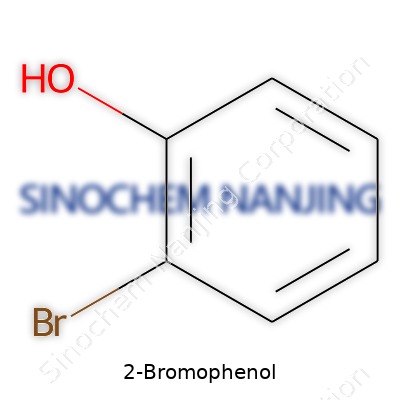
| Names | |
| Preferred IUPAC name | 2-Bromophenol |
| Other names |
o-Bromophenol 2-Hydroxybromobenzene o-Hydroxybromobenzene |
| Pronunciation | /tuː broʊˈmoʊfiːnɒl/ |
| Identifiers | |
| CAS Number | 95-56-7 |
| Beilstein Reference | 1362302 |
| ChEBI | CHEBI:28535 |
| ChEMBL | CHEMBL50238 |
| ChemSpider | 1092 |
| DrugBank | DB03837 |
| ECHA InfoCard | 200-271-7 |
| EC Number | 3.1.1.6 |
| Gmelin Reference | 7852 |
| KEGG | C01407 |
| MeSH | D000321 |
| PubChem CID | 7039 |
| RTECS number | BX8400000 |
| UNII | G7F44L1856 |
| UN number | UN2821 |
| Properties | |
| Chemical formula | C6H5BrO |
| Molar mass | 173.01 g/mol |
| Appearance | Colorless to pale yellow solid |
| Odor | Phenolic odor |
| Density | 1.495 g/mL at 25 °C |
| Solubility in water | slightly soluble |
| log P | 1.96 |
| Vapor pressure | 0.0417 mmHg (25°C) |
| Acidity (pKa) | 9.2 |
| Magnetic susceptibility (χ) | -76.0×10⁻⁶ cm³/mol |
| Refractive index (nD) | 1.573 |
| Viscosity | 2.2 cP (20°C) |
| Dipole moment | 1.96 D |
| Thermochemistry | |
| Std molar entropy (S⦵298) | 112.7 J·mol⁻¹·K⁻¹ |
| Std enthalpy of formation (ΔfH⦵298) | -17.4 kJ/mol |
| Std enthalpy of combustion (ΔcH⦵298) | -3372.7 kJ/mol |
| Hazards | |
| Main hazards | Harmful if swallowed, causes skin and eye irritation, may cause respiratory irritation. |
| GHS labelling | GHS02, GHS05, GHS07 |
| Pictograms | GHS06, GHS05 |
| Signal word | Warning |
| Hazard statements | H302, H315, H319, H332 |
| Precautionary statements | P261, P280, P305+P351+P338, P337+P313 |
| Flash point | 75 °C |
| Autoignition temperature | 548°C |
| Lethal dose or concentration | LD50 (oral, rat): 635 mg/kg |
| LD50 (median dose) | LD50 (median dose): 680 mg/kg (oral, rat) |
| NIOSH | B0136 |
| PEL (Permissible) | PEL: Not established |
| REL (Recommended) | 10.0 |
| Related compounds | |
| Related compounds |
Phenol 2-Chlorophenol 2-Iodophenol 2-Fluorophenol Bromobenzene |



