2-Bromopentane: An In-Depth Exploration
Historical Development
Chemistry keeps peeling back new layers, and 2-Bromopentane stands as evidence of how organic synthesis shapes industries. The push to create simple alkyl halides like 2-Bromopentane dates to classic experiments in the late nineteenth and early twentieth centuries, when researchers boiled hydrocarbons with halogens or their acids. Pioneers such as Victor Meyer studied these reactions for their curious reactivity and separation properties, and the ability to swap out a hydrogen atom for a bromine unlocked countless possibilities in both industrial and academic labs. Each breakthrough in halogenation technology, from the safer handling of bromine to cleaner reaction conditions, echoes through the procedures found in current textbooks.
Product Overview
2-Bromopentane remains a clear, colorless-to-pale yellow liquid, frequently used as a building block in drug and agrochemical production. Its main appeal lies in its structure: a five-carbon chain with bromine knocking hydrogen out of the second spot. That position gives it specific reactivity for substitution reactions compared with its straight-chain or terminal analogues. Producers today ship it in steel drums or glass bottles, sealed tightly against moisture and sunlight, to prevent breakdown and make sure the material arrives with the right purity for downstream synthesis.
Physical & Chemical Properties
2-Bromopentane measures up with a boiling point typically between 115 and 117 °C. Its density hovers around 1.23 g/cm³ at room temperature, higher than unhalogenated pentane because bromine lifts the molecular weight. It doesn’t dissolve in water but mixes well with common organic solvents such as ether, ethanol, and acetone. Odor slips toward a mild, sweetish scent familiar to those who have worked in teaching labs. Its refractive index usually reaches 1.440-1.445, which chemists recognize as a clue to its identity during quality checks. The compound shows moderate reactivity with nucleophiles, undergoing substitution at the secondary carbon, an action taken advantage of in research and manufacturing.
Technical Specifications & Labeling
Labeling for 2-Bromopentane includes not only its chemical name but also common synonyms and safety warnings. Industrial specifications stress purity, which must top 98% for most applications. Labels detail the batch number, production date, expiry, and sometimes GC-MS or NMR analysis results to certify the absence of key impurities. Since handling this compound poses risk by inhalation or skin contact, hazard symbols for flammability and toxicity serve as a reminder for all who use it.
Preparation Method
Traditionally, chemists prepare 2-Bromopentane by reacting 2-pentanol with hydrobromic acid or phosphorus tribromide. In the lab, the alcohol stirs together with the acid under controlled cooling; as the reaction proceeds, bromine slides in, swapping for the hydroxyl. The mixture then gets separated, washed, and dried over anhydrous salts to pull out water, followed by distillation for the pure product. Industrial players sometimes switch to phase-transfer catalysis to boost yield, working in conditions that reduce unwanted byproducts. Each method requires careful handling, because escaping hydrogen bromide and the target compound both bring hazards.
Chemical Reactions & Modifications
The strength of 2-Bromopentane lies in its crossroads nature. It participates in straight nucleophilic substitution, with the bromine acting as leaving group, replaced by everything from cyanide ions to amines, carboxylates, or even sulfur nucleophiles. This reactivity lends itself to the synthesis of amines, nitriles, and thioethers—making it useful in both research and commercial routes. Grignard reagent formation stands out as a cornerstone: reacting with magnesium in dry ether, 2-Bromopentane produces pentylmagnesium bromide, which kicks open the door to adding carbon chains or making alcohols. Elimination reactions under strong bases can drive formation of pentenes, which serves downstream production in polymer work. Each pathway broadens the utility of this simple molecule.
Synonyms & Product Names
Chemists and catalogues call 2-Bromopentane by several names: 2-pentyl bromide, sec-pentyl bromide, 2-Bromopentane, or even "pentane, 2-bromo-." The variety in naming springs partly from functional group placement and differing commercial branding. Some chemical suppliers list this material under its CAS number 107-81-3, letting scientists avoid confusion in procurement and regulatory documents.
Safety & Operational Standards
Handling 2-Bromopentane brings clear rules. Storage calls for cool, dry, ventilated locations, away from oxidizers, acids, and open flames. Personal protective equipment—gloves, goggles, lab coats—must become second nature. Spills cleaned quickly with absorbent and exhaust fans keep vapors away from lungs, reducing exposure. Regulatory bodies rank this compound as harmful by inhalation, ingestion, or skin absorption. Strict recordkeeping and clear disposal procedures keep staff safe and legal. Companies often run safety audits, trace incidents, and invest in periodic air-monitoring to demonstrate they respect hazard controls. Each step, while seemingly basic, makes a difference by nipping near-accidents in the bud.
Application Area
Chemical industries slot 2-Bromopentane into the role of intermediate for making pharmaceuticals, pesticides, and dyes. In my own experience with small-scale synthetic routes, it provided a fast path to alkyl amines—essential for drugs or lab reagents where one errant atom can throw off the whole process. Agrochemical manufacturers convert the bromide group into thousands of new molecules for field trials. Analytical labs use it during method validation, creating test mixtures to check instrument performance. Education sees it in lessons on SN2 and E2 chemistry, giving students both the theory and direct exposure to practical techniques. Its flexibility shores up development timelines across research and production floors.
Research & Development
Universities and companies spend significant energy refining bromination processes, targeting higher yield with lower waste. Catalysis research often gravitates toward milder conditions, using ionic liquids or new catalysts that leave fewer byproducts compared to legacy acids. Process intensification, such as flow chemistry, draws a line toward safer, more scalable conversion of pentanols to bromides with less risk to workers and the environment. In drug discovery, modifying the pentane chain using this bromide provides analogs for pharmacological screening, chasing better absorption, and fewer side effects. Published case studies describe success stories where 2-Bromopentane proved decisive in developing novel antimicrobial compounds and catalysts.
Toxicity Research
Studies across academic and industry settings continually investigate 2-Bromopentane’s safety profile. Exposure links to irritation of skin, eyes, and respiratory system. Animal trials document central nervous system effects and possible liver stress after extended contact, prompting advances in PPE and fume hoods. Toxicologists measure its breakdown in biological systems, identifying metabolites and checking for carcinogenic potential. Environmental specialists focus on its persistence—2-Bromopentane breaks down but can temporarily harm aquatic species if handled carelessly. Ongoing monitoring of exposure among chemists and operators has led firms to install better sensors and encourage substitution when possible. The drive to map out every risk shapes both worker training and the design of next-generation halogenated intermediates.
Future Prospects
Progress never sits still in chemistry. Green initiatives look at renewable feedstocks to make brominated compounds, reducing reliance on fossil-fuel-derived alcohols. AI-guided synthesis holds promise, offering predictive models to select optimal reaction conditions for higher efficiency and cleaner signatures—areas where 2-Bromopentane figures in program testing. Specialty labs keep hacking away at less-toxic alternatives, but for now, demand for this straightforward intermediate keeps courses full at universities and flasks turning in manufacturing suites worldwide. Advances in recycling spent brominated solvents and reducing emissions during synthesis could mark the next leap in responsible production, benefiting the full chain from producer to end-user.
What is the molecular formula of 2-Bromopentane?
Understanding the Structure
I remember my first run-in with organic chemistry—long before the molecular models and online diagrams, I sat at a kitchen table drawing out hydrocarbons with a cheap ballpoint pen. Pondering 2-Bromopentane back then, the name alone felt intimidating. This molecule, though, tells its own story. "Pentane" points straight to five carbons, linked together in a chain, while "2-bromo" simply means a bromine atom attaches itself to the second carbon in that chain. So, each carbon grabs its fair share of hydrogens, except for one hydrogen which got swapped out for that bulky bromine. This leaves us with a formula weighing in as C5H11Br.
A Look at Why Molecular Formula Matters
People in the lab, on factory floors, and in classrooms alike depend on these formulas. Know the formula, and you know the kind of atoms on hand—and how they might behave. C5H11Br isn’t just a string of letters and numbers. Those numbers guide chemists as they piece together new medicines, new materials, and even safer alternatives to things that harm our environment. Think about working out a recipe in the kitchen without knowing how much flour or sugar you’ve got. Chemistry is about precision, and the tool belt starts with the correct formula.
Real-Life Applications
In industrial circles, 2-Bromopentane shows up in plenty of synthetic steps. Some use it to build complex molecules for pharmaceuticals, pesticides, or flavors and fragrances. Its structure—and that bromine atom—make the molecule a perfect candidate for swapping in new groups or building bigger chemical scaffolds. Removing or adding one atom at the right spot can flip a substance from useless to life-changing.
Those of us who’ve been in a synthetic lab know the headaches that follow when the wrong formula creeps into a batch record or an experimental protocol. A clerical slip can wipe out months of work, especially with halogenated compounds, which often bring hazards and waste. Reliable reference numbers and formulas save time, money, and, at times, keep workers out of harm’s way.
Accuracy and Safety
Mistakes in chemistry stretch beyond lost dollars. If an industrial chemist runs a reaction with a misidentified compound, the risks climb quickly, from environmental spills to unexpected reactions. The right molecular formula ensures handlers know what protective gear to wear, what emergency plan to have ready, and how to transport or store the compound safely. C5H11Br offers a case study for safety protocols that hinge on those ten characters.
Building a Stronger Chemistry Community
Education isn’t far removed from industry. As a teacher, clear understanding means better engagement from students. Essays and assignments that dig into these real molecules—ones that see action outside a textbook—teach more than test answers. They show beginners why chemistry isn’t just memorizing, but thinking and reasoning.
To move things forward, more tools and resources should cut through the confusion around chemical names and formulas. Open databases, software that double checks work, and accessible guides can help every learner—from entry-level student to seasoned technician—cut out careless errors. That kind of accuracy builds trust, saves resources, and, as always, keeps people safe both inside and outside the lab.
What are the physical properties of 2-Bromopentane?
Getting to Know 2-Bromopentane
2-Bromopentane floats quietly under the radar for most people outside a chemistry lab, but folks mixing up reactions—whether in academia or industry—find it hard to ignore. This colorless, oily liquid has a faint sweet smell, something you notice the moment you pop the cap off its bottle. Its formula, C5H11Br, means you’re looking at a five-carbon straight chain with a bromine hanging on the second carbon.
Boiling and Melting: Not Just Numbers
Pour some 2-bromopentane into a beaker and heat it up. Around 109°C, vapors start to roll off. That’s the boiling point. If your work involves distillation or separation, you realize why knowing the boiling point isn’t just a textbook fact. Too low, it’s easy to lose up the vent; too high, and you risk scorching your product or grabbing the wrong substance out of a mixture. As for freezing, you need to chill it down to -87°C before it solidifies. Folks working in cold storage labs or shipping chemicals learn to appreciate solvents that stay liquid even in the freezer.
Density: More Than Just a Weight
At 20°C, the density checks in at about 1.2 g/cm3. Dump 2-bromopentane in water and you’ll see it settle underneath since it’s heavier than water (which clocks in at 1.0 g/cm3). This kind of density means careful handling in spills or layer separations. It doesn’t float off somewhere else—it sinks and stays put.
Solubility and Reactions Matter in Real Life
Try dissolving 2-bromopentane in water, and you won't get far. It prefers mixing with organic solvents—think ether, alcohol, acetone. This low water solubility means that in the environment, it sticks with oils and organics instead of running off into the water supply. Chemists who try to wash away a reaction mixture with plain water know it’s a waste of time. Cleanup, waste disposal, and storage all take this profile into account.
Color, Smell, and Other Sensible Qualities
In the flask, it looks clear or sometimes a tad yellow if it’s been sitting out for a while. That slight tint sometimes tells you impurities showed up along the way, but most fresh batches stay colorless. The sweet, sometimes chloroform-like aroma tells your nose that you’re working with an alkyl halide. Safety sheets remind you to keep your face away from the fumes, and you learn quickly how easy it is for volatile liquids like this to fill a room.
Handling and Hazards: Hard Lessons from the Field
Users handle 2-bromopentane with respect. It’s not just the chemical burns or skin rashes after a careless spill. Breathing in those vapors in a closed room gets headaches going, and over the years, stories from the lab reinforce why you keep the hood fan humming and gloves on. Flammable and reactive with strong bases or powerful nucleophiles, it’s a favorite for teaching substitution reactions. But slip up with glassware or label, and the consequences teach better than any lecture.
Why Anyone Bother with These Details?
Hands-on lab experience taught me to trust the physical properties sheet before starting a synthesis. Having precise melting and boiling points, density, and solubility on hand saves time, reduces risk, and keeps experiments on track. Environmental officers and industrial chemists pay just as much attention—knowing how a chemical behaves under different temperatures, who it can mix with, and what it does when spilled shapes more than paperwork. It defines the safety culture, ensures compliance, and helps avoid costly or dangerous mistakes.
How is 2-Bromopentane synthesized?
How It’s Actually Done
Making 2-bromopentane sounds technical, but anyone who’s spent time around a chemistry lab will recognize the core steps. You start with pentan-2-ol; that’s a five-carbon alcohol with the -OH group attached to the second carbon. To turn that harmless-looking alcohol into 2-bromopentane, chemists usually pick a tried-and-true reagent—hydrobromic acid or phosphorus tribromide (PBr3). Both bring something to the table, but PBr3 works especially well if you want a higher yield and less mess to clean up later.
Here’s how the process rolls out with PBr3. You add it to pentan-2-ol inside a controlled environment, with a solvent like diethyl ether keeping things running smooth. You don’t want water creeping in, because that would just undo your progress. PBr3 reacts with the alcohol, swapping the -OH for a bromine atom, and, just like that, you’ve got 2-bromopentane. Since this reaction can be a bit touchy, lab safety really matters—PBr3 fumes irritate everything from eyes to lungs, and nobody likes risking a spill.
Why Even Bother With 2-Bromopentane?
For people outside of chemistry, this compound might not look important. But talk to anyone in organic synthesis and it’s clear: 2-bromopentane stands as a bread-and-butter intermediate. Pharmaceutical companies, researchers, and materials scientists need it for building more complex molecules. Bromine's presence on the chain makes it reactive, allowing for substitution reactions that let you tack on everything from amines to alkyne groups. It’s like having a flexible piece for organic Lego sets—hard to move forward without it.
There’s another angle, too. If you want to teach practical organic chemistry, this is a classic lab demonstration. It’s direct, illustrates nucleophilic substitution (SN2) in real time, and gives students a front-row seat to concepts they otherwise only see in textbooks. Students remember safety protocols the most from hands-on reactions—instructors know those lessons tend to stick for life.
Potential Pitfalls and How To Do Better
Making 2-bromopentane isn’t without problems. Using PBr3 and diethyl ether, you’re handling both a dangerous chemical and a flammable solvent. Clean up leaves behind phosphorus-based byproducts that need careful waste disposal. In large-scale settings, these issues add costs that management never ignores.
Some chemists have explored “greener” bromination methods. One example swaps PBr3 for recyclable ionic liquids as reagents or chooses less hazardous solvents like ethyl acetate. Although these alternative routes sometimes bring lower yields, they cut down harmful waste and keep workers safer. The greener chemistry movement draws from years of seeing students and industry pros develop respiratory symptoms or surface burns after long-term exposure to harsh chemicals. Health and environmental data continue to push the field toward safer methods, but for now, many labs still stick with tried-and-true approaches for their reliability.
Finding The Sweet Spot: Practical Lessons
The synthesis of 2-bromopentane tells a bigger story about chemistry and industry demands. Businesses look for methods that hit a balance—high yield, consistent quality, and manageable safety risks. Regulations get stricter with every decade. It forces labs to re-think whether the extra few grams of product per run justifies the environmental or health drawbacks. My own experience in academic labs showed me why established procedures stick around, but also why innovation doesn’t stop. For every ten chemists grumbling about new protocols, there’s always one who’s seen the damage up close and pushes for smaller steps forward. So, paying attention to safer methods, responsible waste handling, and continued learning often marks the difference between sustainable and unsustainable chemical production.
What are the main uses of 2-Bromopentane?
Looking Deeper Into the World of 2-Bromopentane
2-Bromopentane, a simple but influential molecule in the chemical industry, grabs attention from folks who work in labs and manufacturing plants. With a straight-chain five-carbon backbone and a single bromine atom, it stands out as more than just a name in an organic chemistry textbook. This compound acts as a building block that helps make other valuable products. When I first spent time in a research lab, I ran across it while exploring various ways to synthesize specialty chemicals. What started as curiosity soon turned into admiration for how often chemists rely on it for practical reactions.
Key Role in Organic Synthesis
2-Bromopentane finds heavy use in the world of organic chemistry. It works as an excellent alkylating agent. Alkylation reactions basically stick a carbon chain onto another molecule, which opens the door for all kinds of new structures. Many researchers use this simple brominated compound to make more complex chemicals by swapping out the bromine atom for another group. This step forms the cornerstone for creating pharmaceuticals, additives, and flavor ingredients. In my lab days, using 2-Bromopentane felt like holding a Swiss army knife—handy every time we wanted to snap a new chain onto a molecule.
Pharmaceuticals and Fine Chemicals
Drug discovery isn’t a smooth path, but compounds like 2-Bromopentane give chemists a way to build and tweak molecules quickly. This chemical allows pharmaceutical researchers to test different versions of a drug candidate by swapping in the pentyl group. Anyone familiar with medicinal chemistry recognizes how important this flexibility becomes for improving drug efficiency or minimizing side effects. 2-Bromopentane finds its way into the processes that lead to new heart medications or even antiviral agents, which means the molecule’s utility extends far beyond the factory floor.
Creating Specialty Chemicals
Synthetic work in fragrance, agrochemicals, and specialty solvents often turns to 2-Bromopentane because it reacts reliably and helps shape molecules with specific properties. I’ve seen plenty of projects that start with this bromoalkane. In fragrance development, for instance, the compound acts as a stepping stone toward ingredients that deliver unique odors. Its reactivity makes it a good choice for preparing intermediates used in pesticides or plasticizers, both essential for modern agriculture and materials science.
Educational Practice and Skills Building
Universities also use 2-Bromopentane. The compound features in undergraduate labs where students tackle nucleophilic substitution and elimination reactions. These skills serve as the backbone of chemical education. By working with 2-Bromopentane, students learn what works and what gets tricky between theory and real-world practice. It’s a valuable teaching tool, turning abstract chemistry lessons into hands-on problem-solving exercises that stick in students’ memories.
Addressing Safe Handling and Environmental Impact
Anyone handling 2-Bromopentane needs proper ventilation and protective equipment. The compound carries health and environmental risks, so chemical plants should focus on strict containment and waste management practices. Small spills or improper disposal may harm aquatic life, which signals the need for strict oversight and constant training in labs and factories. Moving toward greener chemistry could mean searching for alternatives with fewer risks or designing reaction processes that cut down on waste.
Looking Ahead: Innovation and Responsibility
Innovation doesn’t take a break, and neither should our sense of responsibility. As sustainable chemistry grows in importance, 2-Bromopentane could spark fresh ideas about using renewable starting materials or designing smarter, safer synthetic routes. Those who work with chemicals every day often have insight into streamlining reactions or lowering the environmental footprint. Learning from each step and staying open to newer, safer alternatives helps the chemical community keep progress and safety moving forward together.
What safety precautions should be taken when handling 2-Bromopentane?
Understanding the Stuff You’re Working With
2-Bromopentane doesn’t show up on household shelves, but it finds its way onto lab benches and into a range of experiments. The chemical acts as an alkyl halide, so people handle it in organic synthesis when making certain drugs or specialty compounds. Before even thinking about pouring or mixing, it's smart to know what we’re dealing with. 2-Bromopentane comes as a colorless liquid but brings some real health hazards—irritation, toxicity, fire risk.
The Risk Is Real: Health Concerns and Fire Hazards
Most people won’t smell trouble until it’s too late. Skin and eyes sting badly after direct contact. Vapors can irritate mucous membranes and the respiratory tract. Breathing in a good whiff leads to headaches, dizziness, and sometimes worse if you get stuck in a poorly ventilated space. Longer exposure sometimes does a number on kidneys or liver. With a flash point lower than many expect, a small spill can catch fire near any spark or hot surface.
No Shortcuts: Personal Protection Counts
Personal protective equipment (PPE) stands as the frontline defense. Gloves from nitrile, not latex, stop most brominated chemicals from soaking in. Lab coats help, but splash-proof goggles and face shields come into their own when pouring larger volumes. Sometimes labs use fume hoods as a basic step, but that’s not overkill—this stuff evaporates fast and nobody wants trace amounts floating around.
Ventilation and Safe Handling Practices
Any time someone opens a bottle, the fumes escape. Open-air environments don’t cut it. Every transfer or experiment calls for a fume hood, which keeps the chemical out of your breathing zone. Going by the rules every time makes accidents rarer. Let’s not forget simple habits: never eat or drink near the work area, wash up before leaving, and keep containers tightly closed after use.
Clean-Up: Spills and Waste Disposal
Spills happen—sometimes because of clumsy hands, sometimes because bottles stick or drip. Everyone should know which spill kits to grab; those with activated carbon or other chemical absorbers make a real difference. The old “sweep under the rug” habit spells disaster here. I’ve learned that labeling every waste container “Halogenated Organic Waste” makes sure no one dumps the wrong chemical down the drain. Getting the right waste transporter involved really matters—just one bottle mishandled can cause major headaches for the lab and neighbors if dumped irresponsibly.
Training: The Best Piece of Gear
No mask, glove, or suit helps if you don’t know what you’re doing. Good training about hazards, emergency procedures, and first aid means people stay out of harm’s way. I remember years back, someone ignored a basic glove rule and landed in the ER with a chemical burn—one simple mistake stacked up into a serious injury. Sharing stories, running drills, and keeping safety data sheets handy pays off every time.
Why Diligence Makes a Difference
No one should fear their workbench, but handling chemicals like 2-Bromopentane asks for real respect. The science pushes forward, people learn new skills, but the basics still matter every single day. Put on the gear, work smart, and watch out for each other—these habits protect health and keep lab work running smoothly.
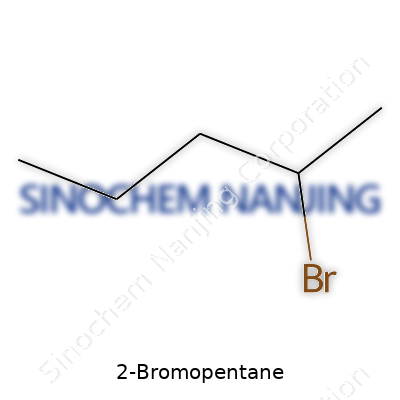
| Names | |
| Preferred IUPAC name | 2-Bromopentane |
| Other names |
sec-Amyl bromide 2-Pentyl bromide 2-Bromopentane Pentan-2-yl bromide |
| Pronunciation | /tuː ˌbroʊ.moʊˈpɛn.teɪn/ |
| Identifiers | |
| CAS Number | 107-81-3 |
| Beilstein Reference | 1209242 |
| ChEBI | CHEBI:77815 |
| ChEMBL | CHEMBL15639 |
| ChemSpider | 60846 |
| DrugBank | DB08398 |
| ECHA InfoCard | 018c2c13-c45a-4dae-a51d-2adb70eb59e6 |
| EC Number | 214-280-6 |
| Gmelin Reference | 7870 |
| KEGG | C18638 |
| MeSH | D017324 |
| PubChem CID | 12311 |
| RTECS number | EJ6475000 |
| UNII | 2U58L5M81K |
| UN number | UN2349 |
| Properties | |
| Chemical formula | C5H11Br |
| Molar mass | 165.06 g/mol |
| Appearance | Colorless liquid |
| Odor | pleasant odor |
| Density | “1.213 g/mL at 25 °C (lit.)” |
| Solubility in water | Insoluble in water |
| log P | 2.76 |
| Vapor pressure | 1.6 mmHg (at 25°C) |
| Acidity (pKa) | 16.1 |
| Basicity (pKb) | 2.84 |
| Magnetic susceptibility (χ) | -77.5 × 10⁻⁶ cm³/mol |
| Refractive index (nD) | 1.4390 |
| Viscosity | 1.867 mPa·s (20 °C) |
| Dipole moment | 2.00 D |
| Thermochemistry | |
| Std molar entropy (S⦵298) | 231.6 J·mol⁻¹·K⁻¹ |
| Std enthalpy of formation (ΔfH⦵298) | –44.4 kJ/mol |
| Std enthalpy of combustion (ΔcH⦵298) | -3476.8 kJ/mol |
| Hazards | |
| GHS labelling | GHS02, GHS07 |
| Pictograms | GHS02,GHS07 |
| Signal word | Warning |
| Hazard statements | H226, H315, H319, H335 |
| Precautionary statements | P210, P233, P240, P241, P242, P243, P280, P303+P361+P353, P304+P340, P305+P351+P338, P403+P235, P501 |
| NFPA 704 (fire diamond) | 1-2-0 |
| Flash point | 41 °C |
| Autoignition temperature | 180 °C |
| Explosive limits | Explosive limits: 1–7% |
| Lethal dose or concentration | LD50 (oral, rat): 2,000 mg/kg |
| LD50 (median dose) | LD50 (median dose) of 2-Bromopentane: **3,000 mg/kg (rat, oral)** |
| NIOSH | WA9625000 |
| PEL (Permissible) | Not established |
| REL (Recommended) | 25°C |
| Related compounds | |
| Related compounds |
1-Bromopentane 2-Bromopropane 2-Bromobutane 2-Chloropentane 2-Iodopentane |



