2-Bromobutane: A Chemistry Cornerstone
Historical Development
Chemists have known about 2-bromobutane since the 19th century, with its structure and uses evolving as synthetic organic chemistry advanced. Early bromination of alkenes opened the door to this family of molecules, and 2-bromobutane emerged as a key building block in alkyl halide chemistry. Over time, techniques improved, and researchers started pulling out this compound not just from lab setups but as an integral component in teaching, industry, and research. I remember handling it during undergraduate labs, where its distinct, pungent odor warned of its strong reactivity—clear evidence of how simple alkanes can transform into versatile reagents.
Product Overview
2-Bromobutane stands as a secondary alkyl halide produced on a commercial scale for its value in both academic and industrial applications. Known for its moderate boiling point and convenient handling, this colorless liquid captures attention among chemists looking for straightforward pathways to substitute reactions or for those working in pharmaceutical or agrochemical industries. It slides into chemical syntheses as a ready source of the butyl group or as a handy probe for studying stereochemistry.
Physical & Chemical Properties
2-Bromobutane displays a boiling point near 91°C and a density around 1.26 g/cm³ at room temperature. Its refractive index clocks in at about 1.437, giving it distinct optical properties. As a secondary bromoalkane, it dissolves poorly in water but blends well with organic solvents. Its strong, sweetish odor is noticeable—even small leaks fill the lab with a chemical tang, serving as a reminder to keep the bottle tightly sealed. Chemical reactivity takes center stage here; it undergoes substitution (both SN1 and SN2) and elimination reactions with ease, and its utility comes from its balance between reactivity and stability.
Technical Specifications & Labeling
Standard bottles of 2-bromobutane carry the label with the chemical's proper name, structure, and the word “Flammable” stamped in bold, often alongside hazard pictograms showing a bright exclamation mark and flame symbol. Chefs in synthetic labs tend to favor grades above 99% purity for precise work, because traces of isomeric bromobutanes or related impurities can ruin product profiles in stepwise organic syntheses. Manufacturers often include information about moisture content, as water can influence certain reactions involving this halide.
Preparation Method
To make 2-bromobutane, chemists usually start with 2-butanol and treat it with hydrobromic acid. This acid-catalyzed substitution swaps the hydroxyl group for bromine—just the sort of transformation organic chemistry instructors love to set up for reaction mechanism demonstrations. One-pot syntheses often run at gentle temperatures with an acid scavenger to limit side products. Several industrial routes use phosphorus tribromide instead, especially in larger-scale runs, since this method keeps impurities to a minimum and gives consistently high yields.
Chemical Reactions & Modifications
2-Bromobutane turns into a workhorse once it enters the synthetic lab. It reacts with strong bases like potassium tert-butoxide to form butenes by elimination, or it can participate in nucleophilic substitution using anionic or neutral nucleophiles to generate a variety of substituted butanes. My personal experience involved using 2-bromobutane for alkylation in Grignard reactions, where the bromine atom served as the perfect leaving group; things can get unpredictable though, with competing side reactions demanding careful temperature control and choice of solvent.
Synonyms & Product Names
2-Bromobutane shows up in catalogs under names like sec-butyl bromide, butan-2-yl bromide, and 2-butyl bromide. Each name points to the same molecular identity: a four-carbon chain, with bromine taking the place of a hydrogen on the second carbon. CAS numbers and systematic nomenclature help clear up ambiguity, a crucial step when accidental mix-ups between isomers could tank a sensitive experimental result.
Safety & Operational Standards
Lab safety officers classify 2-bromobutane as hazardous owing to its flammability, volatility, and potential health hazards. It irritates eyes and skin, and prolonged inhalation can affect the nervous system. My own run-ins with the vapors during spill cleanup only underscored the need for gloves, goggles, and robust fume hoods. Storing the compound below 25°C and away from oxidizers, plus careful labeling of secondary containers, keeps odds of accidents low. Disposal demands attention too—waste must go in halogenated organics bins, never down the sink.
Application Area
In industry, 2-bromobutane finds steady use as a starting material for synthesizing pharmaceuticals, agrochemicals, and dyes. It anchors many classic undergraduate chemistry experiments, especially those demonstrating SN1 versus SN2 mechanisms, due to its chiral center and simple structure. Other sectors tap it for its role in manufacturing rubber accelerators, fielded in tire production and specialty polymers. The patterns of demand echo developments in medical chemistry; chiral drugs have driven interest in enantiopure 2-bromobutane as a precursor.
Research & Development
Researchers pay close attention to 2-bromobutane's behavior in asymmetric synthesis. Academics chase new catalysts that tip substitution reactions to yield mostly one enantiomer, while pharmaceutical scientists value this building block for unlocking diverse molecular scaffolds. It's a reliable test subject for exploring solvolysis, inversion of configuration, and selectivity—topics that pop up frequently in advanced organic synthesis lectures and thesis projects. In my own graduate studies, it doubled as a testbed for reaction kinetics investigation, providing real-world insights into energy barriers and product distributions.
Toxicity Research
Toxicologists recognize 2-bromobutane as moderately toxic. Inhalation studies in rodents link exposure to central nervous system depression, and even low-level chronic exposure can cause headaches and dizziness. Eye and respiratory irritation headlines safety datasheets. Ecotoxicity studies find the compound breaks down in the environment but can pose a risk to aquatic organisms at higher concentrations. This has led to tighter regulation of permissible exposure limits and greater scrutiny of manufacturing emissions.
Future Prospects
Demand for fine chemicals with chiral centers continues to climb, and 2-bromobutane fits this niche thanks to its straightforward preparation and clean reactivity. Biocatalyst and green chemistry initiatives point toward producing optically pure 2-bromobutane using engineered enzymes or milder conditions, cutting down on hazardous byproducts. Machine learning models speed up the process of predicting its reaction outcomes and selecting optimal conditions for industrial-scale processes. Companies investing in sustainable chemistry grab opportunities to recycle or repurpose halogenated byproducts, aligning with environmental stewardship goals and reducing long-term risks associated with halide waste.
What is 2-Bromobutane used for?
Getting to Know 2-Bromobutane
You walk past endless bottles and beakers in a chemistry lab and see names like 2-bromobutane. Unless you have a reason to pay attention, the name sounds forgettable. To chemists and folks working in industry, though, this colorless liquid gets plenty of action, especially as a building block. It stands out because of its “bromine” tag — a single change in structure gives it unique properties that land it in many scientific and manufacturing processes.
Why It Matters in Organic Synthesis
2-Bromobutane plays a key part in organic synthesis. Think about it like a Lego piece that fits into a complicated build. Scientists use it to swap out parts of molecules — a process called nucleophilic substitution. If you ever had to learn the SN1 and SN2 mechanisms in school, this compound serves as a classic example for both. When I was in university, our instructor used 2-bromobutane to show how chirality works, helping us wrap our heads around why small changes in molecule shape can make or break a medication.
That's not just textbook knowledge. Making certain medicines or agrochemicals often means putting together a molecule in a precise way. 2-Bromobutane steps in as a starter piece, reacting with other chemicals and helping build up the structure needed for the next step.
Role in the Chemical Industry
This isn’t just a quirky lab chemical. Several large-scale processes feature it. For example, when making pharmaceuticals or additives for lubricating oils, the specificity of 2-bromobutane’s structure matters. It introduces a bromine atom right where it’s needed — no waste, no major detours. Companies invested in efficiency keep it on hand because reactions with 2-bromobutane often run smoothly and produce a reliable result.
Beyond big factories, smaller research outfits turn to 2-bromobutane for exploring new chemical reactions. Discoveries in this space sometimes lead to greener, safer, or cheaper ways to make existing products. The possibilities expand any time a flexible building block is available, and 2-bromobutane fits the bill.
Safety and Environmental Issues
It’s not all upside. Safety stays front and center. Liquid 2-bromobutane evaporates quickly and can irritate skin, eyes, or lungs. In my own experience, the material safety data sheet for 2-bromobutane isn’t just a formality — splash it or breathe too much, and you’ll regret it. Responsible labs need good ventilation, eye protection, and gloves. Waste must be handled carefully, since letting halogenated compounds leak into water or soil causes lasting harm. Studies have linked improper disposal to groundwater contamination, which puts wildlife and drinking water at risk.
Safer alternatives and better recycling practices deserve more attention. Some chemists work on swapping bromine-based reagents for less-toxic options. Still, certain chemical paths give the best results using bromine, and for now 2-bromobutane remains hard to replace.
Where Solutions Can Start
Practicing strict handling standards reduces immediate risks. Automated systems help avoid spills and limit worker exposure. On the academic side, more research into reaction design can lead to greener chemistry routes. Governments and industry partners can support these efforts with better regulations and incentives for innovation. For those of us in the field, keeping current with safe practices, and considering sustainability alongside productivity, builds a stronger foundation for the future of chemical manufacturing.
What is the CAS number of 2-Bromobutane?
Tracking Down the Unique Identifier: CAS 78-76-2
Every chemical has a fingerprint. In the world of research, labs, and industry, the CAS number stands out as a globally recognized way to track a compound. For 2-Bromobutane, that identification comes in the form of CAS number 78-76-2. On paper, it looks simple, but I’ve seen firsthand in both small college laboratories and bigger industrial setups how much easier science runs when everyone’s on the same page about what substance is in use. The days of confusion between similar-sounding names or mistranslations from supplier catalogs fade away. CAS numbers cut through that.
Diving into why this matters, 2-Bromobutane isn't some relic stuck on a shelf. It pops up in organic synthesis, in educational settings for demonstrating SN2 reactions, and in more advanced chemical manufacturing as a building block. You may not find it under the kitchen sink, but in an organic lab, it holds value for its ability to transform into many other molecules. The CAS number 78-76-2 keeps everyone talking about exactly the same stuff, minimizing mix-ups, and that’s no small accomplishment in environments tackling dozens of similar compounds a day.
How CAS Numbers Prevent Costly Mistakes
Precision keeps people safe. Ask any technician about the dangers of swapping one brominated compound with another just because the bottles looked similar, and they’ll have a story. Using CAS 78-76-2 to specify 2-Bromobutane on a request or safety sheet takes the guesswork out. Many suppliers, including Sigma-Aldrich and Fisher Scientific, sort catalogs by CAS numbers. When your purchase order says “2-Bromobutane, 78-76-2,” the risk of receiving the wrong isomer or contaminant drops dramatically. Consistency saves money, protects users, and ensures repeatability for research.
This adds another layer of transparency for regulators too. Inspectors and auditors reviewing chemical stocks look for proper labeling. If bottles sport the right CAS number, scrutiny becomes easier, and compliance improves. Mistakes can lead to hefty fines, or worse, put people in harm's way. Having detailed CAS-linked inventories helps labs stay above board, both ethically and legally.
Making Information Accessible for All
Many students get their introduction to chemical safety and nomenclature by first learning about CAS numbers, sometimes even before mastering electron-pushing diagrams. I recall my own undergraduate lab partners scribbling CAS 78-76-2 on every lab notebook page because our instructor insisted on documentation. It’s not busywork—it’s practice for accountability in larger scientific communities.
Patents, safety data sheets (SDS), and peer-reviewed papers all include CAS numbers. This brings everyone to the table, whether you’re inventing a new drug or simply running a synthesis for a classroom experiment. Anyone can punch “2-Bromobutane CAS” into a search engine, and the link to 78-76-2 guides them to the correct structure, safety data, and regulations. In workplaces where language differences or brand names cause headaches, the CAS number acts as a bridge.
Ways Forward: Raising Awareness and Digital Tools
In my experience, sharing stories about near-misses from chemical confusion does more to instill respect for proper labeling than any quiz or seminar. If students and employees know the real consequences of misidentification, practices improve. Introducing digital tracking systems that use CAS numbers, QR codes, and real-time inventory updates has transformed work in many modern labs. Such systems could spread even to smaller schools or clinics, helping keep everyone informed and safe.
At the end of the day, the CAS number 78-76-2 does more than fill a spot on a form. It links research, industry, and safety culture in a way no other label can offer, making it essential for both experts and newcomers working with 2-Bromobutane.
Is 2-Bromobutane hazardous or flammable?
A Chemical That Deserves Caution
Most people don’t keep 2-bromobutane on their shelf at home, but it shows up regularly in university labs and some industrial settings. Its clear, colorless liquid form hides what’s underneath — a flammable, hazardous compound with enough risks to make anyone in its presence think twice. 2-bromobutane’s dangers aren’t speculative, they’re spelled out on its safety sheets and confirmed by real-life accidents.
The Fire Risk is Real
Think of 2-bromobutane like the older cousin of lighter fluid. Its vapors spread quickly and catch fire at temperatures above just 10°C (roughly 50°F). An open flame isn’t required for disaster — static electricity or a simple spark can light up a laboratory before you know what’s happened. The National Fire Protection Association flags this chemical as a fire risk. Once burning, 2-bromobutane creates thick, highly toxic smoke that contains hydrogen bromide and carbon monoxide. Having used solvents myself during undergraduate organic chemistry classes, I saw firsthand how easily liquid hydrocarbons can vaporize and hang in the air, waiting for an ignition source.
Direct Health Hazards: More Than Skin Deep
On top of the fire hazard, 2-bromobutane is hazardous to human health. Breathing in the vapors causes headaches, dizziness, nausea, or even fainting. If it gets on your skin, you’ll feel the sting and maybe see redness or blisters. Prolonged or repeated exposure damages the nervous system. Handling it without proper gloves or masks feels reckless with so much evidence about its toxicity. The International Chemical Safety Cards (ICSC) and the U.S. National Library of Medicine both flag 2-bromobutane as hazardous, with recommendations to avoid contact and inhalation at all costs.
Why It Matters in Everyday Work
Some chemicals get shrugged off because injuries feel rare. The reality with 2-bromobutane is that one bad spill in a small lab can lead to fire, injury, or more. I remember lab techs in cold rooms, always keeping flammable liquids confined, away from equipment that could spark. These are choices made because enough people learned those lessons the hard way. Making safety goggles and lab coats non-negotiable isn’t fearmongering — it’s common sense.
Ways to Keep the Risks Down
Ventilation always helps. Working in a fume hood, keeping containers tightly closed, and storing away from direct sunlight or heat reduces the odds of a dangerous event. Fire extinguishers designed for chemical incidents belong nearby. Posting clear signage serves as a reminder, not just for newcomers, but for veterans who might get a bit too familiar. Labs and facilities must encourage a safety culture. No one wants to end a day with a run to the emergency room because a shortcut seemed tempting.
Training, Not Just Rulebooks
No amount of labeling substitutes for hands-on training. I’ve sat through dry 'safety' lectures, but nothing landed like an actual fire drill or spill simulation. Memos fade from memory, but the muscle memory of grabbing goggles or the right fire extinguisher never does.
Final Thoughts
Anyone dealing with 2-bromobutane ought to respect its risks. Take those warning labels seriously — there’s decades of evidence behind every bright red sticker. Flames, fumes, and skin irritation are no joke in the lab or factory. Safety definitely isn’t an afterthought when hazardous chemicals are part of the picture.
What is the molecular formula of 2-Bromobutane?
Understanding the Structure
Chemistry sometimes feels like learning a new language. Each letter and number in a molecular formula tells a story. For 2-Bromobutane, the story starts with its straightforward structure. This compound belongs to the family of alkyl halides where a bromine atom attaches to the second carbon of a four-carbon chain. The backbone, butane, runs as C4H10. Add bromine to the second carbon, you swap a hydrogen for Br, ending up with C4H9Br.
Why Molecular Formula Matters
Knowing the molecular formula saves headaches in laboratories and industries. C4H9Br tells chemists exactly how many atoms of each element line up in the molecule. This formula doesn't just exist in the textbook; it shows up in quality control, regulatory documentation, and purchasing.
I still remember the first time I handled 2-Bromobutane in an undergraduate lab. The instructor quizzed the class on its formula, and someone guessed an extra hydrogen. That small slip translates to a completely different compound and can throw off years of research or production if overlooked.
The Chemistry Behind 2-Bromobutane
In organic synthesis, halogenated alkanes like 2-Bromobutane play a starring role. C4H9Br acts as a foundation for more complex molecules. Its specific makeup makes it reactive, opening doors for substitution and elimination reactions. Forgetting a hydrogen or overlooking bromine's presence leads to breakdowns in everything from new drug creation to polymer production.
Take pharmaceuticals as an example. Chemists see 2-Bromobutane as a starting material for syntheses that might end up in a medicine cabinet. If the formula gets muddled, active ingredients might not function as intended, impacting safety and trust.
Accuracy in Industry and Education
A well-remembered formula avoids waste. Industries weigh and order chemicals based on molecular formulas. Mistakes don’t just waste money; they can bring safety risks. For students or early-career scientists, building a strong knowledge of these basic formulas nurtures good habits and sharper intuition down the road.
Looking at safety sheets, transport documentation, or research papers, C4H9Br doesn’t just fill a blank—it anchors correct labeling, storage, and response procedures. Some companies enforce triple checks on chemical identities because a single molecule out of place can spoil an entire batch, harm workers, or breach regulations.
Improving Chemists’ Precision
Getting the molecular formula correct requires more than memorization. Visualizing the molecule, drawing it out, or even building models in the lab can lock in the knowledge far better than rote study. Teachers can boost understanding through real-world examples, connecting the dots from classroom exercises to industrial applications.
For researchers, digital databases and barcoding now support chemists in double-checking the details, making it easier to avoid embarrassing or costly errors. But even with technology, the human element remains critical. Experience, vigilance, and commitment to accuracy keep the science trustworthy and the industry safe.
Conclusion-Free, Fact-Focused
C4H9Br—that’s 2-Bromobutane, simple on paper yet fundamental in action. Without careful attention to such details, even experienced professionals can trip up. Acknowledging the value of basic formulas lays groundwork for success in science, business, and safety.
How should 2-Bromobutane be stored?
Safety Always Comes First
Anyone who has handled 2-Bromobutane in a lab setting knows it carries its own risks. Even if you trust your coworkers, unexpected accidents happen. Every year, chemical burns, toxic exposures, and even small fires can be traced back to careless storage habits. Not every lab has the resources to bounce back from a preventable mistake.
One day, I watched a senior technician pop open a bottle of 2-Bromobutane right above an open waste container. It seemed innocuous—until fumes filled the air. Even a little exposure stings your nose and reminds you there’s a better way to treat chemicals like this.
How 2-Bromobutane Acts
In terms of hazards, 2-Bromobutane doesn’t ask for much, but ignoring it invites real trouble. Flammable vapors and the potential to irritate skin, eyes, and lungs are enough to take it seriously. Even FEI points to incidents involving secondary contamination, especially since 2-Bromobutane evaporates quickly and can stick to work areas, gloves, and clothing if no one pays close attention.
Leaving it near ignition sources is a recipe for disaster. Its boiling point sits low, so a little warmth sends it out of the bottle and into the air. The National Institute for Occupational Safety and Health lists strict limits for exposure partly because of these airborne risks.
Conditions that Protect People and Product
I’ve worked in spaces ranging from university labs to small research startups. Best practice sticks with you. Store 2-Bromobutane in a tightly sealed glass container, which resists chemical attack and prevents leaks. Plastic sometimes reacts or degrades with strong organics, and cheap caps can warp over time.
Keep it away from direct sunlight and heat sources. Light and warmth speed up degradation and vapor formation, which means higher risk for both quality loss and accidental exposure. Setting bottles on a high shelf near a sunny window is a rookie mistake many learn the hard way.
A lockable flame-proof cabinet earns its keep. Too many storerooms crowd flammables together without any separation, and just one spark could ignite several containers at once. Separating chemicals based on compatibility and using marked, secure storage saves more than just money and time—it protects lives.
Labeling and Accountability
In labs where I’ve seen safety lapses, unlabeled containers are a recurring headache. Clear, legible labeling prevents accidental misuse and gives first responders the information they need in a crisis. The year, month, and batch go onto the label, not just the chemical name. Outdated material gets flagged swiftly.
It also pays to train everyone, not just the “chemical safety officer.” In smaller companies and underfunded college labs, even part-time workers must know how to recognize the scent of evaporation or spot a leaky bottle. Monthly walk-throughs and inventory checks keep everyone honest.
Backup Plans and Community Wisdom
Emergency eyewash stations, spill kits, and fire extinguishers must sit within easy reach. It sounds routine, but I know of two fires where slow access to equipment turned minor incidents into major insurance claims. Posting emergency contacts where anyone can see them adds another layer of reassurance.
In the end, storing 2-Bromobutane safely doesn’t require heroic measures. It builds off daily routines, respect for chemicals, and an understanding that everyone has a part to play. Each step keeps real people out of harm’s way and protects valuable research from going up in smoke.
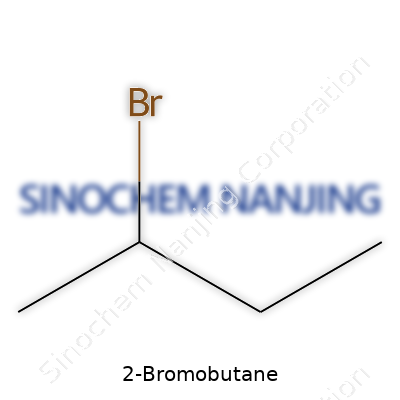
| Names | |
| Preferred IUPAC name | 2-Bromobutane |
| Other names |
sec-Butyl bromide 2-Butyl bromide Butan-2-yl bromide Butyl bromide |
| Pronunciation | /tuːˌbroʊməˈbjuːteɪn/ |
| Identifiers | |
| CAS Number | 78-76-2 |
| Beilstein Reference | 3580153 |
| ChEBI | CHEBI:35918 |
| ChEMBL | CHEMBL166271 |
| ChemSpider | 11664 |
| DrugBank | DB04106 |
| ECHA InfoCard | 100.003.708 |
| EC Number | 200-825-8 |
| Gmelin Reference | Gmelin Reference: 8362 |
| KEGG | C01878 |
| MeSH | D001943 |
| PubChem CID | 6561 |
| RTECS number | EJ0700000 |
| UNII | 8J6QW5P1Q6 |
| UN number | UN2349 |
| Properties | |
| Chemical formula | C4H9Br |
| Molar mass | 137.02 g/mol |
| Appearance | Colorless to pale yellow liquid |
| Odor | sweet odor |
| Density | 1.268 g/mL |
| Solubility in water | Slightly soluble |
| log P | LogP = 2.12 |
| Vapor pressure | 3.3 kPa (20 °C) |
| Acidity (pKa) | pKa ≈ 50 |
| Basicity (pKb) | 2.38 |
| Magnetic susceptibility (χ) | -74.5 × 10⁻⁶ cm³/mol |
| Refractive index (nD) | 1.434 |
| Viscosity | 0.494 mPa·s (20 °C) |
| Dipole moment | 2.76 D |
| Thermochemistry | |
| Std molar entropy (S⦵298) | 309.8 J·mol⁻¹·K⁻¹ |
| Std enthalpy of formation (ΔfH⦵298) | -48.5 kJ/mol |
| Std enthalpy of combustion (ΔcH⦵298) | –2871.8 kJ·mol⁻¹ |
| Hazards | |
| GHS labelling | GHS02, GHS07 |
| Pictograms | GHS02,GHS07 |
| Signal word | Warning |
| Hazard statements | H225, H315, H319, H336 |
| Precautionary statements | P210, P261, P305+P351+P338, P304+P340, P312, P403+P233 |
| NFPA 704 (fire diamond) | 2-2-0-W |
| Flash point | 10 °C |
| Autoignition temperature | 365 °C |
| Explosive limits | 1.6–8.4% |
| Lethal dose or concentration | Lethal dose or concentration (LD50, Oral, Rat): 2730 mg/kg |
| LD50 (median dose) | LD50 (median dose): Oral rat LD50 = 2730 mg/kg |
| NIOSH | BU8400000 |
| PEL (Permissible) | PEL: 500 ppm (TWA) |
| REL (Recommended) | Sigma-Aldrichersachsen |
| IDLH (Immediate danger) | IDLH: 800 ppm |
| Related compounds | |
| Related compounds |
Butane 1-Bromobutane 2-Chlorobutane 2-Iodobutane sec-Butyl alcohol |



