2-Aminopropane: Exploring the Backbone of Modern Chemistry
Historical Development
Chemistry, much like life, favors transformation. In the early twentieth century, scientific curiosity leaned toward simple amines, and among the most direct was 2-aminopropane. Better known as isopropylamine, its history stretches back to the boom of synthetic organic chemistry, especially once chemists realized the value of amines beyond their array of odors and flammability. Early research helped unlock a practical alkylamine, versatile enough to anchor industrial process and research avenues alike. Isopropylamine turned up essential in the production of herbicides, pharmaceuticals, and many niche chemicals. Even in the 1950s and 1960s, as hypergolic rocket fuels reached for space, chemists picked amines like this for their unique mix of volatility and reactivity. Every lab instructor I ever had seemed to have a story about either its sharp, ammonia-like smell or the broad applications that quietly moved industry along.
Product Overview
2-Aminopropane punches far above its molecular weight. Its three-carbon backbone and lone amino group make it a chameleon—part builder, part solvent, sometimes a raw material for more specialized molecules. With uses spanning from agricultural chemistry to medicine, isopropylamine rarely stands alone on the shelf for long. Its commercial prominence reflects more than just ease of access; its chemical personality lends itself to countless derivations and transformations. Most everyday people have encountered end-products linked to it—herbicide residues, cleaning agents, or even active pharmaceutical ingredients.
Physical & Chemical Properties
As a colorless, volatile liquid with a sharp, fishy odor, 2-aminopropane doesn’t keep a low profile in the lab. It boils at around 32°C, so it evaporates readily, and a density lower than water means spills spread fast and linger on the air. Its amino group loves hydrogen bonding, so it dissolves well in water, alcohol, and ether, blending easily into a wide range of chemical settings. This property also means that it can absorb moisture from the air, which influences how it behaves during storage and transport. Its flammability, too, keeps folks on their toes—manageable with respect but unwise to take lightly.
Technical Specifications & Labeling
Walking down a chemical storeroom, labels tell more than a name: they hint at purity, stabilizers, and inhibitor status. With 2-aminopropane, high-purity grades serve research or pharmaceuticals, while technical grades handle the rough-and-tumble of agrochemicals. Regulatory needs force rigorous clarity on labeling. An old friend once worked in quality control for an agrochemical plant—he’d spend hours verifying batch-to-batch consistency, all because even trace contamination skews reactions or, worse, field results in ways you don’t discover until crops wilt or residues appear in food. Container markings must not just prevent confusion, but also help emergency crews work fast in a spill or fire, which brings a peace of mind missing in the field’s early days.
Preparation Method
Decades of large-scale synthesis techniques have honed 2-aminopropane production for both efficiency and safety. The usual route brings together ammonia and isopropanol, guided by a catalyst under heat and pressure. This process delivers high yields, and it scales smoothly to meet huge industrial needs. My old organic professor liked to point out that as demand for amines shot up post-war, optimization of this process became a quiet revolution—the shift from batch processes, with their batch-by-batch mood swings, to continuous runs defined manufacturing for a generation. Advances in catalysis and reaction engineering helped keep costs and environmental burdens in check, opening doors for sustainable improvements and by-product management. That’s the kind of chemistry that sustains not just profits but safer workplaces.
Chemical Reactions & Modifications
What gives 2-aminopropane its flexibility is the amino group. Chemists can alkylate it, turning it into larger, more tailored amines. Acylation swaps hydrogen for acyl groups—vital in pharmaceutical design. Even simple reactions with acids build salts used for various industrial applications. Among the more interesting uses, it’s a nucleophile in organic synthesis, taking part in forming carbon-nitrogen bonds for specialty chemicals. The range of derivatives one can generate from this base molecule is broad; each branch of modification opens new windows, from crop protection agents to curing agents in resins.
Synonyms & Product Names
Chemistry favors clarity and confusion in equal measure. 2-Aminopropane answers to many names: isopropylamine, IPA, 1-methylethylamine, propan-2-ylamine. The agricultural sector often lists it under commercial formulations, barely mentioning the parent amine within. In research literature, you spot the old IUPAC standard, though the practical world long ago gave up elegance for speed, defaulting most often to isopropylamine. This tangle of naming conventions sometimes frustrates newcomers, but seasoned chemists carry a mental catalogue, switching on instinct between synonyms as context demands.
Safety & Operational Standards
Safety concerns show up early and stick with you. 2-Aminopropane presents inhalation and dermal risks. Its vapor irritates the eyes, nose, and chest, and liquid contact readily burns skin. Adequate ventilation, gloves, goggles—these are required, not suggested. Cases of short-term exposure can lead to dizziness or throat irritation, and spilled material evaporates rapidly, spreading risk before anyone notices. Storage protocols often include explosion-proof ventilation and temperature controls, all documented under bodies like OSHA in the United States and REACH in Europe. Emergency planning guides sit firmly in place, shaped by decades of industrial lessons. I remember incidents from my early career where quick adherence to spill-response strategy kept minor accidents from ballooning—proof that safety protocols cannot become afterthoughts in any busy facility.
Application Area
2-Aminopropane’s reach stretches wide. In agriculture, it forms a core intermediate for many herbicides—atrazine and glyphosate production depend on it. The pharmaceutical industry draws upon it to build analgesics, antihistamines, and even certain antiviral compounds. As a blow-molding agent and curing catalyst, it serves polymer manufacturing. Some cleaning products and dyes count it among their initial building blocks, an often-invisible but essential step in formulation. Its role as a corrosion inhibitor in oilfields often goes unnoticed, yet it protects infrastructure on a massive scale. Every so often, a fresh use case reemerges, usually as researchers push for greener chemistry and new kinds of solubility enhancements.
Research & Development
Chemical research treats 2-aminopropane as both tool and springboard. Analysts in academic and industrial labs rely on its known behavior to help model reaction kinetics or explore the nuances of amine-based catalysis. Efforts continue to reduce environmental footprints in its production—switching to renewable feedstocks, for example, or upgrading catalysts for better selectivity and lower waste. In the realm of fine chemicals, its derivatives form the basis for molecular scaffolding in drug design and material science. Conversations with research chemists reveal ongoing work to tweak its structure, optimizing for bioavailability or binding affinity, especially in bioactive molecules. The challenge remains in balancing yield, safety, and environmental impact, but some recent strides with biocatalytic processes hint at an exciting future, blending tradition with next-generation science.
Toxicity Research
Toxicologists have kept tabs on 2-aminopropane for decades. Acute toxicity arises with inhalation or ingestion, generally causing burning, coughing, and nausea. Chronic studies lean heavily on animal research, with data supporting clear threshold limits for workplace exposure. Regulatory authorities set strict limits for both air concentration and allowable residues in crops. Researchers track metabolic pathways in mammals, noting the compound’s uptake and rapid excretion. Environmental scientists monitor its breakdown in water and soil, discovering that microbes degrade it fairly efficiently, though persistent overuse strains local ecosystems. Toxicity profiles demand regular review, especially as related amine-derived herbicides draw public attention for both health and environmental concerns.
Future Prospects
Chemistry keeps evolving, and 2-aminopropane will stay relevant. Pushes toward sustainable manufacturing already nudge producers to invest in cleaner processes, more efficient catalysts, and better emissions management. In pharmaceuticals, as companies seek fresh scaffolds for increasingly specific drugs, demand for building block amines should rise. In agriculture, regulatory shifts might alter which herbicides dominate, but amines like this will likely transition to new roles, especially as pressure grows for more biodegradable, lower-toxicity options. The past points to persistence, but the future seems likely to deliver innovation, especially if green chemistry initiatives continue gathering momentum and policy makers push for tighter standards on both safety and sustainability. For chemists and regulators alike, these trends ensure that the story of 2-aminopropane remains open-ended—and full of opportunity for those willing to push chemistry forward.
What is 2-Aminopropane used for?
Reality Behind a Small Organic Compound
Take a look at everyday chemistry, and you’ll see that compounds like 2-aminopropane, better known as isopropylamine, matter more than people notice. I’ve rubbed elbows with this chemical a few times, mainly while helping out on a farm years back. Most people don’t realize it, but agriculture leans heavily on 2-aminopropane. Many herbicides, particularly those tackling broadleaf weeds in grain fields, start with isopropylamine as a building block. The weed-killers that spare your breakfast toast from being a patch of dandelions have this little chemical to thank. It’s often used to convert active ingredients, like glyphosate, into forms that dissolve easily in water for spraying. Farmers combine these solutions right in the tank. No 2-aminopropane, no simple mixing, no efficient weed control.
Pharma and Manufacturing
2-aminopropane pops up in medicine manufacturing too. Drugmakers use it to build complex molecules found in things such as antibiotics or blood pressure medication. It acts like a relay runner, passing chemical groups to the next stage. Chemists often choose it because it helps reactions finish faster or cleaner. Cleaning up the factory becomes easier, wastes drop, and costs don’t balloon. The fact that isopropylamine swings between sectors like pharma and farming shows its usefulness—but also pushes responsibility onto the companies handling it.
Products at Home and Industry
Few realize their house cleaners and certain paints carry traces of 2-aminopropane. Its smell, a sharp ammonia note, means you’ll spot it if you’ve worked around chemical storage. Workers in water treatment also know its name. Here, 2-aminopropane acts as a corrosion inhibitor in boiler water or as a pH adjuster. In my own experience, walking into utility rooms at an old plant, you could practically taste the chemical tang in the air. That sickly scent signals a tank or drum nearby, probably labeled with a skull if you look close.
Health, Environment, and Responsibility
All these uses give rise to health and safety questions. Sprayers, cleaners, or technicians breathing 2-aminopropane often complain of headaches or throat irritation. That’s not a minor nuisance—chronic exposure likely carries much deeper risks, as research suggests links to nerve damage and respiratory problems. Some labs say it breaks down fairly easily, but runoff from farm fields can still find its way into streams and soil. Research from the EPA points toward the persistence of byproducts rather than the parent molecule itself. The focus should be on safe handling and smarter disposal, especially where agricultural runoff touches public water sources.
Pushing Toward Safer Solutions
We can’t wish away the role that 2-aminopropane plays, but pushing companies to follow strict handling rules makes a difference. Swapping out leaky fittings for modern sealed ones, using closed mixing systems, and wearing correct safety gear keeps vapor exposure down. Government enforcement can back this up—regular inspections pressure businesses to toe the line. Alternatives to isopropylamine exist for certain uses, but their cost or effectiveness seldom match up just yet. Investment in substitute chemistry might tip that balance in time, but for now, vigilance is the best tool. The journey from field and factory to faucet and food is quick, and the habits we maintain with chemicals like 2-aminopropane ripple through neighborhoods and dinner tables every day.
What are the safety precautions when handling 2-Aminopropane?
The Real Story Behind 2-Aminopropane
2-Aminopropane pops up in a lot of labs and workshops. Most know it as isopropylamine. It’s handy, but it’s not something to treat casually. I remember the first time a colleague splashed some on his sleeve — no harm done, but the smell lingered for hours, and that alone was a reminder to give these materials more respect.
Staying Protected: Personal Safety Gear Matters
Before even cracking open a container, I always suit up. At a minimum, nitrile gloves and chemical splash goggles stay on. The fumes sting the nose and eyes, so one whiff tells me ventilation isn’t optional. Opening a lab window barely cuts it. A chemical fume hood or local exhaust fan changes the story. Long sleeves and lab coats keep skin from getting itchy or worse. Over time, I’ve seen folks cut corners on gear and end up with rashes or irritation. It’s never worth it for the sake of comfort or speed.
Bottles, Storage, and Why It’s Never About Convenience
Storing 2-aminopropane means paying attention. I’ve opened cabinets where someone left it next to oxidizers or acids. Nothing says disaster like that kind of mistake. Corrosive or incompatible chemicals don’t belong anywhere nearby. Keep it in a cool, dry place, tightly sealed. Label everything. Too many near-misses happen because someone grabbed the wrong bottle, sometimes because of worn labels or lazy stacking. I keep an eye on the Safety Data Sheet — it lays out flash points well below what I’d expect from something that smells so mild. The vapor catches fire easier than most realize, and static discharge might be enough in the wrong setting. Ground the containers; don’t just set things on the bench and hope for the best.
Clean-Up: Accidents Aren’t Rare
Spills come with the territory. I’ve knocked over my share, and every time, I’m grateful for paper towels and inert absorbent nearby. Don’t wash it down the drain — it kicks up fumes that travel fast, especially in closed spaces. Use a proper spill kit, and skip the urge to improvise with whatever’s around. I’ve watched a guy go at a spill with kitchen towels and end up making it worse — the mess only spread. Never forget the first thing: make sure the air’s moving and anyone nearby knows what happened.
Training: More Than a One-Off
Knowing what to do means regular drills, not reading safety sheets just once. Hands-on refreshers keep people sharp. Every shop or lab I’ve worked in has someone too casual or too eager to impress, skipping basic steps. No piece of equipment or procedure should be a black box. If a move feels off, ask for help. Nobody should be embarrassed to double-check, because the costs are too high. 2-Aminopropane can damage lungs with heavy exposure. I once heard about a new lab tech who spent days feeling sick after a careless exposure — not knowing the warning signs meant missing help early.
Solutions That Actually Work
It helps to keep Safety Data Sheets out in the open and update them every time new info comes out. Training shouldn’t stop at onboarding. Spend time watching for how people really handle chemicals, not just what they claim in safety meetings. Good ventilation systems, spill kits close at hand, gear in the right sizes — these quiet fixes pay off more than any memo ever written. Safe habits come down to people having what they need and knowing how to react for real, not in theory. That’s how you avoid the kind of mistakes that stick with you long after the fact.
What is the chemical formula of 2-Aminopropane?
Getting to Know 2-Aminopropane
Science often gets tangled in jargon, but digging into the basics helps more people understand and engage with the quirks of chemistry. Take 2-aminopropane. Most textbooks call it isopropylamine. The name can sound intimidating for someone without a chemistry background, but the formula is just C3H9N.
What the Formula Actually Means
Learning a simple formula like C3H9N takes me back to high school labs—mixing, reacting, and sometimes spilling things on the bench. Breaking it down, you get three carbon atoms, nine hydrogens, and one nitrogen. Each part tells you something useful. In 2-aminopropane, the amine group attaches to the second carbon, and that small detail makes a big difference in how the molecule behaves compared to its cousins.
The Value to Everyday Life
It’s easy to gloss over chemicals thinking they only belong in research labs. In reality, 2-aminopropane turns up in more places than you expect. Chemical companies use it for manufacturing pesticides, rubber products, pharmaceuticals, and cleaning agents. Farmers often count on its derivatives to treat fields and grow food. Medications branch from amines too—some pain relievers and decongestants owe their structure to compounds like this. With so many touchpoints, learning the formula moves beyond trivia—it gives a practical lens to view daily products and their impact.
Health and Safety Concerns
Having three carbons and a nitrogen in this arrangement might seem harmless, but isopropylamine can cause skin and eye irritation. On a windy day, breathing it in can lead to coughing or discomfort. Chemical spills happen more often than many realize, both in factories and on farms. Workers need reliable training and clear labeling systems to minimize accidents. Regular monitoring and using proper gear go a long way. A chemical formula only tells part of the story; knowing how substances interact with people and the environment builds a more complete picture.
Environmental Effects
Amines as a group can have mixed effects on water and soil. If 2-aminopropane leaks during handling, runoff may reach streams and affect aquatic life. Tight regulations, improved packaging, and strong oversight from agencies like the EPA provide routes to reduce harm. Communities should push for transparent reporting from companies about chemical spills and emissions. Even with a simple structure, C3H9N shouldn’t slip through cracks in safety systems.
Making Chemistry Accessible
Understanding a compound’s formula doesn’t just belong in textbooks or exam rooms. Knowing the basics of molecules like 2-aminopropane gives people a window into the ingredients behind everyday items, from cleaning products to medications. Open conversations, better public science education, and accessible information help everyone make sense of the chemicals that touch our lives. In the end, asking questions about formulas—no matter how small—fosters smarter choices for health and the environment.
Chemical formula: C3H9NHow should 2-Aminopropane be stored?
What 2-Aminopropane Is and Why It Matters
2-Aminopropane, known as isopropylamine, plays a part in everything from pharmaceuticals to agricultural products. Anyone storing this chemical—whether in a school lab or a production facility—should pay close attention to safety because things go south quickly if it’s not handled right. I’ve seen careless storage cause skin burns, eye irritation, and even nasty fires, so this topic isn’t just paperwork—it means protecting lives and property.
Get the Container Right
Start with the right container. Metal drums with tight seals work best. Polyethylene containers can handle 2-aminopropane for smaller storage needs, but I wouldn’t trust just any plastic. The wrong material lets fumes escape or reacts with the chemical, and that can turn a regular day in the storeroom into a medical emergency. All labels should be clear and durable, stating contents and hazard warnings—not tucked away in a binder, but front and center on the drum.
Keep It Cool, Dry, and Isolated
Temperature ranks high on the list. 2-Aminopropane catches fire at relatively low temperatures—its flash point hovers just above room temp—so keep it in a spot where heat sources can’t reach it. I always suggest a well-ventilated, shaded place away from sunlight and far from any direct heat. Moisture creates even bigger worries. Contact with water or humid air creates corrosive vapors and pressure build-up inside containers. If you’ve ever walked into a storage room and felt a sharp, eye-watering sting in the air, you know how serious vapor leaks can get.
Avoid Incompatibles at All Cost
2-Aminopropane sits among other strong bases, and it doesn’t play well with acids, oxidizers, or halogens. Storing them side by side pushes your luck. One accidental spill or even a slow leak leads to violent reactions—think heat, toxic gases, maybe even an explosion. I worked with a team that kept strict color codes and separate shelves for anything incompatible. It slows things down a bit but keeps emergencies off the radar, and that tradeoff always pays off in my book.
Good Ventilation Keeps Trouble at Bay
Anyone who’s opened a jug of isopropylamine without good airflow will remember that burning ammonia smell for years. This stuff evaporates and builds up fast indoors. Some folks ignore proper exhaust and fume hoods, thinking it’s no big deal if the lid’s tight. I’ve learned never to cut corners—install exhaust fans, keep windows open if that’s all you can manage, and skip storing it in cramped, unventilated closets.
Staying Ready with PPE and Training
Even the best rules and storage setups fall apart without personal protective equipment and solid training. Rubber gloves, safety goggles, and a strong face shield become just as important as the container. Every person handling these drums should know how to react to splashes or leaks. Spill kits shouldn’t gather dust on the shelf—trainings every few months keep everyone sharp. I’ve seen a quick, trained response stop small accidents from turning into much bigger messes.
Thinking Long-Term
Periodic inspections make a huge difference. Leaks don’t always announce themselves, and containers weaken over time. Keeping records of how much you store and how long it stays there should get as much attention as the monthly supply orders. Old containers, expired chemicals, or anything that looks off—dispose of them with help from certified hazardous waste services.
The Real Cost Comes From Complacency
Most problems with 2-aminopropane come from shortcuts—stacking incompatible chemicals or locking up drums in overheated spaces. Lessons get learned in hard ways, and the stakes run higher than a spoiled batch or lost money. From years on the job, I’ll tell anyone: invest time, follow the data, and treat safety rules as non-negotiable. That’s how you give 2-aminopropane the respect it demands, and how you avoid headlines for all the wrong reasons.
Is 2-Aminopropane hazardous to health or the environment?
Understanding 2-Aminopropane
2-Aminopropane, known as isopropylamine, shows up in different corners of the chemical world. Factories use it to make herbicides, pharmaceuticals, and even rubber. Having spent years working with occupational health teams, I’ve grown wary of chemicals like this. Short exposure sometimes slips through the cracks, only to catch up later.
Human Health Concerns
2-Aminopropane gives off a strong ammonia-like smell, which most people notice right away. At first, the danger seems mostly to the skin, eyes, and respiratory system. Those who have mixed or transported this chemical speak of irritated noses, watery eyes, and coughing. Long-term health effects gain less attention, but reports link repeated exposure to headaches and even asthma. NIOSH classifies 2-aminopropane as a corrosive agent. Coming into contact with it unprotected leaves skin red or blistered. Eyes take the brunt of accidental splashes, and some have lost vision because goggles lay unused.
Breathing in high concentrations hits the lungs hard. In workplaces without enough ventilation, workers develop sore throats, tightness in the chest, and, over time, damage to their airways. Some data points to kidney and liver issues with chronic exposure, though conclusive studies lag behind. At home, cleaning products rarely include ingredients this harsh, which offers some reassurance. Yet, low-wage laborers sometimes face lax safety rules, especially in countries with spotty regulations.
Environmental Impact
Once down the drain or into soil, this compound does not linger forever. Sunlight and bacteria break it down after a while. Even so, it can kill fish and aquatic insects if it enters rivers or lakes in large enough quantities. I remember seeing small factories dump waste into rivers, turning the water cloudy and lifeless downstream. Amphibians and fish suffered the most. Surprisingly, crops growing in contaminated soil showed less growth, a fact confirmed in agricultural studies warning of reduced yields near chemical waste zones.
This chemical also reacts with nitrogen oxides in the air, creating smog-forming pollutants. City dwellers feel the air get heavier, and asthma cases among children rise. The World Health Organization points to air pollution as a top risk for respiratory disease, and chemicals like 2-aminopropane, leaking unseen from industrial zones, play a part.
Mitigating Risks
Simple steps lower risks quickly. Wearing proper gloves and eye protection in workplaces makes a difference. Regular training ensures workers know what to do during a spill. Factories switching to closed systems limit leaks and fumes. I’ve seen companies do yearly safety reviews and see accident rates drop by half. For the community, better wastewater treatment catches this chemical before it reaches open water. Government regulations, like those enforced by the EPA in the US, set strict discharge limits and force plants to clean up.
It always comes down to awareness. People deserve clear information about what’s in their environment. Companies who communicate hazard data and listen to worker feedback tend to stay ahead of trouble. As cities and industries grow, listening to frontline workers and local residents keeps business honest. If someone smells ammonia near a chemical plant, the warning does not come out of thin air.
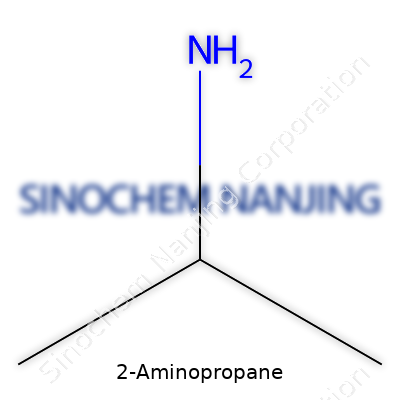
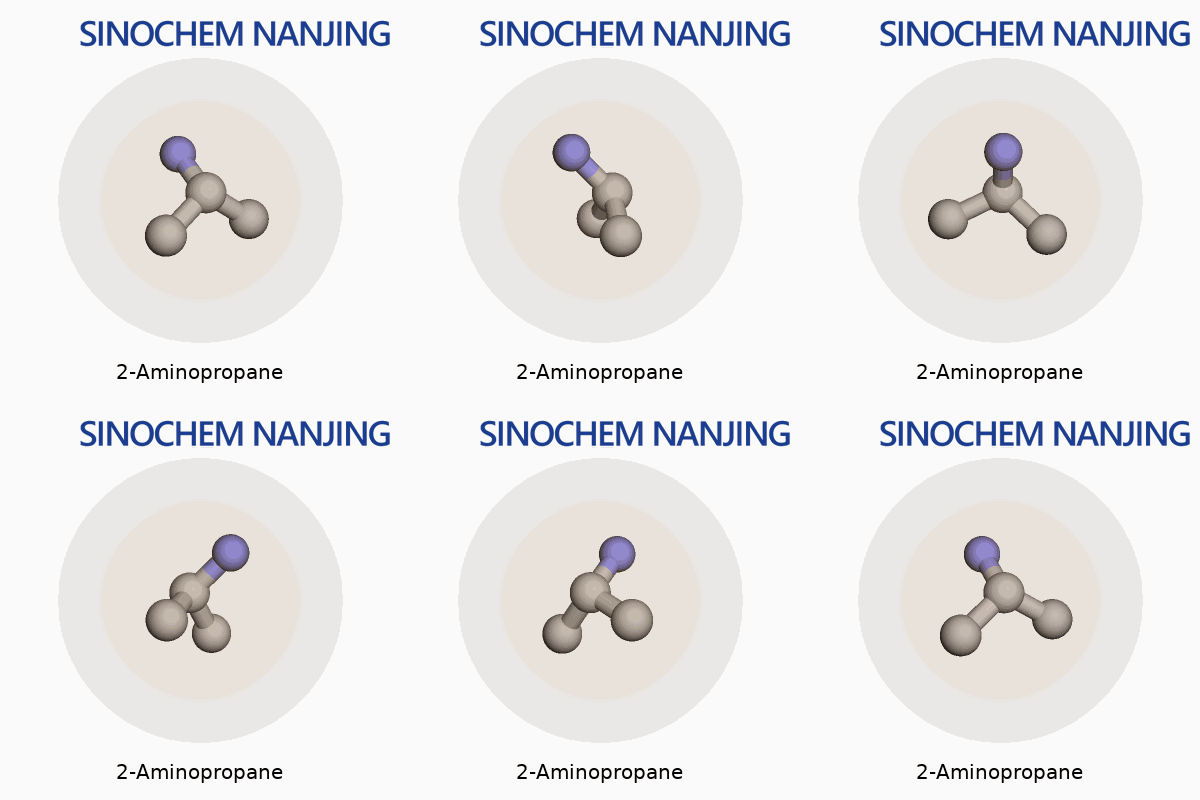
| Names | |
| Preferred IUPAC name | Propan-2-amine |
| Other names |
Isopropylamine Isopropan-2-amine 1-Methylethylamine sec-Propylamine |
| Pronunciation | /tuː əˈmiːnəˌproʊpeɪn/ |
| Identifiers | |
| CAS Number | 75-31-0 |
| 3D model (JSmol) | `CP(N)C` |
| Beilstein Reference | 1718734 |
| ChEBI | CHEBI:16183 |
| ChEMBL | CHEMBL15973 |
| ChemSpider | 557 |
| DrugBank | DB01942 |
| ECHA InfoCard | 03bfa5b6-732a-4131-8c53-c61a55b327c2 |
| EC Number | 200-853-0 |
| Gmelin Reference | 6906 |
| KEGG | C00334 |
| MeSH | D000680 |
| PubChem CID | 6124 |
| RTECS number | TY5600000 |
| UNII | 87GHG2L6FH |
| UN number | UN 1224 |
| Properties | |
| Chemical formula | C3H9N |
| Molar mass | 59.110 g/mol |
| Appearance | colourless liquid |
| Odor | Ammonia-like |
| Density | 0.693 g/cm³ |
| Solubility in water | soluble |
| log P | -0.41 |
| Vapor pressure | 3.3 kPa (at 20 °C) |
| Acidity (pKa) | 10.7 |
| Basicity (pKb) | 3.37 |
| Magnetic susceptibility (χ) | −11.0 × 10⁻⁶ cm³/mol |
| Refractive index (nD) | 1.376 |
| Viscosity | 0.337 mPa·s (25 °C) |
| Dipole moment | 1.13 D |
| Thermochemistry | |
| Std molar entropy (S⦵298) | 286.3 J·mol⁻¹·K⁻¹ |
| Std enthalpy of formation (ΔfH⦵298) | −52.2 kJ·mol⁻¹ |
| Std enthalpy of combustion (ΔcH⦵298) | -2220 kJ/mol |
| Pharmacology | |
| ATC code | N01BX08 |
| Hazards | |
| GHS labelling | GHS02, GHS07 |
| Pictograms | GHS02,GHS07 |
| Signal word | Danger |
| Hazard statements | H225, H319, H335 |
| Precautionary statements | P264, P280, P302+P352, P305+P351+P338, P332+P313, P337+P313, P362+P364 |
| NFPA 704 (fire diamond) | 1-3-0 |
| Flash point | -18 °C |
| Autoignition temperature | 460°C |
| Explosive limits | 3–12% |
| Lethal dose or concentration | LD50 oral rat 960 mg/kg |
| LD50 (median dose) | LD50 (oral, rat): 650 mg/kg |
| NIOSH | SN1800 |
| PEL (Permissible) | PEL: 5 ppm |
| REL (Recommended) | 0.5 ppm |
| IDLH (Immediate danger) | 800 ppm |
| Related compounds | |
| Related compounds |
Methanamine Ethanamine 2-Aminobutane 1-Aminopropane 2-Propanol Propane |



