2-Aminophenol Hydrochloride: A Deep Dive into a Fundamental Organic Compound
Historical Development
Chemists first recognized the importance of 2-aminophenol hydrochloride more than a century ago, as the search for versatile intermediates in dye and pharmaceutical production drove research forward. Labs in Germany and elsewhere in Europe identified the value of aminophenols while exploring ways to synthesize stable dyes and antiseptics. As factories scaled up organic syntheses, companies saw the practicality of securing a stable, water-soluble salt—hydrochloride—instead of sticking with the less manageable free base. This shift from bench-scale discoveries to industrial use mirrored fundamental changes in chemistry itself. The compound’s story is tied to developments in colorants, antibacterial agents, and analytical chemistry, demonstrating the constant push to solve problems in clinical labs and chemical manufacturing.
Product Overview
2-Aminophenol hydrochloride is the hydrochloride salt of a compound that merges an amine and a phenol group onto the benzene ring. As a white crystalline powder, it dissolves readily in water, which means it fits well into both research and production settings. The hydrochloride form lends it stability and ease of handling—that’s often why warehouses stock this version over the raw base. Technicians appreciate that it measures, weighs, and stores without fuss, staying solid and consistent for months under standard conditions.
Physical & Chemical Properties
This compound’s formula, C6H8ClNO, clocks in at a molecular weight of about 145.59 g/mol. It melts at roughly 190°C, an advantage in certain syntheses needing controlled thermal steps. Unlike the parent aminophenol, its salt form sports good shelf life because the hydrochloride locks down the amine’s reactivity, blocking unwanted air oxidation. In humid air, it resists clumping and degradation, which cuts wastage in processing lines. Its aqueous solutions stay clear, letting chemists spot impurities. Technicians control for color and purity using melting point and solubility as quick tests.
Technical Specifications & Labeling
Product sheets from suppliers specify limits on heavy metals, chloride content, and typical ranges for assay by titration. Labels feature signal words and safety pictograms, letting handlers recognize potential hazards without scanning small print. While purity over 98% suits most applications, the pharmaceutical sector calls for even fewer trace contaminants. Labels on research-grade batches give lot numbers, production dates, and recommendations for handling storage, keeping supply chains honest and helping scientists replicate experiments.
Preparation Method
Commercial production starts with o-nitrophenol, which gets reduced—most often with iron filings and hydrochloric acid—to form 2-aminophenol. Reaction with concentrated hydrochloric acid then yields the hydrochloride. Operators monitor reaction temperature and acidity because unplanned byproducts chew through yields and complicate downstream purification. Once the amine forms, chemists precipitate, filter, and dry the salt, then grind it into a fine, free-flowing powder. Labs working with small batches cut down on purification steps, but industrial operations use centrifuges and rotary evaporators to keep up with demand and ensure consistency.
Chemical Reactions & Modifications
This compound acts both as a nucleophile—thanks to its amine group—and as a source for electrophilic substitution on the aromatic ring. Organic synthesis routines tap it to introduce nitro, methyl, or sulfonic acid groups, making downstream intermediates for dyes and photo chemicals. Diazotization followed by coupling leads to azo dyes used in textiles. Researchers convert it to chloroacetamides and ether derivatives for work on pharmaceuticals and corrosion inhibitors. The phenolic hydroxyl kicks off condensation reactions, helping chemists build heterocyclic skeletons common in medicinal chemistry. More advanced teams oxidize it into quinones or complex it with metal ions for analytical probes.
Synonyms & Product Names
Common names in catalogs include ortho-aminophenol hydrochloride, 2-hydroxyaniline hydrochloride, and o-aminophenol hydrochloride. International suppliers might label it by its IUPAC name, 2-aminophenol hydrochloride. In some reagent databases, the CAS number 600-21-5 marks this product for easy reference. This wide variety of names sometimes complicates literature searches, so chemists watch for structural drawings to confirm they have the right compound, not a paradichloro isomer or a sulfate salt.
Safety & Operational Standards
Inhaling its dust or letting it contact bare skin brings risks like irritation and sensitization, so operators equip themselves with gloves, goggles, and masks in noisy environments. Material safety data sheets (MSDS) outline proper ventilation routines and emergency eyewash procedures. Supervisors train staff on spill containment and safe disposal into designated chemical waste streams. Long-term storage in tightly sealed, amber-glass containers—or in polypropylene drums for larger amounts—avoids moisture uptake and accidental mixing with incompatible chemicals. Regulatory oversight in developed countries means routine audits and incident reporting, pushing companies to review their protocols each year.
Application Area
Industrial colorant giants count on this component for dye intermediates. In analytical labs, the compound helps formulate reagents used in metal detection and water testing, while clinical labs look to its derivatives as building blocks for anti-infective drug scaffolds. The chemical plays a supporting role in developing developing developers for photographic film. Researchers investigate it as a corrosion inhibitor in pipelines and cooling systems, where its aromatic structure binds to metal surfaces and reduces oxidative wear. In the electronics industry, batches of copper-plating solutions use it to modify surface adhesion. Some teams even explore its capacities as an antioxidant or stabilizer in cosmetics, although regulatory hurdles challenge these uses.
Research & Development
Academic labs view 2-aminophenol hydrochloride as a flexible starting material, valuable in both classic undergraduate synthesis labs and in pioneering organic frameworks. Ongoing work tweaks its structure to unlock new pharmacological effects, with medical chemists tacking on functional groups in hopes of producing targeted antibiotics or anti-inflammatory agents. Environmental chemists trial it in sensors that can detect trace metals at low concentrations, pushing accuracy and reliability for field testing. Progress in organic electronics depends on molecules that can conduct or sense electric current, so materials scientists screen aminophenol derivatives for optoelectronic performance. Advances in asymmetrical catalysis and green chemistry also lean on time-tested intermediates like this, since their predictable reactivity helps researchers build complex architectures without harsh conditions or toxic reagents.
Toxicity Research
Toxicologists flagged headache, nausea, and breathing problems at high exposures, so manufacturers implement strict airborne concentration controls. Animal studies point to mild liver and blood effects at repeated doses, with clearance through both urine and feces suggesting mixed metabolic fate. In vitro work sees DNA or protein binding only at very high dose levels, which helps reassure most handlers but won’t justify careless exposure. Environmental impact monitoring still keeps this chemical on the list for close watching, as accidental releases could affect aquatic life given the reactivity of aromatic amines. Lab protocols today teach students how to neutralize and handle waste streams, reflecting both safety and environmental duty.
Future Prospects
Looking ahead, the demand for reliable intermediates in pharmaceutical and specialty dye production signals that this compound won’t disappear from shelves any time soon. Researchers push for greener synthesis processes using milder reductions or catalytic hydrogenation to cut toxic byproducts. As analytical chemistry grows more reliant on smart, sensitive reagents, modified 2-aminophenol structures could find new uses in biosensors or T-cell activators. The search for corrosion inhibitors and environmentally safe dyes will drive innovation too. Despite mounting regulations and higher safety standards, the knowledge built up over a century guarantees this chemical a strong foothold. Those of us with hands-on experience know that reliable, well-characterized reagents like 2-aminophenol hydrochloride often serve as the unsung foundations for progress across many industries.
What is 2-Aminophenol Hydrochloride used for?
A Closer Look at the Chemical
2-Aminophenol hydrochloride might sound like a mouthful, but it finds purpose in some interesting places. People don't often see it on a store shelf, yet it quietly plays a big part in industries relying on color, health, and analytics. In my time exploring chemical supply chains and chatting with folks in laboratories, this compound always grabbed my attention because of its flexibility in the chemist’s toolkit.
Spark Behind Color and Dye Science
If you ever slipped on a pair of indigo jeans or picked up a book with crisp printed images, you’ve indirectly bumped into chemistry using 2-aminophenol hydrochloride. Dyes matter a lot in textiles and ink, and this chemical helps form the base for making those vibrant blues and violets. It links up with other ingredients to build complex dye molecules, offering shades that last long and resist fading. A few textile engineers I spoke to pointed out how the stability of dyes influences consumer choices. When clothes hold their color over time and many washes, quality starts with the building blocks, like this compound.
Building Blocks in Pharmaceuticals
There’s another layer that goes beyond day-to-day color. Drug development leans on fine chemicals to construct new molecules—think of it as snapping together pieces of a puzzle, each one necessary for the final effect. 2-Aminophenol hydrochloride supports this kind of research, acting as a starting point in forming active drug ingredients. For example, some pain relievers and fever reducers have roots in reactions with aminophenol derivatives. Chemists find this compound dependable for small-scale synthesis in the lab and, sometimes, in bigger manufacturing setups.
A Trusted Tool for Analytical Chemistry
During my visits to research labs, I noticed how crucial accuracy is for every experiment. Getting a true reading in chemical tests can impact everything from food safety to environmental research. 2-Aminophenol hydrochloride joins in by acting as a reagent—basically a helper that makes certain laboratory tests more reliable. Scientists use it to confirm the presence of metal ions or detect tiny traces of substances that could go unnoticed. Pairing good chemicals with solid lab methods makes results trustworthy, which keeps downstream industries safer.
Challenges and Responsible Handling
It’s not all easy sailing with fine chemicals, though. Safety plays a big role with 2-aminophenol hydrochloride because skin contact or accidental inhalation can irritate the body. That means proper handling—wearing gloves, using fume hoods, and keeping good storage habits—matters as much as knowing how to use the chemical itself. I learned from seasoned lab workers that a strong safety culture helps everybody avoid costly mistakes.
The Road Forward
As technology keeps changing, the demand for specialty chemicals like this one only grows. Sustainable sourcing and waste reduction have started shifting how factories approach production, since cleaner methods keep both workers and the surrounding environment healthier. Several manufacturers now share data on their emissions and make adjustments based on the latest research into green chemistry. That marks a step toward safer products and stronger trust between companies and communities.
Clear understanding and steady responsibility remain key to tapping the best out of 2-aminophenol hydrochloride. Its uses stretch far, from the colors in our closets to the pills in our cabinets. That story shows that the right ingredients, handled with care, lay the groundwork for quality across a surprising range of fields.
What is the molecular formula and molecular weight of 2-Aminophenol Hydrochloride?
The Value of Knowing Chemical Formulas
Every day, labs rely on precise measurements. Knowing the molecular formula of a compound, like 2-Aminophenol Hydrochloride, takes you out of the guessing game. In even the smallest experiment, slight deviations can lead to results that make no sense or put work at risk of safety violations. That’s not just some dry textbook concern; it hits hard for anyone who’s wrestled with unexpected reactions or missing yields.
Molecular Formula of 2-Aminophenol Hydrochloride
This compound forms when 2-aminophenol reacts with hydrochloric acid. The base molecule, 2-aminophenol, has the formula C6H7NO, covering six carbons, seven hydrogens, one nitrogen, and one oxygen. Hydrochloride comes in when a hydrogen chloride attaches, bringing in an extra chlorine and hydrogen (Cl and H), but these partner up as a hydrochloride salt, meaning you get C6H8ClNO for the complete molecular formula.
Getting these numbers right shapes how you weigh, mix, and plan for reactions. I’ve met more than one student who forgot to adjust for the hydrochloride part and ruined a batch. Those memories stick because they warm you to keep an eye on every atom involved. Chemistry gives no free passes for close-enough math.
Calculating Molecular Weight: Why Precision Counts
Let’s break down the atomic weights:
- Carbon (C): 12.01 x 6 = 72.06
- Hydrogen (H): 1.01 x 8 = 8.08
- Nitrogen (N): 14.01 x 1 = 14.01
- Oxygen (O): 16.00 x 1 = 16.00
- Chlorine (Cl): 35.45 x 1 = 35.45
Add those up and you reach about 145.60 g/mol for 2-Aminophenol Hydrochloride.
Precision in these calculations goes straight to protecting research and safety. There’s an unforgettable moment in any chemist’s life when a formula gets missed, sometimes setting you back days or more on a synthesis. Trying to calibrate instruments, prepare solutions, or troubleshoot reactions with incorrect weights lands you in an endless loop of repeats and wasted chemicals. Time feels even shorter when deadlines press and supply budgets run tight.
Impact on Safety and Industry
Many folks outside the lab easily take for granted how much these details matter. The risk of exposure grows when you don’t know exactly how much of a chemical you’re mixing or what its actual structure looks like. In regulated environments, losing track of molecular weights and formulas can mean violating standards or legal limits. Auditor visits show little mercy for slack record-keeping.
Staying true to the facts keeps science honest. Labs that put care into full documentation and clear formulas keep accidents down and reputation solid. Companies sourcing chemicals want vendors who bring detailed, transparent data—missing a chloride or getting a hydrogen count wrong can lead to expensive recalls or worse, endangering workers and researchers.
Best Practices and Reliable Resources
To keep work on track, turn to trusted sources like PubChem, Sigma-Aldrich, or the Merck Index. Double-checking information gives peace of mind, especially if the compound’s handling or regulatory status raises questions. It pays off to bookmark databases and lean on colleagues when a number or nomenclature seems off. Broad collaboration does more to avoid surprise incidents than any single quality control process.
In my experience, treating every molecular formula and weight with respect saves headaches, budgets, and sometimes lives. The small effort needed up front beats any scramble caused by a preventable mistake.
How should 2-Aminophenol Hydrochloride be stored?
Handling With Care: The Real-World Need
Walking into any chemical storeroom, reminders about safety pop up everywhere. 2-Aminophenol Hydrochloride falls into that category where careful storage isn't optional—it’s crucial. This compound appears in dye manufacturing, lab chemistry, and often in specialized industrial settings. Exposure to moisture or temperature swings changes not just the compound’s appearance but its chemical behavior. A spill can lead to contamination or even dangerous reactions.
Moisture and Air: The Silent Threats
Chemists learn early on that humidity ruins more than just a good experiment. Let 2-Aminophenol Hydrochloride hang around in a damp storeroom, and clumping or decomposition starts creeping in. Too much oxygen doesn’t help, either. The hydrochloride form means it absorbs water from the air and turns sticky or even starts reacting, so nobody gets what they expect from it next time. Not just about ruined batches—wrong storage means results in the lab and on the shop floor cannot be trusted.
Temperature Trouble
Recalling past projects, the frustration when a bottle left near a steam radiator yielded unusable powder comes to mind. Warm environments speed up unwanted changes. Store it someplace cool and dry—think below room temperature, if possible, certainly away from direct heat or sunlight. Walk through most professional labs, and temperature-stable cabinets are standard for chemicals like this. It’s not overkill. It’s about protecting quality and safety.
Packing It Up For Safety
Original packaging is not just marketing—manufacturers choose specific containers for a reason. 2-Aminophenol Hydrochloride should sit inside a tightly sealed, non-reactive container. Containers made from glass or certain plastics shield contents from moisture and air in a way that paper bags or old screw jars simply don’t. Trying to save a few dollars on cheap packaging often leads to far greater losses from product waste or even cleanup costs after accidental exposure.
Avoiding Cross-Contamination
Sharing shelves with bases, oxidizers, or acids invites trouble. Proper chemical management means segregation—store it well away from incompatible chemicals. This isn’t just a guideline from a textbook; accidents often start with one mislabeled bottle sitting beside another it should never meet. Labels should stay clear and chemical logs up-to-date. A misplaced scoop or careless handling leads to ruined stock and possibly hazardous conditions for everyone in the area.
Key Actions Moving Forward
Regulations set a minimum, but daily good practice keeps everyone safe. Employees must understand the impact of moisture, temperature, and air. Regular training beats assuming someone else already knows. Facilities can install simple dehumidifiers or use silica gel packs within storage spaces for added insurance. Labels should always display hazard information, expiration date, and opening date. In my previous experience, weekly checks on chemical stores cut down on waste and near-misses.
Proper storage for 2-Aminophenol Hydrochloride is about more than ticking boxes on a safety audit. It preserves product quality, keeps research trustworthy, and, most importantly, protects people.What are the safety precautions when handling 2-Aminophenol Hydrochloride?
Real Risks Demand Real Caution
I once watched a veteran chemist handle 2-Aminophenol Hydrochloride like it was nothing. No gloves, no mask—just faith in quick hands. Days later he broke into a rash. Stories like these showed me that even seasoned folks forget how chemicals never take shortcuts around safety. With 2-Aminophenol Hydrochloride, a little care delivers peace of mind.
Understanding Exposure: Eyes, Skin, and Inhalation
2-Aminophenol Hydrochloride irritates skin and eyes. A handful of reports show eye contact can lead to redness and lasting discomfort. Absorbed through skin, it leaves behind burns and rashes for some people. Dust inhalation triggers coughs and throat irritation, especially in small, poorly ventilated spaces. Problems build up fast for anyone with sensitive skin or airways. Evidence from the European Chemicals Agency confirms direct exposure can cause acute reactions. Simple steps like goggles and gloves make the difference between a safe lab day and a trip to the clinic.
Protective Gear Makes All the Difference
Nothing beats solid personal protective equipment. Nitrile gloves stand up well against this chemical, as do polycarbonate goggles. Long sleeves, lab coats, and closed-toe shoes cut down on accidents, while standard cotton does not go far enough. Medical evidence supports these choices; direct contact is the culprit in nearly every reported injury. Proper gear becomes a shield, not just an annoying routine.
Clean Air Cuts the Danger
Anyone working with chemicals appreciates good airflow. Exhaust fans and fume hoods keep vapors out of breathing space, especially for longer sessions or large batches. Fume hoods, in particular, make short work of lingering dust. National Institute for Occupational Safety and Health (NIOSH) data show reduced respiratory complaints in labs with strong ventilation.
Safe Clean-up: What Every Lab Hand Should Know
Messes happen. Spills of 2-Aminophenol Hydrochloride demand calm thinking. Scoop up solids with dedicated, labeled tools—never bare hands or paper towels that disintegrate. Bag all waste properly using double-sealed containers. Avoid sweeping, since dust finds its way everywhere after that. Chemical safety training often overlooks these details, yet mishandling increases contamination risk.
Storage: Out of Sight, Out of Harm’s Way
Proper storage saves lives, not just supplies. Cool, dry places away from heat and sunlight extend shelf-life and limit hazardous reactions. Tightly sealed containers prevent moisture absorption. It’s not just about regulatory compliance; it’s about saving a night’s sleep knowing the workspace is safe for anyone passing by. Locks and labels matter—kids, visitors, and coworkers rarely guess a clear powder’s dangers.
Preparedness and Training: The Lifeline
One accident drills home a lesson faster than any manual. Most mistakes stem from skipped training or missing data sheets. Teams benefit from walk-throughs that show proper emergency eyewash and shower stations. Practicing with mock spills and reviewing safety data sheets (SDS) sharpens reactions when time runs short. Regular drills and open discussion let everyone share shortcuts and best practices, keeping habits sharp and everyone protected.
Building a Culture of Respect
Handling 2-Aminophenol Hydrochloride safely isn’t just ticking off a checklist. It calls for a workplace culture built on knowledge and caution. Nobody needs to work scared—just informed. Even small labs thrive where people remind each other to stay prepared, share accident stories, and use the right equipment.
Is 2-Aminophenol Hydrochloride soluble in water?
Why Solubility Matters in Chemistry and Beyond
Chemicals play a big part in everything from developing new medicines to cooking up hair dyes. Every once in a while, the question of whether a compound dissolves in water comes up. That’s a make-or-break detail when it’s time to scale up in the lab, kick off a new formula, or even clean up a spill. I remember the early days of my chemistry studies, staring at lists of solubility rules taped to my bedroom wall. They said things about “most hydrochloride salts” being water-loving. Not the most riveting reading, but as it turned out, incredibly useful when real projects started rolling in.
The Science Behind 2-Aminophenol Hydrochloride’s Water Solubility
2-Aminophenol Hydrochloride comes up plenty in organic labs, especially in dyes and pharmaceuticals. The key to its relationship with water lies in its hydrochloride group. Water’s a natural fit for many salts. Toss a spoonful of this hydrochloride into water, and it usually dissolves quickly. With polar molecules and ionic bonds, water molecules slip in, separate the ions, and before long, you’re left with a clear solution.
Reading published chemical handbooks and material safety data sheets, you’ll see this property confirmed: 2-Aminophenol Hydrochloride dissolves readily in water at room temperature, almost as well as table salt. That characteristic streamlines its use in lab settings, letting researchers make up solutions or buffers fast, with no heating or complicated steps required. It even makes cleanup less of a pain if you spill any.
Why Care About Solubility When Using 2-Aminophenol Hydrochloride?
Safety matters wherever chemicals are found. Water-soluble compounds give peace of mind because it’s much easier to rinse them away. Spill a water-friendly salt, and most of it heads straight down the drain with a steady stream, leaving little behind. It also makes disposal more predictable in line with lab safety rules.
Practicality matters, too. Imagine working on an experiment late at night. You measure your 2-Aminophenol Hydrochloride, mix it with water, and it just disappears, allowing your reaction to get going right away. That speed can turn days of trial and error into a quick routine. Having handled less soluble compounds, nothing slows progress more than clumps at the bottom of a flask or gritty paste that refuses to budge.
Common Challenges and Smart Solutions
Watching for possible issues helps keep things running smoothly. Mixing large quantities, the solution may become saturated, so excess compound will hang around undissolved – it’s tempting to keep stirring, but it won’t help past a certain point. Sticking to published solubility limits keeps waste to a minimum. Sometimes, temperature or pH tweaks help, but with this salt, most experiments go well at room temp.
Another concern comes with mixing chemicals in water – even soluble ones can give off colorful reactions or odors. Using proper protective gear and chemical hoods keeps the air clear and skin safe.
Relying on Reliable Sources and Technique
Mostly, textbooks and manufacturer data support the fact that 2-Aminophenol Hydrochloride plays well with water. The reputation of the sources and my own hands-on experience in a teaching lab give me confidence to pass on that answer without hesitation.
Mastering these basics makes a big difference, whether you’re just starting in chemistry or working up industrial processes. Keeping an eye on solubility ensures time, resources, and safety stay in balance.
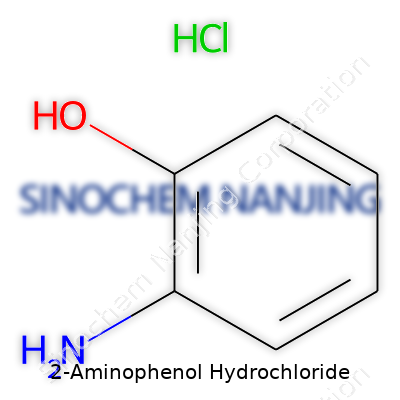
| Names | |
| Preferred IUPAC name | 2-Aminophenol hydrochloride |
| Other names |
2-Hydroxyaniline hydrochloride o-Aminophenol hydrochloride Orthaminophenol hydrochloride |
| Pronunciation | /tuː əˌmiːnəˈfiːnəl haɪˌdrɒklaɪd/ |
| Identifiers | |
| CAS Number | 51-85-4 |
| 3D model (JSmol) | `/www.rcsb.org/3d-view/1N2F` |
| Beilstein Reference | 1720797 |
| ChEBI | CHEBI:63583 |
| ChEMBL | CHEMBL362524 |
| ChemSpider | 10709 |
| DrugBank | DB14096 |
| ECHA InfoCard | ECHA InfoCard: 100.006.745 |
| EC Number | 243-157-5 |
| Gmelin Reference | 83722 |
| KEGG | C02563 |
| MeSH | D000704 |
| PubChem CID | 24860352 |
| RTECS number | SJ6300000 |
| UNII | LR6C9V633N |
| UN number | UN2811 |
| CompTox Dashboard (EPA) | DTXSID4044252 |
| Properties | |
| Chemical formula | C6H8ClNO |
| Molar mass | 146.58 g/mol |
| Appearance | White to light brown crystalline powder |
| Odor | Odorless |
| Density | 0.7 g/cm3 |
| Solubility in water | Very soluble in water |
| log P | '-2.4' |
| Acidity (pKa) | 4.8 |
| Basicity (pKb) | 8.79 |
| Magnetic susceptibility (χ) | -61.0·10⁻⁶ cm³/mol |
| Dipole moment | 6.1 D |
| Thermochemistry | |
| Std molar entropy (S⦵298) | 135.0 J·mol⁻¹·K⁻¹ |
| Pharmacology | |
| ATC code | D03AX03 |
| Hazards | |
| Main hazards | Harmful if swallowed, causes serious eye irritation, causes skin irritation |
| GHS labelling | GHS02, GHS07 |
| Pictograms | GHS05,GHS07 |
| Signal word | Warning |
| Hazard statements | Hazard statements: "H302, H315, H319, H335 |
| Precautionary statements | Precautionary statements: P261, P305+P351+P338, P280, P337+P313, P304+P340, P312 |
| NFPA 704 (fire diamond) | 1-2-0 Health:1 Flammability:2 Instability:0 |
| Flash point | > 195°C |
| Autoignition temperature | > 425 °C |
| Lethal dose or concentration | LD50 (oral, rat): 812 mg/kg |
| LD50 (median dose) | LD50 (median dose): Oral, rat: 1500 mg/kg |
| NIOSH | NM 6175000 |
| PEL (Permissible) | Not established |
| REL (Recommended) | 10g,25g,100g |
| Related compounds | |
| Related compounds |
2-Aminophenol 4-Aminophenol o-Phenylenediamine Phenol Aniline |



