2-Aminophenol: Looking Beyond the Lab Bench
Historical Development
People didn’t know what to make of aniline and its cousins, like 2-aminophenol, in the early days of industrial chemistry. In the late 19th century, scientists noticed small chemical tweaks to coal tar derivatives led to big changes in color and properties. Researchers started isolating and naming these molecules as they looked for new synthetic dyes. After August Wilhelm von Hofmann demonstrated aniline’s potential, interest in similar compounds took off. 2-aminophenol soon popped up in patents and academic journals, giving chemists new tools for making dyes, pharmaceuticals, and photo developers. It fit right into the explosion of organic synthesis that defined chemical manufacturing through the 20th century. In practical terms, 2-aminophenol bridged the gap between obscure theory and the everyday technologies people now take for granted.
Product Overview
At a glance, 2-aminophenol might look like an unremarkable white or pale brown powder, but its structure packs a punch—an amino group right next to a hydroxyl on a benzene ring. That arrangement sets up a whole basket of chemistry. Whether in dye making, making medicines, or serving as an intermediate in various syntheses, this compound works quietly but reliably. Anyone handling or purchasing it should know it carries both practical uses and unique hazards that can’t be brushed aside.
Physical & Chemical Properties
2-aminophenol sits at a melting point just above 170 °C and dissolves pretty quickly in boiling water, ethanol, and some organic solvents. The solid can oxidize to a purple-red color in air—if you’ve ever left a sample out overnight, you’ll notice this subtle but steady change. Its chemical formula is C6H4(NH2)(OH), and the aroma gives off a faint, medicinal whiff which anyone who spends hours in the lab can recognize. Because the amine and hydroxyl groups sit next to each other, the molecule stays remarkably reactive toward electrophiles. In my own research, I’ve found this reactivity opens doors to all kinds of reactions that other aromatic amines don’t offer quite so readily.
Technical Specifications & Labeling
In industrial and laboratory contexts, 2-aminophenol often arrives labeled by its purity, batch number, and storage guidelines. Standard technical grades vary by application but purity above 98 percent covers most needs. A label carries Hazard and Precautionary Statements reflecting its potential risks—eye and skin irritation top the list, and dust clouds mean extra respiratory care matters. Shelves should keep it dry and away from oxidizers due to its sensitivity. Inconsistent labeling and mishandling cause more lab accidents than most people know; clear, detailed labels go a long way in promoting safe and traceable use, and regulatory audits pay close attention to these details.
Preparation Method
You don’t need a huge facility to make 2-aminophenol, but commercial batches scale up standard organic reactions. Most production starts with nitrophenols, typically by reducing o-nitrophenol with iron filings and hydrochloric acid. This method stretches back to early dye-making operations. In some settings, catalytic hydrogenation offers faster, cleaner yields but costs more in setup and precision. I've found working on a small scale in an academic lab, watching for exothermic surges and lingering nitric fumes requires vigilance few beginners expect. The preparation routes reflect a balance between efficiency, scalability, and the prevention of unwanted impurities.
Chemical Reactions & Modifications
Anyone who’s used 2-aminophenol in synthesis knows how diverse its reaction profile turns out. The close placement of amino and hydroxyl groups lets chemists build complex frameworks—Schiff bases form easily, and the molecule serves as a precursor for making antipyretic drugs, azo dyes, and antioxidants. It reacts eagerly with aldehydes and acids, allowing rapid assembly of ligands for metal complexes or custom pharmaceuticals. 2-aminophenol’s conjugated nature brings color reactions into play. In my own project work, modifying the amino group led to fluorescent derivatives, which then became sensors in analytical chemistry. The options seem almost endless if you enjoy tinkering at the bench.
Synonyms & Product Names
You’ll come across 2-aminophenol under many monikers: o-aminophenol, ortho-aminophenol, and 2-hydroxyaniline show up in catalogs and certificates of analysis. People familiar with photographic chemistry might see it called "developing agent" or under trade names found in black-and-white film developer recipes. This mix of names can confuse even seasoned scientists, especially when switching suppliers. Proper referencing clears up ambiguity and keeps experiment records reproducible.
Safety & Operational Standards
Anyone using 2-aminophenol can’t ignore its hazards. It can be an irritant for skin, eyes, and airways, and oxidized dust has the potential to trigger allergies or asthma. In my own lab, a splash wound up burning a colleague’s skin; protocols now require gloves, goggles, and good ventilation. Waste disposal calls for segregated bins as the degradation products can become more toxic or environmentally persistent. Many labs follow OSHA or GHS safety standards, and Material Safety Data Sheets recommend closed storage containers with clear hazard labeling. Training sessions reviewing reaction risks make a difference in reducing incidents—cutting corners doesn’t just risk regulatory fines but can compromise team safety.
Application Area
In dye making, 2-aminophenol remains an essential ingredient for synthesizing azo colors that saturate textiles, leathers, and plastics. Historically, it played a key role in early photographic developers. Pharmaceuticals use it as a starting block for building antipyretic and analgesic agents, such as paracetamol derivatives. The compound also finds use in corrosion inhibitors, antioxidants, rubber chemicals, and specialty resins, showing its range. I’ve worked with research teams exploring how modified forms interact with enzymes, opening avenues for diagnostics and drug discovery. This adaptability means 2-aminophenol continues to matter even as some markets shift toward newer chemistry.
Research & Development
Research involving 2-aminophenol hasn’t stood still. Groups worldwide look into greener, more sustainable synthesis routes, such as biocatalytic reduction and solvent-free methods, to reduce environmental footprint. Teams dig into molecular modifications, fine-tuning the molecule for selective sensors, smarter dyes, and medicinal chemistry. My own time spent characterizing metal ligands based on 2-aminophenol scaffolds taught me how small changes to functional groups can drive big leaps in performance for electronics and analytical devices. Funding for research projects targeting environmental toxicity and safer handling also continues to grow, reflecting a greater awareness of chemical impacts on health and ecosystems.
Toxicity Research
Several studies point out that 2-aminophenol can cause acute toxicity if inhaled or ingested, with animal testing showing dose-dependent effects on organs such as liver and kidneys. Chronic exposure or ingestion raises potential health risks—including methemoglobinemia—where oxygen carrying capacity of the blood drops. Reports of occupational illnesses reinforce why safety regulations need enforcement. Contemporary research works on deciphering metabolic pathways and genetic impacts, as scientists develop better models for understanding its effect on human cells and ecosystems. Regular review of toxicological data informs workplace exposure limits—which, in real scenarios, can prompt changes in handling protocols overnight.
Future Prospects
The future for 2-aminophenol holds both opportunities and challenges. Regulatory pressure pushes manufacturers toward safer and more sustainable practices. Advances in process engineering may lower emissions and minimize hazardous waste, while academic groups look to biotechnological methods for production. In specialty applications—such as organic electronics, medical imaging, and high-sensitivity sensors—tailored derivatives still have much to offer. Ramping up toxicity research helps guide better risk assessment and worker safety. As environmental standards get tighter and alternative starting materials surface, the established versatility of 2-aminophenol means it won’t be pushed aside easily. The compound continues to prove itself useful—adaptation, not replacement, seems more likely to define its future in modern chemistry.
What is 2-Aminophenol used for?
In Pharmaceuticals: Building Block for Vital Medicines
Many people rarely think about where the compounds in their medication come from. Having worked alongside chemists in a lab making common medicines, I noticed how essential 2-aminophenol becomes in this process. Aspirin, cough syrups, and antiseptics don’t spring into existence—chemists synthesize them step by step. 2-Aminophenol helps link molecules that lead to painkillers and antibiotics. Without it, the toolbox for making certain drugs shrinks, causing delays or shortages. Pharmacies can only keep their shelves stocked thanks to the steady supply of these building blocks.
In real-world terms, imagine a missing part in a car engine. Medications that rely on 2-aminophenol won’t work correctly without it. Patients who count on these drugs notice the difference fast. The market expects high quality and safety, especially for medicines. That’s why chemists pay close attention to every step, ensuring 2-aminophenol used meets strict purity standards.
Dyes: Bringing Color to Everyday Items
Beyond healthcare, 2-aminophenol adds vibrant color to clothes, hair products, and inks. As a student, I once tried to dye a shirt using homemade colors. Most efforts faded after a wash, unless I used a proper chemical base. Professional dyes crafted from 2-aminophenol hold onto their color and last, even after dozens of washes. This compound creates strong bonds with fibers, which means less color runs and longer lifespan for your favorite jeans and t-shirts.
Hair dye is another area where it makes a big impact. Many brands mix derivatives of 2-aminophenol for natural-looking, consistent shades that stay bright. While some people worry about the safety of hair dye chemicals, regulatory agencies keep a close eye on the formulations. Most reputable brands test extensively to ensure the products remain safe for home use.
The dye industry generates huge revenues worldwide, so a single ingredient’s reliability affects thousands of jobs and consumer choices. Stopping production over a missing chemical would ripple through everything from fashion designers to salons.
Photography: Developing the Picture
Film photography hasn’t disappeared, especially for art students and professionals who prefer hands-on technique over digital convenience. 2-Aminophenol once played a key part in photo developer solutions. It reduces exposed silver halides, forming the visible image on the film. Even now, specialty black-and-white photographers rely on old-school methods that require consistent, safe reagents. I’ve watched a photo come to life in a darkroom—a moment of magic powered by chemistry.
While digital photos pop up on your phone in seconds, some photographers argue that nothing matches the depth and richness created with chemical processing. Supplies for film development remain in demand, especially for educational programs.
Challenges and Safer Practices
Working with any chemical raises safety concerns. In my experience, handling 2-aminophenol calls for gloves, ventilation, and caution with disposal. Manufacturing facilities need strong protocols to reduce exposure and limit environmental impact. Accidental spills or poor disposal could affect workers or waterways, so regulators set tough rules for storage and disposal.
Recent years show a push to create greener processes and reduce hazardous byproducts. Researchers continue looking for biodegradable alternatives or improved production routes to keep up with increased demand and tougher laws. Some labs recycle solvents or reuse reagents to shrink waste. These actions help reduce risks for people and the planet, without losing the benefits that 2-aminophenol brings to so many industries.
What is the molecular formula of 2-Aminophenol?
The Real Face of 2-Aminophenol
Chemistry isn’t just a collection of complicated names; it’s about understanding how nature works on the tiniest scale. Take 2-Aminophenol—on a lab bench, this compound gives off a faint odor, nothing flashy. But for those working with this molecule, its structure and makeup tell a story about why it keeps showing up in chemical processes and new materials.
The Nuts and Bolts: Molecular Formula
2-Aminophenol sports a molecular formula of C6H7NO. This means each molecule has six carbon atoms, seven hydrogen atoms, one nitrogen atom, and one oxygen atom. It has a benzene ring, with an amino group (NH2) and a hydroxyl group (OH) arranged next to each other. This setup isn’t just an academic point—chemists use this arrangement all the time when figuring out how molecules interact, how they dissolve, or how they spin off into something new.
Why a Simple Formula Matters in the Real World
Once I spent a summer in a small chemicals lab sorting through dusty reagent bottles. We mixed, tested, spilled solvents, and cleaned up, always watching reactions kick off or fail, sometimes because of a tiny difference in structure. I remember one afternoon, hunting through the shelves for a bottle labeled “o-Aminophenol.” A formula scribbled onto a label told me it was C6H7NO. That told us everything we needed. We checked solubility, decided which reactions to try, and predicted what would happen, all starting from that one formula.
It guides everything from how suppliers ship chemicals to whether a lab will store an extra fire extinguisher nearby. For researchers, it’s the baseline: adding or swapping a single atom—change a hydrogen for a methyl group, flip the oxygen to another spot on the ring—and suddenly you’re working with a different chemical, sometimes with entirely new risks. That level of precision in the formula gives companies and universities the confidence to develop pharmaceuticals, dyes, photographic chemicals, even rubber. If that little formula didn’t match, you might as well throw out half a day’s work.
Issues Breeding From Mislabeling and Confusion
One major issue in the chemical world comes from poor documentation. A label peels or someone mixes up 2-Aminophenol with its isomers—m-cresol or p-aminophenol, for example. The difference in a molecular formula, even by a single atom, can spark reactions that cause injury, lost money, or environmental spills. The explosion at a French chemical plant three years ago started with confusion over a mislabeled container. Better knowledge about molecular structure, knowing without hesitation if it’s C6H7NO, can keep real people safe.
Staying on Track with Good Chemistry Practice
Chemists, safety teams, suppliers, and students all need to respect the basics. Double-checking molecular formulas, storing data with redundancy, running reference tests—all of these help avoid the domino effect of a misstep. Schools are pushing for hands-on labs that drill core knowledge into young chemists. Regulatory bodies check imports and exports, verifying that C6H7NO isn’t hiding something more dangerous. The details of a formula carry real consequences; trusting them pays off.
One Small Formula, Many Big Connections
2-Aminophenol isn’t just a dry chemical fact. Its molecular formula wraps up health, safety, and innovation in industries all over the world. By insisting on clarity and accuracy in something as basic as a handful of letters and numbers, the scientific community keeps building progress on a rock-solid foundation.
Is 2-Aminophenol hazardous or toxic?
The Real Hazards Behind 2-Aminophenol
2-Aminophenol shows up in labs, dye manufacturing plants, and sometimes even in pharmaceutical research. This white or pale brownish powder smells faintly of amines, which can be a warning sign in itself. My background in chemical handling has taught me one lesson above all: don't judge by appearance. Even everyday-looking substances can pack some serious risks if not given proper respect. 2-Aminophenol falls in that category.
This organic compound can irritate skin, eyes, and the respiratory tract. A splash on exposed skin leads to red, itchy rashes. If the dust gets airborne, it sneaks into the lungs and causes a cough or tight feeling in the chest. Eyes stung by even a trace will water and burn. These effects show up quickly, from direct contact, and often persist for hours. Sources such as the European Chemicals Agency warn about harm from repeated or prolonged exposure, noting potential for significant irritation and even risk of organ damage under heavy or unprotected use.
Beyond Immediate Effects: Examining Chronic Risks
Though some users see 2-Aminophenol as low-hazard in tiny doses, there’s a bigger picture. Studies in animals hint at long-term risks like possible liver and kidney damage after high, repeated exposures. The U.S. National Institutes of Health has flagged concerns about its metabolites, such as quinone imines, which sometimes cause oxidative stress in organs—a kind of chemical wear-and-tear that steals years from healthy function. The Occupational Safety and Health Administration includes 2-Aminophenol among substances needing strict access controls, ventilation, and personal protective equipment (PPE).
Lax Handling Leads to Community Exposure
What most people miss is how this chemical can jump boundaries at production sites. Poor ventilation, lenient safety training, spills, or open waste storage allow dust or vapors to escape, reaching not only the worker but also the local neighborhood. Water run-off containing this compound contaminates waterways and local environments, shrinking the safety margin for families and animals living nearby. Even ordinary city wastewater systems aren’t built to break it down effectively. On the flip side, companies that tackle emissions, train their staff, and invest in containment features see almost no complaints or health incidents.
Safe Use Means Active Engagement
I’ve seen the impact of regular safety audits and careful process design in facilities dealing with all sorts of aromatic amines. Workers truly benefit from up-to-date hazard communication. Clear labels, well-fitting gloves, and hoods make a difference. These aren't empty rules—they help people walk out of labs without headaches, rashes, or worse. Establishing proper disposal routines, such as collecting liquid waste separately and neutralizing it, blocks environmental accumulation. When managers encourage a culture where employees feel responsible for their own safety and for their neighbors', dangerous surprises sharply decline.
Balancing Chemical Utility and Human Health
Weaving 2-Aminophenol into useful products should never become an excuse to gamble with safety. Community oversight, transparent ingredient lists, and regulatory inspection remain vital. People working with this compound deserve to know the real risks—backed by genuine research, peer review, and regular updates on evolving science. Only through direct engagement and accountability can risks drop to manageable levels, protecting both workers and the environment while still enabling important research and manufacturing to progress.
How should 2-Aminophenol be stored?
What’s at Stake with 2-Aminophenol?
2-Aminophenol serves a big purpose in the lab and industry, showing up in dyes, pharmaceuticals, and photography chemicals. This compound does its job, but mishandling invites more trouble than most realize. Let it sit out under the wrong conditions, and you’ll see color changes, bad odors, and degraded quality—sometimes, much worse. Mishaps can cause dangerous fumes or even spark a fire. Anyone who has worked in a chemistry storeroom knows that confusion or shortcuts never go unpunished.
Common Storage Mistakes
Think of that time old containers stacked in a back room went bad. Storing 2-Aminophenol near acids or oxidizers is one of the quickest routes to disaster. One accidental mix-up, and suddenly the risk has gone from a stained cabinet to an emergency call. Moisture creeping into open bottles will trigger clumping and eventual decomposition. Direct sunlight or heat ramps up the odds of chemical change, reducing shelf life and affecting test results or manufacturing consistency.
Safe Storage Begins with the Right Container
Always keep 2-Aminophenol in tightly sealed, chemical-resistant containers. Low-density polyethylene or amber glass shut out moisture and light while keeping fumes contained. Reseal every time, even if rushing between tasks. This practice comes from long days in research labs where a loose lid would lead to ruined batches or hazardous spills.
Label Everything—Clarity Saves Lives
Find a bottle without a clear label and you hold a guessing game. Permanent, legible labeling—use chemical name, concentration, and date received—keeps everyone safe and saves money. Add hazard warnings to every bottle. Years ago, one improperly marked jar forced a lab evacuation. Since then, detailed labeling has never been skipped.
Control the Environment
Temperature plays a bigger role than many expect. Store away from heat sources and direct light in a ventilated chemical cabinet at stable room temperature. Cooler, constant environments cut reaction risk and prolong usable life. Humidity ruins solid 2-Aminophenol, so dry locations are a priority. In shared spaces, invest in storage with reliable climate control and a log for routine checks.
Separate from Incompatible Substances
It only takes a splash of strong acid, oxidizer, or base nearby for 2-Aminophenol to form noxious or dangerous byproducts. Assign specific shelves for compounds with similar hazard profiles. Treat storeroom organization as seriously as the work itself—it’s an investment in time and safety. Experience shows that a divided cabinet—clearly mapped for each hazard class—cuts down on accidents and confusion during busy shifts.
Training and Emergency Prep
Clear rules backed by regular staff training keep mistakes rare. Train everyone to identify, handle, and store 2-Aminophenol correctly. Familiarize newcomers with safety data sheets (SDS) and emergency procedures for spills, exposure, or fire. Fire extinguishers and chemical spill kits should be close to chemical storage, not just in a hallway far away.
Improving Storage Over Time
Small upgrades like shatter-resistant containers, desiccant packs, or better lockable cabinets make a difference. Review inventory and storage procedures twice a year. Remove expired material, and log issues for future training. With effort, 2-Aminophenol remains a helpful, reliable tool, not a safety hazard waiting to happen.
What are the physical properties of 2-Aminophenol?
The Look and Feel of 2-Aminophenol
2-Aminophenol comes across as a white to light brown crystalline solid at room temperature. Run your fingers over it, you’d feel powder or tiny crystals, similar to table salt. As time passes, exposure to air often brings a color shift—those once-white crystals can look brownish, thanks to oxidation. I’ve opened a bottle of this in the lab after a few months, and the change in shade is hard to ignore. For researchers keeping this compound on the shelf, it pays to store it in airtight containers away from light.
Melting and Boiling Points
Solid at typical room temperature, 2-Aminophenol only gives up from its structure at about 174°C (around 345°F). Try to boil it, and you’d need much more heat—over 285°C (545°F). That hefty boiling point means it won’t vaporize in most labs unless you deliberately turn up the heat. I’ve noticed this matters during chemical synthesis since controlling temperature tightly prevents unwanted side reactions or decomposition.
Solubility: Where It Dissolves
2-Aminophenol gets along well with water, so it dissolves pretty easily. You’ll see a solution cloud if you toss a chunk in cool water, but gentle heating makes it go faster. It mixes with alcohols such as ethanol, and you can stir it into solutions with relative ease. Put it in less polar liquids—like benzene or petroleum ether—and you’re not going to see much dissolve. Made me realize the importance of choosing the right solvent for reactions or purification work; water and alcohols won’t fight you as much trying to dissolve 2-Aminophenol.
Odor, Taste, and Density
It has a faint, distinctive odor but nothing sharp or overpowering. If you’ve worked around aniline or other aminated benzene compounds, the smell is familiar. Don’t taste it—safety comes first—but the density clocks in around 1.2 grams per cubic centimeter. That’s just a bit heavier than water, so it settles quickly in liquid mixtures, which is handy if you’re separating phases in a process.
Chemical Stability
Leave 2-Aminophenol near sunlight or heat, and you risk breaking it down or spurring unwanted reactions. I’ve seen samples darken and collect moisture from humid air. That’s why careful storage matters, especially if using it for pharmaceutical or dye production, where purity heavily affects outcomes. 2-Aminophenol likes a cool, dry, dark spot.
Role in Industry and Everyday Use
Many people, especially those who work with hair dyes or photographic chemicals, come across 2-Aminophenol. Its physical properties—easy water solubility and a fairly low melting point—make it a good fit for those products. The solid form is safe to handle with gloves, and its stability under controlled conditions means it stores well. Though it’s not a household name, the characteristics it brings allow it to quietly do heavy lifting in labs and factories around the world without much fuss.
What These Properties Mean
The way a material behaves in water or against heat, how it handles air and time—all these shape real-world applications. Holding a bottle in hand or running dissolution tests firsthand, you understand why attention to these traits means less waste, fewer accidents, and better outcomes, both in research and on the production line. It’s the practical, physical nature of 2-Aminophenol that lets industries count on it year after year.
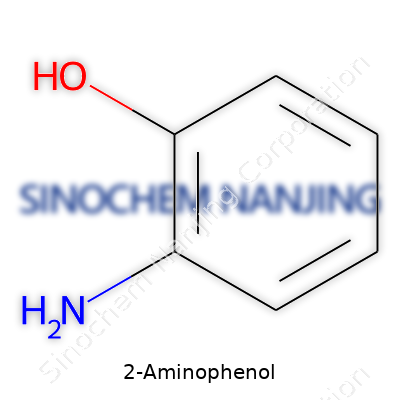
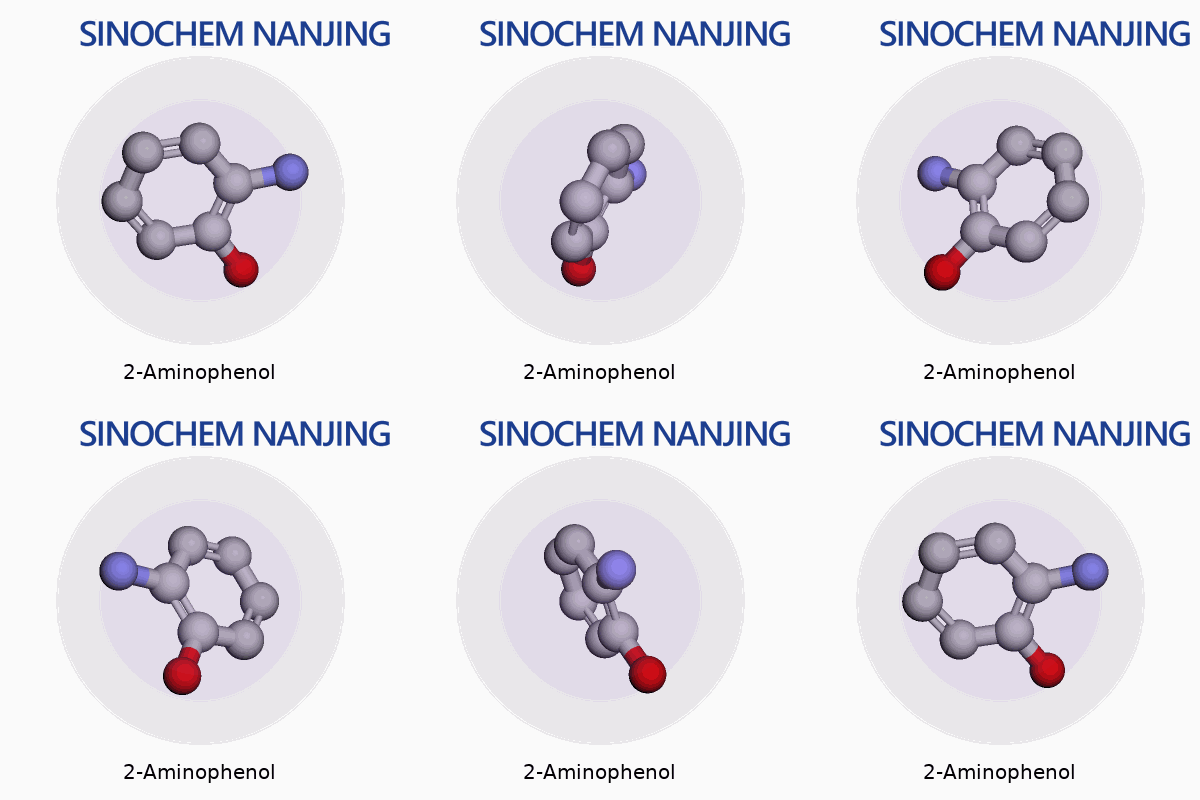
| Names | |
| Preferred IUPAC name | 2-aminophenol |
| Other names |
2-Hydroxyaniline o-Aminophenol o-Hydroxyaniline Orthaminol Orthanilic acid |
| Pronunciation | /tuː əˌmiːnəˈfiːnɒl/ |
| Identifiers | |
| CAS Number | 95-55-6 |
| Beilstein Reference | 822074 |
| ChEBI | CHEBI:17647 |
| ChEMBL | CHEMBL1226 |
| ChemSpider | 809 |
| DrugBank | DB01957 |
| ECHA InfoCard | ECHA InfoCard: 100.003.244 |
| EC Number | 205-500-4 |
| Gmelin Reference | 7293 |
| KEGG | C02366 |
| MeSH | D000687 |
| PubChem CID | 135 |
| RTECS number | BX9275000 |
| UNII | 7OFR0I5AA1 |
| UN number | UN2512 |
| Properties | |
| Chemical formula | C6H7NO |
| Molar mass | 109.13 g/mol |
| Appearance | White to light purple crystalline solid |
| Odor | ammonia-like |
| Density | 1.293 g/cm3 |
| Solubility in water | Moderately soluble |
| log P | 0.33 |
| Vapor pressure | 0.001 mmHg (25°C) |
| Acidity (pKa) | 10.0 |
| Basicity (pKb) | 7.87 |
| Magnetic susceptibility (χ) | -47.5×10⁻⁶ cm³/mol |
| Refractive index (nD) | 1.694 |
| Viscosity | 2.24 mPa·s (25 °C) |
| Dipole moment | 1.310 D |
| Thermochemistry | |
| Std molar entropy (S⦵298) | 115.4 J·mol⁻¹·K⁻¹ |
| Std enthalpy of formation (ΔfH⦵298) | −41.9 kJ·mol⁻¹ |
| Std enthalpy of combustion (ΔcH⦵298) | -2242 kJ·mol⁻¹ |
| Pharmacology | |
| ATC code | D08AX |
| Hazards | |
| Main hazards | Harmful if swallowed, causes skin and serious eye irritation, may cause respiratory irritation. |
| GHS labelling | GHS02,GHS07 |
| Pictograms | GHS07 |
| Signal word | Warning |
| Hazard statements | H302, H315, H319, H335 |
| Precautionary statements | Precautionary statements: P261, P280, P302+P352, P305+P351+P338, P337+P313 |
| NFPA 704 (fire diamond) | 2-3-0 Health:2 Flammability:3 Instability:0 |
| Flash point | 102 °C |
| Autoignition temperature | 440 °C |
| Explosive limits | Explosive limits: 2.4–14% |
| Lethal dose or concentration | LDLo oral rat 200 mg/kg |
| LD50 (median dose) | LD50 (median dose): 375 mg/kg (oral, rat) |
| NIOSH | RN0083000 |
| PEL (Permissible) | Not established |
| REL (Recommended) | 100 mg/L |
| IDLH (Immediate danger) | No IDLH established. |
| Related compounds | |
| Related compounds |
Phenol Aniline 4-Aminophenol Resorcinol |



