2,6-Lutidine: Commentary on a Versatile Pyridine Derivative
Historical Development
Chemists have tugged at the threads of pyridine chemistry since the nineteenth century, figuring out how to turn basic six-membered nitrogen rings into something more specialized and useful. 2,6-Lutidine emerged as one of the notable offshoots when researchers realized that methyl groups on the 2 and 6 positions offer a surprising advantage: they change the whole story of reactivity and application. The early methods for isolating 2,6-Lutidine came from coal tar distillation, a messy and unpredictable mix, yet over time synthesis shifted toward more deliberate and controlled routes. Looking back, the story of this compound reflects both the ingenuity and persistence of organic chemists who refused to settle for only what nature delivers. Each advance in pyridine alkylation and purification delivered better yields, fewer side products, and more robust supply for research and industry.
Product Overview
2,6-Lutidine lands in the sweet spot for synthetic work because it's a heterocyclic amine that combines relatively simple structure with a punchy reactivity profile. It’s a colorless to pale yellow liquid with a strong, penetrating odor that’s hard to mistake once you’ve worked with it. Because the methyl groups flank the nitrogen, the molecule packs both basicity and some steric bulk, making it a go-to for situations where you want a base that keeps itself out of trouble and doesn’t get caught up in side reactions. That sets it apart from plain pyridine, which can get drawn into the fray far too easily when the chemistry gets rough.
Physical & Chemical Properties
From a practical standpoint, 2,6-Lutidine boils at around 144°C and has a density a little lower than water. It’s soluble in common organic solvents: ether, chloroform, acetone, and alcohol, so it mixes well during preparative work and doesn’t force chemists into awkward choices with solvents. Thanks to the methyl groups on the ring, it’s more hydrophobic than pyridine, and that changes both its partitioning during extraction and its volatility. The pKa hovers around 6.7, landing it firmly in the ‘mildly basic’ camp—a property that gives it tremendous value as a proton scavenger, all without falling into the “too reactive” pitfalls of stronger, less predictable organic bases.
Technical Specifications & Labeling
Chemists who buy 2,6-Lutidine—for laboratory or industrial use—often check for purity above 98%. Reputable suppliers run it through gas chromatography and NMR analysis to check for impurities since leftover pyridine or higher analogs can skew results in delicate syntheses. The labeling must make things clear: hazardous liquid, strong odor, keep sealed, flammable, avoid breathing vapors. If you work with it regularly, you learn to respect these warnings as more than regulatory boilerplate, since a splash or a sniff reminds you quickly why you can’t treat this like just another aromatic.
Preparation Method
Earlier chemists relied on fractional distillation from complex coal tar, but there are now synthetic approaches that combine 2,6-dimethylpyridine from acetone and ammonia, using a catalyst such as alumina or silica gel under elevated temperature and pressure conditions. The process favors alkylation at positions 2 and 6 thanks to the inherent reactivity pattern of the pyridine ring—controlled introduction of methyl groups avoids over-alkylation and keeps the process efficient. It’s an example of how targeted synthesis, rather than broad-spectrum extraction, has become the standard for fine chemicals with well-defined structures and properties.
Chemical Reactions & Modifications
2,6-Lutidine earns its keep in the lab as a non-nucleophilic base. The reason is simple: the methyl groups protect the ring, preventing the molecule from acting as a nucleophile. In practice, this allows it to accept protons in acid-base reactions—like quenching acid chlorides or activating reagents—without complicating things by adding itself into the molecular framework of the reaction mixture. This makes it popular in the synthesis of pharmaceuticals, agrochemicals, and other situations where selectivity isn’t just beneficial—it’s essential. Sometimes, 2,6-Lutidine can be functionalized further, such as oxidation to N-oxides, but for the most part, its structure resists the kind of direct substitutions chemists try on less hindered pyridines.
Synonyms & Product Names
A scan of literature turns up several names for this compound: 2,6-dimethylpyridine is the most common, but you’ll sometimes spot numbers or alternate spellings in older references. Some catalogs call it Lutidine, or alpha,alpha'-dimethylpyridine, depending on the conventions of the supplier or the publication. These synonyms often catch new researchers off guard, but the structure—two methyls flanking nitrogen—is what matters in the end.
Safety & Operational Standards
If you’ve handled 2,6-Lutidine, you know the safety risks are real. The strong odor isn’t just unpleasant—it signals volatility and inhalation risk. Safety data sheets urge the use of gloves, goggles, and fume hoods, and anyone who’s swapped out a vapor trap or transferred a liter of the material can tell you just how quickly fumes spread. Exposure causes irritation to eyes, skin, and respiratory tract. Flammability is not a theoretical risk; open flames and hot surfaces can turn an unnoticed spill into an incident. Strict air monitoring, containment protocols, and fire suppression are basic expectations by safety officers and experienced chemists alike. Regulatory bodies classify it under hazardous chemicals, restricting bulk handling and encouraging strict housekeeping.
Application Area
Labs use 2,6-Lutidine almost every day in organic synthesis, especially where a reaction needs a push from a base that won’t tie up with reactants. Medicinal chemistry benefits from its selectivity, especially during sensitive acylations or alkylations. Industrial manufacturers have found a use for it as a catalyst, acid scavenger, and even as an intermediate for more complex heterocycles. Sometimes, it works silently in the background—buffering acid during plastic manufacturing, or sharpening the yields of crop protection agents in agrochemical plants.
Research & Development
Innovations continue in both producing and exploiting 2,6-Lutidine. Research teams have tried to improve yields from continuous flow methods or greener alkylation, since traditional routes generate waste and rely on non-renewable feedstocks. Some groups study the molecule’s behavior under unusual conditions—high pressure, exotic solvents, or photochemical inputs—in hopes of unlocking new reactivity that its cousins can’t match. In medicinal chemistry, scientists experiment with using Lutidine as a ligand for catalysts in asymmetric synthesis, relying on its specific steric and electronic characteristics. Ongoing projects in material science look for opportunities to include this moiety in advanced polymers, coatings, and sensor materials.
Toxicity Research
Anybody in a lab knows to take toxicity seriously, and 2,6-Lutidine raises its share of red flags. Acute exposure irritates mucous membranes, eyes, and skin. Rodent studies have shown effects on the central nervous system and some long-term exposure links to liver and kidney issues, prompting a call for caution and substitution whenever possible. Environmental researchers track levels in wastewater from manufacturing plants, focusing on its resistance to biodegradation and warnings about aquatic toxicity. Not enough long-term human data exist to clarify every health risk, but the precautionary principle drives most workplaces to keep exposure as close to zero as practical. Improved ventilation, real-time air monitoring, and protective barriers do more than meet regulatory requirements—they keep chemists confident they’re working under safe conditions.
Future Prospects
As demands grow for more selective, less wasteful chemical processes, the outlook for 2,6-Lutidine remains strong. Researchers continue refining preparation routes to reduce by-products and switch to greener precursors. In synthetic organic chemistry, its role as a mild, non-nucleophilic base looks set to persist. Automated flow reactors and high-throughput experimentation use 2,6-Lutidine because it delivers predictable results and minimal side reactions. Regulatory pressure may limit open use or bulk shipment, but targeted, small-quantity applications in fine chemical production and pharmaceutical development seem likely to continue. Before jumping to alternatives, chemists weigh performance, cost, and environmental footprint, and so far, 2,6-Lutidine has resisted being easily replaced. Developments in catalyst design or advanced materials might shape the compound’s future applications. Every chemist who’s reached for this bottle in the hood understands the satisfaction that comes from a compound that just does its job without fuss, and there’s little doubt that 2,6-Lutidine will keep its spot on the shelf as science and industry move forward.
What is 2,6-Lutidine used for?
Understanding 2,6-Lutidine’s Place in Modern Labs
2,6-Lutidine, which chemists often list among the family of pyridine derivatives, carries a reputation for versatility. This compound might not grab headlines outside of scientific circles, but inside research labs, it claims a busy life. It shows up most often as a base in organic synthesis, helping researchers coax molecules into new shapes and combinations. In my graduate days, few items stood as steady on the bench as a bottle labeled “2,6-Lutidine.” Its sharp smell worked as a reminder to double-check the fume hood before pouring or measuring.
Why Chemists Keep Reaching for It
In reactions that demand precision, especially those where a gentle, non-nucleophilic base works best, 2,6-Lutidine finds its moment. Its two methyl groups standing at the 2 and 6 positions keep its nitrogen atom just basic enough, and not too eager to participate in side reactions. This advantage can keep unwanted byproducts low when scientists build pharmaceuticals, advanced materials, or even dyes. The fact that it doesn’t jump into the action unless specifically asked matters in every synthesis where yield and purity pay off at the end.
Organic chemists often lean on 2,6-Lutidine during acylation reactions. These are the sort of steps involved in piecing together antibiotics, cancer drug building blocks, or even agrochemical candidates. It acts by scavenging acids produced as byproducts, keeping the main reaction flowing forward. Its ability to perform this clean-up duty without tearing apart the molecules that need protection wins it respect in the lab.
Industrial and Everyday Links
The uses of 2,6-Lutidine stretch beyond research. On the industrial side, manufacturers seek out this compound for synthesizing vitamin B6, specialty solvents, and several flavors or fragrances. Its structure makes it helpful for preparing certain antioxidants, which keep cosmetics, plastics, or foods stable longer. Exposure controls and workplace safety policies have become much stricter since the early days of synthetic chemistry, thanks in part to learning lessons from accidental overexposures. That distinctive odor isn’t just off-putting; it warns of possible toxicity. Science moves forward, but it never forgets those reminders.
Weighing Safety Against Benefits
2,6-Lutidine isn’t trouble-free. Handling it without gloves or goggles risks both immediate irritation and long-term harm. Many institutions set up detailed protocols, including waste disposal processes, to avoid environmental contamination or mishaps. Its volatility—a feature that makes it easy to remove at the end of a process—adds another chapter to the safety binder. Research has helped nail down exposure limits, informed by animal studies and case reports involving accidental releases.
Thinking Ahead: Better Practices and Alternatives
Sustainable chemistry now pushes for greener substitutions in every toolkit. Some labs test out alternatives, measuring not just the raw efficiency but also the environmental footprint of each solvent or base. The conversation has shifted from outcomes alone to include life-cycle impact. Regulatory agencies and public health research highlight the need for constant vigilance as new uses for such chemicals evolve. Personal experience tells me trust in 2,6-Lutidine is earned batch by batch, project by project, as part of a commitment to balancing technological promise with clear-eyed caution.
Is 2,6-Lutidine hazardous?
What Is 2,6-Lutidine?
2,6-Lutidine often gets used in laboratories as a building block for making other chemicals. Its structure places it in the pyridine family, a group known for strong odors and sharp chemical properties. Some folks working in research or industry handle this compound regularly, usually with proper training and protective gear.
Recognizing the Risks
Chemical safety demands more than reading a label. I’ve learned that substances like 2,6-Lutidine carry real risks, mostly through direct exposure. Getting it on your skin brings redness, itching, sometimes even burns. If inhaled, you’ll notice throat irritation and coughing — not unlike what you’d get from harsh cleaning products, but often longer-lasting. In high doses, headaches or dizziness may follow, showing that the fumes do more than just irritate the surface.
Studies from hazard reports back up these observations. The US National Library of Medicine details cases of acute toxicity in animals, showing that swallowing or breathing 2,6-Lutidine can impact organs over time. Long-term effects remain less clear, mainly because research tends to focus on industrial exposure. Still, from my own time in research spaces, even a quick whiff reminds me to reach for gloves and a fume hood.
Environmental Concerns
Dumping or accidental spills mean more than a messy workbench. This chemical, like many related pyridines, can slip into soil and water, resisting easy breakdown. The European Chemicals Agency recognizes it as a substance with potential to harm aquatic life in higher concentrations. Once in the water, it doesn’t just vanish. That persistence means wildlife can end up with a dose they didn’t ask for, leading to health issues up the food chain.
Protective Steps That Work
Effective hazard control comes from real-world habits. For me, the right gloves, splash-proof goggles, and working in a ventilated area change the risk equation. Safety data sheets call for these steps, sure, but watching a coworker rush because “it’s a small quantity” still gets folks in trouble. Labs with proper disposal systems cut down on environmental release, too, helping both people and local waterways.
The numbers back this up. Facilities with solid training and incident tracking show fewer accidents. In one chemical plant report published by the National Institute for Occupational Safety and Health, accident rates dropped after mandatory gear and air monitors were introduced.
Smart Policy, Safer Workplaces
Experience shows that clear policies set the tone. If you can smell the bite of 2,6-Lutidine in a hallway, something’s gone wrong. Air quality monitors and locked storage make a difference, turning a hazardous chemical into something manageable. Programs that teach staff to recognize risks and respond fast limit exposures. My time spent mentoring new technicians taught me that real safety grows from habits, not just rules posted on a wall.
Hazardous doesn’t always mean off-limits, especially in controlled contexts. Still, respecting 2,6-Lutidine and treating it as more than a list on a bottle keeps everyone safer—scientists, support staff, and communities downstream.
What is the chemical formula of 2,6-Lutidine?
2,6-Lutidine: More Than Just a Name in Chemistry
2,6-Lutidine stands out in organic chemistry for its versatility and importance. Using the chemical formula C7H9N, this simple structure packs plenty of utility. For anyone working in a lab, C7H9N isn’t just a collection of letters and numbers—it signals a nitrogen-containing ring with a dash of aromatic character, two methyl groups, and a world of application.
Breaking Down the Structure
This molecule starts with a pyridine backbone—a six-membered aromatic ring bearing one nitrogen atom. Pharmacologists, synthetic chemists, and manufacturers all keep an eye on such rings, because placing groups on certain positions changes how the compound behaves. In 2,6-lutidine, methyl groups latch onto carbons two and six. That small shift in position nudges its physicochemical character, changing how it reacts and how it’s used.
Why Do Methyl Groups Matter?
Adjusting a molecule’s blueprint can make or break its success in the lab. Those methyl groups on 2,6-lutidine block some typical reactions you’d see with plain pyridine. This helps limit side reactions in synthetic pathways, and it gives chemists a tool to fine-tune their products. The extra bulk and electron-donating nature of methyl groups can bump up basicity compared to pyridine, leading to new catalytic possibilities or a more selective base in organic reactions.
Applications: From Ligands to Laboratory Workhorse
Anyone running organic syntheses knows the hunt for the right base or ligand. 2,6-Lutidine steps up in this role, finding frequent use in alkylation and acylation jobs. The methyl groups dampen some unwanted interactions, so it stabilizes sensitive reactions without cranking up reactivity where it isn’t wanted. Labs put 2,6-lutidine to work for scavenging acids, acting as a non-nucleophilic base, and supporting transition metal catalysts.
Besides synthetic work, folks in the pharmaceutical world have their eyes on 2,6-lutidine, too. Once utilized only as a tool of the trade, it’s become a piece of the puzzle for building more complex drug molecules, where selectivity and efficiency matter.
Safety and Responsibility
Lab chemicals always demand respect. 2,6-Lutidine brings notable toxicity if inhaled or handled improperly. Stories circulate in teaching labs about the eye-watering, pungent sharpness hitting you with just a whiff. Safety training in lab courses drills in the protective eyewear, gloves, and ventilation. It's not just about compliance—handling chemicals with care means protecting classmates, colleagues, and ourselves.
Pushing Toward Greener Practices
Green chemistry aims to minimize hazardous waste and toxic exposure. As much as 2,6-lutidine has solidified its status, researchers continue searching for base alternatives that break down more easily and pose less risk. The next step involves not just using it wisely but considering solvents, waste reduction, and greener reaction conditions. Teams evaluate whether alternatives or step changes in experimental design create new benefits or just swap one problem for another.
Moving Forward in Research and Industry
The formula C7H9N does a lot of heavy lifting in many labs. My time in research groups showed me the pressures of balancing efficiency, cost, and safety—choices often starting with picking the right reagents. As more sustainable chemistry practices shape lab culture, the challenge is to keep utility high without losing sight of impact outside the beaker. Every improvement—safer handling, cleaner alternatives, smarter syntheses—keeps the science moving.
How should 2,6-Lutidine be stored?
It’s More Than Putting a Bottle on a Shelf
Anyone who has handled organic solvents knows that some need special attention. 2,6-Lutidine is one of those compounds that punishes sloppy habits. Its sharp smell lingers, and it can escape the bottle if stored carelessly. Controlling exposure keeps you, your colleagues, and the environment a lot safer.
Stability Means Controlled Conditions
In my own experience, alkylated pyridines like 2,6-Lutidine don’t cope well with heat, light, or open air. Leaving the bottle on a sunny windowsill invites trouble. The best practice is to keep it in a cool, dry place, away from anything that sparks or produces a flame. Flammable liquid and vapor labels aren’t just ceremony—one spill near an ignition source can escalate fast.
Air-Tight Bottling Makes a Difference
Capping the bottle tightly seems obvious, yet rushed lab work often leads to loose lids. 2,6-Lutidine absorbs moisture and reacts quite easily with oxidizing agents. If the bottle sits uncapped for too long, water in the air influences the quality of your reagent. I’ve seen project progress stall due to a contaminated solvent—nobody wants to repeat a week’s work because of a few carelessly stored milliliters. Glass bottles with sealable tops and clear hazard labeling keep things straightforward.
Ventilation Isn’t Optional
That pungent, irritating aroma is more than sour news for the nose. Prolonged inhalation causes headaches. Storage in a chemical fume hood works—any local air extraction system in dedicated flammable cabinets does even better. I once overlooked this during a frantic week, only to find my entire workspace smelling like a solvent spill. Now, I make sure ventilation runs where the bottle lives.
Segregating Incompatibles Controls Risks
During an early stint in an academic lab, I remember seeing bottles of strong acids stacked near organic solvents. Luckily, no accident happened, but just the sight convinced me to store 2,6-Lutidine nowhere near oxidizers. Even the most basic safety data sheets warn that mixing can create toxic fumes or even fires. Flammable storage cabinets with separated shelves help eliminate this risk.
Emergency Preparedness Means Awareness
Splash goggles, gloves, and lab coats serve as the first line of defense. Spills do happen—once, a cracked lid led to a small puddle. Neutralizing pads and sand nearby helped deal with it. Every lab should carry a spill kit that’s easy to access, not locked away in storage. Having a copy of the safety data sheet nearby also reminds everyone what to do if exposures or leaks happen.
Sustainable Storage Means Responsible Disposal
Unwanted 2,6-Lutidine doesn’t belong in the sink or trash. Disposal through hazardous waste channels protects water and soil. Many labs keep small waste bottles for pyridines, and scheduling regular disposal with an approved vendor helps everyone keep their side of the street clean.
Everyday Routines Matter Most
Ultimately, safe storage comes down to everyday habits. If you treat each transfer seriously, double check how the lid goes back on, and keep incompatible chemicals apart, you limit nearly all the day-to-day risks. The established rules earned their place through hard lessons—following them shows respect for both people and science.
What are the common applications of 2,6-Lutidine in industry?
Meeting Chemistry's Demands: Why 2,6-Lutidine Matters
2,6-Lutidine, a simple-looking molecule with two methyl groups on a pyridine ring, pulls a lot of weight in the world of chemical processes. In the laboratory, I’ve seen it earn its keep as a trusty base, especially during delicate reactions where stronger, caustic bases can spoil the show. The secret lies in its ability to mop up acids without reacting with delicate reagents or breaking apart sensitive intermediates. This knack for selective actions saves time and resources when synthesizing pharmaceuticals and specialty chemicals.
Active Use in Pharmaceuticals
Drug manufacturers reach for 2,6-Lutidine during active pharmaceutical ingredient (API) production. It helps drive forward key reactions—such as alkylations and acylations—without letting the reaction veer off toward unwanted byproducts. I’ve read accounts from industry chemists who explain that its lack of strong reactivity keeps API building blocks intact, keeping costs down and improving yields. Plus, it doesn’t hang around in final products, so patients don’t get exposed.
Making Agrochemicals Cleaner
Pesticides and herbicides require tidy synthesis, free from lingering waste. In the agrochemical field, companies lean on 2,6-Lutidine to help form clean bonds between building blocks, especially for modern products aimed at safer, more targeted pest control. The low tendency of this molecule to create tough-to-remove residues lets manufacturers give assurance about cleaner processes and less downstream contamination. That’s been a point of pride for firms seeking tighter safety standards and sustainability claims.
Catalyst Production and Fine Chemical Synthesis
Growth in the catalyst industry over the last decade links tightly to increased demand for substances like 2,6-Lutidine. Some catalysts, especially those involving metals such as palladium or nickel, form best in the presence of pyridine bases. The unique shape and electronic properties of 2,6-Lutidine allow it to stand alongside a wide range of metals, nudging them into the right state for speedy, project-specific reactions.
Fine chemicals—everything from dyes to fragrances—often start from raw materials coaxed into new shapes by this pyridine base. Its presence keeps color brightness and scent clarity on track. Even small improvements in these specialty sectors can create value, given the premium placed on quality in the end-use market.
Challenges and Responsible Use
2,6-Lutidine carries a strong smell and isn’t the friendliest compound if spilled or inhaled. On-site professionals wear significant protective gear and follow detailed handling procedures. Regulators and plant managers share stories of building better ventilation, using closed systems, and setting strict monitoring for leaks. The usual call is for stronger training and better emergency plans, helping keep both environment and workers protected from overexposure.
Toward Smarter Chemistry
Sustainable chemistry sits top of mind in nearly every industrial sector. More companies ask whether 2,6-Lutidine or its alternatives produce less hazardous waste or offer recycling. Research groups now explore ways to recover and reuse it, especially since its unique role can’t always be filled by weaker bases. I’ve seen promising results for continuous-flow reactors that recycle this aromatic base, trimming costs and shrinking footprints. While it isn’t a magic answer to every problem, increased care and smarter engineering help this humble molecule play a role in cleaner, more responsible chemical manufacturing.
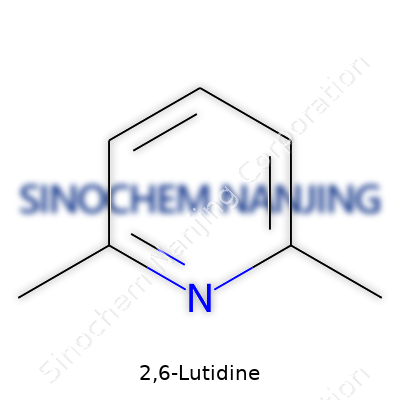
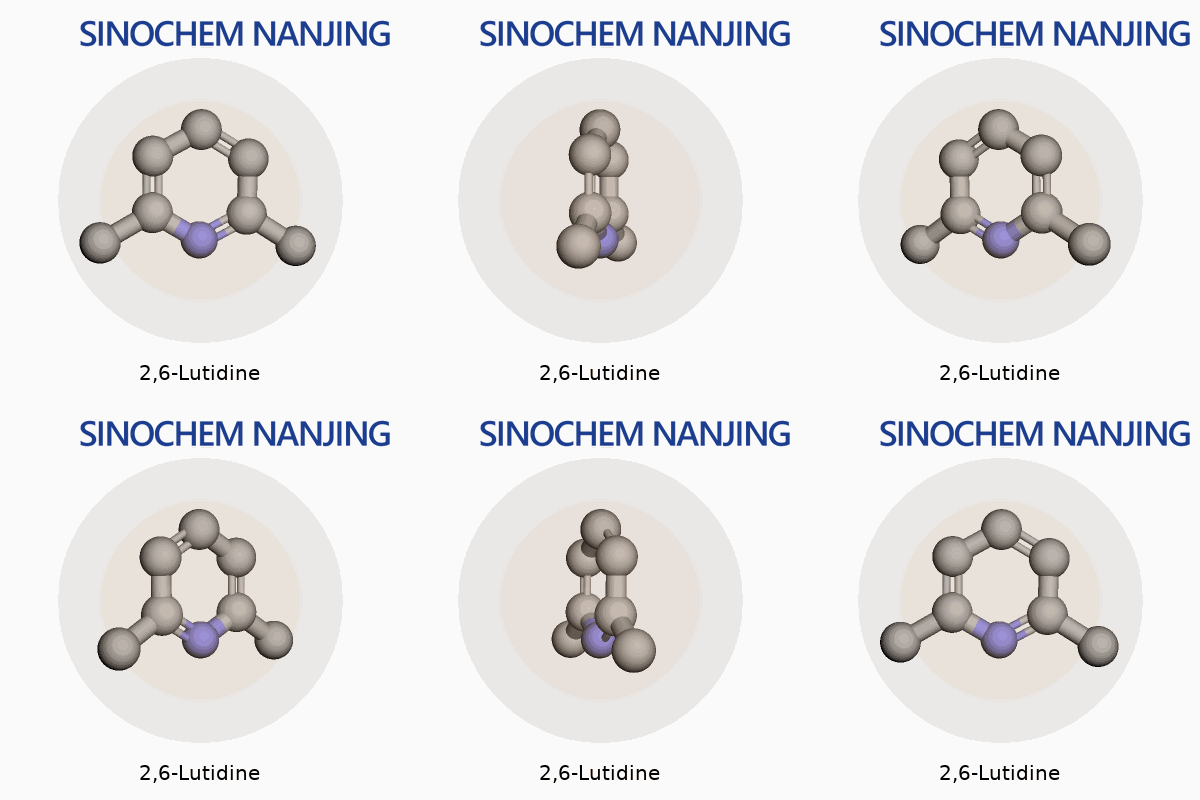
| Names | |
| Preferred IUPAC name | 2,6-Dimethylpyridine |
| Other names |
2,6-Dimethylpyridine 2,6-Lutidin 2,6-Diméthylpyridine |
| Pronunciation | /ˈluːtɪdiːn/ |
| Identifiers | |
| CAS Number | 108-48-5 |
| Beilstein Reference | 505707 |
| ChEBI | CHEBI:28383 |
| ChEMBL | CHEMBL1377 |
| ChemSpider | 7278 |
| DrugBank | DB01878 |
| ECHA InfoCard | 100.014.160 |
| EC Number | 03-03-03-03070 |
| Gmelin Reference | 9716 |
| KEGG | C01782 |
| MeSH | D003434 |
| PubChem CID | 6927 |
| RTECS number | OV3675000 |
| UNII | 88S89O8A3Y |
| UN number | UN2656 |
| Properties | |
| Chemical formula | C7H9N |
| Molar mass | 107.16 g/mol |
| Appearance | Colorless liquid |
| Odor | pungent |
| Density | 0.925 g/mL at 25 °C |
| Solubility in water | miscible |
| log P | 0.77 |
| Vapor pressure | 1 mmHg (at 20 °C) |
| Acidity (pKa) | 6.7 |
| Basicity (pKb) | 6.70 |
| Magnetic susceptibility (χ) | -67.3·10⁻⁶ cm³/mol |
| Refractive index (nD) | 1.505 |
| Viscosity | 1.31 mPa·s (25 °C) |
| Dipole moment | 1.34 D |
| Thermochemistry | |
| Std molar entropy (S⦵298) | 155.1 J·mol⁻¹·K⁻¹ |
| Std enthalpy of formation (ΔfH⦵298) | −24.6 kJ/mol |
| Std enthalpy of combustion (ΔcH⦵298) | -3473.7 kJ/mol |
| Hazards | |
| GHS labelling | GHS02, GHS07 |
| Pictograms | GHS07,GHS08 |
| Signal word | Warning |
| Hazard statements | H226, H302, H311, H315, H319, H331 |
| Precautionary statements | P280, P261, P305+P351+P338, P304+P340, P312 |
| NFPA 704 (fire diamond) | 2,6-Lutidine: 2-3-0 |
| Flash point | 68 °C (154 °F; 341 K) |
| Autoignition temperature | 530 °C |
| Explosive limits | 1.1–3.9% |
| Lethal dose or concentration | LD50 oral (rat) 523 mg/kg |
| LD50 (median dose) | LD50 (median dose): Oral rat 200 mg/kg |
| NIOSH | NIOSH: QK9100000 |
| PEL (Permissible) | PEL (Permissible Exposure Limit) for 2,6-Lutidine: "2 ppm (10 mg/m³) TWA |
| REL (Recommended) | 5 mg/L |
| IDLH (Immediate danger) | 500 ppm |
| Related compounds | |
| Related compounds |
2,4-Lutidine 2,3-Lutidine 3,4-Lutidine 3,5-Lutidine Pyridine 2,6-Dimethylaniline |



