2,6-Dichlorophenol: A Closer Look at a Persistent Chemical
Historical Development
Long before organic chemistry textbooks filled with diagrams and reaction arrows, chemists were working with phenolic compounds. 2,6-Dichlorophenol came out of research efforts in the late 19th and early 20th centuries when industry needed functional molecules with antimicrobial power and simple synthetic routes. Early reports surfaced during the push for better disinfectants, and the compound found a home in labs by its reliable antiseptic qualities. Over time, 2,6-Dichlorophenol slipped into a wide range of applications, driven by its simple preparation from phenol and its two chlorine atoms offering up both reactivity and robustness.
Product Overview
Anyone who has spent time around industrial chemicals has likely crossed paths with a phenolic compound like this. 2,6-Dichlorophenol caught industry attention for being effective, straightforward to produce, and having a sharp, distinctive odor. It packs a punch in smaller doses and has roots in the history of chemical control of microbes and pests, but over the decades, it proved its versatility far beyond that initial niche.
Physical & Chemical Properties
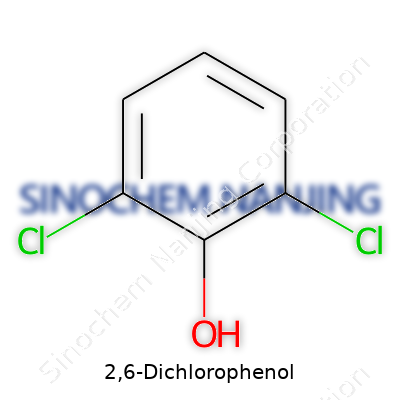
2,6-Dichlorophenol crystallizes as needles or flakes, its color ranging from pale white to light tan with a strong, medicinal scent—unforgettable for those who have opened a bottle in the lab. The melting point hovers close to 70°C, making it easy to handle at room temperature. Water solubility drops off quickly compared to its more polar relatives, so it tends to linger in organic solvents. Its molecular structure—chlorine atoms tucked onto the second and sixth positions of the phenol ring—drives its chemical behavior and links directly to every reaction it takes part in.
Technical Specifications & Labeling
Products need clear, accurate labeling, not just for regulations, but to protect everyone along the supply chain. The label for 2,6-Dichlorophenol typically lists purity above 98 percent, details about appearance, and batch number for traceability. Material Safety Data Sheets (MSDS) include details of hazards, storage guidelines, and handling procedures. In any regulated environment, such precision isn’t a luxury; it’s a baseline for responsibility.
Preparation Method
Chlorination of phenol forms the backbone of large-scale synthesis for this compound, relying on controlled conditions to direct chlorine onto the 2 and 6 positions rather than scattering it randomly. The process uses ferric chloride or another Lewis acid catalyst to keep reactions tight and yields high. Waste streams containing chlorinated byproducts require careful treatment to keep environmental impact in check. Chemists balance efficiency, selectivity, and environmental risk every time they scale this up for industry.
Chemical Reactions & Modifications
The two chlorine atoms on 2,6-Dichlorophenol add a new dimension to its reactivity. They make the aromatic ring less reactive in electrophilic aromatic substitution, nudging organic chemists to use specific conditions when converting this molecule into anything else. For instance, nucleophilic aromatic substitution offers several paths for tweaking its structure, so downstream synthesis can spawn precursors for dyes, pesticides, and specialty chemicals. Anyone working in a synthetic research lab has seen or designed transformations based on the particular substitution pattern of this compound.
Synonyms & Product Names
Chemicals often carry a crowd of names through the marketplace—2,6-Dichlorophenol included. Common synonyms like Dichloro-2,6-phenol, 2,6-DCP, or 2,6-DCPH crop up in publications and supply lists. Textbooks, government registries, and material inventories may not always agree on a single designation, so experience teaches you to check CAS numbers or chemical structures rather than trust a product name alone.
Safety & Operational Standards
Nobody walks into a lab or warehouse with 2,6-Dichlorophenol and shrugs off safety. Gloves, goggles, and proper ventilation—these aren’t suggestions. Handling chlorinated phenols poses both acute and chronic exposure risks. The compound’s volatility means inhalation or dermal contact can cause significant irritation, making well-maintained fume hoods and spill protocols essential. Regulatory standards from agencies like OSHA and the EU’s REACH mandate worker protection and justify every step, from transport to final disposal.
Application Area
Pesticides and antiseptics first made this compound famous, though its menu of uses branched out thanks to the unique ring-halogen setup. 2,6-Dichlorophenol showed up as a synthetic intermediate for herbicide production and specialty chemical synthesis. Industrial water treatment sometimes leveraged its antimicrobial power, while others found roles in dye or polymer manufacturing. Regulatory shifts pushed some applications aside, but niche uses continue in research and some manufacturing sectors.
Research & Development
Innovation with a molecule like 2,6-Dichlorophenol means respecting its legacy but pushing for safer, cleaner chemical alternatives. Researchers in green chemistry search for routes that limit chlorinated waste or switch to catalytic methods minimizing environmental footfalls. Analytical labs develop more sensitive detection methods to track trace residues in water and soil, reflecting a culture shift that values monitoring and prevention. Whenever this compound appears in patents or scientific journals, the focus has turned toward sustainability, toxicity mitigation, and substitution without sacrificing performance.
Toxicity Research
Chlorinated phenols belong to a class that environmental scientists watch closely. 2,6-Dichlorophenol builds up in water and sediments, showing slow breakdown rates under typical conditions. Animal studies found liver and kidney toxicity at low doses over long-term exposure, and regulatory agencies classify it as hazardous for both people and wildlife. Public concern over persistent organic pollutants drives ongoing studies of its fate in natural systems. Some industrial processes have phased out or severely limited this compound where possible, redirecting efforts to safer substitutions.
Future Prospects
Looking ahead, 2,6-Dichlorophenol won’t vanish overnight, but stricter guidelines and consumer advocacy shape its fate. Industry is tasked with redesigning processes to either replace or minimize its presence, especially anywhere materials can leak into the wider environment. Ongoing R&D seeks new chemistries—biodegradable alternatives, cleaner synthesis, and relentless drive for lower toxicity. As scientists, manufacturers, and regulators put their heads together, the story of this compound becomes a case study in chemical stewardship and the balancing act between performance and responsibility.
What is 2,6-Dichlorophenol used for?
Uses in Industry and Everyday Life
2,6-Dichlorophenol has a sharp, distinct odor that tips you off if it’s in the room. Manufacturers rely on this compound in a range of industries. Sometimes, it functions as a building block for larger molecules—think of it like a foundation in a chemical recipe. One spot where this shows up is in making pesticides. It transforms into other compounds that target pests or unwanted organisms. You won’t see it on store shelves, but it’s a backstage player in keeping crops and wood products fungus-free.
Another big arena: the pharmaceutical sector. Some drugs start their lives in labs with a chunk of 2,6-Dichlorophenol. By shifting atoms around, chemists turn it into ingredients that act against bacteria or support key medical treatments. This isn’t an ingredient that goes into your medicine bottle, but without it, the production chain would break down.
The Chemistry Behind Cleaners and Disinfectants
Household disinfectants, especially older formulations, have roots tracing back to chemicals like this. While people don’t pour pure 2,6-Dichlorophenol into mop buckets, older cleaning products leaned on related compounds made using it during the manufacturing process. With stronger safety standards and green chemistry movements, modern cleaners use alternatives, but legacy products sometimes persist—especially where regulation runs light.
I remember working in a hardware store as a teen. One pallet came in with wood preservatives—strong stuff. Turns out, formulations like these leaned on precursor chemicals including variations of dichlorophenols. The harsh smell clung to skin and clothes all day, and some folks in town asked about health risks, so safety conversations started up around the shop breakroom.
Environmental and Health Challenges
Here’s where the story of 2,6-Dichlorophenol gets serious. Unlike some ingredients that break down fast in nature, this one tends to stick around. Once it gets into water, soil, or air after production spills or disposal, it travels. That persistence spells trouble for both wildlife and people. A 2020 study from the Environmental Protection Agency flagged the buildup of chlorinated phenols in rivers near factory towns. Fish and birds start showing signs of trouble—sluggishness, stunted growth, fewer offspring.
Human health doesn’t get off easy either. Exposure through contaminated drinking water or workplace air can irritate skin, eyes, and airways. The World Health Organization labels certain chlorophenols as possible carcinogens, and the data behind that warning sits in long-term monitoring of people near production sites. The effects can take years to unfold, which complicates public health responses.
Paths Toward Safer Use
Some places have started to phase out or tightly control the manufacture and use of high-risk chlorophenols, including this one. Stronger workplace protections and air filters help keep levels low where people work. Farmers and manufacturers benefit from educational outreach so they learn about safer chemical choices. At the consumer end, buying pressure influences which products stay on store shelves. As someone who switched to eco-friendly cleaners early on, I’ve noticed a big leap in options that lean on plant-based chemistry or simple ingredients—less worry, same results.
Moving toward safer production and smarter cleanup matters. Investment in water purification and stricter oversight for chemical waste go a long way. People who live near chemical plants or landfills still deserve a say, and their experiences help drive science and regulation forward. The story of 2,6-Dichlorophenol shows that chemistry needs careful hands and clear eyes—both in labs and in the places where people live and work.
What are the safety precautions when handling 2,6-Dichlorophenol?
Understanding the Risks Up Front
Anyone who has worked in a lab learns quickly that chemicals with the “-phenol” ending often bring trouble. 2,6-Dichlorophenol stands out because it combines the reactive nature of phenol with chlorine atoms, building up risks that can’t be ignored. Exposure brings real dangers—eye and skin irritation, trouble breathing, sometimes even toxic effects that sneak up after the fact. It only takes a splash for irritation to flare or a stray vapor to bring stinging eyes and coughing fits. I learned early from a seasoned chemist to never underestimate what a “little” exposure can do—few people forget that lesson.
Personal Protective Equipment: The Real MVP
Forget about shortcuts. Splash-resistant goggles shield your eyes from fumes or unexpected sprays. Lab coats guard skin and personal clothes. Thick nitrile gloves, not just latex or vinyl, keep your hands from soaking up the compound. If you handle powders or use the compound at higher temperatures, you’ll need a properly rated respirator. Proper shoes and covered legs may seem like overkill, but they’ve saved friends I know from serious burns. It only takes a single mistake to become a cautionary tale.
Engineering a Safe Work Space
Fume hoods offer a haven when volatile compounds hit the bench. Good ventilation keeps airborne phenol from building up, because inhalation exposure can sneak by in a busy lab. I once saw a lab skip using the hood because a procedure “looked simple.” They spent the afternoon with pounding headaches. Always turn to the fume hood with chemicals that bring volatility or toxicity; lab benches near open windows or doors won’t do the trick.
Safe Practices in Action
Label bottles clearly, down to the batch or concentration. Store away from incompatible chemicals: no strong bases or reactive metals nearby, since those can kick off unpredictable reactions. I stash phenols in dedicated cabinets—never mix storage just to save time or space. Spills invite hasty reactions, and those are usually the worst kind. Keep spill kits nearby, including absorbents and neutralizers, plus containers that lock tightly for disposal.
Know What to Do If Something Goes Wrong
A friend of mine splashed dichlorophenol on his forearm. He hit the safety shower instantly, washing for fifteen minutes even as colleagues called for help. Bruises fade, but chemical burns last. Quick action can keep a bad situation from turning catastrophic. Eye exposure calls for real urgency—wash for minutes, not seconds, and seek help. Safety data sheets (SDS) aren’t just paperwork; they offer first aid measures and contact details if something unexpected happens.
Disposing of Waste Responsibly
Ditching left-over dichlorophenol in the drain pollutes water supplies and violates big laws. Waste bins lined with chemical-resistant materials, labeled correctly, keep you clear of regulatory headaches. I’ve found peace of mind by double-checking every disposal step—no odd mixtures, nothing poured out just “because it’s a small amount.” Chemical waste can haunt a lab, or a community, for years if handled recklessly.
Wrapping Up the Lesson
Handling 2,6-Dichlorophenol calls for respect, planning, and a commitment to doing things right. PPE, ventilation, clear labels, and good habits don’t just keep regulators calm—they keep you and everyone nearby safe. Earning experience means hearing stories and learning from the stubborn mistakes of others so you don’t have to make your own.
What is the chemical formula of 2,6-Dichlorophenol?
Why 2,6-Dichlorophenol Matters
2,6-Dichlorophenol shows up in a lot of conversations about water safety, industrial chemistry, and, sometimes, environmental concern. Its chemical formula, C6H4Cl2O, might seem like just a string of letters and numbers. But every digit and each letter here describes a molecule that is both practically useful and potentially troublesome.
Looking at the Structure
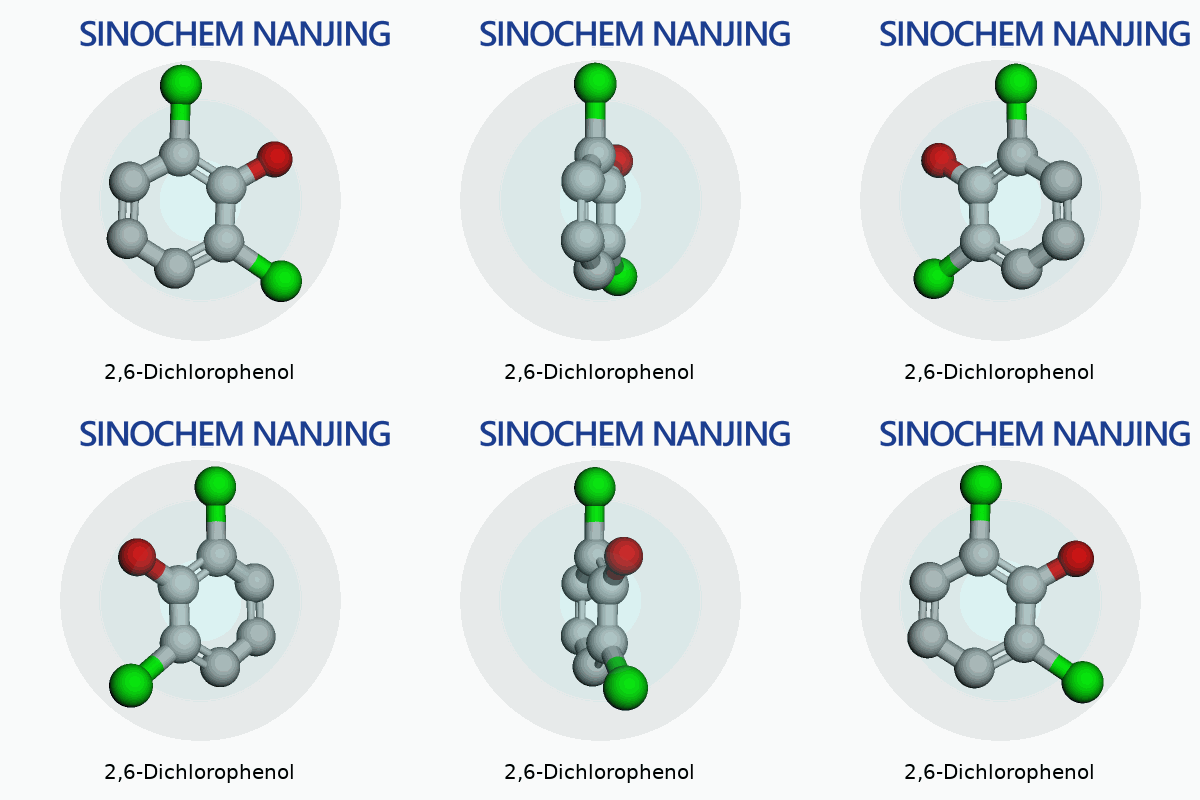
The formula itself hints at its makeup: six carbon atoms, four hydrogen atoms, two chlorine atoms, and a single oxygen atom. This arrangement builds a benzene ring—a classic backbone of many chemicals. The ring doesn’t just sit there unadorned; it holds two chlorine atoms at the 2 and 6 positions and a hydroxyl group at position 1. These positions aren’t random. Chemists label them carefully because even small shifts change how the molecule behaves in the real world.
Why This Molecule Finds Itself in the News
If you’ve ever checked the safety of your drinking water or read about chemical factories, you might have seen 2,6-Dichlorophenol pop up. Its antimicrobial properties mean it ends up in disinfectants, and it sometimes appears as a breakdown product of pesticides. Once released into rivers or soil, this chemical lingers. That’s not great news for fish or people who depend on those water sources.
Risks and Potential Impacts
Experience in environmental analysis tells me that even trace contaminants can spell big problems. 2,6-Dichlorophenol can irritate skin, eyes, and respiratory systems. It attaches itself stubbornly to sediments and doesn’t break down easily. Studies show this chemical can impact aquatic life, disrupting reproduction or hurting smaller organisms at the base of the food chain. I’ve read reports linking it to hormone disruption. Utility managers and regulators keep an eye on it during water quality testing for this reason.
Finding Solutions and Taking Actions
Factories can reduce how much 2,6-Dichlorophenol escapes by updating treatment technology. Activated carbon treatments, for example, trap these molecules before they leave into streams or wastewater. Regular monitoring helps communities catch any spikes early. On the policy side, stricter limits force polluters to fix their processes. Change always meets resistance, but health data supports this kind of shift. In my own experience, public awareness often pushes decision-makers into action faster than regulatory pressure alone.
Practical Takeaways
Knowing the formula—C6H4Cl2O—does more than satisfy curiosity for chemistry fans. It opens the door to understanding both its usefulness and the precautions needed. Each component in the formula points at its real-world effect, from slow decay in the environment to its presence in industrial waste streams. For those curious about what’s in everyday products or the water we drink, remembering this formula can help start deeper conversations about health, safety, and responsibility.
What are the storage conditions for 2,6-Dichlorophenol?
Understanding what’s in the Drum
2,6-Dichlorophenol isn’t just another chemical name you can skim past on a label. Working with any chlorinated phenol means taking more than a short glance at your storage practices. This compound, with its solid crystalline structure and sharp odor, has enough clout to harm health if handled carelessly. Once you’ve opened a drum or even a small sample bottle, the stuff reminds you with its pungent smell that it doesn't belong on a forgotten shelf.
Keeping It in the Right Place
Old hands in a chemical stockroom know not to park 2,6-Dichlorophenol near oxidizers or any acids. A loud chorus during my university days went: keep it cool, dry, and tight—advice that sticks. Temperature shifts in a cluttered storeroom can invite unwanted reactions, especially if containers are cracked. 2,6-Dichlorophenol stays most stable in well-ventilated, low-humidity zones under lock and key. Non-reactive shelves, like steel or coated shelving, serve best. Never toss it near bases or strong reducing agents.
I remember a colleague once struggled to open a container because someone had stacked it close to a heat source. The odor alone made nearby workers uneasy, and it reinforced another unwritten rule: no sunlight, no drafty window ledges. Sunlight heats and degrades, and even minor leaks can spread fumes that set off the building's air monitors. Good containers are not just screw-top jars. They feature chemical-resistant seals and labels that won’t peel off in humidity.
Don’t Overlook Routine Checks
I’ve seen the slapdash attitude of “if it’s out of direct sight, it’s safe.” That mindset can set labs and storage rooms up for headaches. Chemical safety audits like the ones done each month in our research lab always turn up at least one expired or crusted-over bottle in a forgotten corner. This sort of oversight invites trouble—not just leaking containers, but also surprise inspections with disappointing outcomes.
Every bottle of 2,6-Dichlorophenol earns a spot on an inventory sheet. Updating records stops the “I thought you checked it” blame game, and tells users if something’s running low, expired, or needs hazardous waste disposal. Clear labeling, date of receipt, and last inspection notes—these aren’t just bureaucratic headaches but crucial practices that keep folks safe and cut down on accidents and product loss.
Smart Solutions, Real-World Gains
There are real, practical ways to manage storage that make a difference. Chemical-resistant secondary containment trays act as a physical barrier against accidental spills. Spill kits hang next to the stockroom door, not buried under paperwork. Some large campuses use digital monitoring for temperature and humidity, sending alerts when a sealed area gets too warm or moist. This kind of oversight spares staff both the panic and cost of cleaning up after a preventable spill.
Focusing on training turns what could be a once-a-year safety lecture into muscle memory. Every new user in our building goes through hands-on storage routines. Even seasoned staff pick up reminders or spot mistakes during walk-throughs. Building a culture where reporting a broken seal or misplaced bottle gets rewarded, not punished, proves far more effective than scolding after the fact.
Working smart with 2,6-Dichlorophenol means more than minding the rules—it boils down to daily habits anchored in care and respect for the risks in every container. It keeps doors open, research running, and people safe—all things no label ever mentions but every experienced worker knows matter most.
Is 2,6-Dichlorophenol hazardous to health or the environment?
What 2,6-Dichlorophenol Means for People and Places
Walking into a workshop that uses chemicals always sets my nerves on edge. The tang in the air, the warning labels, and the long ingredient names all signal risks that can't be ignored. 2,6-Dichlorophenol shows up in a few places: in pesticides, disinfectants, and even some industrial processes. It's no stranger to contamination talk, especially since it's a byproduct from torching certain chlorinated compounds or breaking down pesticides.
Everyday Exposure and the Health Toll
Coming into contact with this substance isn't rare near chemical plants or waste sites. In some studies, workers reported eye irritation, headaches, and inflammation after handling materials containing or releasing chlorophenols. The irritant effects remind me of those ungloved moments with harsh cleaners—stinging eyes, dry throat, chapped skin. Only here, scientists flagged deeper risks after animal testing: liver toxicity, changes in the kidneys, and possible damage to the nervous system. Some health agencies suggest long-term exposure might add to the risk for cancers, though the evidence relies on more animal trials than clear-cut human cases. Knowing this, I can't help but eye chemical labels in my shed with suspicion, gloves at the ready.
Impact on Water, Soil, and Wildlife
Rain doesn't wash these chemicals away; it tends to move them around. 2,6-Dichlorophenol lingers in soil and water, especially where factories dispose of their wastewater. It sits in rivers long after a chemical spill, and the breakdown moves slowly. Fish and aquatic life don't get off easy—studies show decreased hatching rates, stunted growth, and damaged organs when they're swimming in water laced with this chemical. I read about frogs populations thinning out near dumping sites. Knowing these facts makes it hard to shrug off reports of dying streams or mutant frogs as just another "natural" cycle.
The Bigger Picture on Pollution
Most chlorinated chemicals, including 2,6-Dichlorophenol, don’t stay put. Wind and rain spread them. Once in the air or water, they can enter food chains—fish eat contaminated insects, birds eat the fish, and residues work up the ladder until they can land on dinner plates. I've always believed eating local should be the safest bet, but it's hard to trust when environmental testing points to increasing traces of these compounds in unexpected places. Certain crops and dairy products sometimes show low levels in market sampling.
What Can Change the Situation?
The easiest wins come from prevention and safer alternatives. Tougher waste management rules can keep these toxins from reaching streams in the first place. Upgrading industrial scrubbers and treating wastewater stop much of this spread. Community-scale cleanup, such as better soil filtration and constructed wetlands, helps pull toxins out of waterways. Shifting agriculture toward non-chlorinated pesticides and clearer labeling gives buyers more say in what enters their homes.
Clean-up technology needs funding and political will. Citizen action ramps up pressure for those changes. I've noticed communities near chemical plants forming advocacy groups, doing independent water tests, and working with local media to keep issues on the map. These local watchdogs trigger wider investigations, drive corporate reforms, and sometimes spark broader regulation.
Looking Forward
2,6-Dichlorophenol signals a bigger challenge. Industrial gains need management, not just innovation for profit. The risks linked to this chemical echo the need for stronger oversight and smarter choices in manufacturing and home care. Every time someone calls for stricter controls, safer substitutes, or environmental transparency, the health risks tied to chemicals like this one move closer to resolution.
| Names | |
| Preferred IUPAC name | 2,6-dichlorophenol |
| Other names |
2,6-DCP 2,6-Dichlorfenol Phenol, 2,6-dichloro- NSC 8683 |
| Pronunciation | /tuː sɪks daɪˌklɔːrəˈfiːnɒl/ |
| Identifiers | |
| CAS Number | 87-65-0 |
| Beilstein Reference | 775844 |
| ChEBI | CHEBI:17606 |
| ChEMBL | CHEMBL18703 |
| ChemSpider | 12182 |
| DrugBank | DB13443 |
| ECHA InfoCard | 100.005.024 |
| EC Number | 201-934-2 |
| Gmelin Reference | 6246 |
| KEGG | C02341 |
| MeSH | D004044 |
| PubChem CID | 8110 |
| RTECS number | SN1575000 |
| UNII | G85N96C7NY |
| UN number | UN3437 |
| Properties | |
| Chemical formula | C6H4Cl2O |
| Molar mass | 163.00 g/mol |
| Appearance | Colorless to pale yellow crystals or powder |
| Odor | Phenolic; penetrating |
| Density | 1.5 g/cm³ |
| Solubility in water | slightly soluble |
| log P | 2.67 |
| Vapor pressure | 0.016 mmHg (25°C) |
| Acidity (pKa) | 7.0 |
| Basicity (pKb) | 7.18 |
| Magnetic susceptibility (χ) | -67.0·10⁻⁶ cm³/mol |
| Refractive index (nD) | 1.597 |
| Viscosity | 3.5 mPa·s (at 80 °C) |
| Dipole moment | 2.55 D |
| Thermochemistry | |
| Std molar entropy (S⦵298) | 132.8 J·mol⁻¹·K⁻¹ |
| Std enthalpy of formation (ΔfH⦵298) | -104.7 kJ/mol |
| Std enthalpy of combustion (ΔcH⦵298) | -6210.6 kJ/mol |
| Pharmacology | |
| ATC code | D08AE06 |
| Hazards | |
| Main hazards | Harmful if swallowed, causes skin and eye irritation, toxic to aquatic life |
| GHS labelling | GHS02, GHS05, GHS07 |
| Pictograms | GHS06,GHS05,GHS09 |
| Signal word | Warning |
| Hazard statements | H302, H315, H319, H400 |
| Precautionary statements | P261, P280, P305+P351+P338, P337+P313 |
| NFPA 704 (fire diamond) | 2,6-Dichlorophenol: "2-2-0 |
| Flash point | 71 °C |
| Autoignition temperature | 700°C |
| Lethal dose or concentration | LD50 oral rat 580 mg/kg |
| LD50 (median dose) | LD50 (median dose): 580 mg/kg (oral, rat) |
| NIOSH | QL9625000 |
| PEL (Permissible) | 50 mg/m3 |
| REL (Recommended) | 200 mg/L |
| IDLH (Immediate danger) | IDLH: 50 ppm |
| Related compounds | |
| Related compounds |
Phenol 2-Chlorophenol 3-Chlorophenol 4-Chlorophenol 2,4-Dichlorophenol 2,4,6-Trichlorophenol |



