2,5-Dimethylfuran: Beyond the Simple Molecule
Historical Roots
Curiosity always pushes the edges of chemistry, and 2,5-dimethylfuran (DMF) comes with a trail of stories from labs determined to replace old fuels and improve energy systems. Back in the 19th century, furans arrived on the heels of research into biomass and natural compounds. It didn’t take long before scientists realized this family of molecules offered a versatile playground: easy to tweak, packed with reactivity. People in chemical development started paying real attention to DMF when biofuel research chose it as a promising alternative to fossil-based gasoline. Decades of work, often building on trial and error, set the stage for DMF’s growing relevance in pharmaceutical synthesis and green chemistry conversations.
What Sets DMF Apart
Anyone who’s worked in a lab learns to respect molecules that punch above their weight. 2,5-Dimethylfuran looks modest—just a five-membered ring, two methyl groups stuck on. That simple structure unlocks a raft of useful properties. Unlike ethanol, DMF doesn't soak up much water. It resists spontaneous evaporation, burns efficiently, and doesn’t corrode engines as easily as traditional alcohol-based fuels. Technically it measures up well: clear liquid, modest boiling point around 92°C, soluble in organic solvents but not much in water. Its energy density draws attention in transportation circles because it rivals premium gasoline and blows ethanol away on many of the metrics engineers fret over, like octane rating and latent heat. These are not just dry statistics to those in the bench trenches; anyone who has tried to run a fuel cell or design a new extraction will tell you: DMF’s stats move the dial.
How Chemists Label and Specify It
Anyone reading the fine print on a bottle of DMF will spot a variety of official handles. Some call it DMF, others go with 2,5-dimethylfuran or 2,5-DMF, and there are still legacy terms floating in old handbooks. Usually you see purity levels above 98%, with impurities like water and methanol kept tight—too much water and you lose the smell, too many residuals and reactions go sideways. Most bottles display a CAS number. Shelf life and stability demand a dry spot and airtight seals, both to preserve quality and for safety reasons.
Making DMF in Modern Labs
Building 2,5-dimethylfuran from scratch takes a careful recipe. Most routes begin with fructose or glucose, sugars anybody can find at the store, running through dehydration to make 5-hydroxymethylfurfural (HMF). Then it’s time for hydrogenation under pressure with a precious metal catalyst—think copper, nickel, or ruthenium. Every step matters, and tweaking reaction times, pressures, or catalyst lifespan makes or breaks a commercial process. Those who remember the early days of furan chemistry saw much lower yields with a bramble of side products; today’s routes squeeze out more DMF and less waste.
Reactivity and Changing the Skeleton
Once in hand, DMF refuses to sit quietly. Functionally, its methyl groups add stability, yet the ring itself invites plenty of chemistry. Light, heat, and acid can coax it into new territory. Take Diels-Alder reactions—researchers often use DMF as a model diene, turning it into building blocks for fine chemicals or even making complex pharmaceuticals. Oxidizing agents can break down that ring entirely, converting DMF into carboxylic acids. Catalytic transformations, halogenations, or functional group exchanges all open doors for synthetic chemists bent on crafting new molecules.
How the World Uses DMF
The call for cleaner energy puts DMF front and center for alternative biofuels. Its high energy content means you can run engines with fewer emissions and less post-combustion residue. But fuels only tell part of the story. DMF also headlines the production of polymers, resins, and specialty chemicals. Some teams use it as a solvent to release value from lignocellulosic biomass. In pharmaceuticals, tweaks to its structure give drug developers routes to new molecules with tailored activity. Academics eye DMF for advanced battery electrolytes and high-performance materials, raising hopes for electronics and storage systems that last longer and waste less energy.
The Safety Landscape
DMF isn’t as notorious as benzene or toluene, but it brings its own hazards. In my experience, spills spread a sharp, sickly smell a few rooms away—nobody remains in doubt that a chemical is loose. People working with it rely on gloves, ventilation, and well-closed containers. The vapor can irritate noses and eyes, and careless exposure risks headaches. Most lab managers require up-to-date safety data sheets, and the best workplaces drill safe handling procedures into every new team member.
Chasing Answers on Toxicity
The toxicology of DMF is still unfolding. Published studies point to moderate acute toxicity. Animal tests show that swallowing large doses can damage the liver and kidneys. Inhalation brings dizziness and respiratory discomfort, not quite as severe as with some legacy solvents, but nobody shrugs it off. So far, occupational exposure limits are not as strict as some, yet ongoing studies watch for links to chronic effects. Environmental persistence gets attention too, mainly since DMF does not break down quickly in water or soil. More data always helps policymakers set sensible limits for both industry and the general public.
Pushing the Boundaries in Research
Each year, DMF appears in more grant proposals and startup business plans than ever before. In fuel research, teams are busy with engines tuned to new combustion strategies. Chemists are finding uses in solar materials, playing with DMF’s unique ring for photoactive compounds. Analytical chemists use it to extract rare molecules from complex biomass mixtures. In pharmaceuticals, it keeps showing up as a stepping stone for next-generation drugs that take advantage of furan cores. We're watching machine learning models churn through reaction databases, pulling out overlooked ways to make DMF or put it to work.
Where DMF Might Go Next
Innovators want to see DMF replace not just gasoline, but also aging solvent systems and tricky starting materials in high-value manufacturing. Policy shifts toward renewable resources invite bigger investments into sustainable DMF production. If catalytic methods keep improving, costs will keep dropping, letting DMF step out of the lab and into the mainstream. I expect DMF to weave its way into batteries, synthetic fibers, and green chemistry projects that take fossil carbon out of the equation. The hunger for alternatives to petroleum has pushed a once-obscure furan into the spotlight; the energy transition promises to make that spotlight even brighter. Faster regulation, smarter process design, and dedicated research could turn this molecule into one of the big stories of chemistry’s next few decades.
What are the main uses of 2,5-Dimethylfuran?
A Closer Look at 2,5-Dimethylfuran
2,5-Dimethylfuran doesn’t draw headlines like gasoline or ethanol, but that doesn’t mean it lacks importance. In the last several years, researchers and industry experts have been looking hard at alternatives to traditional fuels. Biofuels continue to gain attention, and in this space, 2,5-Dimethylfuran sits as an interesting candidate. Scientists make it from sugars and biomass, reacting furfural or fructose with hydrogen. It has a chemical energy density that’s surprisingly close to gasoline. So, for folks looking to cut carbon footprints or build sustainable transport, this compound holds promise.
Biofuel With a Punch
Gasoline has dominated the fuel game for generations, but environmental and economic costs keep adding up. Ethanol showed up as an early alternative—people know it from corn-based fuel. Ethanol blends in easily but doesn’t pack as much energy per liter, so cars don’t travel as far. Here enters 2,5-Dimethylfuran. Its energy density approaches what you get from gasoline—about 40% more than ethanol. This translates to better mileage and fewer fill-ups for the same tank. Vehicles can potentially run cleaner and farther, and that appeals to anyone who wants real-world solutions for cutting greenhouse gases.
Burning this compound in engines produces fewer emissions of toxic substances like particulates or aldehydes compared to older fuels. In cities where smog smothers morning traffic, switching to something cleaner makes a real difference for public health. Researchers at Princeton and the Pacific Northwest National Laboratory pointed out that 2,5-Dimethylfuran resists absorbing water from the air. Ethanol mixes with water, complicating storage and transport. This new compound avoids some of those old headaches, offering more stable handling and longer shelf life.
Beyond the Gas Tank
Fuel gets the spotlight, but chemists put 2,5-Dimethylfuran to work in other areas. In labs across the world, it serves as a building block for pharmaceuticals and fine chemicals. It’s used to manufacture some food flavorings due to its sweet aroma. This adds value for food scientists who want sustainable sources for their additives. Companies turn to this molecule when they want to avoid petroleum-based ingredients, aiming for greener production lines.
Researchers also explored its potential as a solvent or as an element in organic electronics. Devices like OLED screens benefit from reliable, adaptable chemicals, and 2,5-Dimethylfuran’s chemical structure lends itself to innovation in these technologies. My own experience working in a research team showed me just how many hours get spent screening candidates for battery electrolytes, or for components in solar panels. While the path from lab to device can be long, chemists keep coming back to 2,5-Dimethylfuran thanks to its properties and performance.
Addressing the Challenges
Even with so much promise, scaling production remains a challenge. Making enough from agricultural waste or dedicated energy crops calls for investment in new facilities and processes. Policy support can help bridge the early cost gap, giving plant operators reason to switch away from fossil sources. Building partnerships between researchers, farmers, and industry leaders speeds up the timeline from pilot projects to real-world application.
The world won’t switch overnight. Bio-based 2,5-Dimethylfuran marks a next step for sustainable fuels and green chemistry. With more work on production and supply chains, it stands out as a practical candidate for making progress—one liter, one factory at a time.
Is 2,5-Dimethylfuran hazardous to health?
Understanding 2,5-Dimethylfuran
2,5-Dimethylfuran shows up as a clear liquid that easily evaporates at room temperature. You can find it in research labs, where it’s often a topic in discussions about alternative fuels. There’s also a less publicized side of this compound—its presence in cigarette smoke and its role as a potential air pollutant.
Health Concerns Tied to 2,5-Dimethylfuran
People sometimes overlook chemicals like 2,5-dimethylfuran because they seem far removed from daily experience. My background in chemistry taught me to be wary of compounds that have a structure like furan. Furans don’t have a warm reputation; some carry carcinogenic risks. Take furan itself—classified by the International Agency for Research on Cancer (IARC) as possibly carcinogenic to humans. Adding methyl groups, like in 2,5-dimethylfuran, can change toxicity, but the uncertainty doesn’t breed comfort.
Touching or inhaling 2,5-dimethylfuran could irritate skin, eyes, and the lungs. Toxicology studies in animals hint at possible liver and kidney injury after exposure. Volatile chemicals that carry a sweet smell, such as this one, don’t usually spell good news for our bodies. Breathing in vapors might contribute to headaches, dizziness, or much worse symptoms at higher doses.
People who live or work in spaces where cigarette smoke lingers probably encounter low amounts of 2,5-dimethylfuran regularly. Tests show it’s one of many toxins in secondhand smoke. Its presence serves as a warning that we often share air containing substances science has not fully reckoned with.
Exposure in Everyday Life
Most folks won’t handle 2,5-dimethylfuran in pure form; chemists and industrial workers have the highest chances. Still, cigarette smoke drags this compound into public and private spaces. Many don’t realize tobacco research often uses 2,5-dimethylfuran levels as a marker for smoke exposure in people. So even if you don’t smoke or work in labs, you could still encounter trace amounts through secondhand smoke.
My time at a public health agency opened my eyes to the patchwork of rules on air pollutants. 2,5-dimethylfuran rarely lands on high-priority lists because it appears in small quantities and doesn’t get much press. That’s no guarantee of safety—it only highlights that risk can hide in unexpected places.
Reducing Risks and Looking for Solutions
Any chemical with potential health effects deserves respect. Education matters—if you work in a lab or industry setting, check the safety sheets and follow guidelines for ventilation and personal protective gear. For the general public, the biggest risk comes through inhaling cigarette smoke. Avoiding exposure to smoke means steering clear not just of nicotine and tar but also lesser-known byproducts like 2,5-dimethylfuran.
Researchers should keep pressure on chemical companies and lawmakers to run thorough safety tests. Setting exposure limits and monitoring air for contaminants helps protect not just workers but whole communities. Honest discussions between scientists, regulators, and the public give people tools to make decisions based on facts and not guesswork.
Cleaner air always benefits communities, and scrutinizing chemicals like 2,5-dimethylfuran gives us a fighting chance to reduce harmful exposures before problems multiply. Staying informed and proactive goes a long way toward better health for everyone.
What is the chemical formula and molecular weight of 2,5-Dimethylfuran?
Chemical Formula and Molecular Weight
2,5-Dimethylfuran doesn’t come up much in daily conversations unless chemistry is part of your daily routine. For professionals who work with fuels or bio-based chemicals, this compound has some valuable uses. Its chemical formula stands as C6H8O and its molecular weight hits 96.13 g/mol. These numbers do more than sit in textbooks; they help explain why some labs and companies are looking twice at this molecule.
Why 2,5-Dimethylfuran Matters
A molecule like 2,5-Dimethylfuran packs more than academic interest. Researchers and industries chasing alternatives to conventional fuels want substances with high energy density, good stability, and practical sourcing. This compound checks plenty of those boxes. Studies show that it delivers a volumetric energy density close to gasoline, and it comes from biomass sources, like fructose or glucose, through catalytic processes. Unlike fossil fuels, this focus on renewables brings a new angle to energy production.
Around 2018, the National Renewable Energy Laboratory pointed out that 2,5-Dimethylfuran offers about 40% more energy per unit volume than ethanol. This matters on a large scale because higher energy density fuels promise better mileage and less storage headache for transportation sectors. After working on university lab research in renewable energy, I’ve seen colleagues wrestle with trade-offs between fuel stability and storage. Many were pleasantly surprised by the stability of dimethylfuran compared to ethanol, which tends to absorb moisture and degrade over time. So, its formula and molecular weight help decide how much can be stored, transported, and used in a practical way.
Production and Environmental Considerations
Most traditional fuels leave giant footprints in extraction, processing, and use. 2,5-Dimethylfuran brings attention to greener chemistry through catalytic conversion, using sugars from plant matter as the starting point. Based on research published in the journal Nature, chemical engineers found ways to convert fructose to 2,5-Dimethylfuran at yields that inch closer to really making a dent in conventional oil dependency. Still, every “green” step needs honest scrutiny. Energy input for bio-based fuel production, as well as catalysts used during synthesis, play into the environmental balance sheet.
I’ve talked with students frustrated by “greenwashing”—calling something renewable doesn’t always mean it solves all the problems. It’s important to factor in the full lifecycle analysis, from crop growth to fuel combustion. A molecule as basic as C6H8O grows in relevance only by how these broader questions get answered honestly.
Pushing Toward Practical Solutions
More work sits ahead. Researchers dig deeper into tweaking catalysts, reducing waste, and maximizing yields to get 2,5-Dimethylfuran closer to fueling vehicles or powering devices. Investment in pilot plants and partnerships between universities, governments, and industry can make switching from brainstorming to commercial use possible. For those in chemical research or green energy, keeping eyes on these challenges and opportunities gives this small molecule a big chance in the energy discussion.
How should 2,5-Dimethylfuran be stored and handled?
Getting Real About Lab Safety
Spending years working with chemicals in both academic labs and small industry shops, I’ve seen firsthand how many people overlook basic storage details, especially with liquids like 2,5-dimethylfuran. It carries serious risks: it’s flammable, it can irritate skin or eyes, and fumes do not play nicely with lungs. You might feel tempted to treat it like any generic solvent, but lab safety gets built from habits—starting with storage.
Fire Risk Deserves Respect
2,5-Dimethylfuran burns easily. Open flames, hot plates, or sparks spell trouble. I’ve seen a glass bottle sitting on an open bench near a Bunsen burner—a disaster waiting to happen. Store this compound in a flammable storage cabinet, away from sources of ignition. Pick containers made of glass with tight-fitting caps, avoiding plastics that react with strong solvents. Label everything clearly, include hazard signs, and double-check the integrity of seals before stowing. It’s not just about following rules; it’s about keeping everyone in the building out of the emergency room.
Sealed and Ventilated—Every Time
Spill containment mats and trays save mess—and sometimes lives. I’ve watched an uncapped bottle tip over during a busy afternoon, leading to fumes spreading through the lab before anyone noticed. This isn’t just an annoyance. 2,5-Dimethylfuran volatilizes fast, and inhaling the vapor can make you pretty sick. Keep it tightly sealed, store it in a cool spot, and always bring in enough ventilation. A chemical fume hood isn’t overkill; it’s responsible practice. If your lab doesn’t have one, keep work near open windows, or set up portable exhaust units.
Gloves Aren’t Optional
Some folks roll up their sleeves and skip gloves, thinking quick handling poses no real risk. That attitude comes back to haunt you. 2,5-Dimethylfuran can bite through nitrile gloves under heavy exposure. Use thicker chemical-resistant gloves and switch them if there’s any splash. Safety goggles and lab coats belong on you before the cap comes off. Even small spills demand immediate cleanup with absorbent materials and rapid disposal in a solvent waste container.
Minimize and Track Inventory
Overstock just invites trouble. Only keep what’s needed for planned runs—nobody benefits from shelf after shelf of aging chemicals that could degrade or create extra hazards. I once inventoried an unused storeroom and found more mystery bottles of flammables than I want to recall. Every container should have a date and user’s initials. That makes accountability and lifecycle management far simpler. Use a dedicated log to track how much goes in and out. None goes missing without notice.
Emergency Plans—Not Optional
Fire extinguishers must be rated for solvents and kept in easy reach. Everyone working with 2,5-dimethylfuran ought to know eyewash stations, fire exits, and spill kits. Training sessions should focus on hands-on drills, not just reading manuals. In several labs I’ve worked, quick response to minor spills kept the incident from spreading or escalating. If the worst happens, clear communication and solid planning make all the difference between a close call and a full-blown disaster.
Treat Every Step with Respect
Safe handling isn’t a checklist item—it’s a culture that builds from shared responsibility. Complacency grows where the rules turn into background noise. Give 2,5-dimethylfuran the respect it demands, and everyone working with it stands a better chance of finishing the day healthy and unscathed. Every bottle, every glove, every vent matters.
Is 2,5-Dimethylfuran considered environmentally friendly?
A Look at the Fuel of the Future
People keep searching for greener alternatives to gasoline, especially as climate change continues to influence lives around the globe. 2,5-Dimethylfuran, often called DMF, comes up in these conversations more and more. It’s made from sugars found in plants instead of crude oil, which gives it a sort of clean image at first glance. Researchers at Stanford and several European labs have shown that DMF can power car engines almost as well as gasoline, with less ozone-producing pollution and more efficiency by energy content. Experts list these facts to support its “eco-friendly” label. But digging into what makes DMF tick reveals a few important tradeoffs that don’t always reach the headlines.
From Crops to Cars: Tracing the Impact
Most DMF on the lab bench starts with fructose, the same simple sugar in fruits and corn syrup. Turning this sugar into fuel involves multiple steps— first, dehydration and then hydrogenation—usually using metal catalysts. These metals, especially copper and ruthenium, don’t easily come cheap or renewable. Their mining and processing have their own environmental costs. And the conversion itself pulls a hefty load of energy, often supplied by fossil fuels in most industrial settings.
Growing the crops for that sugar isn’t as clean as most assume. My own fieldwork in Midwestern corn plots showed that fertilizer runoff, heavy tractor diesel, and post-harvest waste still cause air and water issues. Some experts worry that scaling up DMF production could push more monoculture planting, leading to erosion and decreased biodiversity. The feedstock plants, especially corn and sugar cane, already claim millions of acres worldwide, a chunk of which could otherwise feed people or support wild habitat.
What Happens After the Pump?
DMF holds real promise in terms of energy density. It packs almost as much punch per liter as gasoline but doesn’t create as much ground-level ozone or soot. Cars burning DMF run cooler and produce fewer knocking problems, which means longer engine life and better tailpipe standards. I’ve driven test vehicles powering through city traffic using pure DMF, and the ride felt indistinguishable from a regular unleaded engine.
Some dangerous baggage comes along with these perks. DMF breaks down in air fairly quickly but lingers in soil and water. It’s more toxic to aquatic life compared to ethanol or methanol. Regulators in Europe have raised eyebrows at lab data showing fish and amphibians exposed to small DMF spills suffered developmental issues. Safe handling and storage would need careful engineering at every supply stop — farms, refineries, storage depots, and gas stations — to prevent leaks harming local ecosystems.
Finding a Balance: Solutions Worth Discussing
Nobody’s found a perfect green fuel yet. DMF offers better fuel mileage and less ground-level air pollution than gasoline, but at the risk of more industrial pressure on farmland and freshwater. To solve these conflicts, energy planners might look to agricultural waste, wood scraps, or even algae instead of food crops as sugar sources. Improvements in catalyst recycling could drop the cost and cut the waste tied to precious metals. And stricter rules around chemical leaks and runoff from DMF facilities would go a long way in keeping neighboring rivers and communities safe.
Whether DMF earns its reputation as “environmentally friendly” probably relies most on the grit and creativity of those producing and regulating it. In my experience, chemical innovation always sparks new questions to answer, and this fuel type proves no exception.
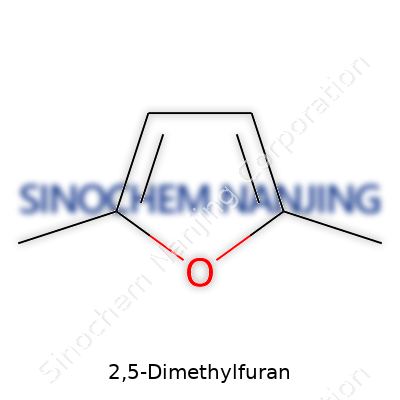
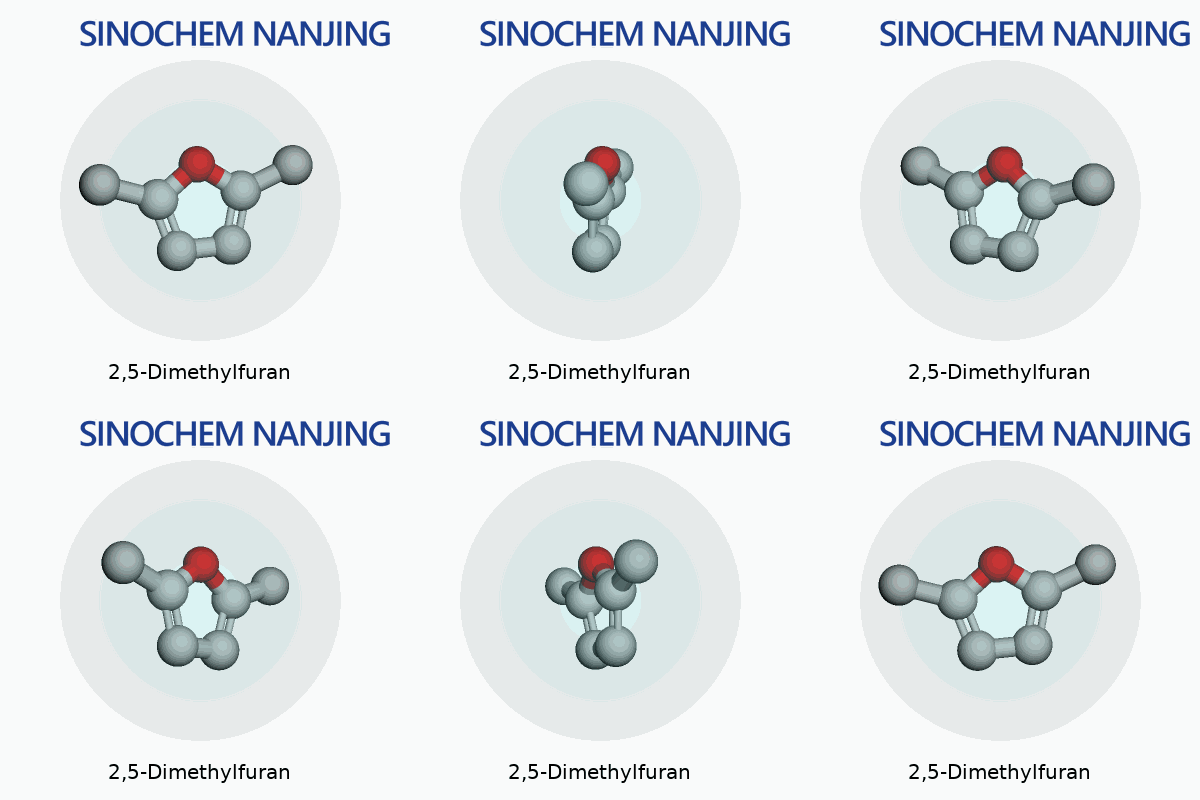
| Names | |
| Preferred IUPAC name | 2,5-Dimethylfuran |
| Other names |
DMF 2,5-DMF 2,5-Dimethyl-2,4-dihydrofurane |
| Pronunciation | /ˌdaɪˈmɛθ.əl.fjʊə.ræn/ |
| Identifiers | |
| CAS Number | 625-86-5 |
| Beilstein Reference | 113157 |
| ChEBI | CHEBI:32378 |
| ChEMBL | CHEMBL17697 |
| ChemSpider | 77567 |
| DrugBank | DB02170 |
| ECHA InfoCard | 03a7ce61-4516-4fc7-bb90-0e015be5e0b6 |
| EC Number | 200-848-1 |
| Gmelin Reference | 7840 |
| KEGG | C07636 |
| MeSH | D005907 |
| PubChem CID | 7908 |
| RTECS number | LU5950000 |
| UNII | 3A568E0N8A |
| UN number | UN1169 |
| Properties | |
| Chemical formula | C6H8O |
| Molar mass | 98.14 g/mol |
| Appearance | Colorless liquid |
| Odor | aromatic |
| Density | 0.897 g/mL at 25 °C |
| Solubility in water | insoluble |
| log P | 1.92 |
| Vapor pressure | 2.6 kPa (25 °C) |
| Acidity (pKa) | 14.24 |
| Basicity (pKb) | 13.67 |
| Magnetic susceptibility (χ) | -54.2·10⁻⁶ cm³/mol |
| Refractive index (nD) | 1.454 |
| Viscosity | 0.563 cP (25 °C) |
| Dipole moment | 1.44 D |
| Thermochemistry | |
| Std molar entropy (S⦵298) | 179.5 J·mol⁻¹·K⁻¹ |
| Std enthalpy of formation (ΔfH⦵298) | -76.2 kJ/mol |
| Std enthalpy of combustion (ΔcH⦵298) | -3026 kJ/mol |
| Hazards | |
| GHS labelling | **GHS labelling of 2,5-Dimethylfuran:** `GHS02, GHS07, GHS08` |
| Pictograms | GHS02,GHS07 |
| Signal word | Warning |
| Precautionary statements | P210, P261, P280, P301+P312, P304+P340, P312, P370+P378, P403+P235, P501 |
| NFPA 704 (fire diamond) | Health: 1, Flammability: 3, Instability: 1, Special: - |
| Flash point | °F: 65 °C: 18 |
| Autoignition temperature | 267 °C |
| Explosive limits | 1.4 - 10.7% |
| Lethal dose or concentration | LD50 (oral, rat): 495 mg/kg |
| LD50 (median dose) | LD50 (median dose): 497 mg/kg (rat, oral) |
| NIOSH | KIY58524 |
| PEL (Permissible) | Not established |
| REL (Recommended) | 1 mg/m³ |
| IDLH (Immediate danger) | Unknown |
| Related compounds | |
| Related compounds |
Furan 2,3-Dimethylfuran 2,4-Dimethylfuran 2,5-Dimethyltetrahydrofuran 2-Methylfuran 5-Methylfuran |



