2,5-Dichlorotoluene: A Closer Look at Its Past, Present, and Future
Historical Development
2,5-Dichlorotoluene came to prominence in the twentieth century as chemical industries expanded their reach into specialty compounds. While toluene itself dates further back, the stories of its chlorinated derivatives mirror those of synthetic chemistry as a whole—an era defined by the pursuit of new intermediates and adaptable building blocks. As more substitutions became possible, researchers discovered that positioning chlorine atoms at the 2 and 5 locations on the toluene ring unlocked unique reactivity patterns, allowing chemists to forge new pathways in dye, pharmaceutical, and agrochemical syntheses. Years ago, industrial demand for reliable intermediates pushed production methods from bench-scale curiosity to major-market commodity.
Product Overview
Chemists who work with aromatic compounds often rely on 2,5-Dichlorotoluene due to its reactivity, especially in electrophilic and nucleophilic aromatic substitution reactions. Whether synthesizing crop-protection agents, pharmaceuticals, or performance materials, this molecule forms a reliable backbone. I’ve seen it play a crucial role in labs and manufacturing sites alike, acting as a cornerstone for more complex structures and modifications. Having it on hand means access to a suite of downstream chemicals, reflecting the ongoing interplay between simple molecular frameworks and their transformed, high-value counterparts.
Physical & Chemical Properties
This compound presents as a colorless to pale yellow liquid under standard conditions. It gives off a mild but unmistakable aromatic odor, hinting at its roots in the benzene family. With a boiling point typically reported around 205-206°C, and a melting point below room temperature, it remains a liquid rather than crystallizing out in typical storage environments. Its solubility in water is nil, but it blends readily with organic solvents. Logically, the presence of two chlorines skews its reactivity: the molecule shows lower reactivity than toluene against typical nucleophiles but enables highly selective transformations in the hands of a skilled chemist.
Technical Specifications & Labeling
In my experience, precision matters for every bottle or drum shipped. Purity commonly hovers above 99 percent in reputable supplies, minimizing byproduct complications in downstream reactions. Labels show precise nomenclature, including the CAS number and hazard information, reflecting both national and international regulations. This kind of clarity protects everyone along the value chain and ties back into years of process development and regulatory scrutiny. Storage guidance usually asks for cool, well-ventilated areas, dry conditions, and containers that shield contents from direct sunlight and accidental ignition sources.
Preparation Method
Traditional routes often take either direct chlorination of toluene under controlled conditions or start with selective precursors. Companies optimize these routes to improve yields and reduce waste, driven both by economic and regulatory pressures. Solvent selection, catalyst choice, temperature, and reaction kinetics each make a big difference at scale. My own experience shows that managing these variables gets trickier as you move from grams in the lab to kilograms or tons in production. Side reactions, once minor annoyances, can become major operational headaches—so ongoing process refinement never ends.
Chemical Reactions & Modifications
The two chlorines set the stage for further reactions, particularly nucleophilic substitution. In the hands of an experienced synthetic chemist, this compound forms the basis for derivatives not easily accessed from other dichlorotoluene isomers. Its methyl group offers another handle for functionalization: oxidation produces the corresponding acid, while bromination or nitration can introduce new substituents. These reactions help fuel entire classes of specialty chemicals—herbicides, dyes, pharmaceuticals—that would struggle to exist without this specific compound in the toolbox.
Synonyms & Product Names
Documents and laboratory catalogs may use alternative names like 1-methyl-2,5-dichlorobenzene or 2,5-DCT. Though these synonyms can create confusion for the uninitiated, operational settings rely on strict adherence to standard nomenclature to avoid costly mistakes. In the scientific community, a shared vocabulary reinforces safety and precision, making it easier to track research efforts and regulatory filings across borders and disciplines.
Safety & Operational Standards
Handling chlorinated aromatics demands respect. Eyes and skin need protection; inhalation risks require local exhaust ventilation and, in some cases, closed systems. Over the years, improvements in engineering controls and personal protective equipment helped reduce health risks. Spills still pose challenges, especially in high-traffic sites or older facilities with dated infrastructure. Disposal practices have tightened, partly due to mounting environmental protections and public expectations. There's always a push for safer alternatives, but until then, vigilance underpins every operation involving this chemical.
Application Area
You find 2,5-Dichlorotoluene at the crossroads of multiple markets—agrochemicals, pigments, perfumery intermediates, resins, and pharmaceuticals. Makers of crop-protection products transform it into even more active entities, seeking better weed and pest control. Pharmaceutical labs draw on its reactivity for starting points in candidate synthesis. Even in dyes and imaging chemicals, it forms colored compounds that underwrite everything from industrial colorants to specialty inks. Each application draws on its robust and predictable reactions, a testament to why industry veterans favor it over less proven intermediates.
Research & Development
Every decade reveals new uses, largely stemming from advances in reaction technology and demand for customized molecules. Emerging research targets more selective catalytic processes to reduce waste and improve efficiency. Academic teams investigate ways to push chemoselectivity, regioselectivity, and even asymmetric synthesis, all on the backbone of this unassuming compound. As the world turns toward green chemistry, efforts to cut chlorinated byproducts and implement recycling schemes for spent solvents are gathering pace. R&D budgets grow every time new regulations threaten supply chains, forcing innovation just to keep up with business as usual.
Toxicity Research
Scientists recognize that chlorinated aromatics like 2,5-Dichlorotoluene come with toxicity concerns. Animal studies indicate potential for organ-specific effects at high or chronic exposures. Regulatory bodies set strict occupational hygiene limits reflecting both precaution and evidence from epidemiological surveys. In my own career, tighter toxicity data has changed how facilities monitor air and surface contamination. Best practices now start with robust exposure controls, not just for acute incidents but for the silent, chronic exposures that add up over a working lifetime.
Future Prospects
Looking ahead, the fate of 2,5-Dichlorotoluene will pivot on two major axes: regulatory evolution and advances in synthetic strategy. Increased restrictions on chlorinated compounds may drive development of cleaner routes, reduce emissions, and push for biodegradable alternatives. At the same time, the molecule’s structural reliability keeps it in demand for high-value specialty processes. Down the road, catalytic innovation and digital chemistry may streamline its synthesis and integration into new product classes. As sustainability concerns grow, companies and researchers must balance economic realities with heightened responsibility for human and environmental health. My hope rests with ongoing collaboration—between labs, industry, and regulators—to trace a future where chemical innovation works in concert with safety and stewardship.
What is 2,5-Dichlorotoluene used for?
A Closer Look at Everyday Chemistry
City air feels thick with scents—some pleasant, some less so. Rarely do we think about the building blocks behind those smells, the same ones found in products at home or work. 2,5-Dichlorotoluene might not sound familiar to most, but this chemical shapes a chunk of the modern chemical landscape. For anyone tracking the journey of products from factories to households, it’s worth understanding how and why this substance matters.
Seeds of the Synthetic World
Much of the world relies on substances crafted far from natural sources. 2,5-Dichlorotoluene often acts as a stepping stone, helping scientists build larger, more complex molecules. This compound often goes to work early in the chain, feeding the synthesis of agrochemicals and dyes. Whether it’s a blue shirt or a crop protected against bugs, there’s a good chance it owes something to small building blocks like this one.
Factories making herbicides and pesticides use 2,5-Dichlorotoluene to design chemicals targeting specific weeds or pests. Researchers craft these controls from the molecule’s stable, chlorine-rich backbone. Its reliability gives manufacturers a repeatable process, making scaled production possible to keep farms growing year after year. The U.S. Environmental Protection Agency sets strict guardrails so these products don’t end up hurting water or food. My neighbor once asked why headache-free strawberries cost a little more at farmers markets. Sometimes, it traces back to which chemicals grow them.
Dye and Pigment Manufacturing
Look closely at the intense color on a new t-shirt or school marker. Synthetic dyes result from a few basic chemical reactions, making color both bold and long-lasting. Makers take 2,5-Dichlorotoluene as a base and attach different groups to create new shades and properties. This approach keeps colors vivid and washable, even after a summer afternoon at the playground or backyard barbecue.
Pharmaceutical Pathways
Many drug molecules are crowds of connected rings and chains. To build something like an anti-allergy pill or tumor-fighting compound, chemists break the job into steps. They might grab 2,5-Dichlorotoluene to supply a tough but flexible starting point. It anchors other chemical groups, allowing research teams to tinker without starting from scratch.
Most people never see the chain of reactions that leads from a bland white powder to a dose of medicine. Good manufacturing depends on ensuring purity and safety at every step, which calls for constant vigilance. Drug regulators in Europe and the U.S. keep a close watch on everything moving through this process. For families relying on a prescription, these background checks bring peace of mind.
Safety and Future Changes
Production means strict rules for workers and the surrounding community. Exposure to concentrated 2,5-Dichlorotoluene can cause skin or respiratory irritation. Employers and safety experts work together, mandating protective gear and close air monitoring. Easier access to data helps workers flag hazards sooner. I’ve watched people in lab coats spending days updating material safety plans, double-checking every shipment and storage shelf.
Better alternatives keep popping up as research pushes safer, more efficient synthetic routes. Green chemistry looks for ways to cut hazardous byproducts and shrink waste. That would mean less risk at factories, in transport, and for the world outside. Following these changes from lab bench to classroom keeps everyone—scientists and families—safer and better informed about what touches their lives.
What are the safety precautions for handling 2,5-Dichlorotoluene?
Understanding What You’re Handling
2,5-Dichlorotoluene often finds its way into labs and production lines because it helps build more complex chemicals. It looks pretty harmless at first glance—a clear liquid, a faint smell. That’s where people can get careless. Just last year, I saw a seasoned technician brush off a warning because he underestimated its vapor. By noon, he felt lightheaded and nauseous. After decades in labs, I never take a clear liquid’s risks at face value, and I keep a close eye on safety data sheets every time I work with chemicals like this.
Actual Risks in Practice
The main problems with 2,5-Dichlorotoluene show up during routine handling. Breathing in its vapors can mess with your respiratory system. Skin absorbs it slowly, but over time even small spills stack up. Eyes sting and water pretty much right away if splashed. It doesn’t explode easily, but heat or an open flame turns it into a real hazard. Some folks in the chemical industry think flammability is only for bigger operations, but small spills on a bench near a heat gun can get out of hand faster than you think.
What Safety Gear Actually Works
People swear by nitrile gloves, not thin latex ones, because this stuff slips right through cheaper options. For your eyes, go with goggles that offer a real seal—regular safety glasses don’t cut it. In busier labs or confined spaces, a proper face shield helps a lot since splashes don’t always aim for one spot. Long lab coats and closed-toe shoes keep it off your skin and out of your system. In smaller rooms, chemical-resistant aprons offer an extra layer.
Ventilation Isn’t Optional
Chemical fumes creep up on you, especially in older or cluttered workspaces. Fume hoods pull vapors away from your face and out of the room. Plenty of places don’t keep theirs maintained, though. I always check airflow with a strip of tissue or vapor indicator before starting work. Even if it slows your routine, leaving a fume hood unchecked never worked out well for anyone I’ve seen take those shortcuts.
Storage Habits That Matter
I still remember a workshop where someone stored 2,5-Dichlorotoluene next to oxidizers out of convenience. Too many chemicals packed together raises risk—one broken bottle can trigger a chain reaction, and nobody catches it right away. These chemicals stay steadier in tight-sealing containers made for organics, kept in cool cabinets marked with solid labeling. Fire-proof cabinets never feel like overkill if you’ve ever witnessed a chemical fire’s speed.
Spill Control Plans That Save Time and Trouble
Paper towels do nothing for this kind of spill and often make things worse. Absorbent pads rated for solvents grab liquids fast. I keep spill kits within arm’s reach, not tucked in a closet. Quick action with the right gear beats improvising every time—one fast cleanup kept vapors down and people from getting headaches more than once. After cleaning up, it’s regular habit to ventilate longer than you think necessary, then double-bag and label everything for disposal.
Why Training Beats Guesswork
Every year, spills and close calls make it clear that training keeps people safe more than any single piece of equipment. Short training sessions, clear labeling, and easy-to-read instructions help newcomers pick up good habits fast. Anyone working near 2,5-Dichlorotoluene needs to know how it behaves in real-world situations, not just on paper. It’s the lived knowledge that turns safety rules from a checklist into a routine you follow without thinking.
What is the chemical formula and structure of 2,5-Dichlorotoluene?
The Building Blocks: What’s in the Name?
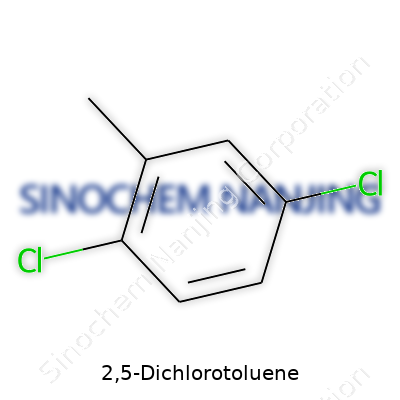
2,5-Dichlorotoluene may sound technical, but its chemistry has found its way into many everyday materials. The name gives away much about its makeup: it’s a toluene molecule, which itself is a benzene ring with a single methyl group, dressed up with two chlorine atoms. The numbers 2 and 5 tell you exactly where those chlorines grab onto the ring.
Chemical Formula and Appearance
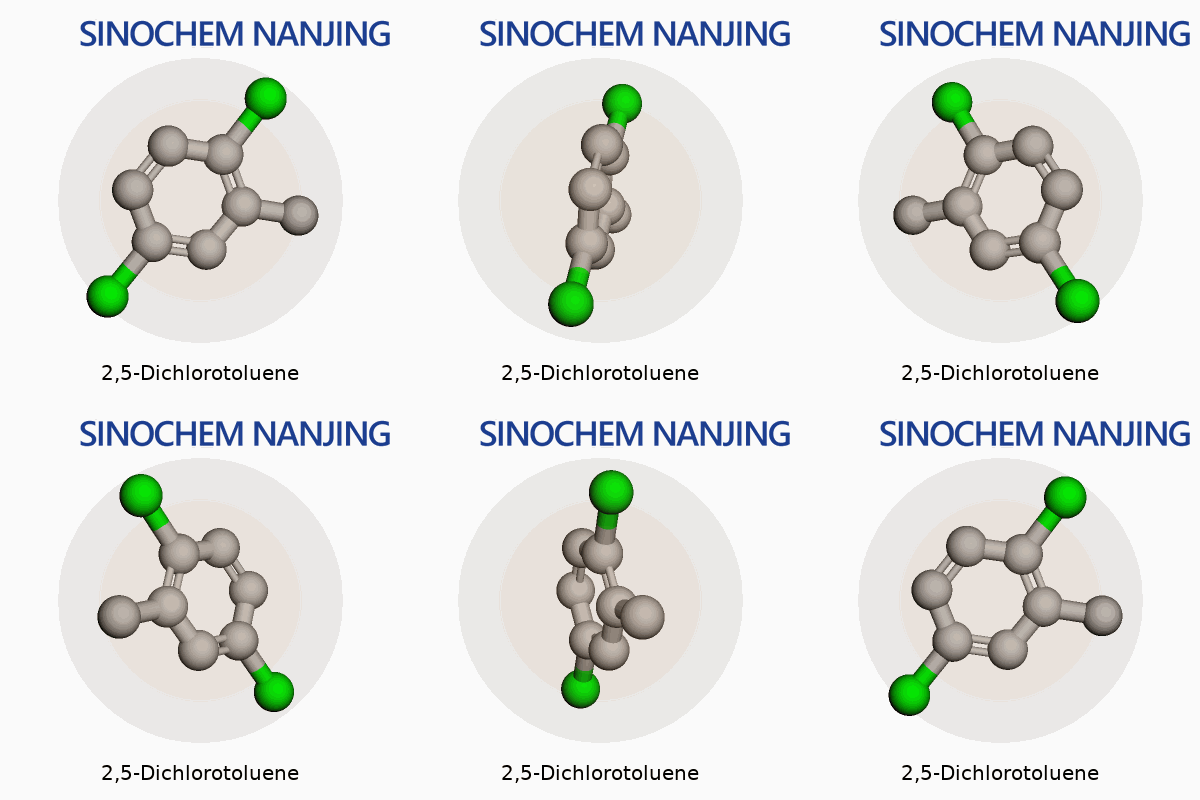
This compound goes by the formula C7H6Cl2. In classrooms and labs, folks draw its structure as a six-carbon aromatic ring. A methyl group (–CH3) hangs off one carbon atom, while the chlorines attach to the second and fifth carbon atoms on that ring. Squeezing two relatively heavy chlorine atoms into a mostly carbon-hydrogen framework changes its behavior. In person, you’ll likely find 2,5-dichlorotoluene as a colorless liquid with a detectable odor.
Structure: Why Positions Matter
In organic chemistry, position means everything. Putting chlorines at the 2 and 5 spots breaks up the symmetry of the benzene ring. This pairing shifts the way electrons move around the molecule and affects the way it reacts with other chemicals. If you swap those chlorines to different spots, you get compounds with different properties. For folks who make paints, plastics, or drugs, that matters a lot.
Real-World Impact
Back in my university days, I watched chemists debate the importance of small changes in aromatic compounds. I saw how the position of a single atom could change the boiling point or the way it bonded to other elements. With 2,5-dichlorotoluene, those chlorine atoms create a molecule that's not very reactive with water, but it stands up well when used as a building block in synthesis. That's a quality needed for tough plastics or reliable pesticides. Many intermediates for dyes and pharmaceuticals spin out from this basic structure.
Health and Safety Considerations
Chlorinated organics, including 2,5-dichlorotoluene, get a watchful eye from regulators and occupational safety groups. Inhalation or skin exposure may result in irritation, and excessive long-term exposure comes with added risks. From handling solvents in college labs, I know safety rules aren’t just there for show—good ventilation and gloves save you a lot of trouble. Following guidance from trusted agencies like the EPA and OSHA ensures that professionals and the environment see as little risk as possible from chemicals like this one.
Industry and Environmental Solutions
With every new chemical, sustainability and waste reduction grow more urgent. Industry has started to pay attention to green chemistry—using methods that limit hazardous byproducts and support recycling. For 2,5-dichlorotoluene, companies have explored catalytic routes and continuous flow processing to raise yields and cut energy use. Academic groups now study ways to break down leftover chlorinated compounds safely, using bacteria or sunlight-driven reactions. These changes don’t just tick boxes on a form; they reflect rising standards across jobs, companies, and entire regions.
Final Thoughts
It may look simple on paper, but the formula C7H6Cl2 maps out a chemistry that pops up again and again in the background of our lives. Each detail in the structure gives rise to properties that drive innovation and caution alike. Taking care with its use, from synthesis to disposal, sets benchmarks not only for chemistry but for responsible industry worldwide.
How should 2,5-Dichlorotoluene be stored?
Understanding the Stakes with 2,5-Dichlorotoluene
Anyone who’s spent time working around industrial chemicals learns pretty quickly that some materials don’t leave much room for mistakes. 2,5-Dichlorotoluene fits right into that category. It comes packed with hazards, and real people get hurt when it isn’t respected. I’ve handled similar chlorinated organics over the years, and the lessons get drilled in fast: store smart or pay the price in health, lost batches, or regulatory fines.
Get Storage Right or Suffer the Consequences
Forget the idea that ordinary shelving or a closet is enough. This chemical gives off fumes. Its vapors bother the eyes and lungs, even in small amounts. In a stuffy room or a leaky drum, problems pop up fast. Stash it in a space built for hazardous liquids—well-ventilated, out of direct sun, where temperatures don’t swing much past room temp. Fumes drifting into a workspace nearly always signal poor storage choices.
A good chem storage room has self-closing doors, chemical-resistant floors, and warning signs that make visitors do a double-take before they enter. I remember a fellow warehouse manager talking about how he ended up having to repaint the walls and replace light fixtures after a drum leaked and fumes corroded exposed metal. He learned from that; many don’t.
Keep It Away from the Wrong Materials
Store 2,5-Dichlorotoluene far away from strong oxidizers. Even a small spill mixing with nitric acid or hydrogen peroxide starts a fire or produces toxic gases. Keeping incompatible chemicals separated cuts incidents. Segregate by risk: flammables, acids, oxidizers, and chlorinated solvents each get their own shelf or cabinet—at minimum, separate cabinets on opposite sides of the room. In the field, I’ve seen the aftermath of lazy storage, and there’s nothing minor about it.
Don’t Ignore Containers and Labels
This chemical often arrives in steel drums or tightly sealed glass bottles lined with PTFE. Never use containers showing rust, cracks, or missing gaskets. A vapor-tight seal actually means something here. Labels fade if they get wet or sit in sunshine, so use ones with permanent ink and laminate if needed. I can’t count the number of labels I’ve seen peeling off after a damp week. No one wants a spill panic while searching for a name on a wrinkled sticker.
Rely on Consistent Inspections
No storage plan works if it isn’t backed by regular checks. Walk the rows, look for bulging drums, odd smells, or residue on the floor. I’ve developed a checklist for my own shops: ventilation hoods working, doors locked, no clutter or pooling liquid. Every real-life incident I know of started because someone skipped the checks. Make it a weekly routine, not just a formality.
Train for Emergencies—Don’t Just Post Instructions
SDS sheets cover the basics, but rescue plans need details: shower stations, eyewash, and clear paths to exits. I’ve seen drills save lives. Even experienced operators freeze in the moment without practice. Have proper spill kits with absorbent pads, neutralizers, and heavy gloves on-hand—better yet, in plain sight. Chemical safety isn’t handled at a policy level; it happens in storage rooms, hour by hour, by workers who know the drill.
What are the health hazards associated with 2,5-Dichlorotoluene exposure?
Understanding the Chemical at Hand
2,5-Dichlorotoluene pops up in a bunch of industrial settings. Anyone who’s worked in chemical manufacturing or labs could have run into it, even if the name doesn’t roll off the tongue. At its core, this compound comes from the group of chemicals called chlorotoluenes, often used to make dyes, herbicides, and pharmaceuticals. The thing is, these uses bring a risk of direct contact or inhalation, especially where good ventilation and protective gear get overlooked.
Risks People Face on the Job
I’ve seen workers forget gloves or a mask during a long shift, often out of routine or the rush to meet a deadline. That’s where problems start. 2,5-Dichlorotoluene tends to enter the body through skin or lungs. Shorter term exposure leads to skin irritation, redness, and a nasty burning feeling. A few times, I watched co-workers brush off a rash, thinking it’s just dryness, not realizing that repeated contact can turn mild irritation into chronic dermatitis. Inhaling its vapors irritates the nose and throat, making it tough to breathe comfortably. Even a single whiff leaves some people coughing and lightheaded.
Why Long-Term Exposure Matters
Stories circulate about old-timers in the industry who started noticing headaches and memory lapses after years of working around certain chemicals. Science backs this up—chronic exposure to substances like 2,5-Dichlorotoluene puts extra stress on the liver and nervous system. Several studies show damage builds over time, though the effects might not hit right away. As the body struggles to process these chemicals, toxins pile up, raising cancer risks. The U.S. Environmental Protection Agency warns that chlorinated aromatic compounds, including this one, can act as suspected carcinogens. The International Agency for Research on Cancer keeps a careful eye on occupational exposures for a reason.
Real-World Paths to Safer Workplaces
Nothing beats training and proper equipment. I remember a boss strict about gear: gloves stayed clean, masks fit right, and we knew how to use emergency showers. It kept us safer than some other shops that cut corners. Still, not every workplace is up-to-date. Regular air monitoring gives a heads-up if concentrations get dangerous. Clear labeling on storage containers helps. In places where chemicals get handled daily, air extraction systems matter. They take fumes out before anyone can breathe them in.
Those making policy need to consider the vulnerability of low-wage workers and temporary staff. These groups tend to get the least training and often work the riskiest jobs. Stronger laws demanding comprehensive education on chemical hazards, even for short-term hires, could close the gap. Providing information in multiple languages and accessible formats helps more people stay aware and protected.
Companies can swap out harmful chemicals for safer alternatives in some cases. Research constantly uncovers substitutes less likely to trigger skin or nerve problems. If substitutions prove impossible, enforcing shorter shifts and more frequent breaks limits the buildup of chemicals in workers’ systems. Medical surveillance, like routine checkups and liver function tests, catches problems before they go too far.
The Takeaway from Experience and Evidence
Most people walking into places where 2,5-Dichlorotoluene gets used won’t spot risk right away. Health hazards often hide behind routine, but the effects show up after months or years. Listening to worker concerns, supporting science-based policies, and sticking to protective measures save lives. It’s possible to run essential industries without gambling on the health of the people who keep them moving.
| Names | |
| Preferred IUPAC name | 1,4-dichloro-2-methylbenzene |
| Other names |
1,4-Dichloro-2-methylbenzene 2,5-Dichloromethylbenzene p-Dichlorotoluene p-Toluylene dichloride |
| Pronunciation | /ˌtuː.faɪv-daɪˈklɔːr.oʊ.tɒl.juːiːn/ |
| Identifiers | |
| CAS Number | 95-49-8 |
| Beilstein Reference | 1207935 |
| ChEBI | CHEBI:83168 |
| ChEMBL | CHEMBL22737 |
| ChemSpider | 11845 |
| DrugBank | DB16638 |
| ECHA InfoCard | 100.007.631 |
| EC Number | 202-315-6 |
| Gmelin Reference | 5897 |
| KEGG | C02571 |
| MeSH | D008478 |
| PubChem CID | 6977 |
| RTECS number | XT3150000 |
| UNII | K1UOL1QE0X |
| UN number | UN2321 |
| Properties | |
| Chemical formula | C7H6Cl2 |
| Molar mass | 161.04 g/mol |
| Appearance | Colorless to pale yellow liquid |
| Odor | Aromatic |
| Density | 1.28 g/mL at 25 °C |
| Solubility in water | insoluble |
| log P | 3.98 |
| Vapor pressure | 0.35 mmHg (25 °C) |
| Basicity (pKb) | Does not contain basic nitrogen |
| Magnetic susceptibility (χ) | -82.0×10⁻⁶ cm³/mol |
| Refractive index (nD) | 1.552 |
| Viscosity | 1.25 mPa·s (20°C) |
| Dipole moment | 1.97 D |
| Thermochemistry | |
| Std molar entropy (S⦵298) | 221.6 J·mol⁻¹·K⁻¹ |
| Std enthalpy of formation (ΔfH⦵298) | –59.6 kJ/mol |
| Std enthalpy of combustion (ΔcH⦵298) | -3887.7 kJ/mol |
| Hazards | |
| GHS labelling | GHS02, GHS07 |
| Pictograms | GHS07 |
| Signal word | Warning |
| Hazard statements | H226, H315, H319, H335 |
| Precautionary statements | P210, P261, P271, P280, P301+P312, P304+P340, P305+P351+P338, P312, P337+P313 |
| NFPA 704 (fire diamond) | 2,5-Dichlorotoluene NFPA 704: 2-2-0 |
| Flash point | 64 °C (147 °F; 337 K) |
| Autoignition temperature | 572 °C |
| Lethal dose or concentration | LD50 oral rat 3913 mg/kg |
| LD50 (median dose) | rabbits oral LD50: > 5000 mg/kg |
| NIOSH | SW1960000 |
| PEL (Permissible) | Not established |
| REL (Recommended) | 0.1 ppm |
| IDLH (Immediate danger) | Unknown |
| Related compounds | |
| Related compounds |
Benzyl chloride Benzaldehyde 2-Chlorotoluene 4-Chlorotoluene 2,4-Dichlorotoluene 2,6-Dichlorotoluene 3,5-Dichlorotoluene 2,5-Dichlorobenzyl alcohol |



