2,4-Dimethylaniline: More Than Just Another Chemical Compound
Looking Back: Historical Development
Curiosity around anilines traces back to the golden era of organic chemistry, when coal tar still fed most innovation. Chemists learned to tweak aromatic rings and move beyond dark dyes and paints. Eventually, they figured out how to add methyl groups to the aniline molecule, and that's where 2,4-dimethylaniline sprang up. By shifting two methyl groups onto the benzene ring's second and fourth positions, researchers opened the gate to a wealth of new reactions. The earliest uses built on this platform, leveraging a molecule that not only colored, but could serve as a launchpad for new pharmaceuticals, pesticides, and polymer components. Through every era—Victorian factories, wartime research, the wave of postwar mass production—2,4-dimethylaniline stayed in the mix, sometimes front-and-center, often behind the scenes, always ready to shape new chemistry.
Product Overview: What 2,4-Dimethylaniline Offers
Anyone who spends time around chemical plants or R&D labs knows that certain compounds keep showing up for a reason. 2,4-dimethylaniline brings together accessibility—easy to produce, simple to modify—and a reactivity profile that fits many applications. It works well as an intermediate, not just a final endpoint. Pharmacies, dye-makers, and agrochemical plants all find uses for it: from furnishing azo dyes, optimizing antioxidants for lubricants, to spinning off herbicide precursors. Its presence in modern chemistry books isn’t about niche interest; demand persists because it slots into so many processes with a minimum of fuss and adapts readily when chemists need to push reactions forward or build out more complex molecular scaffolds.
Physical & Chemical Properties: Why Lab Coats Respect It
2,4-dimethylaniline has a colorless to pale yellow appearance, often showing a faint aromatic smell that signals caution. It melts in a moderate temperature range, not far from the freezing point of water. Solubility isn’t impressive in water, but it blends easily into organic solvents like ether or ethanol, which explains much of its popularity. From a chemical perspective, the methyl groups shift reactivity, making the aniline ring more electron-rich, which can boost nucleophilicity. These tweaks influence how it responds during reactions: it integrates into azo coupling with less hassle, or pushes electrophilic aromatic substitution further along. None of these traits make it wild or unpredictable; on the contrary, the consistency of its behavior under the right conditions is a big draw in tightly controlled industrial settings.
Technical Specifications & Labeling: Knowing What’s Inside
No one buys a drum of 2,4-dimethylaniline without expecting clear specs. Technical documents lay out purity, typical impurity profiles, and identify content by gas chromatography or HPLC. Each shipment usually confirms melting point, color index, and sometimes a refractive index, since even trace contamination can disrupt a dye synthesis or catalyst preparation. Labels list hazards, adhering to GHS pictograms and hazard statements—signal words warn about skin and respiratory irritation, and flammability always gets a mention. Chemical handlers ignore this at their peril; the right specs and safety data ensure that researchers and plant operators use the compound as intended, not in a way that backfires due to overlooked details in composition or handling requirements.
Preparation Methods: Making the Molecule
Historically, synthetic chemists favored direct methylation of aniline, but controlling placement for just the 2 and 4 positions takes finesse. Today, more reliable routes begin either with toluene derivatives or targeted Friedel-Crafts alkylation, moving systematically to create intermediate compounds and aminate them with care to avoid excessive side products. Process engineers spend years optimizing yields and minimizing waste, hunting for catalysts that achieve the desired substitution efficiently, working at scales that range from gram quantities in the lab up to tons in production facilities. Each manufacturer may nurse a favored catalyst system—be it Lewis acids or newer solid acids—to suit their feedstock and match customer constraints on trace impurities, effectively keeping the route cost-effective and green when possible.
Chemical Reactions & Modifications: Flexible Building Block
Take 2,4-dimethylaniline, put it in the right hands, and countless transformations become possible. Nitration, sulfonation, diazotization—its benzene core stands ready for functionalization. Medicinal chemists often use it to make heterocyclic compounds, especially when targeting specificity in drug candidates. Polymer scientists value its use as a monomer precursor; crop protection chemists rely on its selective reactivity when designing new herbicides. Even in dye chemistry, it jumps into azo-coupling to produce bright, stable colors. These reactions depend on more than bench skills; they draw from generations of hard-won experience, demonstrated by the way methyl groups steer electrophilic attack or how the amino group couples to diazonium ions without scattering side reactions across the board.
Synonyms & Product Names: Don’t Get Lost in Translation
Anyone shopping catalogues or calling suppliers runs across multiple names for 2,4-dimethylaniline. It shows up as 2,4-xylidine or 2,4-dimethylbenzenamine. Some product data sheets highlight these alternate names, sometimes complicating international trade or regulatory compliance. Being alert to various trade names and local naming customs spares chemical buyers headaches, making sure they get what their process demands, and not a close—but problematic—lookalike.
Safety & Operational Standards: Keeping People Protected
Workplaces built around chemicals stand or fall on their approach to safety. 2,4-dimethylaniline demands the same respect as other aniline derivatives—protective gloves, eye shields, and ventilation cut down on exposure. Its vapor can irritate, its liquid can sensitize or burn; both acute and chronic risks deserve attention. Chemical spill response relies on training and up-to-date physical data, and safe disposal calls for methods that neutralize toxicity without releasing unchecked residues into the environment. Regulatory agencies keep a close eye on its handling, mandating engineering controls and personal protective equipment standards in any facility using, storing, or transporting it. In my time on shop floors, the difference between a routine day and a medical emergency rarely comes down to luck. It follows from following the rules, understanding the hazards, and double-checking procedures before turning on a single pump or mixer.
Application Area: Where 2,4-Dimethylaniline Matters
Industrial demand for 2,4-dimethylaniline links back to its versatility. Dye manufacturers add it to make vivid colorants with impressive staying power. Agrochemical engineers draw on it to build herbicides that control weeds without wiping out entire ecosystems. Pharmaceutical researchers use its structure as a springboard for active ingredients, often in painkillers, antihistamines, or even anti-tuberculosis agents. Rubber and lubricant producers tweak it into antioxidants, aiming for longer product life and engine protection. These uses look diverse, but they all require reliability and purity at scale—traits that have kept this compound in regular use across continents, from lone labs to sprawling refineries.
Research & Development: Always Pushing Boundaries
The story of 2,4-dimethylaniline keeps growing, thanks to steady curiosity from the research trenches. Novel synthetic routes that cut down waste or dial up yield serve both green chemistry ambitions and market demands. Computational chemists model its reactivity, searching for reaction partners that might unlock new pharmaceuticals or materials. Analytical labs probe ever-tinier impurity profiles, using high-field NMR or advanced chromatography to spot residues from raw materials and confirm purity before clinical or commercial scale-up. Discussions with colleagues often circle back to improving selectivity or minimizing byproduct formation—bread-and-butter challenges that demand both creativity and hard science. The compound’s role may shift, but the appetite for breakthroughs built on its frame shows no signs of slowing down.
Toxicity Research: Looking at Risks with Open Eyes
Studies on 2,4-dimethylaniline’s toxicity underscore the importance of informed handling. Lab data points to risks for skin and respiratory irritation, with potential for cumulative toxic effects if exposure goes uncontrolled. Animal studies have set the stage for current workplace exposure limits, guiding safety officers in drafting policies that favor preventative controls over reactive cleanups. Regulatory bodies—drawing on decades of research—require warning labels, exposure monitoring, and strict inventory controls to keep incidents rare. It’s worth noting that the evidence base grows every year, with new data feeding into risk assessments that redraw what counts as “safe” in chemical manufacturing. Ignoring these findings risks not just regulatory penalties, but real harm to anyone on the job or downstream in the product chain.
Future Prospects: Beyond the Usual Horizon
Demand for smarter chemicals isn’t slowing down, and 2,4-dimethylaniline’s adaptability keeps it in the running as industries look for greener, safer, and more innovative processes. Its ability to serve as a precursor for advanced materials, new pharmaceuticals, and next-stage crop protectants puts it at the crossroads of many technological pushes. Innovation targets both process intensification—for example, continuous-flow production that cuts costs and accidents—and new reaction pathways that may sidestep legacy pollutants. Sustainability efforts drive chemists to revisit existing molecules, exploring biodegradation or recyclable intermediates, while regulatory pressures keep the focus fixed on safer workplace practices and cleaner downstream footprints. Through every challenge and opportunity, the role of 2,4-dimethylaniline stands as a testament to the never-ending search for molecules that do more and do it better.
What is 2,4-Dimethylaniline used for?
Understanding Its Role in Industry
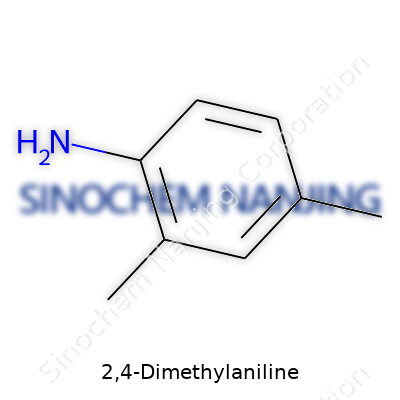
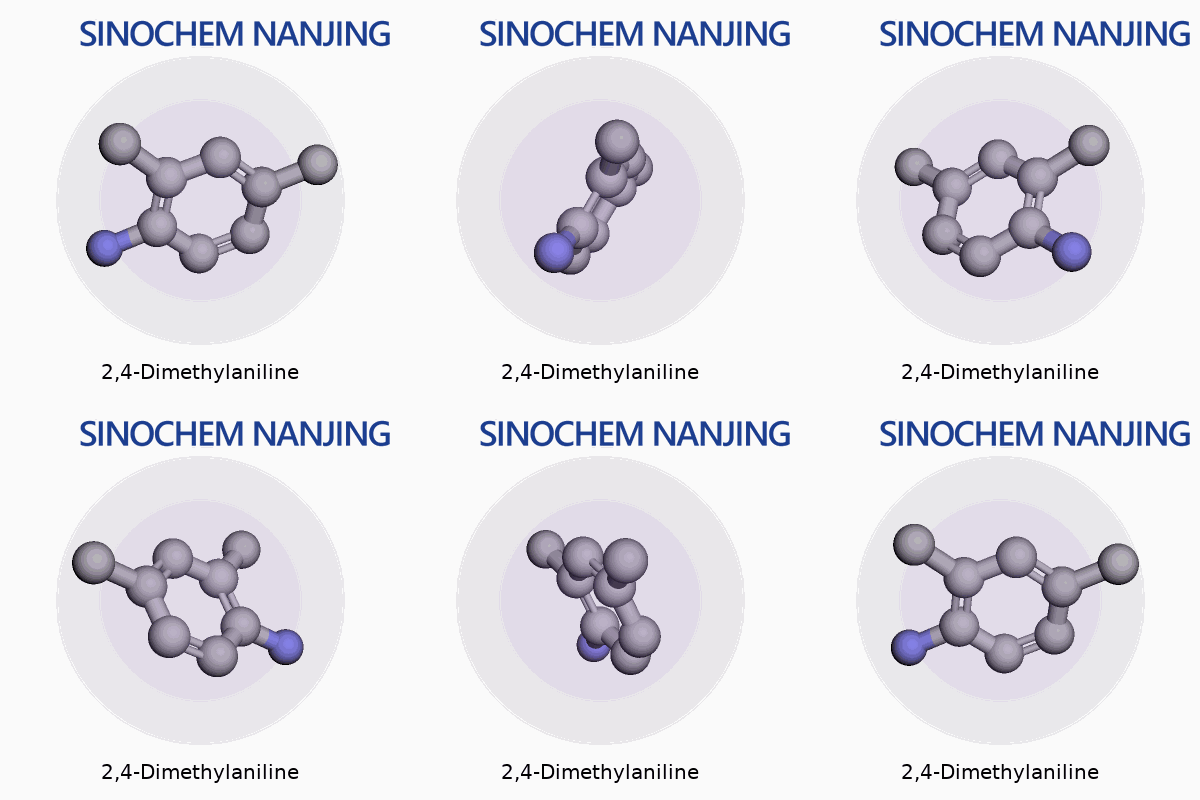
In the chemical world, 2,4-dimethylaniline might sound like just another entry in a thick reference book, but it plays a big part in everyday products. This compound, made up of a benzene ring with two methyl groups and an amino group, often finds its way out of the lab and into factories, coloring plants, and research facilities. Many folks won’t recognize it on an ingredient list, but if you dig into how things are made, you’ll run across it in more places than you’d guess.
Coloring and Pigments
A major use for 2,4-dimethylaniline sits right in the world of dyes and pigments. Synthetic dyes changed everything from the clothes people wear to the plastics used in electronics, toys, and vehicles. Textile industry workers know this chemical as a base. It helps develop colors that don’t fade after a few washes. I’ve seen how these advanced pigments increase durability in fabrics, making items last much longer and keep looking sharp. The move away from natural dyes, which can fade and behave unpredictably, has roots in compounds like 2,4-dimethylaniline.
Pharmaceuticals: A Starting Point
Pharma researchers look for small, tweakable molecules, and this compound fits the bill. It steps in as an intermediate, which means it helps build larger, more complex drug molecules. I remember reading about how it leads to the creation of certain antihistamines, some anesthetics, and even a few antiseptics. Medicinal chemists rely on such building blocks to explore new treatments, and by altering side groups on a compound like this, new drugs often emerge.
Role in Pesticides and Herbicides
Modern agriculture doesn’t run without chemicals to control weeds and bugs, and this amine makes a mark here, too. As a starting point, it leads to the synthesis of pesticides and herbicides that farmers use for stronger crop yields. Companies seek out 2,4-dimethylaniline for its structure to support molecules that kill pests, yet don’t harm crops (in ideal cases). This helps trim back crop losses, reducing some strain on food production worldwide. Still, the use of these chemicals raises questions about environmental impact, run-off, and resistance. Shifting toward smart application methods, integrated pest management, and constant monitoring, growers find ways to strike a better balance between productivity and environmental health.
Handling Health and Safety
Working with aromatic amines never comes without concerns. The International Agency for Research on Cancer includes several chemicals in this family on its lists, connecting them with potential cancer risk. Labs and plants using 2,4-dimethylaniline ramp up their safety equipment, require strict ventilation, and monitor air quality closely. If safety slips, people face real risks—eye, skin, and respiratory irritation or worse. I’ve seen how regular training, using gloves and goggles, and keeping good records makes a powerful difference in worker safety. Companies with strong safety cultures tend to have fewer incidents and healthier staff.
Moving Toward Greener Solutions
As more eyes focus on environmental impacts, industries start searching for safer alternatives and better waste management around compounds like 2,4-dimethylaniline. Green chemistry has become a key part of this effort. Some researchers develop routes to produce similar compounds from renewable resources, using less toxic ingredients or milder conditions. Others invest in recycling waste or capturing emissions before they leave the facility. Collaboration between manufacturers, regulators, and research groups deepens this shift. This steady drive to shrink the environmental footprint changes the look of manufacturing over time, offering hope for safer products in the future.
What are the safety precautions when handling 2,4-Dimethylaniline?
Why Focus on Staying Safe With 2,4-Dimethylaniline?
Anyone who’s spent real time in a chemistry lab understands how quickly routine work can turn hazardous if shortcuts get taken. 2,4-Dimethylaniline comes with enough risk that respect and caution are essential. This aromatic amine can harm skin, eyes, and lungs. It’s considered potentially carcinogenic, and its vapors cause headaches and throat irritation. Once, I got a faint whiff of this stuff through a poor-fitting mask—a mistake nobody wants to repeat. Safety isn’t about paranoia; staying healthy keeps us working and living our lives outside the lab too.
Choosing the Right Personal Protective Equipment
A lab coat may look simple, but it’s there for a reason. Splash one drop of 2,4-Dimethylaniline on bare skin, and you’ll feel the sting—or worse, face serious long-term effects. Nitrile gloves seal off your hands and offer resistance, but they don’t last forever; after every session, I check mine and toss them if they look even slightly worn. Chemical safety goggles prevent a dangerous accident if anything splashes. For me, switching to a face shield felt awkward at first, yet it stands between me and an emergency room visit.
Ventilation Isn’t Optional
Too many labs I’ve visited try to cut corners on airflow, but fumes from 2,4-Dimethylaniline can build up fast in small spaces. Opening a window isn’t enough. Only a properly functioning fume hood clears the room of harmful vapors. I make a habit of double-checking the exhaust before pouring chemicals or starting a reaction. If you can smell anything harsh in the air, stop immediately. Good ventilation works as a basic line of defense.
Storage Practices: Prevention Over Reaction
Where you store chemicals shapes how safe your workspace stays. 2,4-Dimethylaniline should live in a cool, dry cabinet, away from strong oxidizers or acids. I always keep it in well-sealed bottles with clear labeling—no scrawled shorthand. A spill caused by a loose cap or a cracked container can cause a chain of problems nobody wants to manage. Keeping incompatible chemicals apart prevents unexpected reactions that could trigger fire or toxic releases. These steps save a lot of trouble and keep accidents from spreading beyond a single shelf.
Spill and Waste Management: Don’t Delay, Don’t Wing It
In labs I’ve worked in, prompt response to spills makes the difference between a minor cleanup and an escalating emergency. Absorbent materials specifically rated for chemical spills belong on hand—not wadded-up paper towels. Crews wearing gloves and goggles go in right away, using scoops and containers designed for hazardous substances. Documenting what spilled, how much, and where matters for regulatory reasons just as much as safety. As for waste, mixing acids and amines is a recipe for disaster; every container deserves a label that marks exactly what’s inside. I’ve seen too many close calls from ambiguous waste jars—clarity keeps everyone out of harm’s way.
Training: The Overlooked Factor
No label or equipment can replace hands-on instruction. I value periodic drills for chemical safety far more than a stack of printed procedures. People get faster and more decisive under pressure if they’ve practiced. Peer mentoring means new lab members get up to speed much faster, picking up real-world tips on everything from glove changes to spill cleanup. The human element—trust, habit, attention to detail—makes safety work.
What is the chemical formula and molecular weight of 2,4-Dimethylaniline?
A Closer Look at 2,4-Dimethylaniline
People working in organic labs bump into 2,4-Dimethylaniline often. This compound pops up as a starting point for dyes, pesticides, and pharmaceuticals. Many folks outside the lab won’t give its name a second glance, but it serves as a building block for things that affect daily life.
Chemical Formula and Molecular Weight
2,4-Dimethylaniline comes with the formula C8H11N. Its name already hints at its makeup—a benzene ring carrying two methyl groups and an amino group. Each methyl group (CH3) attaches to the second and fourth spots on the benzene ring, while the amino group (NH2) sits right at the first position. Toss together carbon, hydrogen, and nitrogen, and you get a substance with a molecular weight of about 121.18 g/mol.
Why It Matters
It surprises some how molecules like this can sway whole industries. A big chunk of the world’s synthetic dyes trace back to simple aromatic amines. In 2,4-Dimethylaniline’s case, dye makers use it to bring color into everything from clothes to plastics. In my time handling aromatic compounds, I’ve watched a slight tweak in a molecule—like adding a methyl group—change color fast, alter how something mixes with solvents, or impact safety protocol in the lab.
Growing up on a farm, farmers spent hours talking about crop protection. The active ingredients in some herbicides, especially in the past, leaned heavily on aromatic amines like 2,4-Dimethylaniline. Scientists saw how these compounds offered reliable weed control, but past generations learned slow and hard about environmental and health effects. This compound, for instance, breaks down in the environment at a moderate rate, but its presence sparks ongoing studies on toxicity for aquatic life.
Health and Handling
Breathing in or touching 2,4-Dimethylaniline causes trouble. Skin irritation and eye redness show up if someone doesn’t use gloves or goggles. People in chemical plants handle this compound with strong ventilation and protective clothing. The stakes rise because aromatic amines can act as potential carcinogens if mishandled or released without care.
I remember one safety training where a spill ended with someone in the medical tent for the day; the lesson stuck. Factories keep strict handling procedures, and chemists log exposures, often using barrier creams and regular health checks. Simple respect for these substances keeps labs and workplaces safe.
Finding Better Solutions
Chemists look for cleaner alternatives to these aromatic amines. Green chemistry encourages finding dye pathways that use plants or recyclable materials. The push for safer pesticides also trims down on reliance on synthetic amines. For every new compound developed, regulatory groups set tighter guidelines for testing toxicity and environmental impact.
While 2,4-Dimethylaniline remains important, progress comes by making sure every use balances value, safety, and social responsibility. With open communication between chemists, regulators, and the communities affected, it’s possible to keep moving forward responsibly.
How should 2,4-Dimethylaniline be stored?
Why Storage Choices Matter
2,4-Dimethylaniline doesn’t belong on anyone’s kitchen shelf. This chemical, widely used in dyes and organic synthesis, can sneak up with health hazards ranging from skin absorption to respiratory distress. My own stint organizing a dusty old university stockroom introduced me to the sharp, slightly sweet odor of aromatic amines like this one—and the realization that such substances demand real respect. Mishaps won’t wait for another day, and mistakes linger far longer than spills.
Real-world Storage Conditions
Storage starts with the right location. A decent storage room stays cool and dry, far from direct sunlight and sources of ignition. 2,4-Dimethylaniline can ignite more easily than many expect; a simple heat lamp left on in the wrong place can go from slight warmth to a serious hazard. I remember an old tech warning me about bottles “sweating” with condensation when temperature swings get drastic—moisture inside can nudge chemicals to degrade or react, so humidity control can’t just be an afterthought.
No chemical likes being jumbled in with its enemies. Too many small labs stash oxidizers on the same shelves as organics out of simple habit or lack of space. That habit has ruined stockrooms—and in the very worst cases, it means calling firefighters. 2,4-Dimethylaniline, with its reactivity, deserves a spot away from acids, alkalis, and oxidizing compounds. A dedicated cabinet with secondary containment trays makes leaks far less troublesome, and labeling bottles clearly keeps confusion to a minimum during busy days.
Health First—For Everyone
It takes one forgotten glove to turn an ordinary task into an emergency. Splashing this compound on skin won’t just bring a rash; long-term exposure ties into nervous system effects and even cancer risks. I’ve watched new staff, eager to clean up, forget to check their sleeves or swap out old goggles, paying for it with sore hands and eye irritation. Stock PPE nearby—nitrile gloves, goggles, and lab coats—and keep emergency showers and eyewash stations clear of clutter. Practicing for spills before they happen saves time and stress under pressure.
Airflow transforms a storage area from a stuffy closet to a space where chemicals can be handled safely. Aromatic amines like this one emit toxic vapors, especially if caps sit loose or a bottle cracks. A vented storage cabinet or a well-ventilated room draws fumes out before they linger or travel down corridors. Most building codes agree on this, but even in small workshops or teaching labs, propping open a window rarely suffices—proper extraction hoods stay the gold standard.
Inventory Discipline: More Than Box-Ticking
Lax inventory costs more than people admit. Out-of-date or degraded 2,4-Dimethylaniline raises the risks for everyone working nearby. Regular checks, true expiry-date tracking, and a strict policy for getting rid of old stock make a world of difference. Don't trust only labels; chemicals degrade, corks fail, and even plastic may embrittle or dissolve.
Building Safer Habits
Too often, staff treat chemical storage as a chore instead of a responsibility. Regular training, honest sharing of near-misses, and a willingness to invest in proper cabinets take the burden off individuals. Labs working with 2,4-Dimethylaniline can’t just set it aside and hope for the best. Storing it right, every time, means fewer stories about “close calls” and more healthy, productive days at work.
What are the possible health effects of exposure to 2,4-Dimethylaniline?
What is 2,4-Dimethylaniline?
2,4-Dimethylaniline pops up in chemical labs and factories, mostly as a component in making dyes, pesticides, and some medicines. Its popularity comes from its reactive chemical structure, which helps make other complex materials. Most people outside the industry won’t see the substance directly, but folks working in pharmaceutical manufacturing or agricultural chemicals might.
Where Danger Begins
Direct contact with 2,4-Dimethylaniline needs close attention because this chemical gets absorbed quickly through the skin and lungs. You don’t need to drink or eat it for it to enter your body. Handling powders, breathing dust, or working around spills provides enough exposure to create risk if safety steps fall short.
Short-Term Reactions
People who breathe or touch this chemical sometimes notice their skin turns blue or purple. Lab workers call that cyanosis, and it shows the bloodstream isn’t carrying enough oxygen. This reaction starts with a headache or dizziness and sometimes nausea. Further exposure brings chest pain and confusion. I’ve seen lab techs underestimate the warning signs, writing them off as a bad lunch or lack of sleep, which can be risky. Medical research (such as a review in the Journal of Occupational Health, 2021) confirms that acute exposure often triggers methemoglobinemia, which blocks oxygen in the blood.
Long-Term Impact
Extended exposure draws more serious concerns. Chronic contact risks build up over time. Lab studies and reports from factory workers link long-term breathing or skin contact with 2,4-Dimethylaniline to damage in the liver and kidneys. Some groups worry it can affect nerves and cause symptoms like numbness or muscle weakness, although clear links still need investigation. Cancer risk remains a big unknown. Animal studies highlight potential for cell mutations, but current science stops short of classifying it as a proven carcinogen in humans.
Legal and Safety Limits
Governments haven’t set identical safety rules worldwide, but agencies like OSHA in the US recommend keeping workplace air below 0.5 mg/m3. Labs use gloves, goggles, masks, and hoods for a reason. The chemical’s sickly sweet smell doesn’t kick in until unsafe levels are already in the air — your nose can’t act as an alarm.
What Can Help?
Relying on the company to set strict controls and provide personal protective equipment protects not just the worker but families and communities, too. Home doesn’t stay safe when chemicals ride home on work boots or clothes. Investing in regular health checks prevents surprises. Doctors who know the risks can spot signs early, helping to protect health before little symptoms turn into bigger medical bills.
Chemicals like 2,4-Dimethylaniline remind people that industrial progress asks for balance. Factories, labs, and companies bear responsibility for not just making profit, but also caring for the people who drive it. Science offers solutions — better chemical substitutes, stronger safety protocols, and more worker involvement in decision-making can shrink health risks. Honest communication between chemical producers, workers, and communities goes further than any legal fine print.
| Names | |
| Preferred IUPAC name | 2,4-dimethylbenzenamine |
| Other names |
2,4-Xylidine 2,4-Dimethylbenzenamine |
| Pronunciation | /tuː fɔːr daɪˈmɛθɪlˈænaɪliːn/ |
| Identifiers | |
| CAS Number | 95-68-1 |
| Beilstein Reference | 1209228 |
| ChEBI | CHEBI:34693 |
| ChEMBL | CHEMBL15315 |
| ChemSpider | 15149 |
| DrugBank | DB12925 |
| ECHA InfoCard | ECHA InfoCard: 100.007.358 |
| EC Number | 202-416-7 |
| Gmelin Reference | 613668 |
| KEGG | C01424 |
| MeSH | D014235 |
| PubChem CID | 7420 |
| RTECS number | BY8575000 |
| UNII | 6DSS2H1N7B |
| UN number | UN2431 |
| Properties | |
| Chemical formula | C8H11N |
| Molar mass | 121.18 g/mol |
| Appearance | Colorless to yellow liquid |
| Odor | ammonia-like |
| Density | 0.94 g/mL at 25 °C (lit.) |
| Solubility in water | Slightly soluble |
| log P | 1.9 |
| Vapor pressure | 0.16 mmHg (25 °C) |
| Acidity (pKa) | 4.50 |
| Basicity (pKb) | 10.77 |
| Magnetic susceptibility (χ) | -8.38×10⁻⁶ cm³/mol |
| Refractive index (nD) | 1.553 |
| Viscosity | 2.1 mPa·s (25 °C) |
| Dipole moment | 1.61 D |
| Thermochemistry | |
| Std molar entropy (S⦵298) | 188.7 J·mol⁻¹·K⁻¹ |
| Std enthalpy of formation (ΔfH⦵298) | 99.8 kJ/mol |
| Std enthalpy of combustion (ΔcH⦵298) | -3773.7 kJ/mol |
| Pharmacology | |
| ATC code | D04AB03 |
| Hazards | |
| Main hazards | Toxic if swallowed, in contact with skin or if inhaled. Causes skin irritation. Causes serious eye irritation. Suspected of causing cancer. |
| GHS labelling | GHS02, GHS06, GHS08 |
| Pictograms | GHS02,GHS07 |
| Signal word | Danger |
| Hazard statements | Harmful if swallowed. Toxic in contact with skin. Causes skin irritation. Causes serious eye irritation. Suspected of causing genetic defects. Suspected of causing cancer. Toxic to aquatic life with long lasting effects. |
| Precautionary statements | P261, P264, P271, P272, P280, P302+P352, P304+P340, P312, P321, P363, P405, P501 |
| NFPA 704 (fire diamond) | 2,4,0 |
| Flash point | 140°C |
| Autoignition temperature | 630°C |
| Explosive limits | 1.3–7% |
| Lethal dose or concentration | LD50 oral rat 1030 mg/kg |
| LD50 (median dose) | 930 mg/kg (rat, oral) |
| NIOSH | JN8575000 |
| PEL (Permissible) | PEL: 5 ppm (skin) |
| REL (Recommended) | 10 mg/m3 |
| IDLH (Immediate danger) | IDLH: 50 ppm |
| Related compounds | |
| Related compounds |
Aniline 2-Methylaniline 4-Methylaniline 2,6-Dimethylaniline 2,4,6-Trimethylaniline |



