2,4-Diaminotoluene: Lessons from Its Past, Challenges in Its Present, and Questions for Tomorrow
Tracing the Journey: Where 2,4-Diaminotoluene Came From
Looking back, the journey of 2,4-Diaminotoluene reflects the changing needs and ambitions of industry and chemistry over the centuries. Early dyestuff makers in the late 1800s chased new colors brighter and faster than nature allowed. Chemists began to experiment with toluene derivatives, splitting molecules and stacking combinations. Among these, 2,4-Diaminotoluene started to stand out. Its ability to spin off colorants and building blocks for everything from textiles to photographic chemicals sent ripples across continents and industries. During the first half of the twentieth century, the push for synthetic dyes—cheaper than anything from natural sources—meant 2,4-Diaminotoluene became widely adopted. This wasn’t just chemistry for the lab: it touched clothing, paint on houses, even films in theaters. Over decades, knowledge grew, concerns shifted, and uses expanded. The story of this compound is history made visible in the everyday.
Getting to Know 2,4-Diaminotoluene: What Sets It Apart
On paper, 2,4-Diaminotoluene seems pretty straightforward: a toluene molecule with two amino groups poking out at the 2 and 4 positions. That little “diaminotoluene” change packs a punch. This chemical shows up as white or pale pinkish crystals at room temperature, turning a bit darker in the air. Pop the container, and an earthy, amine-like smell drifts out. Its melting point falls between 98 and 100°C. This isn’t the material you want on your hands or near your nose for long—its volatility means it moves fairly quickly from solid to vapor if left out. It dissolves in alcohol and ether, not much in water, but mixes well with acids. These physical quirks determine who uses it, how they use it, and how they try to stay out of trouble.
The Technical Realities: Standard Practice and Labeling
Almost every reputable supplier labels 2,4-Diaminotoluene as toxic, hazardous to both humans and the environment. Bottles and drums carry warnings—keep clear of contact with skin and eyes, avoid breathing dust or fumes, and absolutely never eat or drink around it. Industries that rely on it use closed systems and demand proper personal protective equipment. Regulatory agencies in most countries flag it as a possible carcinogen. Labels, as usual, can only do so much. The real barrier to harm comes from proper training and respect for the risks, not just reading the sticker. On a larger scale, safe handling gets enforced by rules about shipping, storage, and disposal—lessons learned the hard way over decades of chemical industry accidents and near-misses.
How It’s Made: Production and Preparation Methods
Industry uses some classic chemistry to get to 2,4-Diaminotoluene, starting from toluene or its nitro derivatives. The most common route begins with nitrating toluene to form dinitrotoluene, then reducing the nitro groups using iron filings and hydrochloric acid. That step brings the amine groups onto the ring, mostly at the desired positions. The whole process throws off waste acids and byproducts that need careful treatment for both worker safety and community protection. As a student in a synthetic chemistry lab, I remember how the distinctive sharp smell settled over the bench during reductions—reminders that, despite fancy names and techniques, much of industrial chemistry still leans on reliable entries from the playbook rather than chasing novelty for its own sake.
What It Does: Chemical Reactions and Tweaks
2,4-Diaminotoluene opens doors to dozens of downstream reactions. Chemists use it as a stepping stone in the synthesis of dyes, where the amino groups react with acids and diazotization agents to build bigger, more complex molecules. The methyl group on the toluene structure changes how quickly these reactions happen and what byproducts form. Sometimes it’s converted into toluene diisocyanate, which leads to polyurethanes—those foams and adhesives found in insulation, seals, and furniture cushions. Small adjustments—adding groups, shifting the amine positions, or oxidizing parts—bring out new colors or change how the chemical behaves. Across seventy years, improvements in these reactions have trimmed down waste, cut some dangerous steps, and built a clearer map of which modifications cause more risk or cost more money.
Synonyms and Identity: No Shortage of Names
Industry and academia toss around a handful of names for this chemical—2,4-Diaminotoluene, Toluene-2,4-diamine, 4-Methyl-1,3-benzenediamine, and a few others depending on the language or the supplier. In research papers, students will see it abbreviated as TDA. These interchangeable names sometimes cause mix-ups, especially for those not working with it every day, but the chemical structure ties everything together.
Staying Safe: Setting and Following Standards
Working with 2,4-Diaminotoluene means taking protection seriously. Governments and industry groups set exposure limits, require ventilation, and demand gloves and goggles. In plants, workers learn to trust their noses, even if they’re technically not supposed to—smelling amines triggers immediate caution. Spills trigger containment and cleanup protocols built not just through regulations, but through painful experience. In academic labs, I watched graduate students get reminded—sometimes gently, sometimes not—to close vials, double-bag waste, and never take their gloves to the lunchroom. Mistakes sharpen everyone’s awareness. Over time, these routines shape not only habits but the designs of entire labs and factories.
Where It Goes: Application and Impact
This chemical shapes everything from colors on clothing to cushions in furniture. The dye industry depends on it to make reliable, fade-resistant shades, especially for wool, silk, and leather. It serves as a launching pad for pigments in printing inks and specialty plastics. Polyurethane foam makers convert it, through intermediate steps, into the ingredients that keep sofas soft and beds bouncy. Photography, once film dominated, minted new profit from it by using it to create image-developing agents. Each application has its champions and its critics. Textile and leather workers—often in low-regulation zones—have borne the greatest health burdens, leading to sharp debates about offshoring and responsibility.
The Research Race: New Questions, New Directions
Researchers have spent decades digging into ways to make, modify, and replace 2,4-Diaminotoluene in every stage of the value chain. In the past, curiosity about its mechanisms as a dye precursor or intermediate fueled research in synthetic organic chemistry. Now, more voices ask about environmental fates and safer alternatives. Scientists in green chemistry run experiments on catalysts and routes that shave waste or use less energy. Toxicologists push for deeper understanding of how low-level exposure affects workers over a career, not just during accidents or high spikes. Databases expand with fresh data every year, feeding into new policies and sometimes reshaping corporate practice. While the pace may seem slow to outsiders, inside the lab, every breakthrough matters.
Toxicity: What Decades Have Taught Us
Decades of studies show this compound isn’t just an irritant; it poses long-term risks. Chronic exposure has been linked with cancers, organ damage, and reproductive harm. I once spoke with a retired dye plant worker who described the creeping realization among colleagues that odd illnesses clustered around their line, spurring unions to push for air monitoring and shields. Today, published toxicology studies confirm those lived fears. Regulatory agencies now demand data before approving applications, and lawsuits have forced compensation for harm. Governments restrict use tightly, with higher standards for air and water discharges. Despite improvements, echoes of tragedy drive demands for cleaner substitutes.
Looking Ahead: Future Prospects and Responsibilities
Those of us following chemical industry trends know that heavy use of compounds like 2,4-Diaminotoluene can’t keep scaling unless health and environmental burdens drop sharply. Companies pour money into alternatives—both so-called “green” dyes and next-gen polyurethane precursors. In academic circles, pushing to map metabolic byproducts of older compounds uncovers risks we missed earlier. Global debate keeps shifting as countries tighten trade and health rules, driving innovation in both manufacturing and risk mitigation. In the end, progress depends not just on clever chemistry, but on honest conversations about risk, responsibility, and shared benefit.
What is 2,4-Diaminotoluene used for?
The Basics of 2,4-Diaminotoluene
2,4-Diaminotoluene pops up in the world of chemicals as a building block for different products, but most folks never hear about it outside specialist circles. Closely related to toluene, which many know from paint thinners or glues, this particular compound stands out because of the two amine groups stuck to the toluene ring. Those two little additions let it take part in reactions that toluene alone could never manage. I first ran into the stuff back in a high school chemistry lab, where a careful teacher warned me to keep all safety gear on. That stuck with me—working with this compound long term calls for respect and a solid understanding of its uses and risks.
Key Applications
The biggest use of 2,4-diaminotoluene shows up in polyurethane foams. Manufacturers rely on it to make toluene diisocyanate (TDI), a chemical needed for flexible products like the seats in cars, mattresses, and that sponge in your dishwashing kit. Polyurethanes seem basic, but they shape everything from furniture to the world of sports by cushioning impacts and providing structural support. Knowing where these chemicals end up, I always think about how many of the everyday things I touch started out in a lab with something like 2,4-diaminotoluene.
On top of its foam-forming fame, this chemical also turns up in the dye industry. In particular, it acts as an ingredient for producing azo dyes. These dyes color textiles, plastics, and inks, giving everything from blue jeans to bright office sticky notes their punchy shades. Though only a sliver of the market, the pigment industry counts on consistent supply and quality since a glitch can lead to off-color batches and costly product recalls. In some places, artists and craftspeople depend on these pigments for their work—any shift in quality disrupts not just business but creative expression.
Potential Hazards and Concerns
Safety must come first with 2,4-diaminotoluene. Studies tie it to health risks, including possible links to cancer after long-term exposure. Occupational exposure sometimes leads to issues like skin sensitization or breathing problems. Safety protocols, like wearing protective gloves and ensuring good ventilation, become non-negotiable. After seeing some careless practices earlier in my own career, I feel strongly about strong regulations and clear workplace training if chemicals like this one sit on-site. Even a little laziness over time can add up to trouble—companies and regulators both need to remain vigilant.
Towards Safer and Smarter Usage
Reducing risk around 2,4-diaminotoluene means better research and more thorough hazard communication. Clearer data sheets, stronger guidance, and support for workers—these all help avoid long-term health problems. On a wider level, industries should keep investing in greener chemistry methods or alternatives so products deliver without putting health or the planet at risk. The European Chemicals Agency updates its risk evaluations often, so checking their latest reports makes sense before starting a project involving chemicals like this.
People rely on polyurethane foams and rich dyes more than they realize, but the real story sits in the supply chain, where science, safety, and industry combine. Smart handling protects workers and the products themselves, keeping the risks low and the rewards high.
Is 2,4-Diaminotoluene hazardous to health?
What is 2,4-Diaminotoluene?
Walk into a typical chemical plant and you’d be surprised how many obscure-sounding compounds play a big role in modern manufacturing. 2,4-Diaminotoluene, for example, helps build things like dyes, pigments, and even polyurethane foams. Most folks have never heard the name, but it's everywhere, quietly lending its chemical properties to everyday items. But with chemicals like this, sometimes familiarity and safety don’t go hand in hand.
Health Hazards in Plain Sight
Working with 2,4-Diaminotoluene isn’t all lab coats and clipboards. Breathing in dust from this compound or getting it on your skin opens a door to a list of health risks. Irritation to skin and eyes is just the start, according to reports from organizations like OSHA and the CDC. Years ago, I met an engineer who worked with aromatic amines (the same family as 2,4-Diaminotoluene). Even with gloves, he dealt with rashes that wouldn’t quit until he switched jobs. The compound gets absorbed faster through skin than you’d guess; a heavy whiff or splash, and you’re asking for trouble.
Short-term exposure often leads to headaches, dizziness, or nausea. Higher doses hit harder and can harm the liver and nervous system. The deeper worry comes from repeated exposure over time. Studies linking this compound to cancer in lab animals are the big, flashing red sign that deserves attention. The American Conference of Governmental Industrial Hygienists has labeled 2,4-Diaminotoluene as a suspected human carcinogen, and that’s not a checklist you want anything on your hands to match.
The Problem with Underestimating Chemical Risks
Plenty of workplaces don’t have much choice—they rely on chemical processes to make the products that keep businesses afloat. But safety often falls behind speed and costs. I’ve seen managers push workers to skip gloves “just this once” or brush off minor spills like they don’t matter. That short-term thinking can lead to chronic health problems for the employees—weeks, months, sometimes years after initial contact. There are also bigger risks to communities if waste isn’t handled carefully, seeping out into water or soil.
Protecting People in the Real World
A chemical’s real danger shows up in how it’s handled day in and day out. Strict ventilation, reliable chemical-resistant gear, and thorough training slow accidents and keep exposure below recommended limits. These aren't suggestions from a safety manual—they’re lessons earned the tough way. Consistent testing of air quality and simple things like regular breaks and handwashing can make a huge difference.
Health and safety regulators set limits for a reason, and those numbers mean more than lines on a spreadsheet. Keeping levels of 2,4-Diaminotoluene in check depends on buy-in from everyone: plant managers, workers, even local officials. It isn’t just about ticking off compliance boxes, it’s about keeping people healthy enough to live their lives outside the factory gates. Finding safer substitutes or greener chemistry cuts risks even further—and lets workers stop worrying if their job costs them their health.
What is the chemical formula of 2,4-Diaminotoluene?
Understanding the Basics
It’s easy to pass by a phrase like “2,4-Diaminotoluene” and think it’s just another bit of obscure lab jargon. For most people, chemistry lessons faded in high school, but chemicals like this one don’t disappear from everyday life. The chemical formula of 2,4-Diaminotoluene is C7H10N2. Short and neat on paper, but those letters tell a longer story, both in science and in reality.
Why the Formula Matters
Every time I’ve picked up a can of paint or looked at colorful plastics, somewhere in the background, aromatic amines like 2,4-Diaminotoluene have helped shape the colors and materials of daily surroundings. This compound sees heavy use as an intermediate in dye production. Farmers rely on it for protective coatings on seeds, car interiors benefit from foams made using chemicals like this, and hospitals depend on dyes that trace medical processes.
Those seven carbon atoms, ten hydrogens, and two nitrogens don’t float in isolation. The placement of the amino groups at the 2 and 4 positions on the toluene ring gives this compound properties that researchers in organic chemistry have worked to understand for generations. Its molecular structure determines how it reacts with other chemicals. For instance, this configuration is chosen over other isomers because it provides better stability and reactivity for creating azo dyes – the vivid colors you see in textiles and inks often depend on this chemistry.
Health and Environmental Concerns
Not every chemical with a practical use brings only benefits. There’s been strong attention from health and safety agencies about risks of exposure. 2,4-Diaminotoluene is considered potentially hazardous, with links to skin and respiratory irritation and even cancer in chronic cases. Those handling it in industrial settings often take serious precautions, including gloves, masks, and careful procedures for disposal.
The issue isn’t just personal health risks. Improper waste management or accidental spills can lead to long-lasting soil and water contamination. Regulatory bodies like the EPA and OSHA step in here, setting firm controls on exposure levels and waste treatment. Having worked on a summer job at a coatings warehouse, I saw first-hand how dedicated teams carefully tracked chemical inventory, followed spill protocols, and ran air quality checks, not just because it’s the law, but because everyone values their own health and their community’s well-being.
Moving Forward Safely
Better technology keeps emerging for handling compounds like 2,4-Diaminotoluene. Closed-loop manufacturing, improved ventilation systems, and wearable sensors track air quality in real time. Some companies shift towards using less hazardous substitutes in their formulations, though this is a tough process – substitutes must behave similarly for the products people rely on to stay functional.
Chemicals like 2,4-Diaminotoluene may carry names that seem distant from everyday life, but their effects – from the color on a new shirt to the integrity of foam in a car seat – are everywhere. The formula C7H10N2 serves as a reminder to stay informed about both the benefits and the risks involved, and to keep pushing for safer, mindful ways to use what science has discovered.
How should 2,4-Diaminotoluene be stored?
The Real Risks Behind This Chemical
2,4-Diaminotoluene shows up in some tough places—factories, research labs, and spots where folks handle dyes, polymers, or coatings. Not many people outside the chemical industry know it by name, but anyone with hands-on experience in chemical storage understands this compound carries a fair amount of risk. I remember spending hours reviewing MSDS sheets before working near a barrel, and 2,4-Diaminotoluene always had pages of warnings. The issue goes way past spills and stains—this compound can harm skin, cause respiratory trouble, and is a suspected carcinogen. Getting storage right means protecting both people and the building itself.
What Temperature and Conditions Keep It Stable?
Every time I’ve spoken to old pros in the field, they say temperature matters more than you think. 2,4-Diaminotoluene should stay in a cool place, with no heat sources nearby. Warm rooms ramp up its chances of breaking down or giving off hazardous fumes. Humidity causes headaches, too. Moisture can seep in and mess with the chemical’s purity, and over months, this leads to sticky messes or unexpected reactions. A dry, well-ventilated room makes a real difference, not just for regulations, but to prevent cases where split containers or bad air endanger workers’ lungs.
Why Sealed Containers Make a Difference
It always feels tempting to grab the nearest drum or jug, but proper chemical storage containers pay off every time. Steel drums with solid, air-tight seals make sense. Avoid plastic bins unless the chemical supplier specifically says they’re up for it. Lightweight barrels crack or leak, leaving that familiar acrid smell hanging over the whole room. Sealing containers right keeps fumes in, stops leaks, and makes emergency cleanup faster. From my days working weekend shifts at a plant, nothing slows a cleanup crew more than trying to track where a leaky barrel started the mess.
Tossing It Alongside Incompatible Chemicals: A Recipe for Trouble
2,4-Diaminotoluene doesn’t belong near oxidizers or acids. One mistake—like stacking it next to a strong oxidizer—means a spill could trigger fire, smoke, or toxic gases. I’ve seen makeshift storerooms where folks pile chemicals together to save space, trying to stretch out every square foot. Big mistake. One sneeze and you’re racing for the exit. Always give it its own shelf, kept apart from acids, bases, and strong oxidizers. Add clear labels and signage. People skip this step to save time, but clear labeling prevents mix-ups that turn accidents into headlines.
The Role of Ventilation and Emergency Response
If a container bursts or leaks, fumes spread fast. More than once, I’ve watched alarms go off and workers hustle out, coughing and squinting through a haze. Thorough ventilation systems matter even more than high-tech locks or security cameras. Think big vents, exhaust fans, or chemical hoods if you’re handling open samples. Emergency eyewash stations, showers, and quick access to protective gear must be just steps away. Training matters, too. Everyone on the floor should know exactly where the gear stands and what to do if things go wrong. Cutting corners leads to real injuries—nobody wants that.
Storage Done Right Protects More Than Products
Safe storage of chemicals like 2,4-Diaminotoluene means less risk to workers, better air, and a stronger shield against legal or environmental trouble. The industry has tightened standards for a reason: accidents don’t just slow business, they can affect lives. With the right steps—cool temps, tight seals, good labels, and strong ventilation—it’s possible to work with challenging materials and keep everyone safe. That’s the kind of approach that builds trust, both inside labs and with the communities around them.
What are the safety precautions when handling 2,4-Diaminotoluene?
Understanding the Risks
Anyone who has worked in a lab or chemical plant knows certain compounds come with big red flags. 2,4-Diaminotoluene falls into that camp. It’s an aromatic amine that plays a part mostly in dye and polyurethane production. The trouble is, it doesn’t just stain your gloves or overalls — it can mess with your skin, irritate your eyes, and has ties to more serious long-term health problems, including cancer. The National Institute for Occupational Safety and Health (NIOSH) puts 2,4-Diaminotoluene squarely on its list of occupational carcinogens. That isn’t something to take lightly.
Proper Protective Equipment and Handling
Goggles and nitrile gloves are a minimum. I never trust latex when dealing with organics, especially one like this. A lab coat stops splashes from hitting your skin and, if you’re handling more than a dribble, a chemical-resistant apron makes sense. A respirator — not just a dust mask — should come out for any job where dust or vapor could get into the air. Work with even small quantities inside a fume hood. The hood’s constant air draw keeps vapors away from your face, so you’re less likely to breathe in something you’ll regret later.
Good Housekeeping and Storage
Wipe spills right away using absorbent pads designed for hazardous chemicals. No matter how small, a little residue can turn into a real exposure hazard if overlooked. Store 2,4-Diaminotoluene in clearly labeled, tightly sealed containers, away from anything oxidizing or acidic. Keep it on a shelf dedicated to things that might cause harm, not mixed in with safer reagents. This isn’t just a matter of neatness — improperly stored chemical containers often lead to cross-contamination and accidental reactions.
Monitoring and Exposure Limits
Working with a chemical that’s been flagged as a potential carcinogen means regular air monitoring becomes important. The permissible exposure limit, set by OSHA, stands at 0.5 mg/m³. Labs and plants should have safety officers who run regular checks with air sampling pumps. I’ve worked in spaces that had continuous badge-type monitors. Those made it easy to know if the air was clean or if you should stop and check ventilation.
Training and Emergency Preparedness
No one gets to handle the stuff safely without proper training, even for experienced chemists. Make sure everyone knows the symptoms of overexposure: headaches, dizziness, or skin rashes. Emergency eyewash stations and showers must work and sit within a few steps of your workspace. That’s not only a legal requirement but an extra minute can make the difference between minor irritation and serious injury. Every time a new worker joined my team, we walked through exactly how to flush skin and eyes and where to find spill kits.
Solutions and a Culture of Safety
Every workplace that keeps 2,4-Diaminotoluene on site should consider safer substitutes. Whenever possible, swap in less hazardous chemicals. If you must use it, the right attitude can keep everyone safe: respect its potential, keep up with PPE, and never take shortcuts. In my years in the lab, the teams that stayed sharp never faced serious exposure. Relying on a strong safety culture, rather than just rules, builds habits that save skin, lungs, and even lives.
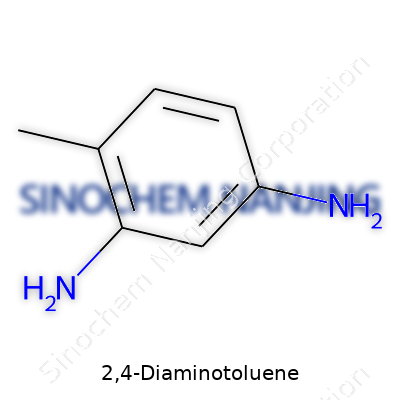
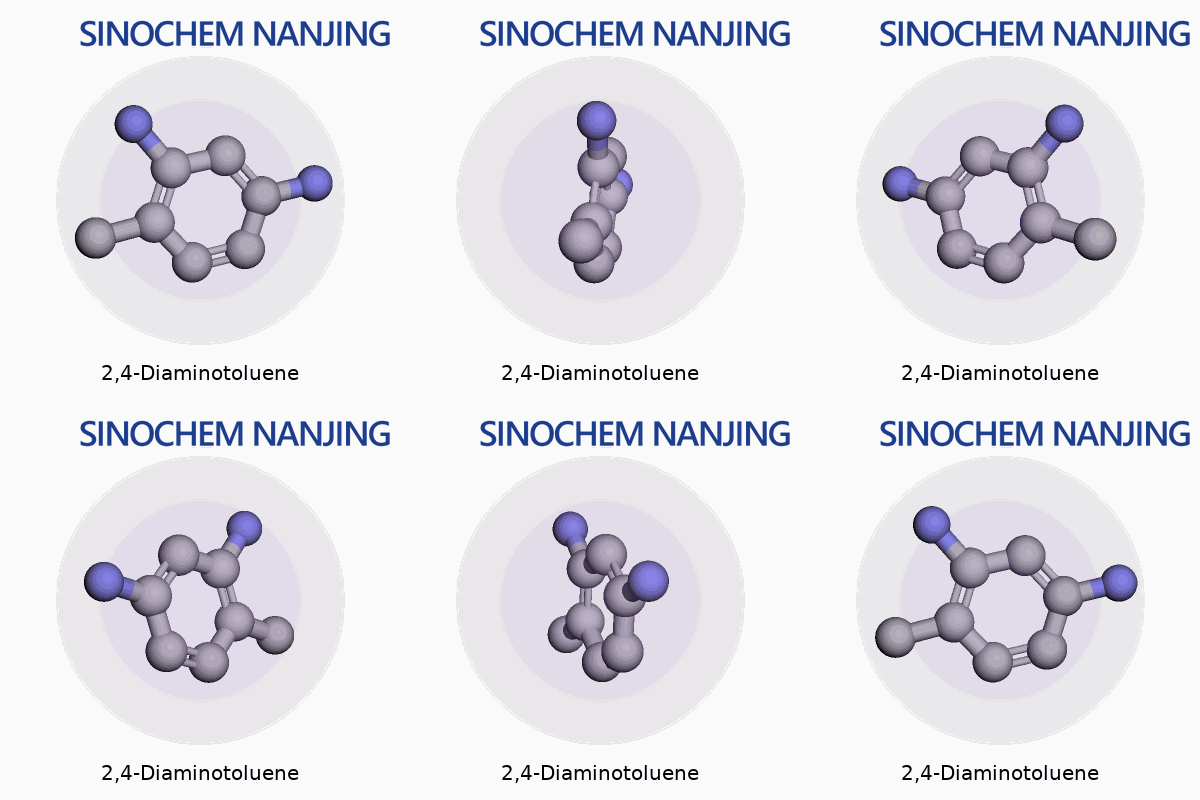
| Names | |
| Preferred IUPAC name | 4-methylbenzene-1,3-diamine |
| Other names |
2,4-Toluenediamine 2,4-Diamino-1-methylbenzene 2,4-Diaminotoluol 2,4-TDA |
| Pronunciation | /ˌtuː.fɔːr.daɪˌæm.ɪ.noʊ.təˈluː.iːn/ |
| Identifiers | |
| CAS Number | 95-80-7 |
| Beilstein Reference | 636450 |
| ChEBI | CHEBI:28555 |
| ChEMBL | CHEMBL140573 |
| ChemSpider | 14208 |
| DrugBank | DB14265 |
| ECHA InfoCard | ECHA InfoCard: 100.005.870 |
| EC Number | 208-870-4 |
| Gmelin Reference | 82864 |
| KEGG | C06511 |
| MeSH | D017158 |
| PubChem CID | 7817 |
| RTECS number | XZ3150000 |
| UNII | 8ZD77CLO1L |
| UN number | UN1321 |
| CompTox Dashboard (EPA) | DTXSID1027733 |
| Properties | |
| Chemical formula | C7H10N2 |
| Molar mass | 122.17 g/mol |
| Appearance | Off-white to brown crystalline solid |
| Odor | Amine-like odor |
| Density | 1.095 g/cm³ |
| Solubility in water | Slightly soluble |
| log P | 0.16 |
| Vapor pressure | 0.03 mmHg (25°C) |
| Acidity (pKa) | 3.75 |
| Basicity (pKb) | 10.25 |
| Magnetic susceptibility (χ) | -53.0·10⁻⁶ cm³/mol |
| Refractive index (nD) | 1.615 |
| Viscosity | 1.31 cP (25°C) |
| Dipole moment | 1.58 D |
| Thermochemistry | |
| Std molar entropy (S⦵298) | 173.2 J mol⁻¹ K⁻¹ |
| Std enthalpy of formation (ΔfH⦵298) | -20.6 kJ/mol |
| Std enthalpy of combustion (ΔcH⦵298) | -4054 kJ/mol |
| Pharmacology | |
| ATC code | D11AX04 |
| Hazards | |
| Main hazards | Toxic if swallowed, in contact with skin or if inhaled. Causes skin irritation. Causes serious eye irritation. Suspected of causing cancer. |
| GHS labelling | GHS02, GHS06, GHS08 |
| Pictograms | GHS06,GHS08 |
| Signal word | Danger |
| Hazard statements | H301 + H311 + H331: Toxic if swallowed, in contact with skin or if inhaled. H317: May cause an allergic skin reaction. H373: May cause damage to organs through prolonged or repeated exposure. H400: Very toxic to aquatic life. |
| Precautionary statements | P210, P261, P264, P270, P271, P280, P301+P312, P302+P352, P304+P340, P305+P351+P338, P308+P313, P311, P321, P330, P337+P313, P362+P364, P405, P501 |
| NFPA 704 (fire diamond) | 2,4-Diaminotoluene: "3-2-0 |
| Flash point | 127°C |
| Autoignition temperature | 530 °C (986 °F; 803 K) |
| Explosive limits | 2.8–14% |
| Lethal dose or concentration | LD50 oral rat 650 mg/kg |
| LD50 (median dose) | LD50 (median dose): 650 mg/kg (oral, rat) |
| NIOSH | WN3150000 |
| PEL (Permissible) | PEL (Permissible Exposure Limit) of 2,4-Diaminotoluene: 0.5 mg/m³ |
| REL (Recommended) | 0.5 mg/m³ |
| IDLH (Immediate danger) | 50 ppm |
| Related compounds | |
| Related compounds |
2,6-Diaminotoluene 4-Methylaniline Toluene 2,4-Toluenediamine diisocyanate |



