2,4,6-Trinitrophenol: A Closer Look at an Explosive Past and Future
Historical Development
2,4,6-Trinitrophenol, better known as picric acid, stands out in the annals of chemistry for its deep roots in both science and industry. The earliest records date back to the 18th century, a time when its yellow crystalline form caught the attention of dye makers and chemists alike. My journey through old chemistry textbooks paints a picture of an era fascinated by the power of nitro groups, as adding them to familiar compounds like phenol often led to new discoveries—sometimes dangerous, often revolutionary. In the late 1800s, picric acid transformed from a mere yellow dye to a military staple, finding its place in explosives across major world conflicts. These transitions highlight how substances can outgrow original intentions, shaped by the hands of necessity and opportunity.
Product Overview
Picric acid never really sat idle on warehouse shelves. For decades, it has had a foot in several doors: a potent explosive, a reliable chemical reagent, and an influential dye. You won’t forget your first experiment with the stuff in the lab—an unforgivingly bright yellow powder with a reputation for more than color. In the age of modern chemistry, it’s tempting to think of picric acid in just one context, yet its spread across dyes, explosive material, and analytical chemistry proves that utility depends heavily on context and intent.
Physical & Chemical Properties
If you crack open a jar of picric acid, you encounter a dense yellow crystalline solid. It sports a melting point around 122.5°C, and its solubility varies: sparingly soluble in water, more agreeable with alcohol and ether. Its high nitrogen content makes it reactive, and that’s part of its draw—and its peril. Living with a substance like this in a lab teaches respect. Even the best containers can dry out, and everyone learns never to let sample jars go unchecked, since dry picric acid poses a far greater hazard than its dampened form. A chemical’s color, smell, and feel can give it away, but picric acid’s reputation walks into the room before the jar ever opens.
Technical Specifications & Labeling
Handling picric acid comes with a thick paper trail and vivid hazard labels. Red diamonds and clear warnings dominate its packaging, not for show but from lessons learned the hard way. Specifications go beyond purity; moisture content becomes a critical detail, because the tiniest oversight can spell disaster. Standards for shipment and storage don’t stem from bureaucracy—they trace their roots to accidental detonations and close calls etched in institutional memory. Every time I see those labels, I remember lab managers double-checking logs and making sure safety data sheets remain visible and up to date. Compliance isn’t just for the auditors; it’s a matter of daily routine.
Preparation Method
Making picric acid from phenol and concentrated nitric and sulfuric acids lands as a classic example in organic synthesis. The process unites chemistry’s elegance and volatility—nitration happens in controlled conditions, far from open flames and careless hands. In theory, it seems straightforward: phenol meets nitrating mixture, careful temperature control, and patience for the yellow crystals to form. In reality, each batch can keep you on your toes. Slight changes in temperature or concentration change yields and purity, and in less regulated environments, the risks multiply. Procedural rigor comes not from love of protocol but from hard-won safety and respect for energy stored in each yellow grain.
Chemical Reactions & Modifications
Chemically, picric acid gets a reputation as a donor and receiver—it reacts with bases to form picrate salts, many of which rival the sensitivity of its acid form. In analytical labs, these picrate salts have exposed cyanides, creatinine, and more, making quantitative chemistry more accessible. Picric acid’s transformations echo across industrial recipes, but working hands know these are not everyday reactions. Tweaks in structure, aimed at dulling the sharp edge of its explosive power, haven’t found as broad a following. Once a molecule sets its character, reworking it for safety or performance can require a whole new approach.
Synonyms & Product Names
Across decades and continents, picric acid travels under different names: trinitrophenol, 2,4,6-TNP, Lyddite (in the context of munitions), and even melinite when French chemists needed an alias. Each name carries a particular context—some sound technical, some historical, some tied to its role as a reagent or an explosive. I’ve seen researchers from different eras use these titles almost as code, signaling whether they’re talking about a patch of battlefield earth, a spot test in biochemistry, or a vat in a dye factory.
Safety & Operational Standards
Few chemicals command as much respect as picric acid. Its ability to form dangerously sensitive salts with metals, its tendency to go from benign to lethal with loss of moisture—these facts reshape laboratory routines. I remember safety briefings focused entirely on handling and storage, instructions to keep it wet with at least ten percent water, and frequent inspections for crusty residues around glass stoppers. Regulations evolve, but the spirit remains: limit stocks, restrict access, and communicate risks openly. These practices extend beyond the letter of law and root themselves in habits of care, born from past incidents that left lasting marks on the profession.
Application Area
Picric acid’s reach stretches far. In the world of explosives, it set standards for power and sensitivity until newer, less problematic compounds moved in. As a dye, it colored textiles and biological specimens long before other options became available. Analytical chemists still rely on its reactivity for detection tests, as its specificity for certain ions and molecules carries value where instruments can't help. Some areas still resist giving it up, either out of necessity or tradition, but environmental concerns and regulatory change put pressure everywhere. The uses have shrunk, but its legacy shows up in the DNA of every nitroaromatic compound in our laboratories and textbooks.
Research & Development
Efforts to improve, adapt, or replace picric acid haven’t stopped. Studies focus on finding safer nitration methods, substitutes for reactive tests, and new explosives with less environmental baggage. Researchers take cues from accidents and near-misses, using analytical tools to monitor stability, examine decomposition, and extend shelf life. Specialized work looks to modify the parent compound, taming sensitivity or finding less impactful breakdown pathways. The process isn’t quick, and progress can feel piecemeal, but the drive for safer, smarter chemistry keeps pushing even old favorites like picric acid toward new forms.
Toxicity Research
Studies on the toxicity of picric acid point to more than just explosive risk. Absorption through skin or inhalation can lead to harmful effects—dermatitis, organ toxicity, chronic yellowing of the skin, and issues with blood and kidneys. Looking at animal data and industrial records, the story becomes one of cautious respect. Work on safer handling limits and better protective equipment has improved conditions, but the compound’s persistent impact on workers in the past weighs on the present. Modern toxicology research pushes for better monitoring and limits, recognizing long-term risks often take years to reveal themselves.
Future Prospects
Picric acid seems unlikely to regain its past dominance, but neither is it banished entirely from chemistry’s toolkit. The future may favor molecules that promise lower toxicity and volatility, but for some tests and processes, the old ways remain stubbornly effective. Ongoing research and regulation might push industry closer to safer alternatives, but the lessons learned from picric acid will echo wherever chemistry meets risk. Each generation finds new ways to balance performance and safety, aiming not to repeat the accidents and excesses that shaped this yellow powder’s story.
What is 2,4,6-Trinitrophenol used for?
A Chemical With a Story
2,4,6-Trinitrophenol, better known as picric acid, carries a history that’s more vibrant than its striking yellow color. Decades ago, folks in different industries grabbed onto this compound for solutions modern-day chemists still talk about. With every bottle handled in a lab, there’s that hum of respect in the background—this substance has power and risk bundled together.
Old-School Explosives and National Security
Picric acid once rode the frontlines of military innovation. Soldiers counted on it for its explosive snap. It figured into artillery shells and bombs before TNT outpaced it. Picric acid packs a strong detonation punch, and back in World War I, armies stashed tons of it. These days, TNT and newer compounds have taken over, but history lessons keep reminding us about the serious attention explosive chemicals still require.
Analytical Chemistry and Laboratory Testing
High school science books rarely mention it, but analytical labs have used picric acid for ages. Files in old med school archives list it as a reagent for detecting creatinine in urine or checking for proteins in samples. The classic “Jaffé reaction” relied on picric acid for diagnosing kidney issues. If someone worked in a hospital lab a few decades ago, they probably remember that signature yellow reagent bottle. Its color-changing trickery helped save lives, giving fast answers when kidneys stumbled. Newer, safer reagents replaced it, with labs moving away because of explosion worries. Still, its fingerprint lingers on testing methods and textbooks.
Dye Manufacturing and Industrial Utility
There’s no denying bright yellow has its place in the textile and pigment world, and picric acid made sure it got there. Textile workers and industrial dyers knew all about the strength of picric acid as a dye for silk and wool. Fashion from the 1800s sometimes sported shades born straight from picric acid vats. It didn’t stop there—making colored inks and preparing chemical indicator papers in the lab kept the demand going. Today, safety rules and better synthetic processes pushed it to the sidelines, but its mark in industry history lingers, like a faded stain on a lab coat.
Risks, Accidents, and Going Beyond Easier Alternatives
Nobody with experience around picric acid forgets the stories—jars getting too dry and turning unstable, or small lab accidents that become cautionary tales. Dry picric acid will detonate if struck or heated. Even a little carelessness transforms it from a chemistry tool into a real danger. Everyone wants to stay safe, so most labs switched over to safer alternatives in the last few generations. Governments now enforce strict handling rules, and old bottles found in abandoned schools or sheds spark disposal panic. Fortunately, the scientific world learns from past mistakes. Clear labeling, special training, and better chemical management have turned stories of disaster into steps toward prevention.
Looking Forwards: Safer Substitutes and Respect for History
Modern chemists and manufacturers reach for safer, less volatile compounds. Creatinine tests lean on enzymatic reactions. Explosives development circles around more stable formulas. Dye factories pull new synthetic colors from the shelf. Even so, picric acid’s story matters, and it remains a reference point for chemical safety and industrial progress. Using science to protect workers and the environment, we trade risk for innovation, always remembering how far we’ve come since picric acid colored the world.
Is 2,4,6-Trinitrophenol hazardous or explosive?
Digging Into the Danger
People in chemistry labs or industries hear about 2,4,6-trinitrophenol, also called picric acid, and usually know it’s not something to take lightly. This compound grabs attention because it does more than just stain your hands yellow. Its explosive nature pushes many institutions to beef up their safety protocols. Over the years working in research environments, I’ve seen firsthand how overlooked chemicals like picric acid can spark chain reactions—figuratively or literally.
What Makes Picric Acid Tick
Picric acid looks harmless at first glance. It’s a yellow crystalline solid often stored in glass containers in older labs. This substance started out in the dye industry in the 1800s. Military folks soon realized that, as an explosive, it could rival TNT. That’s because trinitrophenol carries nitro groups (NO₂) that turn it into a high-energy material. If it dries out, bumping or scratching the crystals could trigger an explosion. According to the Centers for Disease Control and Prevention, even a small amount can destroy equipment—or worse, injure people.
Is the Risk Real?
I once met a senior chemist who kept old jars of chemicals in storage. Over time, the liquid above trinitrophenol evaporated, leaving behind dried crystals. That’s a huge danger sign. Even a vibration can detonate dry picric acid, sending glass shards flying. Hospitals, museums, and universities sometimes discover forgotten bottles in basements. Fire departments have responded to evacuations for this reason.
Trinitrophenol doesn’t just explode. It harms people through skin contact, inhalation, or accidental ingestion. Chronic exposure can cause changes in liver function, anemia, and other organ damage. Cases of poisoning have been documented since the late nineteenth century. For these reasons, strict government rules limit storage and shipping. In the European Union and the United States, regulations put picric acid on controlled lists, right next to dynamite.
How to Stay Safe
Safe handling calls for storing picric acid under water to stop it from drying out. Training is key. I’ve seen organizations hold safety seminars that review the risks and steps in case of spills or suspicious jars. These talks save lives. Regular inspection and labeling of chemical storage by experienced staff mean less chance of surprise discoveries. Local hazardous waste disposal authorities can safely remove old or unstable containers.
Technology helps. Barcode tracking and digital inventories flag dangerous chemicals before they slip off the radar. Good habits make a difference too. Wash your hands, wear gloves, and never work alone when handling risky substances. The American Chemical Society’s guidelines offer clear advice, such as keeping picric acid away from metals that form sensitive picrate salts.
Building a Culture of Safety
I believe the story of picric acid is a lesson on respecting our tools. Just because it’s been used for dyes, explosives, and even medicine doesn’t make it safe. The path to reducing accidents goes through education, communication, and vigilance. Before entering any lab or warehouse, everyone deserves to know which compounds could knock on the door of disaster and how to prevent it. That’s not just responsible science—it’s basic human care.
How should 2,4,6-Trinitrophenol be stored safely?
Understanding The Real Risk
Mention the word “2,4,6-Trinitrophenol” to an old chemist and you’ll see a serious face. In most labs, it goes by picric acid, and it has a notorious reputation, not only because it’s explosive, but because it has caught out many professionals who thought they had everything under control. I remember a university storeroom manager warning, “You never forget the first time you see a dry chunk of picric acid.” Anyone with hands-on lab time knows dry picric acid is nothing to mess around with, so the way it’s kept matters as much as the warning label.
Solid Rules: Keep It Wet and Keep It Separate
Picric acid doesn’t become dangerous just sitting in a bottle. Trouble starts as the water inside evaporates. Dry crystals can detonate under friction or shock, so it never enters the storeroom unless it’s under water—or at least, in a saturated state. Standard wisdom keeps it at minimum 10% water by weight. If you ever see crystals sticking to the cap or notice the solution looking cloudy, don’t even think about opening it. Sealed, never pried open if crust forms, that’s the lesson drilled into anyone handling the stuff.
During my early days in research, every technician got shown a bottle with a warning: never let it dry. A lab manager I trust goes so far as to check containers twice a year to add a splash of distilled water if the level runs low. The risk of detonation isn’t theoretical—aviation and munitions workers have stories no one wants to repeat. That fear does keep people diligent.
Smart Storage Makes All the Difference
Safe storage means keeping chemicals away from deterioration and accident. For picric acid, glass bottles don’t get swapped for plastic and the container stays tightly sealed. Store it cool, well away from heat, sparks, or direct sunlight. Keep the bottle on a low shelf to reduce the risk of dropping. Never keep it near metals or strong bases, either, because picrate salts can form. These salts detonate even easier.
A dedicated cabinet—explosion-proof, locked, ventilated—works better than just a quiet corner in a storeroom. I’ve seen many places use flame-resistant paint or sand-filled bins under shelves, just in case. No lab wants to be the subject of a fire department case study. Always label containers clearly, and record purchase and inspection dates—accountability cuts down on disaster.
Training and Planning: Two Lines of Defense
Facts on paper don’t save lives unless people respect their weight. Proper training comes before access. I’ve watched experienced scientists run full drills for chemical spills or suspect containers, no shortcuts given. Emergency contacts sit posted above every cabinet with a set of procedures for both small leaks and the unlikely event of a fire. Emergency services want advance notice if a building has trinitrophenol on site.
Regular inventories give peace of mind. Strict rules mean anyone who finds a container near empty, crusted, or older than a set limit, alerts a supervisor—and if there’s doubt, it’s disposed of by specialists, not tossed in the regular waste. If there’s ever a lingering question about safety, labs call in bomb disposal units. In this field, pride takes a back seat to real caution.
Why Following These Practices Matters
No technical breakthrough makes up for a burned hand or a ruined lab. Trust from workers, neighbors, and the city comes from taking visible steps to keep danger right where it belongs: contained, controlled, and always respected. Avoiding news headlines means respecting the experience of those who learned the hard way. Even seasoned chemists treat every bottle as if it might be the one that doesn’t offer a second chance.
What are the health risks associated with 2,4,6-Trinitrophenol exposure?
The Human Side of Chemical Exposure
2,4,6-Trinitrophenol, better known as picric acid, might sound like something most people would never encounter, but life’s full of surprises. Having spent a few years in a laboratory, I saw firsthand the care and sometimes the apprehension about handling this compound. Picric acid usually shows up in research labs, ammunition factories, and places where dyes or explosives get made. Anyone working near it faces some personal risk, well beyond the safety rules written in training manuals.
Immediate Reactions—Why Even a Little Matters
Skin and eyes don't do well with 2,4,6-Trinitrophenol. Direct contact often leads to redness, irritation, and sometimes deep-yellow staining that doesn’t wash out quickly. Splash a bit on your arm or under your watch band, and it’s almost like carrying a warning sign for days. Once inhaled as dust or through fumes, the body’s response ramps up: headaches, dizziness, and at higher, repeated exposures, shortness of breath come knocking. Nosebleeds and a persistent dry cough can follow folks home long after work’s wrapped up.
The Deeper Impact—How It Hits More Than Just Skin
Exposure doesn’t stop at the surface. 2,4,6-Trinitrophenol can mess with the blood. By damaging red blood cells, it triggers a condition called methemoglobinemia, which blocks oxygen from reaching tissues the way it should. I remember a colleague telling stories about old timer ammunition workers who would turn blue around the lips and nails after enough years near this stuff. Without enough oxygen, fatigue hits hard and regular, memory slips, and everyday tasks start feeling tougher.
Liver and kidney strain also enters the picture. Reports show workers with abnormal urine color and trouble processing toxins, some needing hospital stays. Sometimes the liver swells or hurts, hinting at deeper troubles brewing quietly. Long-term exposure can even hit fertility, with studies linking it to low sperm counts and rough pregnancies among exposed populations.
How Exposure Really Happens
Many cases trace back to accidental spills, poorly labeled storage, or a dusty workstation where someone gets too casual about personal protective equipment. Picric acid’s volatility adds a worry—old, dried out samples can become explosive, leaving both immediate and delayed risks under one lid.
What We Can Actually Do
The safest labs and workshops I’ve set foot in take training seriously and hold regular reminders. Gloves and goggles don’t just sit on a shelf—they get worn, washed, replaced, and sometimes even upgraded. Ventilation gets real attention, both with extraction fans and with real airflow checks, not just faith in a switch's green light.
Doctors at local clinics now know to ask about chemical exposures during regular checkups for workers in at-risk industries. Early detection, and not just reaction, reduces permanent damage. Waste gets handled with extreme attention so that hazardous compounds never land in regular trash or drains.
2,4,6-Trinitrophenol might seem distant, wrapped up in industrial jargon. The reality lands much closer to home for anyone working with chemicals—and for their families who trust that their loved ones come home whole and healthy after a long shift. Balancing the very real risks with honest discussion and solid safety practice keeps the story pointed in a better direction.
What are the proper disposal methods for 2,4,6-Trinitrophenol?
Understanding the Real Risk
Safely getting rid of 2,4,6-Trinitrophenol, also called picric acid, boils down to protecting both people and the environment. This chemical brings explosive risk that doesn’t just disappear once it’s old or forgotten in a back room. I recall seeing a case at a university lab, where jars of picric acid had dried on the shelf. It looked harmless enough, but if knocked, the crystals could have set off a disaster. This wasn’t a rare mistake. Across schools, hospitals, and old research centers, bottles sit tucked behind others, aging and drying, turning into something you can’t just pour down the drain or toss in the trash.
What’s at Stake
Picric acid rewards respect, not neglect. Historical reports show injuries, fires, and evacuations after mishandling old jars. Dry picric acid has the explosive punch needed for munitions, which is why militaries once stocked tons. With enough time and exposure, regular storage risks turn into bomb threats. The powder can stick to glass threads on the cap. Then, unscrewing the lid snaps the crystals, unleashing a shock. You can ask any bomb technician—no one takes this item lightly. I’ve seen city hazmat squads called out just to handle a shoebox-sized jar. Tax dollars, roads blocked, and families evacuated all because one person didn’t make an informed choice years back.
No Shortcuts: Methods That Work
Pouring chemicals or neutralizers straight into a bottle, crossing fingers, and hoping for the best leads to headlines about explosions instead of safe endings. The right way calls for well-ventilated chemical fume hoods, certified safety gear, and pros with chemical know-how. Elimination by incineration at hazardous waste centers removes risk without damaging air or water. High-temperature rotary kilns, fitted with scrubbers, break molecules apart and prevent toxic byproducts from escaping. This isn’t stuff for backyard burning—the energy and gear needed escapes any DIY project.
For small, wet quantities, neutralizing picric acid with sodium carbonate makes a less dangerous salt called sodium picrate. The trick is always keeping the acid wet with water; never letting crystals or puddling dry. Even lab workers need pre-mixed solutions, not powder. I remember seeing a university lab with special signage ordering immediate disposal once they spotted old stock, and after that, they spread the word to prevent reordering any time soon.
Why Clear Oversight Matters
Handling rules from the EPA and OSHA exist for good reason. Regulations limit how much can sit in a building, how long it can stay, and how it has to move through transport or disposal. Everyone—from janitors to lab directors—benefits from crystal-clear labels and real logbooks. Regular inspections work like clockwork in good labs, not because people love red tape, but because no one wants a mystery bottle sparking panic or catastrophe later. Chemical hygiene plans must name specific staff. Regular audits keep accountability strong, and good habits trickle down to new hires. Training and reporting requirements might feel dull next to the drama of dangerous materials, but the safest teams never see headlines. Everybody gets to go home on time.
Taking Community Responsibility
Schools, labs, clinics—all places that could inherit or uncover picric acid—have a duty to protect people outside their walls. Contracting with certified hazmat disposal firms guarantees materials move straight to approved incineration. Communities that share waste with regional centers, rather than handling it alone, cut both cost and risk. Posting information, holding safety seminars, and removing old chemicals before they age out prevents emergencies before they even hint at starting. This builds trust, keeps everyone safer, and avoids spending taxpayer dollars on preventable emergencies.
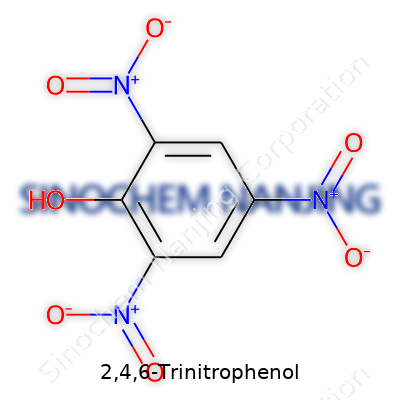
| Names | |
| Preferred IUPAC name | 2,4,6-Trinitrophenol |
| Other names |
Picric acid TNP Auratine Acid trinitrophenique Lauroline Melitid Trinitrophenol |
| Pronunciation | /ˌtraɪˌnaɪ.trəˈfiː.nɒl/ |
| Identifiers | |
| CAS Number | 88-89-1 |
| Beilstein Reference | 1209229 |
| ChEBI | CHEBI:22228 |
| ChEMBL | CHEMBL1409 |
| ChemSpider | 5297 |
| DrugBank | DB06746 |
| ECHA InfoCard | 100.005.264 |
| EC Number | 2.4.6.16 |
| Gmelin Reference | Gmelin Reference: 1640 |
| KEGG | C01445 |
| MeSH | D019340 |
| PubChem CID | 6760 |
| RTECS number | TH6125000 |
| UNII | UNK13C42XA |
| UN number | UN0136 |
| CompTox Dashboard (EPA) | DTXSID5023861 |
| Properties | |
| Chemical formula | C6H3N3O7 |
| Molar mass | 227.13 g/mol |
| Appearance | Yellow crystalline solid |
| Odor | Odorless |
| Density | 1.77 g/cm³ |
| Solubility in water | Soluble |
| log P | 1.58 |
| Vapor pressure | 0.4 mmHg (20 °C) |
| Acidity (pKa) | 0.38 |
| Basicity (pKb) | pKb = 10.08 |
| Magnetic susceptibility (χ) | -60.5·10⁻⁶ cm³/mol |
| Refractive index (nD) | 1.653 |
| Dipole moment | 1.81 D |
| Thermochemistry | |
| Std molar entropy (S⦵298) | 192.0 J·mol⁻¹·K⁻¹ |
| Std enthalpy of formation (ΔfH⦵298) | -332.8 kJ/mol |
| Std enthalpy of combustion (ΔcH⦵298) | -1231.1 kJ·mol⁻¹ |
| Pharmacology | |
| ATC code | D08AX06 |
| Hazards | |
| Main hazards | Explosive; toxic if swallowed, inhaled or absorbed through skin; causes burns; harmful to aquatic life |
| GHS labelling | GHS02,GHS06,GHS05,GHS01 |
| Pictograms | GHS01,GHS02,GHS06,GHS05 |
| Signal word | Danger |
| Hazard statements | H301, H330, H370, H373, H410 |
| Precautionary statements | P210, P261, P264, P273, P280, P305+P351+P338, P337+P313, P370+P378, P403+P235 |
| NFPA 704 (fire diamond) | 4-4-2-* |
| Flash point | 114 °C |
| Autoignition temperature | 300 °C (572 °F; 573 K) |
| Explosive limits | 1.3–10.0% |
| Lethal dose or concentration | LD50 oral rat 200 mg/kg |
| LD50 (median dose) | LD50 (median dose): Oral-rat 200 mg/kg |
| NIOSH | SN4175000 |
| PEL (Permissible) | PEL: 0.1 mg/m3 |
| REL (Recommended) | 0.1 mg/m³ |
| IDLH (Immediate danger) | 75 mg/m3 |
| Related compounds | |
| Related compounds |
Phenol 2,4,6-Trinitroaniline Picramic acid Picramide 2,4-Dinitrophenol |



