2,4,4-Trimethyl-1-Pentene: Shaping Industries Beyond the Lab
Historical Development
Walking back through the chemical landscape of the 20th century, you’ll find that 2,4,4-Trimethyl-1-pentene didn’t just pop out of thin air. Its emergence tracked right along with the spread of synthetic polymers and performance plastics. Think of the post-war boom: plastic bottles, automotive interiors, durable medical equipment, and even home goods needed better raw materials. Chemists, both in academic labs and industrial R&D hubs, started looking for versatile alkenes. They stumbled on this methylated pentene, appreciating how its molecular skeleton brought both branching and compactness. That balance meant new resins and improved chemical intermediates, which nudged industries toward efficient manufacturing. It’s not one of those celebrity chemicals, but its steady presence matters, quietly driving innovation in labs around the planet.
Product Overview
To the casual observer, 2,4,4-Trimethyl-1-pentene sits on a list of unremarkable chemicals. But its value shines once you step into an environment obsessed with high-performance materials. This compound holds a niche as a building block, often blended or reacted to form more complex molecules. Because its structure resists easy breakdown and offers a stable point for further reactions, it regularly shows up in applications involving specialty plastics, adhesives, or as a starting material for unique organic syntheses. The real beauty lies in how this pentene derivative fits both mass-market production lines and bespoke, low-volume R&D projects. Chemists bank on its consistency, purity, and predictable outcomes.
Physical & Chemical Properties
Inside a bottle, pure 2,4,4-Trimethyl-1-pentene appears as a clear, colorless liquid. Unlike some heavier hydrocarbons, this one flows easily, with volatility you’d expect from a small alkene. The boiling point hangs around 99-100°C under normal pressure, which makes distillation manageable without running up energy bills or risking runaway reactions. Its reactivity stays centered on the double bond, so you can hydrogenate, polymerize, or functionalize with standard catalysts or reagents. Thanks to its branched backbone, the compound brings a level of chemical stability absent in straight-chain pentenes, which means fewer surprises during storage or transport.
Technical Specifications & Labeling
Anyone handling 2,4,4-Trimethyl-1-pentene knows you don’t mess around with labeling or quality standards. Labs and plants need to keep an eye on purity, since trace contaminants can throw off yields or poison catalysts downstream. Industry specs often demand purity over 99%, and responsible suppliers list any detectable water, metals, or other volatiles. Labeling, mandated by local regulations and international guidelines, carries the usual details: concentration, hazard markings, batch traceability, and storage conditions. If you’ve ever worked with chemicals, you know sloppy labeling costs productivity, and might trigger hefty fines or worse.
Preparation Method
Synthesizing 2,4,4-Trimethyl-1-pentene means starting with basic hydrocarbons, typically harnessing either isomerization or alkylation strategies. In industrial plants, folks use catalysts—often acidic, sometimes zeolitic types—to coax ordinary isooctane toward rearrangement, cracking, and selective elimination. The challenge always circles back to getting one isomer in high yield, since close relatives might dilute purity or introduce unwanted byproducts. Batch and continuous methods both see use, depending on production scale. Any operator in this space spends plenty of time tuning conditions, balancing between speed, conversion rates, and downstream purity.
Chemical Reactions & Modifications
The double bond in 2,4,4-Trimethyl-1-pentene opens the door to a world of reactions. Hydrogenation takes you to 2,4,4-Trimethylpentane, a useful octane booster for fuels. Polymerization, often using Ziegler-Natta or metallocene catalysts, builds specialty plastics or elastomers with tailored properties. The molecule also partners well with electrophiles and nucleophiles, so chemists attack it to bolt on everything from halogens to esters. I’ve seen it in advanced organic synthesis as a scaffold—attach a functional group, run the reaction forward, and suddenly you’re holding a rare precursor that speeds up pharmaceutical research.
Synonyms & Product Names
Folks in the trade know 2,4,4-Trimethyl-1-pentene by a few other names. The IUPAC code keeps things precise, but “Trimethyloctene” or “Isooctene” pop up in literature and purchase orders. Such synonyms reflect chemical shorthand, and buyers need to cross-check regulatory listings before accepting deliveries. A simple typo between similar alkenes can cause big mix-ups, especially in global supply chains. Reliable communication matters or else projects stall, labs lose time, and money slips away.
Safety & Operational Standards
Dealers in this business rarely treat alkene storage or transfer as casual business. The flash point sits below 20°C, so vapor-air mixtures get flammable fast. Plant operators stress proper ventilation, explosion-proof pumps, and flame arrestors. Inhalation or skin exposure brings risks—anyone in a lab or plant should wear gloves, goggles, and check MSDS data before uncapping a drum. Regulatory guides like OSHA and REACH put a spotlight on proper training, labeling, and emergency planning. Spill response plans anchor safe operations, since solvent-like fumes travel easily and can ignite on stray static or sparks, even in well-kept facilities.
Application Area
Application stretches beyond synthetic resins or bulk polymers. I’ve seen 2,4,4-Trimethyl-1-pentene show up in adhesives for electronics, chemical intermediates for pharmaceuticals, and as a key ingredient in certain lab reagents. Its unique combination of branching and double-bond flexibility lets manufacturers dial in rubbery, tough, or solvent-resistant properties in custom plastic blends—think automotive gaskets, wire casing, or ruggedized packaging. Specialty labs pull it into rare synthetic routes, chasing new monomers and oligomers that open up futuristic product platforms, from medical implants to next-generation circuit boards.
Research & Development
Ongoing research digs into new catalysts and reaction routes. Academic teams often chase greener, safer, or more sustainable production methods. Some labs look at biocatalysis or enzyme-assisted synthesis, aiming to trim waste while making process conditions less hazardous. There’s also a big push in materials science, as chemists try blending this pentene with exotic fillers, hoping to unlock stronger, lighter, or more heat-resistant composites. Real breakthroughs often come from collaborative projects, bringing together university teams, government researchers, and big industry players. Projects move fast but carry plenty of risk—process tweaks that deliver lab wins sometimes flop during plant-scale rollouts.
Toxicity Research
Toxicology studies flag 2,4,4-Trimethyl-1-pentene as a compound needing respect but not panic. Direct studies in rodents show at moderate exposure it carries low acute toxicity, though concentrated vapor can bring on respiratory issues or dizziness. Chronic effects remain a bigger question, sparking calls for longer-term studies in real-world settings. Regulatory bodies mandate exposure limits and call for updated research, especially for workplaces that blend, transport, or recycle larger volumes. Out in the wild, the molecule doesn’t persist long; atmospheric breakdown pushes metabolites down the usual hydrocarbon degradation paths. But that’s no excuse for casual disposal—responsible stewardship matters, whether you’re in a research lab or a sprawling industrial plant.
Future Prospects
Future directions point to cleaner synthesis, safer handling, and new applications. As the chemical industry moves toward carbon-neutrality and circular economy models, process engineers explore ways to produce 2,4,4-Trimethyl-1-pentene from renewable feedstocks. Advances in catalysis keep trimming energy use, slashing waste, and cutting emissions that once felt inevitable. On the application front, you see this compound trialed in smart materials, biomedical devices, and advanced coatings built for harsh environments. Sustainability, regulatory pressure, and plain old curiosity spur researchers to reimagine what this humble alkene can deliver. That drive for innovation keeps 2,4,4-Trimethyl-1-pentene climbing the ranks, making it a silent cornerstone in the foundation of tomorrow’s materials.
What is the primary use of 2,4,4-Trimethyl-1-Pentene?
What Makes This Compound Useful?
2,4,4-Trimethyl-1-pentene sounds like a mouthful, but folks working in plastics and manufacturing recognize its value right away. I remember my cousin mentioning strange chemical names during her stint at a refinery. She explained how some of these compounds may not make headlines, but they help make everyday things work a little better.
The Backbone of Specialty Plastics
2,4,4-Trimethyl-1-pentene finds its primary role as a building block for manufacturing certain high-purity polymers. The most prominent product linked to this compound is poly(4-methyl-1-pentene), better known by the trade name TPX. This resin stands out for its transparency and its toughness when exposed to heat and chemicals. Lab technicians and engineers value these properties: they use TPX for glassware that resists breaking and for parts in electronics that do not warp or melt during soldering.
I once visited a plastics plant as part of a college field trip, and the guide showed us lightweight parts used in water meters, microwave cookware, and even certain medical applications, all benefiting from TPX. The plant manager explained that not every clear plastic fits these uses, but TPX handles higher temperatures and keeps its shape. None of that would be possible without 2,4,4-trimethyl-1-pentene as an ingredient at the start of the process.
Fuel and Chemical Industry Applications
Beyond plastics, this chemical plays a role in creating performance fuels and additives. Refineries blend it into higher-octane gasoline formulations, aiming for a cleaner burn and more efficient engines. Better octane means engines work with less knocking and can last longer. During a visit to a classic auto show last summer, I spoke to a few older mechanics who paid close attention to the octane ratings in their fuels and knew that chemicals like this one drive better engine performance.
Companies using 2,4,4-trimethyl-1-pentene in synthesis can also spin off other specialty chemicals, like surfactants or lubricants. The value here: small changes at the molecular level can shift product features in noticeable ways.
Safety and Environmental Points
No process comes without risk. I’ve seen the strict safety measures adopted in chemical plants firsthand—full suits, air sensors, constant checks. 2,4,4-Trimethyl-1-pentene isn’t something to play around with at home. Workers operate under strict rules to prevent spills, limit vapors, and keep their environments secure. Reliable sources point out the compound’s flammable and irritating qualities, so strong ventilation and emergency plans shape the standard approach.
Waste management also stays front-of-mind. Smart operators look for closed systems to recycle chemical residues and limit emissions. Newer manufacturers keep exploring catalysts or greener routes, aiming for the same strong plastics and high-performance fuels with less environmental cost. Green chemistry always seems to be a work in progress, but every step helps.
What’s Next for This Chemical?
2,4,4-Trimethyl-1-pentene has made itself useful by offering strong building blocks for vital materials. Life demands products that stay strong, clean up easily, or allow faster engines, and this compound often plays a part behind the scenes. With stronger regulation and a shift toward smaller waste footprints, the next round of innovation will likely focus just as much on cleanup as on performance.
What is the chemical formula of 2,4,4-Trimethyl-1-Pentene?
Breaking Down the Compound
2,4,4-Trimethyl-1-pentene doesn’t sound like something you come across at the grocery store, but this molecule carries its own kind of story in the world of chemistry. The formula for this compound is C8H16. Unpacking the name says a lot about its structure. The “pentene” tells us there’s a five-carbon chain with a double bond at position one. The “trimethyl” part points out three extra methyl groups (–CH3), which hang off the main chain at carbons two and four. Counting up the carbons and hydrogens lands straight at C8H16.
Why Formula and Structure Matter
Structural information offers more than just trivia for students or professionals—real work hinges on details. Knowing the exact arrangement helps predict how 2,4,4-trimethyl-1-pentene behaves in chemical reactions, impacts safety sheets in the lab, and guides engineers at plants when handling or synthesizing it. In my college days, memorizing these was not just a box to tick on an exam—it made organic chemistry start to click, as each number and letter tells a story about properties and reactivity.
Applications You Won’t Usually Hear About
Few products splash “2,4,4-trimethyl-1-pentene” across the label, but compounds like this help shape modern manufacturing. It’s one of a family of octenes used for their ability to join up with other molecules in big industrial syntheses. For instance, these chemicals go into making lubricant additives, which keep modern engines running smoother and longer. They play a silent role in producing plasticizers and also pop up as intermediates making specialty chemicals for surfactants or detergent components.
Environmental and Safety Concerns
Organic solvents and intermediates deserve respect. Improper handling or disposal leads to trouble for local waterways or air quality. The hydrocarbon backbone in C8H16 means it burns, but that doesn’t make it safe—mixed with air, vapor from these molecules turns flammable, sometimes explosive in the right mix. Sourcing detailed chemical safety data sheets and following proper storage methods keeps both workers and neighborhoods safe.
Transparency and Traceability
It’s hard to trust a system unless you see where stuff comes from and where it goes. Highly regulated sectors like pharmaceuticals or food packaging keep an eagle eye on every batch, because impurities or accidental swaps ruin more than just the bottom line. Firms have to document synthesis, testing, and shipping because even a simple molecule like C8H16 connects to big downstream uses. Traceable supply chains and clear record-keeping reduce mix-ups and errors, protecting products and consumers alike.
Improving Chemical Education and Public Understanding
Many folks expect chemistry to stay tucked away in textbooks, but everything from medical supplies to car parts leans on careful chemistry. Better teaching in schools and honest conversations between manufacturers and the public help demystify the molecules all around us. Knowing the structure, formula, and proper handling doesn’t just feed curiosity—it means safer products, cleaner environments, and more informed choices as a community.
Is 2,4,4-Trimethyl-1-Pentene hazardous or toxic?
A Closer Look at an Industrial Chemical
2,4,4-Trimethyl-1-pentene shows up in the chemical industry much more often than in the public eye. Used as a building block in the production of plastics or specialty chemicals, its name rarely leaves the inside of labs or petrochemical plants. Most folks won’t cross paths with it, but the conversation about hazards and toxicity extends past chemistry textbooks and technical labels, spilling into workplace safety and public awareness.
Understanding Hazards — Not Just a Label Game
People often think of “hazardous” and “toxic” as interchangeable, but there are important differences. A substance can catch fire or explode, which makes it hazardous, even if it isn’t especially toxic to people or animals. 2,4,4-Trimethyl-1-pentene brings flammability to the table, like many other hydrocarbons. It flashes easily at room temperature, which gives fire crews and industrial workers reason to pay attention.
Safety data sheets flag the substance as a flammable liquid and vapor, placing it in a risk category that demands good ventilation and proper storage. Static charges have set off fires before, so those handling it need to use tools that won’t cause sparks. Wearing gloves and goggles isn’t overkill — it’s common sense.
Digging Into Toxicity
Companies send new chemicals through rigorous tests. 2,4,4-Trimethyl-1-pentene hasn’t shown up as acutely toxic in rats or rabbits, at least not in public records. Breathing in the vapor in large amounts can cause dizziness or headaches, and just about any organic solvent will irritate eyes and skin on contact. Swallowing large quantities could upset the stomach. It’s not the most dangerous chemical on the shelf, but it still calls for respect, not carelessness.
No strong links to cancer or chronic illness pop up in research, and respected agencies like the European Chemicals Agency and the U.S. Environmental Protection Agency don’t put it in a high-risk box. This doesn’t mean the chemical can be ignored. Over time, exposure without protection can add up in unpredictable ways, especially for workers spending years around the stuff.
Long-Term Impact on People and Nature
Looking beyond factory walls, large spills or leaks could end up in soil or water. The substance doesn’t hang around in the environment forever—it turns into other things when exposed to sunlight and air—but that doesn’t erase all concern. Fish and other aquatic life struggle with many organic solvents, so I’d think twice before calling 2,4,4-Trimethyl-1-pentene harmless to the environment.
Better Ways Forward
Solving chemical exposure issues doesn’t usually need a breakthrough. Good rules, training, and basic respect for what goes into the drum or the reactor matter most. Access to personal protective equipment and regular air monitoring work better than just warning labels. Over the years I’ve watched teams run into fewer emergencies just by giving workers clear facts and enough gear. Sharing information between chemical suppliers, regulators, and employers helps spot patterns in workplace illness or accidents even before they become headlines.
At the end of the shift, calling a chemical “safe” or “dangerous” oversimplifies the story. 2,4,4-Trimethyl-1-pentene needs the same balance of caution and practicality as any flammable solvent. Thinking ahead and equipping people right keeps accidents off the evening news and out of hospital records.
What are the storage and handling requirements for 2,4,4-Trimethyl-1-Pentene?
Understanding the Risks
2,4,4-Trimethyl-1-pentene often pops up in chemical manufacturing plants and research labs. It plays a part in making specialty chemicals and plastics. Spend just a day in a place that stocks this substance, and concerns jump out right away — flammability tops the list. One whiff of its sharp, gasoline-like smell reminds you it doesn't mix well with careless storage.
I've watched operations teams in smaller workshops get comfortable, almost too relaxed, around volatile liquids. Familiarity breeds shortcuts: loose-fitting lids, half-read labels, outdated safety data sheets catching dust. It's tempting to wave off a substance like this as "just another hydrocarbon," but treating it loosely can cost more than just product. It threatens lives, nearby communities, and company reputation.
Safe Storage Isn’t Optional
Store 2,4,4-trimethyl-1-pentene in a cool, ventilated area, far from heat sources, open flames, and direct sunlight. Locked, fire-resistant storage rooms with chemical-resistant shelving work best. Concrete floors help to minimize spread if a spill happens, but keep wood and carpet far away — they absorb and extend the hazard. Never stack near oxidizers, acids, or bases; these combinations set off serious risks.
Ventilation isn’t just about comfort — without it, vapors collect fast. I’ve seen minor leaks trigger alarms in poorly vented storage closets. Besides installing mechanical vents, keep windows cracked where permitted to lower vapor concentrations.
Containers Matter
Skip ordinary plastic buckets or glass containers without seals; vapor escapes or chemicals break down seals, leaving surprises for the next shift. Tight-fitting lids, made from compatible materials like stainless steel or certain plastics, help keep everything contained. Large drums must get grounded during transfer, as static sparks can ignite vapors. Labels need bold, clear markings: no one benefits from indistinct scribbles when seconds count.
Everyday Precautions Save Headaches
Chemical splash goggles and neoprene gloves serve as baseline protection. Teams moving this liquid must use face shields if pouring large quantities. Over time, I've lost count of near-misses — someone reaching for goggles only after feeling an eye sting, or realizing gloves have pinholes during post-task cleanup. Small steps, taken every single time, prevent bigger issues.
Spill kits loaded with absorbent pads, neutralizers, and chemical-resistant bags sit close to storage points. It's easy to leave these out of arm's reach, but reacting to a spill gets much harder and more dangerous without them right on hand. Managers should run regular drills where teams practice cleanup, containment, and proper reporting — everyone benefits when these steps become second nature.
Protecting Community and Environment
Approved waste streams are non-negotiable. Pouring leftover liquid down drains or mixing it with regular trash brings heavy fines and reputational harm. Reach out to local hazardous waste handlers; they often offer guidance or pickup schedules for tricky substances.
Updates from agencies like OSHA and the EPA provide tailored rules that take the guesswork out of compliance. Keep safety data sheets updated and always accessible, even if you think everyone "knows the routine." In my experience, skipping these basics only leads to trouble and puts real people at risk.
Where can I purchase 2,4,4-Trimethyl-1-Pentene?
What Makes 2,4,4-Trimethyl-1-Pentene Different
I’ve seen people in research labs hitting walls just because of issues around finding high-purity chemicals for their experiments. In industry, the hunt for a molecule like 2,4,4-Trimethyl-1-Pentene often starts online, but that’s only half the journey. This compound, usually found as a colorless liquid, gets used for making specialized plastics and chemical syntheses. It looks straightforward—a molecule with a short name, clear structure, and not the rarest thing in the world. The trouble is, sourcing it isn’t as casual as filling up a shopping cart on Amazon.
Why Sourcing Requires More Than Google
Walk into any university lab, and you’ll spot big catalogs from chemical suppliers—MilliporeSigma, Alfa Aesar, TCI, Fisher Scientific, and so on. These companies carry chemicals for legitimate research and industrial purposes. A quick search shows a handful offer 2,4,4-Trimethyl-1-Pentene, usually accompanied by product details like CAS number 107-39-1, purity grades, and SDS sheets. Just having a listing isn’t a promise of easy access. Suppliers check customer backgrounds and may ask for proof of business or research activity to follow not only company policy but also federal regulations. I’ve gone through this vetting more than once, emailing account managers and providing documentation. It slows things down, but the process makes sense. Keeping hazardous or specialty chemicals out of the wrong hands matters more than instant gratification.
The Catch for Non-Industrial Buyers
I remember a chemistry student friend searching for obscure chemicals for a senior thesis, only to discover suppliers would not ship to home addresses. Research supply companies need a business or institutional address, and proof of lab use or teaching helps. Some chemicals need special handling, and shipping requires trained carriers. Usually, there’s a minimum order size or fixed contracts with manufacturers—something I saw up close working at a small process plant. It means bulk buyers do better, while hobbyists and smaller operations often pay more or get turned away altogether. These policies protect both the business and public safety. No company wants to risk an incident, regulatory fine, or bad press over a mistaken shipment.
Why Oversight Improves Trust, Not Just Hurdles
It’s easy to grumble about red tape or the well-meaning roadblocks put in the way. But chemical safety remains no joke. The regulatory demands on suppliers—tracking customers, reporting transactions, following chemical control lists—have grown since high-profile misuse cases and environmental disasters. Transparency, experience, and answering questions clearly matter when working with chemicals like this. Companies with a long track record in chemical distribution—such as Sigma-Aldrich and Thermo Fisher—earn trust by training staff, updating documentation, and providing technical support after delivery as well. On top of that, organizations like the American Chemical Society offer guidance. Responsible buyers match that attitude, keeping logs, following disposal rules, and respecting supplier requests for clarification.
Smart Solutions for a Safer Marketplace
For individuals or small companies who need 2,4,4-Trimethyl-1-Pentene, reach out to established suppliers with clear intent: describe your use case, share credentials, and stay open about your needs. Building relationships with sales reps—rather than viewing them as barriers—can make a difference. For educators, group purchases under university accounts simplify things. At a policy level, shared databases could help identify reputable distributors globally, reducing the headache of dead-end sites and unfinished orders. Connecting buyers with safety resources and application advice keeps everyone honest and safe. My experience says open communication and respect for risks pay off long after the bottles arrive.
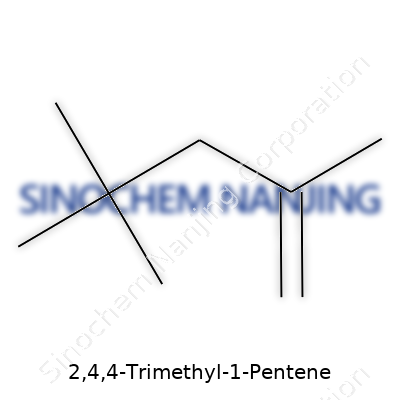
| Names | |
| Preferred IUPAC name | 3,3,5-Trimethyl-1-hexene |
| Other names |
Isooctene Diisobutylene Trimethylethylidenebutane |
| Pronunciation | /tuː,fɔː,fɔːl-traɪˈmɛθɪl-wʌn-ˈpɛntiːn/ |
| Identifiers | |
| CAS Number | 107-39-1 |
| Beilstein Reference | 1209245 |
| ChEBI | CHEBI:89455 |
| ChEMBL | CHEMBL153130 |
| ChemSpider | 541425 |
| DrugBank | DB02907 |
| ECHA InfoCard | ECHA InfoCard: 100.029.786 |
| EC Number | 2454-47-3 |
| Gmelin Reference | Gmelin Reference: 172164 |
| KEGG | C08334 |
| MeSH | D017250 |
| PubChem CID | 10447 |
| RTECS number | RZ2100000 |
| UNII | TF74T1U82H |
| UN number | UN1993 |
| CompTox Dashboard (EPA) | DTXSID9020711 |
| Properties | |
| Chemical formula | C8H16 |
| Molar mass | 112.21 g/mol |
| Appearance | Colorless liquid |
| Odor | mild odor |
| Density | 0.703 g/mL at 25 °C(lit.) |
| Solubility in water | insoluble |
| log P | 2.87 |
| Vapor pressure | 2.7 kPa (at 25°C) |
| Basicity (pKb) | pKb: 8.7 |
| Magnetic susceptibility (χ) | -8.03e-6 cm³/mol |
| Refractive index (nD) | 1.414 |
| Viscosity | 1.71 mPa·s (20 °C) |
| Dipole moment | 0.46 D |
| Thermochemistry | |
| Std molar entropy (S⦵298) | 358.2 J·mol⁻¹·K⁻¹ |
| Std enthalpy of formation (ΔfH⦵298) | -120.2 kJ/mol |
| Std enthalpy of combustion (ΔcH⦵298) | -4816.8 kJ/mol |
| Hazards | |
| GHS labelling | GHS02, GHS07 |
| Pictograms | GHS02, GHS07 |
| Signal word | Warning |
| Hazard statements | H225, H315, H411 |
| Precautionary statements | P210, P233, P240, P241, P242, P243, P261, P271, P280, P303+P361+P353, P304+P340, P312, P337+P313, P370+P378, P403+P235, P405, P501 |
| NFPA 704 (fire diamond) | 1-2-0-ALK |
| Flash point | -6 °C (21 °F; 267 K) |
| Autoignition temperature | 220 °C (428 °F; 493 K) |
| Explosive limits | 0.9–6% |
| Lethal dose or concentration | LD50 (oral, rat): >5 g/kg |
| LD50 (median dose) | LD50 (median dose): >5000 mg/kg (rat, oral) |
| NIOSH | RD1410000 |
| REL (Recommended) | REL: 100 ppm |
| IDLH (Immediate danger) | IDLH: 900 ppm |
| Related compounds | |
| Related compounds |
Isomers 2,4,4-Trimethyl-2-pentene 4-Methyl-2-pentene 2,3-Dimethyl-1-butene 2,3,3-Trimethyl-1-butene 2-Methylpent-1-ene |



