2,3-Dimethylpentane: Beyond the Molecular Outfit
Historical Development
Chemists out in the late nineteenth and early twentieth centuries enjoyed a good puzzle. They approached the hydrocarbon family like explorers with a map, eager to draw borders around each molecular neighborhood. Isoalkanes, including 2,3-dimethylpentane, grew out of efforts to understand octane ratings—a critical quest once the internal combustion engine started dominating roads. This molecule didn’t get the same headlines as benzene or toluene, but it earned a place in standardized fuel research, especially as folks pieced together the chemistry behind knocking in engines. Tracking its path reveals a story about fuels evolving to squeeze out better performance as society’s pace quickened.
Product Overview
2,3-Dimethylpentane falls under the alkanes, a class of straight- and branched-chain hydrocarbons with a long history in oil refining and engine development. As a colorless liquid under normal conditions, it doesn’t bring drama to the lab bench with wild smells or flashy reactions. This substance slips quietly into blends, supporting research and industrial studies into volatility, combustion, and refining. Chemists consider it more of a supporting actor, never dominating commercial markets but always in the background as researchers put octane numbers through their paces or test new separation processes.
Physical & Chemical Properties
2,3-Dimethylpentane doesn’t turn heads in the lab based on looks alone. At room temperature, it stays a clear liquid with low viscosity and a boiling point a notch below 100 degrees Celsius. Like other hydrocarbons of similar size, it floats just below water’s density and avoids dissolving in it, sticking with organic solvents instead. It burns clean in air, leaving carbon dioxide and water, but goes up pretty fast in a fire. Chemists appreciate its stability under normal storage conditions—no fuss, no demanding shelf protocols, just straightforward management.
Technical Specifications & Labeling
Technical specialists classify 2,3-dimethylpentane as a high-purity research chemical. Regulatory rules, like those set by major chemical safety boards, require clear labeling because of its moderate fire hazard and vapors. Documentation, from Safety Data Sheets to bottle stickers, reminds users that, while it doesn’t have major acute toxicity, attention to proper storage and handling remains essential. Regulations cover everything from maximum container sizes to required fire protection in mixing or storage areas.
Preparation Method
Refiners coax 2,3-dimethylpentane out of crude oil fractions through complex distillation and catalytic reforming. Building it in the lab typically starts with suitable straight-chain precursors, tweaking carbon skeletons using methods like alkylation or controlled hydrocracking. Some synthetic approaches mix olefins and acids under tight temperature control, splitting and joining molecules until the right isomers emerge. Purification involves fractional distillation to slice away close-boiling relatives—a classic separation challenge for petroleum chemists.
Chemical Reactions & Modifications
On the reactivity front, 2,3-dimethylpentane doesn’t fight change, but it doesn’t chase it either. It burns with plenty of oxygen, showing up in engine-test studies that examine how branched alkanes influence octane numbers. Run it through halogenation, and it swaps hydrogens for chlorine or bromine, giving organic chemists routes toward more tailored molecules. Cracking under heat and catalysts breaks it down for lighter hydrocarbon production, playing a part in refining strategies that chase maximum fuel yields.
Synonyms & Product Names
Industry circles and chemical catalogs call 2,3-dimethylpentane by a handful of names: it pops up as “diisopropylmethane” and “iso-octane isomer” among several. When I thumb through older technical books, I sometimes spot it labeled under codes from petroleum testing organizations. These alternate names and codes reflect how closely it ties to fuel research rather than consumer goods.
Safety & Operational Standards
Anyone working around 2,3-dimethylpentane follows time-tested habits meant for flammables. Fume hoods, explosion-proof storage, and good ventilation all stand as first lines of defense. Exposure controls matter—goggles, gloves, and flame-retardant lab coats keep the focus on work, not accidents. Fire drills and familiarization with extinguishers come with the territory, underscoring how quickly vapors can ignite if a spark gets loose. Waste protocols seek to lock up even the smallest spills—routine, but not optional. A lab’s culture of safety grows from taking everyday risks seriously, and clear documentation about this hydrocarbon fits right into that discipline.
Application Area
Though it rarely headlines product launches, 2,3-dimethylpentane contributes as a testing material for octane measurements and volatility studies. Research teams use it to mimic important qualities in gasoline blends, giving them a controlled way to tweak and push performance benchmarks. Refinery engineers look to it as part of baseline mixtures, creating reference fuels for engine calibration. Outside the lab, its fingerprint turns up in monitoring emissions and fine-tuning the output of distillation columns. The real value isn’t in everyday chemical commerce, but in shaping what goes inside every tank at the gasoline pump.
Research & Development
Research on 2,3-dimethylpentane touches everything from combustion chemistry to advanced fuel analytics. Teams use it when probing how fuel structure influences performance, emissions, and efficiency. Its well-known reactivity gives scientists a benchmark for modeling burning profiles, contributing data that feeds computer simulations and pollution studies. Lately, the push for more sustainable fuels has people re-examining every real-world molecule in the gasoline pool, zeroing in on isoalkanes like this one for insights about low-temperature combustion, alternative blending, and new corrosion inhibitors.
Toxicity Research
Current data suggest that 2,3-dimethylpentane doesn’t jump out for acute toxicity, but inhaling concentrated vapors or handling big spills risks headaches and, at high doses, some central nervous effects. Long-term workplace studies remain sparse, though, so occupational exposure limits err on the side of caution. The general approach puts engineering controls front and center instead of relying on personal protective equipment alone. Hazard communication aims to keep even minor exposure rare, respecting the lessons learned from older alkane studies where chronic contact causes skin and eye irritation.
Future Prospects
2,3-Dimethylpentane probably won’t become a household name, but its role in fuel studies and blending stands set to grow as policymakers and companies confront stricter emission standards and rising interest in high-performance engines. Modern research teams already look at isomeric hydrocarbons to play with properties like boiling range and oxidative stability. Down the road, advanced catalysis—possibly drawing inspiration from biochemistry—could unlock new routes to these specialty isomers from plant feedstocks, not just oil fields. As folks push for both cleaner-burning fuels and sharper analytics, isoalkanes like 2,3-dimethylpentane become even more important in fine-tuning tomorrow’s mixes and understanding combustion at a molecular level. Its quiet persistence in labs proves value isn’t always measured by name recognition but by how reliably a compound enables progress just beneath the surface.
What is the chemical formula of 2,3-Dimethylpentane?
Understanding the Structure: Not Just for Exams
If I think back to my own days wrestling with organic chemistry, I remember how teachers would press the importance of understanding molecular structure. More than a blur of letters and numbers, the formula for a compound offers insight into how it behaves, reacts, and even why it ends up in a fuel tank or on a government regulation list. For 2,3-Dimethylpentane, the chemical formula is C7H16.
Making Sense of the Name and Formula
Chemistry gives us those long names for a reason. Each syllable means something. 2,3-Dimethylpentane has a five-carbon backbone called pentane, with methyl groups (–CH3) hanging off the second and third carbons. Counting each carbon, including those dangling methyls, we arrive at seven carbons and 16 hydrogens. That structure matches C7H16, a real-world example of how naming connects directly to the makeup of a molecule.
Beyond the Blackboard: Why Molecular Structure Matters
Knowing a compound’s structure does more than fill out a worksheet. Take 2,3-Dimethylpentane. As an alkane, it’s saturated with hydrogen. Crews in the oil industry work with compounds like this every day—especially in refining. Isomers of heptane, including 2,3-Dimethylpentane, tweak gasoline’s performance. In my own work with technical writing for energy projects, I’ve seen project teams adjust fuel blends using isomers to meet engine standards and government requirements.
The isomeric arrangement changes things. The way those methyl groups branch from the main chain changes boiling point, knock resistance, even how easily the vapor catches fire. C7H16 isn’t just another hydrocarbon—you change the way the atoms connect, you change the properties. That’s practical knowledge, not trivia.
Impact on Health and Safety
Safety sheets for 2,3-Dimethylpentane treat it as a volatile organic compound. Exposure can lead to headaches or drowsiness if ventilated poorly—workers in confined spaces, like tank cleaning or laboratory settings, deal with this risk directly. If you’ve been in a lab, you know to keep that hood running anyway, but proper chemical labeling—based on a clear understanding of chemical formulas—reduces accidents.
Government agencies depend on correct formulas to set exposure limits. The Environmental Protection Agency and the Occupational Safety and Health Administration both use classification systems tied to chemical structures. If we get formulas wrong, workers end up at real risk.
Solutions: Learning and Applying the Details
Building habits around double-checking names, formulas, and chemical structures pays off in many fields. For students, drawing structures by hand drills the details that machines or databases can miss. Engineers see cost savings and safety improvements when they select the right isomer for a blend. Regulators protect the public with standards based on chemical accuracy.
Make each chemical formula, like that of 2,3-Dimethylpentane, a chance to think through consequences—on the job, in the lab, out in the world. These details matter, and getting them right gives us better products and safer workplaces. The formula C7H16 isn’t just something to memorize; it’s a link between chemistry’s rules and the way we handle real challenges.
What are the common uses of 2,3-Dimethylpentane?
Where 2,3-Dimethylpentane Turns Up
People rarely think about the building blocks hiding in everyday fuel. 2,3-Dimethylpentane counts among those obscure but crucial chemicals that make up what comes out of the pump. Its main spot is in gasoline, sharing company with other alkanes and branched hydrocarbons. Refiners pay attention to compounds like this because the shape and branching of their molecules influence how gasoline performs inside engines.
Boosting Octane and Engine Knock Prevention
Filling a tank with fuel isn’t just about “getting from A to B.” The octane rating matters since it reveals how well gasoline resists pre-ignition, also called knocking. This sudden popping inside the combustion chamber hurts efficiency and can damage engine parts. Branched alkanes, including 2,3-Dimethylpentane, regularly help raise a fuel’s octane. The automotive industry has counted on these molecules for decades. They burn in a more controlled way than their straight-chain cousins, reducing knock and giving modern engines the smoother ride drivers expect.
Refining and Research Value
Research labs and fuel companies often use 2,3-Dimethylpentane as a “model compound.” Scientists use it to learn how different molecules break down or interact under heat and pressure, and to refine the formulas behind things like jet fuel and diesel blends. Years ago, I watched technicians measure combustion speed and breakdown products using small batches of this compound. These traces in the test results added up to insights that eventually improved full-scale refining methods.
Industrial Testing and Calibration Uses
Companies making analytical machines, like gas chromatographs, turn to 2,3-Dimethylpentane to calibrate their equipment. Chemists studying fuel composition use it as a standard, helping them track and compare results across different samples. The precision gained from this approach saves time and narrows down uncertainty, an important priority in the lab. Instruments set with high-purity compounds detect even the slightest “off” chemicals in finished fuels.
Health and Safety Considerations
Like many hydrocarbons found in fuels, 2,3-Dimethylpentane isn’t something you want to splash around or breathe in without proper gear. Chronic exposure brings risks, just as it does for other gasoline components. Regulatory guides push for restricted use and good lab practice—gloves, goggles, and strong ventilation belong in any room where volatile hydrocarbons show up. For first responders, knowing what chemicals are in a fuel spill means getting the right controls in place quickly to protect people and the environment.
The Road Ahead: Greener Alternatives
Concerns around air quality and climate leave people asking tougher questions about what goes into gasoline and how refining shapes emissions. Cleaner fuels and novel additives challenge long-standing chemical formulas, but many engines still reply on known molecules. 2,3-Dimethylpentane remains a touchstone while the sector tests renewables and biofuel blends. Chemists and engineers, drawing on both old and new molecules, work toward a fuel mix that keeps engines humming but curbs impact on air and health.
What are the safety precautions for handling 2,3-Dimethylpentane?
Understanding the Risks
2,3-Dimethylpentane may sound like just another name on a long list of hydrocarbons, but anyone who’s ever worked in a school or industrial lab knows it carries its share of hazards. With a low flash point, high volatility, and its tendency to form explosive mixtures with the air, ending up on the wrong side of a safety slip with this chemical can mean more than just inconvenience. I remember opening a small bottle once—just a whiff was enough to remember that careless handling can hit hard.
Personal Protection is a Must
Goggles don’t win fashion awards, but splashed solvent in your eyes teaches a lesson you won’t forget. Always go for splash-resistant eye protection, not just the cheap safety glasses that leave the sides of your eyes exposed. From open skin to lungs, this stuff gives no quarter, so gloves with solid chemical resistance and a proper lab coat matter. If you’re pouring or transferring, a face shield on top of glasses never hurts, especially if your hands get shaky.
Ventilation: Not Just a Guideline
No one wants to smell this solvent on their clothes for the rest of the week or, worse yet, get dizzy off fumes. Fume hoods work for a reason. Even opening a container or running a simple reaction inside an unventilated space risks letting vapors pool close to the ground, especially where static or sparks might lurk. It never pays to ignore the simple act of flipping on a ventilation switch. In smaller setups where power hoods miss the mark, opening windows and running fans toward exit vents can add a helpful boost.
Fire Hazards Demand Respect
2,3-Dimethylpentane turns any open flame into a major threat. The tiniest spark can trigger a fire you can’t control. I’ve seen a careless mistake—one unplugged hot plate—turn routine work into a near-crisis. Fire extinguishers belonging to the right class (foam or CO₂) belong nearby, not at the other end of the building. Source all ignition hazards before you open the bottle: static, heating elements, cell phones, anything capable of sparking. Waste needs to go into a metal, lidded container, outside the main work zone, away from acids or oxidizing agents.
Storage Practices That Save Headaches
After a long day, who wants to run around hunting for a missing chemical? Storage should never be an afterthought. Tuck 2,3-Dimethylpentane away in well-marked, tightly sealed metal containers, away from heat, sunlight, and strong oxidizers. Chemicals like this don’t play well with careless labeling or stacks of other solvents. Stash it below shoulder level in dedicated flammable cabinets, making sure every co-worker knows exactly where and how it’s kept. It’s surprising how much chaos gets avoided with a simple inventory check once a week.
Training and Emergency Planning
Forgetting how to use a spill kit or fire blanket can leave you scrambling in a real emergency. Practice goes further than any warning poster. Hold short, regular drills, covering everything from wiping up a minor spill to evacuation. I’ve found that confidence in these steps spreads fast when people see them done for real, not just on paper. Early sharing of Material Safety Data Sheets, real-world stories of what actually went wrong, and honest conversation about accidents helps keep the group alert and responsible.
Better Solutions
Chemicals like 2,3-Dimethylpentane won’t disappear from the curriculum or the industry, but risk never needs to ride shotgun. Investing in good training, reliable gear, and proactive storage pays back much more than just ticking a compliance box. Colleagues and students start to look out for each other, and suddenly, the dangerous stuff feels a bit more manageable. Experience—and the occasional close call—teaches more than any manual could.
What is the boiling point of 2,3-Dimethylpentane?
A Closer Look at 2,3-Dimethylpentane
2,3-Dimethylpentane doesn’t grab headlines like big chemical disasters or top-selling medicines, but understanding simple properties such as its boiling point shows what’s happening at the molecular level. Its boiling point comes in at about 90.3°C, which puts it right in line with what you’d expect from isomers in the octane family. Anyone who’s ever poured gasoline in their car is already benefiting from careful study of chemicals like this, because these little tweaks in structure and boiling point shape the qualities of fuels and solvents all over the world.
Why Boiling Point Shapes Everyday Products
Growing up around backyard mechanics and small labs, I saw firsthand that it only takes a few degrees’ difference in boiling point to change how a substance works. High-boiling stains used to linger in the air longer, while lighter solvents seemed to vanish before a job finished. For companies refining or mixing fuels, knowing boiling points isn’t just about numbers—it’s about safely handling chemicals, setting distillation towers, and avoiding explosions or fires.
Fuel Quality and Air Quality
Boiling point sits at the core of fuel blending. Gasoline, for example, is a cocktail of hundreds of hydrocarbons. Chemists juggle their proportions to hit the sweet spot for performance and emissions. 2,3-Dimethylpentane’s boiling point helps decide when it vaporizes in an engine. If fuel evaporates too easily or too late, engines run rough, emissions spike, and efficiency suffers.
EPA standards for summer and winter gasoline reflect this concern. Lighter components are dialed back in summer to keep vapor pressure down, while colder months might call for more of these compounds to keep cars starting easily. Each molecule, including 2,3-Dimethylpentane, has a role in those seasonal tweaks.
Safe Handling in the Lab and Plant
No one wants an accident in a lab or refinery. Knowing boiling points helps set safety protocols—ventilation, temperature control, and storage conditions. If something boils off lower than expected, accidents can happen fast. I watched an early-career chemist learn this the hard way, after a poorly labeled bottle resulted in a sticky cleanup and a stern lecture. Such details, often overlooked, keep people safe and save money.
Future Problems, Old Lessons
Climate action and energy transitions push us to rethink traditional fuels. Some refineries are retooling to handle alternative feedstocks, which throws new molecules into the mix. Lab researchers mapping out new blends fall back on the basics—boiling points, flash points, and phase diagrams make up the tool kit. Someone skimping on this groundwork now will likely run into headaches blending future fuels.
Smarter Solutions and Broader Knowledge
Chemists, engineers, and students who take the time to dig into basic properties like boiling point build stronger science and safer industries. More transparent databases, easy-to-access chemical safety sheets, and realistic training can cut down on mistakes or emergencies. In my own line of work, frequent drills and practical classes root these numbers into daily routines better than any textbook could.
Keeping the focus on fundamentals like the boiling point lends clarity, prevents waste, and pushes whole sectors closer to cleaner energy and safer chemistry.
Is 2,3-Dimethylpentane soluble in water?
Everyday Chemistry: What Solubility Tells Us
Pick up a glass of water, drop a sugar cube in, and watch it disappear. Now, imagine trying that with 2,3-dimethylpentane—a colorless liquid you’d spot on a lab shelf, mostly used in hydrocarbons research. The sugar vanishes, but the 2,3-dimethylpentane floats around in stubborn, clear blobs. This isn’t magic; this is solubility, or in this case, the lack of it.
Understanding the Science: It’s About Similarity
Chemists love to repeat, “like dissolves like.” It feels almost too simple, but it fits here. Water has a bent molecular shape and carries a strong polarity, which means its molecules are a bit like tiny magnets with positive and negative ends. They bond with each other and with anything else that can match up with their charge. Look at 2,3-dimethylpentane: its structure is made up only of carbon and hydrogen atoms. There’s no polarity in this compound, so there’s no attraction to water’s magnet-like pull.
Why It Matters Beyond the Lab
This lack of mixing doesn’t just stop at science demonstrations. It shapes things in the real world. Say an oil spill happens. The main offenders often share that hydrocarbon structure, just like 2,3-dimethylpentane. When they touch water, they spread out on top, refusing to dissolve, creating environmental headaches. Cleanup teams know from experience: you can’t rely on water to absorb these compounds; special methods like skimmers or dispersants are needed.
Dig a little deeper, and you’ll find that this idea of solubility cuts across drinks, food, drugs, and fuels. Medicine makers, for example, design pills knowing that water won’t carry oily compounds into the bloodstream efficiently. They add other ingredients—emulsifiers, surfactants, or solvents—to force the mix. Farmers spraying pesticides on crops face similar challenges. Oily chemicals stick to leaves, but rainwater slides right off, influencing how they plan application and safety measures.
Learning from Hydrophobic Compounds
In the classroom, these concepts help us understand pollution and even nutrition. Foods high in fats (another non-polar family, like 2,3-dimethylpentane) don’t blend with water easily. Dietitians teach about balancing oily and watery foods—think of salad dressings, which always separate unless you whip them together with enough force or add something to bind them.
Looking at Solutions
Overcoming the stubbornness of oily, water-hating compounds means thinking outside the box. Environmental scientists test absorbent materials, surfactants, and even bacteria that break down molecules like 2,3-dimethylpentane. Some cities invest in treatment plants using activated carbon to trap hydrophobic pollutants before they reach drinking water. Chemists design “green” solvents that blend properties of both worlds, helping industries clean and manufacture more safely.
Curiosity Leads to Better Practices
Simple questions, like why two liquids don’t mix, uncover a web of real challenges and solutions. The study of 2,3-dimethylpentane’s behavior in water reminds us that ordinary properties shape much of our health, environment, and safety. By paying close attention and sharing what we learn, people can handle these challenges with confidence, whether in a kitchen, a farm, a factory, or while cleaning up after a spill.
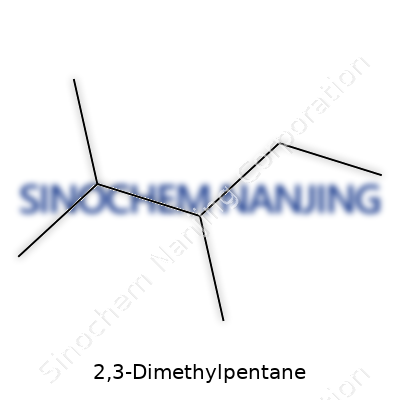
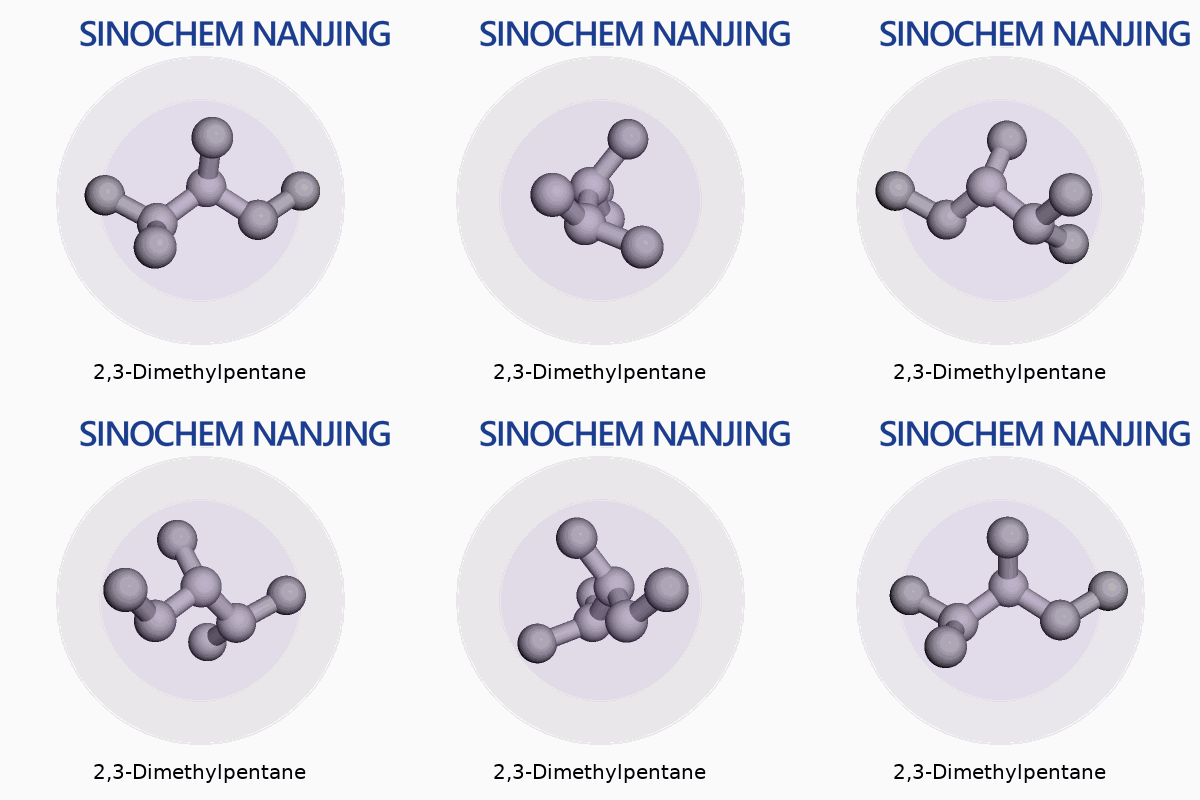
| Names | |
| Preferred IUPAC name | 2,3-Dimethylpentane |
| Other names |
Diisopropylmethane |
| Pronunciation | /tuː θri daɪˈmɛθɪlˌpɛnteɪn/ |
| Identifiers | |
| CAS Number | 107-83-5 |
| Beilstein Reference | 1209281 |
| ChEBI | CHEBI:88374 |
| ChEMBL | CHEMBL15370 |
| ChemSpider | 11657 |
| DrugBank | DB14171 |
| ECHA InfoCard | 100.144.072 |
| EC Number | EC 208-698-5 |
| Gmelin Reference | 786 |
| KEGG | C08353 |
| MeSH | D017921 |
| PubChem CID | 11421 |
| RTECS number | RY2625000 |
| UNII | 7V62R573FP |
| UN number | UN2451 |
| CompTox Dashboard (EPA) | DTXSID6020446 |
| Properties | |
| Chemical formula | C7H16 |
| Molar mass | 100.21 g/mol |
| Appearance | Colorless liquid |
| Odor | Odorless |
| Density | 0.673 g/mL at 25 °C |
| Solubility in water | Insoluble |
| log P | 3.82 |
| Vapor pressure | 4.13 kPa (at 25 °C) |
| Acidity (pKa) | ~50 |
| Magnetic susceptibility (χ) | -72.8·10⁻⁶ cm³/mol |
| Refractive index (nD) | 0.6986 |
| Viscosity | 0.545 mPa·s (25°C) |
| Dipole moment | 0.00 D |
| Thermochemistry | |
| Std molar entropy (S⦵298) | 254.8 J·mol⁻¹·K⁻¹ |
| Std enthalpy of formation (ΔfH⦵298) | -198.7 kJ/mol |
| Std enthalpy of combustion (ΔcH⦵298) | –4159.9 kJ·mol⁻¹ |
| Pharmacology | |
| ATC code | V06DA02 |
| Hazards | |
| GHS labelling | Not a hazardous substance or mixture according to the Globally Harmonized System (GHS) |
| Pictograms | `GHS02` |
| Signal word | Warning |
| Precautionary statements | P210, P233, P240, P241, P242, P243, P261, P271, P301+P310, P303+P361+P353, P304+P340, P331, P370+P378, P403+P235, P405, P501 |
| NFPA 704 (fire diamond) | 1-1-0 |
| Flash point | “-18 °C” |
| Autoignition temperature | 221 °C |
| Explosive limits | 1.0 - 6.0% |
| Lethal dose or concentration | Lethal dose or concentration of 2,3-Dimethylpentane: "LD50 (rat, oral) > 5000 mg/kg |
| LD50 (median dose) | LD50 (median dose): >5 g/kg (oral, rat) |
| NIOSH | NIOSH: SY8575000 |
| PEL (Permissible) | Not established |
| REL (Recommended) | 100 |
| IDLH (Immediate danger) | IDLH: 900 ppm |
| Related compounds | |
| Related compounds |
2-Methylpentane 3-Methylpentane n-Hexane Isohexane 2,2-Dimethylbutane 2,4-Dimethylpentane 3,3-Dimethylpentane |



