2,3-Dimethylbutane: More Than Just a Hydrocarbon
Historical Development
Looking back, 2,3-Dimethylbutane reflects the changing landscape of organic chemistry. Once folks unlocked the secrets of cracking petroleum in the late nineteenth and early twentieth centuries, chemists landed upon a whole range of hydrocarbon isomers, not just the straight chains but the oddball branched varieties, too. 2,3-Dimethylbutane isn’t the star of every textbook, but researchers mapped it early as part of the isoalkane family. With petroleum refining growing and automobile engines needing tweaks, knowing how these molecules behave made a real difference. Over time, the molecular study of such compounds shaped how we approach fuels, lubricants, and even helped fill in the complex puzzle of hydrocarbon chemistry.
Product Overview
2,3-Dimethylbutane enters labs as a colorless, flammable liquid—one of the so-called “isoparaffins.” Its formula, C6H14, makes it isomeric with hexane, yet its properties don’t quite match with the straight-chain cousin. Engineers and chemists value the molecule for its volatility, making it a handy reference and blending stock for specialized fuels. While you don’t see it on hardware store shelves, it turns up steadily in refining, research, and sometimes in test mixtures where precise boiling points matter.
Physical & Chemical Properties
This hydrocarbon boils at around 58°C and packs a lower density than water, much like its mate isomers. The low boiling point and lightweight vapor come in handy when controlling evaporation or flash points in lab conditions. 2,3-Dimethylbutane won’t dissolve in water, sticking to the hydrophobic playbook, but shows solubility in organic solvents like ether and alcohol. It burns clean in open air, as its structure favors complete combustion with few leftover byproducts.
Technical Specifications & Labeling
Any chemist working with 2,3-Dimethylbutane knows to check labels for purity—typically, samples for lab work run above 97% pure, but real stakes arrive when small impurities can throw off test results or analytical calibrations. The molecule brings a sharp odor and evaporates easily under room conditions, so clear hazard marking stays non-negotiable. Containers generally bear flammable liquid graphics and warning codes, as the stuff ignites with ease and forms explosive mixtures with air.
Preparation Method
Synthetic approaches borrow from classic hydrocarbon chemistry. One route involves isomerizing hexane or 2-methylpentane over acidic catalysts, pushing the rearrangement toward the double-branched skeleton of 2,3-Dimethylbutane. Another production trick draws from fractional distillation of light petroleum fractions after reforming runs, using temperature cuts and careful collection. The lab methods feel routine for modern organic labs, but industrial runs demand real vigilance around catalyst control and precise thermal management.
Chemical Reactions & Modifications
The backbone of 2,3-Dimethylbutane resists most tame reagents. Its saturated, no-frills structure shrugs off mild acids and bases, but comes alive under harsh conditions like chlorination, nitration, or combustion. Breaking the molecule takes oxidative muscles; for example, exposure to enough heat and air leaves water and carbon dioxide. Radical halogenation swaps in chlorine or bromine atoms, offering routes to new organic intermediates. These reactions seldom form the core of basic synthesis classes, but industries exploring isoparaffin upgrading look closely at every pathway available.
Synonyms & Product Names
Chemists throw around several names for this same compound—isohexane, diisopropyl, sometimes dimethylbutane—the labels may sound technical, but they all echo the same zigzag chain. Journals and safety data sheets stick with the IUPAC name, 2,3-Dimethylbutane, for clarity, and every practitioner learns early to cross-check synonyms to sidestep confusion, especially when paging through legacy research or older MSDS formats.
Safety & Operational Standards
Real-world handling of 2,3-Dimethylbutane demands respect for volatility. Fume extraction becomes crucial, as the vapor can displace oxygen and presents a marked inhalation risk. Open flames, sparks, or static build-up turn dangerous around stored volumes. Gloves and goggles turn into non-negotiables in my own lab practice, because chemical burns and eye injuries almost always trace back to ignored protocols. Waste management brings its own discipline, with spent samples sent to licensed disposal and clean-up involving absorbent pads and plenty of ventilation.
Application Area
Nobody goes to a hardware store looking for 2,3-Dimethylbutane, yet its fingerprint pops up in the background of several modern industries. In fuel research circles, it acts as a model hydrocarbon for studying octane ratings or understanding knocking in engines. Its branched structure raises the octane number above that of straight-chain hexane, giving researchers a benchmark for how branching shifts combustion behaviors. For gas chromatography calibration, the molecule provides a neat, reproducible peak. I once handled it in a pilot project exploring synthetic aviation fuels, where every hydrocarbon in the blend could change performance and emissions. Even though rare as a bulk product, its presence shapes the back end of fuel engineering, environmental analysis, and petrochemical research.
Research & Development
Advanced R&D uses 2,3-Dimethylbutane as both a reference standard and a real-world challenge. Modern refining aims to maximize isoalkane content in gasoline for efficiency and emissions control, so understanding how to synthesize or purify these molecules takes center stage. Catalyst designers spend long hours tuning zeolites to encourage this molecule’s production while minimizing less-desirable byproducts. Environmental chemists take a hard look at its burn-off characteristics, hunting for ways to limit volatile organic emissions. Academic labs testing new analytical techniques often start with a collection of “simple” organics like this before jumping into complex mixtures. The journey mirrors the larger push toward cleaner fuels and better-performing engines.
Toxicity Research
Toxicologists and industrial hygienists put 2,3-Dimethylbutane through rigorous screens. Like most light alkanes, acute toxicity runs low at typical exposures, but the real threats lie in asphyxiation or CNS depression when vapors build up in confined spaces. The liquid itself can dry skin and cause irritation, and longer-term studies assess whether repeated inhalation might pose subtler health risks. Animal models and metabolic studies guide workplace exposure limits, though many labs opt for basic protective measures well short of published thresholds. No one I know has ever discounted solvent risks, especially in facilities where flammable vapors combine with busy electrical equipment.
Future Prospects
With energy markets shifting and green chemistry on the rise, 2,3-Dimethylbutane sits at a crossroads. Synthetic fuels and cleaner combustion sit high on the agenda for many countries phasing out older petroleum processes. Researchers continue to probe branching effects, both in classic fuels and next-gen blends for aviation or specialized engines. Analytical chemistry—especially advances in detection limits and portable gas chromatographs—lets industry keep a sharper watch on hydrocarbon blends, emissions, and leaks. Some academic groups eye biotechnological pathways, asking if fermentative or catalytic methods can deliver branched alkanes from renewable stocks. In all, this molecule’s journey reflects the larger dance of chemistry and energy, where even the most unassuming substances can change the way we power and protect our world.
What is 2,3-Dimethylbutane used for?
What Makes This Compound Stand Out?
2,3-Dimethylbutane often turns up in classrooms as a classic example of a branched alkane. Most folks never run into it in daily life, but its story doesn’t stop at textbooks. This clear, colorless liquid shows up quietly in bigger arenas: the oil industry, research labs, and discussions about cleaner-burning fuel.
Where You Can Find It Working
Gasoline needs hydrocarbons that burn well and help engines deliver more power without knocking. Knock—those strange pings and rattles that old cars make—happens when fuel burns unevenly inside an engine. 2,3-Dimethylbutane joins the fight against knock. Its structure puts more branches in the molecule, which raises the octane number. Octane numbers matter. Without them, engines run rough and waste gas.
Refineries blend this compound into small batches of fuel to study engine performance, pollution levels, and fuel stability. Every time researchers want to improve gasoline, or find alternatives to what we already use, hydrocarbons like this one come down off the shelf.
Science and Research Connections
Chemists rely on 2,3-Dimethylbutane’s clear structure to test theories about hydrocarbons. Gas chromatography labs use it as a reference standard to check equipment performance. Comparing 2,3-Dimethylbutane with related compounds uncovers insights about boiling points, vapor pressures, and reactivity, helping design safer, more effective fuels.
During my undergrad years in a research lab, handling 2,3-Dimethylbutane meant learning the importance of safety. Even though this alkane doesn’t have strong odors, it evaporates fast and catches fire easily. Just one mistake with storage or venting could lead to dangerous fumes. Keeping it safe boiled down to using fume hoods, wearing proper gloves, and checking equipment seals. These small steps protect people in the lab and help ensure clean results.
Looking At the Bigger Picture
Not everyone stops to think about what goes into their tank, but the way fuel is made changes air quality and climate. Alkanes like 2,3-Dimethylbutane factor into the balance. Raising octane allows modern engines to use less fuel while getting better performance. Every tweak goes under review by engineers and chemists, looking for ways to deliver power with less pollution.
Room for Better Solutions
Some folks trace health or environment troubles back to what burns in cars and trucks. Gasoline’s complex chemistry hides a lot of potential problems. On the upside, tight regulations already push refineries to watch every solvent, additive, and blend. 2,3-Dimethylbutane offers value as a tool for figuring out just how clean, reliable gasoline can become.
Shifting away from fossil fuels altogether remains a huge challenge. In the meantime, research into these tiny molecules helps make today’s fuels a little safer and a little more efficient. With every study, with every test batch, chemists inch closer to answers. Science never stands still, and these clear liquids keep playing their part.
What are the physical properties of 2,3-Dimethylbutane?
What Stands Out About 2,3-Dimethylbutane?
Fresh out of college, I spent time in a research lab that often handled a range of hydrocarbon molecules. One of those compounds, 2,3-dimethylbutane, caught attention not because of its popularity, but because its physical properties strongly influence how and where it ends up in industrial and research settings. This hydrocarbon carries the molecular formula C6H14, but its name doesn’t tell the whole story—how it behaves in the real world matters far more.
Physical State and Appearance
2,3-Dimethylbutane flows as a colorless, clear liquid at room temperature, much like its cousins in the alkane family. I remember its faint petroleum-like odor sticking around when samples went uncapped for too long. That specific smell often tipped us off to leaks or spills even before monitoring equipment registered a change. Its distinctive scent, while not unique to chemists, helps inform safe workspace practices.
Boiling and Melting Points: Practical Impacts
With a boiling point right around 58°C (136°F), 2,3-dimethylbutane vaporizes at a temperature that can be reached on a warm stove burner. This low boiling point makes it quite volatile. Working with it in summer lab temperatures, we always kept samples tightly sealed. Even brief exposure to open air resulted in rapid evaporation. Such volatility often means ventilation becomes just as important as flame resistance during handling.
The melting point hovers near –128°C (–198°F). This frigid threshold keeps it in liquid form in most work environments and explains why solid samples of 2,3-dimethylbutane rarely show up outside specialized cryogenic settings.
Density and Solubility
This molecule floats on water thanks to a density around 0.66 g/cm³, a figure lower than most other common organic solvents. I once saw a separation experiment use 2,3-dimethylbutane; the clear boundary line it formed on water made it easy to track its presence. Its insolubility in water sidesteps many worries about water contamination but makes it stick around in organic spills, sometimes complicating clean-up if it seeps into soils or waterways.
Flammability and Hazard Considerations
What really sets this hydrocarbon apart: its readiness to ignite. The flash point falls below –26°C (–15°F), squarely in the range of major fire risk. In the lab, even static sparks could threaten disaster if proper grounding or handling steps went ignored. Unlike some common household substances, there's zero room for complacency. That teaches a lesson about the need for strict training and the importance of clear safety protocols wherever volatile chemicals appear.
Applications and Pathways for Safer Use
Industries extract value from 2,3-dimethylbutane based mainly on these properties. Its volatility fits refining and reforming efforts in fuel manufacturing. Its physical traits determine storage protocols: only approved, airtight containers… always away from ignition sources. Integrating stronger monitoring systems and engineering better emergency response practices could make workplaces safer for anyone coming into contact with it. Real knowledge about these properties doesn’t just keep production running, it sends people home safe at the end of the day.
Is 2,3-Dimethylbutane hazardous to health?
What 2,3-Dimethylbutane Actually Is
Years ago, in a college organic chemistry lab, I got to know a few strange chemicals. 2,3-Dimethylbutane, a clear liquid with a faint odor, looks harmless enough at first glance. It’s one of several isomers in the hexane family, used mostly industrially as a solvent or sometimes as a research reagent. Not something most people keep under the kitchen sink, but it’s part of the chemical landscape in labs and factories.
Taking a Close Look at Health Hazards
The main risk with 2,3-Dimethylbutane comes from inhalation. Breathing in vapors, even for a short time, can cause dizziness, headaches, or even nausea. Folks who work around chemicals like this, especially in tight spaces, sometimes report symptoms before realizing it's the air itself causing trouble. Anything that makes you lightheaded or passes through the bloodstream as quickly as a hydrocarbon doesn’t belong floating around unventilated.
I spent a summer in a paint facility. One lesson sticks out: personal protective equipment isn’t optional, it’s the difference between a healthy afternoon and a dangerous accident. Hydrocarbons seep through skin and hit the lungs fastenough to make your next breath count. That’s why places handling 2,3-Dimethylbutane require good ventilation, gloves, and splash goggles.
Long-Term Effects Deserve Attention
Exposure once in a while might not leave lasting damage, but regular or high-level contact paints a different picture. Chronic hydrocarbon exposure has a documented link to nerve damage. Some studies show that workers breathing in these chemicals over long stretches face issues like memory loss or difficulty focusing. Rapid heartbeat and coordination problems sometimes show up, too.
Regulatory agencies such as the Occupational Safety and Health Administration (OSHA) set exposure limits for a reason. Repeated exposure that crosses those lines can set up a person for lingering problems, especially if other safety practices fall by the wayside.
Combustibility and Environmental Spillovers
Apart from what the body faces, 2,3-Dimethylbutane burns easily. One spark near a careless spill, and you have a fire that spreads faster than most people expect. Most incidents in industrial settings trace back to the same root cause—a glove not worn, a fume hood left off, or a storage can clicked open for just a minute longer than needed.
There’s an environmental angle, too. As a volatile organic compound (VOC), 2,3-Dimethylbutane adds to air pollution when released outside. VOCs don’t just vanish: they help form ground-level ozone and smog that make air less healthy for all.
Improving Safety and Reducing Hazards
A simple audit of storage, handling, and disposal practices for chemicals like this saves more than time. Facilities benefit from training schedules that keep safety rules fresh in mind and reminders of what these solvents can do if mishandled. Periodic ventilation system checks prevent slow leaks from becoming big headaches. Emergency response plans and spill kits earn their keep during accidents.
Anyone working with chemicals, including 2,3-Dimethylbutane, keeps risks low by knowing what they’re handling and following the rules as daily routine. It’s easy to ignore a faint smell or write off lightheadedness. But facts and real workplace stories show that even “just another hydrocarbon” demands respect and smart safety habits.
How should 2,3-Dimethylbutane be stored?
What Makes 2,3-Dimethylbutane a Concern?
2,3-Dimethylbutane carries a reputation for volatility. Working in a research lab, it's hard to forget the tang of that sharp, gasoline-like smell—a warning sign that even a small spill can turn a safe afternoon into an emergency. The chemical vaporizes at room temperature, so even a tiny leak turns air risky. These hydrocarbons catch fire easily and don’t need much encouragement, whether from a spark, a hot surface, or plain static electricity.
A decade ago, a simple mistake with similar compounds left a coworker scrambling for the fire blanket. The memory sticks, not just because of the scare, but because it drove home an important lesson about proper handling and storage.
What Storage Looks Like in Practice
Safe storage starts with the right container. Forget old glass bottles without working stoppers. Only use sealed, chemical-resistant containers with uncracked surfaces. Metal cans rated for flammable liquids give an extra shield. Once, seeing a cracked glass bottle made me double-check everything else in the storage cabinet that day—and I found a forgotten open container beside a heating unit. That close call proved that sealed, stable storage saves worry.
Chemicals like 2,3-Dimethylbutane belong in a dedicated flammables cabinet, not squeezed in with acids or oxidizers. Combining incompatible materials triggers dangerous reactions—even experienced staff sometimes overlook this step. A coworker once stored a hydrocarbon next to nitric acid. The oversight ended with a call to the fire department and some harrowing cleanup—thankfully, no one got hurt. It's not paranoia; it's about recognizing what can go wrong.
Air, Temperature, and Light—The Big Three Risks
Fresh air plays a double role: reducing harmful vapor buildup and keeping fire risk low. Never store volatile chemicals close to heat, sparks, or sunlight. That sunny windowsill in the lab made a handy spot for small equipment, but for flammable chemicals the risk outweighs any convenience. A simple label—“No sunlight, 10-27 °C, ventilated”—helps. I've watched people ignore this, only to deal with alarms later.
The Role of Training and Real Accountability
Everyone in the workplace needs solid training on storage rules. One person skipping the safety briefing can put the entire staff, environment, and neighbors at risk. Safety isn't just about rules; it runs on memory, awareness, and regular checks.
It helps when supervisors run unannounced inspections and give quick feedback. Getting people talking about near-misses, not just accidents, builds habits that last. Every chemistry teacher and seasoned technician knows the quickest way to trouble is to treat these storage practices as a formality.
Solutions that Cut Risk Down to Size
Some fixes aren’t complicated. Clear labels, fire-proof cabinets, and routine checks keep dangerous situations rare. Rotating stock, logging what comes in and out, and having a rapid spill response plan puts everyone in a stronger position. In my experience, a well-lit, ventilated storage—far from busy walkways or electrical gear—makes safe storage second nature, not an afterthought.
Every stored drum or bottle of 2,3-Dimethylbutane stands as a reminder—safety habits don’t make headlines, but they make all the difference.
What is the molecular formula of 2,3-Dimethylbutane?
Molecular Formula: C6H14
2,3-Dimethylbutane sounds like a complicated name from your old chemistry class, but put simply, its molecular formula is C6H14. Six carbon atoms. Fourteen hydrogen atoms. That’s the blueprint. The thing about organic molecules like this—every tiny change in structure changes how it acts and where it finds use.
Let’s break it down. The backbone comes from butane, which has four carbons in a row. Toss on two methyl groups—each with a single carbon and three hydrogens—onto the middle two carbons (numbered as 2 and 3), and you end up with 2,3-dimethylbutane. It’s all about where those groups attach, not just how many atoms are stuffed in.
Why Chemists Care About Structure
Chemical structure drives everything, from boiling point to how easily something catches fire. Trying to remember why you ever learned this? Pull up a can of gas or any common solvent in your garage, and you’ll see these principles in play. 2,3-Dimethylbutane sits among the isomers of hexane; they all share the same formula but behave differently because of their shapes. As a liquid, it barely mixes with water and evaporates fast, reminding me of spilled gasoline on a hot day—gone in minutes, smell lingering behind.
People working in refineries and labs check these features constantly. The unique arrangement in this molecule cuts down its boiling point compared to straight-chain hexane. It’s why refineries separate isomers out, boosting the efficiency of fuel blends. Late nights in a campus lab, I learned that making a pure cut of one isomer often meant hours of careful distillation—picking out 2,3-dimethylbutane meant you needed precision.
The Bigger Picture: Safety and Environment
Getting to know hydrocarbons like 2,3-dimethylbutane sheds light on some big issues. These molecules pour out of tailpipes. They show up in the air around refineries. They can catch fire fast if handled poorly. Records show accidental releases of isomeric hydrocarbons around petrochemical sites have led to headaches for workers and clean-up teams. US Environmental Protection Agency reports push for better handling and tighter controls, since a spill doesn’t just disappear.
From the energy side, molecules like this aren’t just fuel—they’re part of the smog problem in some cities. Volatile organic compounds like 2,3-dimethylbutane react under sunlight, pushing up ozone levels and hurting air quality. The American Lung Association points to ground level ozone as a driver for asthma and other respiratory problems. So, it’s not just about chemistry—there’s a real need to rethink how industries manage these chemicals from start to finish.
Better Solutions for Handling Hydrocarbons
I've seen engineers roll out vapor recovery units to keep emissions low. Refiners use improved sensors and tougher leak-prevention rules. These steps help, but nothing beats tighter accident reporting and crew training. Policies get built, but the human factor counts most. Teaching chemists and plant workers about where these molecules go makes a difference: catch the leak, fix the tank, keep the formula where it belongs—in the barrel, not the air.
2,3-Dimethylbutane, C6H14, doesn’t look like much on paper, but it folds into some big real-world questions. How we use, store, and move it changes what kind of mark it leaves behind.
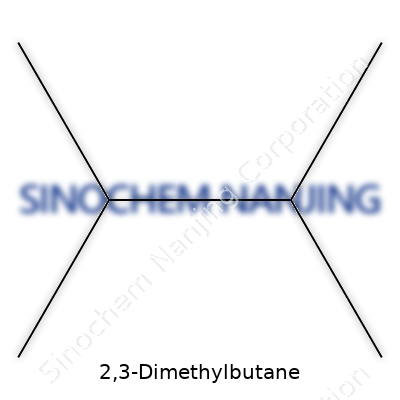
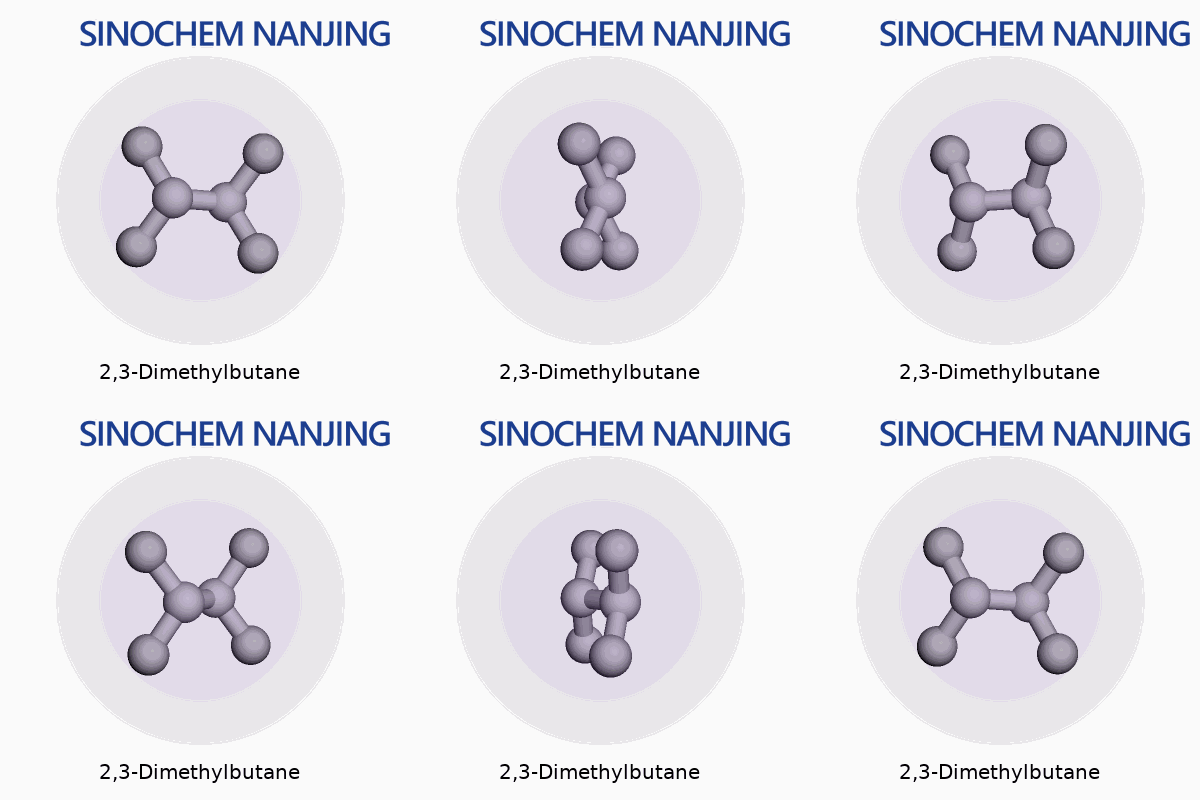
| Names | |
| Preferred IUPAC name | 2,3-Dimethylbutane |
| Other names |
Diisopropyl Sym-Dimethylbutane |
| Pronunciation | /tuː θri daɪˈmɛθɪlˌbjuːteɪn/ |
| Identifiers | |
| CAS Number | 79-29-8 |
| Beilstein Reference | 1730682 |
| ChEBI | CHEBI:88338 |
| ChEMBL | CHEMBL51168 |
| ChemSpider | 68299 |
| DrugBank | DB01924 |
| ECHA InfoCard | DTXSID6020543 |
| EC Number | EC 209-796-6 |
| Gmelin Reference | 126827 |
| KEGG | C06588 |
| MeSH | D016690 |
| PubChem CID | 6566 |
| RTECS number | EI9625000 |
| UNII | E6J1F76IMF |
| UN number | UN1160 |
| Properties | |
| Chemical formula | C6H14 |
| Molar mass | 86.18 g/mol |
| Appearance | Colorless liquid |
| Odor | gasoline |
| Density | 0.653 g/mL at 25 °C |
| Solubility in water | insoluble |
| log P | 2.89 |
| Vapor pressure | 17.60 kPa (at 20 °C) |
| Acidity (pKa) | pKa > 50 |
| Magnetic susceptibility (χ) | -64.8·10⁻⁶ cm³/mol |
| Refractive index (nD) | 1.372 |
| Viscosity | 0.467 mPa·s (25 °C) |
| Dipole moment | 0.00 D |
| Thermochemistry | |
| Std molar entropy (S⦵298) | 229.3 J·mol⁻¹·K⁻¹ |
| Std enthalpy of formation (ΔfH⦵298) | -198.7 kJ/mol |
| Std enthalpy of combustion (ΔcH⦵298) | –3919.9 kJ/mol |
| Pharmacology | |
| ATC code | V60 |
| Hazards | |
| GHS labelling | No GHS labelling. |
| Pictograms | GHS02 |
| Signal word | Warning |
| Precautionary statements | Keep away from heat, hot surfaces, sparks, open flames and other ignition sources. No smoking. Store in a well-ventilated place. Keep cool. Dispose of contents/container in accordance with local/regional/national/international regulations. |
| NFPA 704 (fire diamond) | 1-1-0 |
| Flash point | -26 °C (closed cup) |
| Autoignition temperature | 413 °C |
| Explosive limits | 1.2–8.6% |
| Lethal dose or concentration | LD50 (oral, rat): 5000 mg/kg |
| LD50 (median dose) | LD50 (median dose): 5000 mg/kg (rat, oral) |
| NIOSH | NA2627000 |
| PEL (Permissible) | PEL (Permissible Exposure Limit) for 2,3-Dimethylbutane: 1000 ppm (2400 mg/m3) as an 8-hour TWA (OSHA) |
| REL (Recommended) | 200-800 |
| IDLH (Immediate danger) | IDHL: 900 ppm |
| Related compounds | |
| Related compounds |
isopentane neohexane hexane 2-methylpentane 3-methylpentane |



